
I’m going to start serialising Bob’s memoirs ‘Breaking the Fetters’ on this blog as it has long been out of print. It was first published on the author’s ninetieth birthday by Lawrence & Wishart in 1967. As he was beginning to go blind during this time, the memoirs were dictated onto tape and then edited and prepared for the press by Dave and Elizabeth Bowman. The dedication runs as follows:
To the parents who begot me, William Stewart and Georgina Fraser Stewart. To my eight sisters and three brothers, a hard-working, kindly clan.
To all those who struggle to break the fetters that capitalist society has rivetted on public enterprise and social advance.
To my dear comrades the world over who form the vanguard of liberators of human kind from age-old bondage.
Finally, to my beloved wife, Margaret Lang, who in storm and stress was my loyal and loving comrade.
Chapter 1: The Stewart Family.
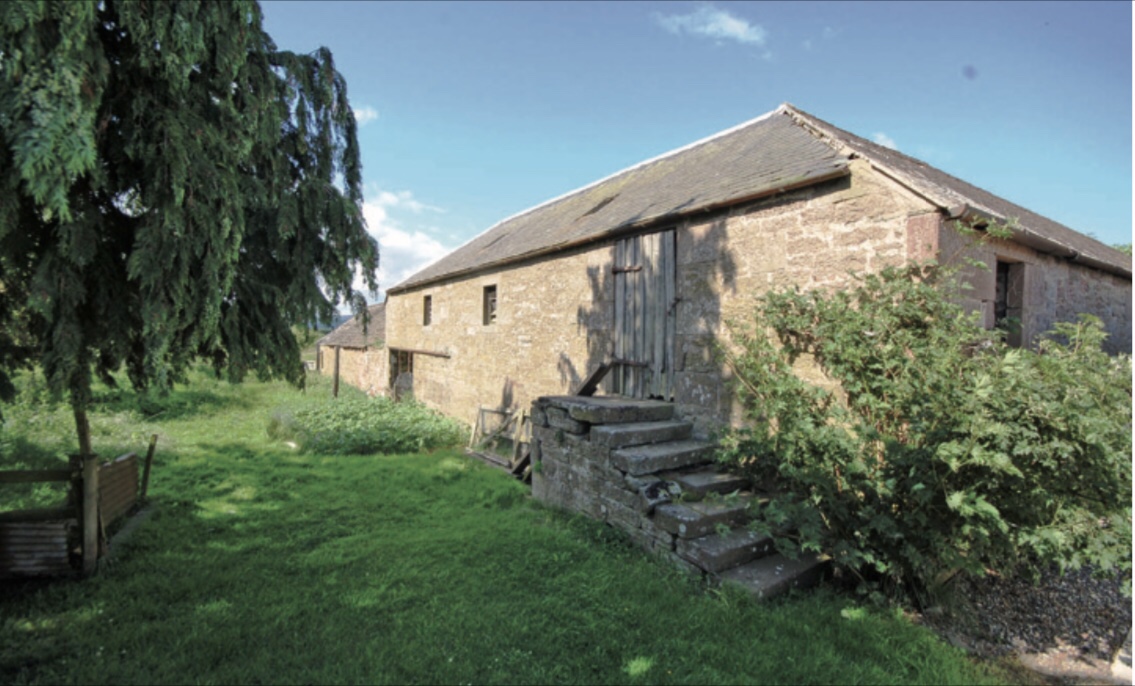
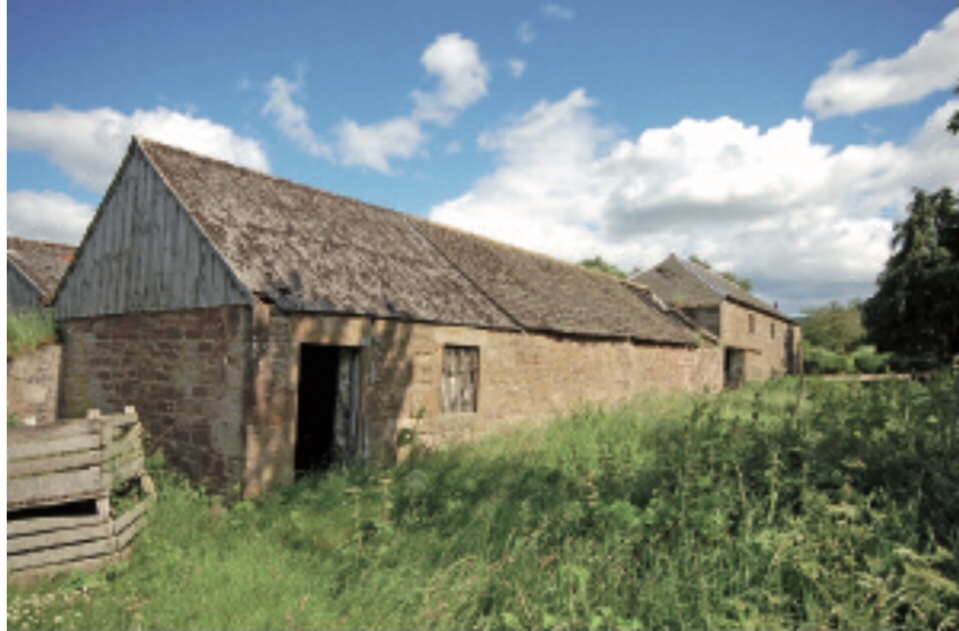
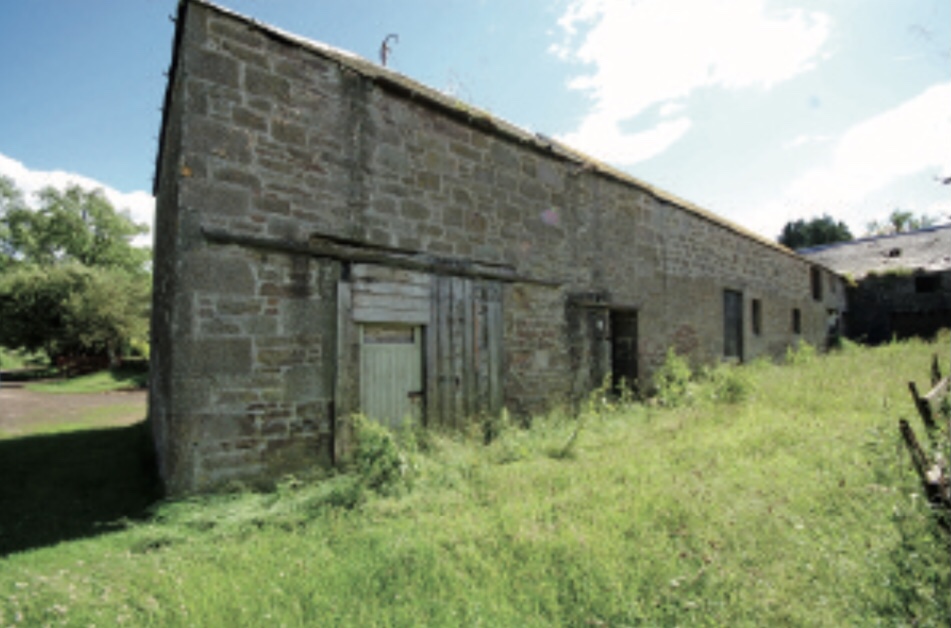
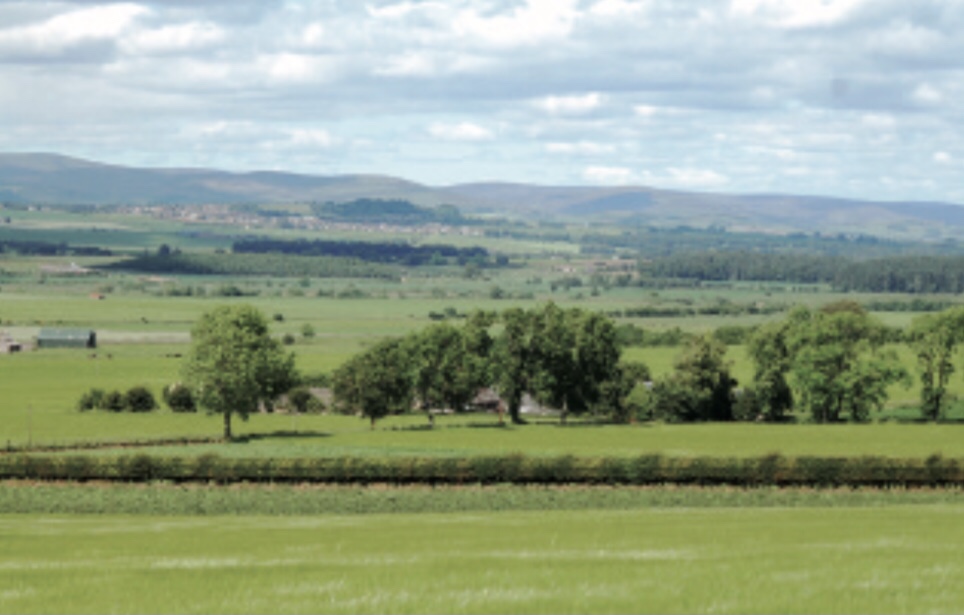
I was born on 16th February 1877 in the Parish of Eassie, at the farm of Balgownie in Glen Ogilvie, which is part of the beautiful How O’ Strathmore in County Angus, Scotland.
My father was a grieve (foreman) on the farm and my mother naturally worked in the fields, but to augment the small income she was also a handloom weaver, doing two jobs and rearing a family at the same time. Handlooms were in all the homes and apart from weaving for the families’ own needs, the women also worked for the textile merchants in Glamis and Forfar which are only a few miles from Eassie.
It was the small income and the Stewart family, growing both in number and appetite, that forced us to leave Eassie and seek a better means of livelihood in the town of Dundee, which was known at the time as a woman’s town, because its main industry was jute manufacture and the work of spinning and weaving was done by women.
I was two years old when the move to Dundee took place, so I was of little consequence, but my older brothers and sisters were reaching working age. The flitting to the town was made to secure employment and a bigger income for the family.
In town my father got a job as a carter with one of the delivery firms, driving a horse and lorry. There were no motors at the time. His main work was carrying raw jute, which was shipped from India in 2 cwt. bales, from the harbour to the mills. A hard, arduous job for which he was paid a mere 18s per week.
When we were children, we did not see much of my father, as he left home at five o’ clock in the morning and did not return until seven or eight o’ clock in the evening. He took with him bread, sandwiches and a flask of tea. If funds were good and he had twopence to share he would treat himself to a large bottle of ale, called twopenny, the common beer drink of the period.
My father was not a church goer, Sunday “claes” were expensive, but he religiously adhered to the Scottish sabbath as a day of rest. After six days of back-breaking toil his Sunday consisted of lying abe all day reading the newspapers.
My mother had a hard struggle to make ends meet. To feed a big family like ours, to provide the clothes, was no mean task. Our fare consisted mainly of porridge for breakfast, broth for dinner with an occasional treat of rice pudding, an evening tea of bread, butter and home-made jam. Clothes were handed down from the older to the younger children. Boots were worn only in the winter; in summer we ran barefoot.
Through all her troubles and worries my mother kept a cheery disposition. A lovely singer, she could be heard all day singing to herself as she went about her work.
I am the tenth child of twelve. I had three brothers and eight sisters. My youngest brother Willie was a carter. A hard-working, hard-drinking man. When he got drunk, generally on Saturdays, he wanted to fight policemen, an urge which on many occasions landed him in serious trouble. They say in Dundee that a drunk man is an honest man, so deep down Willie must have had a dislike of the police force- a dislike I have shared on many occasions.
Later in life I persuaded Willie to change his ways. He became a total abstainer and an excellent trade unionist. He was one of the founders of the Dundee Branch of the Scottish Carters’ association, which is now the Scottish Horse and Motormen’s Trade Union. I was quite a youth when the Dundee branch opened but gave what help I could. This was my introduction to the trade union movement.
My eldest brother Jock was a regular soldier. He served for thirty years in the army and fought in the Boer War and in the First World war. He said he was fighting for his country. My sisters used to kid him about this when he was home on leave, asking if he had got his farm yet. They said if he had been fighting for his country all these years, he was surely entitled to a wee farm out of it. No doubt he was, but like millions of other British soldiers who defended the rights of the British imperialists to exploit the world, all the land Jock ever got was the eight feet by three in which he found his last resting place. He could well have agreed with Cynicus’s famous carton of a graveyard: “Your portion: make the best of it. The Landlord’s got the rest of it.”
Brother Jim did a short spell in the Cameron Highlanders and trained in the Militia. The militias were county organisations and were used as army reserves. In times of industrial unrest, a common enough feature of these times, they were handy for the Establishment. Each county had its militia, from Aberdeenshire to the South. The training period for a militia man was usually one month, but when a man was finished in one county, he could move onto another.
Jim went one morning after breakfast and came home a year later at dinner time. In between meals he had sampled training in quite a few militias. Jim also liked his dram but differed from Jock in his drinking habits. Jock said he took his medicine regularly while Jim took his in bouts, one time drinking very heavily and then with periods of total abstinence. My horror of the booze was intensified when I spent anxious nights looking after him when he had the DTs.
My sisters, all eight of them, were hard-working lasses, weavers and spinners in jute manufacture doing a ten -hour working day and six hours on Saturday.
Betsy wed a mill ‘gaffer’ whom I taught to read and write so he that he could qualify for the gaffer’s job. She died when she was ninety-two years of age, a fully paid up member of the Communist Party. Georgina for many years peddled household goods in the country, married and had a family of twelve. One of her daughters Madge Hodgson, is a foundation member of the Communist Party and still does her share of party work. Georgina died when she was ninety years of age.
Mary had a tragic life with her husband, a roving ferocious Scotsman who was often “fou’ wi’” the booze. He was a ship’s stoker, and sailed with the Dundee whaling fleet for many years. Mary died at the age of fifty-three, the first break in the twelve.
Elizabeth was a barmaid, and finally emigrated to South Africa where I met her many years later. A handsome, capable lass who served the South African bourgeoisie well as cook or housekeeper and, I fear, imbibed much of its racial prejudice.
Maggie married a railway engine driver and a number of their family became members of the Communist Party. Jean married a carter, a grand player of the melodeon, who was much in demand for weddings. Many a merry evening was spent at her hospitable fireside.
Agnes, next in age to myself, was a mill weaver. A foundation member of the Communist Party well known in Dundee and a devoted sister and comrade, she was also for many years an active Co-op Guildswoman.
My youngest sister Annie is the only one still alive and has been in the USA for thirty years, married, with one daughter. I refrain from giving their names as it is a crime to be related to such as me in that much-advertised land of the free.
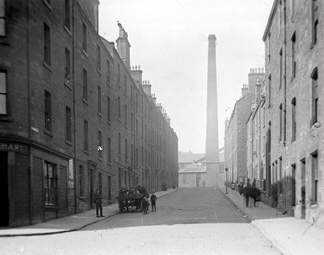
Our first house in Dundee was at 21 Lawrence Street, in a block of tenements, built like all the others, in close proximity to the jute factories. These tenements were built in flats or platforms very similar to the construction of most prisons. There were four ‘houses’, usually a kitchen with one or two rooms, on each ‘plat’. There were no lavatories, no baths or other essential amenities, but there was running water, naturally only cold.
We entered by a covered entry called a close, which led to a stair winding up to the ‘plats’, again in the best prison design. There was a ground floor and three stories which meant sixteen families to a block, many of them large families such as the Stewarts. In the courtyard stood an open midden for rubbish which was used by the males as a dry closet. The women used a pail indoors and later emptied the contents into the midden. The scavengers emptied the midden weekly, wheeled out the muck and emptied it on the street to wait for a cart to take it and its perfume for disposal.
The tenements from the other side of the street from ours were a bit more classy. They did not have the middens and had a WC on the stair landing. This we called the syrup side and our side the treacle side. Many years after we first moved to Dundee, the Stewart family managed to move to the syrup side.
I went back to the old tenement in 1962, when I was on a visit to Dundee. Eighty-three years had passed but the original tenements complete with ‘plats’ were still standing. The only change was that the midden had gone and one lavatory had been installed for each ‘plat’. That is one lavatory for four families.
Poor as our family was, we kept our heads high. In our kitchen and two rooms the males slept in one room and the females in the other and my parents in the kitchen. As both rooms led off the kitchen, however, the privacy was somewhat restricted. As some of the family married and set up on their own they left more breathing space for the rest.
Such was the Stewart family and its abode. A royal name without a royal income. A royal name without a royal residence. A hard-working family of men and women fighting for a livelihood in a Scottish textile, engineering and ship building town.
In Calton Gaol, may years later, in 1917, I wrote the following:
“In olden days, ‘tis written,
Their sires o’er Scotland ran,
Wi’ shield and spear and sharp claymore,
Made war on many a clan.

Wi’ rieving, robbing, ravaging,
They hewed their bloody way,
Until upon a throne they sat,
To wield their tyrant sway.

But pride o’ place and courtier’s grace
Are little to be trusted,
To brave the force of truth and right,
So the Stuart line was worsted.

And down the centuries grey and old,
New kings, new wars, arrangeth,
But now the Stewarts have wiser grown,
And bestial methods changeth.

Brave and free and fit to dee,
For justice truth and right,
They cannot see that these can be
Maintained by warrior’s might.

A cleaner road, though hard to tread,
They chose to travel through,
To free the earth from lust of war,
And shape the world anew.”
Bob Stewart’s Prison Rhymes.
 Breaking the Fetters