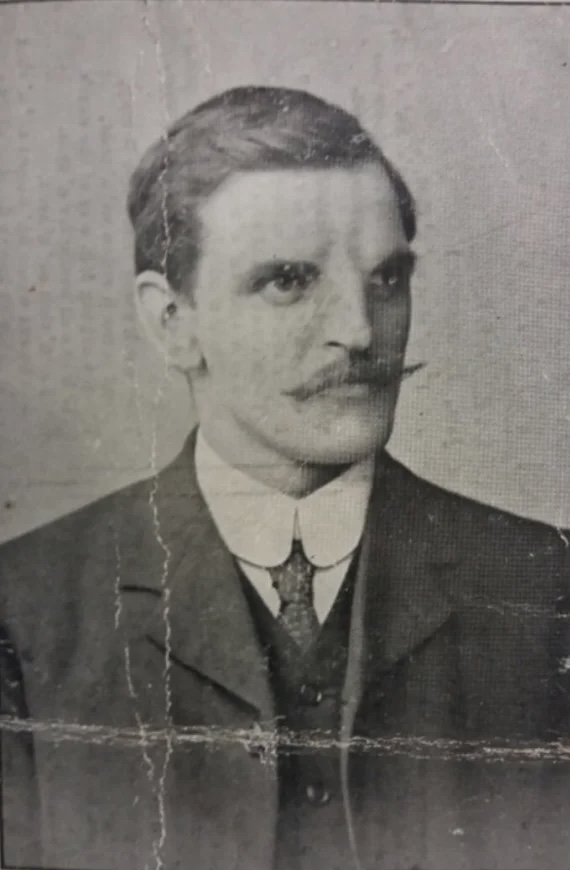

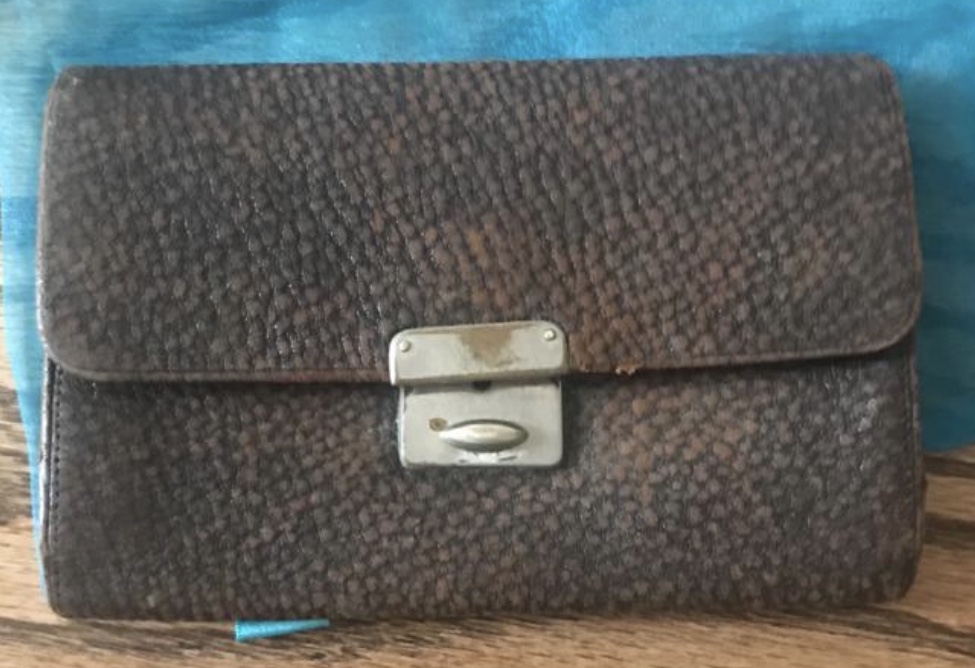
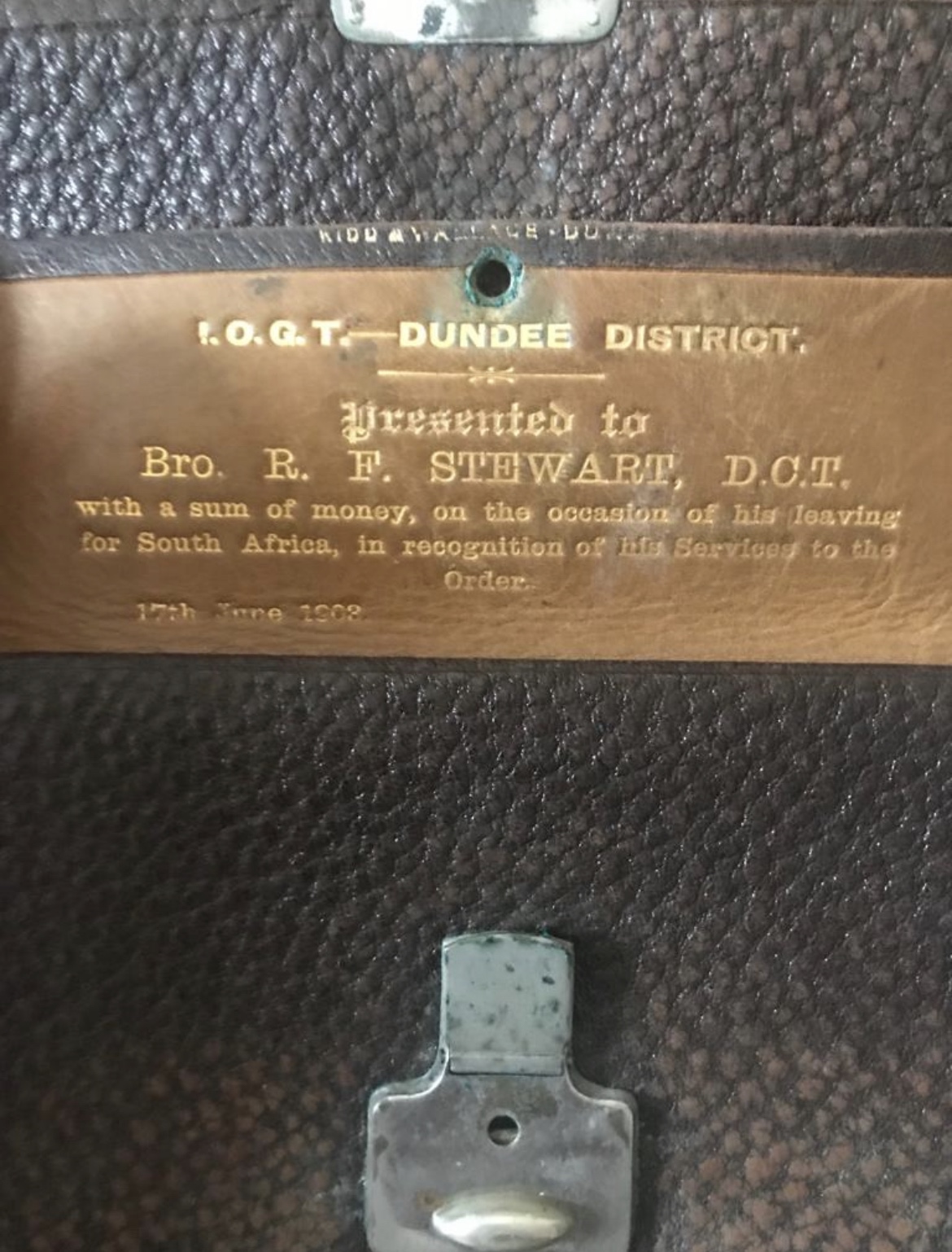
When I sailed for South Africa I got a present of a pocket book and a little money from the Templars, a Gladstone bag and a set of razors from the joiners in the Yard. At Cape Town, where I landed, my first visit was to my sister who was housekeeper to A. B. Reid, one of the protégés of Cecil Rhodes. Rhodes was the big imperialist and had a vast amount of satellite firms under his control- building works, contracting firms of all descriptions, transport firms and so on. A. B. Reid was one of the biggest building contracting men in South Africa. I met him during the visit to my sister’s and he advised me to stay in Cape Town and said he would give me work. However, I had promised my friend in Pretoria to go there and to me a promise is something you keep.
My first night in Pretoria I ran into the race question. I was out with my two pals, Henderson, the fellow who had sent me my fare, and another called Scott, who also came from Dundee. We were walking along the street when we came to a junction and met some Africans coming up the other street. They were big fellows and going along quietly, minding their own business. Suddenly Henderson, who was quite a small fellow, about five feet three inches tall, lashed out with his boot at these Africans and kicked one to the ground. I reacted by taking a swing at him and clouting him on the jaw, then demanded to know why he wanted to kick a man like that. He gazed at me in amazement. “Do you not know that Kaffirs must stand back and let us pass?” and I got a lecture on how the black man must be kept in his place and all the blah blah that we are so familiar with at the present time. But the lecture had no effect on me. I could not understand the line of reasoning that because the colour of a man’s skin was black he could not pass in front of you. I had never had a spare pair of boots until my apprenticeship was finished and therefore such “superior” thinking was foreign to my nature, and no doubt the reading of socialist and temperance books, which always had an international content, would wipe out any thought of a colour bar.
But I very soon discovered that the colour bar in South Africa was not only an idea in some people’s minds. It was a way of life. On public transport, in places of entertainment, even in churches, there was segregation, special places for whites and others for the blacks, and to my horror even the Templars had white and black lodges.
My first job was in the railway workshops but after a few weeks hundreds of men were stood off because for some reason supplies of material and money from Britain were stopped. So back I was, unemployed again. I worked on odd jobs for the farmers on the veldt, building stables and doing all sorts of joinery work. I also worked for a few weeks finishing bungalows and villas for British officers. The war had finished long ago, but it looked as if they were anchored. Another place to find work was in the rising shanty towns. Here ordinary British soldiers took over an African woman each, set up in a shack and sent her to work washing and cleaning for the whites, while they frequented the white clubs and pubs buying and selling land script. If one tenth of the tales I had to listen to at boarding house tables and in the “scoff”‘ houses were true, then many of the whites by their own boasting were a far from reputable lot.
But as the weeks passed it became brutally apparent to me that Pretoria was a place men were not coming to, but rather getting out of very fast. The cost of living was high and unemployment was rising rapidly. So I followed the exodus and made for the Cape, where living was cheaper although wages were lower. By this time I had had to flog nearly half my toolkit to keep going and the sun-tan of the promised land had begun to wear off- if it had ever taken on.
Back in Cape Town I attended the joiner’s trade union branch and the Templars lodge and got up-to-date with the local position- state of work, employers and so on. I was elected as a delegate to the Cape Town Trades Council and on occasions was on deputations to the ministries during industrial disputes, of which there were many, but the trade unions were still weak and ineffective. This weakness was aggravated by the attitude of the whites to the organisation of the coloured and black workers. My experience was that generally speaking the whites were not only against the blacks coming into the white trade unions but in many cases against the blacks and coloured being organised at all. There was a commonly held idea that they were too stupid to organise effective trade unions.
One morning, to the horror of all “decent” people, the blacks who loaded and unloaded the ships at Cape Town did not turn up for work. They also bunkered the ships running with their heavy loads of coal on their backs up the gangways. It made me sweat to look at them. They had a grievance, a very old one. They said, maninga sabenzi i kouna mali, too much work too little money. So they stayed on their location. The bosses tried to persuade them to go back to work, but always got the same answer, we want more money. The police, both black and white, surrounded the location. The parsons of all the churches prayed and entreated. The authorities offered the time-honoured dodge of setting up a
committee of inquiry. It was all of no avail. The blacks stayed quietly on their location and waited. Finally the bosses gave way and granted extra wages. This burst the bubble that the blacks were unable to organise.
I landed a job in a wood yard at Mowbray. A shipload of timber had come in and I had to supervise a gang of Africans who piled the wood, classified as firsts, seconds and thirds, in the sheds. I was constantly in trouble because I was told I did not drive the blacks hard enough. I saw they did their work; there was certainly no slacking; they worked hard and I rather liked them. They were a happy crowd and I noticed that they ate together and that many of them shared their meal pack with their less fortunate mates, something that seldom happened with the white tradesmen.
In the Cape wages were lower than up country. At this time Kruger, the Boer leader, had decreed that no white man should work for less than £1 a day, a very good wage then. But British contractors got over this by contracting men in Britain, Sweden and elsewhere for much lower rates, paying their fares to South Africa and then holding the men to their contracts while they were there. Because of this wages were lower in the Cape, approximately 14s. a day for tradesmen. Certainly the Kruger decree was never applied, but 14s. a day
was a good wage if you could get steady work.
Unemployment got so bad that demands were made for relief work for the unemployed. The Cape Town Trades Council waged a campaign on this and eventually succeeded. The unions paid unemployment pay, which was only IOS. a week and lasted for only thirteen weeks. Even the cheapest board for a single man was (2 a weck. It was because of this impossible position and the campaign waged by the Trades Council that relief work was started by the authorities.
Usually the relief work was strenuous manual labour, making new roads, excavation for new buildings, and such like. This is where many of the Africans got their own back. Firstly, because they had the same relief rates as the whites and, secondly, they were much better used to the handling of a pick and a shovel and the whites could not keep pace; no doubt this made a dent in some of the superior attitudes.
I was never reduced to relief work though many times I was next door to it. I passed through several jobs that lasted only a few weeks , keeping body and soul together. then came the news that there was to be an industrial exhibition in Cape town. All joiners heard this news with glee. We went down to the site and saw the foreman. Yes! He required plenty of joiners, but he said “What rate were you expecting?” “The standard rate,” I replied. There was a heated argument with the foreman who offered 10s. a day, a figure well under the standard. We could not shift the foreman. In face of this I suggested we hold a meeting and after some discussion it was agreed that a deputation go to see the management and make it clear that if the standard rate was not paid there would be no joiners to build the exhibition. The deputation soon returned with the answer. No more than 10s. a day. So I said, “Let’s all walk off the job,” and to give a lead my pal, a fellow joiner named Forest, and myself walked off. But we were the only ones who did. The rest stayed put. The men who stayed were good trade unionists but the employment situation was so bad they weren’t prepared to fight.
One night, feeling very low, I went to the Templars and found a cricket match on. I was asked to play and at the finish got talking to another player from the opposing side, Australian, “How’s business?”‘ he asked. No one asked “How’s
work? “I haven’t got any,” I replied. “I got sacked and I have no job at the moment.” He then told me a friend of his was fitting out a restaurant for his fancy woman and could do with a man to do various joinery jobs. Naturally I gobbled at this and was introduced to the friend, a shipping agent, who
was satisfied I could make the necessary alterations to the restaurant.
I measured up the job, started with the wood available, and sent an order to the saw mills at Salt River for more. Things were looking up. Then, out for a walk at lunch time, I ran into another joiner, a member of the union, who was really miserable. “Christ! If I could only get another job I would tell the swine of a foreman where to get off,” he said. “Well,” I replied, it was. “I have a bit of a job myself,” and I explained what “You can have half of it if you want.” “Good, wait there a minute and I’ll be back.” He went off like a shot and when he returned a few minutes later he was a different man. I don’t know what he said or did to the foreman but he certainly relieved himself of a burden.
The shipping agent and I got along very well. A lot of furniture and prefabricated counters, etc., came out from London. These had to be put together. There were ovens to be put in the kitchen, sinks and other plumbing work to do. In fact all the building tradesmen in my digs got into the scheme. Masons worked on the walls and cut out fireplaces, plumbers worked at the water fittings, joiners fixed the floors, counters, fretwork arches and so on. This kept us going for a few weeks. I had the right to purchase most of the material and came to an agreement with the suppliers from which I got a 5 per cent commission which supplemented my wages.
I never met the shipping agent’s fancy woman and I do not know how she fared as a restaurateur, but she got a first-class place, and several building trades workers gave her thanks for supplying them with work during very hard times.
I made up my mind while doing this job that I had had enough of South Africa. During my stay I had tried to send some money home to my wife in Dundee, but although I didn’t smoke and was strictly teetotal it was hard going. My wife, working in Dundee, was finding it difficult to make ends meet, so I decided to return home. With the money from the restaurant job I had enough for the steerage fare home.
On the boat home I found many like myself, some had been even worse off. The promised land had not fulfilled its promise. Many had done a spell of relief work and were bitter about their experiences. One interesting fellow I met was a Cornishman. Cornishmen are very common in South Africa, particularly in the gold mining areas. No doubt their tin mining experience had some value. When a Cornishman got a job he wasn’t long in asking the gaffer if he could find a job for his cousin Jack. So Cornishmen in South Africa are all called Cousin Jacks. This Cornishman on the boat had been the first to take a group of Chinese down the mines. There was a tremendous political row in Britain at the time about imported Chinese labour in South Africa: This was not only a reactionary racialist matter continuing the dirty ‘Yellow Peril’ scare launched by the German Käiser in 1900, but also a strong protest expressed in the resolutions of British trade unions and socialist organisations against indentured Chinese labour kept in compounds which they regarded as a form of slavery. But the Chinese never had intentions of working in the mines for low wages. At this time the African natives were prohibited from drinking intoxicating liquor so the Chinese got into a racket of making the liquor and selling it very profitably to the Africans.
The Cornishman gave me some very graphic details of life in the gold mines. The duration of life was not long even for the white artisans. For the natives it was only a matter of months or at best a few years. The dust, lack of sanitation, intolerable labour conditions and disease were dreadful reapers of human life, white or black.
I returned home more convinced than ever that a change in economic and social conditions was necessary. South Africa was certainly a land of promise for men of capital and money, but for ordinary workers like me it was hell. The great weakness of the workers’ organisations, trade unions and co-operatives, meant that in any labour dispute the boss invariably won. I had left Dundee well equipped with tools and clothes, a book of Burns’ poems and the Bible, transport paid for and all looking rosy. I squared my debt for my outward passage, left South Africa minus half my tools and arrived home a wiser and much more experienced man.
 Breaking the Fetters