
Today’s post is about Bob Stewart’s youngest child, his daughter Annie who was my dad’s aunt.
Annie, otherwise known Little Nannie or Nan was born in Dundee on 30th November 1913. Her earliest memories would have been those of her father imprisoned for refusing to fight; her mother bringing up the family with the assistance of a legion of aunts and the contempt in which the general public held conscientious objectors such as Bob. Whether there was sympathy for the family among her neighbours I do not know but the common opinion that ‘conchies’ were cowards and traitors would have been part of the atmosphere that she grew up in. There was talk in the press of banning COs from positions such as teaching lest they contaminate the young and many, many similar stories. A law was even passed in which they could be disenfranchised. Bob actually lost his vote in 1921, shortly after the Caerphilly by-election, when a jute merchant, John Willison, petitioned for him to be removed from the electoral register on the grounds that he had refused military service. Willison, a prominent Dundee Unionist, stressed that there was no political party behind his application and that he bore no ill will against Mr Stewart, it was simply that men of his ilk were “embittering people against doing their duty” and should face, “the full measure of the law.” So, from the time she was learning to walk to her first years at school Annie would have understood that her family stood for something and that the attacks these principles drew had to be stood up to.
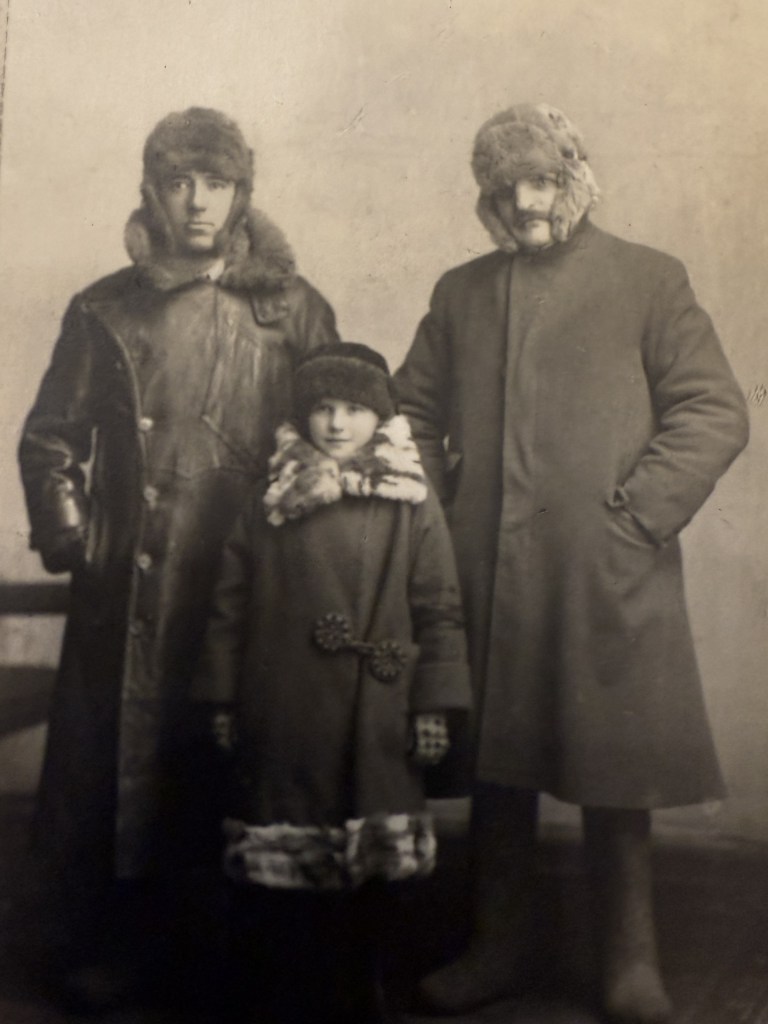

It was an unusual childhood. The Bolshevik revolution took place when she was four and it shaped the rest of her life. How could it not? In his study of CPGB members, Communism in Britain, 1920 – 39: From the Cradle to the Grave, Thomas Linehan points to the idea that the communist upbringing of ‘red diaper’ babies would help them withstand the future demands of capitalism but would also help prepare them physically and mentally to play a future role in the party organisation. It’s difficult not to view Annie as an example of this tendency. Bob went to work for the Comintern in 1923 and took Nan with him. At that time, travelling to the Soviet Union was not an easy task and not entirely legal. Whatever route Bob, Margaret and Annie took to get to their destination they would have risked arrest at certain stages and the journey would have been arduous and uncomfortable. The strangeness of leaving Dundee behind and settling in Moscow at the age of ten must have been overwhelming. In a Henry Sara slide taken at the Pushkin School she looks a little ill at ease and awkward amongst her classmates. However, the experience left her able to speak Russian – a language her parents never managed to learn.

The young Annie’s fluency with Russian is the focus of this remarkable news report in the Aberdeen Press and Journal dated 3rd June 1925:
WOMEN COMMUNISTS
Police Raid Glasgow Meeting.
GREETINGS IN SCOTS AND RUSSIAN.
Glasgow police raided yesterday the conference there of women Communists.
A demand for the names of the delegates failed to produce the desired results, and a request that each representative should speak produced remarks in braid Scots, Esperanto and Russian.
GLASGOW, Tuesday. Glasgow police raided the congress of women Communists in St Mungo Hall, Glasgow, to-day, five minutes before the dispersal of the meeting. Forty uniformed and plain-clothes men surrounded the hall, the plain clothes men entering the congress room. The visit of the police was regarded by the women as a comedy.
The plain-clothes men entered by the South York Street door. They swept aside the inner guard, and were confronted by Mr William Gallacher, who objected to the intrusion, and only four detectives and the aliens’ officer entered the congress room.
A Bit of Scots.
Immediately the presence of the police was known the women rose and greeted them by singing the “Internationale.” When quiet was restored, the police demanded the names of all the delegates present. This was refused, and the officers then asked that all the women present speak in turn, the request being made apparently for the purpose of detecting any foreign accent. This caused some hilarity, and Mrs Helen Crawfurd who presided shouted in braid Scots, “It’s a braw, bricht, meen-licht nicht the nicht, pipe clay, up the lum. Camarachanchoo.” Greetings in Esperanto were given by a delegate of Irish birth from Alexandria and an 11 year old girl, Nannie Stewart, daughter of the Communist candidate for Dundee at the last general election addressed the detectives in Russian. With her parents, she lived for some time in Russia and had been a pupil in a Russian school for about a year.
The officers then withdrew. Their search was obviously for the purpose of discovering if any foreign delegates, whose presence had been banned by the Home Office, were in the meeting.
The Girl’s Greeting.
Little Nannie Stewart told the Press that what she had said to the police was, “I don’t know what you mean, and I don’t care.” Asked what the police replied, she said, “I don’t think they understood me, because they never answered.” A remarkable sidelight on the intensity of the Communist instruction of the young was revealed in her remark, “They are a lot of moral cowards, any way.” The statements in Esperanto were interpreted simply as, “I thank you for your visit.”
Some of the women Communists were in terror, and Mrs. Crawfurd remarked, facetiously, that she thought it was a great compliment to the women’s section of the Communist Party that, while four detectives were considered sufficient for the main congress the previous day, over 30 officers were sent to the women’s conference. Others laughingly described the raid as “A rare sporting finish.”
The police refused to make any official statements.
I adore this article. As much as her youthful commitment to Marxist-Leninist revolution is apparent in this encounter, many decades later she became a resolute anti-communist – even going so far as to join the Conservative Party. And, after what she experienced – her husband murdered in Stalin’s purges with her and their baby son escaping by the skin of their teeth – who could blame her?
After Bob, Annie is the most important character in the book I’m writing. It wasn’t until recently that I realised I have never seen a photograph of her as an adult. I will have to do some more digging.
Alan Stewart.
PS – Many thanks, once again, to Maurice J Casey. This time for turning up the photographs of the Stewart family and their friends in Moscow in a newly discovered cache of letters belonging to Rose Cohen. For the upteenth time buy his book Hotel Lux!
 Breaking the Fetters