Long before I got caught up in my family’s communist past I was an East Anglian small town goth obsessed with The Sisters of Mercy. In 1987, at the age of fourteen, I begged my dad to let me go and see Ghost Dance, the band formed by Sisters co-founder Gary Marx at Lowestoft Pier. Alas, he thought I was too young and it was two years until I was allowed to go to my first gig (Fields of the Nephilim at UEA in 1989- they were ace!)
Anyway, Marx has been fairly low profile since the demise of Ghost Dance in the late 1980s. He was always my favourite member of the Sisters because he looked so fucking cool and, as so many years have passed, I thought I’d never see him. Until tonight. Gary Marx is playing and telling all.
I’m in Old Woollen in Farsley watching the heartwarming scenes of old faces from the 1980s Leeds goth scene greet each other while I nurse a pint on my own as I was unwilling to subject my partner to a level of detail about the early years of The Sisters of Mercy that I thought she couldn’t cope with. I admit I was wrong. I’ve spotted the parent of one of my son’s childhood friends in tow with his kid who’s now the age when I was most in thrall to the Sisters. The guy used to do their merch. I’ve already texted my kid to say it’s as if I dragged him along to a CPGB meeting. The show’s about to start so I’ll hold off for a while.
…………….
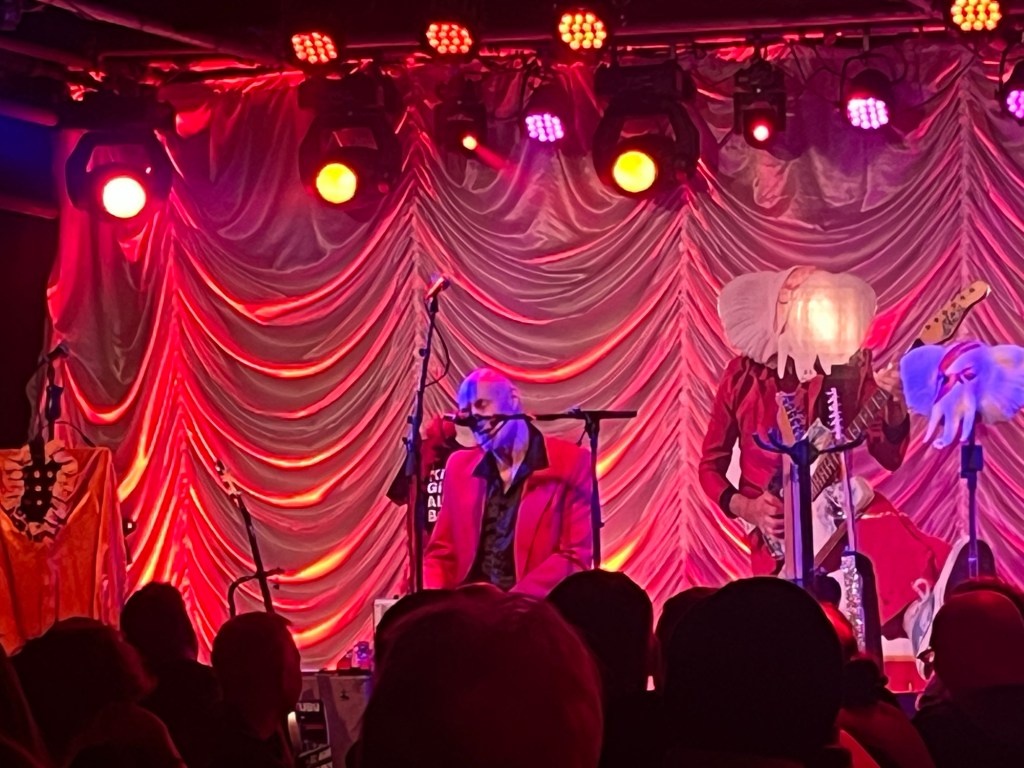
OK! He started with Anaconda, played the Damage Done and Adrenochrome, Burn was on there and the last song was Heartland- my favourite Sisters song of all time. The anecdotes were funny and he was an engaging performer. So why am I telling you all this?
They’re on the left. They’ve always been on the left. Since the days where their drum machine sounded like, as Jon Langford described, “a mouse tap dancing.” They came from a scene that included Gang of Four and The Mekons and, although they’re not explicitly political they’re actually consumed by politics. I wasn’t old enough to see the original version of the band but I’ve seen most incarnations and I’m heartened that they are defiantly supportive of their current non binary guitarist. Gary Marx is actually Mark Pearman, a pseudonym for the DHSS but to be honest all of that doesn’t matter right now.
I had the best time tonight.
Alan Stewart.
Postscript. Sunday evening. Countryfile’s on.
If the above post doesn’t make much sense it’s because I was slightly tipsy (understatement) when I wrote it. Now leaning into my hangover…
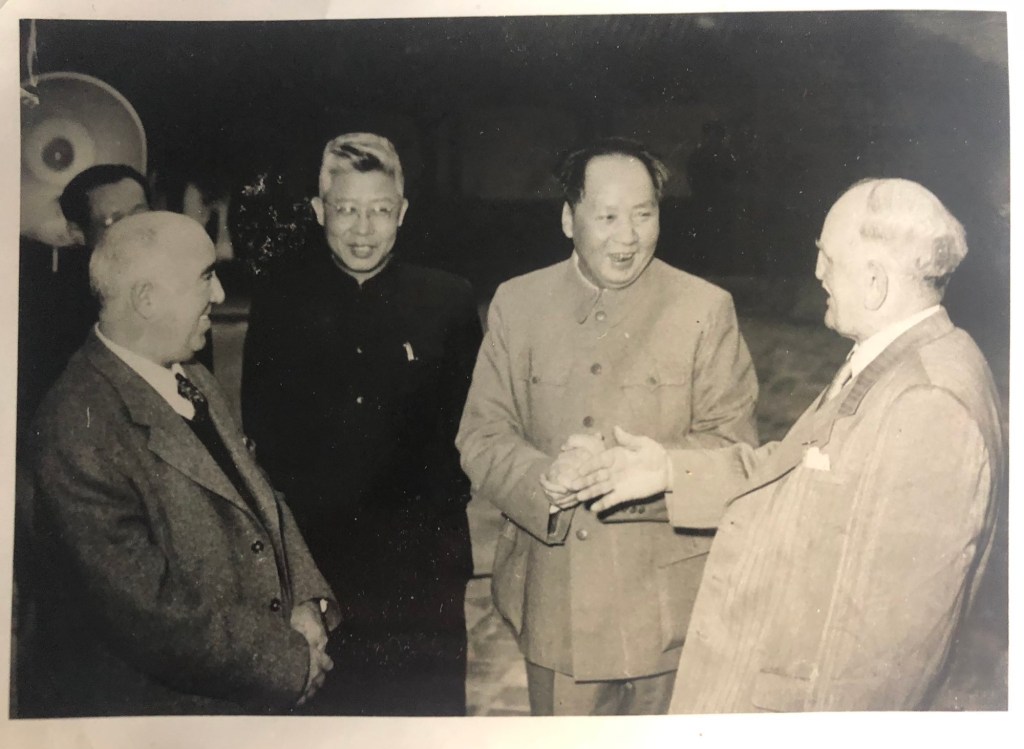
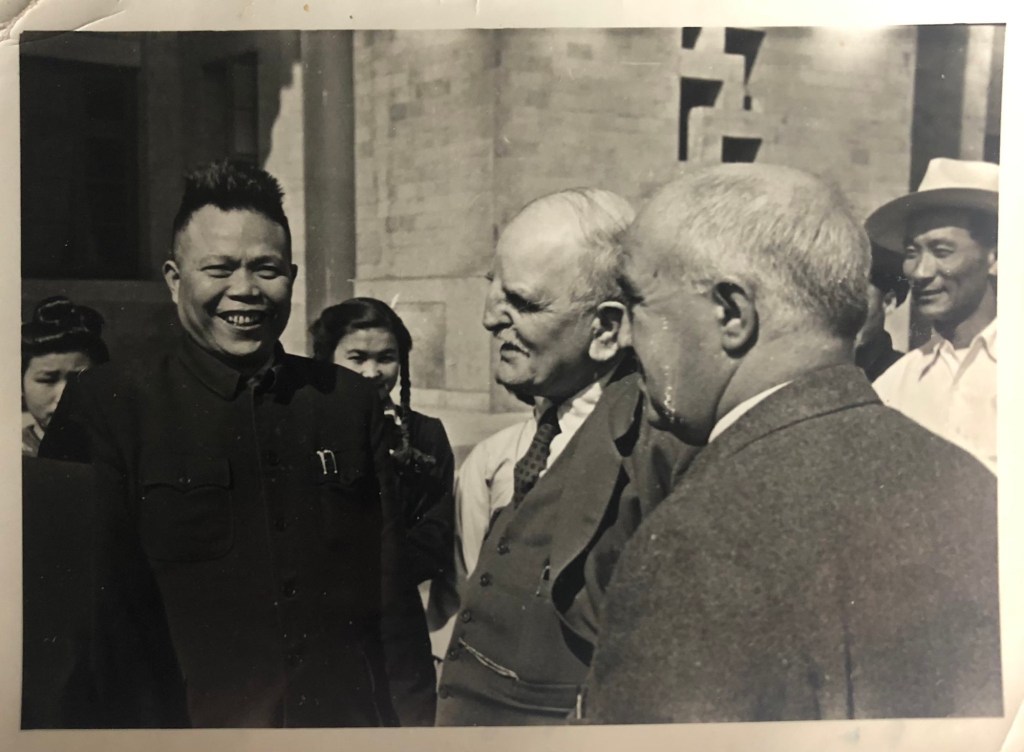
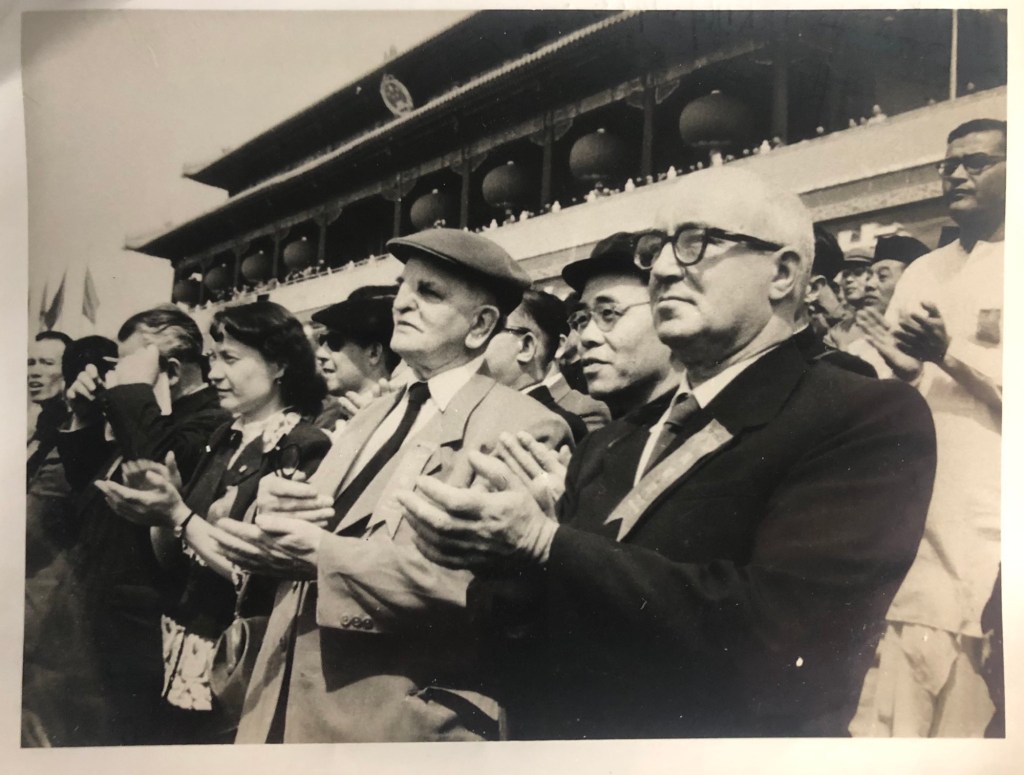
I thought I’d post some things that I’ve previously shared on Twitter/X. First of all here’s a set of photographs I found detailing Bob’s visit to China. It’s a particularly resonant event for me due to the ornamental walking stick which was presented to him when he met Mao Zedong. When my brother and I were children we were fascinated by it as it was beautifully inscribed with intricate black and red Chinese script. Dad told us these were quotes from Mao’s little red book; he mentioned some stuff about paper tigers and gun barrels but I didn’t really understand. Ian and I used to pretend it was a guitar to mime along to Beatles records with until, inevitably, the writing was completely worn away. Yet another significant historical artefact that didn’t survive intact. As he entered his last decade it became my dad’s walking stick. Now it’s leaning by my front door waiting for the time when it will be mine.
The first photograph is quite well known as it’s reproduced in Bob’s memoirs. He shown smiling and laughing with Chairman Mao. This one usually produces a “WTF?!” when I show it to friends.
Bob, his friend and General Secretary of the CPGB, Harry Pollitt and a Chinese official – if anyone out there recognises any of these people please let me know – I’ll be writing the chapter that includes this visit in a month or so.
Bob and Harry view a parade in Tiananmen Square.
I don’t know anything about this photo but it’s amazing.
And to finish, a transcript of Bob boasting about what he smuggled through customs on his return courtesy of the bug MI5 placed at CPGB HQ.
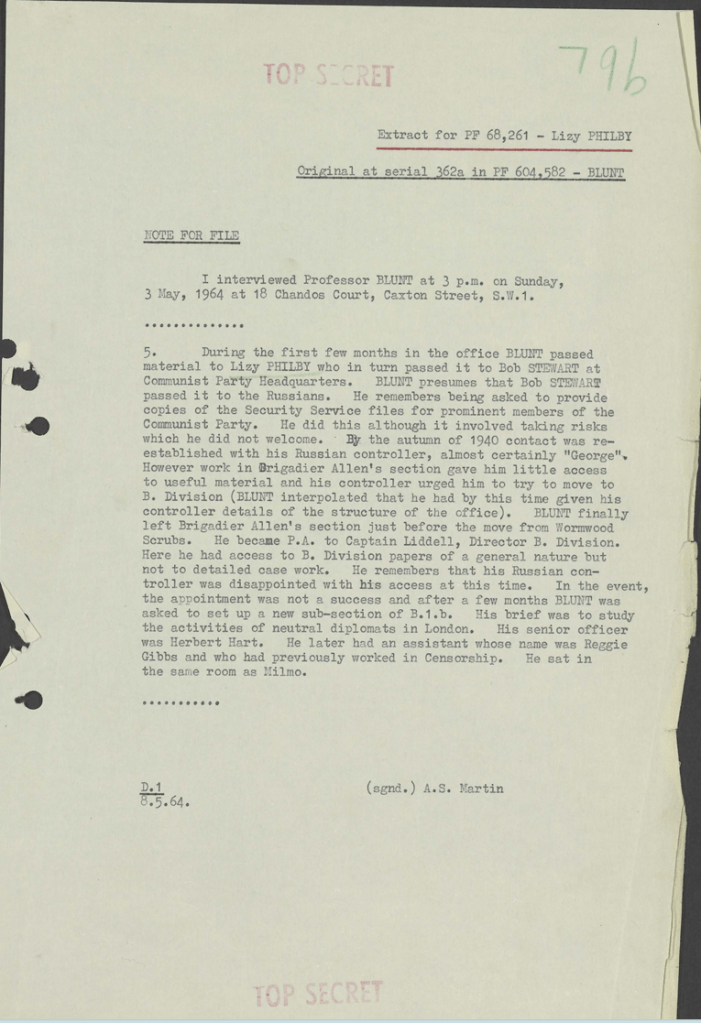
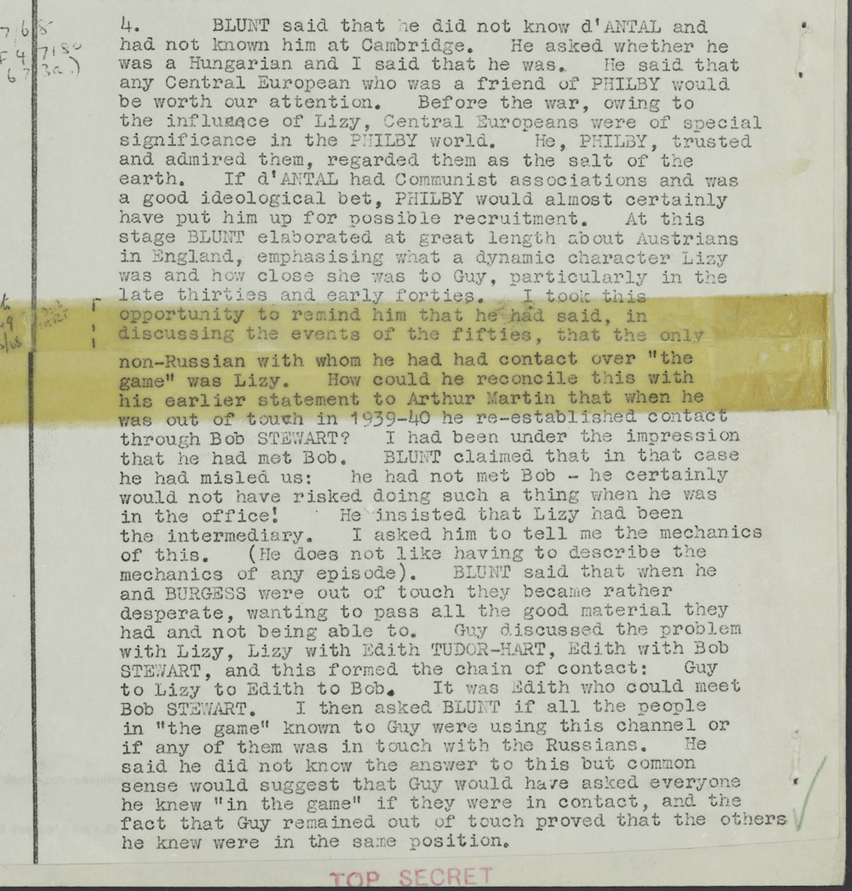
Notes from Anthony Blunt’s confession in 1964 where he mentions Bob Stewart’s role in the network.
On Tuesday I received a late Christmas present courtesy of The National Archives – a selection of previously secret MI5 files were made available to the public for the first time. This latest release of material is largely concerned with the Cambridge Five. There’s acres of material on Kim Philby, Anthony Blunt and John Cairncross as well as Philby’s first wife Litzi Friedmann. It couldn’t more opportune time as I’m currently attempting to write the first draft of the 1940s chapter in my biography of Bob Stewart.
I’ve known about Bob’s involvement with the Cambridge Five since I was a teenager in the 1980s; it was mentioned in Peter Wright’s Spycatcher. It’s been further outlined by security expert Nigel West who states in The Historical Dictionary of British Intelligence that, “in the absence of [their Soviet contact] Anatoli Gorsky in 1940, Stewart had run Blunt, Kim Philby, and Guy Burgess.”
Although it’s a minor part of the book I’m writing, I recognise that people are still fascinated by the Cambridge spies. I’m fascinated too. Recently, I loved the TV adaptation of Ben MacIntyre’s A Spy Amongst Friends which sent me rushing to the book; I recently finished the excellent Guy Burgess biography Stalin’s Englishman by Andrew Lownie (Burgess has always been my favourite since Alan Bates in An Englishman Abroad) and I’m currently rereading Enemies Within by Richard Davenport-Hines which argues that the whole affair shaped modern Britain. It’s always blown my mind that my great grandfather was involved. I’ve been trying to write about it for a while now but, as so much of the detail is, well, secret, I’ve found it very hard going. I am so relieved all this material is now easy to access. I had a quick scan through some files the other night and here’s a few things that I found.
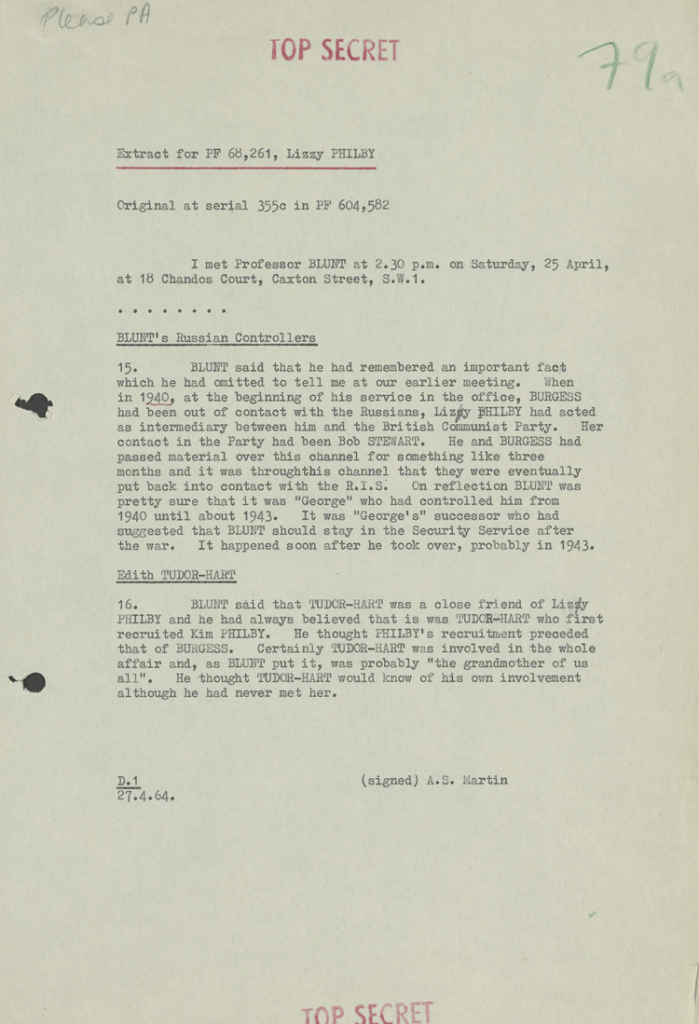
Bob’s involvement was first revealed when Anthony Blunt confessed in 1964. After this MI5 renewed their interest in Litzi Friedmann and, in one of the documents in her file, you get a fuller exploration of her and Bob’s roles,
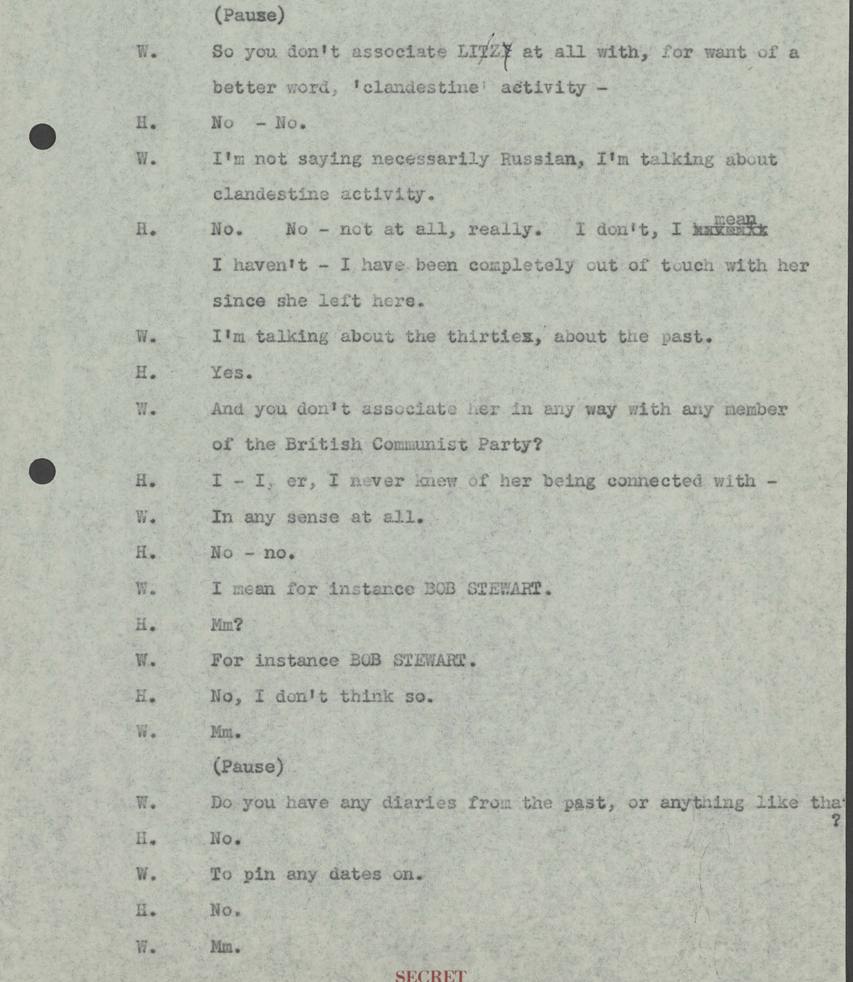
Also in Litzi’s file is the transcript of a lengthy interview in 1968 with Edith Tudor-Hart her friend and the woman who helped recruit Kim Philby as a penetration agent for the Soviets. I love her evasiveness in this passage.
Tudor-Hart’s interview was in 1968 as Blunt spent the years following his confession in endless debriefs with MI5. Here’s more information from one of those sessions.
So far all of this simply adds a bit more detail to what we already know. If I’m lucky there’ll be a bit more buried somewhere in this latest release although it might take a while to uncover it in the thousands of documents. In particular I’m hoping to uncover Peter Wright’s interview with Bob that he alludes to in Spycatcher. I’ll never uncover the whole story though. I’d need to visit Russia and gain access to the archives there. Given the world situation and the state of my finances there’s two hopes of that. Appropriately enough, one of those hopes is called ‘Bob.’
Alan Stewart.
The latest release of MI5 files by The National Archives is available here:
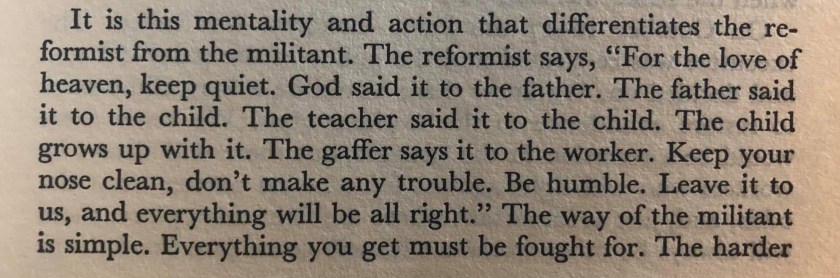
Extract from Bob Stewart’s memoirs Breaking the Fetters from which the title of my biography is taken.
I’ve not posted much on here lately and so before 2024 draws to a close I’d like to update you on what’s happening with the project. The reason for the lack of new articles is that I’ve been concentrating on finishing the biography I’m writing of Bob Stewart. It is tentatively titled Everything You Get Must Be Fought For and it’s about three quarters finished. Frustratingly, it has sometimes seemed that this is the book’s permanent state as work commitments get in the way but it will be finished. I’ m just wise enough now not to confidently say when that will be.
Back in January I handed my work in progress to Stu Hennigan, the author of Ghost Signs: Poverty and the Pandemic and his editing and advice was invaluable. Following his suggestions during redrafting has improved the book beyond measure and I’m very excited by the results. It might turn out that Everything You Get… will be something people will actually want to hold in their hands. If you haven’t read Stu’s book yet I urge you to do so as soon as possible – its an essential exploration of our recent history. I also can’t recommend his editing enough – sympathetically forthright is possibly the best description I can offer. I think he’s currently swamped with work and deadlines for his own writing at the moment but if, in the future, he announces he’s ready to take on more editing assignments I’d encourage any author to seize the opportunity of working with him. You can find him easily on Bluesky now that Twitter/X becomes a less attractive option with every passing day.
Early this autumn I entered the Elizabeth Buccleuch Prize. This is run by the Biographer’s Club and awards £2,000 to the best proposal for an uncommissioned first biography. Since then I’ve had little time to write and I’ve hit a patch where I’m stuck. I’m finding the 1940s very difficult to navigate and I’ve been pretty fed up with the whole thing. I had assumed that my proposal had got nowhere but yesterday, to my amazement, I received an email telling me that I had been shortlisted and the prize will be announced on the 11th December. I am overjoyed at this unexpected development – it couldn’t have come at a more opportune time. It’s all very exciting and I’m looking forward to the announcement. I am in some very good company. The details of the prize and the other shortlisted titles can be found here: https://thebiographersclub.com/elizabeth-buccleuch-prize-2024-shortlist-announced/
Before Christmas I hope to post a couple of new articles. First of all a few words on Hotel Lux by Maurice J Casey which is my favourite book released this year. I would be very pleased if mine were half as good when it’s finished. Also, I hope to do a Comrades post on Bob’s daughter Annie Walker Stewart or Nan as she was better known. There’s a magnificent newspaper story from the 1920s which features her as precocious young revolutionary which I’ve shared before on Twitter but which needs to be on the site.
Anyway, that’s it for now except to say thank you to everyone who has been so generous in helping me either in person or online. Keep your fingers crossed for me at the Elizabeth Buccleuch Prize announcement on the 11th of December!
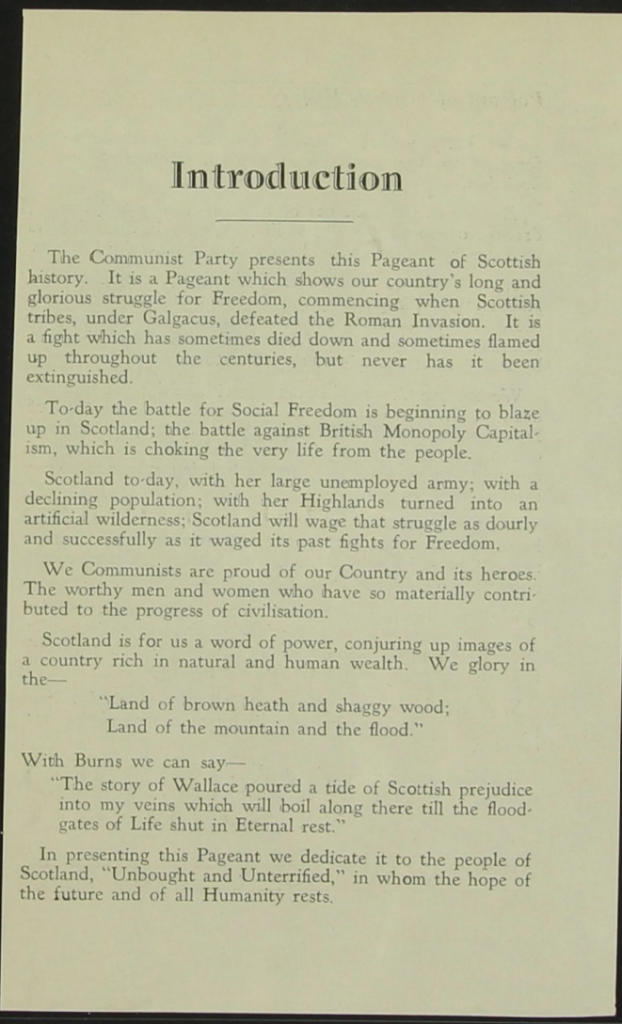
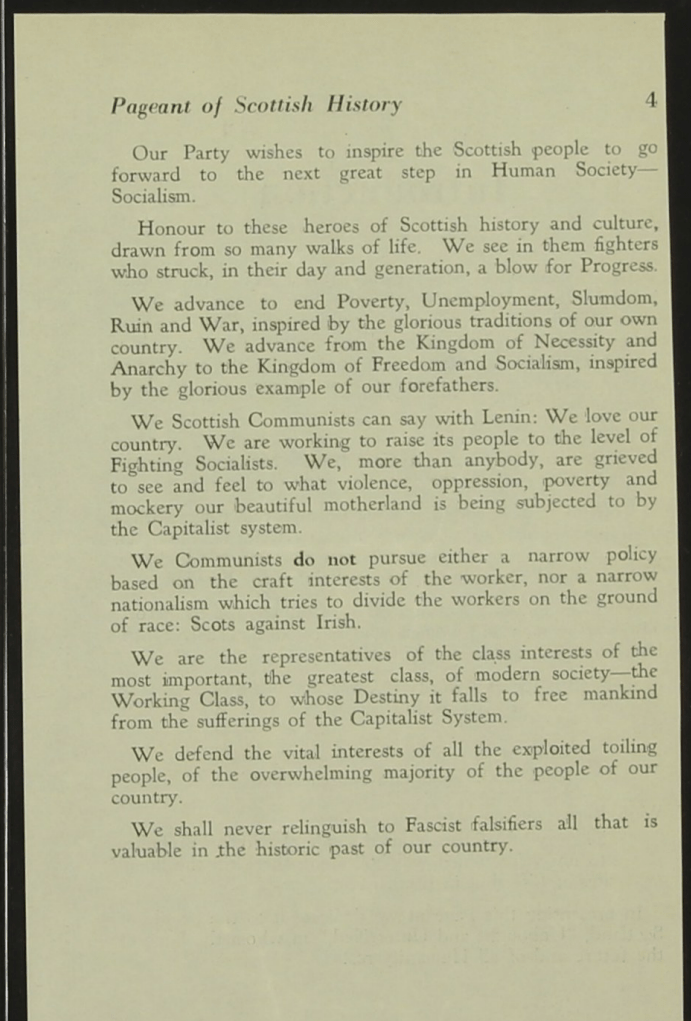
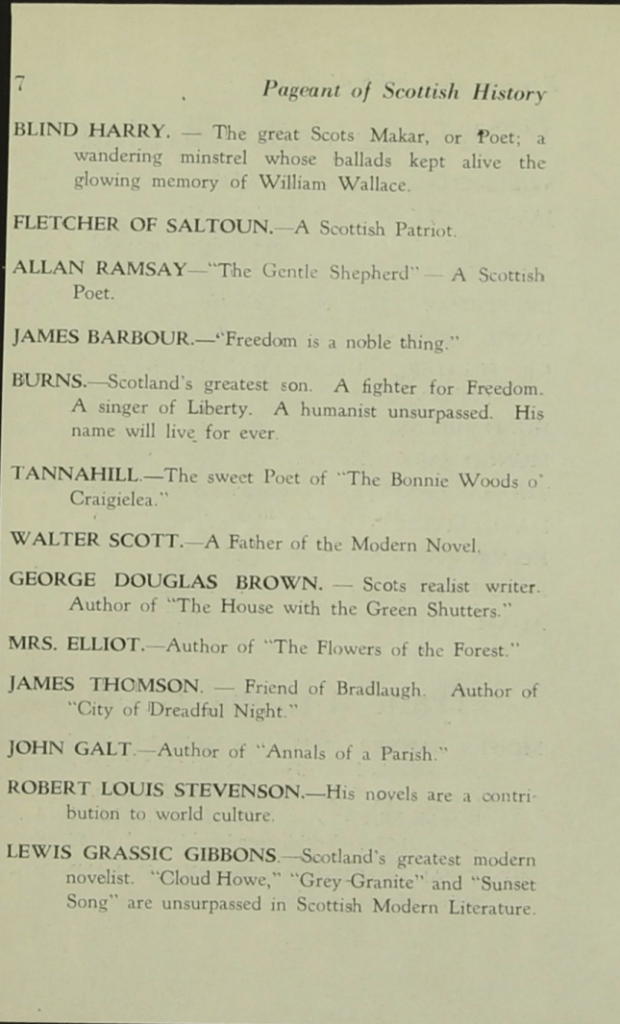
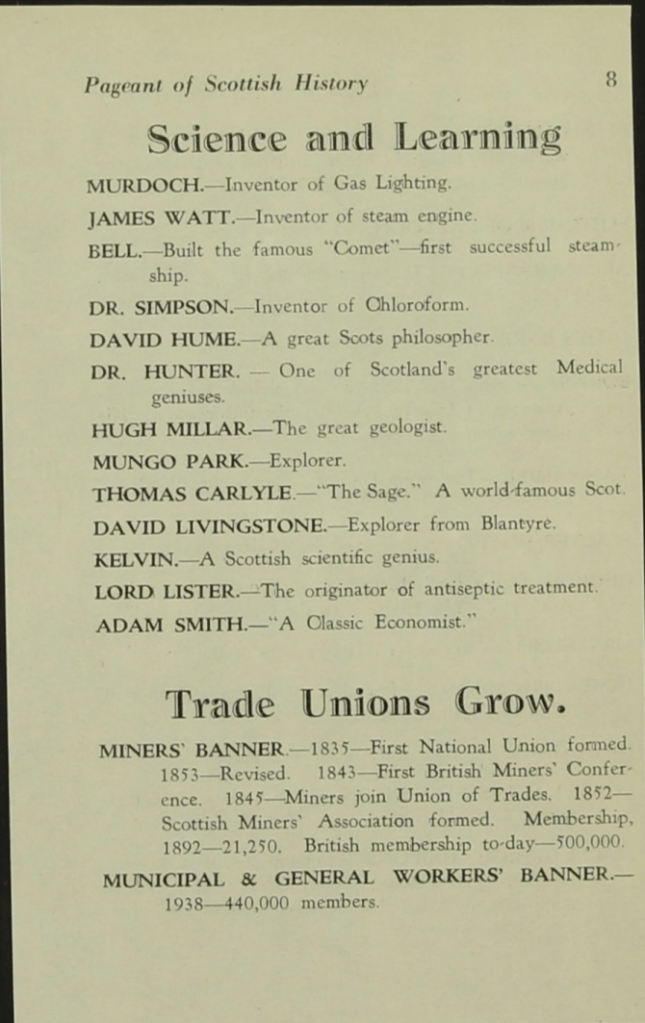
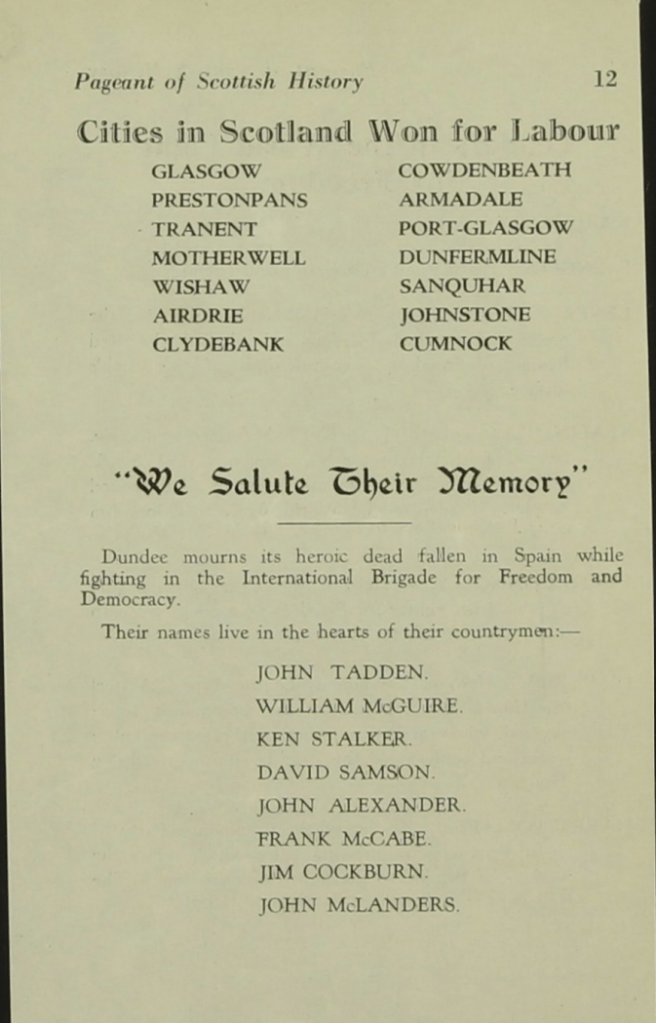
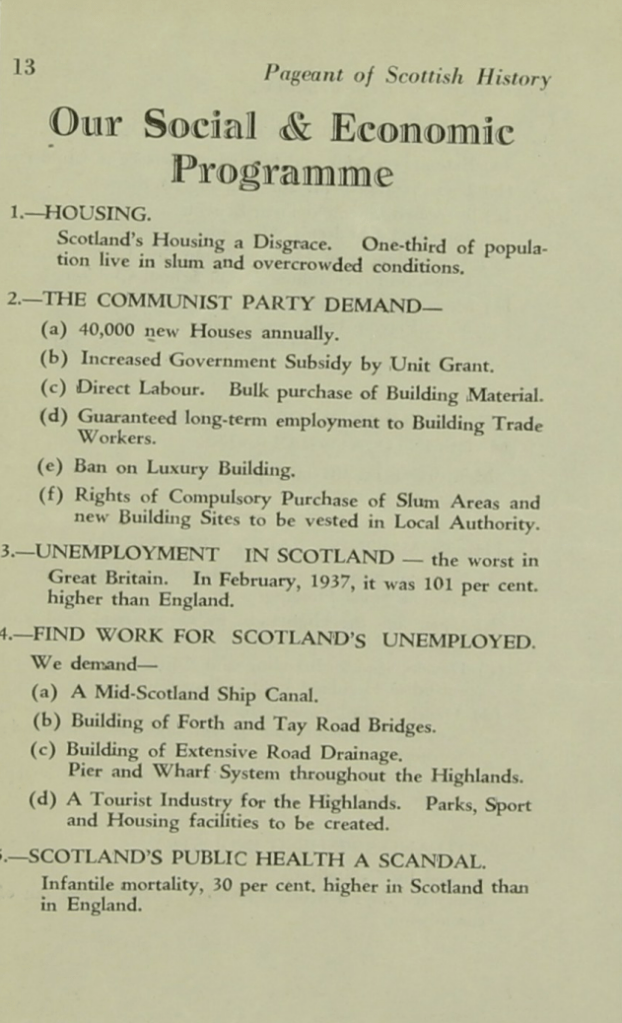
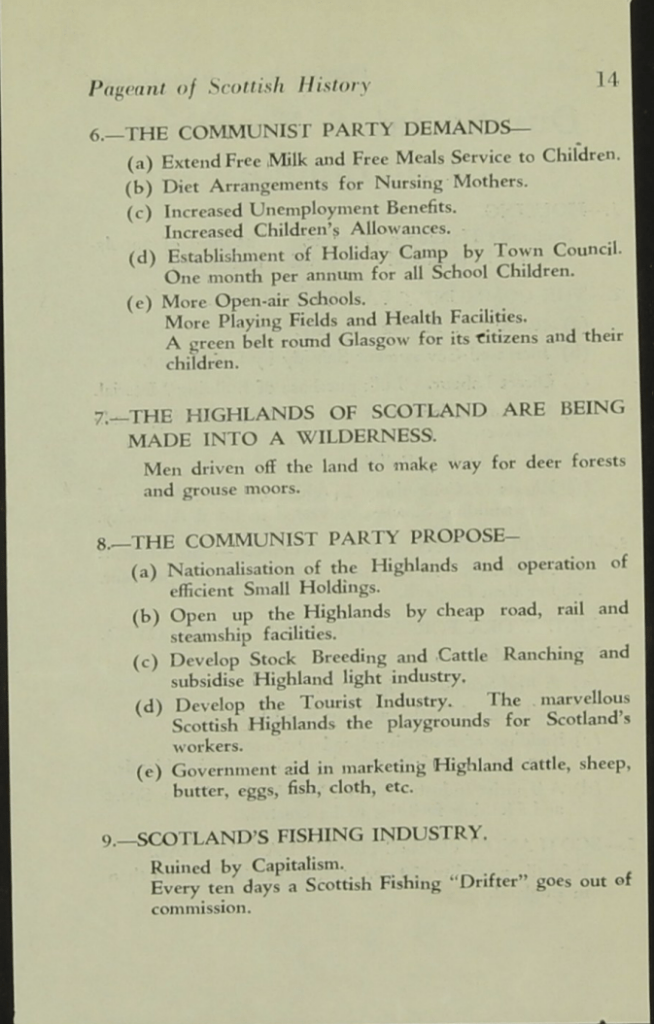
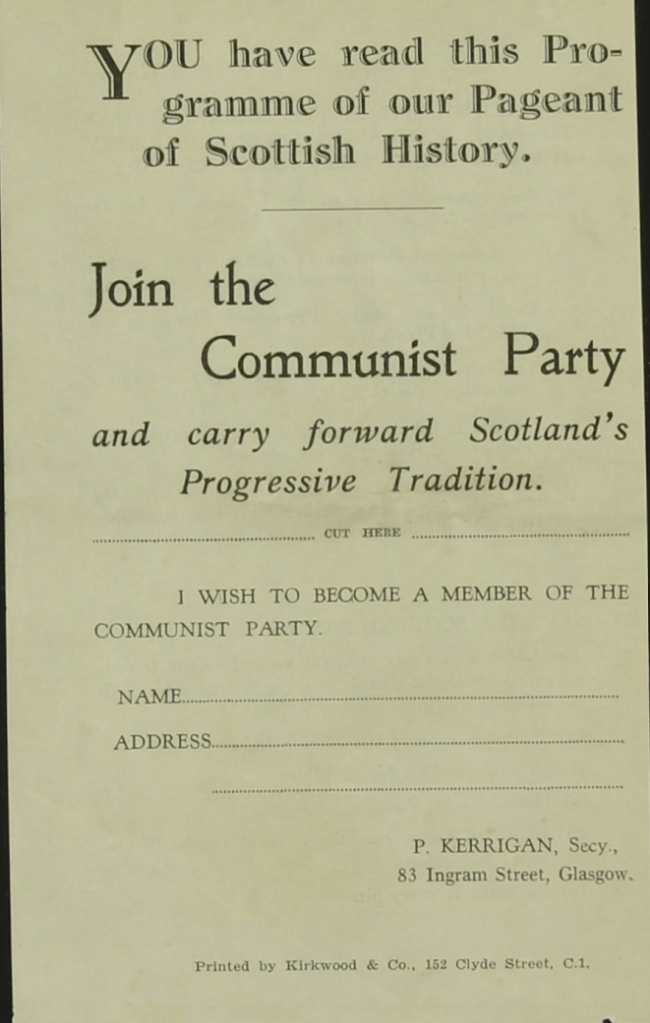
I found the following document – a celebration of Scottish history through a communist lens, in Bob Stewart’s files at the National Archives. Been waiting for an occasion to share it and today seems as good a day as any.
Bob Stewart pictured on a visit to Moscow in 1961.
The following article celebrating forty years of the Communist Party of Great Britain was written by Bob Stewart and appeared in the September 1960 issue of the journal Labour Monthly. At the time Bob was 83 years old and had ‘retired’ from active work three years earlier. The piece is written from the perspective of being one of the last men standing’ from the formation of the CPGB in 1920.
“HISTORY will record that the birth of a Communist Party in Britain was the outstanding event of the 1920’s. The fact that it was nearly three years after the Bolshevik victory of 1917 indicates the difficulties encountered and overcome before it saw the light of day. Small as the event appeared, it was nevertheless the political culmination of more than a hundred years of British working class struggle against the rule of the capitalist class. These years had inscribed indelible victories as well as many defeats on the banners of the oldest working class movement of Europe.
Along the years it built the modern Trade Union movement which despite weakness, sectionalism and betrayal is still a powerful weapon and a training ground for militant workers. It embraced Chartism which meant the intrusion into politics of revolutionary ideas and practices on a mass scale. It eventually cast off the manacles of the Liberal Party even if it is not vet free from their illusions. It gave birth to the Labour Party out of the strange assortment of Fabians, Independent Labour Party, Social Democratic Federation which became the British Socialist Party, the latter becoming a leading component of the Communist Party, and was itself affiliated to the Labour Party. Due to historic circumstances which I have not space to detail, the Labour Party has rejected a scientific outlook. It rejected Marxism, abhorred revolution, and has spent half a century confusing and befuddling the working class with hopes that capitalism would change its spots or at least let the right wing leaders of Labour paint them a different hue.
Necessarily capitalism imputed foreign parentage to the C.P. as it had done to Chartism and to early Socialist or other progressive movements. The mud refused to stick. The C.P. was bone and flesh of the British working class. Of course it had and is proud of its international connections. That also is a fine tradition of our class. The more immediate circumstances attending the birth of the C.P. may be thus described. Prior to 1914-18 and during the First World War there were outside of the official Labour Party many of the most class-conscious and militant workers who were split up amongst a number of more or less Marxist sects, e.g., the Socialist Labour Party, Workers’ Socialist Federation, South Wales Socialist Society, and many lesser bodies in various localities. These were largely concerned about the purity of their gospel. There were also the shop stewards, the workers’ committees and many unattached rebels, New Age readers, Guildsmen, etc. Amongst them were great agitators and strike leaders who had with Tom Mann and others headed the struggles of workers on Merseyside, Clyde and elsewhere before World War I.
August, 1914, saw official Labour, like official Social Democracy, dip their flags of red and appear in the flamboyant colours of the capitalists they were supposed to fight against. A sorry spectacle indeed, relieved if but a little by the few who kept the flag aloft. The course of the war brought hellish experiences to the workers. Along came Military Service Acts, which gave rise to an Anti-Conscription movement, Munitions Acts, Rent Acts, high prices. Out of these struggles the clamant need for unity, discipline and wider understanding was arising here, as in every country.
Then came 1917, and the glorious victory of the Russian workers and peasants. The movement in Britain was reborn out of the fires of war. On July 31 and August 1, 1920, after months of negotiation, a convention was brought together in London by the Joint Provisional Committee of the Communist Unity Conference, representing chiefly British Socialist Party, Communist Unity Group, South Wales Communist Council. (The unification was completed in the early months of 1921. The Leeds Congress in January, 1921, brought in the Scottish Communist Labour Party, whose leading members included William Gallacher and J. R. Campbell; while the left wing of the Independent Labour Party, including Shapurji Saklatvala, came in a month or two afterwards.)
At this founding convention in August, 1920, well-known figures included Bob Williams of the Transport Workers Federation, A. A. Purcell, Colonel Malone, William Mellor, Joe Vaughan, Arthur McManus, Tom Bell, William Paul and Albert Inkpin. Of the Provisional Executive elected I fear I am now alone. Some have done their day and passed on. Others sought other fields and have faded from my memory. The convention was serious and full of zeal, sharply divided on the question of affiliation to the Labour Party, but when Paul and Hodgson had finished debate and affiliation was carried the Conference agreed in unanimity. I recollect that after the convention finished on the Sunday, a group comprising Bill Hewlett of Wales, Bill Jackson of Sheffield, Frank Simpson of Perth, George Anderson of Coatbridge, Fred Douglas and myself from Dundee were steered by Jock Laurie of Aberdeen to what he called the ‘Merble Airch’. Before long we were spectators at a B.S.P. meeting. Jock said, ‘the speaker’s gey cauld’. Off he went and how he managed it I had not time to find out before I was hustled through the crowd and found myself making what I suppose must have been the first report back of the first Party Conference, which was received with great enthusiasm. Then to the train, where fate had delivered a very orthodox clergyman into our carriage, and did we baptise him!
That was our send-off. What have we to show for our Party over the years? Not enough but still a lot. We played our part in pulling capitalism’s hands off Russia. We backed and fought for British Miners when officialdom turned their backs and even their guns on them. We expelled even big Bob Williams for his part in the Triple Alliance betrayal of the miners. The defeat of the miners opened the way for attacks on engineers, textile-workers, seamen, etc. In all of these struggles our members were active. In the heat of these struggles some succumbed and left us for easier paths. We fought the opportunist heritage brought in by local Councillors or personal egoists. The Government of the day soon recognised the new type of Party. Raids were frequent, our General Secretary, Albert Inkpen, was arrested and sentenced, active workers, especially in the minefields, were doing time. Our organisation was still lamentably weak and sectarian. Printers were blackmailed into refusing to print our articles and pamphlets. We started our own printing works. Our editors faced libel and sedition charges, so that we needed a double shift, sometimes a treble one.
By 1924 we had our first taste of Labour Government, rather sourish at that. Johnny Campbell put the cat among the pigeons and very much upset MacDonald & Co. By 1924 we began to put new life into the trade unions through the Minority Movement whose secretary was Harry Pollitt, later Arthur Horner. So 1925 opened new economic battles. Government was compelled to subsidise mineowners and assume emergency powers. To prepare for the next round they arrested twelve of our leading members. They were found guilty of conspiracy to utter seditious libels. Six, with previous convictions, were given twelve months.
Six were offered release if they would forswear their allegiance. But one and all refused and served six months’ sentences. Further attacks on the miners were more than decent workers were prepared to put up with, so came the General Strike and wholesale arrests, office raids. This greatest confrontation of the classes in Britain in our time sent their leaders shivering to sell the pass and leave the miners to their fate. Fierce punishment befell the workers in consequence of this betrayal. Victimisation was common and hard, hard times kept knocking at the door. The miners survived their desperate ordeal. . . .
1929. Once again a Labour government which succumbed to American capitalist pressure. The defection of McDonald, Thomas and Snowden and their descent into a ‘National Government’ did not stop the economic rot. Unemployed relief was cut to the bone. These tested our membership and they withstood the pressure and nobly headed or fought in the ranks of the unemployed, joined in hunger marches, fought the police and won concessions. Meantime the German monopolists had been set on their feet again by American and British investments. But being unable to rule in the old way, they washed out the remnants of democratic practice and forged a rod of iron for Hitler to wield while they cheered him on to the fight against the growing Soviet power. Fascism reared its black flags in Britain too, but the working class showed its strength and routed it. In 1935 we scored a real Parliamentary success by the return of William Gallacher who by his Communist attitude did much to add to his own and the Party’s prestige. We led the fight and formed the British section of the International Brigade which saved the honour of the British working class in the battlefields of Spain. 1939: that fatal year that saw the outbreak of that most vicious war of the centuries. Here also our Party gave freely of its dearest and best to bring the war to a victorious end. When it ended the British workers’ stored-up anger burst through to the defeat of Churchill and placed their hopes on the Labour Government, which shooed them off with meagre reforms and played a sorry second fiddle to American big business so that once again our Party is leading the fight against further war.
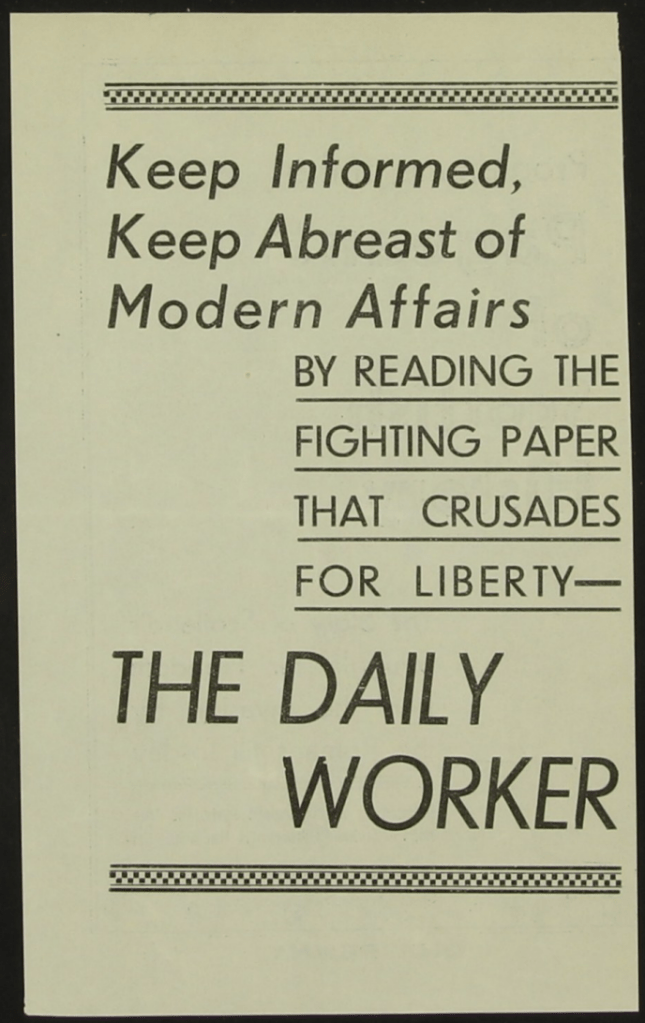
Now we have established the Party as a potent factor in British politics. Our numbers have grown. We have lost many brave and able leaders but we have raised able successors. Our camp of Peace grows daily and despite provocation we know that the forces of Peace will prevail. All our efforts are turned in that direction. Our literature is improving daily. Our Daily Worker is known the world over. We are no longer the feeble body of propagandists that we were in 1920 but a strong virile Party worthy of the class we find it an honour to serve.”
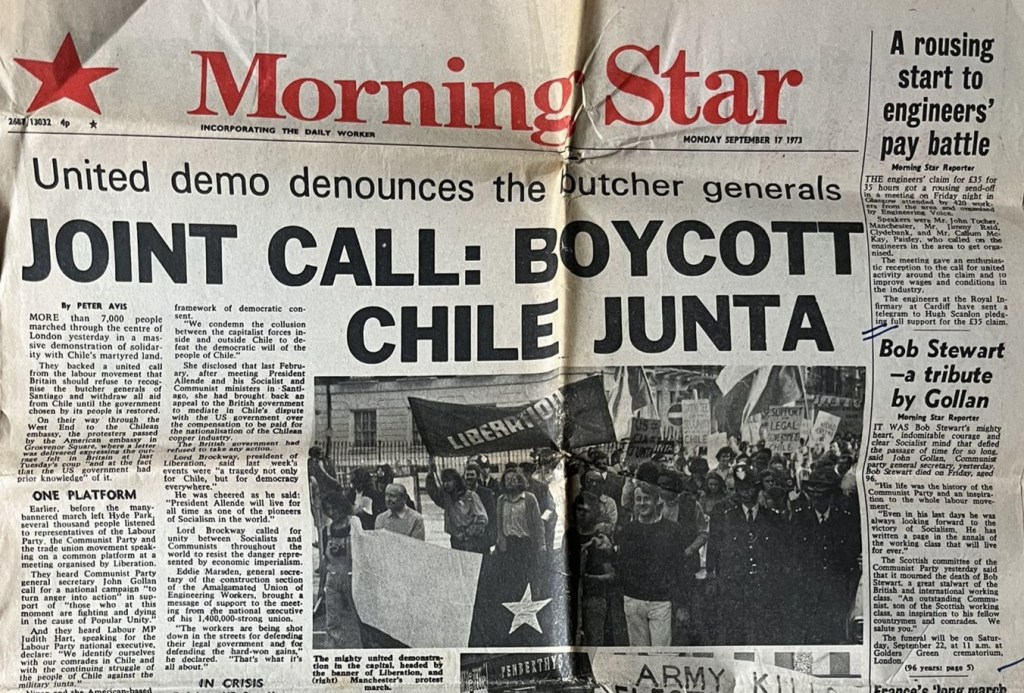
How Bob Stewart’s death was reported in The Morning Star Monday 17th September 1973.
It is the fiftieth anniversary of the death of our great grandfather, Bob Stewart. As a major figure in the early days of worldwide Communist movement in Britain, the news was announced in The Morning Star the Monday afterwards. The announcement shared the front page with the major news story of the time – anti Pinochet protests at the Chilean embassy. A week later the paper reported his funeral at Golder’s Green Crematorium. The following month, reflections on Bob Stewart’s life by his contemporaries Rajani Palme Dutt and Peter Kerrigan were printed in Labour Monthly. We reproduce them below.
Honour to Bob Stewart
With a deep sense of loss Labour Monthly joins in paying honour to the universally loved veteran and Grand Old Man of the British and international working class movement, Robert Stewart. Right up to the completion of the 96 years of his event filled and fruitful life he remained active to the last, despite disabilities to give inspiration, counsel and guidance to younger comrades. My personal memories of him are so close already as a foremost fighter before the foundation of the Communist Party and his leading role in its foundation and in all its battles, that my thoughts turned back to the joy and pride which I felt at an early congress when I had offered some suggestions as a rank and file delegate from the floor in the discussion and Bob Stewart in his reply from the platform referred to what I had said as constituting ‘the most useful contribution’ in the discussion. Praise from Bob Stewart was praise indeed. Bob was always for us a wise counsellor and guide, with a record of manifold struggles, and an indomitable spirit, equally in spells imprisonment or in positions of responsibility and leadership. Harry Pollitt justly called him ‘a model and an example to all of us.’ John MacLean, honoured by the Bolshevik revolution to be nominated as the Soviet diplomatic representative in Britain before recognition, and a very close friend of our journal, already in 1912 described Bob as ‘the finest propagandist in Scotland.’ When he was first elected by the Fourth Congress of the Communist Party to the Central Committee in 1922, the first Central Committee elected by the Congress as a whole, it was a measure of the universal respect for him that Bob Stewart was one of the seven members chosen. Alike in his fourteen years of service on the Central Committee, as a representative in the international movement, in his subsequent service on the Control Commission and the Appeals Committee, and in all his ceaseless activity in every field, and personal contact, Bob helped to shape generations of working class fighters. On his 83rd birthday in 1960, when various trends of ideas were arising among some sections, Bob gave his characteristic guidance: ‘The acid test for a socialist anywhere is his attitude to the Soviet Union.’ All the condolences of Labour Monthly are expressed to his family and relatives. The inspiration Bob Stewart has given us lives on, and will live on, through the years to come.
Rajani Palme Dutt
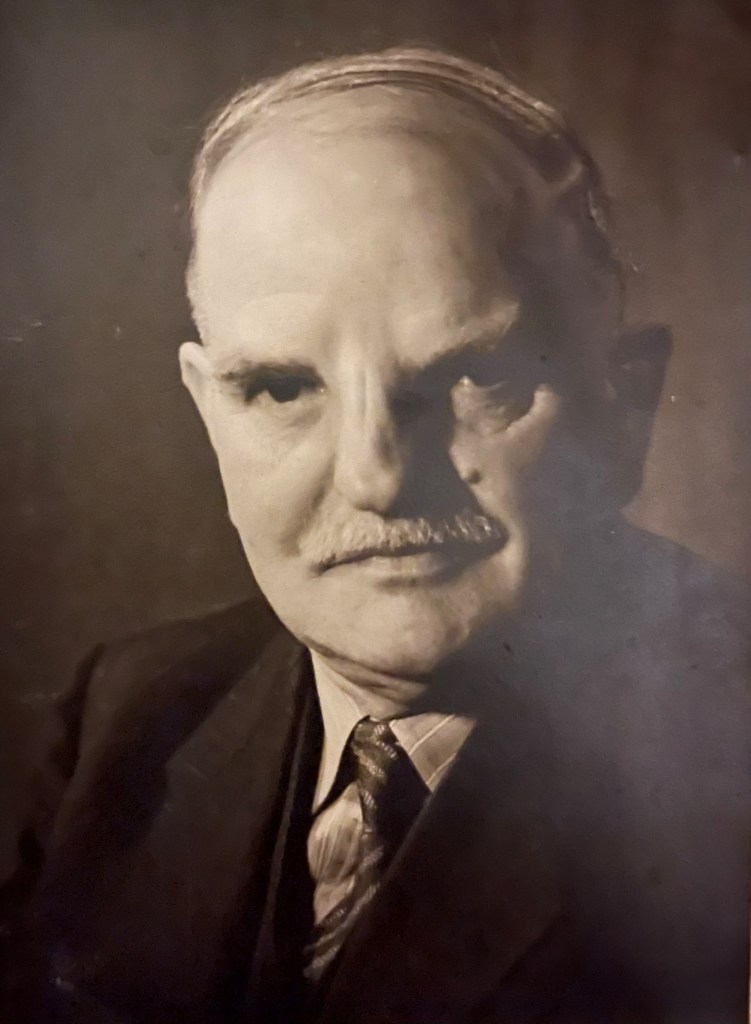
Bob Stewart: February 16, 1877 – September 14, 1973.
BOB STEWART’s death breaks one of the longest living links in a chain of revolutionary struggle bridging two centuries. Even a brief factual record of the highlights of his tempestuous career would fill many pages. Scottish prohibitionist socialist, skilled carpenter, trade union organiser, conscientious objector in world war one, four times imprisoned for his refusal to fight, foundation member of the Communist Party and its first parliamentary candidate at Caerphilly in 1921, for many years on its Central Committee, and one-time Acting General Secretary, delegate to the Communist International, active on South Africa and Ireland, always in the thick of the struggle whether as parliamentary candidate fighting Churchill in Dundee or elsewhere in mass demonstrations of the unemployed and at political meetings.
Bob carried on his varied activities with unflagging energy and enthusiasm, until a few years ago when advancing years and the onset of blindness confined him to his room. The documented record appears, complete with dates and brief explanations, in James Klugmann’s first two volumes, History of the Communist Party of Great Britain, and, in more detail, written by Bob himself in his autobiography, Breaking the Fetters, published by Lawrence & Wishart in 1967. I want to speak of him from my own personal experience because this may be a contribution to creating a more complete picture of the whole man.
I will always remember my first meeting with him. It was in 1921. I had been paid off from my job in engineering and was chairman of the Springburn branch of the National Unemployed Workers’ Movement. We held a weekly meeting in the Princes Picture House, with invited speakers like Pat Quinlan and others mentioned by Bob in his book. The speakers had to climb a ladder from orchestra stalls to a narrow strip of platform on which was a table and two chairs in front of the picture screen. Up the ladder came this man, with the striking face, a long, rather badly broken nose and piercing eyes.
My most lasting impression was the speech and method of delivery. No one I have listened to since could do so effectively what he did. He would break away from the main theme to make a witty or acid comment. Sometimes he would develop the point, but always he would return to the main content. The thread was never broken, and when he had finished you were left in possession of the case he was making in its entirety. Of course, there were better orators than Bob Stewart, men like Harry Pollitt, Willie Gallacher and Tom Mann, to mention only some. But he was supreme in the way I have just mentioned.
He had an undying hatred of capitalism and its oppression, and could be devastating in criticism when he felt it necessary. One example comes to mind during this period. It was 1922 in Glasgow, when he was Scottish Organiser of the Communist Party. At that time there were a number of Party members, of whom I was one, who were strongly opposed to the Party decision to apply for affiliation to the Labour Party. We were at a Party conference and Bob read out the letter of resignation from one of them, which ended by saying that in the meantime he proposed to go back to his books. I shall never forget the way he spoke of anyone dropping out of all activity. and ‘going back to his books’ in the situation then confronting us. On the other hand, Bob was always prepared to help us younger, inexperienced and impetuous ones, with guidance and advice. He would listen carefully and then deal with the arguments showing how the particular problem could be solved, and often with a personal example or anecdote.
Bob was always a staunch trade unionist from his apprenticeship days when, in his last year, he joined the Amalgamated Society of Carpenters and Joiners. He was elected to the yard management committee at Gourley’s Shipyard, Dundee. However, he left because the employers offered to continue his job for a year at the improver’s rate ten shillings below the basic journeyman’s rate. From job to job, until, back in Dundee again, he became shop steward at Gourlay’s where he also worked on building the Discovery, which took Captain Scott on the national Antarctic expedition. It was in this period that Bob met and married Margaret Lang, and commenced a partnership which lasted till her death forty-eight years later, and to whom he pays tribute in the foreword to his book. I suppose in one way the high point of Bob’s earlier trade union activities came in 1915 during the first world war when he became local organiser of the Scottish Horse and Motormen’s Union, at a wage of 30 shillings a week, and went back into the trades council as a delegate. He would have been about 38 years of age at the time. He lost that job when, in 1916, he received his first prison sentence for having conscientious objections to killing his fellow men in an imperialist war and refusing to do military service.
I have dwelt briefly on these aspects of Bob Stewart’s career because the more outstanding political features are on the record and are better known to those who have been colleagues or have studied the history of the Communist Party and the British labour movement. Bob was an outstanding political leader, tested many times in class battles. He was a staunch internationalist and life-long friend and supporter of the Soviet Union. As I will always remember him, he was a great humanist, whose memory will be cherished as long as we who knew him live.
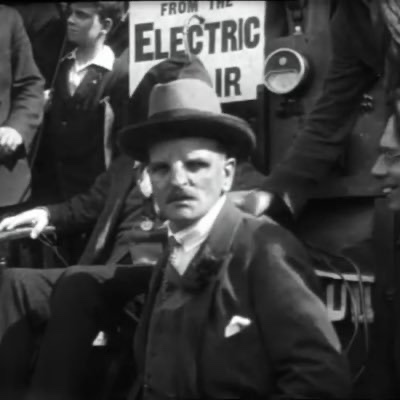
The ScotsmanJim LarkinShapurji Saklatvala Bob Stewart
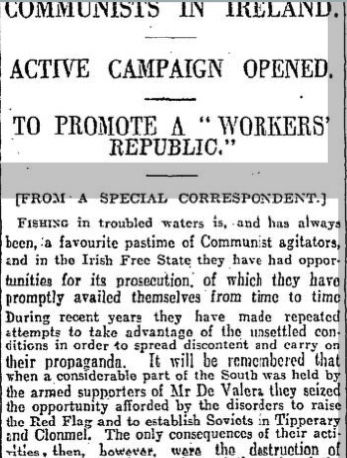
At the moment I’m working on a biography of Bob Stewart. Hopefully this will build on what he revealed in his memoirs and will offer a fuller picture of his political and clandestine life and how this affected his family. I’ve just finished writing a chapter on his activities in Ireland in the 1920s when he was tasked with trying to set up an ‘Irish Marxist Party’. As part of the research, I came across this news article from The Scotsman that hopefully gives a little more of an idea of how Bob’s activities were viewed at the time.
Alan Stewart.
COMMUNISTS IN IRELAND.
ACTIVE CAMPAIGN OPENED.
TO PROMOTE A ” WORKERS ‘ REPUBLIC . “
(FROM A SPECIAL CORRESPONDENT.)
Fishing in troubled waters is, and has always been, a favourite pastime of Communist agitators , and in the Irish Free State they have had opportunities for its prosecution, of which they have promptly availed themselves from time to time. During recent years they have made repeated attempts to take advantage of the unsettled conditions in order to spread discontent and carry on their propaganda . It will be remembered that when a considerable part of the South was held by the armed supporters of Mr De Valera they seized the opportunity afforded by the disorders to raise the Red Flag and to establish Soviets in Tipperary and Clonmel . The only consequences of their activities then, however, was the destruction of creameries and other works and the ruin of the workers.
Subsequently there was a lull in the Communist propaganda, although now and again Mr Jim Larkin and a few others made efforts to instil life into the movement. Larkin has been twice at least in Russia during the past eighteen months, and the fact that he is a welcome visitor there is in itself significant . He claims to be a recognised link between Moscow and Ireland, and to have been appointed to some sort of official position as a delegate or deputy from the Bolshevists to the Free State.
A DANGEROUS DOCTRINE.
Lately there has been a revival of Communist agitation, and an active campaign has now been inaugurated in Dublin, where a public “demonstration” has been held beneath the folds of a Red banner said to have been sent by “the Russian proletariat” to their “Irish comrades.” The chief speakers at this “demonstration” came from Great Britain. They were Mr Saklatvala , the Communist MP for North Battersea and Mr Robert Stewart , of Dundee. Mr Saklatvala (who spoke for nearly two hours) declared that the revolutionary method was the only one that would befriend the working classes and Mr Stewart pledged himself that before the end of next month an organisation will be established in the Free State for the promotion of a Workers’ Republic. Mr Stewart, who recognises, as Irish agitators have done before, the value of land hunger as a , political weapon, appealed to workers if they wanted land to take it, and legalise their action afterwards. A dangerous doctrine and all the more dangerous that it has always been a popular one among a large class in Ireland. One of the troubles which the Free State government is experiencing arises from the illegal seizure of land in some of the Western counties at this moment.
While the Government do not, it is understood, take the Communist irruption into the Free State very seriously at present, they are watching developments with great care. They recognise that the real danger of the campaign which has been inaugurated lies not in its political propaganda, however pernicious, but in the possibility of resort being made to the weapons of terrorism and violence. Any association with Moscow cannot fail to be disquieting , especially at the present juncture.
The Scotsman Friday 24 April 1925
POSTSCRIPT
A shorter version of the story appeared in the Irish Weekly and Ulster Examiner on Saturday 25 April 1925.
A Workers’ Republic
Addressing a meeting in the Mansion House on Sunday Mr. Saklatvala said the revolutionary method was the only method that could befriend the labouring classes. They seeded a great revolutionary measure by which boards of directors could be set aside and representatives of the working class take their places. British Labour betrayed the Irish workers when they were fighting for their freedom.
Mr. Bob Stewart, Dundee, said if the workers wanted the land of Ireland for the people they must take it and legalise it afterwards. Before the end of May he would have established in Ireland an organisation whose object would be a Worker’s Republic.
Our great grandfather Bob Stewart – founder member of the CPGB, Comintern agent and, in the words of Wikipedia, ‘spymaster’ was born on this day in 1877. To mark the occasion last year we posted photographs from an album celebrating his 70th birthday with portraits taken by Edith Tudor-Hart. We have similar albums from his 75th and 80th birthdays which we’d like to reproduce in the same way but I need to pull in some favours from my photographer mate first. In the meantime, here’s a few birthday related items from the archives.
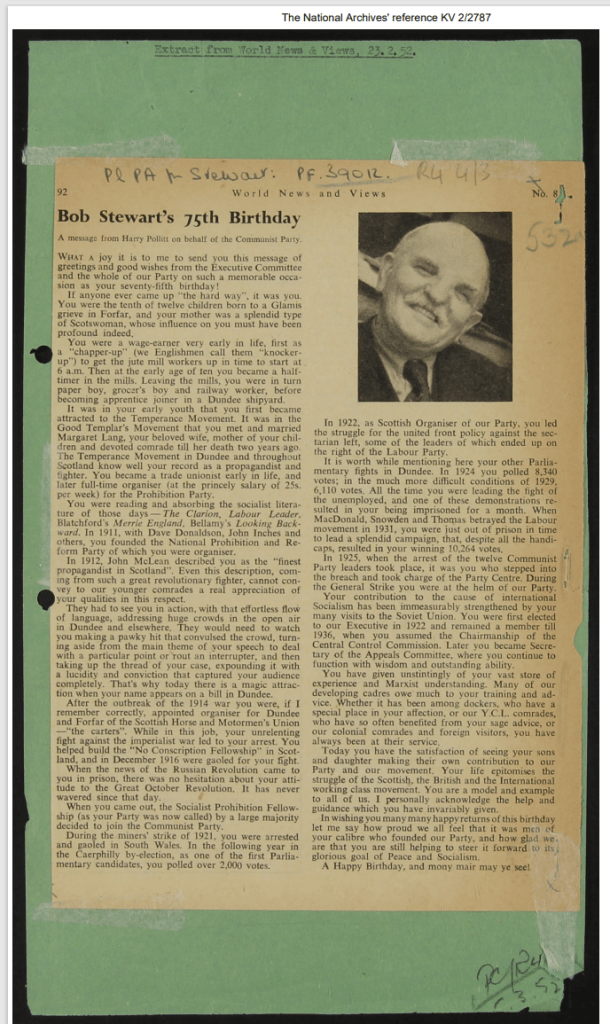
First of all, here’s a cutting from World News and Views from 1952. Harry Pollitt gives a brief overview of Bob’s life up to that point. This is taken from one of the many MI5 security files compiled on Bob now held at the National Archives.
Also from the National Archives is this brief note on Bob Stewart’s 80th birthday intercepted by MI5 in 1957.
Finally, here’s two accounts of Bob’s birthday celebrations. One from his 80th and one from his 90th in 1967. The latter was also the launch of his memoirs ‘Breaking the Fetters’. They’re from the journals of Charles Desmond Greaves, Marxist historian, revolutionary socialist and campaigner for Irish unity. Much, much more is available at www.desmondgreavesarchive.com – huge thanks to Pádraig Durnin for bringing them to our attention.
February 16 Saturday1957: Bob Stewart’s 80th birthday party took place at King Street [CPGB headquarters] this evening. I met many people I had not seen for years – Robson, for example, and Aileen Palmer who was friendly with Jimmy Shields. Idris Cox’s wife was there, whom I had not seen since just after I returned from Ireland to take over the Democrat, and found her son a job for the summer in Powell Duffryn. I cycled from Cardiff to London that day – it would be in 1951 I would say. R. Palme Dutt was there but did not stay long. He is a bad “mixer”. Wal Hannington [Unemployed Workers Movement leader in the 1930s] sang a song, and at a crucial point in the proceedings after Harry Pollitt had pronounced encomia, Bob was set beside the table to cut his cake. He did it as the camera clicked. Then Harry insisted on his cutting it again, with Harry standing by his side. But twice did he cut, and twice did theflash-bulb fail to light, so the attempt was abandoned! I thought it served him right. But it must be said it didn’t cast him down. He was in the best of spirits all night!
February 17 Friday1967: I was in the office all day or most of it. I signed the lease, then tried to phone Toni Curran for the purpose of securing her signature. After a provoking series of wrong numbers I found her line was out of order, and had to wire. Likewise Coutts was in Weybridge, so I could not inform the landlords.
At 7 pm. I went to Bob Stewart’s 90th birthday party in the Holborn Assembly rooms across the road in the Mews. There was a large gathering, not exactly the same as those at R.Palme Dutt’s. The “oration” was delivered by JR Campbell who took occasion for a smack at Larkin which Pat Devine thought in poor taste. “I wouldn’t have said that if I’d known you were here,” says Campbell to me afterwards. But I have long accepted him as a “Rangers’ man” and see quite well that he will respect the Irish movement for its strength and nothing else. His remark implied that whereas when he was in Dublin Bob Stewart “talked sense”, Larkin’s oratory was eloquent but nonsensical. Of course Larkin did have his idiosyncrasies. I remember Gallacher [ie. Willie Gallacher] writing to me once that he infuriated Connolly as he gave the right conclusions for all the wrong reasons.
Bob Stewart himself seemed to have aged since Dutt’s affair, but gave a lively speech. His head is as clear as ever. Idris Cox was there. I think he has abandoned his old talk that Wales is “not a nation”, which was what he told Margot Parrish, who had not the stamina to keep going until reason asserted itself. Some people age badly, others hardly at all. Despite her illnesses Maggie Hunter looks as fresh as a daisy, and her husband into the bargain. They were asking after Cathal. Maurice Cornforth however seems partially lame and hobbled out like an old man. Jack Cohen is sprightly but grey. James Klugman on the other hand looks much better. He chased round the world looking for remedies for asthma, but was cured by his own hospital! I was depressed to learn that Pat Devine’s recent illness was cancer of the lung. He has now given up smoking. But the pain is still there. And he walks very very slowly indeed. I had a drink with him and Gloria afterwards. Palme Dutt was there but did not stay long, and of all people Aileen Palmer once again. I thought she had retired from everything. It brought back the memory of the days twenty years ago when Bob Stewart and Jimmy Shields shared an office and she used to be the technical worker for them. Mrs Bowman was there too. I had not met her since I used to stay in her house in Dundee, and Dave who still works for the NUR [National Union of Railwaymen]. He, by the way, told me that “Seven Seas” want to cooperate with the republication of Jackson’s book. So I must get the time off.
One thing Pat Devine said was curious. He had been somewhere in Eastern Europe and met Derek Peters of Belfast, a very “orange” socialist who after returning home from Manchester became interested in Gaelic and appeared when Sean Redmond spoke at Murlough [at the Roger Casement commemoration. Peters was the first secretary of the NICRA]. He said he had taken a marked dislike to him, and could not understand this son of a policeman who seemed to have visited every socialist country in the world and was so full of himself. Why should I be interested? Well, somebody suggested we ask him to be Democrat correspondent in Belfast.
Afterwards I read Bob Stewart’s book, of which Cornforth told me he had sold forty copies tonight, and I recognised the use he had made of material I provided for him twenty years ago!
The Stewart Family pictured in the mid 1920s: -R: Bob, Rab, Annie (Nan), William and Margaret.
To the best of my knowledge the last person in my family to still be fully committed to a Marxist-Leninist revolution died in 1978. He was my grandfather William Stewart and he was lovely. However, even though those that remain have spent the intervening forty-four years failing to overthrow the capitalist system, communism has loomed ever present in the background in our lives for all sorts of reasons. It is a bittersweet inheritance. I suppose there is nothing surprising in its presence as, from the inception of the CPGB in 1920, communism essentially became the family business for the next fifty years. Practically everyone was involved.
At the end of 1955 – a few months before Khrushchev would acknowledge the crimes of Stalin for the first time in his ‘secret speech’ MI5 picked up some office gossip about the Stewart family through one of the bugs it had placed in the offices at the Communist Party’s HQ in King Street, Covent Garden. Reuben Falber, who, when Bob Stewart finally retired in 1957, would go on to be responsible for distributing funds from Moscow, was overheard talking to fellow party worker Betty Reid about a recent scandal involving Bob’s nephew Greg – a Cambridge student who had just been unforgivably rude to one of the comrades at Central Books. Here’s part of the transcript in the security files:
‘They’re a family that-well, they’re a law unto themselves because you’ve got a combination of the old fellow’s prestige and money. BETTY asked where the money came from. Regret FALBER’s reply was whispered and could not be followed.
(From the MI5 Security File on Bob Stewart KV2/2790 – The National Archives)
The ‘old fellow’ is, of course, Bob Stewart and quite clearly the whole family had something of a reputation within communist circles. In fact, Betty Reid, in a conversation recorded about eight months later, was of the opinion that the Stewart children – William, Rab and Nan, had been “thoroughly spoiled all their lives.” This kind of attitude is elaborated further in an earlier document I came across in my grandfather’s security file on a recent visit to the National Archives. It’s dated 17th October 1932 and appears to be a memorandum from Special Branch to MI5 concerning the activities of Bob and his three children. I reproduce it here in full partly because I think it’s an interesting account of how the Stewarts and other similar families were viewed within the movement but mainly because I love the description of my grandfather.
The following information has been received.
WILLIAM STEWART, who used to drive the Soviet Ambassador’s car has given up driving altogether and is now employed in the Embassy as a ‘trusted’ man. He recently stated that he was engaged there on work of a secret nature, which included a little clerical labour.
His hours are from 5pm until 1am and his wife also has a job at the Embassy.
He is forbidden to undertake Communist Party of Great Britain work.
He now wears a small moustache, Charlie Chaplin style, which gives him an altered appearance, and carries an ash walking-stick. He often wears a light green shirt, brown jacket and shorts (at other times grey flannel trousers), light brown rabbit-skin hat, and brown shoes. He apes the appearance and mannerisms of a university student.
His father, ‘Bob’, is at present in Belfast where he is assisting the Irish Revolutionary Workers’ Party.
His brother, who lived with Ralph Edwin BOND, and was attached to St. Pancras Local Communist Party of Great Britain, has now secured a situation at Arcos Ltd. as also has his wife. Both have been transferred to Islington Local.
His sister, who was active in the Young Communist League of Great Britain, and who went to Russia on several occasions, has gone to live there permanently. She also was employed at Arcos and married a principal of that concern. As he has been recalled to Russia, she has accompanied him.
The state of affairs here outlined indicates how the movement is ‘exploited as a meal ticket’ (to use the phrase of certain disgusted genuine Communists) by certain fortunate families.
The CAMPBELL family is another case in point. The sum of over £20 weekly is received in John Ross Campbell’s home from Soviet sources.
The WATKINS’ are in the same position, whilst there is a host of others.
There is keen resentment in the ‘movement’ over this condition of things. It is freely expressed that no man and wife should be allowed to hold a situation while other ‘Comrades’ are unemployed. This objection has taken root and considerable trouble on the point seems likely to develop.
SUPERINTENDENT.
(From the MI5 Security File on William Stewart KV2/4494 – The National Archives)














 Breaking the Fetters