I’m currently writing a chapter on Bob Stewart’s life during the decade after The Second World War. During that time the CPGB ran into financial difficulties and the security services were very interested in my great grandfather’s role in the secret funding of the party. He largely avoided banks and kept vast reserves of cash in various locations around the country. Welwyn Garden City and Bricket Wood were the places he visited most and MI5 were very interested in the contents of his briefcase when he left. There were as few written records as possible and he kept most of the transactions in his head. As he was in his mid seventies some in the party were very worried about what would happen to the money if he died suddenly.
At times circumstances forced him to travel further afield and one revenue stream that stood out while I was reading through Bob’s MI5 files was this one. Mainly because I have an enormous affection for Sheffield having spent my student days there but also because I love the idea of a wealthy communist baker. Fletcher’s Bakery was a Sheffield institution with a radical history still remembered affectionately today. The family sold the business in 1999 for £40 million.
This extract is short and a bit rough and ready but I hope some of it survives redrafting because there’s a couple of discoveries that made me laugh. I hope you enjoy it.
Betta Fetcha Fletcher’s Loaf. One of the company’s distinctive vans.
Occasionally, Bob would have to travel further afield. In September 1951, about a month before the general election that was Clement Attlee’s doomed attempt to increase his majority, Harry Pollitt and Bob were recorded discussing campaign expenses and the funding of The Daily Worker. Sums of £20, 000 and £17, 000 were mentioned. Pollitt was planning to stand ten candidates in a futile effort to restore the CPGB’s Parliamentary presence. Though the conversation was indistinct, Bob was understood to have said that he’d have to take a trip by car, keep “something” overnight and then take it down to Sam Cohen so as to have £10, 000 within easy reach. The following evening Bob was driven the hundred and seventy miles to Sheffield by party chauffer Sid Easton while MI5 informed the local police who managed to locate and tail them in the city. Bob and Sid drew up at the home of George Fletcher Jnr – heir to a city wide franchise of bakeries set up by his father- a direct contemporary of Bob’s who had been a member of the Party since the beginning. Bob left this address carrying a large suitcase and all three of them stopped off at two branches of Fletcher and Son Ltd. Shortly afterwards Bob and Sid headed back to London. The suitcase, which looked very heavy, remained in Bob’s house for the weekend. On the Monday, Bob took a smaller case into the offices of The Daily Worker and it was thought he delivered the remainder to the Cohen’s at Welwyn. If he had been carrying £10, 000 it would be equivalent to over £300, 000 today. As a result of this jaunt, MI5 applied for a Home Office Warrant in order to monitor the Fletcher family business more closely.
MI5 Officer Dick Thistlethwaite’s encounter with the Sheffield Constabulary
The journey up north to visit George Fletchers Senior and Junior became an annual event. The elder Fletcher was a prosperous man who, as well as the string of shops, owned a large factory and a fleet of vans delivering bread and cakes up and down the hills of Sheffield and its South Yorkshire environs. Queuing up at a burgundy liveried van to buy a sliced loaf and the firm’s speciality of an Elephant’s Foot – a chocolate slavered, cream filled, choux pastry, is still a fond memory for the baby boomer generation in the steel city. The deep red of the delivery vans was commonly thought to represent the baker’s communist beliefs. A staunch trade unionist, he’d also been an anti-war campaigner, endured a spell in prison for sedition after agitating for a miners’ strike and had stood as a candidate in several general elections. His son carried on the family tradition as a founder member of the Young Communist League. By the early 1950s, Fletcher Senior had retired a wealthy man and the authorities believed him to be a major financial supporter of the Party. In October 1951, the MI5 officer Richard Thistlethweight went up to Sheffield to brief the local constabulary on the security threat in their midst. They were already familiar with the Fletchers and regarded the father as, “the nicer type of old Communist, the sort who always make the Police welcome at […..] meetings.” One Detective Sergeant offered his opinion that, “the bread is infinitely better than any bread in Sheffield, although his superiors refuse to patronise the establishment for political reasons.” Bob’s dealings with the radical proletarian pâtissiers were to be closely monitored.
For his part, Bob looked forward to his get togethers with old man Fletcher and his wife. At least once a year he’d take the train up to Retford and stay at their charming home in the hamlet of South Leverton, their residence since handing over day-to-day oversight of the business to their son. Bob thought it had, “the most beautiful garden I’ve ever seen.” The family’s wealth was worn lightly. The bakery’s employees were treated well, they kept no servants and Fletcher was well regarded in the community, regularly helping out those in need. He was even friends with the local vicar. In Bob’s summation the family were “decent people.” But Bob was also overheard at King Street describing George Snr as a “useful man” who “does some things for us at times.”
Was the Fletcher and Son Ltd’s new factory funded by Moscow Gold?
The authorities speculated that the firm had survived during the 1930s, when so many of its competitors had gone to the wall, due to the injection of Soviet cash and that it was still, to all intents and purposes, laundering Moscow gold. Consulting the Chief Constable of Nottinghamshire on proposed surveillance of Fletcher’s house in 1953, MI5 chief Sir Percy Sillitoe outlined how the business acted as “some kind of channel for secret Party funds.” When Bob had visited the Sheffield premises there was, “no doubt that the object was to fetch a large sum of cash to replenish the secret reserves of the Party.” Any appearance by Bob in the area was assumed to be for a similar purpose – either depositing large sums or withdrawing them. The Chief Constable wrote back to inform Sillitoe of the prospect of more underground financial dealings as the Fletchers were planning to “expand their business by building a new bakery at Claywheel Lane, Sheffield, and that the cost of this will be several thousand pounds.” This snippet of industrial intelligence was obtained through a “most reliable informant” who had quizzed the Fletcher’s gardener. The old boy had also volunteered that, “FLETCHER had been very busy dealing with business matters with an old gentleman from London (STEWART).” Any transactions were likely to be in large sums comprised of one pound notes. When Bob was seen taking a ride in the hilly outskirts of the city in George Fletcher Junior’s flashy but elegant two tone Ford Zephyr Zodiac the security services once again focussed all their guesswork on what his ever present battered briefcase contained.
It’s a week since the founding conference of Your Party and the less said about the mess of factionalism and wasted opportunity the better. However, it did put me in mind of another gathering that attempted to harness the potential of Britain’s left- the formation of the Communist Party of Great Britain in 1920. Here’s an extract of my account of it from the book I’m writing about Bob Stewart.
There’s a photograph in the CPGB archive at the People’s History Museum in Manchester depicting a large gathering outside London’s Cannon Street Hotel in 1920. It resembles the kind of yearly school photo they used to take at the better type of educational establishment during the early part of last century. The passing of a hundred years or so has lent these figures some semblance of respectability – if you didn’t know who they were then it would be hard to identify them as revolutionaries and a threat to the British state. Red flags and ushankas are conspicuous by their absence. The men are all in sober suits and ties and, for the most part, adhere to the code of the time that a gentleman is not fully dressed without a hat. The headgear on display ranges from formal looking homburgs, some egalitarian flat caps and even a couple of jaunty straw boaters. Possibly interlopers from the Fabians. The comparatively few women present look out from under wide brims and give the impression that they do not, under any circumstances, suffer fools gladly. Everyone looks as if they have something extremely important on their mind. Bob is there, instantly recognisable with his broken face, sitting on the cobbles front row, seventh from the left. As ever, he looks more serious and full of intent than anyone else. Everyone looks as if they have something extremely important on their mind. This was the Communist Unity Convention. Over a hundred and fifty delegates from all across the country drawn from over twenty different left wing groups. Although it was formalised the following year in Leeds, this last day of July was essentially the beginning of the Communist Party of Great Britain. The following day, as the conference continued at a second venue, the International Socialist Club on East Road, Bob was voted onto the Executive Committee and became its Scottish organiser.
It had been two and a half years since the October Revolution. The Red Army was engaged in a brutal civil war repelling counter revolutionary forces aided by Western European allies. This support stemmed from the worry that the worker’s state would default on loans made to Imperial Russia and that insurrection would spread across continents like a disease. Winston Churchill, then Secretary of State for War, voiced his antipathy in visceral terms. In conversation with the Prime Minister David Lloyd George, he was purported to have said, “One might as well legalise sodomy as recognise the Bolsheviks.” Publicly, he announced that the ideology should be “strangled in its cradle.” Right wing groups such as the British Empire Uniontoured the country to “campaign against Bolshevist propaganda.” A photograph in The Daily Mirror shows that this amounted to a small group of portly, middle aged men each resembling the cartoonish stereotype of a bowler hatted capitalist standing dourly in front of a carriage daubed with the slogan, ‘Britain for the British.’ The union flag was unfurled and one of their number meekly held a placard decrying the red menace. The ‘B’ word became the pejorative of the day. More often than not its application was ridiculous. Even Austen Chamberlain, the Tory Chancellor of the Exchequer of the coalition government had his 1920 budget described as containing “the seeds of Bolshevism.” Any prospect of the mildest wealth redistribution would draw similar accusations. Appealing for greater harmony between Liberal and Conservative MPs, Lloyd George called for a united front against socialism. He emphasised his commitment to restoring the country through a “fair reward for individual effort” and damned the Labour Party’s commitment to “the doctrine of common ownership” as essentially the same as Lenin’s hated vanguard party. An absurd comparison but thanks to the extension of the franchise, Labour had emerged as the official opposition and so would inevitably be subject to incessant outlandish claims such as this.
If it attracted so much invective, what was it that drew some people towards communism in the 1920s? The answer is simple. For many, the shattering experience of The Great War was capitalism’s greatest crisis. As the population attempted to forge some kind of normal life in the years that followed they were assailed by a raft of social problems. What people got in actuality was far from what they thought they had been promised. At the beginning of the 1918 General Election Campaign, the Prime Minister had acknowledged the dire situation for many in the country. The war had been like a “gigantic star shell” illuminating the land. It had lit up “all the dark places […..] that we have never seen before.” The past four years of conflict had shown the “appalling waste of human material” in the nation. If people had been fed and housed properly and had lived in healthy conditions a million more men would have been fit for the services whereas there were millions “below par.” This was to be put right. Children could not be brought up in these conditions. After a death toll of millions in the battlefields of Europe he warned that there were, “more lives being lost and maimed through the atrocious social conditions that prevail, than through the terrors of this war.” The work of the nation was summed up in the memorable line, “What is our task? To make Britain a fit country for heroes to live in.” Slums would be cleared, houses built and industry and agriculture revived. Stirred by this rhetoric, the electorate rewarded Lloyd George’s coalition with a landslide victory. The type of victory that, once the fuss has died down, can only ever disappoint and disillusion. Bob’s view was this:
“I came out of gaol in April 1919 and entered an entirely changed world from the one I had left. The heroes had returned from the war to find the golden promises of a land fit for heroes to live in had not materialised. Many were unable to find work. Many, when they found it, got low wages on which they could not adequately provide for their wives and children. The housing shortage became a serious social problem as the soldiers, married during the war, tried to set up house with their war-wives and young children. The landlords, taking advantage of the shortage, found ways and means to raise rents.
The Dundee I came back to had all these problems and more. Lack of work, low wages, unemployment, bad housing and a housing shortage, and to add to the confusion, thousands of war disabled demanding work and maintenance.”
The economy was nosediving and social reforms put in place as an insurance policy against another Petrograd were failing to lift people out of misery. In the light of this, communism offered a compelling vision of the world.
The birth of the CPGB was made possible by the creation of the Communist International. Also known as the Comintern or the Third International it was formed in Moscow in 1919 and it’s raison d’etre was to advocate for a world revolution. Lenin believed that, unless there was a successful socialist uprising in Europe, all that the Bolsheviks had achieved would be crushed by the military might of its capitalist neighbours. To protect itself it would establish communist parties across the world and provide funding, instruction and training. The parlous economic state of much of the continent and the memories of the war still fresh in people’s minds meant that there was fertile ground for radical militancy. There were many eager to learn from the one band of Marxist revolutionaries who had actually achieved what others spent so much time discussing in smoke filled rooms or shouting about in front of factory gates.
In Britain, those others were the myriad of leftist groups that weren’t the Labour Party or the ILP. Veterans of the trenches and veterans of the anti-war movement. Trade unionists and suffragettes. All haunted by the horrors of recent years and united, in the grand tradition of British radicalism, by an intense distrust of each other. That aside, there was a feeling, which Bob shared that, with things the way they were, there should be more progress politically towards socialism. All had been galvanised by the events of October 1917 and began to hold talks to foster greater cooperation. The Comintern began to court several of these parties and Lenin secretly donated £500, 000 towards setting up the CPGB. A phenomenal sum worth well over £10 million today. As Francis Beckett noted in his history of the CPGB, Enemy Within, “Without Lenin’s continual encouragement, and the careful distribution of Soviet money among groups which had always been starved of funds, the Communist Party would not have existed.” The Unity Convention, in the Italianate surroundings of a railway hotel, was the first fruition of that investment comprising of representatives from the British Socialist Party, the Socialist Labour Party, Sylvia Pankhurst’s Workers’ Socialist Federation and also from tiny organisations such as the Doncaster Worker’s Committee, Ferndale Socialist Society and Bob’s own band of socialist temperance campaigners. The sun had decided to shine after several days of rain. Things were looking up. The collapse of capitalism was surely imminent.
Amid a fug of pipe smoke, it was clear, when the first resolution was debated, that this new party would be closely modelled on the Russian one. The conference declared for a Soviet system as a means for the working class to achieve power. Lenin’s slogan, “All power to the Soviets!” from the October Revolution still had the capability to thrill or terrify. The term referred to the worker’s councils that had begun in 1905 and proliferated in 1917. Emerging from the factory floor, they were created to fight against the Imperial regime’s control of the workforce through strikes, direct action and also military force. After the Tsar’s abdication, the Petrograd Soviet played a key role in toppling the provisional government during the Bolshevik coup. Those gathered in the room were convinced something similar could be achieved in Britain and that this would lead to the dictatorship of the proletariat. This concept was also much discussed and Bob admitted to the delegates that he did not know much about it and doubted whether anyone else gathered there did either, an early indication of how impenetrable the language of the CPGB could alienate even the most sympathetic listener. Still, it was deemed a necessary step in order to achieve the party’s main aims – a society where the means of production would be communally owned and controlled. The conference also declared that they would ally themselves with the Communist International. Bob could not know at this point how this organisation would come to dominate his life.
There was a debate as to whether the Party should follow a Parliamentary route or whether it should be an armed revolutionary movement – the disenchantment many felt regarding the Labour Party’s reformist path was tangible. Not that it would prevent several futile attempts by the CPGB to affiliate with them in the immediate future. A social revolution could not be delivered through the ballot box alone. And yet, “electoral action [would provide a] valuable means of propaganda and agitation.” Any elected representatives from the CPGB would be considered as having a mandate from the Party rather than the constituency in which they happened to sit. The majority of attendees wanted to get councillors and MPs elected but there were a few who enthusiastically advocated “the use of the gun” to achieve their aims. Given his experiences of the past three years, Bob was not among them. He said he often found the people who wanted to “shoot it out” to be the “worst stayers in the movement” and felt that such people seemed “unable to cope with the hard day to day grind of politics.” Bob rebuked one such comrade with the memorable line, “A great many people talk about guns who would run away when they saw one. I am more interested in folks having brains in their heads.” Bob went on to outline his argument further.
“Whether guns come soon, late or not at all, there will be times when it is far more revolutionary to refuse to have anything to do with guns. I think the provisional executive which is to be set up by the conference will be far wiser to devote themselves to building up such organisation as will make it possible to win the maximum of our party policy with the minimum of violence.”
In his account of the conference, Francis Beckett relates a story about how Bob attempted to get the Communist party to go down the prohibitionist path. The temperance movement had struck a chord with many of the comrades – alcoholism being one consequence of the hardship suffered by the poverty stricken and several saw abstinence as an essential part of their socialism. To Bob, prohibition was a revolutionary tactic.
“After the main resolution was carried, the stout sincere man with a sober moustache walked solemnly to the platform to ask the new Party to come out in favour of suppressing the manufacture of alcoholic drinks. Few thought much of the idea, but they liked Bob Stewart, so they referred it to the executive for action. In seventy-one years no action was ever taken.”
Sadly, this moment was left unrecorded in his memoir, Breaking the Fetters.
For Remembrance Sunday here’s something I wrote about Bob Stewart’s experiences as a conscientious objector during the First World War.
On the day war was declared, Bob was campaigning on behalf of the Prohibition and Reform Party a hundred miles up the coast in the fishing port of Peterhead. The last days of peace had been dreich. Endless rain lending a sullen mood to the maritime manoeuvres taking place a little way out of port. The clock ticking as the country waited for Britain’s ultimatum to Germany to expire. That morning the weather had improved enough to hold an outdoor meeting at which there was quite a crowd. He’d visited the town many times before and had always taken an interest in its affairs; some weeks previously he’d been presented with a pipe and a purse of sovereigns as a thank you for his part in organising a successful strike at the wood yard there. It had always been a good place to campaign.
The rally took place up on the links looking out onto the treacherous North Sea. Choppy, battleship grey whitecaps stretched out to the horizon. Also visible was the prison next to the Admiralty Yard. One of the toughest in the country, it housed long term convicts sentenced to breaking rocks in the granite quarry. These were used to construct the Harbour of Refuge breakwater to reduce the number of ships lost to storms. In Bob’s opinion anyone who couldn’t make a good socialist speech looking at that view didn’t know anything about socialism. Just as he was getting into his stride, the breeze carried a crescendo of tenor and contralto voices and the sound of euphoniums and trumpets began to drown him out. It was the Salvation Army band playing Lead Kindly Light as they accompanied the Naval Reserve to the station. This was how he learned of the outbreak of hostilities. The reservists were mainly trawlermen – the retainer both supplementing their income and acting as a “sweet little pill to recruiting.” He resumed his speech and tried in vain to tell them where exactly they were being led but the mood of those marching into town was buoyant and hymns gave way to songs of king and country. The meeting broke up and everyone followed them to the recruiting office where wives and mothers, who regarded the situation very differently, began to weep and howl. “Many affecting scenes were witnessed,” as the local paper put it.
That evening, there was another assembly, this time held at the fish market. Despite the rain it was full. These were uncertain times. Bob thought that wars were “always sprung on the people. They don’t know their enemies until they are told.” He was under no illusion who the real adversary was. During his speech he declared:
“[This] is a capitalist war. It is not worth sacrificing the bones of your domestic cat, or your pet canary, even less those of your husbands, brothers and sons.”
Conflict meant insecurity. Already the fishing trade in Peterhead was paralysed. The whole of the east coast was at a standstill. Fearing attacks on shipping, insurers had “intimated to trawler owners that vessels […..] must not leave port.” Any boats attempting to reach the fishing grounds would be uninsured and would sail entirely at their own risk. Five hundred fishermen in nearby Aberdeen had been laid off days before but worse was to come. On average, each trawler had nine crew members which meant that eventually four thousand sea going men would be thrown into idleness in the Granite City alone. This had ramifications for the rest of the industry. Thousands of men and women employed in gutting and packing would soon be out of work as would the hundreds of coopers who made the fish barrels. The daily losses would run in to thousands. Meanwhile, the first trawlers were being stripped of their fishing gear and were being made ready for mine sweeping duty.
Advertisements urging young men between the ages of 18 and 30 to heed their country’s call and “rally round the flag and enlist in the ranks of her army” were already appearing in the press the day after the declaration of war. The choice between no job or a soldier’s wage was no choice at all to many. Aside from the prospect of unemployment, Bob recognised that countless ordinary people joined up for the slaughter not due to nationalistic fervour but simply because a soldier’s wage together with the separation allowance for wives was better than a labourer’s earnings. At the beginning of the war a private at the front got 6s 8d a week. The separation allowance was 7s 7d with 1s 2d added per child. Although this benefit rose significantly – 12s 6d from March 1915- it does not say much for labourer’s wages.
Attitudes to the war divided the left and, as far as Bob was concerned, this was the first real test for socialist internationalism. A test he considered the Labour movement to have largely failed. His belief that a British worker had more in common with a German worker rather than a British capitalist was a minority view. As he put it, in no time at all, “the red flags turned to tartan.”
When Bob returned home he found his city gearing up for the battles ahead. An article in the Courier prosaically titled. ‘The Recruiting Sergeant is Busy’ gives some indication of what the first week was like. Lord Kitchener’s appeal for recruits was “stirring the hearts of young Dundee.” The thousands of millworkers and those in clerical professions proved “up to the hilt that the young fellows of the city [were] patriotic to the core.” They constituted a “fruitful source” to the Nethergate recruiting office which was now thronged by a persistent gathering of young and old outside. Periodically the door was unlocked and another batch of men passed through for processing. The flow of aspirants for the army was almost constant. This zeal carried on in the town’s social life. A programme of Strauss and Lizst at the King’s Theatre was preceded by “scenes of great enthusiasm” as the orchestra played Rule Brittania, The Marseillaise and God Save the King. The audience rose to the national anthem a second time when a company of soldiers marched into the auditorium greeted by cheers. Dundonians could also try and spot their loved ones on the big screen as the Scala Picture Theatre showed footage of the Tayside Naval Reserve and the Territorials carrying out their mobilisation orders before the main feature, Beneath the Czar. The movie topping the bill concerned a woman forced to enter the Russian Secret Service to save her father, an active Nihilist, from being put to death. If my great grandfather went to the pictures that week I do wonder what he made of that film.
The readership of The Courier was hungry for every scrap of detail about the war and the paper eagerly obliged. The coverage in one issue in the first week ranged from German submarines in the North Sea to a call for the women of Angus to knit two thousand pairs of socks for the forces while also taking in a French victory in the Alsatian town of Colmer and restrictions on aliens in the UK. A German spy was shot in Paris; there were skirmishes on the Russian frontier and English cricket was to continue. Articles about the phenomenal number of men joining up dominated. Some stories such as the West Fife licensees ordered to exercise more care in the supply of drink might have consoled Bob but not for long. Look closely and amid all the breathless excitement of world events and everyone pulling together for the good of the nation there’s hints of the crisis to come. The 26 year old infantryman fatally shot after coming off duty in Romford. A forgotten cartridge in the breech of his rifle had accidentally discharged. The British Red Cross appealing to the public for supplies. They needed mattresses and sheets, bandages and basins. The one naval and three military deserters committed to the respective authorities at Dundee Police Court. Presumably they were reluctant to find themselves confined to one of the beds the Red Cross had salvaged. Or they feared worse.
Looking back on 1914, Bob remarked, “ I don’t know of any honest working man who got anything out of the war.” He was also aware that, for some, it was very profitable. While the business sector “babbled about the war to end war” they were “in no hurry to end it.” He bemoaned the industrial truce that came into play with moderate trade union leaders resisting strikes and keeping their membership in check while the nation was in peril. What part of the country the ordinary people actually owned was a question he never heard answered. Dundee historian William Kenefick described the age as a time when, “citizens’ rights and civil liberties became secondary to those of the British state.” A condition that was “never fully removed.” The workers were handcuffed when the Munitions of War Act was passed in 1915 – eroding what little employment rights trade unions had fought for. It was an offence to leave your work without the consent of your employer or to refuse to take a new job whatever the rates of pay. With rent increases and a steep rise in the cost of living there was plenty for Bob to battle against.
As the war progressed, the supply of young factory and agricultural workers used as cannon fodder began to dry up. In March 1916 the Military Services Act came into effect and all single men aged 18 to 41 in Great Britain were to be called up to fight. Married men became eligible for conscription two months later and the age limit was extended to 51 in 1918. Widowers with children, clergymen and those in reserved occupations such as coal miners, train drivers and steel workers were exempt. Conscientious objectors had to appear before a tribunal to argue their case for refusing to enlist. These arguments did not get a sympathetic hearing.
The largest socialist organisation opposed to the war was the Independent Labour Party (ILP) and, in December 1914, they played a large part in establishing the No Conscription Fellowship (NCF). Formed in anticipation of the 1916 Act, the NCF would campaign against it and offer support and guidance to those refusing to join the armed forces. After a large ILP meeting in Dundee in November 1915 the city’s branch of the NCF was set up with the support of Bob’s party as well as that of his old rival Scrymgeour. In January the following year both organisations banded together with members of the Trades Council, the Labour Representation Committee, the ILP, the British Socialist Party and the Free Religious Movement to found the Dundee Joint Committee Against Conscription. Disparaged in the press as being “Pro-German” the group ensured that Dundee became one of the strongholds of the anti-war movement. They drew crowds of more than 1, 500 at their weekly Sunday meetings and Ramsay Macdonald, in an article in Forward in 1917, acknowledged that Dundee was “said to be ‘fair hotchin’ with conscientious objectors” as it fought for “liberty and Socialism.” By then the army had caught up with Bob. Pushing forty, he was conscripted in 1916. In July, he featured in a report on the COs appealing at the local tribunal. He appeared alongside several trade unionists and ILP officials, a couple of Socialist Sunday School teachers, another prohibitionist and an ex policeman turned left bookseller who declared he worked eighty four hours a week, “62 for wages and the remainder for downtrodden humanity.” Bob was described as:
“Ex-Town Councillor, Prohibitionist, Socialist and International Protagonist; a clever writer and convincing speaker; refuses non-combatant service on the grounds that it simply means holding the jackets for others to fight.”
He was an absolutist. Some of his fellow conscientious objectors managed to escape imprisonment after being offered alternative Home Office schemes which involved voluntary service for the war effort. This might include labouring on a farm or in a factory for a Work Of National Importance (WNI) initiative; or they might be drafted into the Non-Combatants Corps to fix infrastructure after battle or work as medics. But there was no way Bob would abandon his principles for an easier life. The war was wrong and he was not going to assist in its prosecution in any way. “Quakers, Christadelphians and priests in holy orders and their like” were, it was assumed, the only people who “could aspire to a conscientious objection to killing their fellow men.” He was not a member of any religious body. Even worse, he was a well-known socialist and anti-militarist. His appeal at tribunal was turned down as a matter of course and he was ordered to present himself for military service. He refused. Whatever hulking Victorian gaol was waiting to confine him, he was resolute.
Arrested and taken to the police court, he was charged with being AWOL. The Chief Constable. acting as prosecutor, asked for a pause of a week which allowed Bob more time to make preparations for the inevitable prison sentence. He spent this time assisting others with their cases and speaking at some anti-war meetings. This was “much to the annoyance of the local respectables, who if they couldn’t get me shot at least expected me to be put out of sight for a long time.” Also, Margaret would have to take over some of his work. He’d recently become the local organiser of the Scottish Horse and Motormen’s Union, applying for the job after the previous post holder had been called up. Margaret would have to carry on with this as well as bringing up the family. A legion of aunts would be on hand to help but it would be tough. Bill and Rab were thirteen and ten, old enough to understand what was going on. Annie or Nan as she was known was only three years old. Her earliest memories would be those of her father in jail and the general contempt in which the general public held people like him. Whether there was sympathy for the Stewarts among her neighbours I do not know but the common opinion that ‘conchies’ were cowards and traitors would have been part of the atmosphere in which she grew up. There was talk in the press of banning COs from positions such as teaching lest they contaminate the young and many, many similar stories. Annie would have to understand that her family stood for something and that the attacks these principles drew had to be stood up to.
Once Bob was back in court, a recruiting officer took to the witness stand to prove that on a given day Robert Stewart was ordered to appear and did not do so. The officer looked rather pleased with himself after giving his evidence, as did the magistrate. An example was about to be set. Not the example they expected though.
“…their expressions changed when I asked, “Under what regulations do you mark a man absent?” “Under the King’s Regulations,” was the reply. “Under which one?” I persisted. The beak looked blank. The assessor said, “Can you help us, Mr. Stewart?” a rather unusual form of address to a prisoner at the bar. So I helped them by quoting the […..] King’s Regulations, in which it was clearly stated that a man could not be posted absent until twenty-one days had expired from the date of his call-up.”
Unwilling to take the word of a prisoner as final, a messenger hurried to find a copy of the manual which bore out Bob’s contention. There was some frantic consultation before the magistrate announced, “I am afraid we can’t convict.” Bob walked free to the “great glee of a small crowd […..] and the extreme chagrin of the military escort.” Immaculate in his polished uniform, this officer brandished a pair of handcuffs. “Ay laddie […..] You’re too early,” was Bob’s greeting. Eventually, they got the paperwork right and he was court martialled for the first time. So began the seemingly endless spells at His Majesty’s Pleasure simply because, when asked why he wouldn’t fight, he answered, “It’s not my war.”
He was sentenced to one hundred and twelve days of hard labour in Wormwood Scrubs- almost five hundred miles away. He had no visitors and his mail was withheld from him, thus no contact with his wife and children or news from his friends during his incarceration. As he was handed over from the military to the civil authority in London Bob noted that, in actuality, it was “far less civil” than the army.
“The Scrubs was one of the largest and in consequence most regimental of what were known in official jargon as ‘His Majesty’s Prisons’, which of course he never used as a personal residence. I was turfed into a reception cell to await disposal. It was a dirty, begrimed hole, some thirteen feet long and six and a half broad, its dingy walls covered by names of former occupants and an occasional word of advice, like “Sleep on it, chum”, and some uncomplimentary remarks about officers and prison food.”
Late in the afternoon he was officially received. The voice of the head warder echoed around the reception room as he barked out every single one of Bob’s personal possessions while they were collected in and did the same for each article of kit that was handed out. They took down his height and weight and then he had to have a tepid bath in three inches of water. The suit of prison clothes he was given were, “not ready to wear but already well worn.” A medical followed. The prisoners were ordered to line up, face the wall, to stand apart and stop talking. Then, one at a time, they passed by the doctor as the guard yelled, “Shirt up and trousers down!” Bob found it strangely amusing that, “members of this humane profession should lend themselves to this farcical medical examination and humiliation of their fellows.”
After this, bibles and prayer books were doled out, the “compulsory library of each prisoner” and they were ordered to, “Get up them stairs!” He was housed on the third corridor of the D hall with the other conscientious objectors. In 1889, fifteen years after ‘the Scrubs’ had opened, the journalist FW Robinson had praised the “brightness and lightness” of the cells. Such an atmosphere was, “not frequently met with in a convict prison at all.” At that time it was considered a fine example of penal architecture. Bob’s appraisal of his new accommodation reflected the prison’s notorious reputation it had garnered in the three decades that had since passed.
“My new abode was the usual brick-walled domicile, thirteen feet by about seven feet. Its furnishing, a six feet by thirty-inch board bed. Top and bottom sheets of canvas, one or two blankets according to season, a bedcover, a small table under a pane of obscure glass through which a flicker of gaslight shone, sufficient to strain your eyes when reading. A small shelf for books, and a pint pot, a tin basin and a jug for water, a minute portion of soap, a very small weekly supply of toilet paper and a slop pot for natural necessities. A window in the outer wall with twenty-one very small panes of obscure glass. Woe betide any prisoner who was caught (as many were) trying to get a cock-eyed view of the outside world by standing on the stool provided to be sat on and not stood on. A copy of the prison regulations and diet sheet was hung on the wall.”
The warders he regarded curiously, contemptuous of their pretensions to be called officers. A “screw by any other name” was “still only a turnkey […..] under just as close a surveillance as the prisoners.” He observed that some were “sadistic and cruel [and] extra officious” with promotion being their main object rather than the care of their charges. Some could be “reasonably human” but all were “fearful of the economic consequences of losing their steady and comparatively lazy occupation which carries a pension with it.” As the following encounter demonstrates, prison magnified the intransigent aspect of Bob’s character.
“I soon ran into my first bit of trouble. […..] the screws regard themselves as officers and like to be called Sir. I have never said Sir to anyone in my life […..] One of them said to me, “Call me Sir.” “Why?” I asked. Well, there is no direct answer to that but it meant I did two weeks in very, very solitary confinement. After that I went to sewing mail bags for an hour or two a day.”
Besides the mail bags the hard labour he was engaged in was mostly joinery. A fortnight after his arrival he was marched before the inspector who demanded to know what his occupation in civil life was. He gave his profession as “Agitator.” Further questioning saw him passed to the carpenter’s shop to make furniture and fitments for the HM Office of Works. The prisoners laboured under the gaze of a pacing disciplinary officer whose snarling and growling annoyed even the artisan warder who was responsible for seeing that the men got the job done. All the tools had to be checked and locked up in a cupboard with drawings of each tool to show where it went “like a kindergarten” and pencils had to be sharpened by the guard who “painted one end and notched the other lest the lead be pinched for writing purposes.” Other than work the prisoners had exercise once a day – “the large contingent walked from nowhere to nowhere and back again. What a silly exhibition.”
The prison day seemed much longer than the normal twenty-four hours. Once his hundred and twelve days were done he was taken to the Governor and then to reception to be returned to Scotland for his next court martial. His army chaperon didn’t arrive and so he was shut up in his cell for one more night. “Overtime without pay” as he put it.
After refusing once more he was handed a sentence of one year, later commuted to sixth months. This time he did his stretch in Calton Gaol, Edinburgh. A remnant of this penitentiary is still visible today in the castellated form of Governor’s House looking down on the city from Calton Hill. Bob’s future comrade Willie Gallacher also endured a spell in there during the war for sedition. He described it as, “by far the worst prison in Scotland; cold, silent and repellent. Its discipline was extremely harsh, and the diet atrocious.” Bob viewed it as “grim and grey, old and forbidding” He found the initial reception “not quite so noisy as the Scrubs” as the warder fussed around listing the King’s property in Bob’s possession. To his relief, his family were allowed to visit. His reminiscences of the months spent there largely focus on the mischief he and other inmates got up to during Bible classes and Sunday services. Prisoners had to recite Bible passages and anyone who could perform Luke 15: 1-10 without error would receive their own copy of the good book when their term ended. On Bob’s second Sunday he gave full voice to the parables of the lost sheep and the prodigal son and won that prize on release. He also tried to diversify with a selection of Tennyson, Burns and Shelley. It got too much for the preacher who ruled that only extracts from scripture were allowed. Bob was then one of the older inmates who had to persuade some of the lads not to “utter some of the rather bawdy texts […..] which might offend the lass at the music box.”
One day a warder stopped by his cell and wondered aloud that such nice people as his wife and daughter could come to visit when he was an atheist. In the warder’s mind unbelievers were all “thieves, robbers, devils or whoremongers.” Bob asked him how many atheists were in the jail. The warder replied that Bob was in fact the only one. “Well, if all the others are Christians it doesn’t say very much for Christianity, does it?” replied Bob. The warder slunk off in confusion.
Perhaps the most significant event during his second term came in March 1917. He was trudging round the exercise yard when a fellow internee came up to him and whispered, “There’s been a revolution in Russia. They’ve set up Workers’ and Soldiers’ Councils!” Bob recognised that this was an epoch making event but was, at this stage, sceptical at its impact. Just before the warder put an end to their conversation Bob’s friend declared excitedly that there would be a revolution in Britain within six months. Bob’s verdict? “Hae ma doots.” Still, it sparked something in him. When his time at Calton came to an end the Chief Warder told him that he was going to get another chance to shoot the Hun. Bob replied, that if he ever got it into his head to go shooting he wouldn’t be looking for Germans. “And who will you be looking for?” was the next question. Bob looked him straight in the eye and said, “Warders.”
Found guilty of the charge ‘Refused to Parade’ in his third court martial and receiving two years hard labour in the process, Bob was interned at Edinburgh Castle for a short while. The sentence was later remitted to one year. His elderly mother was growing increasingly frail and found it hard to make the return journey to Edinburgh sixty miles away. She’d been a widow for several years, Bob’s father passing away in 1915, something he doesn’t touch upon in his book. Two of her sons, Jock and James were away fighting while Bob, her youngest was jailed. Naturally she wanted to see him as often as she could in the time she had left. There’s very little in Bob’s writing about her but he does mention that in the course of her visits she struck up a rapport with the prison Governor after he found out they both came from the same part of Scotland. After spending time with Bob she would be ushered into the Governor’s office to gossip about “lairds and tenants and the hamely fare o’ the countryside.” The issue of Bob’s godlessness came up once more. The Governor said to her, “What I canna understand, wumman, hoo wi’ a maither like you Robert’s an atheist.” She lamented that, “he was aye a great Bible student.”
Bob’s mother died at the age of seventy eight on the 10th September 1918. She passed away at home and a short notice in the Dundee People’s Journal announced these simple details along with her status as William’s widow and her maiden name, Georgina Ferrier Fraser. I cannot imagine what it was like to receive such news in prison, separated from loved ones. Worse was to come. Although he was held in a state prison, he was serving a military sentence. Regulations meant that he was refused permission to attend the funeral. With some understatement, he observed, “there was much local feeling about this.” Georgina had been “greatly respected by all her neighbours” and Bob had many friends on the outside. All were extremely angry at the situation and complaints were made to the Lord Provost of Dundee. He intervened and said he would vouch for Bob’s return. Wheels were grudgingly set in motion. Bob omitted any detailed description of how he felt about the whole experience but the contempt is still there. A “most inhuman warder” took him to Dundee but he was too late to see his mother buried. There was some consolation that he was at least allowed to meet his family. His two soldiering brothers had managed to get leave to join them. An all too brief hour or so with his wife and children and his siblings all united in grief. Impossible to find the words that needed to be said with the warder ever present and repeatedly checking his watch. His guard was impatient to get back to Edinburgh and so “dumped” him at Dundee Gaol. An awful end to an awful day. At least he was nearer home. After more deputations from colleagues and neighbours to the Lord Provost it was decided that he would do the rest of his time there.
At this late stage of the war, the jingoistic optimism exemplified by Jessie Pope, the favourite poet of The Daily Express, who urged the nation’s youth not to “lie low” but be “part of the fun” had given way to an acknowledgement of the realities of mechanised slaughter. In the newspaper carrying the details of Bob’s mother’s death, her name is among twenty six others who died either at home or in hospital of natural causes after living full lives. That list takes up about a third of a column. A further three and a half columns concern the Dundee war dead. Under the banner ‘For Their Country’ there’s a catalogue of the recently slain. Private Andrew McCabe aged 19 and the beloved son of Mrs McCabe, 40 Hunter Street- “died of wounds” on 25th August. Private Peter McIntyre, reported missing on October 4th 1917, now reported killed on that date – “Not dead to us who loved him dear.” Private Scott who died from gas poisoning on the 21st August – “We mourn for you dear son.” It goes on and on. Name after name in tiny print. Then there’s the ‘In Memoriam’ section marking the anniversaries of so many families’ bereavements. Private Donald Dewar of the Cameron Highlanders was killed in action on 14th September 1914 – “Not forgotten.” Did his family remember him this way every year? How long did they continued to do so?
The way the war was playing out was beginning to affect Bob’s jailers. Dundee was a much smaller prison and wasn’t fully occupied. This was a source of dismay to the warders. Bob recalls the glee at which they greeted new prisoners. Not because their hearts were softer or they were more devoted to their role than other officers but because, while they were avowedly patriotic, they were not overly keen on being called up to fight at the front while thousands of men were being killed each day in Europe. Bob even helped some of them complete their claim forms for exemption on compassionate and domestic grounds. It was an absurd position – “the warder who locked me up for resisting military service then asked my assistance to fill up his application form for exemption so that he could continue to lock me up!”
It was while he was captive in Dundee that Bob began to write the poems which he later gathered together in the pamphlet Prison Rhymes. Published in 1919 as a fundraiser for the Prohibition and Reform Party, Bob claimed it sold thousands and helped keep the organisation in funds. Copies are rare -there are a few in archives up and down the land but until recently the cheapest copy I’d come across was priced at £650. At the time of writing, Blackwell’s Rare Books advertise one at just under £5000. It comes an inscription to the Miners’ Leader, trade unionist and Labour politician Robert Smillie. Bob had served time in Worwood Scrubs with Smillie’s son Alex, a fellow conscientious objector. Collecting labour history is a habit I cannot afford but fortunately our family does have its own copy. It was acquired by my brother in the late 1980s around the time he had a wall length poster of Lenin in his bedroom and wore a Che Guevara t-shirt like an East Anglian Wolfie Smith. He rang up the Communist Party explaining the family connection and asked if they had a spare. The elderly lady on the other end of the line cooed about Bob being the one who shifted the Moscow gold around back in the day. A photocopy of the pamphlet landed on our doormat a few weeks later.
Bob was modest about his poetic achievements. “Prison”, he remarked “is not the best place to practice literary ambitions.” However his diffidence is more than made up in the preface to the work in which a Mr G Anderson of Coatbridge is effusive. The author of the verses is described in grandiloquent terms as formerly a “man of lucid and terse prose” whose forced confinement has made him turn to rhyme with “happy effect.” While the body is held captive by “stone walls and iron bars” the “spirit of the man never flinched” and the lines inspire a “veneration of love for humanity.”
The poems are mostly written in Scots dialect and are largely concerned with protest, socialist agitation and reflections on the isolation of prison life. They are written to be sung to the tune of popular hymns and folk songs. Common harvests, scarlet banners and rallying comrades feature heavily. Robert Burns is an influence. One poem, ‘A Man’s a Man For A’ That’ takes the Scottish national poet’s celebration of egalitarianism and tailors it to the anti-war movement. This also featured on a postcard sold by the Prohibition and Reform Party featuring a portrait of the author on the other side. He looks very smart and serious with his moustache seemingly waxed at the tips in one concession to vanity. It’s the earliest photograph we have of him. The most affecting poems are those that deal with the sadness of separation. Little Nan is about Bob’s youngest child Annie. She would have been six at the time of publication and the poem reflects Bob’s sadness of being separated from her for most of the preceding three years.
“O bonnie lass o’ mine
Wih eyes that brightly shine,
With your winsome ways and tender loving smile
O how pleasant it would be
Could I come away with thee
And leave this dismal solitude awhile
O to listen to your voice
How ‘twould make my heart rejoice,
And to see the lovelight glancing in your eyes,
What recompense ‘twould be
For the days spent wearily
So far away from those I love and prize.”
While at Dundee he was court martialled for a fourth time but with little change in his situation. Prison life was dull. A pint of skillyfor breakfast; slopping out; work detail; exercise; an inedible dinner and as little association time as the authorities could manage before lock up. The only variation being chapel on Sunday or punishment in solitary. There was the occasional cause to fight for such as access to newspapers and books but then only the smallest subterfuge to be indulged in when passing round banned copies of Tribune and Socialist Monthly smuggled in by one or two sympathetic warders. As the months passed, it was “galling to be divorced from activity” and news from outside only added to “the impatience and yearning of release.”
Unlike the other prisons where Bob had viewed the religious mentors sympathetically or at least with an amused detachment there was one chaplain at Dundee named MacDonald who succeeded in antagonising him more than any other figure. Every Sunday in the pulpit he’d veer off the topic to “have a go at the Bolsheviks” The Russian Revolution had caught Bob’s imagination and the scraps of news he could gather were what inspired him while confined to a cell. It might seem unusual – a man imprisoned for refusing to fight and kill his fellow man clinging on to news of a violent revolution for hope but he knew his enemy. For Bob, being forced to listen to a man he held in contempt preach about how “Lenin ate children” and “Trotsky shot all the workers” was insufferable. He said nothing for a while as his friend, a fellow conchie called Dave Donaldson, was approaching his next court martial – to all intents and purposes a day out – and he didn’t want to get him into trouble. Still, during one sermon MacDonald moved on to how the Bolsheviks “must be crushed like rats” and Bob exploded.
“”You dirty miserable little coward,” I said, “standing up there in your coward’s castle maligning men who can’t speak back. Well, here’s one that speaks back, you dirty contemptible little rascal! They should put you in a prison cell not a prison pulpit.” During this outburst he sat down too surprised to say a word and he never rose again. It must be the shortest prison service on record.”
Amazingly there were few repercussions. No solitary. No withdrawal of privileges. Once the men were marched out of the chapel one of the warders suggested to Bob that he write to the Prison Commissioners to complain that the chaplain was using the pulpit for political purposes. Bob preferred to let the matter rest. He’d done what he’d wanted. The Head Warder told him that he’d have to apologise to the Rev. MacDonald. Bob expected this and was fully prepared to do so, even though he’d taken to referring to the clergyman as “The Weasel.” The minister never came. Too afraid. Here endeth the lesson.
Around this time Bob began to sense the war weariness “weighing heavily on everyone.” The “loss of millions of good lives” even affecting the top brass. The conflict was drawing to a close, victory was near but the atmosphere of the guard rooms where the conchies were shoved before facing military trial was subdued. Bob recalled one fellow silent and unable to answer the sergeant demanding, “How long have you been absent?” The man seemed to be wholly unaware of what was happening but just sat and stared despondently ahead. The sergeant took one look at his face and declared, “You’re no’ absent – you’re lost!” He wasn’t alone. Four long years and there were few families who hadn’t feared the knock at the door and the dreaded telegram. The sight of the wounded, the disfigured and the amputated was disturbingly common. Many wore their scars on the inside trying to suppress the trauma of what they’d experienced. All this damage wrought on people who mostly couldn’t even vote until the Representation of the People Act in 1918.
Bob was serving his fourth term when The Great War finally came to an end. The fighting carried right up until the last minute and then it simply finished. The combatants slowly limping home. A damaged generation. Once they’d returned, many hoped that things would be back to how they were before, or that things would be a little better. That world had gone. Who knew what kind of world would replace it? Bob, however, was still confined to gaol. Month after month passed and there was no word said about his release. Bob felt it as purgatory.
“One day I was communing with myself. “What am I doing in here? It was in April 1919. I was going with a bucket of water and a brush to clean some windows. “Ach,” I said, “I’m finished.’ So I went back to my cell and the warder hurried after me. “What’s up?” “I’m finished.” “What do you mean, you’re finished? “I’m through. I’m not going to do another damned thing. I’m not going to work, eat or drink in this prison.” Up came the Governor, but I held my ground. “I’m finished,” I said. “There’s neither sense nor reason for my being here. The war ended months ago and to keep me here is sheer malice. I am not going to continue.” That started the ball rolling and in a few days Dave Donaldson and I were out. They called a cab to take us home.”
As the pair stepped out of the cab it was Annie who first spied her father and went running to Margaret and told her that there were “two dirty looking soldiers coming into the house.” An impromptu party followed with neighbours and well wishers stopping by to celebrate the occasion. An honest man all his life, it might have occurred to Bob that he’d never see the inside of a jail again. There would be more prison sentences to come though and the decade that was about to begin would change his life forever.
Despite growing up in the 1970s, The Second World War loomed large in my childhood. Probably due to a mixture of factors but mainly because the children who had grown up in its shadow were now the adults in charge. Television output seemed mainly to consist of afternoon repeats of black and white acts of heroism such as The Longest Day, The Dambusters and Ice Cold In Alex. their influence on the seemingly endless free time we had back then cannot be underestimated. My parents ran a village pub in Suffolk and so, between the hours of 11 and 3 and then from 6 until bedtime, my brother and I were free to do as we pleased. Activities usually centred on tree climbing, den building and war games. We had access to a formidable arsenal of toy weaponry and would take great delight during these unsupervised hours in pretending to massacre the pub’s clientele. Sporting our plastic tin helmets and armed with authentic looking cap guns we imagined ourselves comic strip heroes from Victor or Commando. The pillbox left over from Second World War in the paddock behind the beer garden lent some authenticity to the proceedings. For a time I was convinced my father had won the war all on his own. I have a distinct memory of my five year old self looking up at Dad and visualizing him engaging in brutal hand to hand combat with Adolf Hitler against the background of a bombed out city, eventually dispatching the Nazi leader with a Gurkha knife. In reality my father was eleven years old at the time of Hitler’s suicide and living in Colchester while his father remained in London.
I’d always wondered what my lovely grandad, Bill Stewart, did during the war. I know what his father Bob was up to – passing secrets to the Soviets. There were some rumours that in the years before Germany invaded Poland that Bill had helped smuggle people out of mainland Europe to safety but unfortunately I’ve so far not been able to find any concrete evidence to support this. I used to wonder why he had never joined up when everyone else around me seemed to have a grandparent in the Army, Navy or Air Force. This was answered a couple of years ago when I read his files at the National Archives in Kew. He’d been prevented from joining up due to his communist views and his close links to the Soviet Embassy. It was Civil Defence for Comrade Stewart. I’m quite interested in British communists’ experience of 1939-1945 and it’s something I might return to later. In the meantime here’s some images showing my grandad’s involvement in the Home Front.
Here’s the note I found in Grandad’s MI5 file in the National Archives suggesting that his call up was blocked due to his links to the Soviet Embassy.
A letter from grandad’s old boss the Soviet Ambassador Ivan Maisky. The family were clearly glad that the Red Army was now an ally!
Bill Stewart is the figure second left in the dark suit holding the pole while defending Tottenham Lido from the enemy.
I love this photograph too. Especially the sign ‘Bathers in Swimming Costume NOT SERVED in Restaurant.’ Grandad was a very dapper man and despite his his belief in Marxist-Leninist revolution clearly had standards.
On a related note I think this extract from Matthew Sweet’s The West End Front is interesting – British communists led by Phil Piratin forcing their way into The Savoy’s as air raid shelter provision was inadequate. As my great grandad Bob wrote, “Everything you get must be fought for.”
When we started this project on our great grandfather Bob Stewart, my brother and I both agreed that we thought there was much to admire about the man but also much to criticize. Although I’ve tried to steer clear of hagiography in my writing I probably haven’t been as critical on this blog as the subject deserves. Lately I’ve been working on Bob’s life during the Second World War. In my misremembered reading of Francis Beckett’s Enemy Within I had been under the impression that Bob had objected to the CPGB’s acceptance of the Molotov–Ribbentrop Pact – Stalin’s squalid arrangement with Hitler. Turns out I was wrong. He followed the Stalinist line. So disappointing. Below is part of the first draft of my chapter on this period. Thanks to Katherine Mackinnon from Glasgow, who sent me the material on Bob from About Turn – the transcript of the CPGB’s meeting about the non-aggression pact. I wouldn’t have been able to write about this without her help and you can find out about her work at kmackinnon.org.
Bob Stewart and Harry Pollitt in 1947. Photograph taken by Edith Tudor Hart.
A spectre had been haunting Europe. The spectre of fascism. During the 1930s this new doctrine, fusing myths of noble past eras with a disturbing sense of victimhood, tantalised nations still shattered by The Great War. Many looked to Mussolini’s rise the decade before and sought to emulate his example. It was time for an iron hand. A need for discipline and national pride. Paramilitary uniforms accompanied political violence. Parties with an authoritarian distaste of the masses and enthralled with notions of racial purity flourished across the continent from Portugal to Romania. For a time it seemed unstoppable. Hitler had come to power in 1933, Franco took Spain few years later. In Britain, Oswald Mosley’s British Union of Fascists were given a sympathetic hearing in the press for several years and attracted a membership of around 50,000. Reactionaries aghast at liberal advances in society found themselves a natural home.
Anti-fascism was the impulse that caused a new generation to gravitate towards communism. Whereas Bob’s politics had progressed to Marx and Engels via temperance, trade unionism and the anti-war movement, younger comrades viewed the world in which they found themselves with horror. A rising tide of cry bully dictators and the terror they’d bring. Communists were added to the long list of scapegoats that fascists believed were polluting society. Inspired by the Nazis, Mosely often denounced Marx to his followers, in part because of the philosopher’s Jewish heritage. Communists were often at the forefront of disrupting the British Union’s rallies and stopping them marching through Jewish areas to intimidate the populace. By the middle of the decade the Comintern encouraged communists across Europe to form popular fronts with other anti-fascist parties with the aim of halting the spread of the far right. The CPGB, having exhausted its approach of decrying everyone else on the left as ‘social fascists’ threw itself into this new line. Campaigns to aid republican Spain or to challenge Prime Minister Neville Chamberlain’s attempts to appease Adolf Hitler benefitted from drawing in a wider range of people. The party considered itself the bulwark against fascism. It had to be fought at every opportunity. Socialism or barbarism. It was a rare edition of The Daily Worker that didn’t highlight the fact that Hitler was the greatest threat to the world. Right up until the moment that he wasn’t. And everything turned upside down.
The volte -face was the Molotov–Ribbentrop Pact signed on the 23rd August 1939. A treaty of non-aggression, it committed the USSR and Germany to ensure neither country made alliances with an enemy of the other. Russia had been an implacable foe of Nazism; it now supplied the Wehrmacht with fuel and grain. Many made justifications that Stalin was buying time in order to build up his armed forces in order to more readily combat the threat from Hitler but the grubby deal included not so secret plans to carve up parts of Europe between them. Germany invaded Poland from the West on the 1st of September causing Britain to declare war. Sixteen days later the Soviet Union invaded Poland from the East. The British communists were caught in an unresolvable conundrum. Their opposition to fascism was genuine and strident but the leader they had held up as a paragon of all that was good and true, Joseph Stalin, was now arm in arm with Adolf Hitler.
In the second week of hostilities, the CPGB’s leader, Harry Pollitt, published a pamphlet that laid out his party’s position explicitly:
“The Communist Party supports the war, believing it to be a just war. To stand aside from this conflict, to contribute only revolutionary-sounding phrases while the fascist beasts ride roughshod over Europe, would be a betrayal of everything our forebears have fought to achieve in the course of long years of struggle against capitalism…. The prosecution of this war necessitates a struggle on two fronts. First to secure the military victory over fascism, and second, to achieve this, the political victory over the enemies of democracy in Britain.“
On the day these words appeared Pollitt received a telegram from Moscow giving him instructions that the war was to be opposed. Stalin had instructed Georgi Dimitrov, the current head of the Comintern and one of Bob’s travelling companions on his first visit to Russia, that communist parties abroad should condemn their governments’ involvement in the conflict as imperialistic and, to keep Hitler on side, he wanted anti-fascist rhetoric to be minimal. Foreign communist parties were expected to correct their line immediately. Douglas Springhall, the CI’s British representative was on his way back from Moscow to clarify matters. On his return there followed a series of bad tempered meetings of the CPGB’s Central Committee to thrash out what they should do about the change of circumstances. Although Bob was not a member of the committee at this time he was seen as a senior voice in the party and attended the final two sessions.
Against the new line were Pollitt, J.R. Campbell and the party’s only MP, Willie Gallacher, figures who Bob was closely aligned with. Everyone else on the committee favoured following Moscow’s instructions which, as a travel weary Springhall admitted in the first meeting, amounted to the CPGB to not only highlight the imperialist nature of the conflict but to actively work for Britain’s military downfall. Revolutionary defeatism. When pressed on the possibility of fascism being imposed from within or without as a consequence of this Springhall confessed he had raised this question at the Comintern but had received only non-committal answers. A state of affairs which should have made the majority pause but, instead, the lemming like desire to adhere to Stalin’s directive was too strong to resist.
The hardline theoretician Rajani Palme Dutt opened the next meeting on the 2nd of October. He was the main proponent of the Stalinist line and began by fashionably traducing an old comrade – Harry Pollitt. The new policy needed to be accepted by every party member with absolute conviction and those that had misgivings should be mercilessly cleared out. It was “foul slander” that the CPGB was changing because of the Soviet Union. The reversal was necessary because, “our line was the wrong line.” He implied that Pollitt was a half-hearted vacillator and that the crisis had unveiled “dangerous tendencies in our Party.” The duty of a communist was not to disagree but to accept. Reading the transcript of Dutt’s speech what springs to mind is not a key moment in the liberation of the international working class but, instead, a badly acted one man fringe theatre production of Animal Farm performed to a minuscule audience in a tatty room in Covent Garden. Which is what it was. Gallacher was outraged. Never before had he listened to a “more unscrupulous and opportunist speech.” Pollitt assured his opponent that he would not be intimidated, “I was in the movement practically before you were born, and will be in the revolutionary movement a long time after some of you are forgotten.”
When Bob spoke up it was to deplore the manner in which the topic was being discussed. He was glad not to have been present at the previous session and, in defence of Pollitt, he was wary of “sledge-hammer demands for whole-hearted convictions and solid and hardened Bolshevism and all this bloody kind of stuff.” Aiming a barb at Dutt, he emphasised that the tone he had struck at the beginning of the meeting was “not a good way to start.” It was a very difficult situation that they were facing and they had to find a way through. Clarity was essential. And he was unequivocal, “I am for the line.” Over eighty years later, I wish his words had been different. He qualified his support – the thesis the CPGB had received from the Comintern had been very short and he anticipated a longer explanation of why this policy was necessary and correct but he was willing to accept it in the meantime. Part of his reasoning stemmed from his background as a conscientious objector. If they could stop the war the communists would, “be doing a service to the people of Europe and the world in general.” He also reflected on Winston Churchill’s address as First Lord of the Admiralty which had been broadcast the previous night. It was a month into the war and the statesman had described Russia as, “a riddle, wrapped in mystery, inside an enigma.” It only acted in its own self-interest. In Churchill’s analysis, this might not be a wholly undesirable trait. He might have wished that the Russian Army had acted as friends and allies of Poland rather than its invader, but the Soviets were standing where they were because it was, “necessary for the safety of Russia against the Nazi menace.” The invasion from the East had halted Germany’s designs on the Baltic states and Ukraine. A small silver lining. Bob imagined that the situation would bring about a “very definite searching of hearts even amongst the bourgeoisie.” His own contemplation had led him to an overly charitable reading of the situation.
“Is it not the case that in the workshops there is no serious antagonism at all to the Soviet Union having walked into Poland? In the first few hours there was, but after a little bit of thinking and after they saw the newspapers, with the peasants getting their landlords’ land, etc, then a different kind of attitude began to occur in the minds of the workers.”
Tens of thousands of Polish prisoners of war were murdered by Stalin’s secret police, 22, 000 in the Katyn massacre alone. The Soviet occupation was marked by mass deportations to Russian Gulags and brutal repression. Bob’s comments, even in these early weeks, were as shameful as they were misguided.
The meeting dragged on until the next day in a belligerent atmosphere but it was clear the majority were prepared to support the Comintern directive whatever misgivings they may have had. The Second World War was a conflict between old Imperial powers and should be denounced and opposed by communists everywhere. I am thankful that my great grandfather was not a member of the committee and could not participate in the final vote on the resolution the next day. His friends Pollitt, Gallacher and Campbell remained consistent in their anti-fascism and voted against. Bob would have joined sixteen of his comrades in adopting a position endorsing Stalin and Hitler’s marriage of convenience which spat in the face of all they had campaigned for over the last decade. Once the meeting was over, Pollitt was no longer the leader of the Communist Party of Great Britain though his last act was to ask that the record show that Gallacher had voted with the majority. As the party’s only presence in Parliament he had to be seen to be following the line. Dutt took over as General Secretary in all but name.
Walking out of King Street that evening, mithering over what had just occurred, Bob would have been greeted by the sight of London’s preparations for war. Barrage balloons beginning to dot the skyline like eerie sentinels. Railway stations crammed with duffle coated school children weighed down with kitbags and boxed gas masks being shepherded onto hissing steam locomotives hauling them away to safety and homesickness. Late afternoon in autumn took on a gloomier aspect with the street lights and neon advertising extinguished in the blackout. A depressing and maddening day. It would be the last time he’d visit CPGB HQ for months. He’d not been coming in very often for a while. Through the tapped telephones MI5 kept track of people trying to reach him. They were often told that it was no good enquiring for him, that the only way to get hold of him was to visit him at home. He did not come in these days. Was he ill? No. As time went on there seemed to be some confusion over his whereabouts. In November one caller asked whether Bob was in London and received the reply, “I think he is.” Time and time again people were informed he wasn’t in and nor was he likely to be. He was no longer at King Street. Had he washed his hands of the whole lot of them after the rift? Or had he gone to ground?
Harry Pollitt used the free time he had unexpectedly acquired to write his memoirs, Serving My Time. In its pages he described the moments he shared with my great grandfather in 1924 when, surrounded by snow and ice, they attended Lenin’s funeral in Moscow. The event was of paramount importance to them both.
As Bob Stewart and I stood there, we pledged ourselves and the Communist Party to which we belong to prove worthy of our trust , and to build up in Britain a revolutionary party of which we could be proud. And Comrade Lenin would desire no greater tribute, no greater memorial , than the building up of a Communist Party in Great Britain that will lead the working class in the age-long fight to smash capitalism and achieve the emancipation of the workers.
L-R: Bob Stewart, Unknown, Nikolai Antipov, Grigory Zinoviev, Kliment Voroshilov, Ho Chi Minh, Unknown. Partially visible behind L-R: Avel Yenukidze.
One of the benefits of researching a distinctive looking ancestor is that they’re easily recognisable to others studying the same topic. During the summer holidays, Maurice Casey, author of Hotel Lux (out now in paperback!) spotted Bob Stewart’s familiar broken face in a photograph taken in Moscow dating from 1924 when he was the CPGB representative to the Communist International. He could be seen, furthest left, in a group lined up behind a banner proclaiming, “ Long Live the Global Union Of Soviets!” Above them is a flag with a hammer and sickle in the centre of the globe which is framed by sheaves of wheat. The group look as if they’re in the middle of the chorus of The Internationale, The Red Flag or a similar revolutionary anthem. Bob has a broad smile on his face. Of the others, the only individual I could recognise was Grigory Zinoviev, the head of the Comintern, essentially my great grandfather’s boss at the time. In his email, Maurice pointed out the figure second from right, “a young delegate of the French Communist Party, originally born in French Indochina: today known as Ho Chi Minh.” Frankly I was stunned. Despite his attendance at Lenin’s funeral, late night consultations in the Kremlin with Stalin and his visit to China in the 1950s where he met Mao Zedong, I had no idea that Bob had ever encountered the man who would become one of the most influential leaders of the twentieth century. Even my teenage son was impressed having studied the Vietnam War in GCSE History. “They named a trail after him!” was his initial reaction. Yes – also an avenue, a square, several monuments across the world and a whole city.
The photograph encapsulated something I’ve grown to love about the communists of the 1920s. The optimism. The hope. The unwavering belief that they would change the existing state of things. Life would be better for millions. A lifelong abstainer from alcohol Bob would nevertheless would find life at the epicentre of this struggle intoxicating. It’s something I marvel at, especially in today’s atmosphere of grim resignation of successive governments that – no – nothing in society can ever be improved. Here’s more cuts. Here’s more crackdowns. Nothing to be done. The romance of this image of my forebear and his comrades – and it isRomantic – was only heightened when Liz Wood from the Modern Records Centre at Warwick University pointed out on Bluesky where the image had come from. It was taken on the 6th of July during a massive celebration when representatives from the French Communist Party symbolically handed over a tattered red flag which had flown over the Paris Commune in 1871 to be placed in Lenin’s mausoleum which was then under construction.
In an eyewitness account published in the US version of The Daily Worker the journalist Anna Louise Strong describes how a four hundred thousand strong crowd poured into the October Field just outside Moscow. The ceremony took place on the International Day of Co-operation and the first anniversary of the signing of the new Soviet constitution. I imagine it was also organised to rally the workers after an appropriate period of mourning for Lenin after his death in January that year. The solemn grief of the funeral which took place in ice and snow months before was replaced by sunshine and a carnival atmosphere.
The Passing of a Banner to the Moscow Workers by the Communards on Khodynka Field in Moscow by Isaak Brodsky.
The fraying flag perforated by bullet holes had been taken down from the barricades of the Paris Commune over fifty years before and had been passed along various socialist groups in the intervening years in the manner of a religious relic. It had left the French capital with a farewell parade of one hundred thousand workers and was greeted on it’s arrival in the worker’s state by magnificent scenes captured stirringly in an oil painting by the artist I.I. Brodsky. I’m fairly sure Bob is depicted as one of the distant figures on the middle row of the tribune. It’s probably me being sentimental but it does correspond with the photograph.
Yeah, I reckon that’s Bob on the middle platform second left.
Strong’s narrative outlines the speeches, the songs, the performances and the sporting displays of this public holiday but at the centre of events is the handover of the scarlet standard.
“For nearly five hours they were marching 10 abreast into Hodinka field now named the Field of October. A great tribune 70 ft. square, with a pyramid of platforms one above the other, held the delegates of the Communist International, the central executive of Russia and the Moscow city government. Massed around the tribune were hundreds of encircling factory delegates bearing their factory banners of embroidered red silk or velvet topped with metal stars or sickles. Around these was a wide aisle and then came the hundreds of thousands of spectators with eight wide aisles formed through their midst by single lines of soldiers.
A festival spirit pervaded the assembly. Men and girls were raised aloft on the arms and shoulders of their friends, and balanced above the throngs. They led the cheers and salutations and even made speeches.
The worn red banner was borne down one of the aisles by the delegation of French Communists. It was lifted aloft to the highest platform of the tribune, where it was visible for half a mile away. President Kalinin received it.”
The next day a Russian newspaper carried the message, “We will give it back to France when we have carried it throughout the world.” A sentiment which should still make any self-respecting leftist go all husky and brave and, yes, I did find myself welling up. There had been a world to win. If only we could leave it there. But of course we can’t. When this photograph was taken, capturing my great grandfather full of confidence that a fairer society was just around the corner, very bad things had already happened. Very bad things were happening at that time. And very, very bad things were going to happen in the future.
Another image from the day. Bob Stewart furthest left.
I’m currently working on the period in Bob’s life where this hopefulness turns to tragedy. The 1930s and 40s. A few enquiries on social media helped identify some of the other figures on the platform. Nikolai Antipov became Deputy Premier of the Soviet Union but during the Great Purge he was arrested, expelled from the Communist Party and sentenced to death. A similar fate was in store for Avel Yenukidze. Grigory Zinoviev, the Comintern Chairman, was tortured, forced to confess to outlandish crimes during the Trial of the Sixteen and shot in the back of the head. Apart from Bob and Ho Chi Minh, the only other identified person to survive until old age was Marshal Kliment Voroshilov who emerged from Stalin’s maniacal purging of military officers unscathed only because he was an enthusiastic participant in the process having personally signed 185 execution lists.
These names can be added to this list of Bob’s comrades, friends and family I made to try and make sense of the chaos of a few short years:
Aug 1936: Kamenev (and Zinoviev) executed.
January 1937: Karl Radek’s show trial. Murdered in prison in 1939.
February 1937: Sergo Ordzhonikidze kills himself.
March 1937: Arrest of David Petrovsky, a former Comintern liaison with CPGB and friend of many British communists including Bob. Shot in September.
June 1937: Grigory Kaminsky, The People’s Commissar for Health and Bob’s daughters’ brother-in-law was arrested. He was executed in February 1938.
August 1937: Rose Cohen, David Petrovsky’s wife and close family friend of Bob’s arrested. She had given up her British passport and become a Soviet citizen. Shot after a twenty minute trial in a closed court in November.
June 1938: Anatole Kaminsky, Bob’s son-in-law arrested. The family presumed he was dead but he was executed in 1941 as the Nazi forces began their attack on the USSR.
November 1938: Nannie Stewart, Bob’s daughter and Anatole’s wife makes it back to London alive with her baby son Greg.
The madness of it all. Whatever the words I find to relate all this, they will be inadequate.
L-R Bob, Annie and Margaret Stewart. Photograph probably taken in Moscow around 1924.
Today’s post is about Bob Stewart’s youngest child, his daughter Annie who was my dad’s aunt.
Annie, otherwise known Little Nannie or Nan was born in Dundee on 30th November 1913. Her earliest memories would have been those of her father imprisoned for refusing to fight; her mother bringing up the family with the assistance of a legion of aunts and the contempt in which the general public held conscientious objectors such as Bob. Whether there was sympathy for the family among her neighbours I do not know but the common opinion that ‘conchies’ were cowards and traitors would have been part of the atmosphere that she grew up in. There was talk in the press of banning COs from positions such as teaching lest they contaminate the young and many, many similar stories. A law was even passed in which they could be disenfranchised. Bob actually lost his vote in 1921, shortly after the Caerphilly by-election, when a jute merchant, John Willison, petitioned for him to be removed from the electoral register on the grounds that he had refused military service. Willison, a prominent Dundee Unionist, stressed that there was no political party behind his application and that he bore no ill will against Mr Stewart, it was simply that men of his ilk were “embittering people against doing their duty” and should face, “the full measure of the law.” So, from the time she was learning to walk to her first years at school Annie would have understood that her family stood for something and that the attacks these principles drew had to be stood up to.
L-R Harry Pollitt, Annie Stewart and Bob Stewart.L-R Harry Pollitt, Margaret Stewart, Bob Stewart, Annie Stewart and Rose Cohen.
It was an unusual childhood. The Bolshevik revolution took place when she was four and it shaped the rest of her life. How could it not? In his study of CPGB members, Communism in Britain, 1920 – 39: From the Cradle to the Grave, Thomas Linehan points to the idea that the communist upbringing of ‘red diaper’ babies would help them withstand the future demands of capitalism but would also help prepare them physically and mentally to play a future role in the party organisation. It’s difficult not to view Annie as an example of this tendency. Bob went to work for the Comintern in 1923 and took Nan with him. At that time, travelling to the Soviet Union was not an easy task and not entirely legal. Whatever route Bob, Margaret and Annie took to get to their destination they would have risked arrest at certain stages and the journey would have been arduous and uncomfortable. The strangeness of leaving Dundee behind and settling in Moscow at the age of ten must have been overwhelming. In a Henry Sara slide taken at the Pushkin School she looks a little ill at ease and awkward amongst her classmates. However, the experience left her able to speak Russian – a language her parents never managed to learn.
Pushkin School: Nannie Stewart fifth from the right in the front row. Bob and Margaret just about visible in the back row. (Henry Sara Archive, Warwick Modern Records Centre)
The young Annie’s fluency with Russian is the focus of this remarkable news report in the Aberdeen Press and Journal dated 3rd June 1925:
WOMEN COMMUNISTS
Police Raid Glasgow Meeting.
GREETINGS IN SCOTS AND RUSSIAN.
Glasgow police raided yesterday the conference there of women Communists.
A demand for the names of the delegates failed to produce the desired results, and a request that each representative should speak produced remarks in braid Scots, Esperanto and Russian.
GLASGOW, Tuesday. Glasgow police raided the congress of women Communists in St Mungo Hall, Glasgow, to-day, five minutes before the dispersal of the meeting. Forty uniformed and plain-clothes men surrounded the hall, the plain clothes men entering the congress room. The visit of the police was regarded by the women as a comedy.
The plain-clothes men entered by the South York Street door. They swept aside the inner guard, and were confronted by Mr William Gallacher, who objected to the intrusion, and only four detectives and the aliens’ officer entered the congress room.
A Bit of Scots.
Immediately the presence of the police was known the women rose and greeted them by singing the “Internationale.” When quiet was restored, the police demanded the names of all the delegates present. This was refused, and the officers then asked that all the women present speak in turn, the request being made apparently for the purpose of detecting any foreign accent. This caused some hilarity, and Mrs Helen Crawfurd who presided shouted in braid Scots, “It’s a braw, bricht, meen-licht nicht the nicht, pipe clay, up the lum. Camarachanchoo.” Greetings in Esperanto were given by a delegate of Irish birth from Alexandria and an 11 year old girl, Nannie Stewart, daughter of the Communist candidate for Dundee at the last general election addressed the detectives in Russian. With her parents, she lived for some time in Russia and had been a pupil in a Russian school for about a year.
The officers then withdrew. Their search was obviously for the purpose of discovering if any foreign delegates, whose presence had been banned by the Home Office, were in the meeting.
The Girl’s Greeting.
Little Nannie Stewart told the Press that what she had said to the police was, “I don’t know what you mean, and I don’t care.” Asked what the police replied, she said, “I don’t think they understood me, because they never answered.” A remarkable sidelight on the intensity of the Communist instruction of the young was revealed in her remark, “They are a lot of moral cowards, any way.” The statements in Esperanto were interpreted simply as, “I thank you for your visit.”
Some of the women Communists were in terror, and Mrs. Crawfurd remarked, facetiously, that she thought it was a great compliment to the women’s section of the Communist Party that, while four detectives were considered sufficient for the main congress the previous day, over 30 officers were sent to the women’s conference. Others laughingly described the raid as “A rare sporting finish.”
The police refused to make any official statements.
I adore this article. As much as her youthful commitment to Marxist-Leninist revolution is apparent in this encounter, many decades later she became a resolute anti-communist – even going so far as to join the Conservative Party. And, after what she experienced – her husband murdered in Stalin’s purges with her and their baby son escaping by the skin of their teeth – who could blame her?
After Bob, Annie is the most important character in the book I’m writing. It wasn’t until recently that I realised I have never seen a photograph of her as an adult. I will have to do some more digging.
Alan Stewart.
PS – Many thanks, once again, to Maurice J Casey. This time for turning up the photographs of the Stewart family and their friends in Moscow in a newly discovered cache of letters belonging to Rose Cohen. For the upteenth time buy his book Hotel Lux!
I thought I’d post some things that I’ve previously shared on Twitter/X. First of all here’s a set of photographs I found detailing Bob’s visit to China. It’s a particularly resonant event for me due to the ornamental walking stick which was presented to him when he met Mao Zedong. When my brother and I were children we were fascinated by it as it was beautifully inscribed with intricate black and red Chinese script. Dad told us these were quotes from Mao’s little red book; he mentioned some stuff about paper tigers and gun barrels but I didn’t really understand. Ian and I used to pretend it was a guitar to mime along to Beatles records with until, inevitably, the writing was completely worn away. Yet another significant historical artefact that didn’t survive intact. As he entered his last decade it became my dad’s walking stick. Now it’s leaning by my front door waiting for the time when it will be mine.
The first photograph is quite well known as it’s reproduced in Bob’s memoirs. He shown smiling and laughing with Chairman Mao. This one usually produces a “WTF?!” when I show it to friends.
Bob, his friend and General Secretary of the CPGB, Harry Pollitt and a Chinese official – if anyone out there recognises any of these people please let me know – I’ll be writing the chapter that includes this visit in a month or so.
Bob and Harry view a parade in Tiananmen Square.
I don’t know anything about this photo but it’s amazing.
And to finish, a transcript of Bob boasting about what he smuggled through customs on his return courtesy of the bug MI5 placed at CPGB HQ.
Extract from Bob Stewart’s memoirs Breaking the Fetters from which the title of my biography is taken.
I’ve not posted much on here lately and so before 2024 draws to a close I’d like to update you on what’s happening with the project. The reason for the lack of new articles is that I’ve been concentrating on finishing the biography I’m writing of Bob Stewart. It is tentatively titled Everything You Get Must Be Fought For and it’s about three quarters finished. Frustratingly, it has sometimes seemed that this is the book’s permanent state as work commitments get in the way but it will be finished. I’ m just wise enough now not to confidently say when that will be.
Back in January I handed my work in progress to Stu Hennigan, the author of Ghost Signs: Poverty and the Pandemic and his editing and advice was invaluable. Following his suggestions during redrafting has improved the book beyond measure and I’m very excited by the results. It might turn out that Everything You Get… will be something people will actually want to hold in their hands. If you haven’t read Stu’s book yet I urge you to do so as soon as possible – its an essential exploration of our recent history. I also can’t recommend his editing enough – sympathetically forthright is possibly the best description I can offer. I think he’s currently swamped with work and deadlines for his own writing at the moment but if, in the future, he announces he’s ready to take on more editing assignments I’d encourage any author to seize the opportunity of working with him. You can find him easily on Bluesky now that Twitter/X becomes a less attractive option with every passing day.
Early this autumn I entered the Elizabeth Buccleuch Prize. This is run by the Biographer’s Club and awards £2,000 to the best proposal for an uncommissioned first biography. Since then I’ve had little time to write and I’ve hit a patch where I’m stuck. I’m finding the 1940s very difficult to navigate and I’ve been pretty fed up with the whole thing. I had assumed that my proposal had got nowhere but yesterday, to my amazement, I received an email telling me that I had been shortlisted and the prize will be announced on the 11th December. I am overjoyed at this unexpected development – it couldn’t have come at a more opportune time. It’s all very exciting and I’m looking forward to the announcement. I am in some very good company. The details of the prize and the other shortlisted titles can be found here: https://thebiographersclub.com/elizabeth-buccleuch-prize-2024-shortlist-announced/
Before Christmas I hope to post a couple of new articles. First of all a few words on Hotel Lux by Maurice J Casey which is my favourite book released this year. I would be very pleased if mine were half as good when it’s finished. Also, I hope to do a Comrades post on Bob’s daughter Annie Walker Stewart or Nan as she was better known. There’s a magnificent newspaper story from the 1920s which features her as precocious young revolutionary which I’ve shared before on Twitter but which needs to be on the site.
Anyway, that’s it for now except to say thank you to everyone who has been so generous in helping me either in person or online. Keep your fingers crossed for me at the Elizabeth Buccleuch Prize announcement on the 11th of December!
This was a first draft of a chapter from the biography of Bob Stewart I’m currently writing, tentatively titled Everything You Get Must Be Fought For. Much of the material here will make it in the rewrite but the chapter as a whole is, unlikely to survive. I thought I’d post it here as I loved learning more about my dad’s uncle. Many thanks to Rab’s daughter, Linda – I hope we can meet up again soon. Thanks also to Ros Sitwell who found material on Rab in The Daily Worker – it was enormously helpful.
Bob had named his first child after his father. When his second came along in 1906, he gave him his own name. To avoid the muddle of having two Roberts, two Bobs in the household, the younger son was forever known as Rab. However, as if to add to the confusion, Rab also went on to marry a woman named Margaret.
Rab became active in the trade union movement at the age of 16 when he began working as a printer which, in Dundee, meant working for the press baron DC Thompson. Today, of course, the company he founded is famous for being the publisher of The Beano and The Dandy – something commemorated by statues of cowpie connoisseur Desperate Dan and Minnie the Minx situated in the city’s High Street. However, in the 1920s Bob and other communists viewed it as a bastion of the reactionary right wing press- its conservative leaning title The Dundee Courier being particularly critical of their activities. Although, to be fair, as Bob mentioned in his memoirs, the Courier was also pretty vituperative about Winston Churchill during his time as an MP there.
The 1926 General Strike was a turning point. Rab evidently played his part and was victimised for it. Thompson was furious with the strike and the damage it did to newspaper revenues. As a punishment he would only allow those who took industrial action to return if they made a formal apology and presented a document proving that they had left their union. Rab was one of those who lost their jobs. The sacked printers set up their own paper The Dundee Free Press which ran for around a decade. It’s likely that Rab had some involvement with this although in 1927 he came to London and found a job with the The Daily Chronicle and joined the National Society of Operative Printers. He became a shop steward or, as they were termed in the printing trade, a Father of Chapel and throughout the Second World War was an organiser for the Daily Worker League, drumming up funds and support for the CPGB’s paper.
Though our conversations about his family were rare, my dad always spoke of his uncle with great affection. My brother recalls an incident during the 1980s which shows the influence he had. When we were younger our family took both The Observer and The Sunday Times – the latter for balance. This lasted until the Wapping dispute when Dad refused to buy the Murdoch paper ever again in solidarity with striking printworkers. A small act from a man who was vaguely left but not party political. One afternoon during the summer holidays my brother was working as a pot boy and heard raised voices in the main bar. Dad was in a heated discussion with a holidaymaker from London.
It turned out that he was an electrician working at Wapping, and very pleased with himself he was too. Dad was politely refusing him further service, and the exchange went like this:
Electrician: I can spend my money how I bloody well please!
Dad: Yes squire, but I don’t have to take it. Goodbye.
As the man left with his family, muttering under his breath and the regulars sat in stunned silence, Dad said out loud, “I don’t mind a man scabbing, we’ve all got to eat, but he was proud of it. My uncle was Father of Chapel.” The bar then returned to its normal sleepy midweek hum, as Dad, now aware that my brother had seen this, told him, “Don’t tell Mum I lost my cool, I shouldn’t have done that.”
However, as well as his lifelong career in the printing trade, Rab, along with the rest of the family, also dipped his toe into secret work. Letters in various files in the National Archives reveal that in the mid 1930s he was living in Moscow and attending the International Lenin School. The ILS was a Comintern initiative founded in order to shape the outlook of generations of communist leaders from all over the world – in JT Murphy’s words it was to be “a real revolutionary university capable of training revolutionary workers for real Communist leadership.” Its most famous graduate was probably Yugoslavia’s Marshal Tito followed by the GDR’s Erich Honecker. The idea was to fashion a revolutionary elite free from the ‘taint’ of social democracy. There was an academic curriculum focussing on subjects such as Philosophy, Politics and Economics although I imagine this was very unlike Oxford University’s PPE as taken by UK Prime Ministers David Cameron and Liz Truss and right wing Labour figures such as Rachel Reeves. There were further courses such as Trade Union Organization and the History of the Russian Communist Party but, most significantly, the school also provided training in practical underground political work.
Over the years the CPGB sent around 160 comrades to the ILS and, in keeping with the Comintern’s impatience with the British party’s less than stellar record in achieving revolution, the British recruits tended not to impress. Nevertheless, MI5 and MI6 maintained a keen interest in anyone found to have attended the school and letters from Rab during his time at the ILS appear in Bob’s files. First of all, the security operatives were focussed on establishing that the pseudonym Robert Ness written on the envelopes was indeed Rab. All the ILS students had to adopt aliases but the family gossip content of the letters was a fairly good clue as to the true identity. Of course there was little mention of Rab’s activities at the school and scanning them for secret messages turned up nothing. Vague references to old friends and various visitors coming and going were of interest but there was nothing conclusive. However, while Military Intelligence found little to interest them within these pages, to me they provide a glimpse about Rab’s life and the lives of other British communists in the USSR including his sister who had moved there at around the same time.
In the grand tradition of the British traveller, one of the first things that Rab encountered in a far-off land was a debilitating bout of dysentery. In June 1934 he wrote to his parents warning that there would be a period when there would be no letters from him as he was about to get very busy. His work had suffered as a result of his poor health and he mentioned that he’d lost weight but felt he was on the mend. He noted that he had to be careful of his diet but that it wouldn’t be difficult as most things were “barren” and he stuck to basic foods like rice and fish. Partly due to his illness he hadn’t yet seen “any of our old friends” at that point and was keeping abreast of current affairs as he could get all the newspapers there. He described events in Britain as ‘lively’ but Moscow was, in his view, the opposite apart from the rescue of the Soviet Arctic explorer Otto Schmidt and his team whose vessel, the SS Chelyuskin, had become trapped in polar ice and sunk. A daring air rescue was planned and, after weeks of surviving on the ice floes, the scientists were given a heroes’ welcome along with the rescuers. Unable to join in due to his illness, Rab relayed what he heard about the event from friends and wrote of the “tremendous reception” the explorers were given and the huge parade thrown in their honour.
Rab had rallied enough to attend celebrations for the anniversary of the Bolshevik revolution in the autumn that year. He mentioned the excitement of watching thousands of people passing through the square and being involved in the various celebrations. He was kept very busy but he did feel a sense of isolation about being so far from his family. In response to a letter from Bob which included a lovely account of my father at one years old – “ A mouthful of teeth and we toddling legs off which he falls every few steps but he is rather a good-natured kid and seems used to the bumps.” – Rab replied that he loved hearing about “Bill’s kid” but it brought home how much he missed his own daughter, Moira and had written to her in the hope of a reply. In a subsequent letter he writes of his relief to hear from her and her mother.
However, what comes across in Rab’s letters is how much the cultural life of Moscow, such as it was, meant to him. In one letter he laments that, after attending a film festival, there were no new films for him to see. He urged Bob to catch Chapaev as soon as he was able. A war movie by the Vasilyev brothers about a Red Army commander from the Civil War, it became one of the most popular Soviet films of all time. It was well regarded and won prizes abroad in the USA and France. It is also apparently, Vladimir Putin’s favourite film. Rab also recommended a comedy Jolly Fellows and mentioned that he’d seen Rene Claire’s On the Roof of Paris once again after reminding his father they’d seen it at the Rialto some years previously. He went on to remark that the festival had created tremendous interest abroad and there were great musical and theatrical programmes planned. He mentioned that Paul Robeson had written very favourably about the Moscow theatre and anticipated many more performers coming to the USSR. Rab was very much looking forward to this. Music was his first love – both as a listener and as a performer. Bob had written in a previous letter of Rab and his wife keeping them all entertained singing into the “wee sma’ oors” and his surviving daughter, Linda, recalls a man whose favourite thing was to browse the record stores after work and arrive home with a new LP under his arm. He also had quite a fine voice. In a letter from March 1935 Rab’s sister described him singing the Robeson standards ‘Old Man River’ and ‘Pretty Little Fellah’ – presumably ‘Mighty Like a Rose’ – at a party thrown for a visiting Harry Pollitt. It sounds like quite a raucous evening. Before the party Nan, her husband and Rab had gone to the theatre and saw the first three acts of ‘Eugin Onegin’ before making their way to Pollitt’s bash. According to Nan, Pollitt, the General Secretary of the Communist Party of Great Britain, remarked that Rab’s voice would “make all the women there want to have babies.”
The letters from this time reveal quite a bond between Rab and Nan. It must have been a comfort to have family so close by in a strange place when he could barely speak the language. He called round often, joking that it was mainly to pinch her notepaper. The pair of them tease and gossip about each other in their letters home but ultimately Rab’s time in Moscow was relatively brief. It was Nan who had decided to make her life out there. A decision she would soon come to regret.
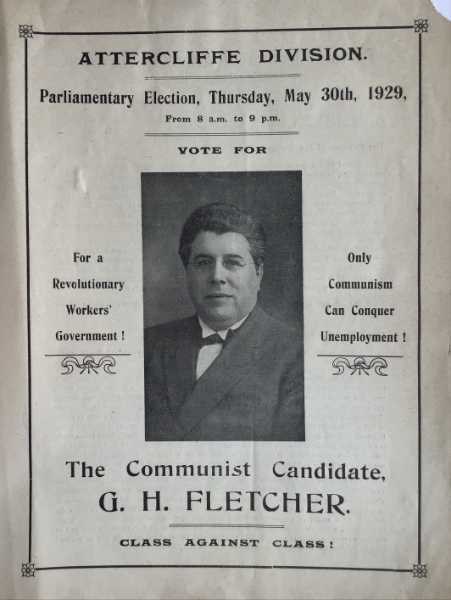
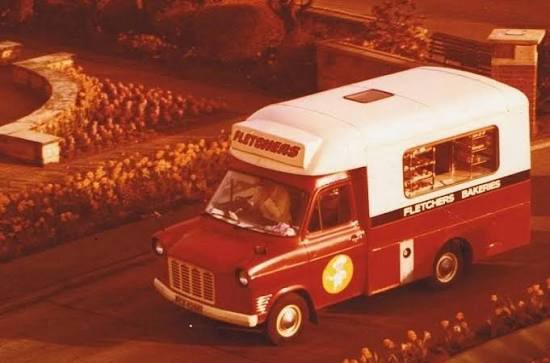
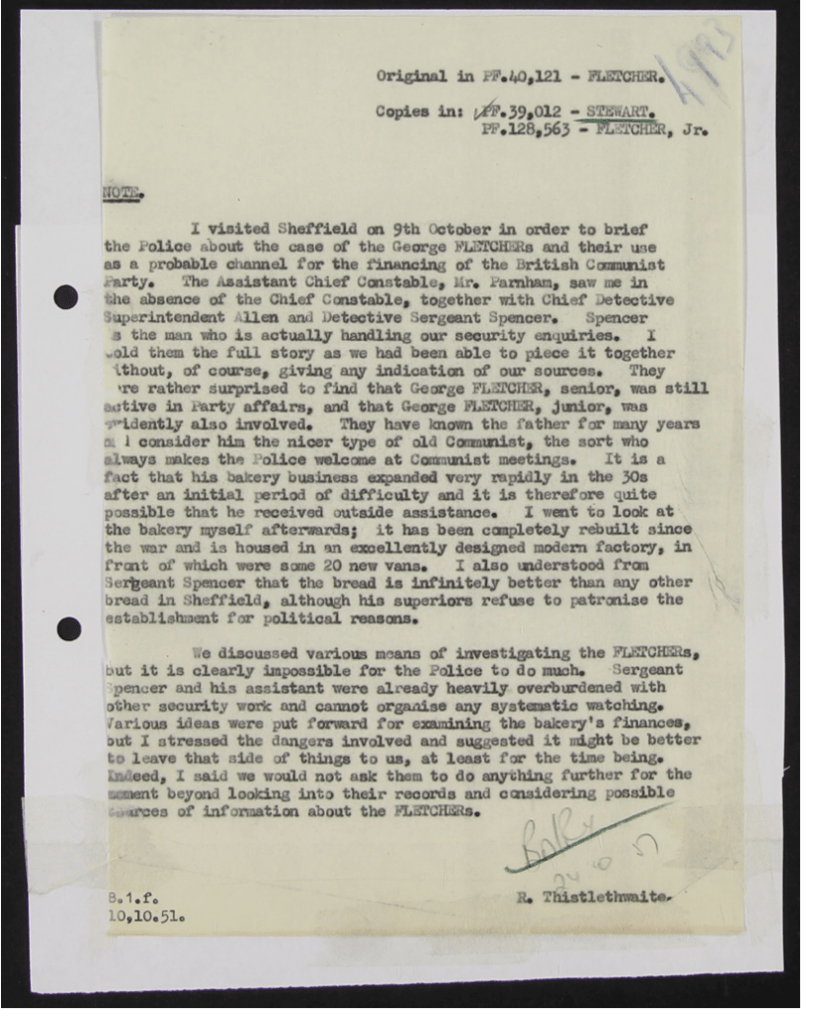
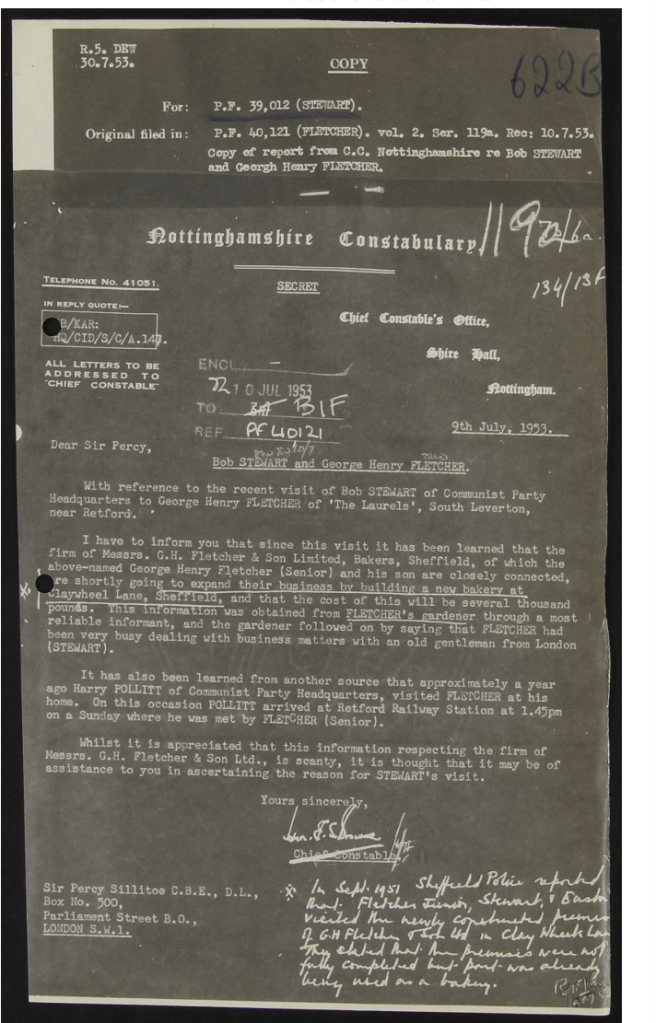
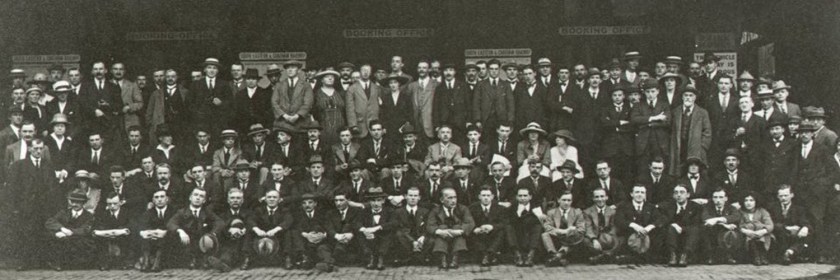
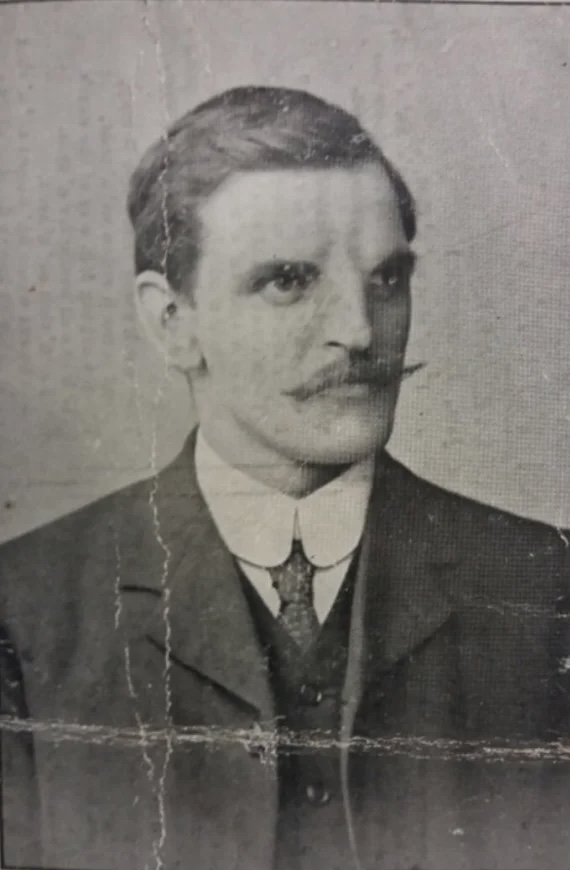
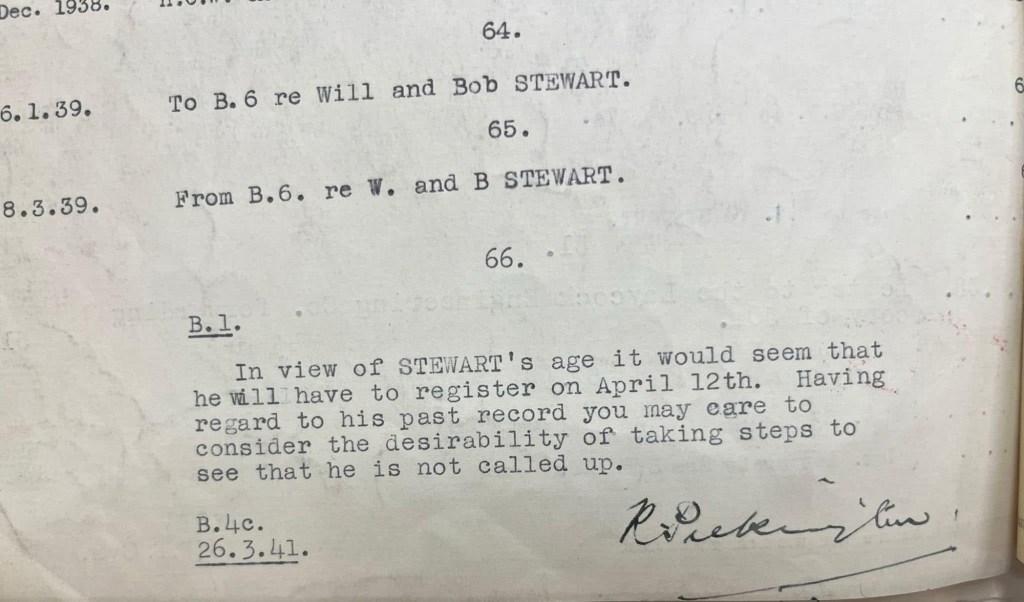
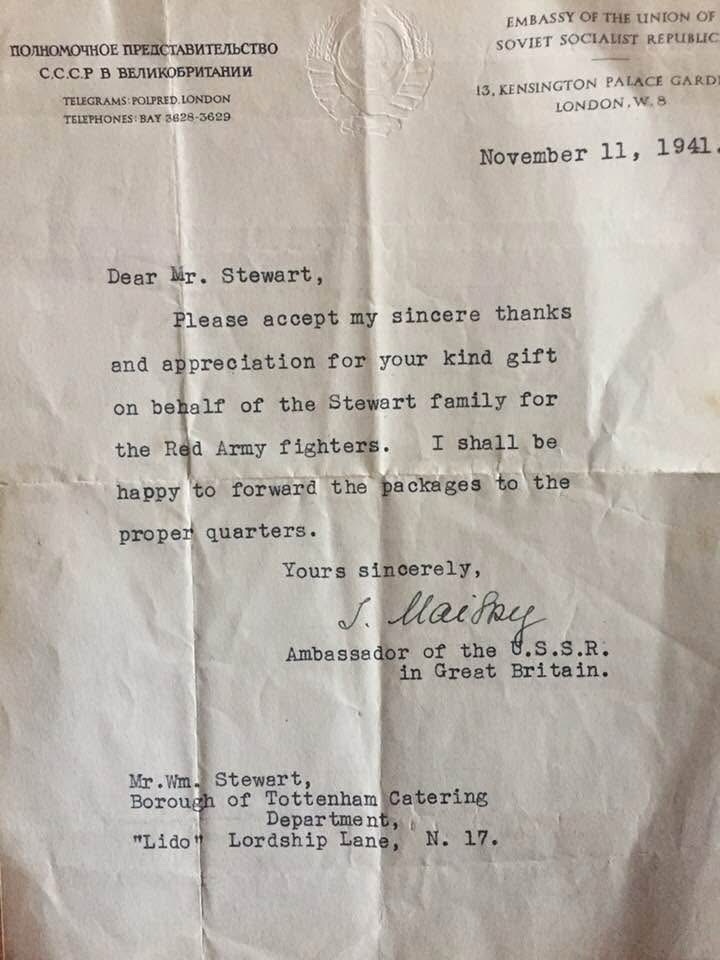
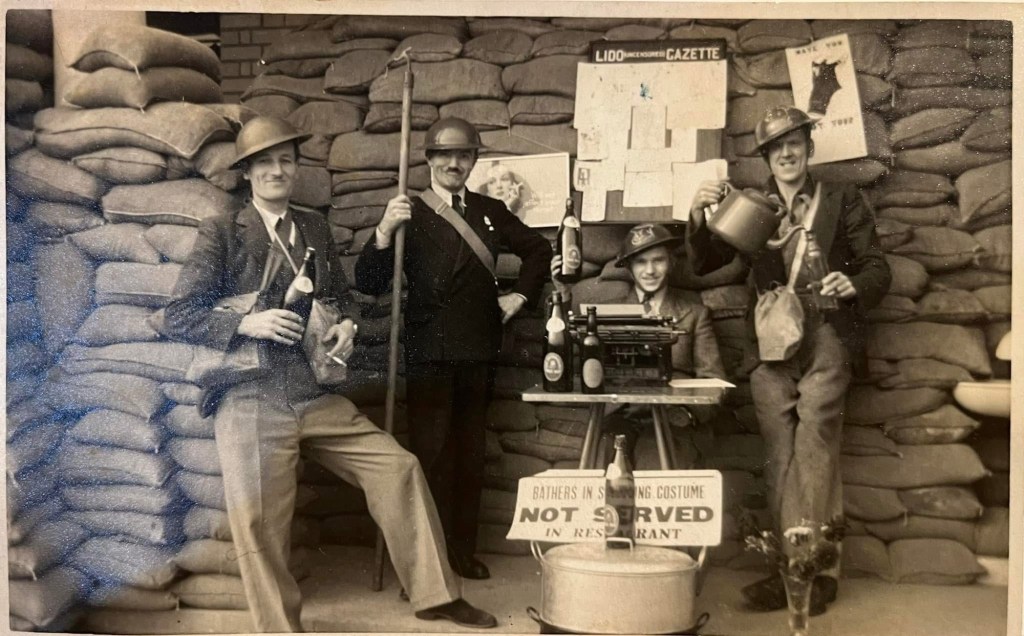
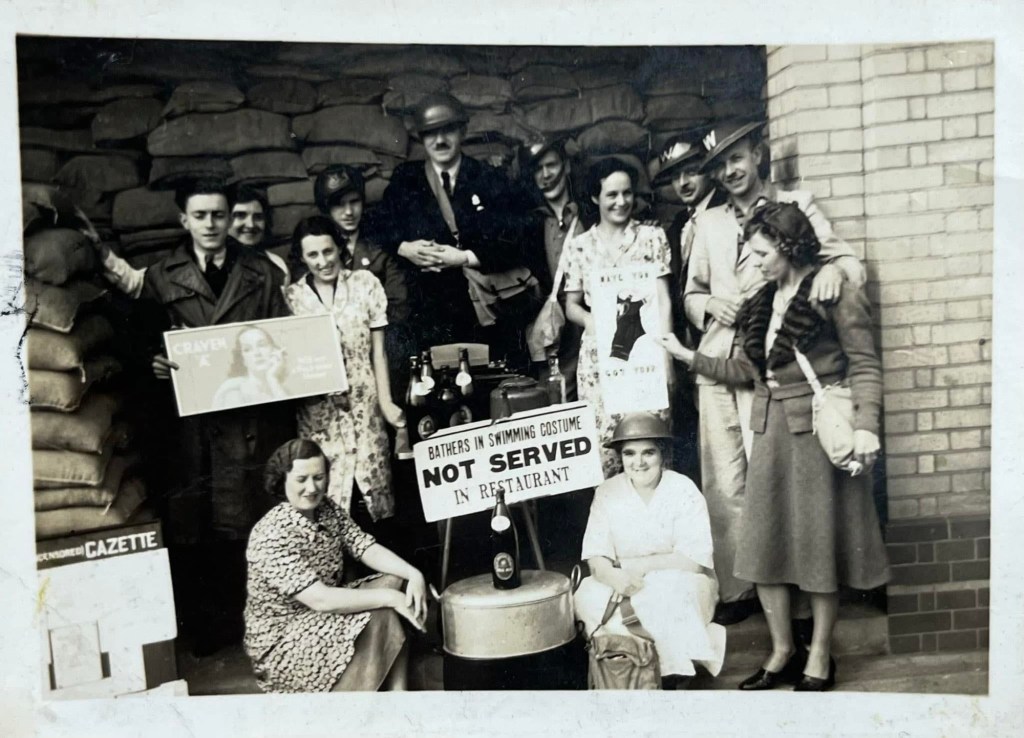
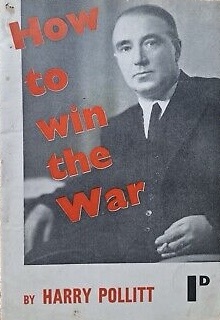
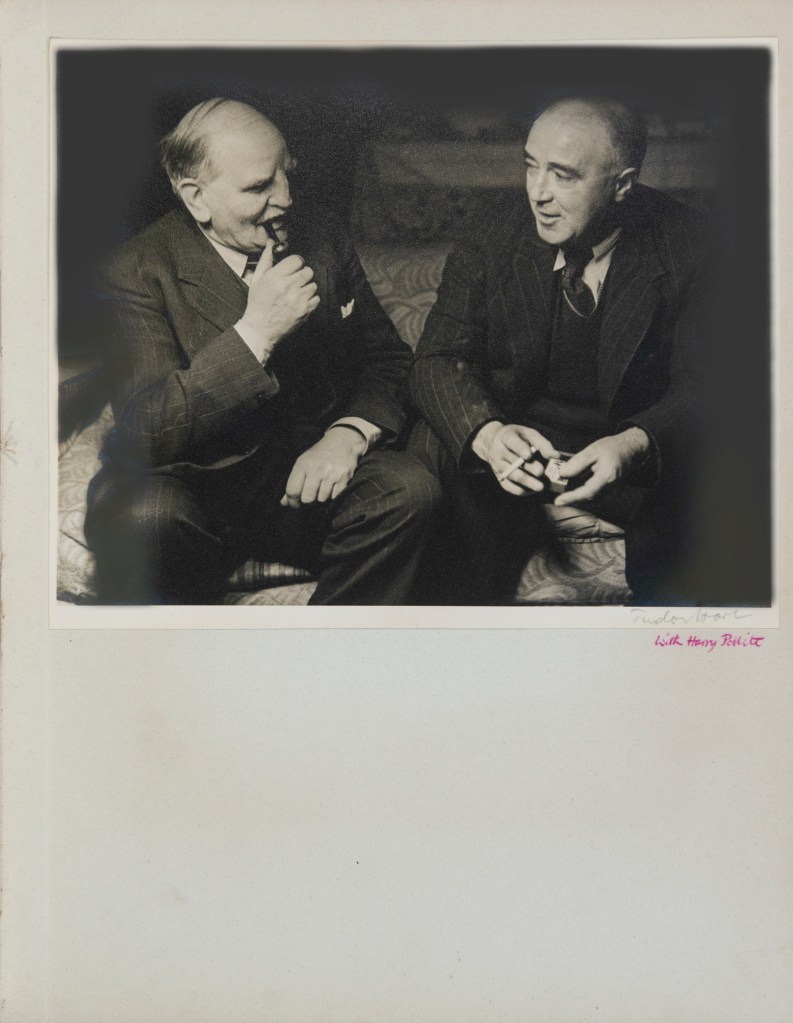
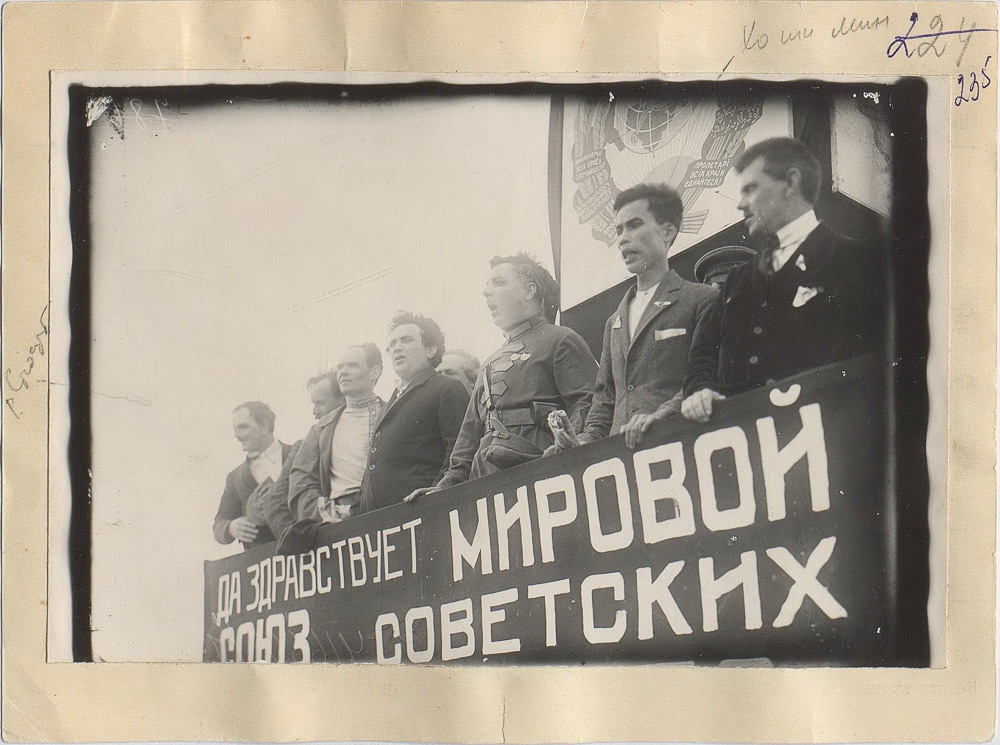
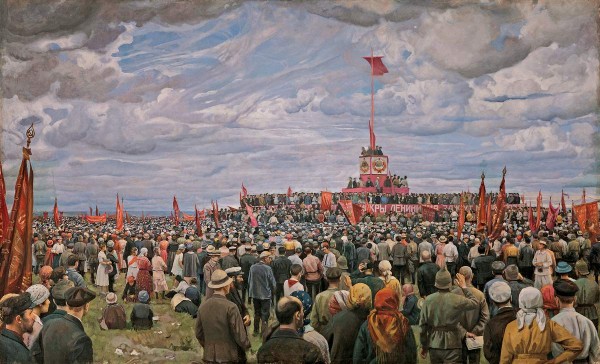
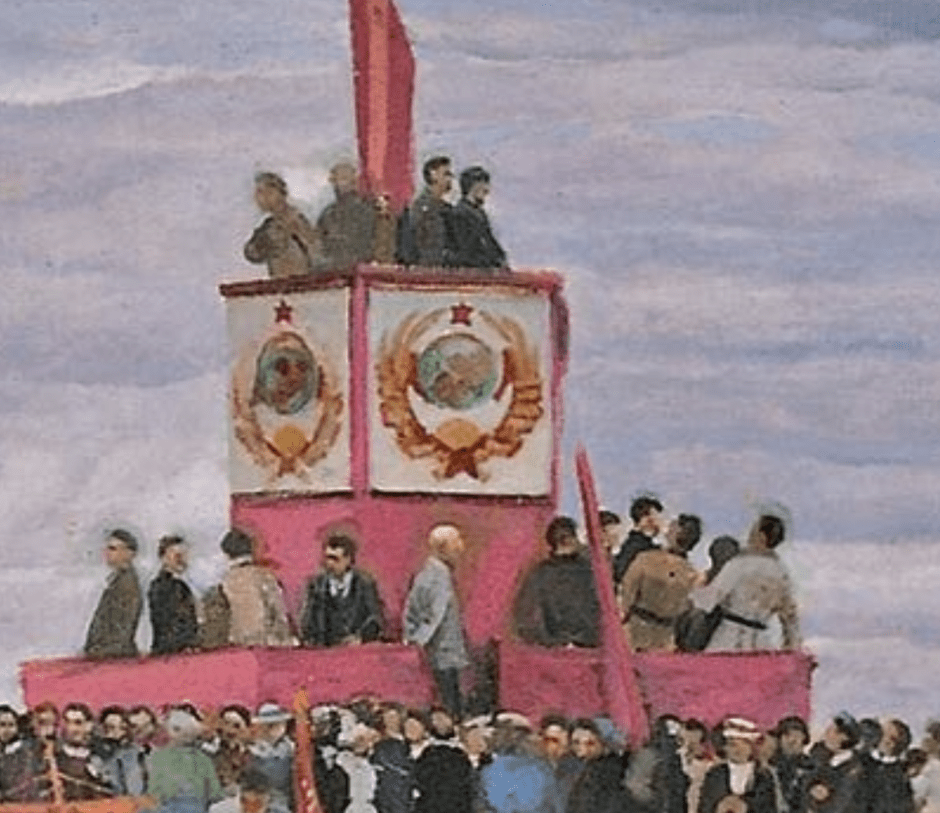
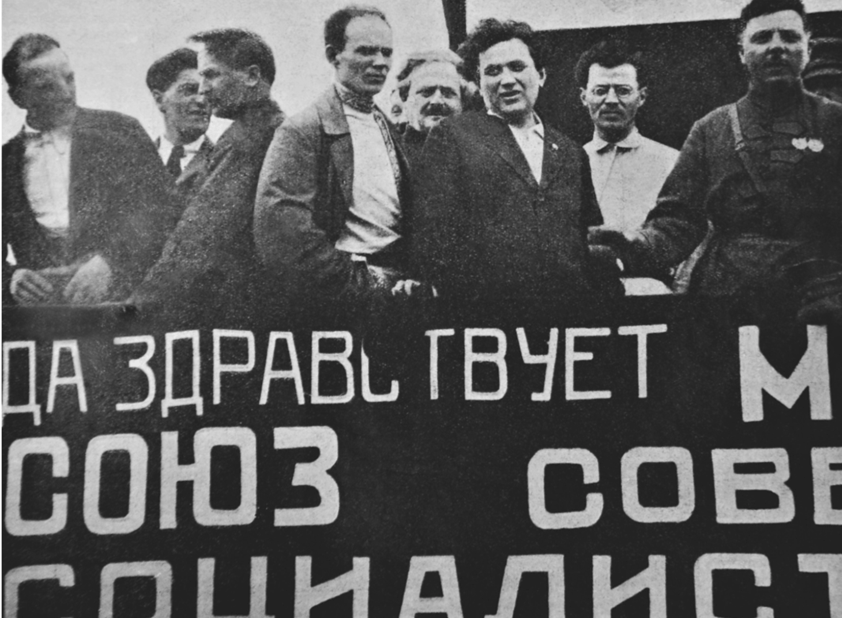

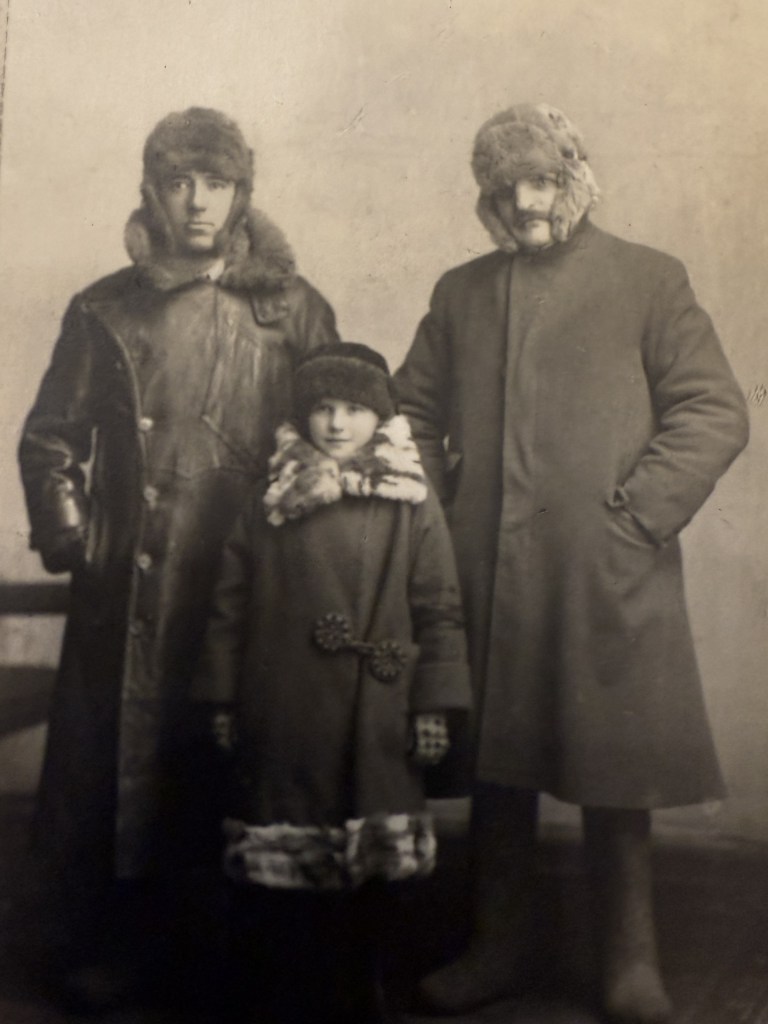


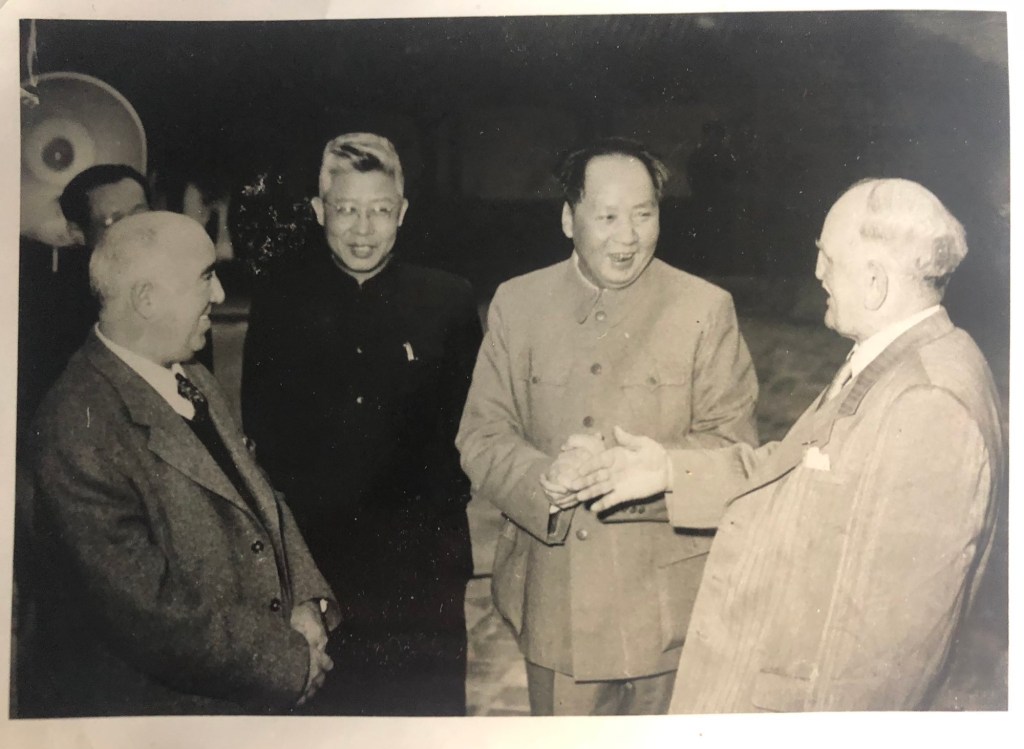
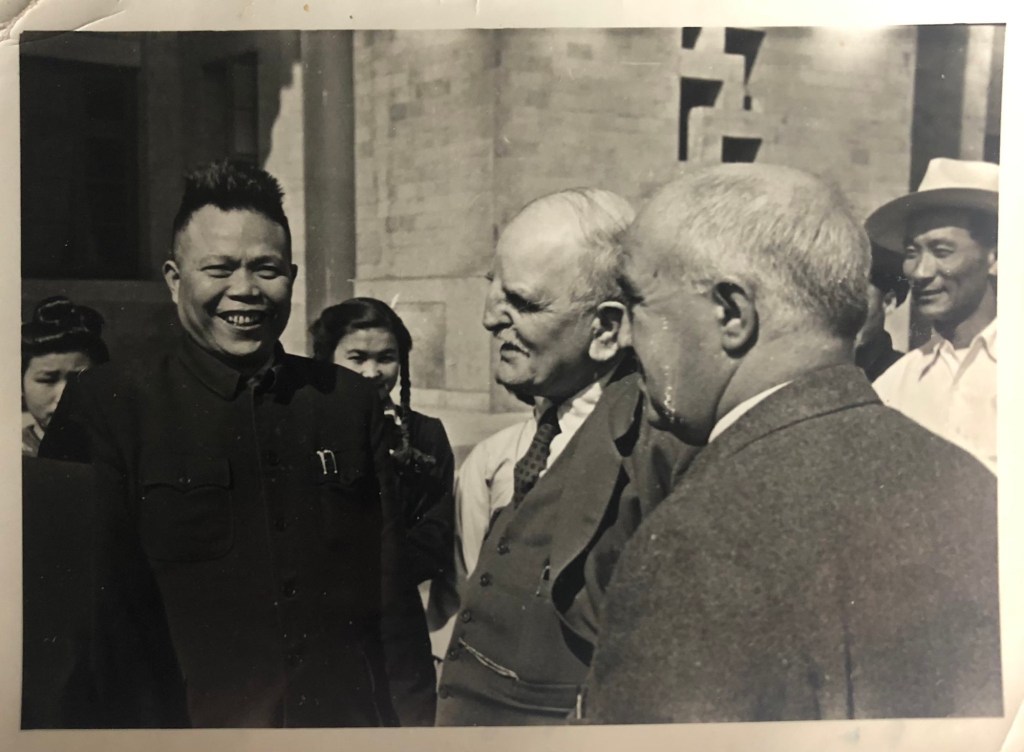
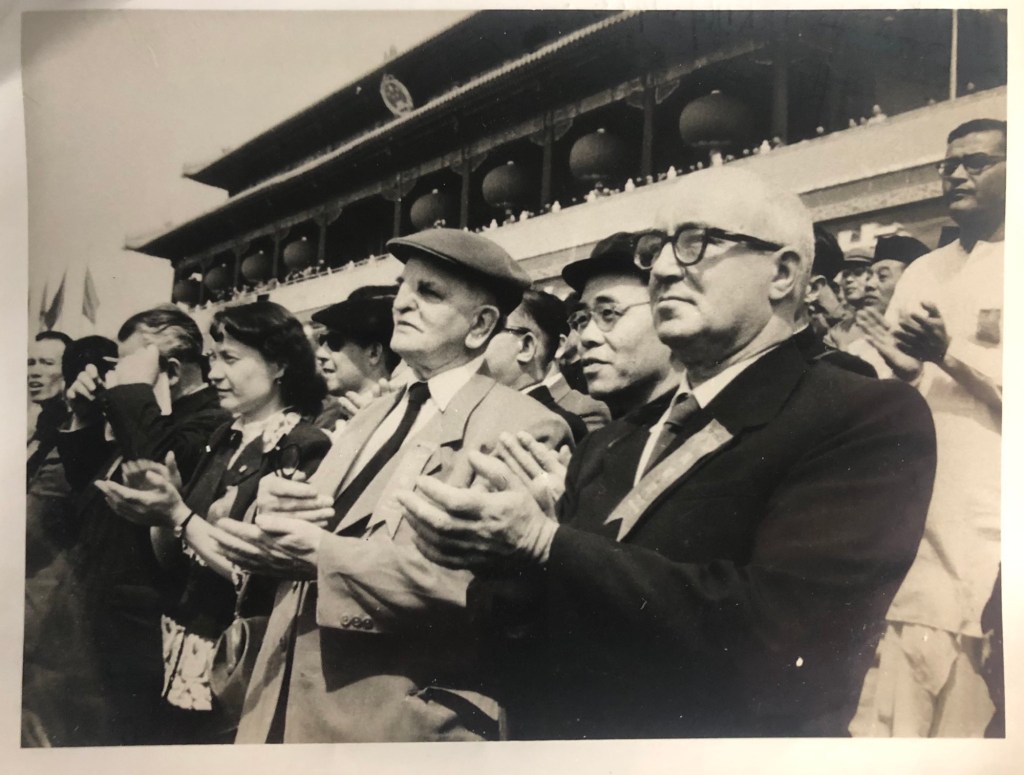


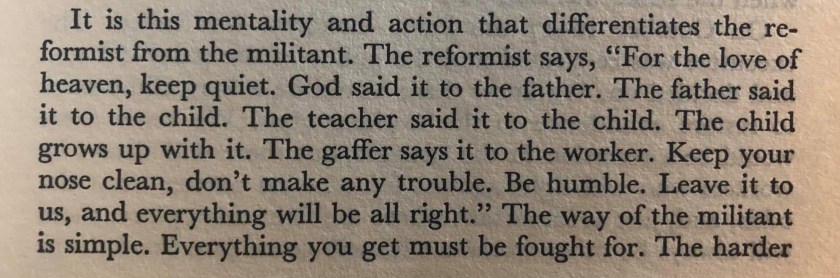

 Breaking the Fetters