When we started this project on our great grandfather Bob Stewart, my brother and I both agreed that we thought there was much to admire about the man but also much to criticize. Although I’ve tried to steer clear of hagiography in my writing I probably haven’t been as critical on this blog as the subject deserves. Lately I’ve been working on Bob’s life during the Second World War. In my misremembered reading of Francis Beckett’s Enemy Within I had been under the impression that Bob had objected to the CPGB’s acceptance of the Molotov–Ribbentrop Pact – Stalin’s squalid arrangement with Hitler. Turns out I was wrong. He followed the Stalinist line. So disappointing. Below is part of the first draft of my chapter on this period. Thanks to Katherine Mackinnon from Glasgow, who sent me the material on Bob from About Turn – the transcript of the CPGB’s meeting about the non-aggression pact. I wouldn’t have been able to write about this without her help and you can find out about her work at kmackinnon.org.
A spectre had been haunting Europe. The spectre of fascism. During the 1930s this new doctrine, fusing myths of noble past eras with a disturbing sense of victimhood, tantalised nations still shattered by The Great War. Many looked to Mussolini’s rise the decade before and sought to emulate his example. It was time for an iron hand. A need for discipline and national pride. Paramilitary uniforms accompanied political violence. Parties with an authoritarian distaste of the masses and enthralled with notions of racial purity flourished across the continent from Portugal to Romania. For a time it seemed unstoppable. Hitler had come to power in 1933, Franco took Spain few years later. In Britain, Oswald Mosley’s British Union of Fascists were given a sympathetic hearing in the press for several years and attracted a membership of around 50,000. Reactionaries aghast at liberal advances in society found themselves a natural home.
Anti-fascism was the impulse that caused a new generation to gravitate towards communism. Whereas Bob’s politics had progressed to Marx and Engels via temperance, trade unionism and the anti-war movement, younger comrades viewed the world in which they found themselves with horror. A rising tide of cry bully dictators and the terror they’d bring. Communists were added to the long list of scapegoats that fascists believed were polluting society. Inspired by the Nazis, Mosely often denounced Marx to his followers, in part because of the philosopher’s Jewish heritage. Communists were often at the forefront of disrupting the British Union’s rallies and stopping them marching through Jewish areas to intimidate the populace. By the middle of the decade the Comintern encouraged communists across Europe to form popular fronts with other anti-fascist parties with the aim of halting the spread of the far right. The CPGB, having exhausted its approach of decrying everyone else on the left as ‘social fascists’ threw itself into this new line. Campaigns to aid republican Spain or to challenge Prime Minister Neville Chamberlain’s attempts to appease Adolf Hitler benefitted from drawing in a wider range of people. The party considered itself the bulwark against fascism. It had to be fought at every opportunity. Socialism or barbarism. It was a rare edition of The Daily Worker that didn’t highlight the fact that Hitler was the greatest threat to the world. Right up until the moment that he wasn’t. And everything turned upside down.
The volte -face was the Molotov–Ribbentrop Pact signed on the 23rd August 1939. A treaty of non-aggression, it committed the USSR and Germany to ensure neither country made alliances with an enemy of the other. Russia had been an implacable foe of Nazism; it now supplied the Wehrmacht with fuel and grain. Many made justifications that Stalin was buying time in order to build up his armed forces in order to more readily combat the threat from Hitler but the grubby deal included not so secret plans to carve up parts of Europe between them. Germany invaded Poland from the West on the 1st of September causing Britain to declare war. Sixteen days later the Soviet Union invaded Poland from the East. The British communists were caught in an unresolvable conundrum. Their opposition to fascism was genuine and strident but the leader they had held up as a paragon of all that was good and true, Joseph Stalin, was now arm in arm with Adolf Hitler.
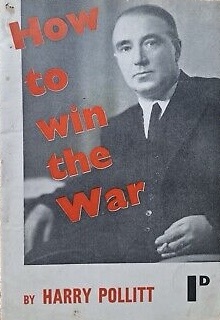
In the second week of hostilities, the CPGB’s leader, Harry Pollitt, published a pamphlet that laid out his party’s position explicitly:
“The Communist Party supports the war, believing it to be a just war. To stand aside from this conflict, to contribute only revolutionary-sounding phrases while the fascist beasts ride roughshod over Europe, would be a betrayal of everything our forebears have fought to achieve in the course of long years of struggle against capitalism…. The prosecution of this war necessitates a struggle on two fronts. First to secure the military victory over fascism, and second, to achieve this, the political victory over the enemies of democracy in Britain.“
On the day these words appeared Pollitt received a telegram from Moscow giving him instructions that the war was to be opposed. Stalin had instructed Georgi Dimitrov, the current head of the Comintern and one of Bob’s travelling companions on his first visit to Russia, that communist parties abroad should condemn their governments’ involvement in the conflict as imperialistic and, to keep Hitler on side, he wanted anti-fascist rhetoric to be minimal. Foreign communist parties were expected to correct their line immediately. Douglas Springhall, the CI’s British representative was on his way back from Moscow to clarify matters. On his return there followed a series of bad tempered meetings of the CPGB’s Central Committee to thrash out what they should do about the change of circumstances. Although Bob was not a member of the committee at this time he was seen as a senior voice in the party and attended the final two sessions.
Against the new line were Pollitt, J.R. Campbell and the party’s only MP, Willie Gallacher, figures who Bob was closely aligned with. Everyone else on the committee favoured following Moscow’s instructions which, as a travel weary Springhall admitted in the first meeting, amounted to the CPGB to not only highlight the imperialist nature of the conflict but to actively work for Britain’s military downfall. Revolutionary defeatism. When pressed on the possibility of fascism being imposed from within or without as a consequence of this Springhall confessed he had raised this question at the Comintern but had received only non-committal answers. A state of affairs which should have made the majority pause but, instead, the lemming like desire to adhere to Stalin’s directive was too strong to resist.
The hardline theoretician Rajani Palme Dutt opened the next meeting on the 2nd of October. He was the main proponent of the Stalinist line and began by fashionably traducing an old comrade – Harry Pollitt. The new policy needed to be accepted by every party member with absolute conviction and those that had misgivings should be mercilessly cleared out. It was “foul slander” that the CPGB was changing because of the Soviet Union. The reversal was necessary because, “our line was the wrong line.” He implied that Pollitt was a half-hearted vacillator and that the crisis had unveiled “dangerous tendencies in our Party.” The duty of a communist was not to disagree but to accept. Reading the transcript of Dutt’s speech what springs to mind is not a key moment in the liberation of the international working class but, instead, a badly acted one man fringe theatre production of Animal Farm performed to a minuscule audience in a tatty room in Covent Garden. Which is what it was. Gallacher was outraged. Never before had he listened to a “more unscrupulous and opportunist speech.” Pollitt assured his opponent that he would not be intimidated, “I was in the movement practically before you were born, and will be in the revolutionary movement a long time after some of you are forgotten.”
When Bob spoke up it was to deplore the manner in which the topic was being discussed. He was glad not to have been present at the previous session and, in defence of Pollitt, he was wary of “sledge-hammer demands for whole-hearted convictions and solid and hardened Bolshevism and all this bloody kind of stuff.” Aiming a barb at Dutt, he emphasised that the tone he had struck at the beginning of the meeting was “not a good way to start.” It was a very difficult situation that they were facing and they had to find a way through. Clarity was essential. And he was unequivocal, “I am for the line.” Over eighty years later, I wish his words had been different. He qualified his support – the thesis the CPGB had received from the Comintern had been very short and he anticipated a longer explanation of why this policy was necessary and correct but he was willing to accept it in the meantime. Part of his reasoning stemmed from his background as a conscientious objector. If they could stop the war the communists would, “be doing a service to the people of Europe and the world in general.” He also reflected on Winston Churchill’s address as First Lord of the Admiralty which had been broadcast the previous night. It was a month into the war and the statesman had described Russia as, “a riddle, wrapped in mystery, inside an enigma.” It only acted in its own self-interest. In Churchill’s analysis, this might not be a wholly undesirable trait. He might have wished that the Russian Army had acted as friends and allies of Poland rather than its invader, but the Soviets were standing where they were because it was, “necessary for the safety of Russia against the Nazi menace.” The invasion from the East had halted Germany’s designs on the Baltic states and Ukraine. A small silver lining. Bob imagined that the situation would bring about a “very definite searching of hearts even amongst the bourgeoisie.” His own contemplation had led him to an overly charitable reading of the situation.
“Is it not the case that in the workshops there is no serious antagonism at all to the Soviet Union having walked into Poland? In the first few hours there was, but after a little bit of thinking and after they saw the newspapers, with the peasants getting their landlords’ land, etc, then a different kind of attitude began to occur in the minds of the workers.”
Tens of thousands of Polish prisoners of war were murdered by Stalin’s secret police, 22, 000 in the Katyn massacre alone. The Soviet occupation was marked by mass deportations to Russian Gulags and brutal repression. Bob’s comments, even in these early weeks, were as shameful as they were misguided.
The meeting dragged on until the next day in a belligerent atmosphere but it was clear the majority were prepared to support the Comintern directive whatever misgivings they may have had. The Second World War was a conflict between old Imperial powers and should be denounced and opposed by communists everywhere. I am thankful that my great grandfather was not a member of the committee and could not participate in the final vote on the resolution the next day. His friends Pollitt, Gallacher and Campbell remained consistent in their anti-fascism and voted against. Bob would have joined sixteen of his comrades in adopting a position endorsing Stalin and Hitler’s marriage of convenience which spat in the face of all they had campaigned for over the last decade. Once the meeting was over, Pollitt was no longer the leader of the Communist Party of Great Britain though his last act was to ask that the record show that Gallacher had voted with the majority. As the party’s only presence in Parliament he had to be seen to be following the line. Dutt took over as General Secretary in all but name.
Walking out of King Street that evening, mithering over what had just occurred, Bob would have been greeted by the sight of London’s preparations for war. Barrage balloons beginning to dot the skyline like eerie sentinels. Railway stations crammed with duffle coated school children weighed down with kitbags and boxed gas masks being shepherded onto hissing steam locomotives hauling them away to safety and homesickness. Late afternoon in autumn took on a gloomier aspect with the street lights and neon advertising extinguished in the blackout. A depressing and maddening day. It would be the last time he’d visit CPGB HQ for months. He’d not been coming in very often for a while. Through the tapped telephones MI5 kept track of people trying to reach him. They were often told that it was no good enquiring for him, that the only way to get hold of him was to visit him at home. He did not come in these days. Was he ill? No. As time went on there seemed to be some confusion over his whereabouts. In November one caller asked whether Bob was in London and received the reply, “I think he is.” Time and time again people were informed he wasn’t in and nor was he likely to be. He was no longer at King Street. Had he washed his hands of the whole lot of them after the rift? Or had he gone to ground?
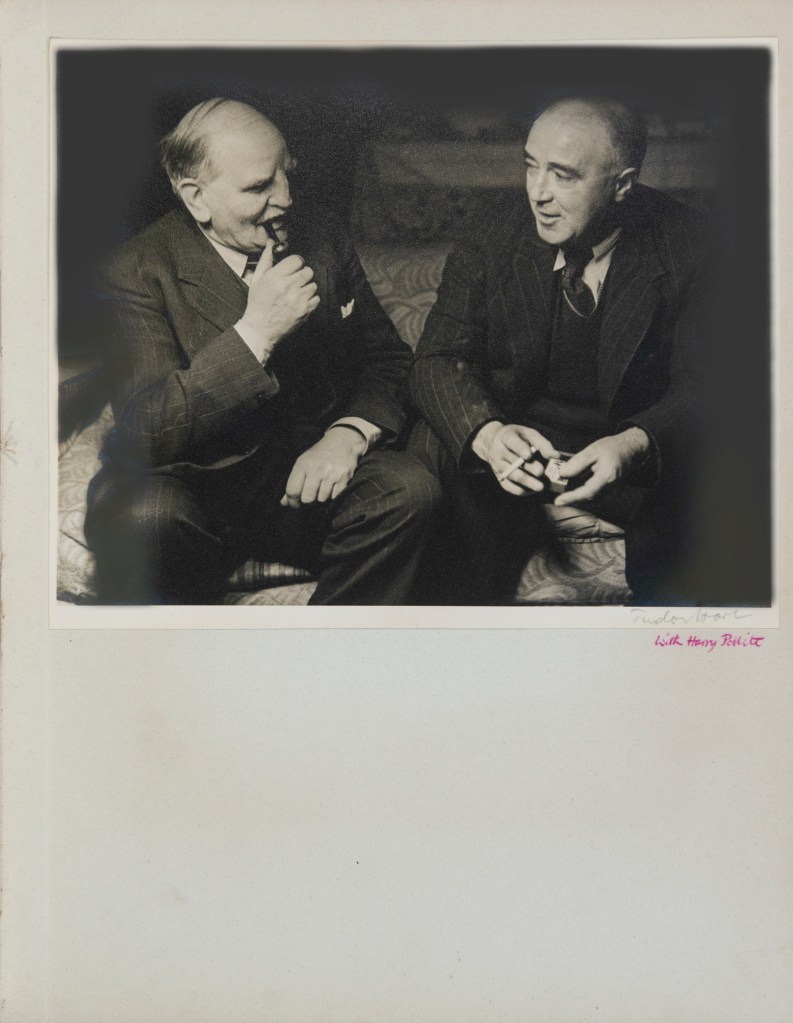
Harry Pollitt used the free time he had unexpectedly acquired to write his memoirs, Serving My Time. In its pages he described the moments he shared with my great grandfather in 1924 when, surrounded by snow and ice, they attended Lenin’s funeral in Moscow. The event was of paramount importance to them both.
As Bob Stewart and I stood there, we pledged ourselves and the Communist Party to which we belong to prove worthy of our trust , and to build up in Britain a revolutionary party of which we could be proud. And Comrade Lenin would desire no greater tribute, no greater memorial , than the building up of a Communist Party in Great Britain that will lead the working class in the age-long fight to smash capitalism and achieve the emancipation of the workers.
How long ago that must have seemed.
Alan Stewart.
 Breaking the Fetters