Breaking the Fetters Chapter 22: The First Labour Government and the Zinoviev Letter.

The First Labour Government.

On my return from Ireland I found the country in a political ferment. A Labour government, with Liberal support, had been formed arising from the general election of November 1923. This government, headed by Ramsay McDonald as prime minister, had run into trouble and was in no way solving the deep economic crisis. The cost of living was high, wages were low and unemployment still at a very high level. Despite this the big political discussion was taking place on foreign policy. The de jure recognition of the Soviet Union had been effected in the early days of the Labour government, and demands were being made by Labour M.P.s for this to be followed up by normal trading and diplomatic relationships.

This demand soon ran into difficulties. The Tories were vehemently against. They demanded compensation for British property in the Soviet Union which had been nationalised by the Soviet government, and also trading rights for British firms on Soviet territory. The first was realisable, but naturally the Soviet government would not entertain the latter. In Parliament Lloyd George supported the Tories, so with a Tory-Liberal coalition the minority Labour government was in difficulty. Pressure by Labour M.P.s, however, forced the government to open discussions with the Soviet government on compensation for confiscated British property, trading relations and a British loan to the Soviet Union.

The Soviet delegation arrived in Britain in April 1924, and negotiations under Arthur Ponsonby from the Ministry of Foreign Affairs began immediately. By August all the problems had been settled except one: the compensation for British property. Then news came that negotiations had broken down. The Tories were jubilant, saying this showed that it was impossible to negotiate with these Bolsheviks. In this critical situation, when it was obvious that the future of the Labour government was in jeopardy, a number of Labour M.P.s went into action. One of them who played a leading part, and who later told the full story, was Edmund Morel, M.P. for Dundee, a man I knew well. Morel was secretary of the Union of Democratic Control, a champion of the colonial peoples and founder of the Congo Reform Association in 1904. Among his many books and pamphlets outstanding was Red Rubber, an exposure of the rubber slave trade in the Congo. Morel and the others had discussions with the Soviet delegation and then went to Ponsonby with a suggested formula. At first this was accepted, but later rejected by Ponsonby, and it was deadlock again. On the critical day when Parliament was to re-assemble and a parliamentary statement of the negotiations was to be made in the House of Commons, Labour M.P.s again saw the Soviet delegation and only four hours before the parliamentary statement was due agreement was reached by all parties in what were really last-minute negotiations. Edmund Morel later told the story of what the argument was about. The British government wanted the words “valid claims” inserted in the compensation agreement. The Soviet delegation suggested “valid and approved by both governments”. The Soviet government demanded they should have a say in what was “valid”. The eventual compromise which was finally accepted used the words “agreed claims”.

This draft treaty on trade was, however, never put into effect. It was clear that the Tories violently opposed any trade with the Soviet Union and, with the Liberals supporting them, the defeat of the Labour government was only a matter of time. The Communist Party estimated that the general election was at most only a few months away.

The party called for a closing of the working-class ranks and for an end to the divisions in the labour movement and a fight for the return of a majority Labour government based on the unity of the working class, with Communists being accepted with full rights in the Labour Party. We decided that no Communist candidates would run against Labour candidates when the election took place and instructed our branches to submit the names of Communists to the Labour selection conferences to go forward for selection with the Labour nominees. In some constituencies the nominations of Communists were ruled out by right-wing Labour, but in others Communists were nominated and eventually selected to stand as joint Communist-Labour candidates. In this way Saklatvala contested Battersea and won the seat. In all, seven Communists stood as Labour-Communist candidates and in Leeds Tom Mann lost a selection conference by two votes. Gallacher was only narrowly defeated in the Motherwell selection.

In Dundee, however, the position was different. It was a double-barrelled constituency, two seats for the city. There was only one Labour candidate, Edmund Morel. The other M.P. was Edwin Scrymgeour, the prohibitionist, who, while occasionally supporting Labour, was not officially connected with the Labour Party. We took a decision to contest Dundee and I was chosen as the candidate, thus becoming the only “clear” Communist candidate in the election. However, it was not the British-Soviet draft treaty that defeated the Labour government. The defeat came on a much smaller issue. Johnnie Campbell, who was then the editor of the Workers Weekly, the paper of the Communist Party, had written an article which the Crown held to be seditious. This contention was one which might have been difficult to sustain in Court and, on second thoughts, the Attorney General withdrew the charge. The Tories, hell bent for an election at any cost, raised an outraged cry. The Tory press claimed intimidation of the Labour government by the Communists and in parliament the Tories tabled a vote of censure on the government. This vote of censure was defeated, but a Liberal amendment to it seeking an “appointment or a select Committee to investigate ” the withdrawal of the charge against J. R. Campbell was carried against the government by 364 votes to 198. Next day, October 10, Ramsay McDonald announced the dissolution of Parliament.

Our party was first in the field in the Dundee hustings. I commenced my campaign with meetings on the 14th October. With me I had Harry Pollitt who, because he had been in Dundee with Gallacher in the previous elections, knew Dundee as well as his home town of Gorton. He was also a great favourite with the local shipyard workers, many of whom were to him “fellow boilermakers”. Also with me was Helen Crawfurd, a wonderful woman speaker invaluable in an election in a women’s town. And also Johnnie Campbell. Poor Johnnie, he always had to open his meetings with an apology: “I would much rather have discussed the election without dragging in personalities, but I will have to because if I don’t, you will.” After all, he was supposed to be the cause of the election, although he soon disposed of that in his speeches. Still, it was all grist to the mill and filled the meetings to capacity, with Johnnie always in top form.

The Dundee Tories and Liberals had made a pact for the election, running one candidate each, two votes -one Tory, one Liberal. The Liberal was Sir Andrew Duncan, a barrister from Kent, who boasted of Scots ancestry. This brought him his first mistake in the election. At his first meeting he was laying on the charm and said, “I come as a Scotsman among Scotsmen.” Then a voice from the audience put him right: “Hauf o’ wiz are Irish.” This was indeed true. At any Dundee meeting 50 per cent or more of the audience were Irish. Scrymgeour, who had lived all his life in Dundee, knew this and always deliberately campaigned for the Irish Catholic vote.

Early on in the campaign Harry Pollitt also gave Duncan a knock. Sir Andrew let it be known in the press that he wanted a debate with a trade unionist, preferably a shipyard worker, no doubt to show he knew the trade union position very well. The boilermakers got together and accepted the challenge and put forward as their speaker Harry Pollitt. The brave Sir Andrew then changed his pipe music. He would not debate with a Communist, he said, much to the glee of the local shipyard workers who put his gas at a peep for the rest of the campaign.

Sir Andrew Duncan’s running mate was a Tory called Frederick Wallace who had already contested Dundee in the 1923 General Election.

The Labour candidate was Edmund Morel, who as I have said had taken an important part in the British-Soviet negotiations on the trade treaty. When the Labour government was first formed he was tipped to be the first Foreign Minister, but he was much too left for Ramsay McDonald, who took the Foreign Ministry himself as well as being the Prime Minister. Morel was a strong candidate, a good speaker and always on the left, but he always hedged at being officially associated with the Communists. Privately he would say he hoped the Communists would win the second seat, but he would never say it publicly.

Edwin Scrymgeour was the sitting member and, while he stood as a prohibitionist, he campaigned for the second Labour vote. I said at the time he was the candidate from heaven who would steal a vote from all parties, Tory, Liberal, Labour and Communist, and then say he had a mandate for the abolition of the liquor trade. This in fact was a great joke at the time, because Dundee was one of the most “drunken” cities in Britain and many of those who voted for Scrymgeour could be seen every Saturday in life fou’ with the beer and whisky.

This election was one of the most rousing in Dundee’s long history of tousy election campaigns. From the day I opened my campaign on October 14th to my final meeting on the 28th I spoke to full houses only. On many occasions there were overflows. This went for every candidate. From the City Hall holding three thousand to the smaller halls holding a few hundreds, all were packed out. The main issues in the election, in fact almost the only two issues, were British-Soviet relations and employment with good wages. In Dundee these fused together because Dundee is a big textile town and before the war of 1914-18 a large flax manufacture was based on the export of flax from Russia. This had dried up and many flax workers were unemployed, so the question of British-Soviet trade was not an academic one in Dundee. It was on diplomatic relations between Britain and the Soviet Union that the big election fight took place.

I had just returned from my spell on the Communist International and my knowledge of the Soviet Union was standing me in good stead. I knew what I was talking about and could discuss developments in the Soviet Union at first hand. Morel, with his knowledge of British-Soviet trade discussions, was also campaigning well on this issue. This rattled Sir Andrew Duncan and his Tory running mate, and as they tried to answer the questions their meetings became rowdier and rowdier. They were under a constant barrage of interruptions, which was not unnatural because they began to insult people at the meetings. Many of the audience had been in dire straits and unemployed for months, and they retaliated by showing their disgust in good election fashion. The singing of “The Red Flag” at the end of the Tory and Liberal meetings became a commonplace event. The local newspapers, seeking to find a reason for this, accused the Communists of trying to break up the Tory-Liberal meetings. I was mad about this and wrote to the papers pointing out the Communists had a campaign in operation and this was stretching our resources to the limit and occupying 100 per cent of our time. We had no time to think about other candidates’ meetings.

So it was Morel and I for recognition and trade with the Soviet Union, Duncan and Wallace with their “down with the Bolsheviks and trust the boss” attitude, and in between came Scrymgeour talking of God and Heaven, the iniquity of the drink trade, appealing to the reason of the Labour voters, and in particular to the Irish Catholic voters. As the campaign went on he became more and more anti-Soviet, no doubt through pressure of the Catholics and in order to win Catholic support.

Of course the election hustings were full of good give and take questions and answers, with the Tory and Liberal mostly on the receiving end. The following question, noted by the press of the period and kept for posterity, is a good example. At Sir Andrew Duncan’s final rally, after he had concluded his final speech and was no doubt saying to himself, as all candidates do, “Well that’s finished,” the chairman asked for questions. Up jumped one bright fellow to ask: “As the only difference between Churchill and you is that Winnie sent us to war to slash the Germans whilst you stayed at home to slash wages, is there any reason why we should not give you the same dose as the Kiel Canal rat catcher?” Amid a storm of cheers Sir Andrew was heard to whimper, “I stand on my record.”
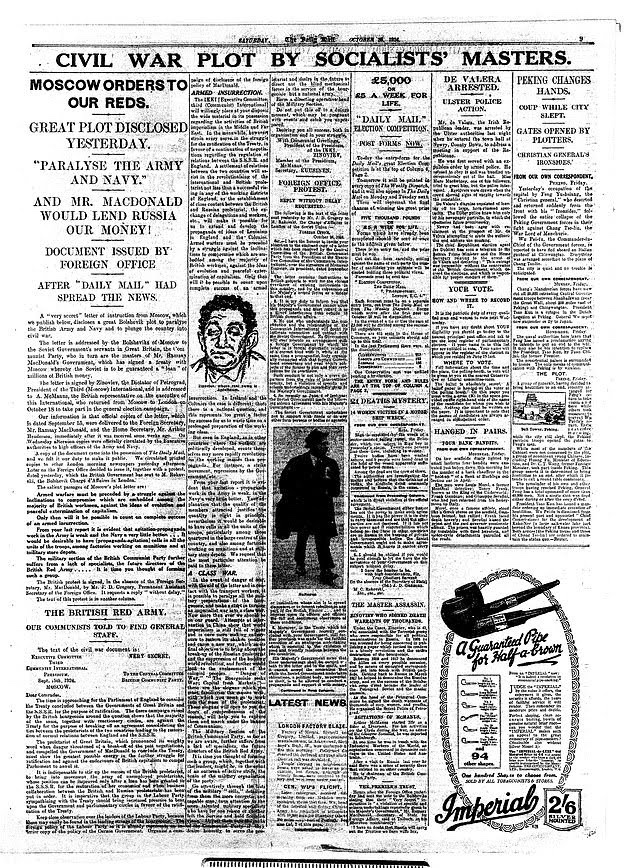
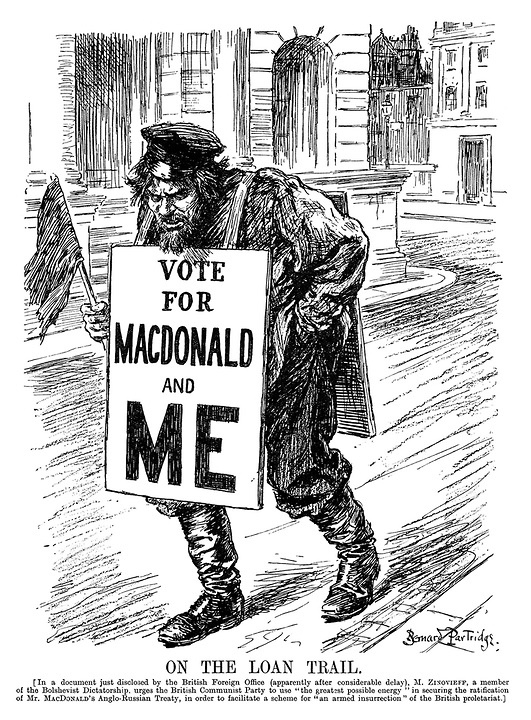
As the election campaign neared its end it became increasingly clear that Labour was gaining ground. It was at this point that the Zinoviev letter incident broke (1). This was one of the crudest political frauds ever inflicted on the British voter. It was a forged letter purporting to have been sent by the Communist International to the British Communist Party. On the Saturday before the election all the press in Britain had banner headlines: “Soviets Intervene in British Elections,” “Red Hands on Britain’s Throat”, and so on. Immediately Rakovsky, the Soviet Chargé d’Affaires in Britain, indignantly and emphatically denied the authenticity of the letter and categorically stated it a forgery. All Sunday the country waited for an explanation from Ramsay MacDonald, who was Foreign Minister, but nothing came. On Monday the local paper in Dundee, The Courier, carried a huge banner headline:

COMMUNIST PLOT-RAMSAY MACDONALD SILENT

While such a denial from the Soviet Ambassador was to be expected the fact remains that the socialist government, the foreign office, and Mr. McDonald personally were satisfied it was a genuine document and not a forgery.

Arthur McManus, who had taken my place on the Communist International and who was an alleged signatory to the letter from Zinoviev, was speaking at Manchester two days before the poll. In the audience were police and C.I.D. men. McManus denounced the document as a forgery and challenged the police to arrest him, but no one moved. The last thing the Foreign Office ever wanted was an investigation into the origins of the document.

On Tuesday, MacDonald made a statement casting doubt on the genuineness of the document, but the damage was done. The British electorate went to the polls without a clear statement from MacDonald, and the greatest hoax ever perpetrated in British political history had paid off. The result of the poll was a resounding Tory victory. On dissolution of Parliament the state of the parties was:

Tories 258

Labour 193

Liberal 158

After the election it was:

Tories 403

Labour 157

Liberal 38

The Liberals who had precipitated the election were smashed and never again returned as a main British parliamentary party. That was the outcome of their anti-Soviet policy and their demand for an investigation in the Johnnie Campbell case.

Edmund Morel held Dundee, with Scrymgeour second. The result was:

Morel (Lab.) 32, 864

Scrymgeour (Prob.) 29, 193

Wallace (Con.) 28, 118

Duncan (Lib.) 25, 566

Stewart (Comm.) 8, 340

After the count we mounted the platform to say our piece, but the Tory and the Liberal would not speak. They were sorely disappointed because they had really believed that the Zinoviev scare had won them the seats. Morel, knowing this, went for them, saying he would demand an immediate investigation from Parliament, which I think he did. Scrymgeour, safe in the second seat, found time to thank God for being good to him and thus saving the second seat from the Communist menace. He did not add but must have thought, “Yes, and with the aid of the Irish Catholic vote.”

With such a resounding victory at the polls the road was now open for a direct attack on the British working class. It certainly came.

Footnote (1): Some facts regarding the notorious letter came to light years after-wards. The letter was dated Moscow, September 15th 1924. It purported to be signed by three people: Zinoviev, President of the Presidium of the I.K.K.I., McManus, Member of the Presidium, Kuusinen, Secretary.

Zinoviev was not president of the presidium of the I.K.K.I. (Communist International) although he was president of the I.K.K.I. itself, and therefore would not sign himself as president of the presidium. Also, he always signed as G. Zinoviev. Secondly, McManus always signed as A. McManus. or Arthur McManus. Thirdly, Kuusinen was not the secretary of I.K.K.I The secretary was a man named Kolarov. To add to this mountain of obvious forgery the letter was headed from “the Third Communist International”. There was no Third Communist International. It was always referred to as “the Third International’ because it followed the First and Second Internationals, which were not Communist. These were such infantile mistakes that even a cursory examination would have shown the document to be a blatant forgery.

In later years it came to light that a Foreign Office official, Mr. J. D. Gregory, who was dismissed from the Foreign Office after an inquiry into some illegal currency deals, was stated to have been involved with some Russian emigrés in the forgery of the letter. This was never ultimately proved, but the whole story of the Zinoviev letter, dealt with in W. P. and Zelda K. Coates’ book A History of Anglo-Soviet Relations, is fascinating reading for all students of political history.
Breaking the Fetters Chapter 15: In Gaol Again.

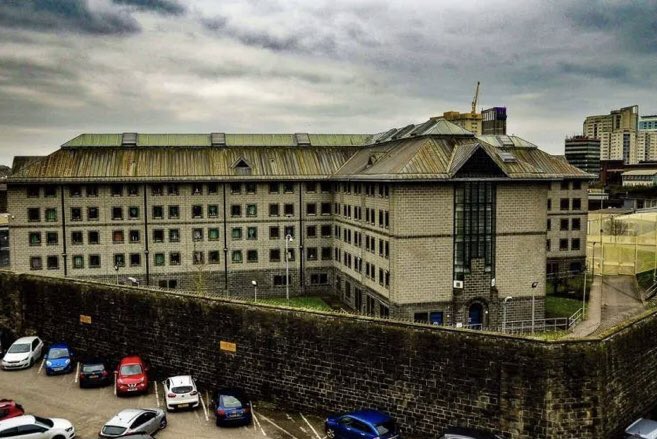
HMP Cardiff.

In 1921 I was attending the Party’s National Executive in London. It was close to May Day and McManus, who was booked to speak at a May Day meeting in South Wales, said he could not go and asked me if I would like to take his place. “Sure,” I said, “I have never been to South Wales and it will be a new experience.” As it turned out it was.

I went down by train to Aberdare but before reaching there the train stopped at a small station and along the platform came a group of fellows shouting, “Bob Stewart, Bob Stewart!” I stuck my head out of the window and said, “That’s me.” “Can you do a meeting for the Party in Mountain Ash tomorrow night?” they asked. “Yes, I’ll be there.” So, after the meeting in Aberdare I travelled to Mountain Ash. The meeting was in a cinema and was crowded out. As usual at the time, the “splits” were in the boxes taking notes of my speech, but this happened at all meetings so I ignored them. The meeting finished and the local fellows said they were very pleased with the attendance and the effect. The repercussions were then still unknown.

I returned to London, and on the following Saturday, 7th May 1921, came the police raid on the party offices at King Street, Covent Garden, when Inkpin the general secretary was arrested. The raid was made without a warrant, under the Emergency Regulations Act. It was carried out by Detective-Inspector Parker, acting under the instructions, so he said, of the Director for Public Prosecutions.

During the raid all personnel in the office were rounded up from their individual rooms and brought to the general office on the ground floor of the building. The rooms were ransacked and, while this was going on, the homes of the office workers, even those of the girl clerks, were being searched. The police authorities certainly put on all the trimmings to build the raid up into a first-class political scare.

When Inkpin came into the general office and he exploded at Parker for the unwarranted intrusion into private property. “I demand to see your warrant to search these premises,” he said. “I don’t need a warrant,” replied Parker. “I am acting under the Emergency Regulations.” Parker then started to question Inkpin about the publication and sale of the Communist Party pamphlet called The Statutes of the Communist International. “Who wrote the book?” asked Parker. “What do you mean who wrote it?” said Inkpin. “These are the Statutes adopted by the 2nd Congress of the Communist International.” “Where did the books come from?” persisted Parker. “They came from Moscow, from the Communist International,” replied Inkpin. During the interrogation Inkpin again protested to Parker about the manner in which the police were acting, forcing their way into all the rooms in the building, sorting out files of correspondence obviously with the intention of taking them away. But Parker brushed this aside and kept on asking questions about the pamphlet The Statutes of the Communist International. Inkpin continued to answer truthfully this was a record of the decisions of the Communist International which was sent by the International not only to Britain but to most countries throughout the world.

Now Detective Inspector Parker might have been a good man at detecting crime, but he did not seem to have the elementary knowledge required to comprehend the simple working of an international body. Maybe, of course, he had had his instructions not to try to understand. Anyway, after fifteen minutes of this sham he stopped asking questions and started giving instructions. To Inkpin he said, “I am going to arrest you under the Emergency Regulations Act No. 19. I am further going to search the premises and take possession of anything I think fit under an order signed by the Chief of Police.” He then turned to another detective and said, “Mr Hole, here is the order,” and to “Inkpin, “Come with me.” “What, without a warrant?” said Inkpin. “None necessary,” was the reply and he turned to leave. It was then he spotted me standing in a corner trying to look as inconspicuous as possible, but obviously not succeeding. “Who is that man?” he barked. “That’s Mr Stewart,” said Inkpin. “Get his name and address, and the name and addresses of all the others.” And with that little lesson of how democracy works in this land of the free he turned, taking Inkpin with him, and disappeared out of the door.

The place was alive with police and plain-clothes men. I ran from room to room trying to salvage what I could, but the police ransacked the place, almost everything went, even to the paper and the stencils. There were a number of spare files of our paper Communist and I knew that McManus had some papers ‘filed’ away for safety. I said to the policemen who were carting all the material away for examination., “Here, take these away; they are only in the damned way here. You’ll be doing something useful then.” “We don’t need these,” was the reply, “we have files of them ourselves.” So that saved something. After the raid, in the evening, I went out to try and contact some of the Executive members.  I went to the Corner House in the Strand and luckily, I bumped into a few of them and learned that there was to be a meeting at Bill Mellor’s house later to discuss what we could do under the circumstances. After the discussion, I had an argument with McManus because I said I thought that Mellor was deciding to leave us-to get out. McManus said I was a fool, but I was eventually proved right; William Mellor, despite all his thunder and aggressive revolutionary phrases, was afraid of being on the wrong side of the police authorities, and a short time after left the party.

After the meeting, I was sent to get a lawyer for Inkpin, to Torrington square, to see WH Thompson, a lawyer who was on the left. I found him in a strange way. I was ascending the stairs to his place when a young fellow came running past me. Suddenly, he stopped and said, “Jesus Christ! Bob Stewart!” “The latter’s right,” I replied. “What brings you here?” This fellow had been a conscientious objector in Wormwood Scrubs when I was there, so we wore the same old school tie. I explained the position. He worked for WH Thompson. He said, “He’s not here but I’ll tell you where to find him.  He has gone to see his girl friend,” and he gave me the address. I found WH, explained the position, where Inkpin was- Snowhill Prison- and he assured me that I could leave everything to him. I returned to my hotel in Villiers Street, near the Strand, a good evening’s work done. As I entered two big fellows ‘took’ me, one on each side. “Your name Stewart, Robert Stewart?” one of them said. “Yes, a good Scottish name.” “Well, we want you, we have a warrant out for your arrest.” Naturally, I thought it was in connection with the raid on the party office, but as soon as I got to Cannon Row Police Station I discovered I was booked at the request of the Welsh police for speeches made in Aberdare and Mountain Ash. So, I was stuck in a cell, arrested for sedition. I was interrogated by an inspector, a very clever fellow, to his own way of thinking. “Ah! I know you,” he said. “I have heard you speaking in Dumbarton.” “Up on the rock?” I asked. “Sure, there was always a big crowd there.” There was never a meeting on Dumbarton Rock in all history, so I continued to kid him but he twigged it and finally closed up.

Next day I was taken to Wales, to the Abercynon Gaol where I rested the night, and the day after I went before the magistrate. He was an old fellow, sitting at his desk. “Your name Robert Stewart?” he asked. “Yes, but what’s going on?” I replied. “You’re in Court.” “What Court? Only you, me and a policeman?” “Yes, and you are remanded to the Assizes.” And that was the strangest court I was ever in, but then the Welsh do many things in strange ways. Back I went to the cell and the policeman said, “I want to take your fingerprints.” “Not mine, I am no criminal, I draw the line at that.” “We’ll see about that,” he said and went off but he did not return for the fingerprints.

In due course I was taken to the Assizes at Pontypridd. A bunch of snuffy magistrates, local publicans and others of that ilk. The prosecutor was a little fellow called Lloyd. The charges were seditious speeches. Little Lloyd had a real go. He built up a terrible case against me, and said I should be ashamed to call myself a British subject, I was an agitator coming into the district in troublesome times stirring up strife and hatred, saying the miners were being treated worse than German prisoners and that Jimmy Thomas was a traitor to the working class- which appeared to be sedition, I don’t know why. In passing I may add that the selfsame Mr Lloyd was some time later pinched for embezzlement , but I suppose that that would not trouble his loyalty to Britain. The witnesses said their piece. The local secretary, who was a canny lad named Foot, was very good. But the other party witness, Billy Picton, undid the good work. Billy was one of the aggressive type; good in an industrial struggle, but not much use in a court of law. Asked about my reference to miners being treated worse than German prisoners, he replied, “Well, it’s bloody true, isn’t it?” – not very helpful in a court in which the scales have already been loaded against you. In the long run the trial came to an end. The magistrate said a lot of wise words, then asked if there was anything known about a past record. Innocent like, of course. Then out came the dossier. Tried, court-martialled; tried, court-martialled, on and on. When he finished reading out the record, I looked at him and said quietly, “A good record.” The magistrate said that this sort of thing must not be allowed to continue, it would not continue, and so on. The sentence would have to be appropriate to the offence. I would be made an example. The sentence was three months’ hard labour. Three months’ hard. You can do that, as the old lags say, on the door knob.

Well, there I was inside again. In Cardiff Gaol. Interesting, because Cardiff being a big seaport the gaol is very cosmopolitan- men from all nationalities are inside and going around the ring at exercise you saw all colours and all kinds of men. For the first three days I sat sewing a pillow case. That was my hard labour, putting in stitches and pulling them out again. Of course, reading the Bible in between. This was the compulsory reading, but a very valuable book for left wing propagandists. One day the artisan warder came to see me. “What the hell are you sewing pillowcases for?” he demanded. “You’re a carpenter, aren’t you?” I told him what I thought about his pillowcases, his prison and his magistrates, but he only laughed. He turned out to be a good sort. He didn’t like clergymen and that was an instant bond between us. The prison chaplain at Cardiff and I could not get on. Charlie Chaplin we called him. This was because of the way he walked, not because of his humour. One day in my cell he said to me, “Mr Stewart, in cases of your kind, it is the wives and children I am sorry for.” I said, “Don’t you try telling my wife you are sorry for her, because if you do you will end up being sorry for yourself.”

The artisan warder stopped the pillowcases lark and took me down to the workshop. There was method in this because part of the prison was being demolished and an old oak floor was being scrapped. “Can you do anything with this, Jock?” he asked me, showing me a bit of the wood. It was a good bit of oak. “You could make some nice things with that,” I said. And I did- bookcases, hallstands, cupboards, small stools and many other pieces of oak furniture found their way into the warder’s home from the floor of the Old Cardiff Gaol. I am quite sure the government got none of it.

One day the warder gave me a shout when I was working. “Come here, Jock, I have a job for you.” So, I picked up my tools. “No, no,” he said, “all you need is an oil can. We’re going round to the execution chamber to oil the joints of the hanging apparatus.” Two men, sentenced to death for murder, were to be hanged the next day. “I’ll not oil your bloody hanging apparatus.” “What! You not in favour of hanging?” “Oh yes I would hand prison warders at a bob a time,” I said; “the trouble is they usually hang the wrong people.” “Well come and see how it works,” he said. So off we went to the execution chamber. He oiled the necessary places then gave me a demonstration of the proper way to operate it by pulling the lever and pointing to the drop. He seemed to take delight in it.

One day towards the end of my term, in came Jock Wilson, the Welsh Party Organiser, to see me; well, really to tell me something- that I had become a parliamentary candidate because Alfred Irons, the MP, had died. A by-election was pending at Caerphilly and the party had decided to contest their first ever parliamentary election as a party and I had been chosen as the candidate. Well, anyway, being in gaol, I couldn’t speak back. There had been quite a barney with the prison authorities. A report in The Communist appeared as follows:

We had expected difficulties to be put in the way of Robert Stewart’s Candidature in the Caerphilly mining constituency. They have already begun, and the Prison Governor has taken a hand. We wished to know when Stewart would be released for the purpose of the election campaign.

The party had sent a letter to the Governor of Cardiff Gaol in the following terms:

Dear Sir,

I should be very much obliged if you would kindly let me know on what date Robert Stewart, the National Organiser of the Communist Party, whom we understand to be present in Cardiff Gaol, will be released.

Yours faithfully

(signed) Fred H. Peat, acting secretary

Back came the reply:

HM Prison,

Cardiff

23rd July, 1921

In reply to your letter of inquiry it is regretted that the information asked for cannot be given.

I am your obedient servant

(signed) HJ Perwin

One night before the end of my time I was pleasantly surprised when the head warder came and asked if I would like to be released a day early. “Fine,” I said. But really the authorities were afraid of a demonstration, because when I had been taken from Pontypridd to Cardiff Gaol to start my sentence there was a bus load of policemen in the front and a bus load of policemen behind all the way. Certainly a good few tons of policemen to hold mine nine stones of communism. No doubt they were also taking no chances when I was leaving.

Out of the gaol, I went to Alf Cook’s house to discuss the political situation, and I had just arrived when a telegram was delivered from Moscow informing us of the death of Bill Hewlett in a monorail accident in Russia. It had been a bad accident and Jim Stewart of Lochgelly was also injured. So, I had the sad task of making arrangements for someone to break the news to Mrs Hewlett.

The Family Firm.

The Stewart Family pictured in the mid 1920s: -R: Bob, Rab, Annie (Nan), William and Margaret.

To the best of my knowledge the last person in my family to still be fully committed to a Marxist-Leninist revolution died in 1978. He was my grandfather William Stewart and he was lovely. However, even though those that remain have spent the intervening forty-four years failing to overthrow the capitalist system, communism has loomed ever present in the background in our lives for all sorts of reasons. It is a bittersweet inheritance. I suppose there is nothing surprising in its presence as, from the inception of the CPGB in 1920, communism essentially became the family business for the next fifty years. Practically everyone was involved.

At the end of 1955 – a few months before Khrushchev would acknowledge the crimes of Stalin for the first time in his ‘secret speech’ MI5 picked up some office gossip about the Stewart family through one of the bugs it had placed in the offices at the Communist Party’s HQ in King Street, Covent Garden. Reuben Falber, who, when Bob Stewart finally retired in 1957, would go on to be responsible for distributing funds from Moscow, was overheard talking to fellow party worker Betty Reid about a recent scandal involving Bob’s nephew Greg – a Cambridge student who had just been unforgivably rude to one of the comrades at Central Books. Here’s part of the transcript in the security files:

‘They’re a family that-well, they’re a law unto themselves because you’ve got a combination of the old fellow’s prestige and money. BETTY asked where the money came from. Regret FALBER’s reply was whispered and could not be followed.

(From the MI5 Security File on Bob Stewart KV2/2790 – The National Archives)

The ‘old fellow’ is, of course, Bob Stewart and quite clearly the whole family had something of a reputation within communist circles. In fact, Betty Reid, in a conversation recorded about eight months later, was of the opinion that the Stewart children – William, Rab and Nan, had been “thoroughly spoiled all their lives.” This kind of attitude is elaborated further in an earlier document I came across in my grandfather’s security file on a recent visit to the National Archives. It’s dated 17th October 1932 and appears to be a memorandum from Special Branch to MI5 concerning the activities of Bob and his three children. I reproduce it here in full partly because I think it’s an interesting account of how the Stewarts and other similar families were viewed within the movement but mainly because I love the description of my grandfather.

The following information has been received.


WILLIAM STEWART, who used to drive the Soviet Ambassador’s car has given up driving altogether and is now employed in the Embassy as a ‘trusted’ man. He recently stated that he was engaged there on work of a secret nature, which included a little clerical labour.

His hours are from 5pm until 1am and his wife also has a job at the Embassy.

He is forbidden to undertake Communist Party of Great Britain work.

He now wears a small moustache, Charlie Chaplin style, which gives him an altered appearance, and carries an ash walking-stick. He often wears a light green shirt, brown jacket and shorts (at other times grey flannel trousers), light brown rabbit-skin hat, and brown shoes. He apes the appearance and mannerisms of a university student.

His father, ‘Bob’, is at present in Belfast where he is assisting the Irish Revolutionary Workers’ Party.

His brother, who lived with Ralph Edwin BOND, and was attached to St. Pancras Local Communist Party of Great Britain, has now secured a situation at Arcos Ltd. as also has his wife. Both have been transferred to Islington Local.

His sister, who was active in the Young Communist League of Great Britain, and who went to Russia on several occasions, has gone to live there permanently. She also was employed at Arcos and married a principal of that concern. As he has been recalled to Russia, she has accompanied him.

The state of affairs here outlined indicates how the movement is ‘exploited as a meal ticket’ (to use the phrase of certain disgusted genuine Communists) by certain fortunate families.

The CAMPBELL family is another case in point. The sum of over £20 weekly is received in John Ross Campbell’s home from Soviet sources.

The WATKINS’ are in the same position, whilst there is a host of others.

There is keen resentment in the ‘movement’ over this condition of things. It is freely expressed that no man and wife should be allowed to hold a situation while other ‘Comrades’ are unemployed. This objection has taken root and considerable trouble on the point seems likely to develop.

SUPERINTENDENT.

(From the MI5 Security File on William Stewart KV2/4494 – The National Archives)

Alan Stewart.

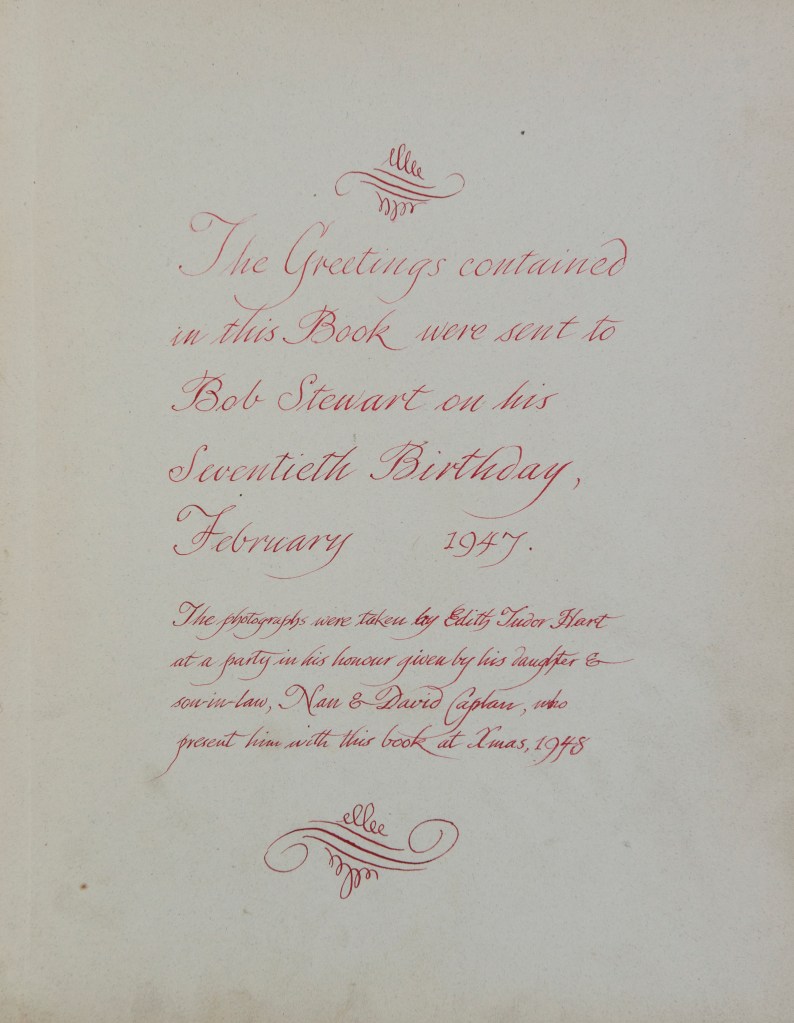
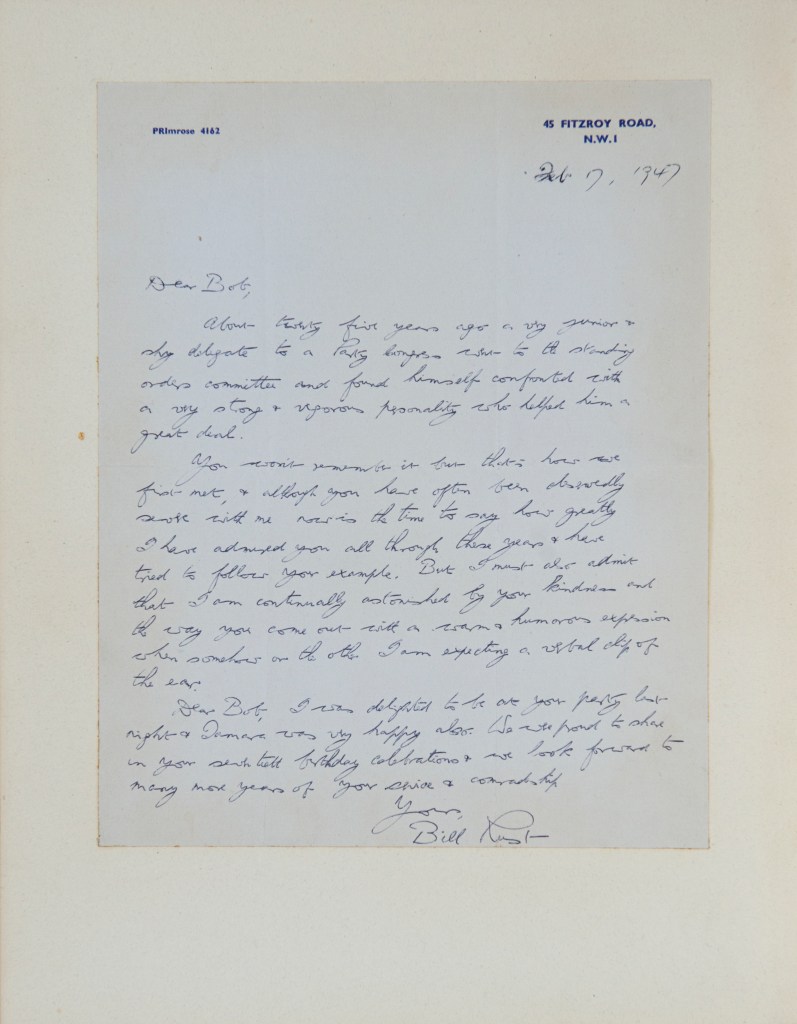
Greetings to Bob Stewart on his 145th Birthday.

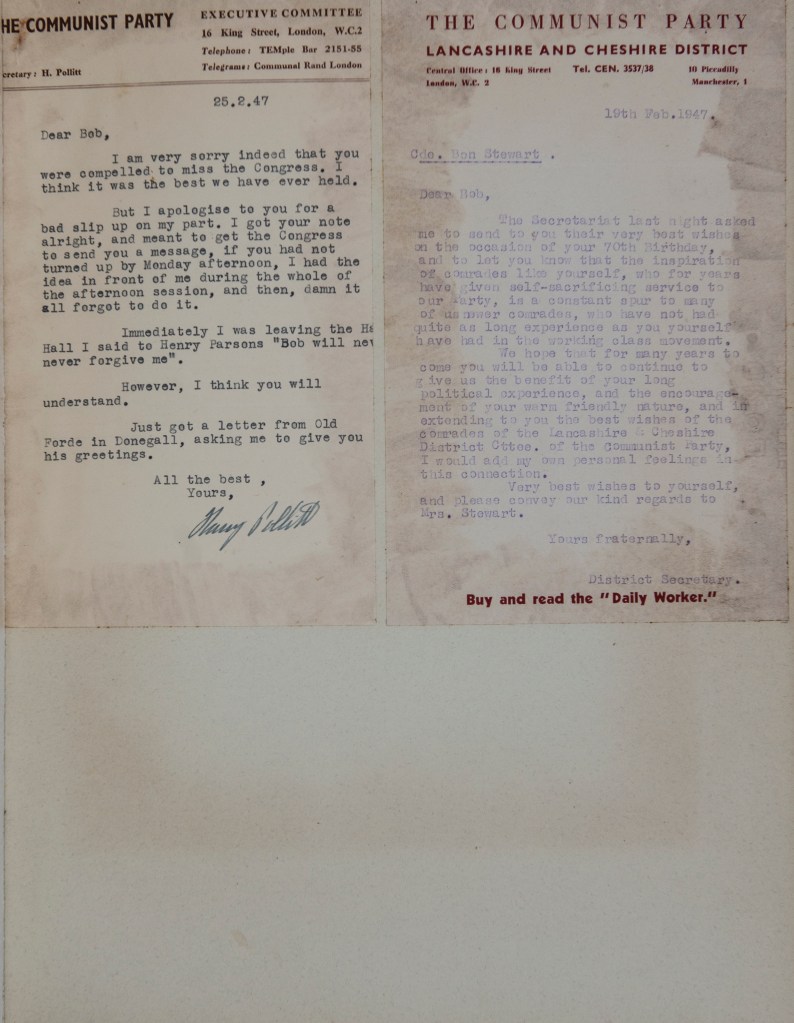
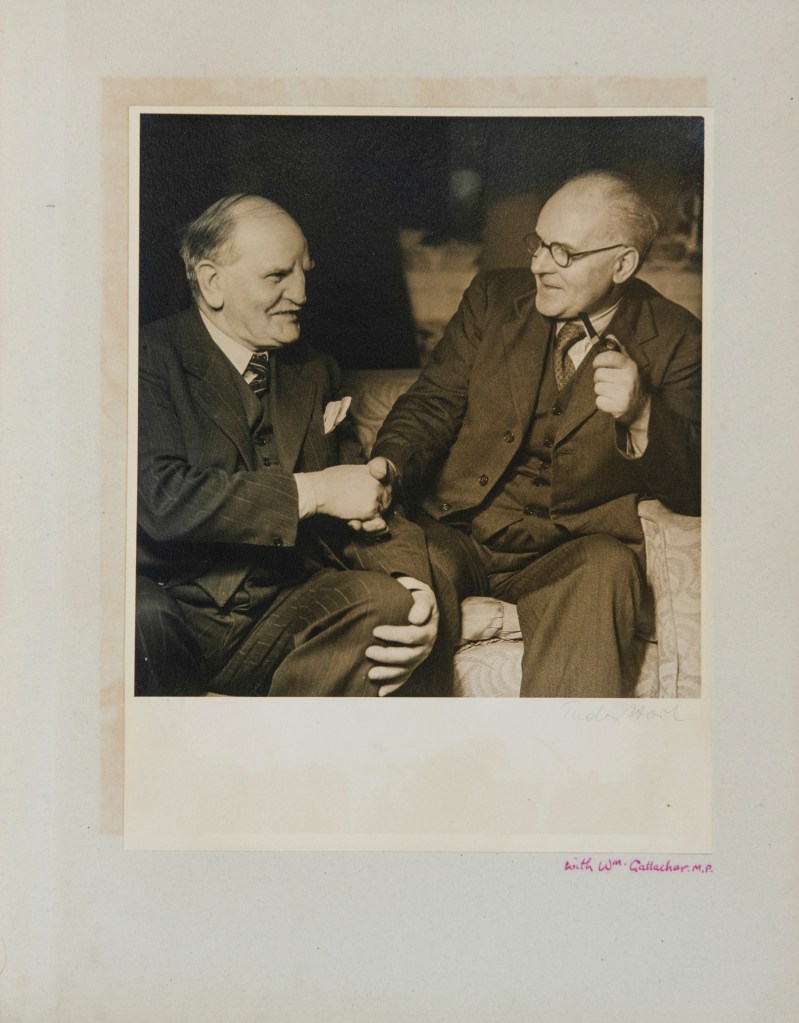
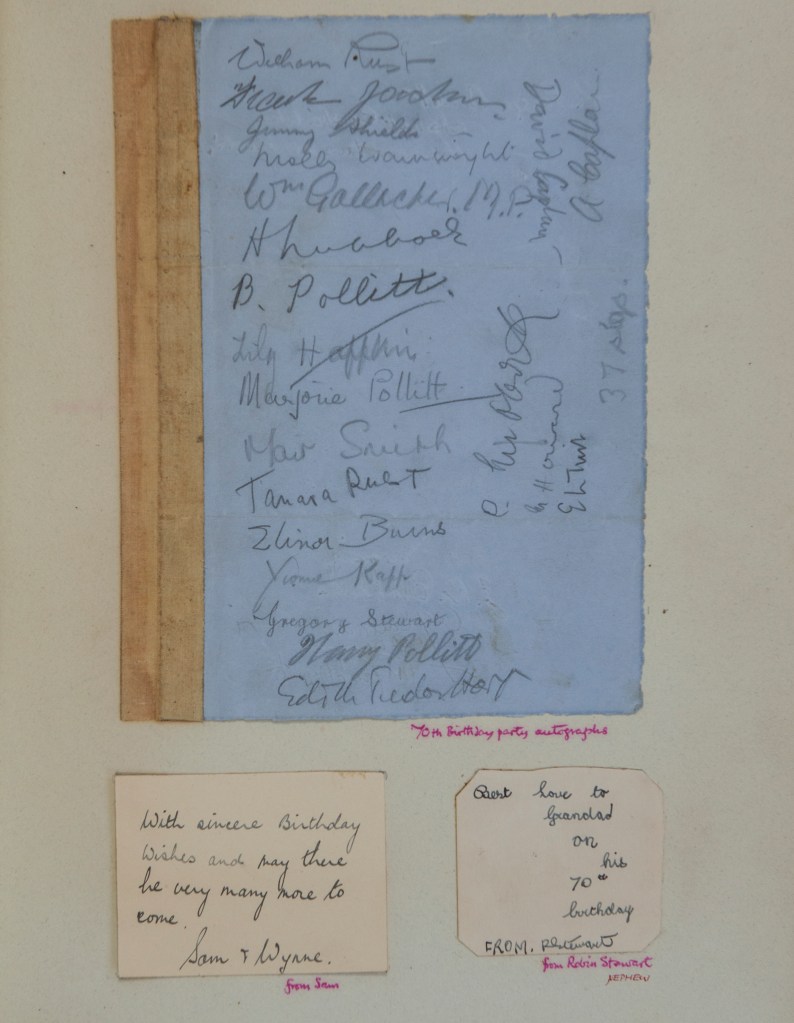
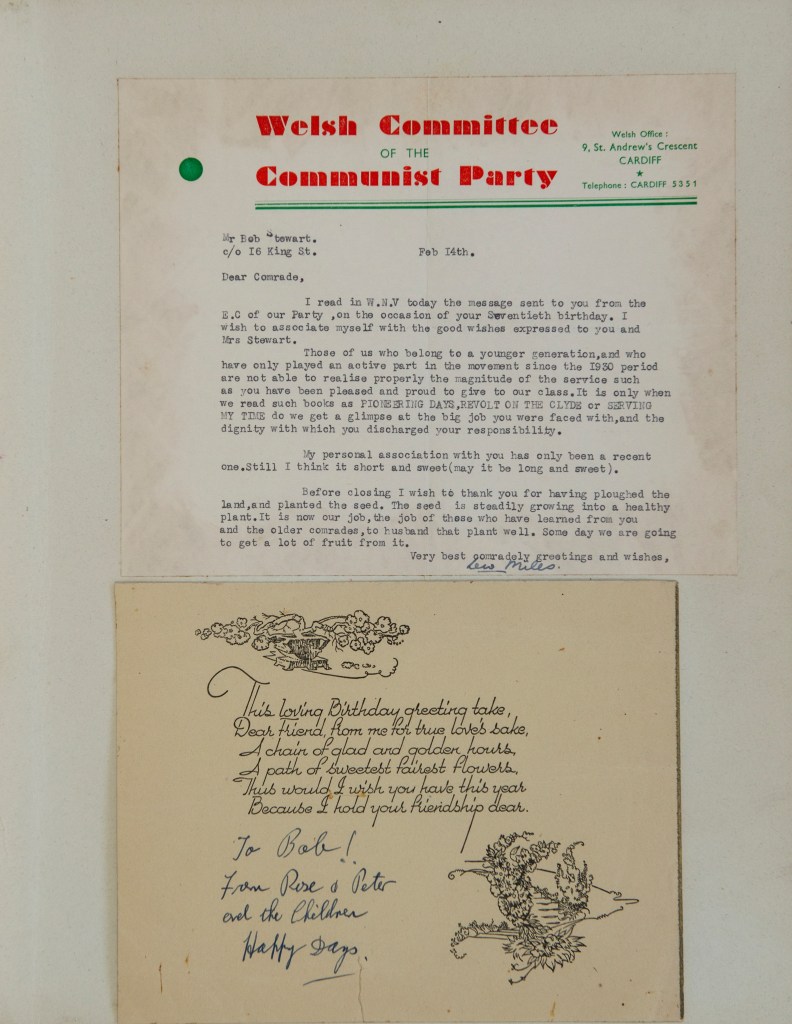
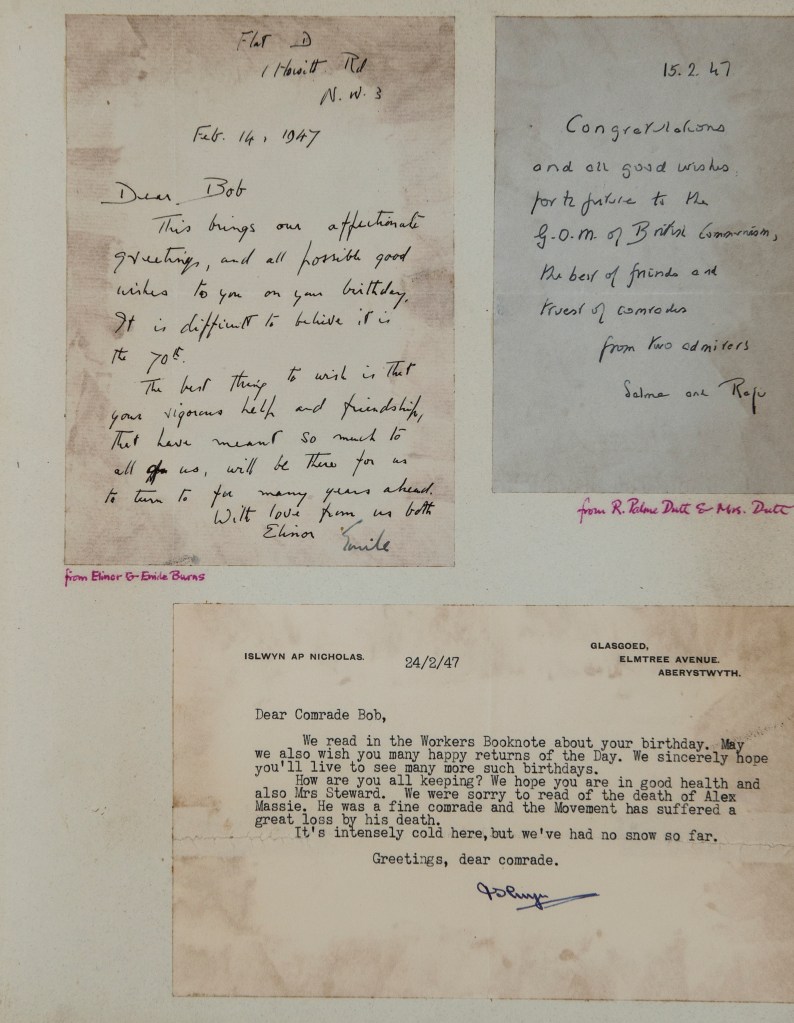
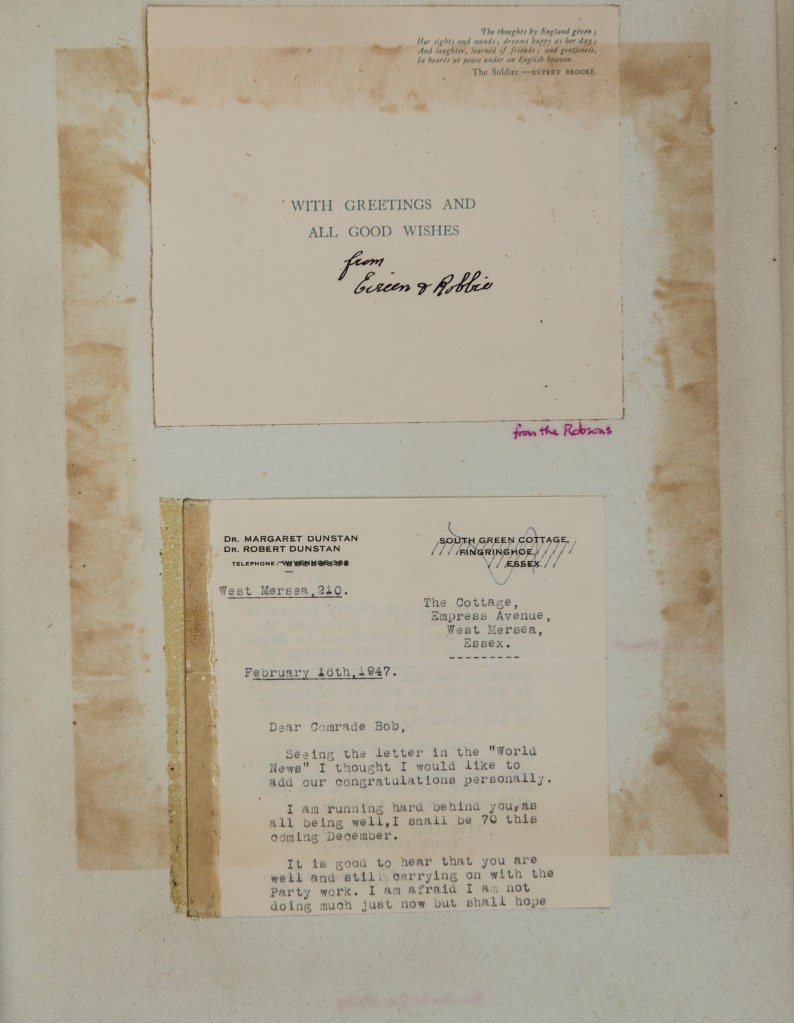
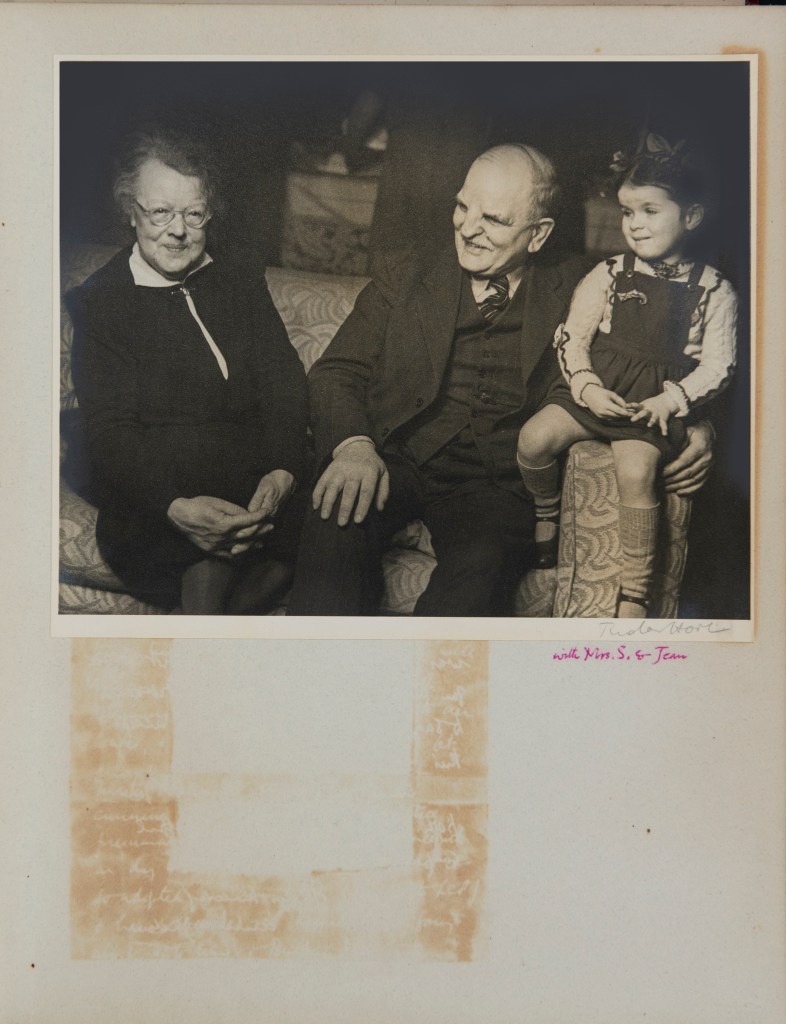
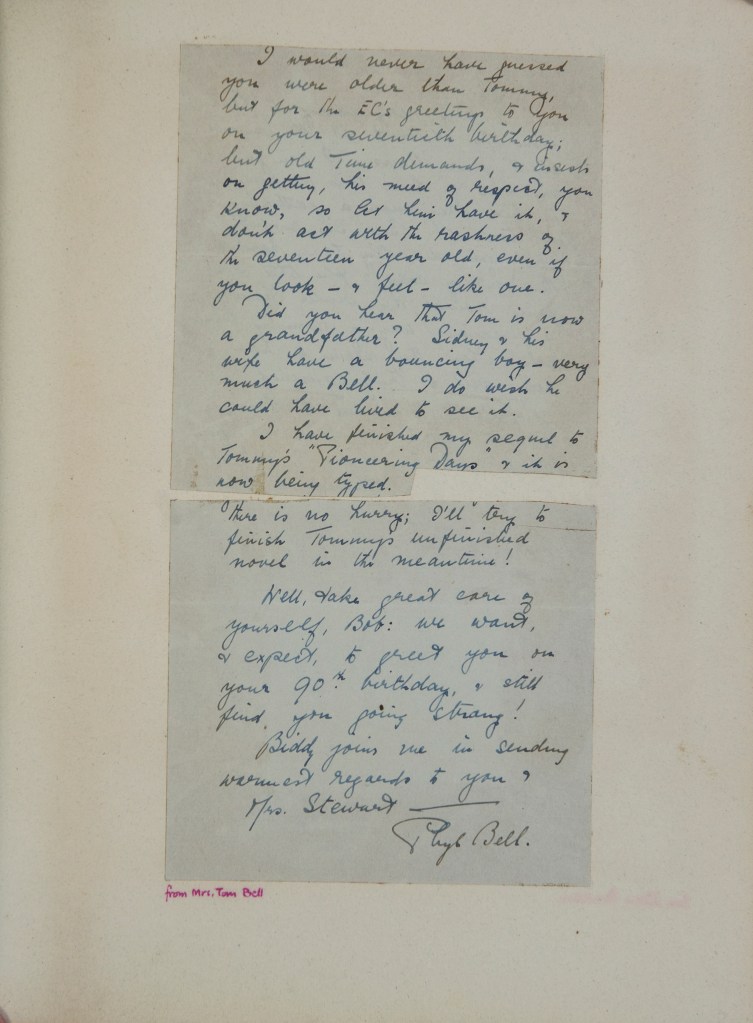
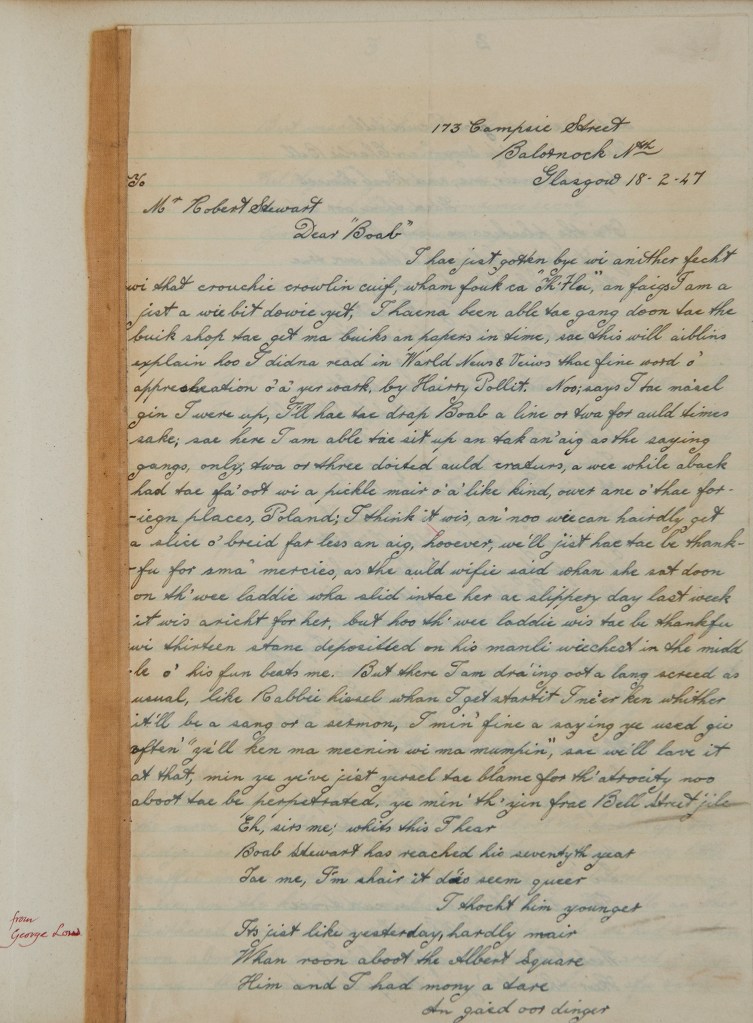
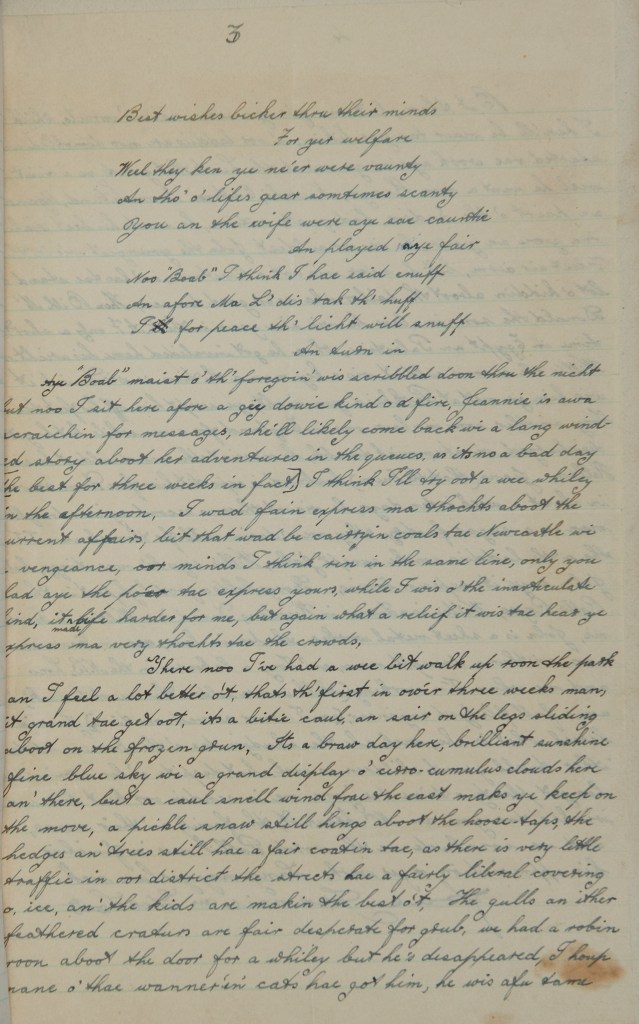
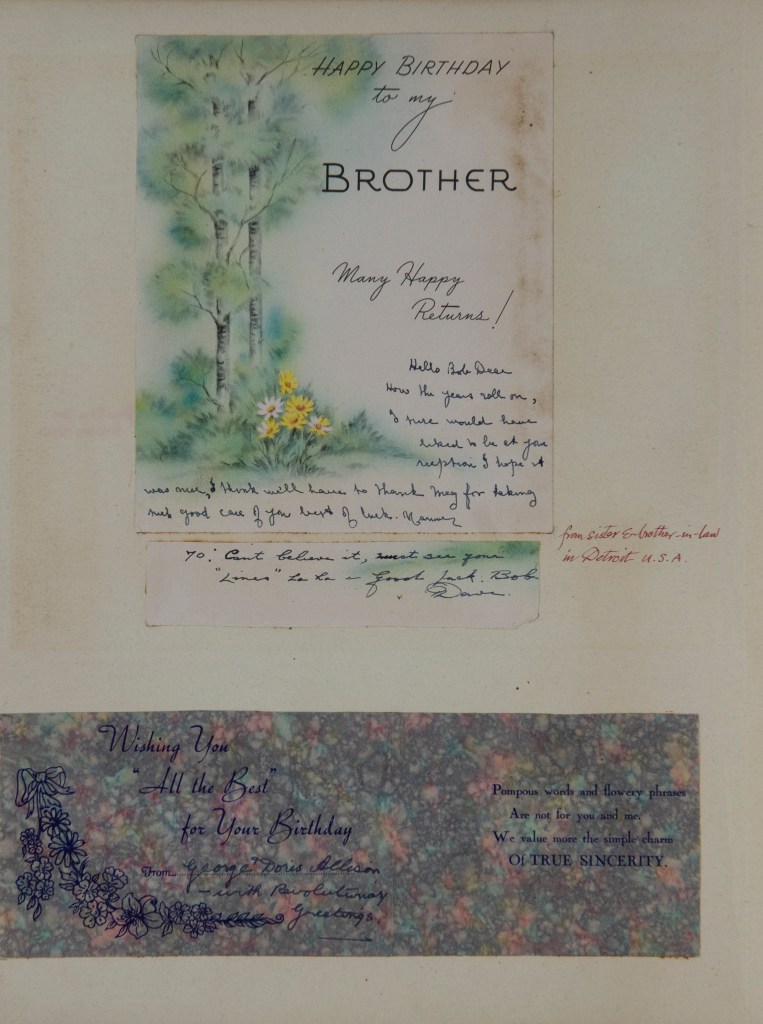
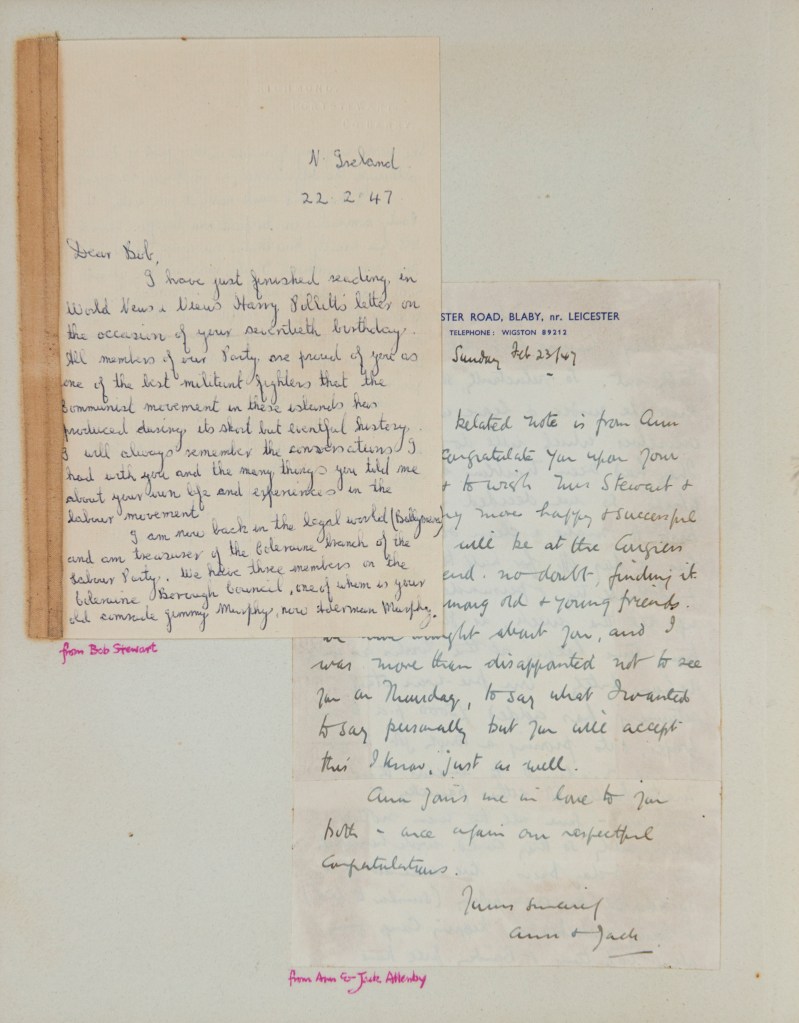
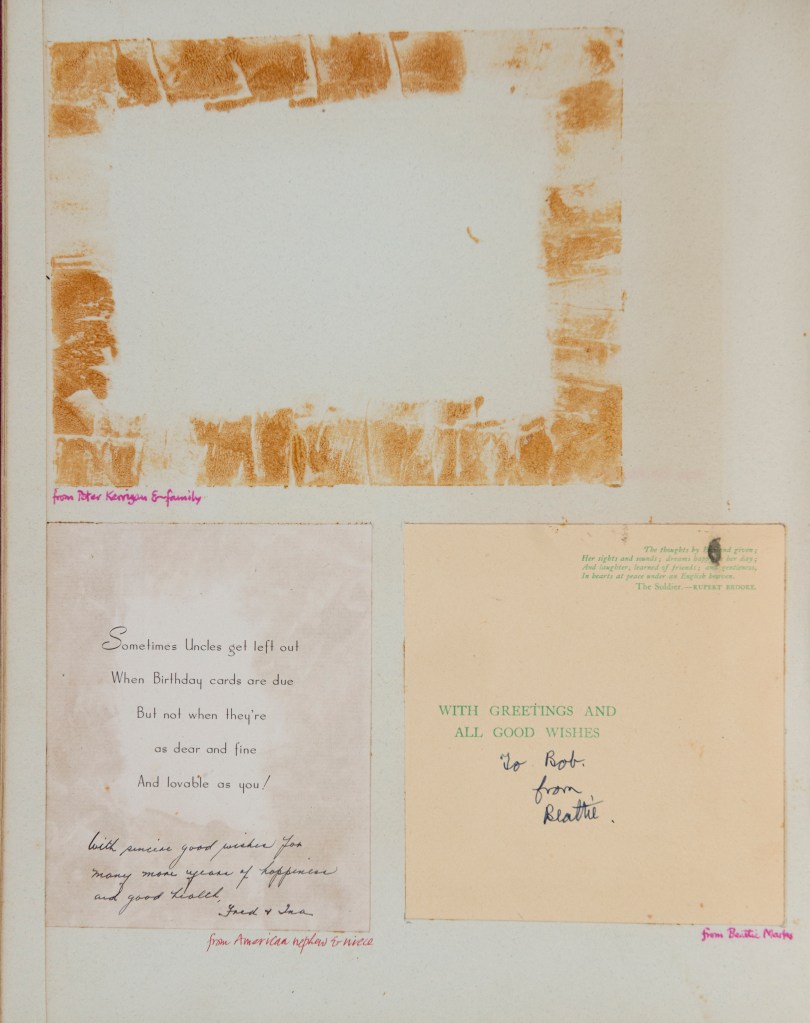
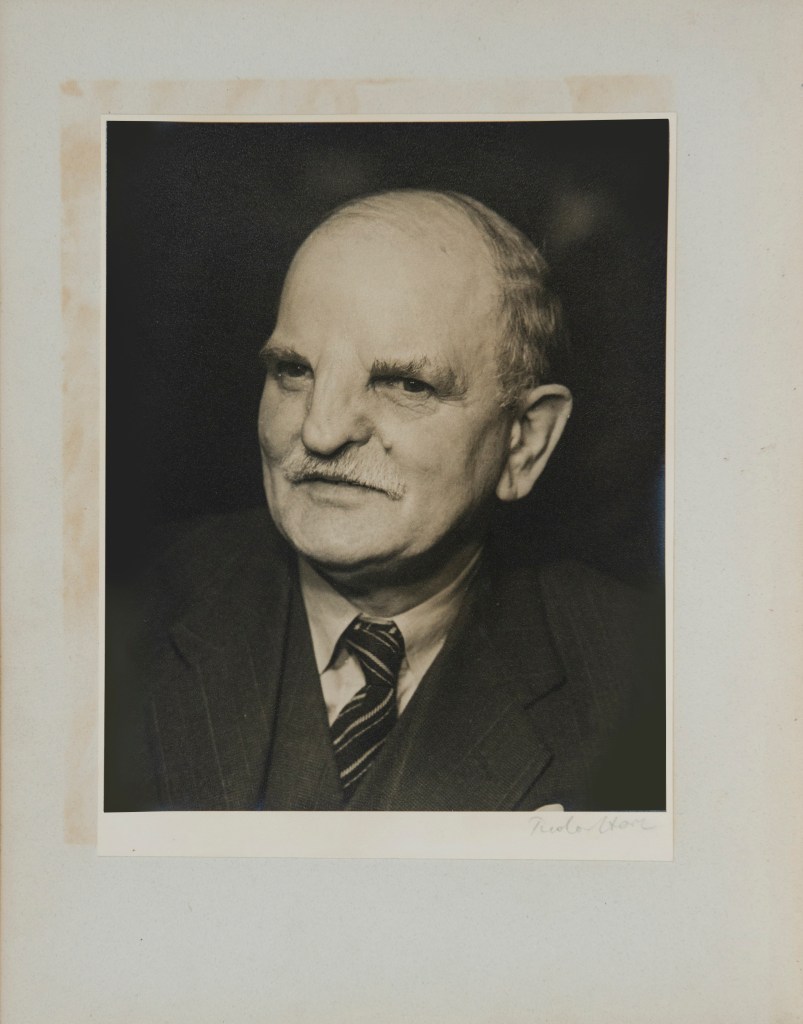
It is the 145th anniversary of Bob Stewart’s birth and to mark the occasion I’d like to present some photographs of an album commemorating Bob’s 70th birthday in 1947. The album was put together by his daughter Annie ‘Nan’ Caplan and contains photographs taken by Edith Tudor-Hart which have rarely been seen. Tudor-Hart was a documentary photographer in the 1930s who was recruited by the Soviets as a spy. Her nephew, Peter Stephan Jungk, directed a wonderful film all about her life called ‘Tracking Edith’ and I cannot recommend it enough. She is also the subject of Charlotte Philby’s book ‘Edith and Kim’ which should be out any day now. Apparently Bob has a walk on part.

The album contains many letters, cards and telegrams from figures central to British Communism and although most of the information they relay about Bob’s life and career is mainly well known I imagine this is the first time they have been put in the public domain. My brother and I also have similar albums from Bob’s 75th and his 90th birthdays and at some point we may donate all of these to the archives of the CPGB at the People’s History Museum in Manchester but we’d just like to hold on to them for a little longer.

The photographs were taken by my friend Jonathan Turner. He’s an excellent photographer who, when not helping a mate out, focuses on social documentary and portraiture. I am very grateful to him. Please have a look at his work on his website: http://www.jonathan-turner.com

Alan Stewart.

Portrait of Bob Stewart by Edith Tudor-Hart.

Bob Stewart at His Majesty’s Pleasure in Cardiff.

Screenshot of some of the findings from the 1921 census.

The 1921 census, which went online earlier this year, is likely to be an invaluable resource for anyone researching their family history. It has to be said it was fairly easy to find Bob Stewart’s whereabouts on the night it was taken – the 19th June, 1921. My great grandfather was in Cardiff. More specifically in HM Prison Cardiff doing three months hard labour. The relationship to head of the house made me laugh- ‘inmate’. Bob’s occupation is listed as ‘organiser’ and his employer is ‘Communist Party’. However, his place of work was noted as ‘no fixed place’ indicating he was spending much of his time this early on into the CPs existence travelling- something that would characterise the next thirty years. Once he’d got out of the clink of course.
He’d been sentenced to jail for making seditious speeches in Aberdare and Mountain Ash – the most diabolical comments being that miners were treated worse than German prisoners. The hard labour consisted of sewing pillowcases until a prison warder got him turning an old oak prison floor into handmade furniture for the warder’s home. At the end of his sentence Bob had been selected as the Parliamentary candidate for the Communist Party in the Caerphilly by-election – their very first candidate.

This experience is the subject of a highly entertaining chapter from Bob’s memoirs which I’ve reproduced below. Just a few notes on some of the people who make an appearance. Albert Inkpin was the first General Secretary of the Communist Party and Arthur McManus was the first chairman.

Part of the digitised census showing Bob Stewart’s entry.

Chapter 15: In Gaol Again.

In 1921 I was attending the Party’s National Executive in London. It was close to May Day and McManus, who was booked to speak at a May Day meeting in South Wales, said he could not go and asked me if I would like to take his place. “Sure,” I said, “I have never been to South Wales and it will be a new experience.” As it turned out it was.

I went down by train to Aberdare but before reaching there the train stopped at a small station and along the platform came a group of fellows shouting, “Bob Stewart, Bob Stewart!” I stuck my head out of the window and said, “That’s me.” “Can you do a meeting for the Party in Mountain Ash tomorrow night?” they asked. “Yes, I’ll be there.” So, after the meeting in Aberdare I travelled to Mountain Ash. The meeting was in a cinema and was crowded out. As usual at the time, the “splits” were in the boxes taking notes of my speech, but this happened at all meetings so I ignored them. The meeting finished and the local fellows said they were very pleased with the attendance and the effect. The repercussions were then still unknown.

I returned to London, and on the following Saturday, 7th May 1921, came the police raid on the party offices at King Street, Covent Garden, when Inkpin the general secretary was arrested. The raid was made without a warrant, under the Emergency Regulations Act. It was carried out by Detective-Inspector Parker, acting under the instructions, so he said, of the Director for Public Prosecutions.

During the raid all personnel in the office were rounded up from their individual rooms and brought to the general office on the ground floor of the building. The rooms were ransacked and, while this was going on, the homes of the office workers, even those of the girl clerks, were being searched. The police authorities certainly put on all the trimmings to build the raid up into a first-class political scare.

When Inkpin came into the general office and he exploded at Parker for the unwarranted intrusion into private property. “I demand to see your warrant to search these premises,” he said. “I don’t need a warrant,” replied Parker. “I am acting under the Emergency Regulations.” Parker then started to question Inkpin about the publication and sale of the Communist Party pamphlet called The Statutes of the Communist International. “Who wrote the book?” asked Parker. “What do you mean who wrote it?” said Inkpin. “These are the Statutes adopted by the 2nd Congress of the Communist International.” “Where did the books come from?” persisted Parker. “They came from Moscow, from the Communist International,” replied Inkpin. During the interrogation Inkpin again protested to Parker about the manner in which the police were acting, forcing their way into all the rooms in the building, sorting out files of correspondence obviously with the intention of taking them away. But Parker brushed this aside and kept on asking questions about the pamphlet The Statutes of the Communist International. Inkpin continued to answer truthfully this was a record of the decisions of the Communist International which was sent by the International not only to Britain but to most countries throughout the world.
Now Detective-Inspector Parker might have been a good man at detecting crime, but he did not seem to have the elementary knowledge required to comprehend the simple working of an international body. Maybe, of course, he had had his instructions not to try to understand. Anyway, after fifteen minutes of this sham he stopped asking questions and started giving instructions. To Inkpin he said, “I am going to arrest you under the Emergency Regulations Act No. 19. I am further going to search the premises and take possession of anything I think fit under an order signed by the Chief of Police.” He then turned to another detective and said, “Mr Hole, here is the order,” and to “Inkpin, “Come with me.” “What, without a warrant?” said Inkpin. “None necessary,” was the reply and he turned to leave. It was then he spotted me standing in a corner trying to look as inconspicuous as possible, but obviously not succeeding. “Who is that man?” he barked. “That’s Mr Stewart,” said Inkpin. “Get his name and address, and the name and addresses of all the others.” And with that little lesson of how democracy works in this land of the free he turned, taking Inkpin with him, and disappeared out of the door.

The place was alive with police and plain-clothes men. I ran from room to room trying to salvage what I could, but the police ransacked the place, almost everything went, even to the paper and the stencils. There were a number of spare files of our paper Communist and I knew that McManus had some papers ‘filed’ away for safety. I said to the policemen who were carting all the material away for examination., “Here, take these away; they are only in the damned way here. You’ll be doing something useful then.” “We don’t need these,” was the reply, “we have files of them ourselves.” So that saved something. After the raid, in the evening, I went out to try and contact some of the Executive members.  I went to the Corner House in the Strand and luckily, I bumped into a few of them and learned that there was to be a meeting at Bill Mellor’s house later to discuss what we could do under the circumstances. After the discussion, I had an argument with McManus because I said I thought that Mellor was deciding to leave us-to get out. McManus said I was a fool, but I was eventually proved right; William Mellor, despite all his thunder and aggressive revolutionary phrases, was afraid of being on the wrong side of the police authorities, and a short time after left the party.

After the meeting, I was sent to get a lawyer for Inkpin, to Torrington square, to see WH Thompson, a lawyer who was on the left. I found him in a strange way. I was ascending the stairs to his place when a young fellow came running past me. Suddenly, he stopped and said, “Jesus Christ! Bob Stewart!” “The latter’s right,” I replied. “What brings you here?” This fellow had been a conscientious objector in Wormwood Scrubs when I was there, so we wore the same old school tie. I explained the position. He worked for WH Thompson. He said, “He’s not here but I’ll tell you where to find him.  He has gone to see his girl friend,” and he gave me the address. I found WH, explained the position, where Inkpin was- Snowhill Prison- and he assured me that I could leave everything to him. I returned to my hotel in Villiers Street, near the Strand, a good evening’s work done. As I entered two big fellows ‘took’ me, one on each side. “Your name Stewart, Robert Stewart?” one of them said. “Yes, a good Scottish name.” “Well, we want you, we have a warrant out for your arrest.” Naturally, I thought it was in connection with the raid on the party office, but as soon as I got to Cannon Row Police Station I discovered I was booked at the request of the Welsh police for speeches made in Aberdare and Mountain Ash. So, I was stuck in a cell, arrested for sedition. I was interrogated by an inspector, a very clever fellow, to his own way of thinking. “Ah! I know you,” he said. “I have heard you speaking in Dumbarton.” “Up on the rock?” I asked. “Sure, there was always a big crowd there.” There was never a meeting on Dumbarton Rock in all history, so I continued to kid him but he twigged it and finally closed up.

Next day I was taken to Wales, to the Abercynon Gaol where I rested the night, and the day after I went before the magistrate. He was an old fellow, sitting at his desk. “Your name Robert Stewart?” he asked. “Yes, but what’s going on?” I replied. “You’re in Court.” “What Court? Only you, me and a policeman?” “Yes, and you are remanded to the Assizes.” And that was the strangest court I was ever in, but then the Welsh do many things in strange ways. Back I went to the cell and the policeman said, “I want to take your fingerprints.” “Not mine, I am no criminal, I draw the line at that.” “We’ll see about that,” he said and went off but he did not return for the fingerprints.

In due course I was taken to the Assizes at Pontypridd. A bunch of snuffy magistrates, local publicans and others of that ilk. The prosecutor was a little fellow called Lloyd. The charges were seditious speeches. Little Lloyd had a real go. He built up a terrible case against me, and said I should be ashamed to call myself a British subject, I was an agitator coming into the district in troublesome times stirring up strife and hatred, saying the miners were being treated worse than German prisoners and that Jimmy Thomas was a traitor to the working class- which appeared to be sedition, I don’t know why. In passing I may add that the selfsame Mr Lloyd was some time later pinched for embezzlement , but I suppose that that would not trouble his loyalty to Britain. The witnesses said their piece. The local secretary, who was a canny lad named Foot, was very good. But the other party witness, Billy Picton, undid the good work. Billy was one of the aggressive type; good in an industrial struggle, but not much use in a court of law. Asked about my reference to miners being treated worse than German prisoners, he replied, “Well, it’s bloody true, isn’t it?” – not very helpful in a court in which the scales have already been loaded against you. In the long run the trial came to an end. The magistrate said a lot of wise words, then asked if there was anything known about a past record. Innocent like, of course. Then out came the dossier. Tried, court-martialled; tried, court-martialled, on and on. When he finished reading out the record, I looked at him and said quietly, “A good record.” The magistrate said that this sort of thing must not be allowed to continue, it would not continue, and so on. The sentence would have to be appropriate to the offence. I would be made an example. The sentence was three months’ hard labour. Three months’ hard. You can do that, as the old lags say, on the door knob.

Well, there I was inside again. In Cardiff Gaol. Interesting, because Cardiff being a big seaport the gaol is very cosmopolitan- men from all nationalities are inside and going around the ring at exercise you saw all colours and all kinds of men. For the first three days I sat sewing a pillow case. That was my hard labour, putting in stitches and pulling them out again. Of course, reading the Bible in between. This was the compulsory reading, but a very valuable book for left wing propagandists. One day the artisan warder came to see me. “What the hell are you sewing pillowcases for?” he demanded. “You’re a carpenter, aren’t you?” I told him what I thought about his pillowcases, his prison and his magistrates, but he only laughed. He turned out to be a good sort. He didn’t like clergymen and that was an instant bond between us. The prison chaplain at Cardiff and I could not get on. Charlie Chaplin we called him. This was because of the way he walked, not because of his humour. One day in my cell he said to me, “Mr Stewart, in cases of your kind, it is the wives and children I am sorry for.” I said, “Don’t you try telling my wife you are sorry for her, because if you do you will end up being sorry for yourself.”

The artisan warder stopped the pillowcases lark and took me down to the workshop. There was method in this because part of the prison was being demolished and an old oak floor was being scrapped. “Can you do anything with this, Jock?” he asked me, showing me a bit of the wood. It was a good bit of oak. “You could make some nice things with that,” I said. And I did- bookcases, hallstands, cupboards, small stools and many other pieces of oak furniture found their way into the warder’s home from the floor of the Old Cardiff Gaol. I am quite sure the government got none of it.

One day the warder gave me a shout when I was working. “Come here, Jock, I have a job for you.” So, I picked up my tools. “No, no,” he said, “all you need is an oil can. We’re going round to the execution chamber to oil the joints of the hanging apparatus.” Two men, sentenced to death for murder, were to be hanged the next day. “I’ll not oil your bloody hanging apparatus.” “What! You not in favour of hanging?” “Oh yes I would hand prison warders at a bob a time,” I said; “the trouble is they usually hang the wrong people.” “Well come and see how it works,” he said. So off we went to the execution chamber. He oiled the necessary places then gave me a demonstration of the proper way to operate it by pulling the lever and pointing to the drop. He seemed to take delight in it.

One day towards the end of my term, in came Jock Wilson, the Welsh Party Organiser, to see me; well, really to tell me something- that I had become a parliamentary candidate because Alfred Irons, the MP, had died. A by-election was pending at Caerphilly and the party had decided to contest their first ever parliamentary election as a party and I had been chosen as the candidate. Well, anyway, being in gaol, I couldn’t speak back. There had been quite a barney with the prison authorities. A report in The Communist appeared as follows:

We had expected difficulties to be put in the way of Robert Stewart’s Candidature in the Caerphilly mining constituency. They have already begun, and the Prison Governor has taken a hand. We wished to know when Stewart would be released for the purpose of the election campaign.

The party had sent a letter to the Governor of Cardiff Gaol in the following terms:

Dear Sir,

I should be very much obliged if you would kindly let me know on what date Robert Stewart, the National Organiser of the Communist Party, whom we understand to be present in Cardiff Gaol, will be released.

Yours faithfully

(signed) Fred H. Peat, acting secretary

Back came the reply:

HM Prison,

Cardiff

23rd July, 1921

In reply to your letter of inquiry it is regretted that the information asked for cannot be given.

I am your obedient servant

(signed) HJ Perwin

One night before the end of my time I was pleasantly surprised when the head warder came and asked if I would like to be released a day early. “Fine,” I said. But really the authorities were afraid of a demonstration, because when I had been taken from Pontypridd to Cardiff Gaol to start my sentence there was a bus load of policemen in the front and a bus load of policemen behind all the way. Certainly a good few tons of policemen to hold mine nine stones of communism. No doubt they were also taking no chances when I was leaving.

Out of the gaol, I went to Alf Cook’s house to discuss the political situation, and I had just arrived when a telegram was delivered from Moscow informing us of the death of Bill Hewlett in a monorail accident in Russia. It had been a bad accident and Jim Stewart of Lochgelly was also injured. So, I had the sad task of making arrangements for someone to break the news to Mrs Hewlett.

Books: ‘Enemy Within’ by Francis Beckett.

If they were asked to recognise the name of Luke Akehurst most sensible people of voting age in the United Kingdom would struggle. How I envy them their Eden-like innocence. Unfortunately for me, I’m one of those people who, without wanting to, seems to possess a perverse desire to keep abreast of every single development of the infighting within the Labour Party forevermore. It is not good for your health. For those of you don’t know Akehurst, he is a figure on the right wing of the party who sits on its NEC whose responsibilities seem to be chiefly to boil the piss of everyone to the left of Liz Kendall. He’s the secretary of a group called ‘Labour to Win’ which is ironic given that his extreme factionalism is likely to steer the party to an even greater electoral disaster than the one Jeremy Corbyn delivered in 2019.

Why even mention the man at all? Distressingly, it’s because earlier this year I found myself in the frankly uncomfortable position of being in agreement with him. Ruined my day to be honest. To elaborate, he had been asked what his problem with the hard left was. Among his reasons was the following:

“…silly exaggerated left rhetoric drives voters away from Labour.”

He’s right. If you’re on the left there are words you’ll use and love. Words such as ‘comrade’, ‘solidarity’ and ‘class struggle’. The problem is, most people who don’t view themselves as left wing- and that’s most voters in the country- loathe this type of thing. The workers of the world may have nothing to lose but their chains but they won’t vote for you in the United Kingdom if your language is couched in socialist tradition. Polling showed many of the policies of Corbyn’s Labour were popular but in no way would many people want to associate themselves with a group whose idea of a good time is a hearty chorus of ‘The Red Flag’.

Where myself and Mr Akehurst differ however is that while I do think ‘left language’ is ill advised when courting the floating voter I think the actual concepts of comradeship, solidarity and class struggle are important for a democratic socialist party. I’m not sure the Secretary of Labour to Win could stretch to that.

At this point you’d be forgiven for wondering what all this has to do with Francis Beckett’s book ‘Enemy Within- The Rise and Fall of the British Communist Party.’ In the first Covid-19 lockdown when I started this project I needed a single volume history of the CPGB to help make sense of all the security files and letters I was poring over. I immediately went for ‘A Centenary For Socialism-Britain’s Communist Party 1920-2020’ which was published by the current version of the party to coincide with its anniversary celebrations. It would be an understatement to say I found it hard going. Having to wade through sentences such as, “Lenin gave added expression to this paradigm of oppression by nations and national colonialism as part of the general struggle of the working class and working people against imperialism” and the general uncritical, almost hagiographic approach to its subject was alienating and exhausting. Perhaps I’m being unfair. After all, it’s hard to write about the CPGB without this kind of language and to be fair the companion volume , ‘Red Lives – Communists and the Struggle for Socialism’ is superb.

After this disappointment my brother recommended Beckett’s book which first came out in 1995 shortly after the CPGB wound up earlier that decade. The contrast was stark. Beckett seems to have achieved the impossible – a book about the far left which is also a pleasure to read. Sympathetic where it’s justified – Harry Pollitt’s activities during the Spanish Civil War and critical when needed – the CPGB’s inability to be independent of Moscow. It is engagingly written throughout and shot through with a dry wit. The history of the CPGB is labyrinth subject but Beckett helps you understand why people were drawn to the Party while also exploring the tragedy at the heart of it. Having read little else other than books on communism over the last couple of years I wouldn’t hesitate to recommend this book alongside Raphael Samuel’s ‘The Lost World of British Communism’ as necessary starting points.

Below is an extract from the book describing Bob Stewart at the conference where the Communist Party of Great Britain was formed in 1920.

There was the first stirring of a debate which was to cause a lot of trouble over the next seventy-one years. Did the CP stand for armed revolution or not? One excited delegate proclaimed ‘the historic and revolutionary value of a gun in the hands of a man of the working class’, only to be magisterially rebuked by Bob Stewart of Dundee: ‘A great many people talk about guns who would run away when they saw one. I am more interested in folks having brains in their heads.’ Bob Stewart had spent several years in prison for opposing the First World War, and knew more about hardship and violence than most. He led the smallest and oddest of the groups which formed the CP, the Socialist Prohibition Fellowship. After the main resolution was carried, the stout sincere man with a sober moustache walked solemnly to the platform to ask the new Party to come out in favour of suppressing the manufacture of alcoholic drinks. Few thought much of the idea, but they liked Bob Stewart, so they referred it to the executive for action. In seventy-one years no action was ever taken.

Yet banning the demon drink struck a chord with many Communists. Many hard, poverty-stricken lives were tolerable only through a haze of beer. Three Scottish founder-Communists, Stewart, Jack Murphy and Willie Gallacher, remembered their deprived childhoods being blighted further by drunken fathers. They not only abstained all their lives, but saw abstaining from alcohol as part of their socialism.

(Francis Beckett, Enemy Within, Merlin 1998 pages 14-15)

Alan Stewart.

Comrades: Yvonne Kapp

At the end of last year I was sorting through a large box of correspondence dating from the 1930s and onwards. In amongst them was a handful of letters addressed to Bill Stewart who was my grandfather. They stood out due to the immaculate clarity of the handwriting and the fierce affection they displayed for my family, in particular Bob. They were all signed by an ‘Yvonne’ who lived in the red enclave of Highgate not too far from the cemetery where Karl Marx is buried. It turned out they were from Yvonne Kapp, not someone I had ever heard of, certainly my father had never told me about her even though he comes in for a great deal of flattery in them. I have to admit that, starting with the letters and then digging deeper, Kapp is someone I’ve become almost infatuated with during the course of my research and I am sad that I never met her. She lived an extraordinary life.

Dating from the early 1970s the overwhelming sense that these letters convey is of age and infirmity. Bill is getting over a serious illness, Yvonne is recovering from a fall, Bob is blind and installed in a care home. There is an acknowledgment of things slowly coming to end and of putting affairs in order. A deep love and attachment is clear though the odd resentment surfaces occasionally. The first, from April 1972 is innocuous enough.

Dear Bill,

Thank you so much for sending the snapshots & your nice letter. The snaps are wonderfully good & I wish Bob could enjoy them. I thoroughly enjoyed meeting Robin on that occasion; what a very nice chap he is.

Unfortunately, I can’t go to see Bob at present as, a fortnight ago, I fell & broke my ankle – both sides of it- & shan’t be able to put that foot to the ground for 6 to 8 weeks. It’s not too painful now, but I’m helplessly moored to the bed. Still, I send letters to Bob by the nice young woman whom we’ve laid on to attend him twice a week.

I’m enclosing the publisher’s announcement of my book which will be out on May 25th. Do ask for it at your local library- & get Robin to do the same at his if you can find the time.

With very best wishes,

Yours ever,

Yvonne.

I’m assuming the snaps were from Bob’s 95th birthday celebrations though try as I might I have not been able to find any copies of these photos so far. Robin is my father, always known by his middle name on his side of the family but as I never really knew any of them I only ever heard him called ‘Mike’ or ‘Michael’ or, of course, ‘Dad’. The book she refers to is the first part of her two volume biography of Eleanor Marx, described by Eric Hobsbawn as, “one of the few unquestionable masterpieces of 20th-century biography.” It’s certainly the work she is best known for, completed in her seventies after ten years researching and writing.

The second letter is dated New Year’s Day 1973- the year of Bob’s death. Things seem far more urgent. Bob is growing frailer and Kapp is urging Bill to make the journey from Colchester to London to see his father before it’s too late. Bill wasn’t in the best of health either. He died in 1978 when I was about four years old. I have few memories of him save for a lovely old man in stripy pyjamas in a hospital bed whose moustache was all tickly when I kissed him. Of a tiny, dark house full of treasures and of long night time drives back from Essex to Suffolk where I only now realise how my own father must have felt whilst leaving an ailing parent as I’ve now made so many similar journeys myself. I think I remember his funeral- a haze of adults’ knees, mumbling and, in my mind, a red flag draped over the coffin. That could just be my imagination. His decorative Indian elephant bell that I adored was given to me afterwards has been a constant companion in every move I’ve made since leaving home – always kept safe.

Dear Bill,

Forgive me for not having been able to answer your letter before. I came back from my “summer holiday” just before Xmas, since when I’ve visited Bob a couple of times, ln the first of which I read him your letter, of course. He was sorry to hear of your illnesses & does hope you are now fully recovered.

He himself is growing very frail, Bill, and I hope that you will make a trip to see him very soon. His courage is unimpaired & he never complains, but feel he has to make an effort to appear as cheerful as he always is when I am there & that underneath it, he feels very tired & rather sad. His muscular strength is reduced; he finds it difficult to move about even in the room & with help & as time passes, he loses his sense of direction in his total blindness. I have never known anyone as brave & as good as Bob, I love him, dearly as you know, but now I worry about him a good deal & I wish I could do more to help him in his lonely old age. Please go and see him when you can manage it.

Wishing you a happy New Year & with Bob’s love to you.

Yours ever,

Yvonne

The next letter was written in March 1974 around sixth months after Bob’s death and his funeral at Golders Green Crematorium. Kapp’s grief is still very raw and her anger at others failing to remember his birthday on the 16th February in commemoration is palpable. She refers to papers and photos that have gone missing and of course it’s impossible to tell what may have been lost but we do at least still have an album of cards and messages from his 90th birthday celebrations that she seems to think has gone forever. The striking thing about this letter for me is her description of Bob as, “the finest human being I have ever known” something she would reiterate when she came to write her memoirs at the close of the 1980s. The letter closes with some comments on the problems of completing the second volume of the Eleanor Marx biography and the difficulties on living on the proceeds of the first. I don’t think much has changed for writers in the almost fifty years since she made those comments.

Dear Bill,

Thankyou for your letter. I was glad to hear from you though sorry that your health is so bad & prevents you getting out and about.

I must say I was rather surprised that, of all people who swilled and guzzled at Bob’s birthday parties year after year, I was the only one, apparently, to remember them with gratitude- or remember him on that occasion, only five months since he has gone. I still miss him very much. Though the last 3-4 months were painful to go through, I would not have foregone my weekly visits to him for anything on earth. Indeed, during the period when he was first moved to the Nursing Home, I went twice a week so that he should not feel too unfamiliar in new surroundings. Bill Brooks- and his family too- was wonderful to the very end & so thoughtful & considerate of Bob’s wellbeing.

It is horrid that his photographs disappeared. For a long time at Fenstauton Avenue, he had them with many other photos & papers of interest at the top of his cupboard & I often asked him whether I shouldn’t take them away to keep them safely: all his 90th birthday greetings cards in a folder & a mass of other stuff. But as long as he was entirely clear in his mind, he wanted them left there. Then, as you know, he was moved to the Home at a rather critical stage when he was rather confused, & I never saw any of those papers again. But I am not very much surprised. After all, if members of his loving family could steal from a blind man a new suit he had only worn 3 or 4 times, on the grounds that he had told them to take a suit – he meant the old one- for “jumble”, then nothing can surprise one.

However, these things – papers, photos, clothes- are not important. It is Bob, the man, the finest human being I have ever known, who remains in one’s loving memory & nothing can add to that or subtract from what he has left behind in one’s heart or what he gave us all in his lifetime.

I am getting on with Vol 2 of Eleanor, but it is a slow task as I’m not so young myself. However, it will be finished before the year is out – quite a long time before, I hope, as it is going quite well. – & in the meantime, the more people you can encourage to read Vol 1 the better, as it is quite a hard struggle to live & work on the proceeds. (Not even a Phase 3 for writers!) At least each time that a library (or anyone) buys a copy – never mind how often it is lent out- I get 45p.

Take care of yourself & when you write to Robin, give him my kind regards. I took to him very much when we met at those famous (forgotten) birthday parties & you have a fine lad there.

With love to you,

Yvonne.

In the final letter I have, the grief remains The target of her anger is Bob’s daughter Nan, who I mentioned in the previous post ‘Prison Rhymes’. Since 1956, while the rest of the family had maintained their commitment to communism, she had travelled further and further away from them politically. The reasons for this are not surprising. In the early 1940s her first husband, a Russian apparatchik and the father of her son Gregory, was shot in one of Stalin’s purges. Nan and her baby son, my dad’s cousin, managed to escape the USSR but almost inexplicably the details of her husband’s fate were unclear and she remained a member of the Communist Party. Everything came out years later in 1956 after the ‘secret speech’ where Khrushchev admitted Stalin’s crimes. The trauma this caused within the family, often overheard by MI5 on tapped phones and bugged offices is the current focus of my research. By 1978, Nan has done the unthinkable. She has become a member of the Conservative Party and Yvonne Kapp is furious.

Dear Bill,

Thank you for your letter and sending me one from the Millers. I was so glad to hear from you and Robin and to know that he is settled in such a pleasant place. One day I shall try to visit him there.

I wish you yourself were feeling stronger and in better health.

The news of Nan’s preposterous move had reached me before you wrote. I’ve heard a few sick jokes in my time but Nan as a member of the Tory party is about the sickest. I’m glad that, whatever your parents suffered at her hands one way and another, they did not live to see this.

It was sad going to Peter Kerrigan’s funeral just before Xmas. What a terrible year the last one was. So many dear friends departed. I suppose that at my age it’s inevitable, but that doesn’t ease the sorrow. Let’s hope that 1978 will have less sadness to record.

Anyway, I wish you all the best for 1978 and – herewith returning the Millers’ kind letter- send you my love,

Yours always,

Yvonne.

1978 was the year my grandfather died. Kapp, born in same year as him lived to the age of 96 – the exact same age Bob was when he died. She passed away on June 22nd 1999. Eric Hobsbawm wrote an admiring obituary in The Guardian in which he described her as “self-reliant, tough, faithful, ladylike and quietly proud to the end” before adding, “She had good reason to be.”

……….

Clearly, the almost forty year friendship between Yvonne Kapp and Bob Stewart was a profound and important one. It began in 1934 when she was housing refugees who, a year into Hitler’s seizure of power, were already fleeing Nazi Germany for London. One such refugee, as with many in the same position, seemed particularly damaged and traumatised and was proving difficult to cope with. He was arranging for suspicious packages to be sent to her address, ranting about the prospect of being expelled from the German Communist Party, demanding money and threatening suicide. Kapp, at this point an active communist, didn’t know what to do and was frightened his death was potentially on her hands. Someone suggested she should go and see Bob for advice at the party’s headquarters in King Street, Covent Garden. He listened patiently and helped her work out the best course action to take. In her memoir, Time Will Tell, she outlines the “permanent legacy” of this situation.

Bob who had been a joiner and a cabinetmaker in Dundee, was a foundation member of the British Communist Party in 1920. He and his wife, Meg, became honoured guests in my house shortly after that first meeting and we spent many Sundays visiting them. With Meg’s death in the early 1950s and his advancing age- for he was over sixty when I first put my head round his door- his life took a melancholy turn, not made happier by retirement and the gradual onset of blindness, so that I visited him as often as I could and he would come to us on Christmas Day. At one point I took him to see an ophthalmologist who told him that his eyes had done their work and there was no cure for his failing sight.

He was always resolutely cheerful and uncomplaining, put on so brave an air of being in good spirits, took so lively an interest in what was happening in the world and, though unable to read newspapers, held so clear-headed a view of events as they unfolded (including, in 1968, when he was over ninety, telling young people- in their sixties – that the invasion of Czechoslovakia by Russian tanks, was a terrible mistake), that it was an education to be in his company and a privilege to be his friend. As his strong body lost some of its resilience, and to his blindness were added other infirmities, the Party arranged at considerable expense for him to live in a kindly if rather slapdash home for old people. There I went to see him every week  during his last years and did so almost to the end though, as ill luck would have it, when he died at the age of ninety-six in 1973, I was away on holiday.

Bob, the wisest of men and also the most generous and great hearted, was the first person I had ever known who was truly good, all through. I could not have had a better teacher. His was the permanent legacy my shifty lodger left me.

(pp185-6 Yvonne Kapp, Time Will Tell, Verso 2003)

……….


One of the things that I most admire about this friendship is the unexpectedness of it all. Bob was working class Dundee bred joiner who had endured great poverty and left school at twelve. Kapp on the other hand was the privileged bohemian, bisexual daughter of wealthy upper class German Jewish immigrants twenty six years his junior. Reading her memoir the 1920s were a particularly heady time for her. While Bob was organising for worldwide revolution and heading off to Moscow as a representative on the Comintern, she made an early marriage to the artist Peter Kapp; headed off on a walking tour of Europe; wrote scandalous novels under the pseudonym Yvonne Cloud and dived head first into the artistic and literary world of London. In her afterword to Time Will Tell, Charmian Brinson notes:

…there is much about Yvonne’s life that reflects the intellectual, cultural and political climate of the age in which she lived, with Bloomsbury (in the shape of her friend Quentin Bell) juxtaposed with Harry Pollitt or, on an international plane, with Helene Weigel (for some years, Yvonne advised Weigel on English translations of Brecht). Figures as diverse as Rebecca West, Noel Coward, Frances and Vera Meynell, Max Beerbohm, Clifford Allen, John Collier, Melanie Klein, Nancy Cunard, CK Ogden, Rudolf Olden, John Strachey, Paul Robeson, John Heartfield, Kate O’Brien, Herbert Morrison, Jack Tanner, Jocelyn Brooke and Ilya Ehrenburg people these pages.

(p291 Time Will Tell – Charmian Brinson- Afterword-Reflections on Yvonne Kapp)

While I would love more gossip on Noel Coward who regularly came to the Kapp’s for post performance suppers after The Vortex at the Comedy Theatre, my favourite anecdote in Kapp’s memoir involves the future star of Bride of Frankenstein Elsa Lanchester and her husband and fellow screen legend Charles Laughton. The Kapps met Lanchester through joining the 1917 Club and through The Cave of Harmony- a cabaret Elsa ran and performed at. Yvonne and Elsa became close for a number or years but Kapp is scathing in her assessment of Laughton.

In that same year of 1929 Elsa Lanchester married Charles Laughton. She told me he was wonderful but, though prepared to believe her, i found that he seemed to quench her fiery spirit and mocking wit. An adoring wife, she kept the best of herself – like the choicest morsel of food and the heart of the lettuce- for Charles. He, to my irritation, could not so much order a cup of tea without playing the part of a man ordering a cup of tea.

(p86 Yvonne Kaapp, Time Will Tell, Verso)

She goes on to dismiss Laughton as a “great ham” and laments seeing less and less of Elsa until she became a “virtual stranger” who avoided former friends due to her troubled personal life.

As the 1920s gave way to the 1930s Yvonne Kapp became more and more political and her life changed direction. As Hobsbawm notes in his obituary of her:

Hitler and the Nazi tyranny in Germany turned her into a communist and this gave sense and stability to her life. Through her work with refugees it also brought her together with the former member of the Bertolt Brecht collective, Margaret Mynatt, the later inspirer and editor of the English tradition on of the Collected Works of Marx and Engels, with whom she shared her life until Margaret’s death in 1977.

(Eric Hobsbawm – Yvonne Kapp, The Guardian 28th June 1999)

The first volume of the Eleanor Marx biography, Family Life was dedicated to Margaret Mynatt. When it came out in 1976, the second volume, The Crowded Years, was dedicated to the memory of Bob.

……….

POSTSCRIPT: In learning more about Yvonne Kapp, I found the work of Alison Light, Charmian Brinson and Sally Alexander to be essential. Also, Yvonne Kapp’s Eleanor Marx and Time Will Tell are both published by Verso who, at the present time always seem to have a sale on so it’s worth heading over to http://www.versobooks.com to pick up a bargain.

Alan Stewart

What Is to Be Done?

I came to this story through grief. In 2018 my father, Michael, suddenly died of a heart attack at the age of 84. His passing brought to an end years of decline through vascular dementia. I had loved him very much and the idea that now there was only myself, my elder brother Ian and our mother was impossible to process. We did what most families do in that first year – come together for solace, then fracture painfully, then slowly heal. We did most of our grieving separately but I imagine it looked pretty similar. Sleep never seemed to arrive and I spent many nights in the spare room as my partner slept on searching through photographs, old letters and hunting down any recording or videos just so I could hear his voice again. He left very little trace on the internet – I picked up a few extra photographs from his days as a parish councillor, the odd story archived from the local paper from his days as the landlord of the village pub but very little else. Although it was in no way a reality, I felt I was losing him just as surely as the dementia had whittled down his ability to tell the stories he loved. God knows why I was looking for proof that he existed but, as is the way with these things, the death of a parent leads you to wanting to know more about where you come from and who your family are. And inevitably, you always leave it too late to ask the questions you need to ask. The gathering at my father’s funeral had been small. That’s not surprising for someone of my father’s age. He’d not been wealthy, he’d been an only child, both his parents had been dead for decades and illness had reduced his world. I’d always been aware that my family was perhaps more compact than my friends’ with all their cousins and uncles and aunts but, on my dad’s side, despite there being family out there somewhere, I can’t remember very much contact while I was growing up. Other than the affection he held for Bill and Jessica, his mother and father, and a few stories about his grandfather Bob I knew very little about his life before he was our Dad.

One insomniac night I was looking for more traces of him, and I finally found something more. I’d searched the National Archives collection and discovered the security service files relating to ‘Robert Stewart: A founder member of the British Communist Party…British representative on the Comintern and a member of its Executive. For many years he oversaw the British Communist Party’s secret apparatus including, it was thought, those of its members who passed military information to the Soviet Union’.  Of course I’d grown up with the knowledge of who Bob Stewart was but here was acres of material – all scanned and, from what was once top secret, easily accessible. Skimming through one file I found this dated August 1933:

“I saw Bob Stewart yesterday. Bill’s wife is in hospital. She had a baby a couple of days ago. Bob didn’t know a thing until it arrived. Both are doing well.”

The extract was from a letter intercepted by MI5 and written by the union agitator and one of the few communist politicians to be elected to Parliament, Willie Gallacher. The baby was my father who was born a few weeks before. The letter is mentioned during some notes about Bob’s arrival from Holland. Not only is his correspondence and that of his friends being intercepted, his movement around the country and abroad are being closely monitored. I continued to search the files for any mention of my father, occasionally rewarded with a tantalising glimpse. By the time the surveillance crept into the 1950s they were bugging telephones and offices. Through the transcripts I had the intimate conversations of the side of the family I had vaguely heard about but never really knew.

So, what is to be done with all of this? And all the letters, photographs and souvenirs left behind that we inherited from Granddad after his death in 1978. The case full of stuff that convinced me that all my family were all Soviet agents when I was five. The answer is to read and remember and to try to understand. There’s a lot in Bob’s life that I admire but, as with any lifelong communist from the 1920s, sooner or later you have to confront the obscenity of Stalinism. At the moment, as I’m researching the ramifications of Khrushchev’s secret speech and the Hungarian uprising in 1956 its clear these events had huge repercussions for my great grandfather, his children and his grandchildren. I’m not sure Bob comes out of it well but that’s for later. For now, all that remains is to say – Dad, all this is for you. I wish you were here to show you what we’ve found out. I wish you were here to talk about it all. We miss you.

Alan Stewart.