Breaking the Fetters Chapter 14: Scottish Party Organiser.

After the formation of the British Communist Party at the Leeds Conference, the main task was to build and strengthen the organisation. I was elected as the Scottish organiser, a very tough assignment.

The main political problem then was the beginning of mass unemployment, the fight for work, and the divisions which this creates in the working-class movement. During the war most big factories had established their “factory committees”. But now many of the factory committee members had become
unemployed, and factory committees had employed and unemployed workers working together. This, however, gradually ceased and there began the unemployed workers’ committees which led to the National Unemployed Workers’ Movement which was to play such an important role in the working-class struggles of the 1920s. This segregation of employed and unemployed workers was not then and never has been a good thing for workers in struggle. One section is always played off against the other by the boss and inevitably the boss wins.

Naturally our fellows, being the most militant, suffered most and were the first victims in the factories. Many joined the ranks of the unemployed, and while this meant they had time for political campaigning it cut them off from the much more decisive political work in the factory organisation.

In this setting we commenced to gather together the socialist fragments and build the Communist Party in Scotland. We inherited the British Socialist Party branches, the Communist Labor Party branches, and Socialist Prohibition Fellowship Party branches. All rather loose in organisation, and as I very soon found out, very inflated in assumed membership. The Communist Labour Party were supposed to bring over 4,000 members but I doubt if there was half that
number. The British Socialist Party claimed to bring over 10,000 members. If they did, there were thousands I never saw and I very much doubt if anyone else ever saw them. Propaganda was our strong point. We had many excellent speakers, and all dead sure of themselves. Tom Bell, for years the editor of The Communist; Willie Gallacher, for fifteen years M.P. for West Fife; Johnnie Campbell, who became editor of the Daily Worker, and Bill Joss, one of the ablest lecturers in the Scottish Labour College. These and many others made up a brilliant team of socialist agitators for the Scottish district of the new party.
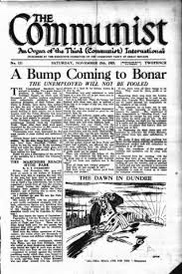
Then there was the selling of our paper, The Communist, an extremely important part of our political work. With self-sacrificing effort of fellows like big Pat Quinlan, Malcolm McFarlane and others the sales rose by thousands. Nothing was a handicap to them. They were out on sales late and early, in snow, sleet and rain, nothing deterred them. At this period I remember one strange incident that came up in the ordinary course of the work. In Glasgow there was a big Irish docker named Jimmy Fearns. He originally came from Newry in Northern Ireland, and I think he was one of the founders of the Irish Citizen Army. Jimmy was out of work and, like most people in his circumstances, living in one of the model lodging houses for which Glasgow was famous-or infamous, depending on which way you look at it. I never knew why the name “model” was given to these dens of human suffering, they were certainly revoltingly original, but never model. One morning Jimmy came to me and said:

“Bob, can’t we do something for the modelers?”

“Have they any grievances?” I asked.

“Sure they got nothing but grievances.”

So we had a meeting with a number of representatives from the models, mostly men living apart from their wives and families and trying to keep two homes going. We got their grievances, published a leaflet and distributed it around the lodging houses. Because of this agitation a number of these places became cleaner and started to provide more up-to-date cooking and washing facilities.

The story was not without sequel. We were amply repaid for our work. For us there was the guarantee that our meetings in Glasgow were conducted in a peaceful atmosphere. The modelers were very handy fellows when the occasion arose. They lived in a society in which “might was right” and if there was any attempt to break up our meetings they soon put an end to that nonsense, saying “they defended those who defended them.”

The Scottish organisation took shape on the basis of our propaganda meetings. We had branches in every big borough from Glasgow to Aberdeen and a lone scout or two in places like Inverness, Dumfries, Perterhead and Fraserburgh. We listed speakers for the meetings, checked that they were advertised- because in those days it was a hit or miss business, sometimes the speaker did not turn up, sometimes the meetings were not advertised and there was no audience. All arrangements had to be checked and re-checked.

This meant money, and sometimes the sums were large, at least large for us. Two members of the Scottish Executive who did a magnificent job on finance for the party were John Inches and George Whitehead. By their work the Scottish Party was entirely self supporting, and with good finances the
political and organisation work of the party received most attention. Thus early I already understood that freedom from financial worry is a boon to a Communist Party organiser.

The most distinguishing feature of the Scottish Party then was its solid industrial base. In fact, the party was so working-class that there was a real antipathy to what was termed “the intellectuals”. It was entirely wrong of course and was combated by the Party. At that time we had a number of students; one of them, Phil Canning, later to be elected as a Communist Councillor in Greenock for many years, became an outstanding representative of the working class. Our students became swallowed up in revolutionary thought and began to absent themselves from their university classes, thinking the revolution was round the corner. I had long conversations with them, and patiently explained that just as in the workshop a Communist had to be a capable worker and win the respect of his mates, so in the college and university the students must do the same. If a Communist could not pull his weight then his “preaching” will fall on deaf ears. A student with a degree was a much more valuable political worker than a student without a degree.

Our solid industrial base came largely from the members who had come to the party from the Clyde Workers’ Movements and the militant workers from the mines and the railways who also had an excellent record of militancy during the war. But they also brought a number of problems. Our relations with the Labour Party were not good. This was partly of our own making, in that many of the groups that had preceded the new Communist Party and helped to form it had a very abusive attitude towards the Labour Party. Many of these members were strong political individualists and spent the greater part of their political life calling the Labour Party names. Not that sometimes the abuse was not called for, but nevertheless it was not the right way to go about trying to cement relationships that certainly would have helped us to gain more working-class unity in action.

We also inherited a problem from the Socialist Labour Party, who had laid down that their members would not accept trade union office lest they be corrupted. We naturally had to fight against that principle; corruption in the trade unions was then and still is an occupational hazard for which membership of the Communist Party is a good antidote. This, however, was one of the reasons why many militant trade union leaders in Scotland did not immediately join our party.

Our principal problem in industry was to get a balanced understanding of the political work of the party, engaging in every struggle in the social field and blending this with our industrial work in the fight for wages and better working conditions. This conception was foreign to British politics and therefore the hardest nut to crack for our party. A break had been made during the war in the rent struggles on the Clydeside, which culminated in the pressure on the authorities being so great that a new Rent Act was passed in Parliament. The Clyde Workers’ Movement had played a decisive part in this fight, organising the workers in the factories and combining with the tenants’ organisations. In fact, it can truly be said it was this successful combination of social and industrial struggle that was the main reason for the success gained.

We also had to try and overcome strong syndicalist traditions which still endured in industry. In this there was good and bad. I well remember when the late Jack Tanner came to the party, at that time a strong syndicalist-in fact, he edited a paper called The Syndicalist from somewhere in Fetter Lane, London. But Handsome Jack, as he was called, developed ambitions to become a trade union leader and the Communist label did not make for an easy passage, so Jack
changed the label.

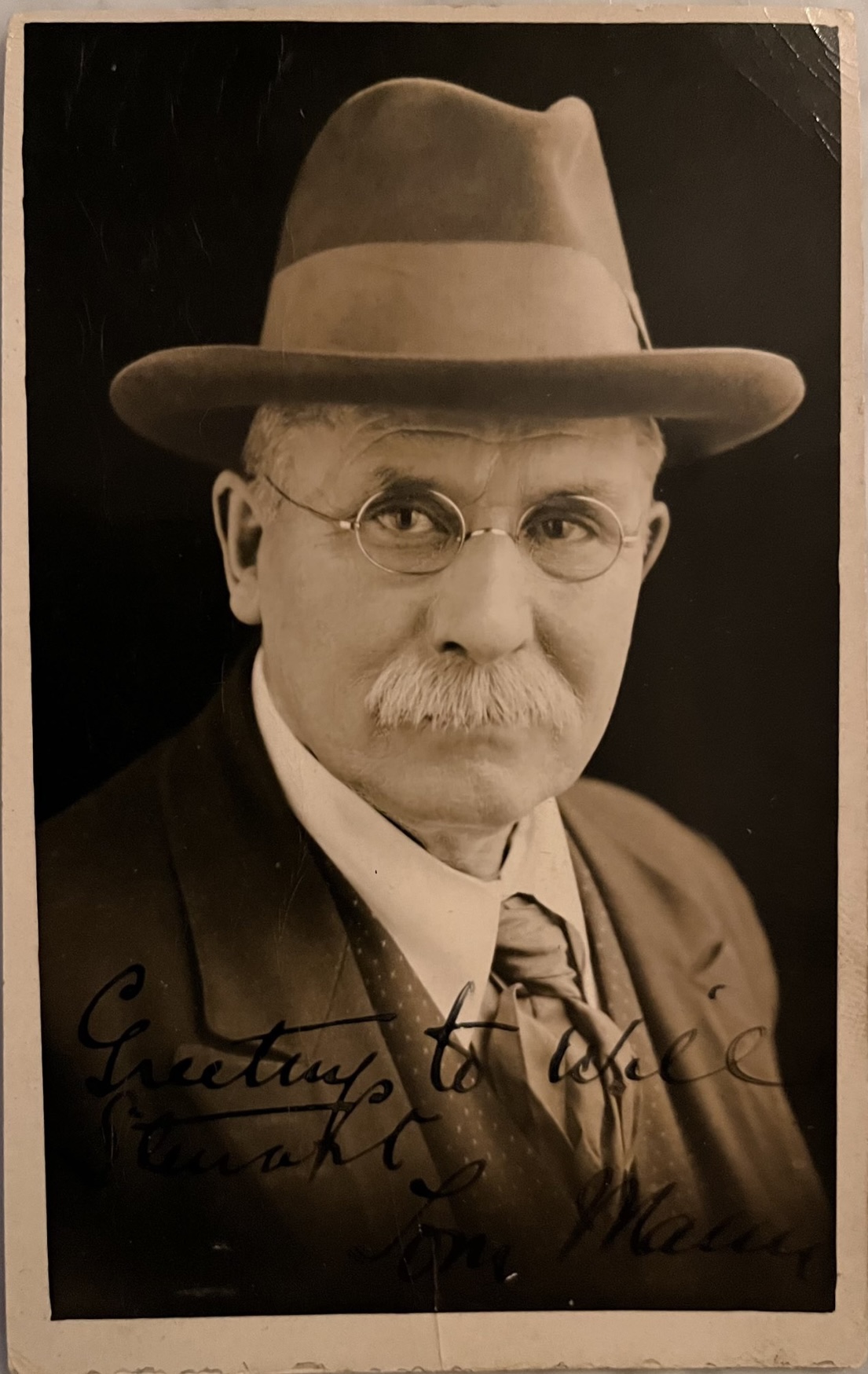
Tom Mann in 1920.

Another syndicalist, but one who was quickly shedding his syndicalist ideas and who came to the party, was Tom Mann. A great national and international figure and the first Labour candidate to contest Aberdeen; a fine trade unionist, a first-class politician, a great social mixer, known to everyone left, right and centre, respected by all and one of the best speakers the Communist Party ever had; Tom Mann was a great asset to the British trade union movement and an excellent representative of the Communist Party.

In these early days the party attracted all kinds of industrial do-gooders and the sieve of struggle sorted them out. In Scotland we got our quota, but the vast majority of our members were fine men and women, with the success of the working-class struggles and the achievement of socialism as their main aim. We had leading miners from every coalfeld, engineers like Willie Gallacher and Hugh Hinselwood, Tom Bell and Jim Gardner (later to be the general secretary of the Foundry Workers Union) from the foundry workers, from the railways Jimmy Davidson and Jimmy Figgins who many years later was general secretary of the N.U.R., and George Whitehead from the Clerks. They and many others were held in the very highest esteem in the unions and the factories, enhancing the prestige of our party.

At that time we had not reached the stage of factory organisation, but there is no doubt that the work of our industrial members at the formative stage of the party laid a firm base for party industrial work in Scotland which has endured, expanded and strengthened until the present time. One of the big disappointments when the party was formed in Scotland was that John McLean, one of the foremost members of the British Socialist Party, did not join the new
Communist Party.
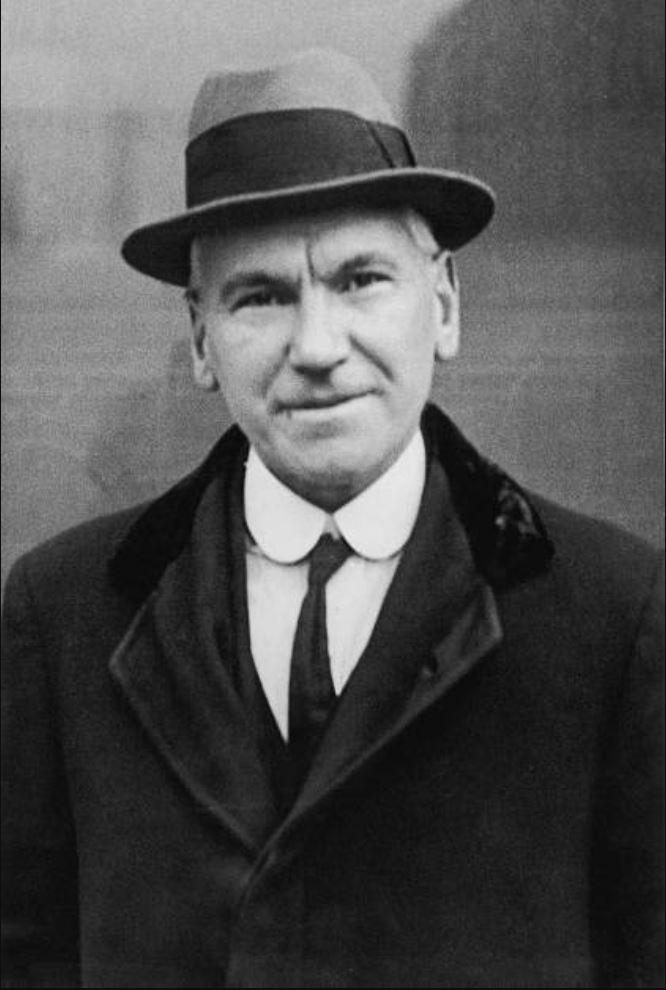
John McLean.

McLean was undoubtedly one of the greatest British socialists of all time. Lenin spoke of him as a fearless fighter against imperialist war. When the first All Russian Congress of Workers and Soldiers’ Councils met, John McLean and Karl Leibknecht were appointed honorary members of the presidium in recognition of the great international character of their socialist work. Later McLean was appointed as the first consul for Russian affairs in Great Britain. In this job he did a vast amount of work and many Russians then living in Britain thanked him for his assistance.

McLean’s main aim was to have Labour Colleges in every county and city in Scotland and he succeeded in doing so in all the main cities and in many of the counties. These colleges brought many thousands of Scottish workers closer to the understanding of socialist principles. As a school teacher and a mass working-class leader McLean naturally gravitated to this form of mass socialist education. I was an Executive member of the Scottish Labour College, worked with McLean, and came to appreciate his outstanding capabilities in this form of work.

I am many times asked, “Why did McLean not join the Communist Party?’ I have always found some difficulty in answering. John McLean was a Communist. His life and work was that of a dedicated Communist motivated by sincere socialist principles. He was a most energetic man and never at rest, a powerful debater and a skilful propagandist. He could hold a crowd for hours with his oratory. He was a comparatively easy man to work with, but more an individualist worker than a collective one. There can be no doubt that the long spells in His Majesty’s prisons totally undermined his health and that this had an effect on his thinking in his later years, when he became obsessed with the idea that he would be poisoned. He refused to eat in anyone’s house and on occasions refused food even from his wife. I noticed this particularly when he came down to assist me in the Caerphilly by-election in which I stood as the Communist candidate.

He told me he did not like a number of the leading members of the Communist Party, but I think he would not be alone in that, and we had a number of discussions on this question. Yet such things should not detract from the indispensable contribution John McLean made to the advancement of the British working class. He was truly a giant in the British labour
movement and an international socialist of whom the British people can be proud.

His early death in 1923 was a great blow to the Scottish working class.
Comrades: Tom Mann

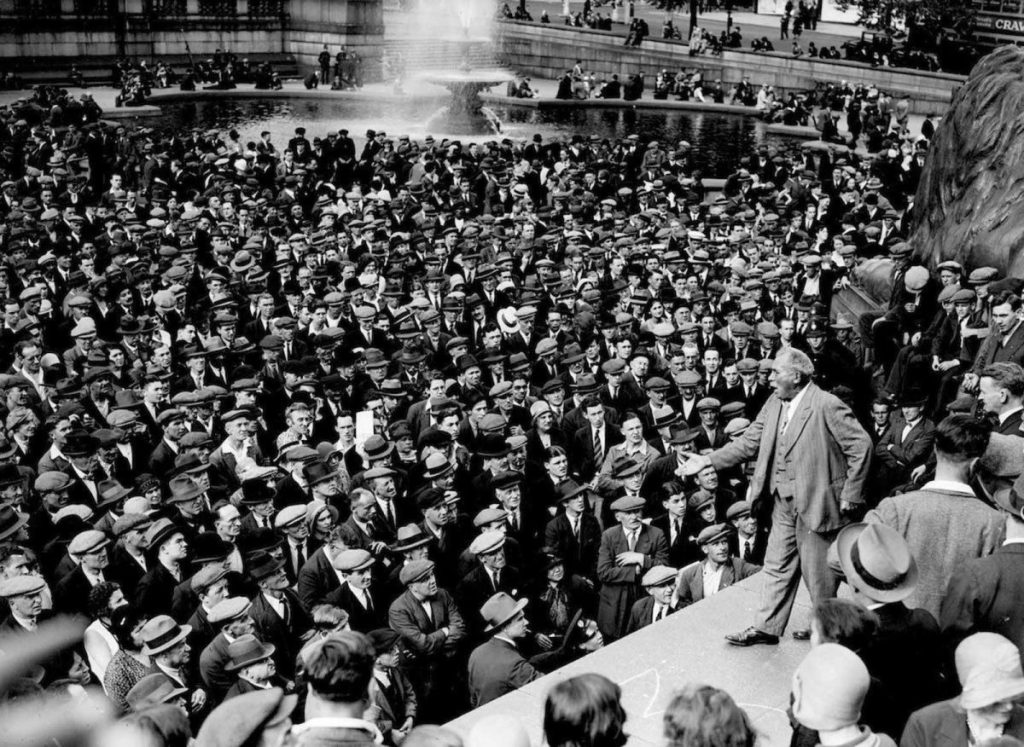
Tom Mann addressing the crowds at Trafalgar Square. Possibly at the Sacco and Vanzetti protest in 1927.

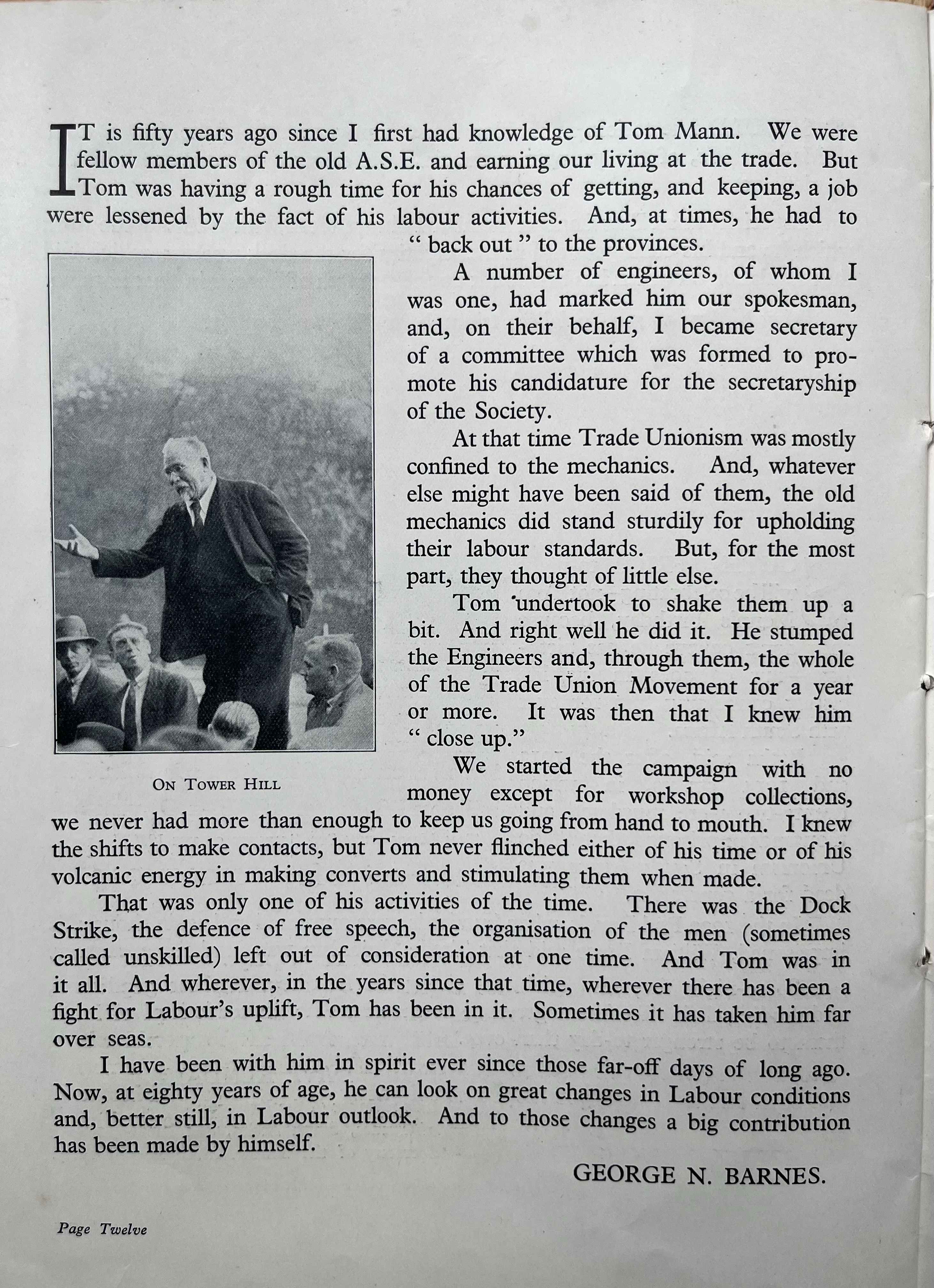
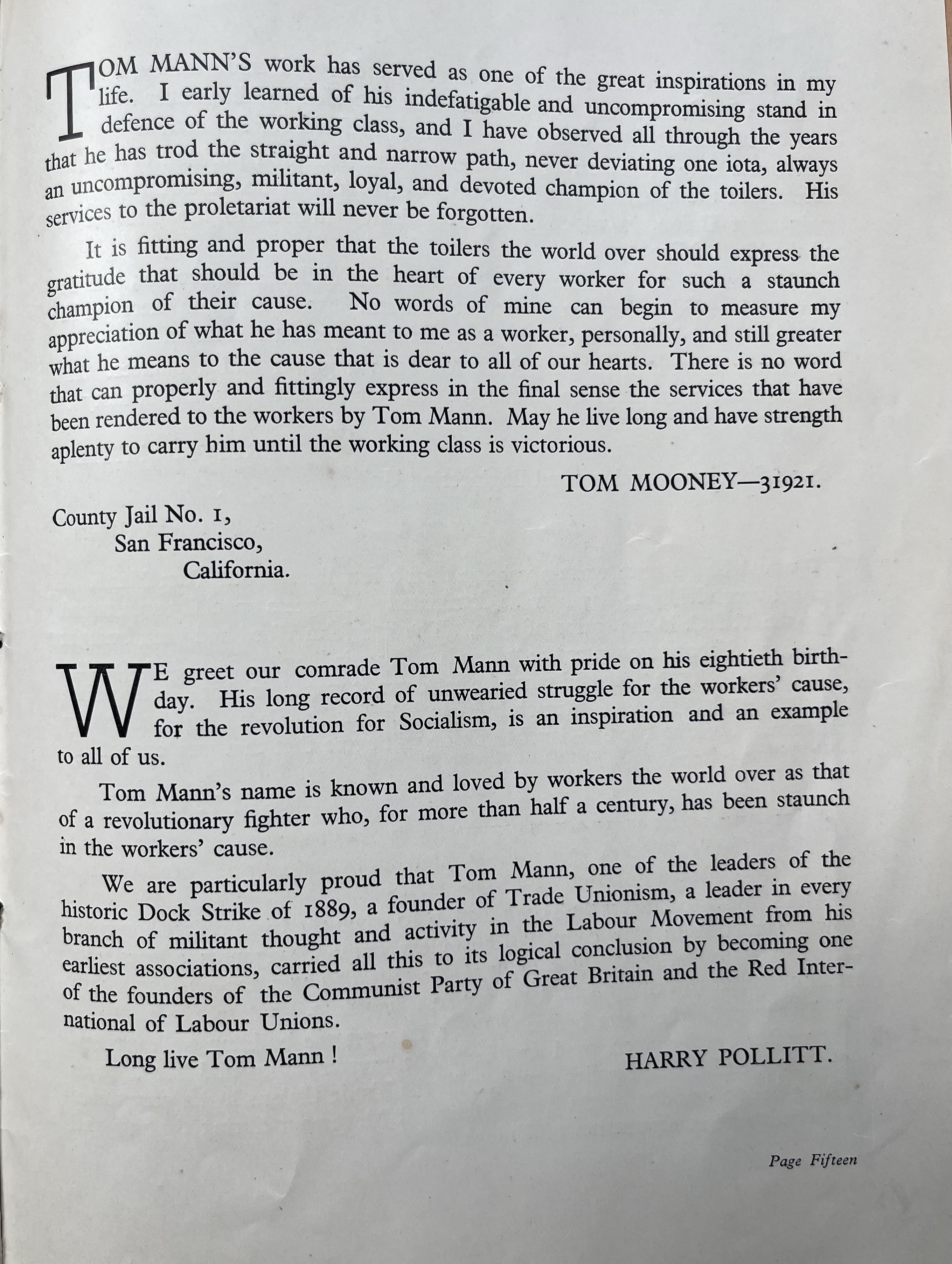
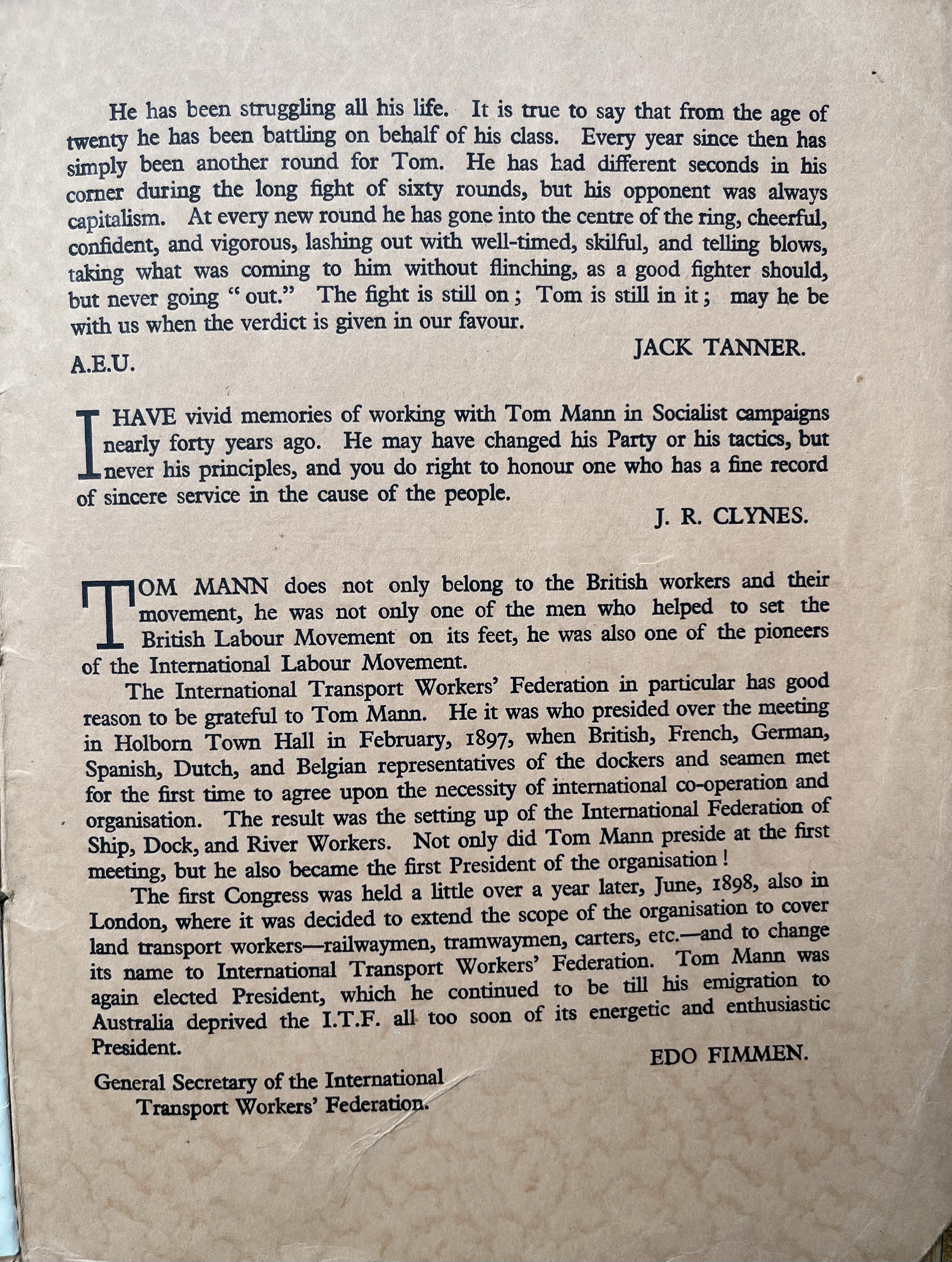
Few members of the public might recognise the name Tom Mann these days but, even though he died over eighty years ago, he remains a giant of the Labour movement and trade unionism. He drew huge crowds as a public speaker and achieved the seemingly impossible by being equally admired by moderate Labour figures such as George Lansbury, Clement Attlee and Herbert Morrison and by his comrades in the CPGB Harry Pollitt and Willie Gallacher. Both my great grandfather, Bob, and William, my grandfather were privileged to know him. Recently I watched some old Pathe footage of Mann addressing crowds of people in Trafalgar Square and was amazed to see Bob Stewart wander in to shot and look straight at the camera for a moment. At that point in time- 1927- he was fifty years old – a landmark which I am rapidly approaching. Almost a hundred years separated us an unexpected and it was spine tingling moment.

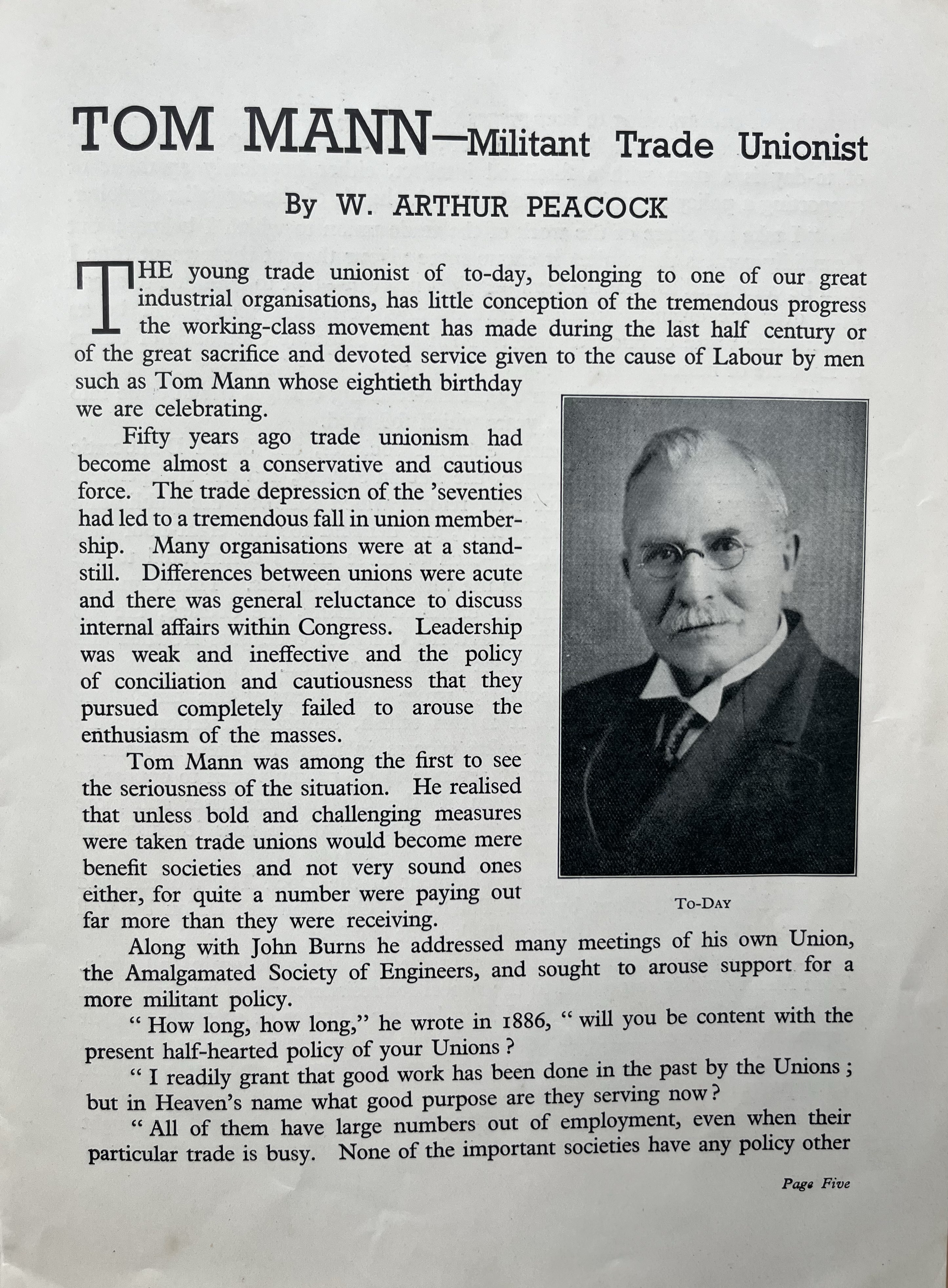
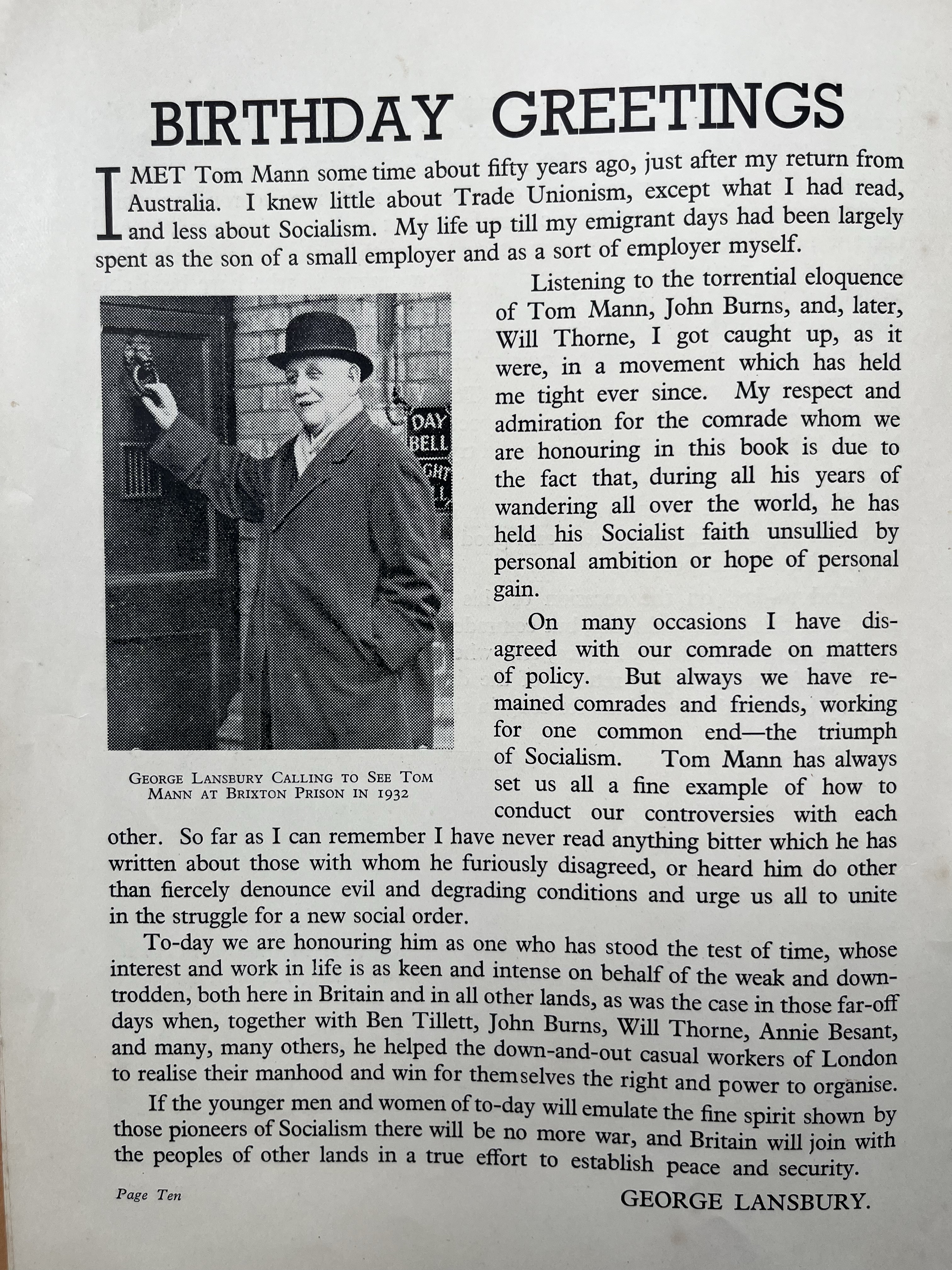
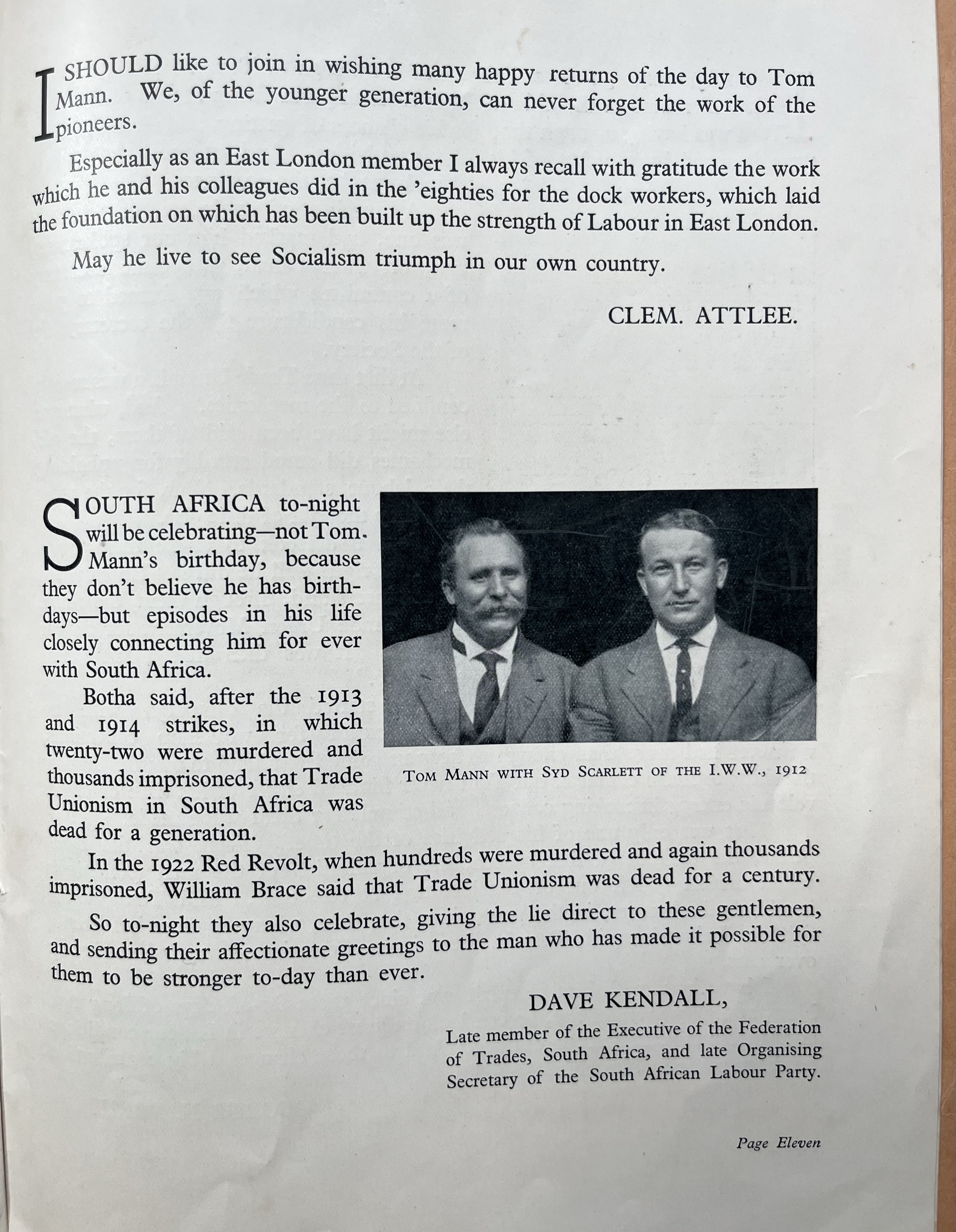
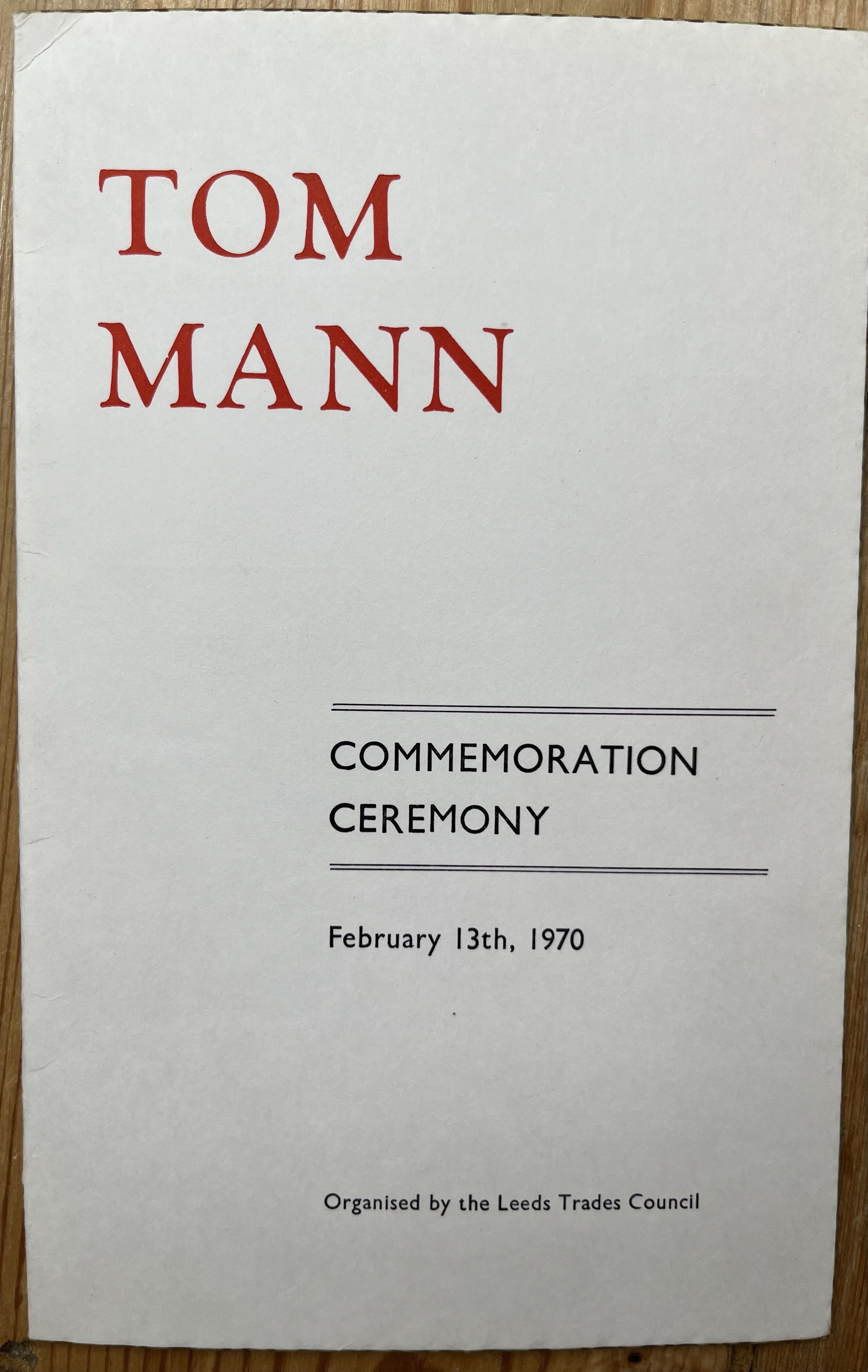
Below you will find photographs of a few of the documents relating to Tom Mann we have. Two of them relate directly to his eightieth birthday celebrations in 1936 and feature contributions from the figures mentioned earlier as well as a few others. I hope you enjoy them.

Apparently seven hundred people attended Tom Mann’s 80th Birthday Testimonial Dinner. Here’s an autographed menu. Signed by Tom Mann, Ben Tillet, Bob Stewart, Willie Gallacher, Harry Pollitt, Clement Attlee (!) and others. I was quite shocked to see Attlee’s autograph in that company- not exactly renowned for his communist sympathies is he?

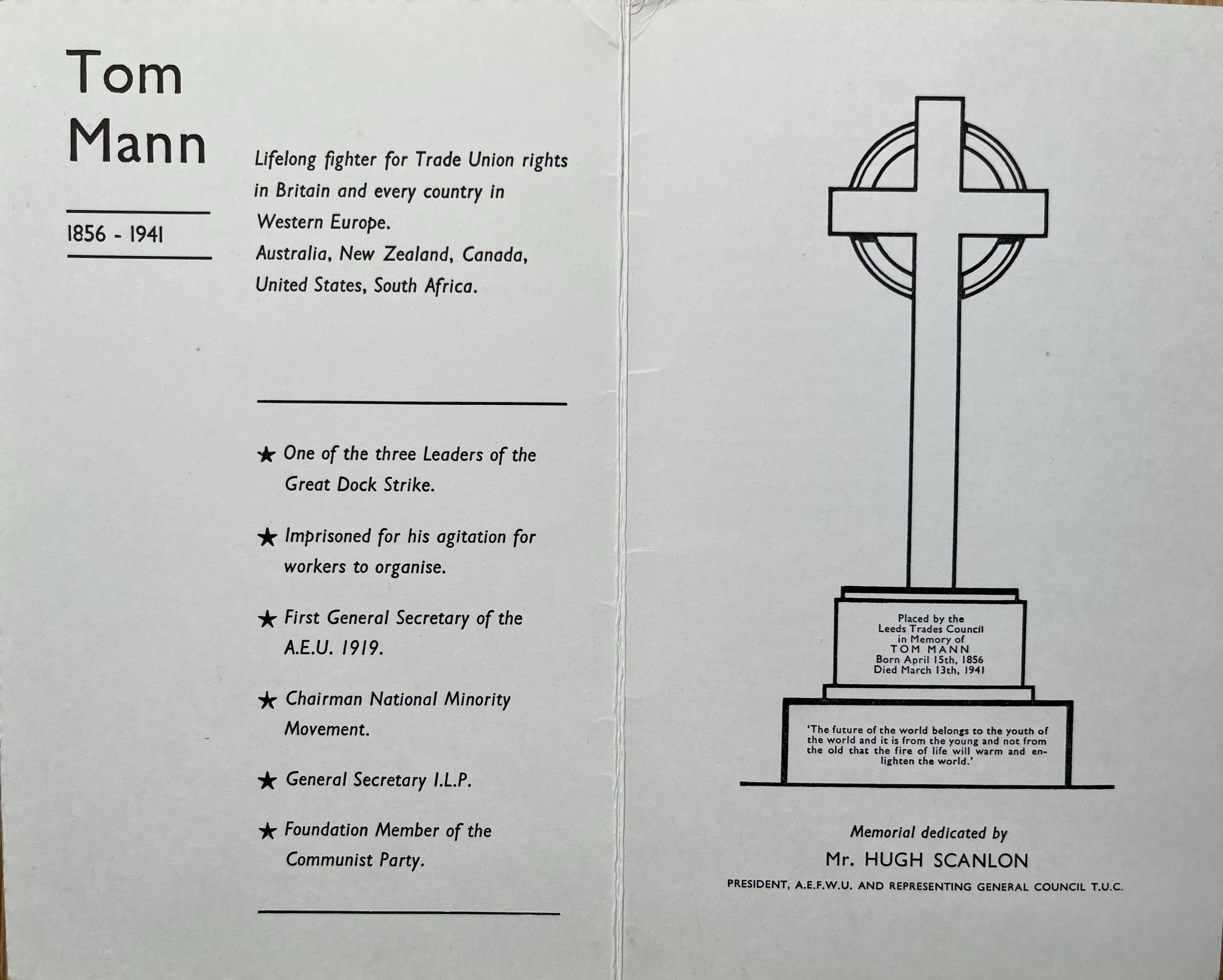
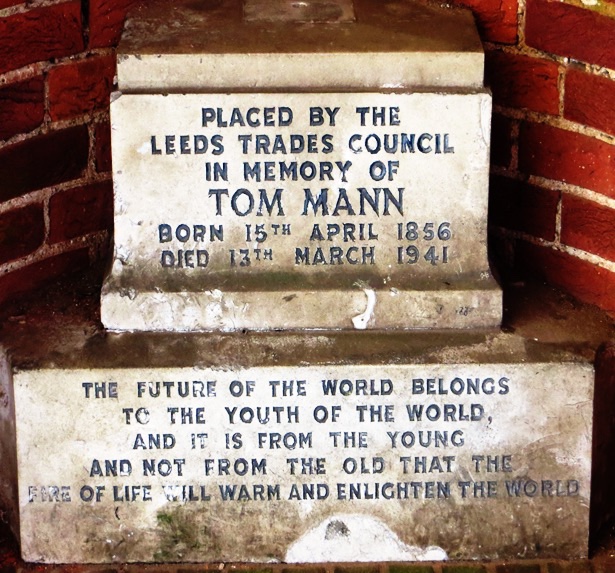
A memorial to Tom Mann was unveiled at Lawnswood Cemetery in 1970. I am presuming my grandfather attended and bought back this souvenir- Bob Stewart would probably have been to poorly to attend at that time.

William Stewart and the National Unemployed March to London, 1929.

The 1929 National Unemployed March from Glasgow to London arriving at Hyde Park.

Frankly, the 1920s do not seem very different to our own times. Huge inequality, increasing poverty and a government wholly indifferent to the situation, more concerned with preserving their interests and dismantling the rights of ordinary people. Liberal voices and the fourth estate hostile to any ideas that may remedy the situation. Perhaps the main difference between then and now is that, in the twenties, unemployment was the source of hardship whereas these days most people tipping into poverty are in work.

During the 1920s and 1930s there were numerous marches and protests to combat unemployment and hunger and my grandfather Bill Stewart was on one of the first. I recently discovered two documents that shed a little light on these times. One of them was my grandad’s own handwritten account of his experiences, written sometime in the 1970s for The Morning Star. The other was a letter to Bill from trade union legend Tom Mann- a colleague and friend of his father Bob Stewart.

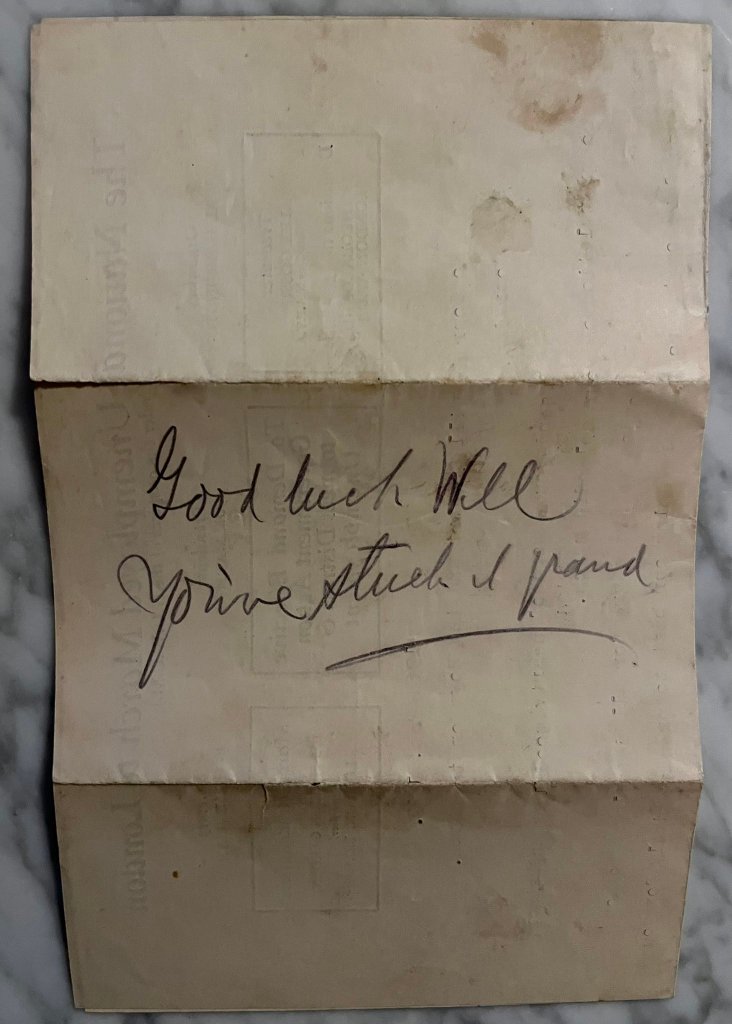
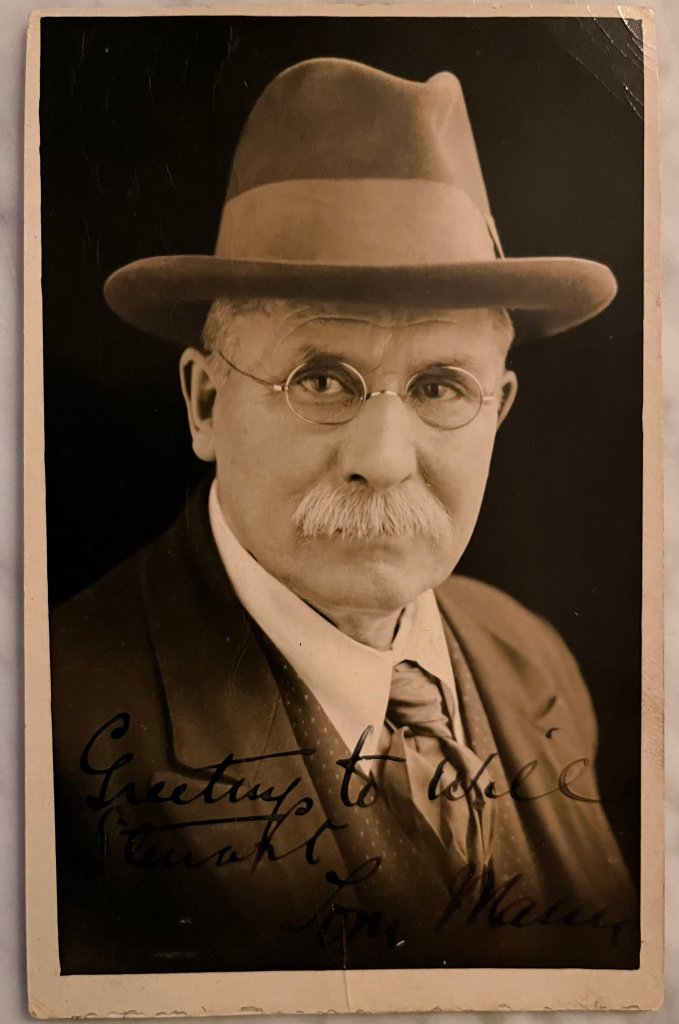
The envelope is addressed to ‘Comrade William Stewart – WITH THE MARCHING UNEMPLOYED’ to be picked up at the Aylesbury post office on or after the 20th February. The marchers had made it on foot from Glasgow to Buckinghamshire in a little less than a month. The letter is on the headed notepaper of the National Unemployed Workers Committees Movement – an organisation set up by the CPGB to highlight the conditions of the unemployed after the First World War and on the back Tom Mann has scrawled something along the lines of ‘Good luck Will- you’ve stuck it grand.’ There’s even a signed photograph. The letter reads:

To Comrade Will Stewart and the Boys on the March.


Dear Comrades,
I send you a word of hearty good luck and sincere congratulations on your splendid march.


In London we are eager for all details as to how you fare on the road. We
are doing our best to prepare nicely for you on your arrival.


You have done splendidly and are now within a few days of your destination. In spite of all obstacles you have achieved your purpose so far and we believe will carry it out to the letter.

I am hoping to meet you at Watford on Friday, continue in the
same spirit of Comradely devotion to our great cause and you will do much to bring about betterment now and the great Industrial and Social change for the future.


Hail to the Marchers;
Fraternally Yours,

Tom Mann

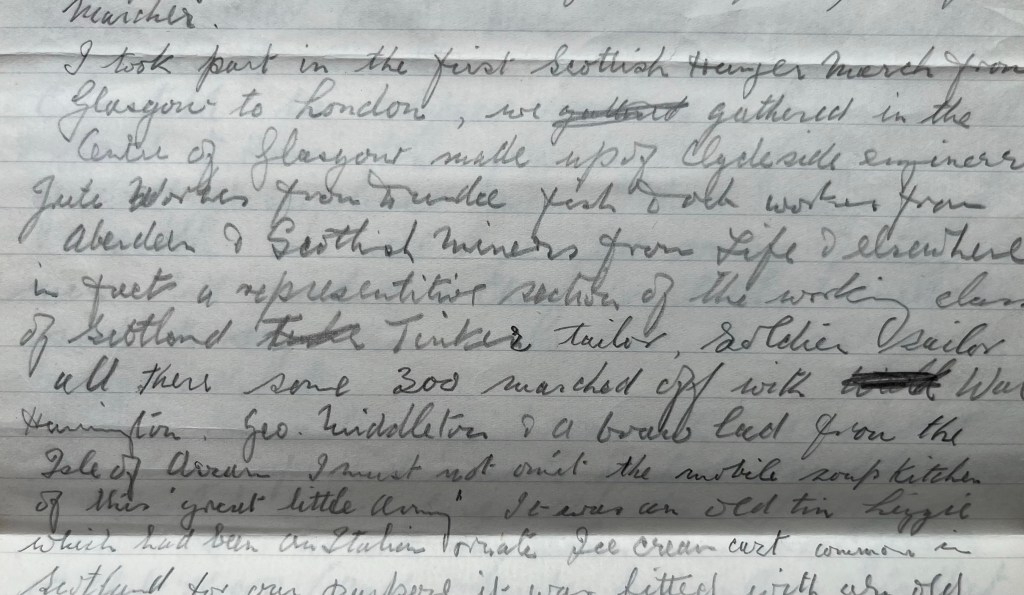
Part of William Stewart’s handwritten account of the 1929 Unemployment March from Glasgow to London.

William Stewart’s own handwritten account seems to have been written sometime in the 1970s almost fifty years after the event. It sheds more light on what it was like to be on the march and the issues they faced on the way. Wal Hannington was a founding member of the CPGB and the head of the National Unemployed Workers’ Movement. If any one could identify the Geo Middleton mentioned I’d be extremely grateful.

I have just been reading your article in this morning’s Morning Star on the Hunger Marchers, and I think that apart from the actual primary importance of the political side of the campaign, please let us tell the up and coming militants what made an ‘Unemployable Person’ (as the title often was quoted) a Hunger Marcher.

I took part in the first Scottish Hunger March from Glasgow to London, we gathered in the centre of Glasgow made up of Clydeside engineers, jute workers from Dundee, fish and dock workers from Aberdeen Scottish miners from Fife and elsewhere in fact a representative section of the working class of Scotland. Tinker, tailor, soldier, sailor altogether some 300 marched off with Wal Hannington, Geo Middleton and a braw lad from the Isle of Arran. I must not omit the mobile soup kitchen of this ‘great little army’. It was an old tin Lizzie which had been an ornate ice cream cart common in Scotland. For our purpose it was fitted with an old wash house boiler (as used these days for cooking pigs swill) a few sacks of boiler coke and firewood and of course a ‘cook’ of whom more later.

The month of January was not best weatherwise in Scotland and as we progressed on our way snow was falling as we marched through Thornhill singing the old marching songs of the Movement in which we were soon to become as efficient as any body of marching troups and when London’s Trafalgar Square was reached our rendition of Macgregor’s Gathering and the Hunger Marchers song was worthy of a Red Army Choir.

I am transgressing, to get back to purport of these notes I must go back to our march across the border into Carlisle, here along a country road came the power of the law in the shape of a PC Sergeant and Chief Constable resplendent in blue and yards of black braid and a flashing silver nobbed cane. Wall gave the command to stand to attention coming abreast of the Chief Constable – he stepped forward saluted Wal and said ‘Mr Hannington you have a fine body of well disciplined men. I had visions of a rabble.’ Our well organised army of determined men had evoked a Chief Constable’s admiration. Sad to say this was not the case as we progressed.

What comradeship and warmth we received – the big splendid meals of hot vegetable soups and through Lancashire the tons of hotpot consumed as we lay down on school floors or club floors tired but proud with the great justification of the duty we were performing for our class. Proud of the bands of working class women who cooked and fed us at each halt on the way – of butchers who handed us joints of meat – bakers who gave us bread and buns – of the Co-op Womans Guild who organised their local Co-op resources on our behalf – of women, whose homes were full of their own unemployed fathers and sons, took and did washing for us.
Each marcher had an Army blanket which on the march was rolled and worn bandolier wise over our overcoats and with each man wearing an Army haversack we did look as if we meant business – marching in battalion formation of companies and sections, (we had no lack of military advisers- many of the lads were ex-servicemen).
Our commander and his deputy Wal Hannington and Geo Middleton respectively were tremendous, not forgetting the role they played – for want of a better name – political commissars.

To get back to my story and to emphasise the main purpose of writing is to show that it was in the organisation and the day to day problems and details dealt with by “Our Command’ without this the impact on the community would have been lost. All working class organisations rallied to us as the march continued south.

We had a cyclist courier on an old boneshaker who would ride ahead to alert local comrades of our impending arrival and make arrangements for our rest at night – all important when we had forced our march to some 30miles in one day on some occasions.

Wal Hannington- head of the National Unemployed Workers’ Movement.

We were approaching Warwick – our scout or courier said we would have to go to the ‘Spike’ that night and he was not too sure of the ‘Workhouse Master’. As we marched in that evening there stood the Master well dressed in tweeds and stout brown brogues – the envy of the Army booted marchers. His eyes showed his amazement at our discipline quietly he said ‘this is not what I expected’ and he re-arranged all the quarters and implemented the meals after which he asked Wal and I to share his supper in his own quarters and as the meal of lamb and pickles progressed and Wal explained the reason and the purpose of what the march involved he grew in admiration and from a hostile attitude almost came to flattering of our efforts. He voluntarily waved the 3hour work rule then in force – (any person using the workhouse overnight was compelled to do such things as cleaning, wood chopping and coal carrying. This was not always the case as in later cases when a downright refusal had to be made at other workhouses). As Wal and I said good night to him and walked across to the main building and our floor space Wal said to me “Billy another couple of hours with that bloke I would have had him packing up and joining us.

On down through Lancashire among the lassies in their clogs and shawls ladling out mountains of hotpot full of meat scrounged off local butchers and cigarettes from their own meagre supplies – though on occasions a Tobacconist gave a supply of Woodbines, Shag and papers

What an army from Glasgow to London without a courtmartial! At no time was anyone reported for drinking such was the effect of good leadership and voluntary discipline in our day to day organisation of ordinary working blokes with intellect enough to understand how worthwhile this great effort was. Many had little knowledge of The Working Class Movement when the march started other than they were against the system that had unjustly degraded them but the hell of it had not broken the spirit that took them on the march.

One wee chap whose feet were a bit sore as we marched along half whispered to me ‘Hey Bill I’ve been thinking we missed a wee thing at the start of this — job – we should have sent a telegram to Budyonny to hae sent us some o his Red Cavalry horses – ma feet always walked better in stirrups? Later I learnt he had been in the Scots Greys.

The bedding down at night were like any barrack room except the arguments were on a higher plain and as the march progressed the full sense of class and political involvement came to the top and the knowledge of fully participating in the struggle of the masses and the need to implement their knowledge grew in their eagerness and enlightenment so that when London came everyman Jack was fully conscious of every facet of the political causes that prompted our actions as working class militants.

Comrades: Henry Sara

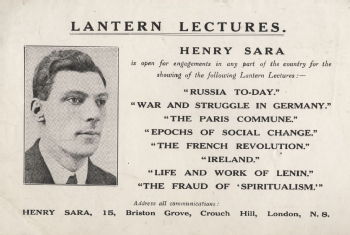
Leaflet advertising Henry Sara’s Lantern Lectures (Warwick Modern Records Centre).

Late last year I was contacted on Twitter by someone who runs the Warwick Modern Records Centre account who told me they thought they had some lantern slides of Bob Stewart in Russia in 1924 – the time he was on the Executive Committee of the Comintern. They were part of the Henry Sara collection – someone I had never heard of before. A brief biography apppears on their website:

“Henry Sara (1886-1953) was attracted early in his life to social ideals, and during his twenties became active within the small British anarcho-syndicalist movement. With the advent of the First World War in 1914 Sara aligned himself with the anti-war movement and, after a campaign of public meetings, was arrested and imprisoned in April 1916 for his refusal to serve in the army. He remained in prison until February 1919, when he was finally released after going on hunger strike.

Henry Sara joined the Communist Party of Great Britain (CPGB) in the early 1920s, shortly after its formation, and became a popular speaker within the Party, travelling widely as a representative of the CPGB and associated organisations. His international trips included a lecture tour of the USA on behalf of the Friends of Soviet Russia in 1922; and visits to Germany and France in 1924, Russia / the Soviet Union in 1921, 1925 and 1927 (in 1921, by his own account, he “smuggl[ed] away on a ship from Hull, because he wanted to see for himself”), and China in 1927, where he attended the 5th Congress of the Communist Party of China in Hankow and witnessed the beginnings of the Chinese civil war. Sara’s willingness to criticise Party leaders and association with other Trotskyist “dissidents” resulted in his expulsion from the CPGB in 1932, and he went on to become a leading figure in the British Trotskyist movement of the 1930s.”

Sara used to give lectures and talks about socialist politics and illustrate them with magic lantern slides taken, in the main, from his own travels. The slides, reproduced by the WMRC on their website are exhaustive and fascinating and I’d encourage anyone interesting in Soviet history or the broader sweep of left wing politics in the early twentieth century to view them. An absolutely exhaustive and stunning resource. You can view them here: https://warwick.ac.uk/services/library/mrc/archives_online/digital/sara/

The photos the WMRC sent me on Twitter are reproduced below. The first is a group portrait taken in Faustovo. Henry Sara is the tall, dark haired young man standing on the left while that’s unmistakeably Bob Stewart standing on the right hand side of the picture. He’s roughly my age there (47) but looks odd due to an industrial accident and too many policemen stamping on his face. His wife Margaret in the glasses is sitting on the left and the little girl by his knee I’m pretty sure is their daughter, my dad’s Aunt Nan. Years later in the late 1930s/early 40s she would have to flee Russia with her baby son after her husband was arrested as a Trotskyist. He was shot in 1941 and the full details only came out in 1956. Standing at the back is British Trade Union legend Tom Mann who I’ll be writing about later. Also in this photograph is Rose Cohen – she’s sitting next to Margaret. She was a suffragette and like my great grandad a founder member of the British Communist Party. Standing behind her is probably her soon to be husband David Petrovsky. In 1938 he was arrested and executed and later on Rose was also arrested. There was nothing anyone could do as she had given up her British citizenship. Her trial lasted twenty minutes and then she was taken out and shot. Their child was sent to an orphanage. All of this is described in Francis Beckett’s superb book ‘Stalin’s British Victims’ and in Maurice Casey’s article, ‘The Suffragettes Who became Communists’ which you can read here: https://www.historytoday.com/miscellanies/suffragettes-who-became-communists

Front Row L-R: Margaret Stewart, Rose Cohen (?), Unknown, Unknown, Annie Stewart, Bob Stewart. Back row L-R: Henry Sara, Unknown, David Petrovsky (?), Tom Mann, Unknown.

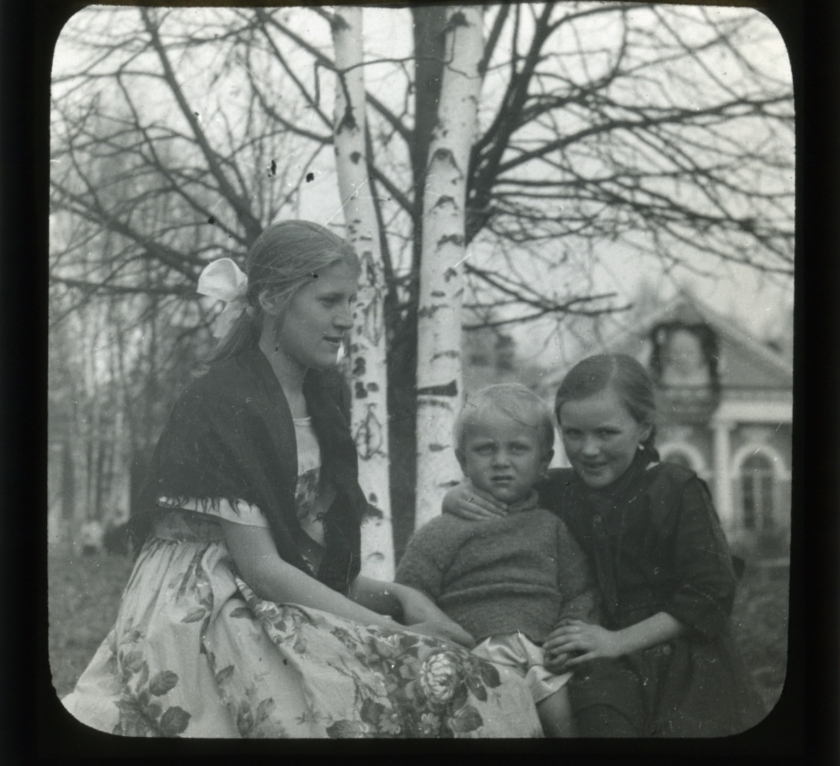
This next photograph was simply labelled ‘Nan’ and though I don’t know who the older girl and the small boy are that’s definitely Bob and Margaret’s daughter Annie ‘Nan’ Stewart aged about 11 on the right. The picture appears to have been taken in the grounds of the Pushkin School.

This image has an empty alt attribute; its file name is 9e2853d7-5854-4bad-9d0e-2355bd77411a.jpeg

Annie Stewart can also be seen in the class photo from the Pushkin School – she’s the little girl standing in the dark dress fifth from the right. Bob and Margaret Stewart can just about be spotted at the back on the left hand side.

The last slide features Bob and Margaret Stewart in Red Square visiting the grave of John Reed- the American journalist who wrote the eyewitness account of the Russian Revolution ‘Ten Days That Shook the World’.

If anyone has any more information regarding these images please do get in touch. I’d love to know more. Many thanks to the kind but anonymous person who brought them to my attention. Learning all about Henry Sara was fascinating. Thanks also to Maurice Casey who has always been so helpful.

Alan Stewart.