Breaking the Fetters Chapter 19: A Storm – Workers in Action.

During one of my periodic visits to Dundee in early 1923 I ran into a serious confrontation between the jute employers and the jute workers. To make things more serious this took place while nearly 25 per cent of the workers in the city were unemployed. A running battle was taking place over unemployment pay and parish council assistance to those who had exhausted their unemployment benefit.

In February 1923 there were 10,500 workers claiming benefit on the Dundee unemployment register. This was by no means the total unemployment figure; many women workers were not entitled to benefit when they were unemployed. Under the unemployment acts then in force, by April 4th 7,000 would be completely cut off from unemployment benefit and would then have to apply for parish relief. This bleak prospect was causing a serious crisis in every home in the city. The scales for weekly parish relief were 7s. 6d. for a husband, 7s. 6d. for a wife and 1s. for every child under fourteen years of age. This meant a family consisting of man, wife and four children under fourteen years of age (by no means an uncommon family then) had to live on 19s. a week.

Into this already seething cauldron of discontent another problem boiled up. In Cox’s jute mill, one of the largest in the city, employing thousands of workers, the management introduced new spinning frames and demanded a reduction of women spinners. Where formerly three worked, two now would be employed, thus saving the wage of every third spinner. No offer of extra payment to the spinners left was even contemplated. The impudence of such a demand was highlighted by the fact that only the week before, the Associated Companies of Jute Industries, whose chairman was Mr. J. Ernest Cox, had published their profits for the year showing a record £606,224 and declaring a dividend of 9 per cent, all of which Mr. Cox said was very satisfactory. No wonder Cox’s workers were hopping mad. The spinners refused to work the machines and held up the work for the rest of the mill, so the management then locked out all the workers. The mills in the Federation followed suit and in a few days 30,000 jute workers were on the streets swelling the number of unemployed to more than half the population of the city. The locked-out workers got no unemployment pay and were being denied relief from the parish council. There was no doubt in my mind that behind-the-scenes attempts were being made to smash the jute trade union and to try and bring the workers to heel.

The party had discussions with the workers involved and decided to approach the trades council. At first there was a joint effort to organise collections and pay out a few bob to the unemployed, but it soon became clear that this was not even scratching the surface of the problem. Arrangements were then made for a joint demonstration to demand that the parish council raise the relief rates and pay relief to all unemployed.

The demonstration was the largest, noisiest and possibly the most successful in Dundee’s history. The crowd assembled in the Albert Square. The newspapers at the time estimated that 50,000 filled the Square and the adjoining streets. The chairman, one of the locked-out workers, called on me to put the proposals on what should be done. I suggested that the demonstration should elect a delegation to go to the parish council, which was holding a meeting that evening, to table our demands. Secondly, that the crowd should form fours and march to the parish council offices at West Bell Street, making themselves and their demands heard on the way, and continue back to the Square where the delegation would return to give their report. A deputation of ten was selected including Billie Tom Stewart, Councillor John Ogilvie, the A.E. U. organiser Alf Maloney, myself and others. The ten heading the procession, we set off. When we reached West Bell Street there were hundreds of sweating policemen struggling with thousands of people, trying to keep them on the sidewalks so that the demonstration could pass on the road. All traffic was completely halted. In Dundee most of the jute employees were women and many of the husbands stayed at home to keep house and make the meals, so there was the contradictory spectacle of the majority of the marchers being women and those on the sidewalks men. The call went up from the women marchers: “Get the kettle-boilers in the march!” so there was a rush from the sidewalks into the road. The demonstration then became a seething mass of slow-moving humanity.
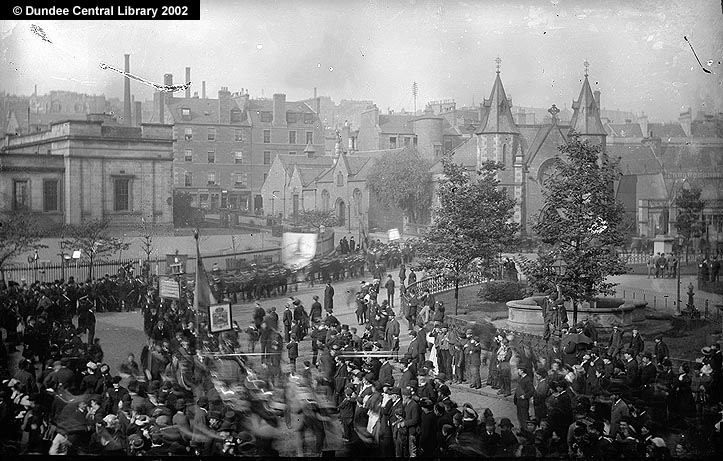
As the head of the march came to the parish council offices, the deputation dropped off and were admitted to the parish council meeting. At least we got there. A number of the parish councillors were unable to get in the front door and had to be hoisted in by the rear windows. The chairman, Davie Duncan, a pal of mine from the old Temperance movement days, opened the meeting, but no one heard a word he said; you could see his lips move but there was no sound. His voice was entirely drowned by the deafening noise from the thousands passing outside shouting slogans for unemployment benefit, increased relief rates, snatches of “The Red Flag”; the sound bounced off the walls of the building and filled every room. At last Bobby Allan, the clerk of the council, made signs that the delegation should be heard. Now Bobby Allan was a terror in Dundee. In the old days when the mothers wanted to frighten their children and get them to go to sleep they recited the old ditty:

“Hush ye, hush ye, dinna fret ye,

The Black Douglas’ll ne’er get ye.”

In many homes Bobby Allan had replaced the Black Douglas. He was a real swine who saw working-class people as beasts of burden and treated them as such.

Allan began by objecting to one of the delegation called McGuire and demanded that he be asked to leave. I promptly told him and the council that McGuire was an elected member of the delegation and if he left, all left. That finished that lot! So we had our say. I let Baillie Stewart and Councillor John Ogilvie, “Mr. Facing-both-ways” as we called him, have the first go. They started with tear-jerking humanitarianism, poor people without a crust of bread, children who were the future citizens starving, and so on. With the flint-hearted parish councillors that didn’t get us very far. When it came to my turn to speak, Davie Duncan said, “Please be brief, Bob.” “Why me?” I asked. I told them the workers were entitled to a good life and it was no fault of theirs that they were unemployed. I accused the jute bosses of locking out the workers and said they were deliberately trying to bust the trade union. “The workers won’t have it,” I said, “and what’s more if you don’t give them money to buy food and clothes, they will likely take them without asking your permission.” I cautioned them and said if there was any trouble then it was the fault of the parish council and not the starving workers.

Bobby Allan said there was the question of legality involved. Discussion would have to be held with government authorities on raising the scales of payment and certainly discussions with the unemployment exchange before any payments to the locked-out workers could be made. When Bobby cracked the whip the councillors usually obeyed, but on this occasion a few demurred. However, he had the majority with him. So we went back to the Albert Square to report. What a thunderous howl of rage greeted my simple announcement that the parish council were not prepared to move meantime! An unbiased outsider would have thought the day of revolution had arrived. From all sides came the demand to smash the council offices, to smash into the shops and take the goods “that belonged to the workers”. For a time it looked as if control of the meeting had been lost. The chairman then called on me to make any proposals of what could be done. I suggested that the demonstration refuse to accept the parish council decision as final, that the deputation should return to the council meeting, and that the demonstration form a procession again and march as before, only this time making their demands a bit louder. I knew that the “spies would be out” and that before we reached the council offices they would know what had transpired on the Square.

This time there was no one on the sidewalks; there was just a huge surging mass of humanity. On the way the window of G. L. Wilson the clothier went in, and this was followed by a few more, including the Buttercup Dairy, and a few goods were extracted; but the wonderful thing was that with the police impotent because of the vast surging mass, thousands of these people desperately in need of food and clothes remained disciplined and orderly.

When the deputation was received the second time I charged Bobby Allan with provoking the workers and creating a situation in which thousands of people could be seriously injured. I said if I went back and told these people nothing was to be done to relieve their distress, then it was the parish council who would be responsible for what would happen. Some of the councillors, no doubt already well briefed on what was happening, supported me, and Bobby Allan knew he would have to make concessions, so we started to talk. First it was conceded that the scales of payment should be raised, and then that the locked-out workers would be given relief while discussions proceeded with the unemployment exchange authorities. So it was back to the Square with a success report and victory for working-class solidarity and united action. This decision to a certain extent ended the starvation tactics of the jute employers and gave the workers confidence to fight on. Dundee people say Bobby Allan never forgot that evening and for years after he continued to extract revenge from the individual cases he dealt with in the parish council.

The case of the locked-out jute workers dragged on. The jute employers were hard men and did not give up easily. I am sure one of their aims was to smash the jute union, at least to cripple it. The case was discussed in parliament where Edmund Morel, M.P. for Dundee, demanded that something be done to end the lock-out. The Lord Provost tried to mediate but without success. Finally the Minister of Labour, Sir Montagu Barlow, intervened and set up a court of inquiry under the chairmanship of Sir David Shackleton. Naturally the report of the inquiry came down on the employers’ side but, if I remember correctly, it also said that increased rates should be given to the spinners, thus sweetening the blow. The lock-out lasted eight weeks, two months in which Dundee was a storm centre in every sense of the word. It was a remarkable coincidence, but true, that as the lock-out was ending the British Trades Union Congress was opening its first session in Dundee.
Breaking the Fetters Chapter 14: Scottish Party Organiser.

After the formation of the British Communist Party at the Leeds Conference, the main task was to build and strengthen the organisation. I was elected as the Scottish organiser, a very tough assignment.

The main political problem then was the beginning of mass unemployment, the fight for work, and the divisions which this creates in the working-class movement. During the war most big factories had established their “factory committees”. But now many of the factory committee members had become
unemployed, and factory committees had employed and unemployed workers working together. This, however, gradually ceased and there began the unemployed workers’ committees which led to the National Unemployed Workers’ Movement which was to play such an important role in the working-class struggles of the 1920s. This segregation of employed and unemployed workers was not then and never has been a good thing for workers in struggle. One section is always played off against the other by the boss and inevitably the boss wins.

Naturally our fellows, being the most militant, suffered most and were the first victims in the factories. Many joined the ranks of the unemployed, and while this meant they had time for political campaigning it cut them off from the much more decisive political work in the factory organisation.

In this setting we commenced to gather together the socialist fragments and build the Communist Party in Scotland. We inherited the British Socialist Party branches, the Communist Labor Party branches, and Socialist Prohibition Fellowship Party branches. All rather loose in organisation, and as I very soon found out, very inflated in assumed membership. The Communist Labour Party were supposed to bring over 4,000 members but I doubt if there was half that
number. The British Socialist Party claimed to bring over 10,000 members. If they did, there were thousands I never saw and I very much doubt if anyone else ever saw them. Propaganda was our strong point. We had many excellent speakers, and all dead sure of themselves. Tom Bell, for years the editor of The Communist; Willie Gallacher, for fifteen years M.P. for West Fife; Johnnie Campbell, who became editor of the Daily Worker, and Bill Joss, one of the ablest lecturers in the Scottish Labour College. These and many others made up a brilliant team of socialist agitators for the Scottish district of the new party.

Then there was the selling of our paper, The Communist, an extremely important part of our political work. With self-sacrificing effort of fellows like big Pat Quinlan, Malcolm McFarlane and others the sales rose by thousands. Nothing was a handicap to them. They were out on sales late and early, in snow, sleet and rain, nothing deterred them. At this period I remember one strange incident that came up in the ordinary course of the work. In Glasgow there was a big Irish docker named Jimmy Fearns. He originally came from Newry in Northern Ireland, and I think he was one of the founders of the Irish Citizen Army. Jimmy was out of work and, like most people in his circumstances, living in one of the model lodging houses for which Glasgow was famous-or infamous, depending on which way you look at it. I never knew why the name “model” was given to these dens of human suffering, they were certainly revoltingly original, but never model. One morning Jimmy came to me and said:

“Bob, can’t we do something for the modelers?”

“Have they any grievances?” I asked.

“Sure they got nothing but grievances.”

So we had a meeting with a number of representatives from the models, mostly men living apart from their wives and families and trying to keep two homes going. We got their grievances, published a leaflet and distributed it around the lodging houses. Because of this agitation a number of these places became cleaner and started to provide more up-to-date cooking and washing facilities.

The story was not without sequel. We were amply repaid for our work. For us there was the guarantee that our meetings in Glasgow were conducted in a peaceful atmosphere. The modelers were very handy fellows when the occasion arose. They lived in a society in which “might was right” and if there was any attempt to break up our meetings they soon put an end to that nonsense, saying “they defended those who defended them.”

The Scottish organisation took shape on the basis of our propaganda meetings. We had branches in every big borough from Glasgow to Aberdeen and a lone scout or two in places like Inverness, Dumfries, Perterhead and Fraserburgh. We listed speakers for the meetings, checked that they were advertised- because in those days it was a hit or miss business, sometimes the speaker did not turn up, sometimes the meetings were not advertised and there was no audience. All arrangements had to be checked and re-checked.

This meant money, and sometimes the sums were large, at least large for us. Two members of the Scottish Executive who did a magnificent job on finance for the party were John Inches and George Whitehead. By their work the Scottish Party was entirely self supporting, and with good finances the
political and organisation work of the party received most attention. Thus early I already understood that freedom from financial worry is a boon to a Communist Party organiser.

The most distinguishing feature of the Scottish Party then was its solid industrial base. In fact, the party was so working-class that there was a real antipathy to what was termed “the intellectuals”. It was entirely wrong of course and was combated by the Party. At that time we had a number of students; one of them, Phil Canning, later to be elected as a Communist Councillor in Greenock for many years, became an outstanding representative of the working class. Our students became swallowed up in revolutionary thought and began to absent themselves from their university classes, thinking the revolution was round the corner. I had long conversations with them, and patiently explained that just as in the workshop a Communist had to be a capable worker and win the respect of his mates, so in the college and university the students must do the same. If a Communist could not pull his weight then his “preaching” will fall on deaf ears. A student with a degree was a much more valuable political worker than a student without a degree.

Our solid industrial base came largely from the members who had come to the party from the Clyde Workers’ Movements and the militant workers from the mines and the railways who also had an excellent record of militancy during the war. But they also brought a number of problems. Our relations with the Labour Party were not good. This was partly of our own making, in that many of the groups that had preceded the new Communist Party and helped to form it had a very abusive attitude towards the Labour Party. Many of these members were strong political individualists and spent the greater part of their political life calling the Labour Party names. Not that sometimes the abuse was not called for, but nevertheless it was not the right way to go about trying to cement relationships that certainly would have helped us to gain more working-class unity in action.

We also inherited a problem from the Socialist Labour Party, who had laid down that their members would not accept trade union office lest they be corrupted. We naturally had to fight against that principle; corruption in the trade unions was then and still is an occupational hazard for which membership of the Communist Party is a good antidote. This, however, was one of the reasons why many militant trade union leaders in Scotland did not immediately join our party.

Our principal problem in industry was to get a balanced understanding of the political work of the party, engaging in every struggle in the social field and blending this with our industrial work in the fight for wages and better working conditions. This conception was foreign to British politics and therefore the hardest nut to crack for our party. A break had been made during the war in the rent struggles on the Clydeside, which culminated in the pressure on the authorities being so great that a new Rent Act was passed in Parliament. The Clyde Workers’ Movement had played a decisive part in this fight, organising the workers in the factories and combining with the tenants’ organisations. In fact, it can truly be said it was this successful combination of social and industrial struggle that was the main reason for the success gained.

We also had to try and overcome strong syndicalist traditions which still endured in industry. In this there was good and bad. I well remember when the late Jack Tanner came to the party, at that time a strong syndicalist-in fact, he edited a paper called The Syndicalist from somewhere in Fetter Lane, London. But Handsome Jack, as he was called, developed ambitions to become a trade union leader and the Communist label did not make for an easy passage, so Jack
changed the label.

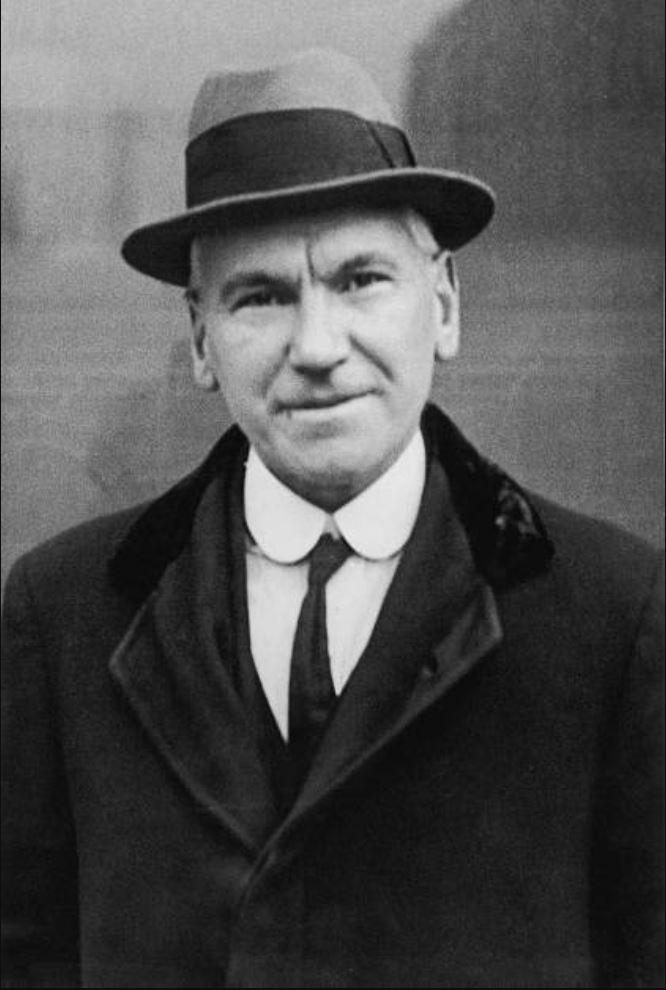
Tom Mann in 1920.

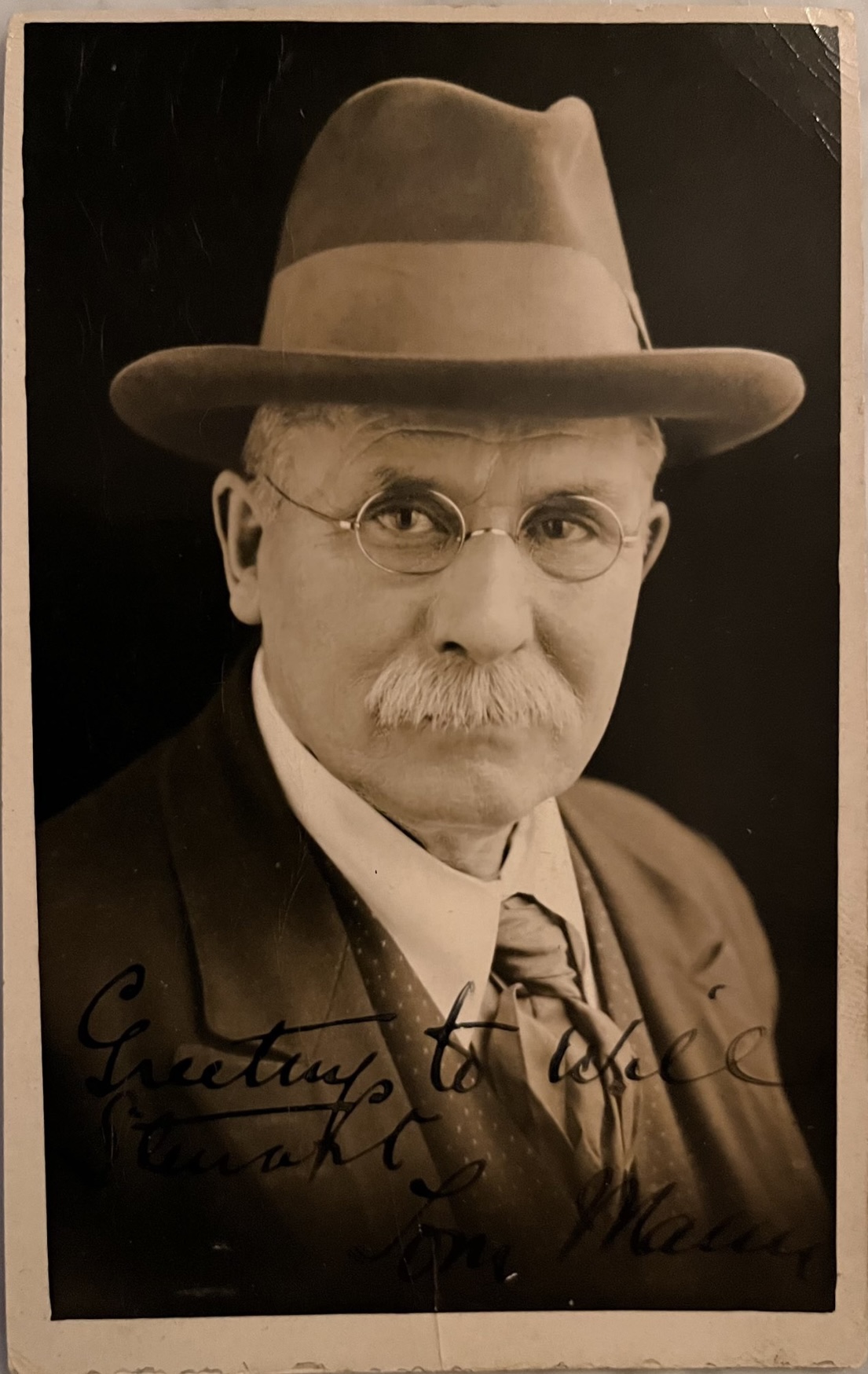
Another syndicalist, but one who was quickly shedding his syndicalist ideas and who came to the party, was Tom Mann. A great national and international figure and the first Labour candidate to contest Aberdeen; a fine trade unionist, a first-class politician, a great social mixer, known to everyone left, right and centre, respected by all and one of the best speakers the Communist Party ever had; Tom Mann was a great asset to the British trade union movement and an excellent representative of the Communist Party.

In these early days the party attracted all kinds of industrial do-gooders and the sieve of struggle sorted them out. In Scotland we got our quota, but the vast majority of our members were fine men and women, with the success of the working-class struggles and the achievement of socialism as their main aim. We had leading miners from every coalfeld, engineers like Willie Gallacher and Hugh Hinselwood, Tom Bell and Jim Gardner (later to be the general secretary of the Foundry Workers Union) from the foundry workers, from the railways Jimmy Davidson and Jimmy Figgins who many years later was general secretary of the N.U.R., and George Whitehead from the Clerks. They and many others were held in the very highest esteem in the unions and the factories, enhancing the prestige of our party.

At that time we had not reached the stage of factory organisation, but there is no doubt that the work of our industrial members at the formative stage of the party laid a firm base for party industrial work in Scotland which has endured, expanded and strengthened until the present time. One of the big disappointments when the party was formed in Scotland was that John McLean, one of the foremost members of the British Socialist Party, did not join the new
Communist Party.

John McLean.

McLean was undoubtedly one of the greatest British socialists of all time. Lenin spoke of him as a fearless fighter against imperialist war. When the first All Russian Congress of Workers and Soldiers’ Councils met, John McLean and Karl Leibknecht were appointed honorary members of the presidium in recognition of the great international character of their socialist work. Later McLean was appointed as the first consul for Russian affairs in Great Britain. In this job he did a vast amount of work and many Russians then living in Britain thanked him for his assistance.

McLean’s main aim was to have Labour Colleges in every county and city in Scotland and he succeeded in doing so in all the main cities and in many of the counties. These colleges brought many thousands of Scottish workers closer to the understanding of socialist principles. As a school teacher and a mass working-class leader McLean naturally gravitated to this form of mass socialist education. I was an Executive member of the Scottish Labour College, worked with McLean, and came to appreciate his outstanding capabilities in this form of work.

I am many times asked, “Why did McLean not join the Communist Party?’ I have always found some difficulty in answering. John McLean was a Communist. His life and work was that of a dedicated Communist motivated by sincere socialist principles. He was a most energetic man and never at rest, a powerful debater and a skilful propagandist. He could hold a crowd for hours with his oratory. He was a comparatively easy man to work with, but more an individualist worker than a collective one. There can be no doubt that the long spells in His Majesty’s prisons totally undermined his health and that this had an effect on his thinking in his later years, when he became obsessed with the idea that he would be poisoned. He refused to eat in anyone’s house and on occasions refused food even from his wife. I noticed this particularly when he came down to assist me in the Caerphilly by-election in which I stood as the Communist candidate.

He told me he did not like a number of the leading members of the Communist Party, but I think he would not be alone in that, and we had a number of discussions on this question. Yet such things should not detract from the indispensable contribution John McLean made to the advancement of the British working class. He was truly a giant in the British labour
movement and an international socialist of whom the British people can be proud.

His early death in 1923 was a great blow to the Scottish working class.

Comrades: Tom Mann

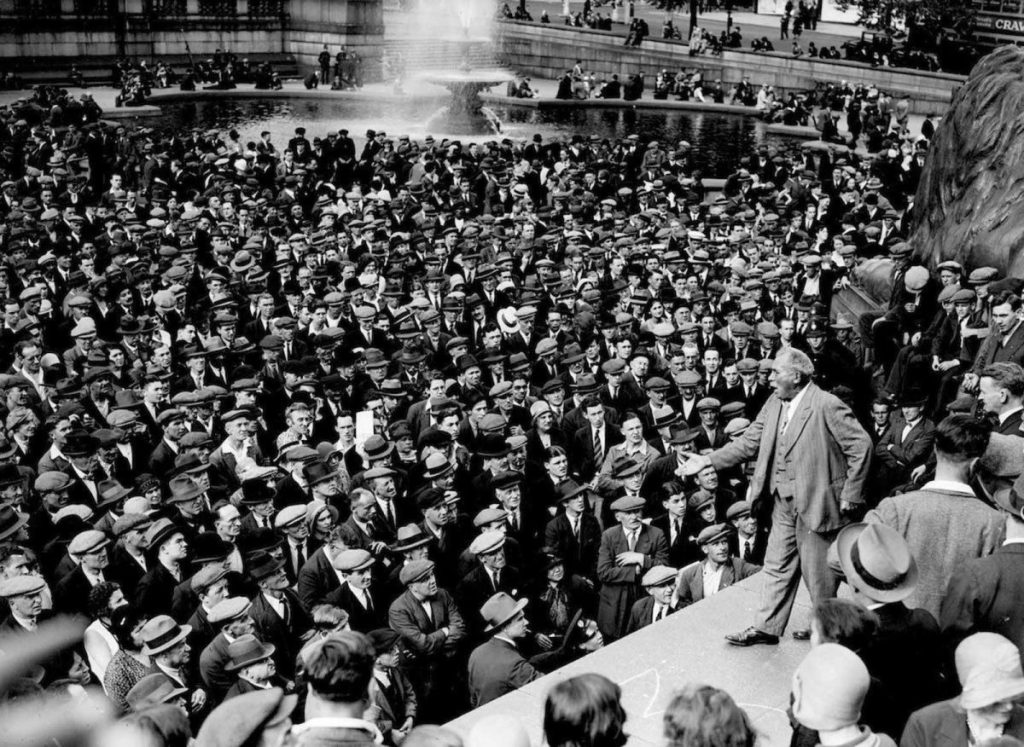
Tom Mann addressing the crowds at Trafalgar Square. Possibly at the Sacco and Vanzetti protest in 1927.

Few members of the public might recognise the name Tom Mann these days but, even though he died over eighty years ago, he remains a giant of the Labour movement and trade unionism. He drew huge crowds as a public speaker and achieved the seemingly impossible by being equally admired by moderate Labour figures such as George Lansbury, Clement Attlee and Herbert Morrison and by his comrades in the CPGB Harry Pollitt and Willie Gallacher. Both my great grandfather, Bob, and William, my grandfather were privileged to know him. Recently I watched some old Pathe footage of Mann addressing crowds of people in Trafalgar Square and was amazed to see Bob Stewart wander in to shot and look straight at the camera for a moment. At that point in time- 1927- he was fifty years old – a landmark which I am rapidly approaching. Almost a hundred years separated us an unexpected and it was spine tingling moment.

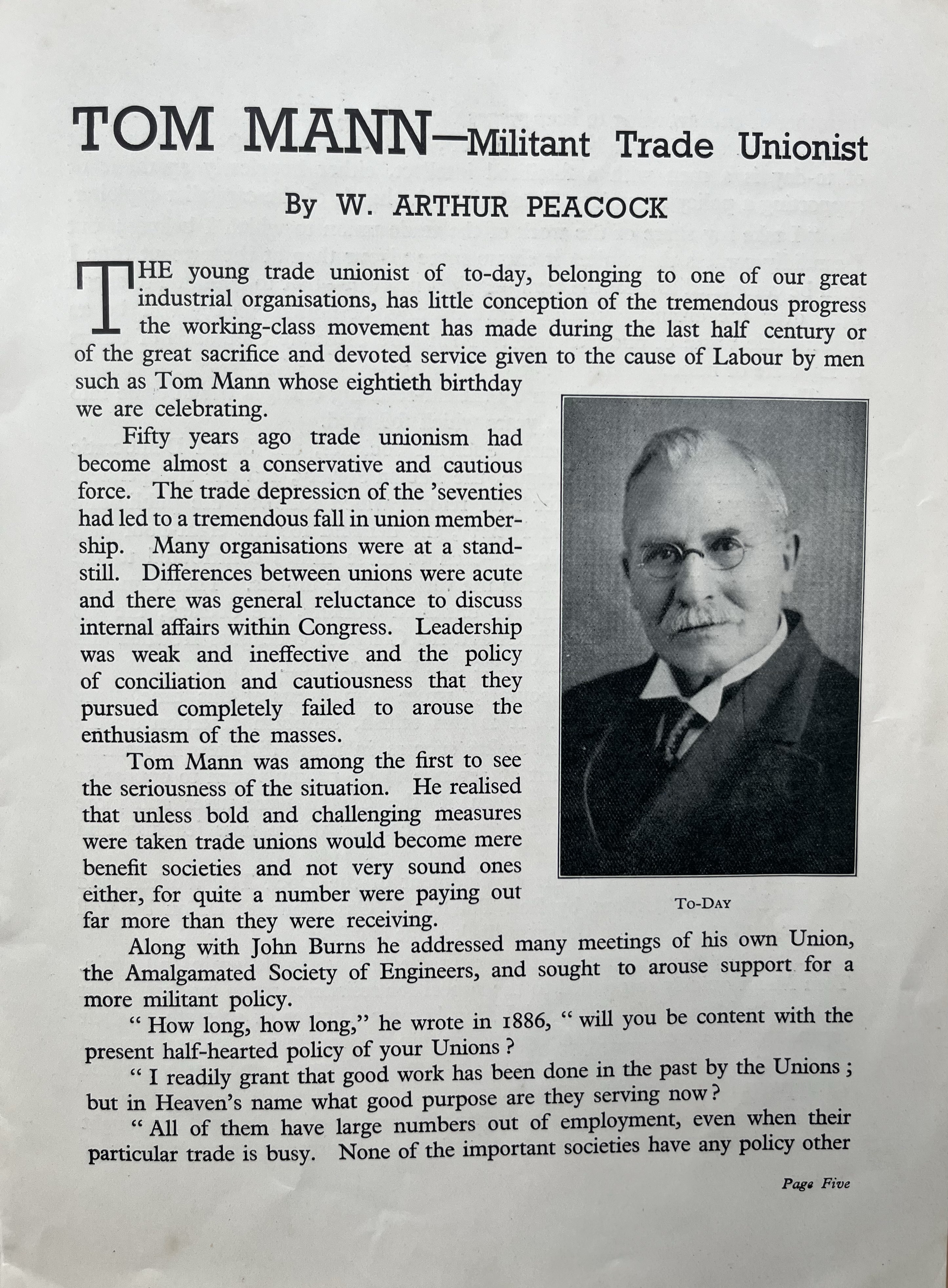
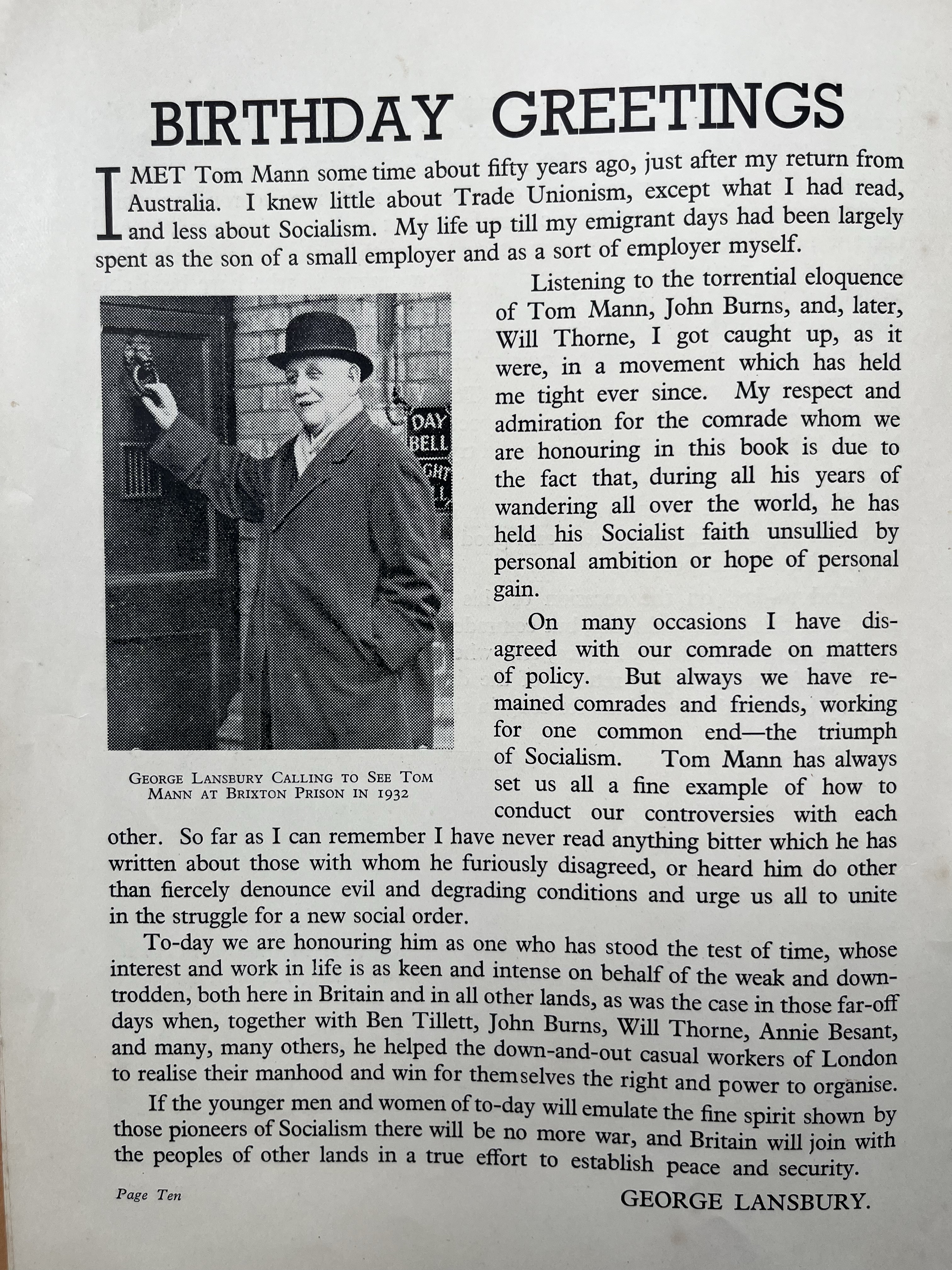
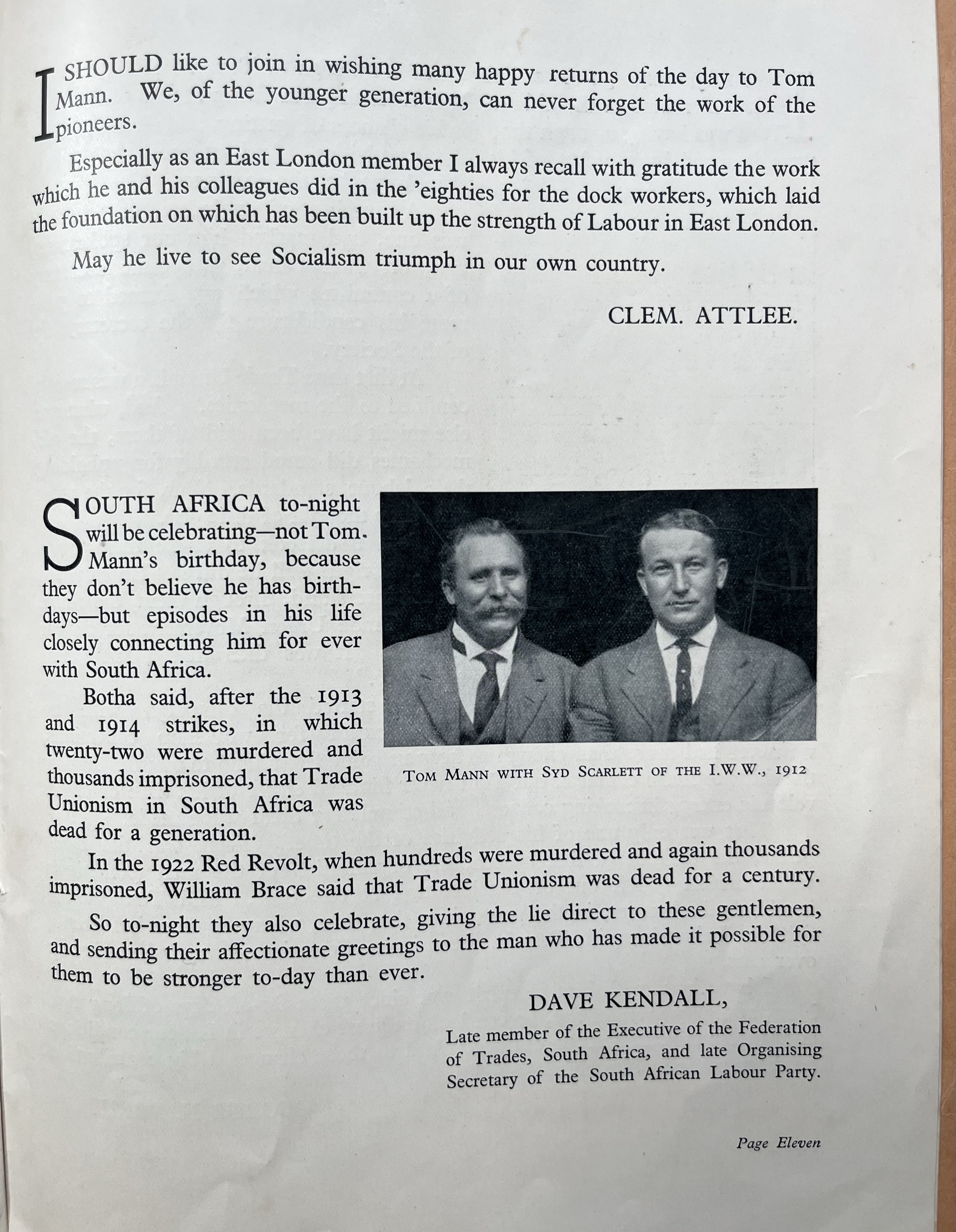
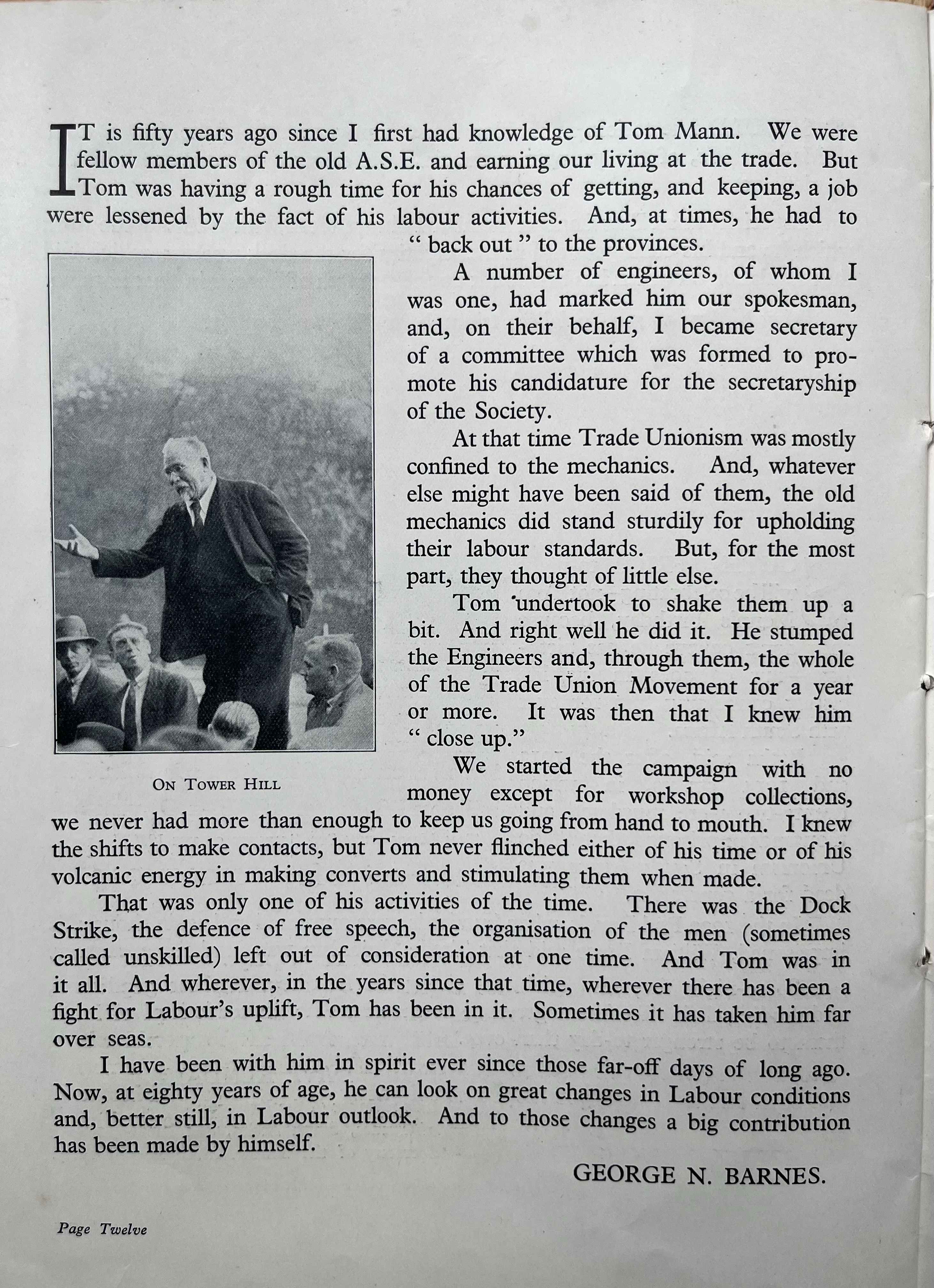
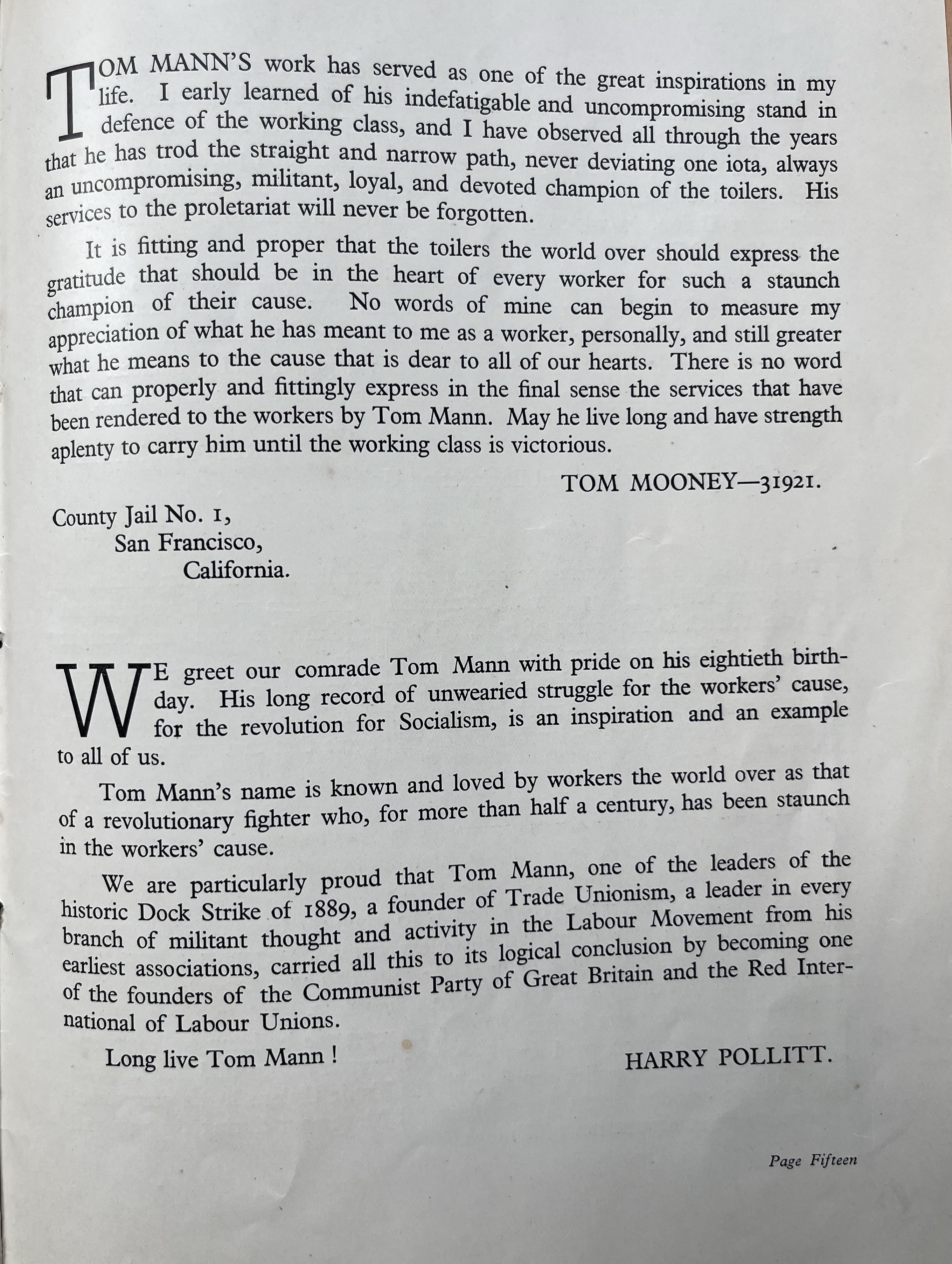
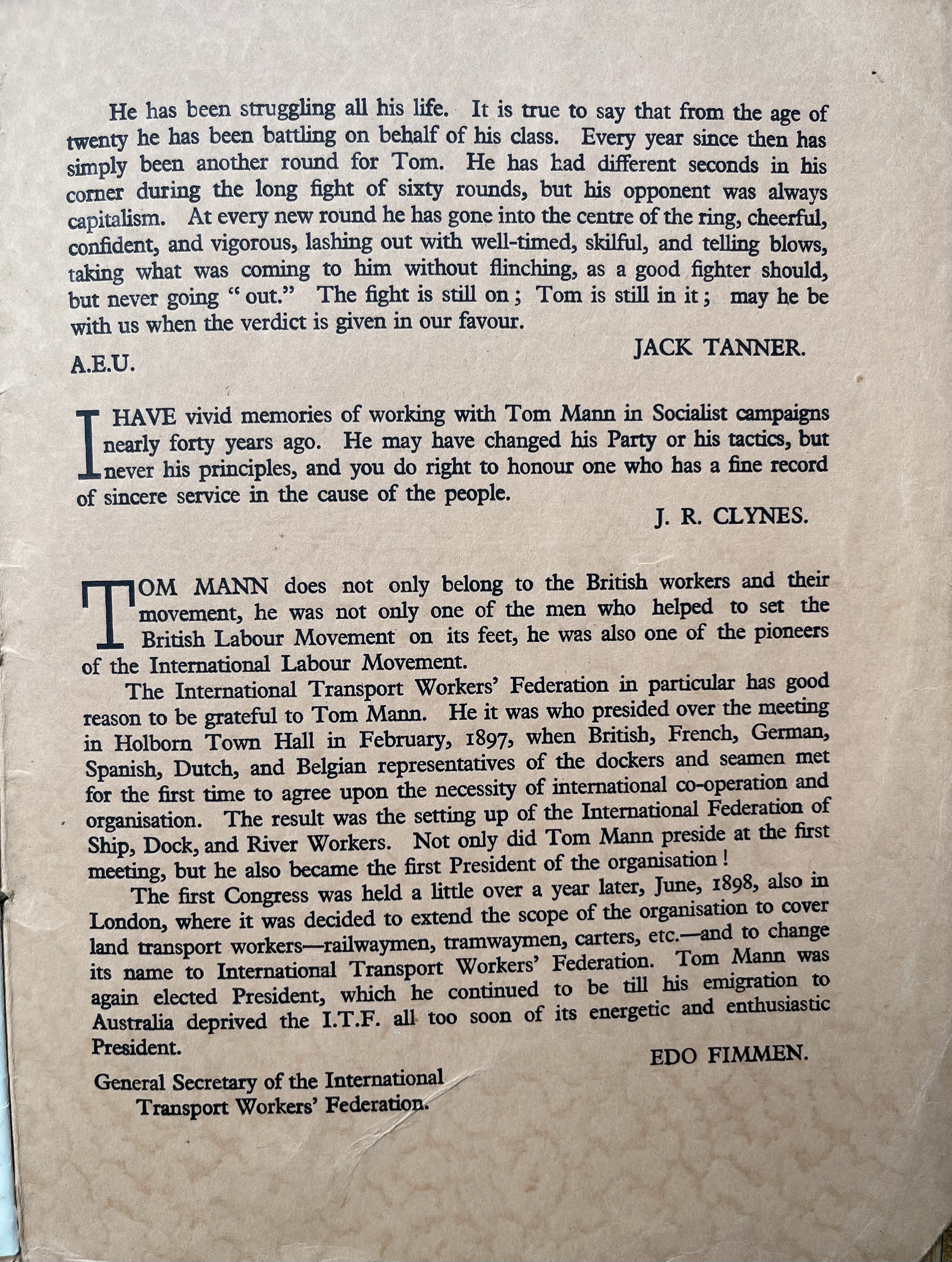
Below you will find photographs of a few of the documents relating to Tom Mann we have. Two of them relate directly to his eightieth birthday celebrations in 1936 and feature contributions from the figures mentioned earlier as well as a few others. I hope you enjoy them.

Apparently seven hundred people attended Tom Mann’s 80th Birthday Testimonial Dinner. Here’s an autographed menu. Signed by Tom Mann, Ben Tillet, Bob Stewart, Willie Gallacher, Harry Pollitt, Clement Attlee (!) and others. I was quite shocked to see Attlee’s autograph in that company- not exactly renowned for his communist sympathies is he?

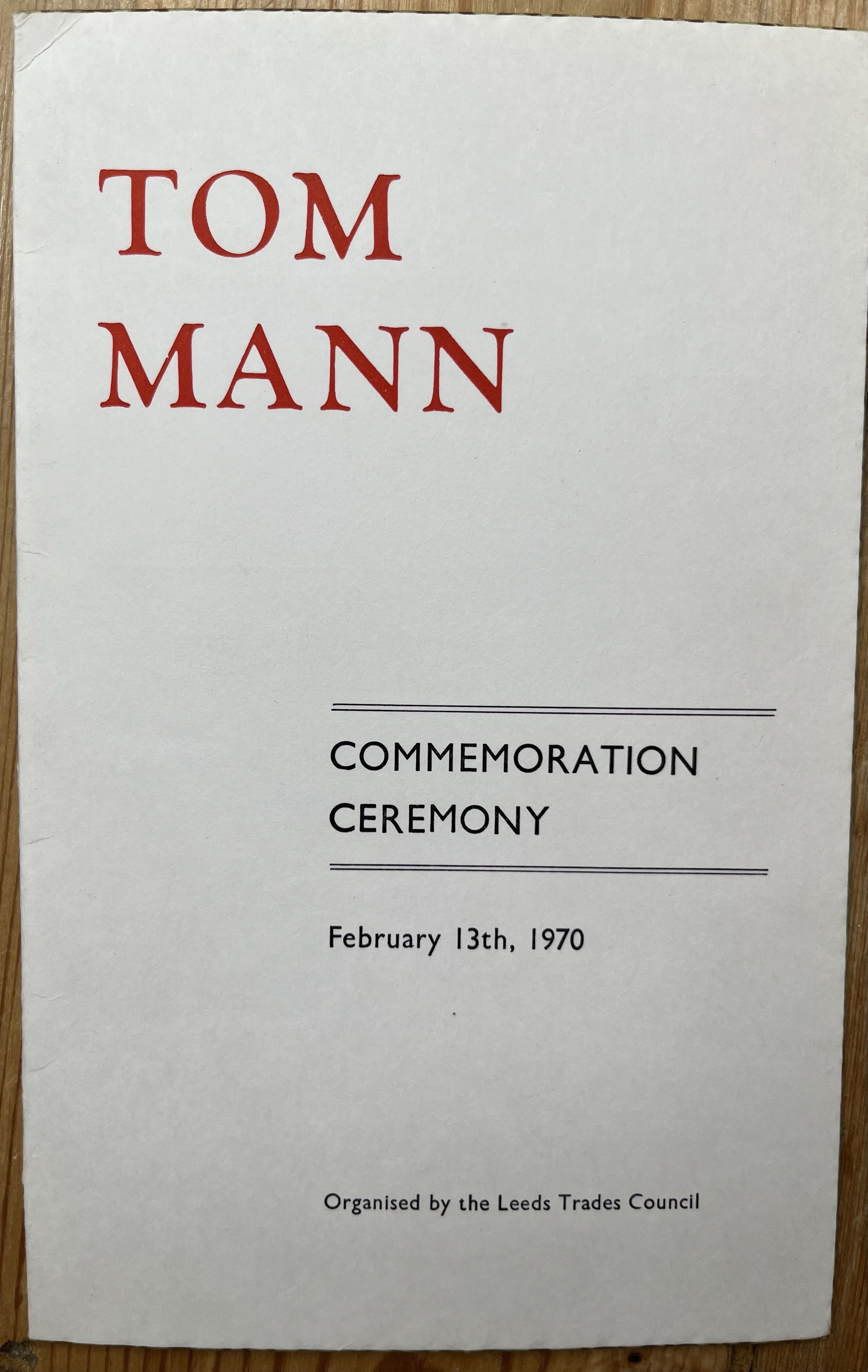
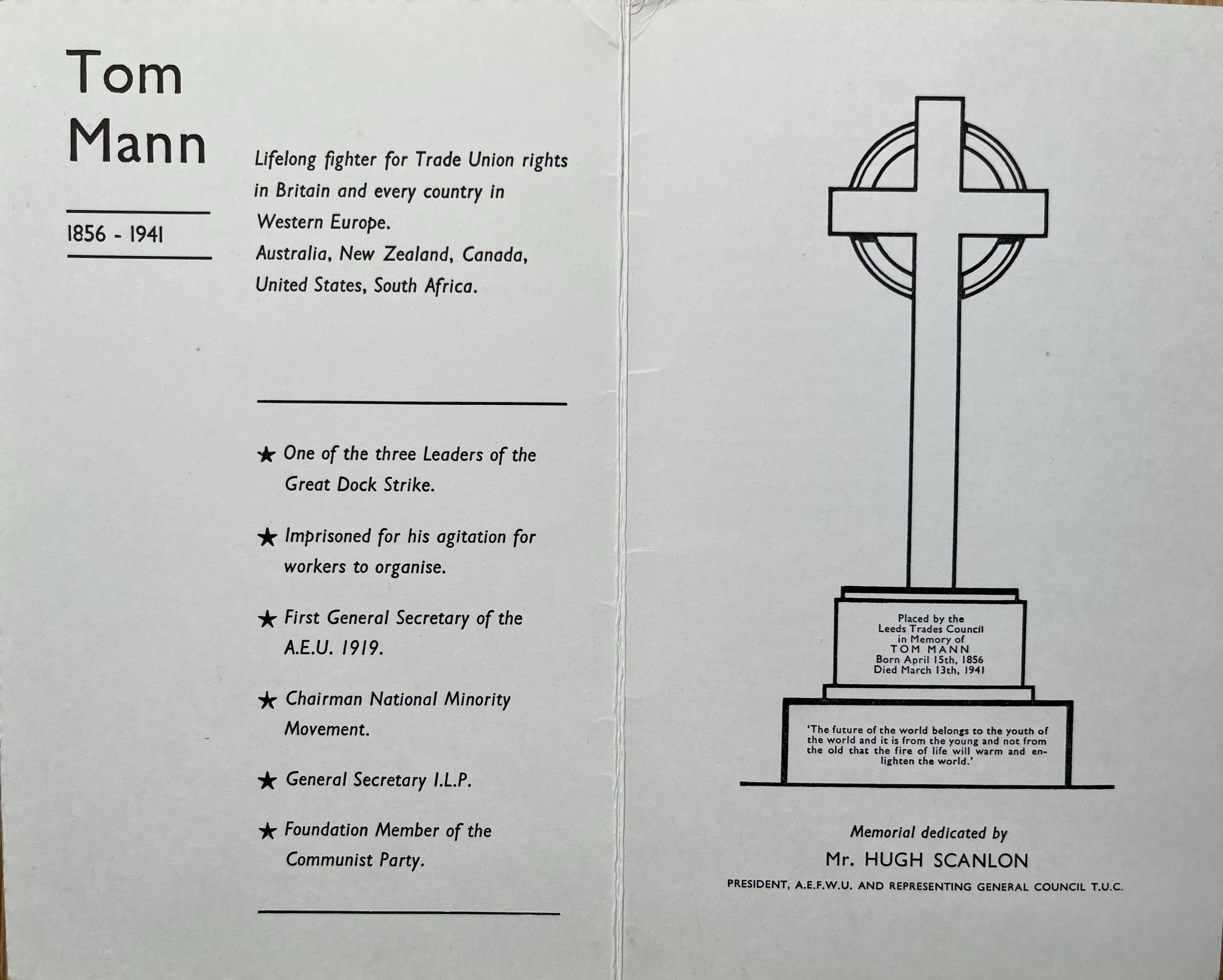
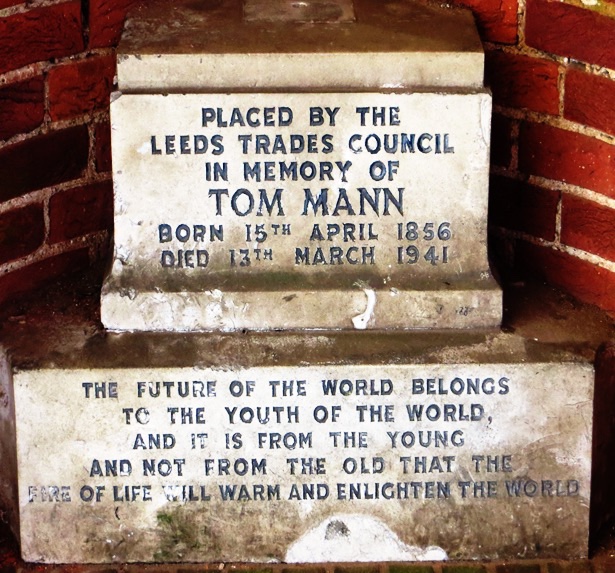
A memorial to Tom Mann was unveiled at Lawnswood Cemetery in 1970. I am presuming my grandfather attended and bought back this souvenir- Bob Stewart would probably have been to poorly to attend at that time.