(In Chapel, male prisoners are partitioned off from females.)
We go on Sunday to the Church,
And sit amongst the boys;
The girls are on the other side,
We tell that by the noise,
The warders grim, our shepherds are,
Perched on their seats to view
The motley: flock of wayward sheep
They watch the service through.

Of prayer, and chant, and sacred verse,
The pastor spares he none;
An' in his prayers confesses oft
The rotten things we've done.
‘Twirls seem his God's a magistrate;
Safe seated up on high,
Who, when he hears the weekly tale,
Must surely wink his eye.

A summary of war-like news
Each Sunday morn provides,
And parson's magisterial God
Compelled is to take sides.
He must become a God of War
To help us smite the German,
And so establish peace on earth
By sword in place of sermon.

At last the service to a close
The parson duly bringeth,
And through the Chapel dolefully
Jehovah’s praises ringeth,
With pose affected, hands outstretched,
He benediction utters;
Methinks his love for fellow-men
Amicted is with stutters.
Tom Mann addressing the crowds at Trafalgar Square. Possibly at the Sacco and Vanzetti protest in 1927.
Few members of the public might recognise the name Tom Mann these days but, even though he died over eighty years ago, he remains a giant of the Labour movement and trade unionism. He drew huge crowds as a public speaker and achieved the seemingly impossible by being equally admired by moderate Labour figures such as George Lansbury, Clement Attlee and Herbert Morrison and by his comrades in the CPGB Harry Pollitt and Willie Gallacher. Both my great grandfather, Bob, and William, my grandfather were privileged to know him. Recently I watched some old Pathe footage of Mann addressing crowds of people in Trafalgar Square and was amazed to see Bob Stewart wander in to shot and look straight at the camera for a moment. At that point in time- 1927- he was fifty years old – a landmark which I am rapidly approaching. Almost a hundred years separated us an unexpected and it was spine tingling moment.
Below you will find photographs of a few of the documents relating to Tom Mann we have. Two of them relate directly to his eightieth birthday celebrations in 1936 and feature contributions from the figures mentioned earlier as well as a few others. I hope you enjoy them.
Front cover and opening pages of ‘Tom Mann -80th Birthday Souvenir’. Signed by the man himself.Introduction by Ben Tillet, Mann’s friend and colleague.‘Tom Mann: Militant Trade Unionist’ by W. Arthur Peacock.Birthday greetings from George Lansbury, Clement Attlee, Dave Kendall, George N. Barnes and Percy Laidler.Birthday greetings from Herbert Morrison, W.A. Appleton, Wilfred H. Harrison, Tom Mooney, Harry Pollitt, Fred A. Smith, W. P. Coates, Jack Tanner, J. R. Clones and Edo Fimmen. Back cover – note from my grandad to my dad – he’s gone to Tottenham corner.
Apparently seven hundred people attended Tom Mann’s 80th Birthday Testimonial Dinner. Here’s an autographed menu. Signed by Tom Mann, Ben Tillet, Bob Stewart, Willie Gallacher, Harry Pollitt, Clement Attlee (!) and others. I was quite shocked to see Attlee’s autograph in that company- not exactly renowned for his communist sympathies is he?
Clement Attlee’s autograph near the bottom just above the printed credits.
A memorial to Tom Mann was unveiled at Lawnswood Cemetery in 1970. I am presuming my grandfather attended and bought back this souvenir- Bob Stewart would probably have been to poorly to attend at that time.
When I sailed for South Africa I got a present of a pocket book and a little money from the Templars, a Gladstone bag and a set of razors from the joiners in the Yard. At Cape Town, where I landed, my first visit was to my sister who was housekeeper to A. B. Reid, one of the protégés of Cecil Rhodes. Rhodes was the big imperialist and had a vast amount of satellite firms under his control- building works, contracting firms of all descriptions, transport firms and so on. A. B. Reid was one of the biggest building contracting men in South Africa. I met him during the visit to my sister’s and he advised me to stay in Cape Town and said he would give me work. However, I had promised my friend in Pretoria to go there and to me a promise is something you keep.
Bob’s pocket book. A gift from the Dundee branch of the IOGT.
My first night in Pretoria I ran into the race question. I was out with my two pals, Henderson, the fellow who had sent me my fare, and another called Scott, who also came from Dundee. We were walking along the street when we came to a junction and met some Africans coming up the other street. They were big fellows and going along quietly, minding their own business. Suddenly Henderson, who was quite a small fellow, about five feet three inches tall, lashed out with his boot at these Africans and kicked one to the ground. I reacted by taking a swing at him and clouting him on the jaw, then demanded to know why he wanted to kick a man like that. He gazed at me in amazement. “Do you not know that Kaffirs must stand back and let us pass?” and I got a lecture on how the black man must be kept in his place and all the blah blah that we are so familiar with at the present time. But the lecture had no effect on me. I could not understand the line of reasoning that because the colour of a man’s skin was black he could not pass in front of you. I had never had a spare pair of boots until my apprenticeship was finished and therefore such “superior” thinking was foreign to my nature, and no doubt the reading of socialist and temperance books, which always had an international content, would wipe out any thought of a colour bar.
But I very soon discovered that the colour bar in South Africa was not only an idea in some people’s minds. It was a way of life. On public transport, in places of entertainment, even in churches, there was segregation, special places for whites and others for the blacks, and to my horror even the Templars had white and black lodges.
My first job was in the railway workshops but after a few weeks hundreds of men were stood off because for some reason supplies of material and money from Britain were stopped. So back I was, unemployed again. I worked on odd jobs for the farmers on the veldt, building stables and doing all sorts of joinery work. I also worked for a few weeks finishing bungalows and villas for British officers. The war had finished long ago, but it looked as if they were anchored. Another place to find work was in the rising shanty towns. Here ordinary British soldiers took over an African woman each, set up in a shack and sent her to work washing and cleaning for the whites, while they frequented the white clubs and pubs buying and selling land script. If one tenth of the tales I had to listen to at boarding house tables and in the “scoff”‘ houses were true, then many of the whites by their own boasting were a far from reputable lot.
But as the weeks passed it became brutally apparent to me that Pretoria was a place men were not coming to, but rather getting out of very fast. The cost of living was high and unemployment was rising rapidly. So I followed the exodus and made for the Cape, where living was cheaper although wages were lower. By this time I had had to flog nearly half my toolkit to keep going and the sun-tan of the promised land had begun to wear off- if it had ever taken on.
Back in Cape Town I attended the joiner’s trade union branch and the Templars lodge and got up-to-date with the local position- state of work, employers and so on. I was elected as a delegate to the Cape Town Trades Council and on occasions was on deputations to the ministries during industrial disputes, of which there were many, but the trade unions were still weak and ineffective. This weakness was aggravated by the attitude of the whites to the organisation of the coloured and black workers. My experience was that generally speaking the whites were not only against the blacks coming into the white trade unions but in many cases against the blacks and coloured being organised at all. There was a commonly held idea that they were too stupid to organise effective trade unions.
One morning, to the horror of all “decent” people, the blacks who loaded and unloaded the ships at Cape Town did not turn up for work. They also bunkered the ships running with their heavy loads of coal on their backs up the gangways. It made me sweat to look at them. They had a grievance, a very old one. They said, maninga sabenzi i kouna mali, too much work too little money. So they stayed on their location. The bosses tried to persuade them to go back to work, but always got the same answer, we want more money. The police, both black and white, surrounded the location. The parsons of all the churches prayed and entreated. The authorities offered the time-honoured dodge of setting up a committee of inquiry. It was all of no avail. The blacks stayed quietly on their location and waited. Finally the bosses gave way and granted extra wages. This burst the bubble that the blacks were unable to organise.
I landed a job in a wood yard at Mowbray. A shipload of timber had come in and I had to supervise a gang of Africans who piled the wood, classified as firsts, seconds and thirds, in the sheds. I was constantly in trouble because I was told I did not drive the blacks hard enough. I saw they did their work; there was certainly no slacking; they worked hard and I rather liked them. They were a happy crowd and I noticed that they ate together and that many of them shared their meal pack with their less fortunate mates, something that seldom happened with the white tradesmen.
In the Cape wages were lower than up country. At this time Kruger, the Boer leader, had decreed that no white man should work for less than £1 a day, a very good wage then. But British contractors got over this by contracting men in Britain, Sweden and elsewhere for much lower rates, paying their fares to South Africa and then holding the men to their contracts while they were there. Because of this wages were lower in the Cape, approximately 14s. a day for tradesmen. Certainly the Kruger decree was never applied, but 14s. a day was a good wage if you could get steady work.
Unemployment got so bad that demands were made for relief work for the unemployed. The Cape Town Trades Council waged a campaign on this and eventually succeeded. The unions paid unemployment pay, which was only IOS. a week and lasted for only thirteen weeks. Even the cheapest board for a single man was (2 a weck. It was because of this impossible position and the campaign waged by the Trades Council that relief work was started by the authorities.
Usually the relief work was strenuous manual labour, making new roads, excavation for new buildings, and such like. This is where many of the Africans got their own back. Firstly, because they had the same relief rates as the whites and, secondly, they were much better used to the handling of a pick and a shovel and the whites could not keep pace; no doubt this made a dent in some of the superior attitudes.
I was never reduced to relief work though many times I was next door to it. I passed through several jobs that lasted only a few weeks , keeping body and soul together. then came the news that there was to be an industrial exhibition in Cape town. All joiners heard this news with glee. We went down to the site and saw the foreman. Yes! He required plenty of joiners, but he said “What rate were you expecting?” “The standard rate,” I replied. There was a heated argument with the foreman who offered 10s. a day, a figure well under the standard. We could not shift the foreman. In face of this I suggested we hold a meeting and after some discussion it was agreed that a deputation go to see the management and make it clear that if the standard rate was not paid there would be no joiners to build the exhibition. The deputation soon returned with the answer. No more than 10s. a day. So I said, “Let’s all walk off the job,” and to give a lead my pal, a fellow joiner named Forest, and myself walked off. But we were the only ones who did. The rest stayed put. The men who stayed were good trade unionists but the employment situation was so bad they weren’t prepared to fight.
One night, feeling very low, I went to the Templars and found a cricket match on. I was asked to play and at the finish got talking to another player from the opposing side, Australian, “How’s business?”‘ he asked. No one asked “How’s work? “I haven’t got any,” I replied. “I got sacked and I have no job at the moment.” He then told me a friend of his was fitting out a restaurant for his fancy woman and could do with a man to do various joinery jobs. Naturally I gobbled at this and was introduced to the friend, a shipping agent, who was satisfied I could make the necessary alterations to the restaurant.
I measured up the job, started with the wood available, and sent an order to the saw mills at Salt River for more. Things were looking up. Then, out for a walk at lunch time, I ran into another joiner, a member of the union, who was really miserable. “Christ! If I could only get another job I would tell the swine of a foreman where to get off,” he said. “Well,” I replied, it was. “I have a bit of a job myself,” and I explained what “You can have half of it if you want.” “Good, wait there a minute and I’ll be back.” He went off like a shot and when he returned a few minutes later he was a different man. I don’t know what he said or did to the foreman but he certainly relieved himself of a burden.
The shipping agent and I got along very well. A lot of furniture and prefabricated counters, etc., came out from London. These had to be put together. There were ovens to be put in the kitchen, sinks and other plumbing work to do. In fact all the building tradesmen in my digs got into the scheme. Masons worked on the walls and cut out fireplaces, plumbers worked at the water fittings, joiners fixed the floors, counters, fretwork arches and so on. This kept us going for a few weeks. I had the right to purchase most of the material and came to an agreement with the suppliers from which I got a 5 per cent commission which supplemented my wages.
I never met the shipping agent’s fancy woman and I do not know how she fared as a restaurateur, but she got a first-class place, and several building trades workers gave her thanks for supplying them with work during very hard times.
I made up my mind while doing this job that I had had enough of South Africa. During my stay I had tried to send some money home to my wife in Dundee, but although I didn’t smoke and was strictly teetotal it was hard going. My wife, working in Dundee, was finding it difficult to make ends meet, so I decided to return home. With the money from the restaurant job I had enough for the steerage fare home.
On the boat home I found many like myself, some had been even worse off. The promised land had not fulfilled its promise. Many had done a spell of relief work and were bitter about their experiences. One interesting fellow I met was a Cornishman. Cornishmen are very common in South Africa, particularly in the gold mining areas. No doubt their tin mining experience had some value. When a Cornishman got a job he wasn’t long in asking the gaffer if he could find a job for his cousin Jack. So Cornishmen in South Africa are all called Cousin Jacks. This Cornishman on the boat had been the first to take a group of Chinese down the mines. There was a tremendous political row in Britain at the time about imported Chinese labour in South Africa: This was not only a reactionary racialist matter continuing the dirty ‘Yellow Peril’ scare launched by the German Käiser in 1900, but also a strong protest expressed in the resolutions of British trade unions and socialist organisations against indentured Chinese labour kept in compounds which they regarded as a form of slavery. But the Chinese never had intentions of working in the mines for low wages. At this time the African natives were prohibited from drinking intoxicating liquor so the Chinese got into a racket of making the liquor and selling it very profitably to the Africans.
The Cornishman gave me some very graphic details of life in the gold mines. The duration of life was not long even for the white artisans. For the natives it was only a matter of months or at best a few years. The dust, lack of sanitation, intolerable labour conditions and disease were dreadful reapers of human life, white or black.
I returned home more convinced than ever that a change in economic and social conditions was necessary. South Africa was certainly a land of promise for men of capital and money, but for ordinary workers like me it was hell. The great weakness of the workers’ organisations, trade unions and co-operatives, meant that in any labour dispute the boss invariably won. I had left Dundee well equipped with tools and clothes, a book of Burns’ poems and the Bible, transport paid for and all looking rosy. I squared my debt for my outward passage, left South Africa minus half my tools and arrived home a wiser and much more experienced man.
RRS Discovery under construction in Dundee in 1900. (www.rrsdiscovery.co.uk)
Now I was a fully fledged journeyman, Gourlay’s offered me an extra year at an improver’s rate, which was 10s. under the basic journeyman’s rate. This was usual at the time but did not appeal to me. I felt I had done my apprenticeship and was entitled to the full journeyman’s rate. So I left Dundee and went to the Clydeside where I got a job in a yard in Renfrew called The Ring. This yard did specialised work on dredgers. I worked 53 hours a week for a basic 38s. 3d., 9 hours week-days and 6 hours Saturday.
I held this job for a few months. Then, after the ship was launched, there was a big pay off. It was just before the Glasgow Fair holidays and was a blow to the Glasgow men. No work meant no trip “down the water” for the wife and kids and no whisky and chasers in the pubs with their pals on Saturday nights,
For me it meant looking for another job immediately. I tramped the whole of the reaches of the Clyde, Greenock, Yoker, Partick and Govan, but at every yard the position was the same, no work. Trying to find a job was humiliating. At the yard gates hundreds of men would wait each morning and dinner-time for the foreman to come out. In most cases he did not appear, but if he did he would walk down the line of waiting men and then turn on his heel and go back inside the gates with a grunt of ‘Nothing today”, or sometimes even not a word. There were no employment exchanges then and no dole. The unemployed got 10s. a week from the union for thirteen weeks and then it was reduced. My position became desperate and, unable to find work in the yards, I was forced to find other employment. I got a job with what was called the National Benefit Trust. It had a system in which a draw was held periodically and the winner got his advance of money free of interest to buy a house. My job was to hawk around the doors trying to interest people in the lottery. The whole thing was run by a family who held all the top positions in the firm. Sellers like myself were paid on a commission-only basis. I stuck this for a month. The whole thing revolted me and I had the feeling of being degraded.
Then, by a stroke of luck, I picked up a job in the Arrol Bridge Building Works. A mate of mine, Jimmy Walsh, had an uncle who was foreman in the template shops and he told Jimmy to come and get a start. But Jimmy had also been offered another job at the Linthouse Yard which he preferred, so I went to see the uncle. He was a good sort and when I explained that his nephew had taken a job at Linthouse and hoped I would be suitable, he asked me “Can you draw?” “A barrow,” I replied . “All right,” he said, “start tomorrow and we’ll see how good your barrow is.”
I stayed there until the New Year but it was not my cup of tea. I wanted back to my trade and when I saw an advertisement for joiners for a small shipyard at Annan, I applied and got the job.
Annan today.
Annan is a small market town on the River Annan near the border and naturally, being so far inland, the ships built there were small-stern wheel ships. They were built in sections and exported, mostly to the American lakes. When I arrived, the joiner’s shop was just being erected and I went in with the pattern makers. In fact, I was the only ship joiner in the yard. The manager, a little fellow who wore a bow tie and was always very smartly dressed, but a decent fellow to work for, asked me if I could get more joiners, so I wrote to the Glasgow union committee and asked for another five to be sent. I went up to the station to meet them when they arrived and asked to see their union cards. One of them said, “Christ! I’ve left mine at home.” “Well, you had better go home and get it because you can’t start here without one,” I said. Fortunately, the other four had their union cards up-to-date and I said they were all right. I can imagine their astonishment next morning when they found out I was the only other ship joiner in the yard. Now that I had some mates I did a lot of union canvassing on the building sites in the area and we soon formed an Annan union branch of the Amalgamated Carpenters and Joiners.
Annan was a nice place to work in. The countryside was beautiful in summer. It was a great temptation to throw up a brick and if it came down you didn’t go to work that day. The laws of gravity being what they are, one day we did throw up a brick on the job and down it came, so we had the day off. We went to the hostelry and hired a two-horse brake. No motors then, and no traffic jams. We had a run round the countryside and a real good picnic. Next morning, when we turned up at the yard, the manager asked: Where were you all yesterday?” “It was too good weather to work,” I replied. “Where did you go?” “To the Loch Mabon.” “Why the hell didn’t you tell me and I would have been with you.”
In Annan there was a branch of the Good Templars Lodge. A real live lodge it was. We had dancing every week, and fishing competitions, as the River Annan was famed for its salmon and trout. We even ran a regatta, which in those days was considered a real feat of organisation. I don’t know if we took many people out of the public houses, but we certainly did give them a chance to employ their time fully in the Templars Lodge.
I lived with an old lady and her daughter who looked as old as her mother. She kept an excellent house. I had a room of my own for a time but one day Mrs. Patterson came in to apologise, saying she would have to put another lodger in with me. In this way I met Harry Watson, an iron planer from Manchester.
Harry was a good singer, he had done a bit of amateur stage work at the “free and easies” in Manchester and I persuaded him to join the Templars, stop drinking and use his talents. Soon he had more money than he had ever had in his life. He bought himself new shoes, suits, shirts and began to feel and be a man about town, So I said one day, “Harry, now I have introduced you to the finer things in life, I must now introduce you to Scottish culture. Let’s have a walk to Ecclefechan and I will show you where Thomas Carlyle was born.” “Who’s Thomas Carlyle?” asked Harry. So I explained to him as best I could that he was a Scottish writer, explained briefly what he had written, then went off to Ecclefechan which was six miles by road. But Harry remained unimpressed by his introduction to Scottish culture, his final comment being: “Thomas Carlyle must have been a bloody fool to have been born in a place like that!’
One time Harry had a flaming row with his sweetheart. Flora Whimpenny was her name. I remember it well, because many a letter I wrote to her signed “Harry”. I was engaged for a long time trying to effect a reconciliation, which I eventually did. But I never knew how Harry explained these letters to Flora because he could not write a sentence, never mind a letter, and the only papers he ever read were children’s comics. He was not alone in this. The best sellers in the shipyards in those days were Comic Cuts, Chips and other comics specially written for children. I was astounded to find that grown men read such bairn’s weeklies.
One day I was working on a little wooden boat, the type used by the missionaries in Africa. It was being built for some religious society and had only a dozen rivets in its whole construction, but unfortunately a fragment of a red-hot rivet finished up in my eye. I was on the stair panelling, and the riveter knocking off the rivet failed to stop the blaze coming off it. Off it came, and struck me right in the eye. There was no first aid. One man wanted to put carbolic in my eye. That was enough for me. I immediately took the next train home to Dundee where the eye specialist said I was just in time to save the eye. That ended my idyllic situation in Annan.
When the eye healed and I was ready to resume work, the shipyards were still slack but the Boer War had made necessary the building of many more barracks. So I went down to Salisbury Plain and got a job on the building of Bulford Camp. We were a motley lot, drawn from all over the British Isles with the Irish in the majority. At that time there was a strike in Belfast and to save strike pay joiners were sent in mass to Bulford and other camps. You could work as many hours as God sent at 9d. an hour. We slept in the huts as we built them. A hardboard bed with one blanket, which I rolled into and made the best of it. Trade unionism in this setting took a back seat although we had forms of organisation on the job.
In 1900 the shipyards got busy again and I went back to Gourlay’s at Dundee where I became a shop steward and also a member of the yard management committee. The job of the shop steward was to see that members were fully paid up and being paid in accordance with the existing agreements, and so I religiously examined all cards and wage packets from time to time in case anyone was being paid under the rate for the job. Some union organisers today pride themselves on the excellent state of their organisation but in those days in shipbuilding, particularly in places such as Dundee and on the Clyde, there was already well organised labour in the trades.
Naturally, of course, a lot depended on the activity of the delegate and his standing in the trade union branch. The rule was that men more than eight weeks in arrears would not be started, so if a man came on the job the first thing was to see his union card and get it in order. I tried to make it the generally accepted thing that when a man started he would clear his card if in arrears, and sometimes this was done by borrowing the money from me, the money being paid back from his first pay.
RRS Discovery in the Antarctic, 1923
It was about this time that I got a job on the building of the Discovery, the ship which took Captain Scott on the National Antarctic expedition. It was most interesting work. The ship was built at the Dundee Shipbuilder’s Company yard and was constructed almost entirely of Scottish oak, with a little greenheart and elm. There were no rivets, no steel plates, no iron nails. With the exception of the funnel the ship was entirely constructed of wood. It was said at the time that they had to dig men out of the Howff (the local graveyard) to get the right labour for the construction. The wood was steamed to get it bent into its proper position and wooden nails called trunnels were used and battered in to hold the beams in position.
When construction commenced, the joiner gaffer on the job was Joe Wyllie, a man with a great respect for the trade unions and respected by the workers, so in the early days the construction went smoothly and well. The job, however, was not being completed fast enough. Joe got the sack and another gaffer was brought from Grangemouth. We called him the Rat, and he was just that. The first thing he did was to have a little glass-fronted bucky built so that he could survey the whole of the shop, and from this perch he would periodically dart down to snarl at some workmen. This was to frighten them and consequently to get more work out of them. I was never able to fathom this type of thinking. I had one brush with the Rat. The joiners had a dispute and I was deputed to by-pass the Rat and go and see the yard manager, Davie Low, who was a very decent fellow. When the Rat saw me standing at the door of the manager’s office, he rushed down, threatening me and demanding to know what I was doing. His attitude sickened me. I said “Get back to your glass bucky, I’m waiting to see the manager and don’t want to be molested by an insignificant pup like you.” “You won’t be paid for this time,” he shouted, but at this point Davie Low came out and I cut it short by informing him that I was on union business, so not to worry about “his” money. Strange how such people as the Rat always scem to think it’s their money that pays the wages. So I saw the manager, told him of the dispute and in the course of it made a few uncomplimentary remarks about the Rat. “Well, Bob,” he said, “I’m only the manager, not the whole company.” Then he explained to me that the Rat had been specially employed to horse on the men and get the ship finished. Like us, the manager didn’t like it but also had to put up with it. In March, 1901, the Discovery was launched. At a reception at the Queen’s Hotel after the launching Captain Scott said “that for some months the preparing of the ship had been handed over to him. It was work that involved great detail, some harassing detail. In fact it got on your nerves occasionally.” I do not know if the new gaffer had rubbed Scott the wrong way but he certainly caused many a disturbance amongst the workers who built the good ship Discovery. But I suppose Lady Markham, who bashed a bottle of champagne against the bows at the launching, would be blissfully ignorant of such mundane shipbuilding affairs.
At this time I had a good run of work and accepted that my employment was steady. So while at Gourlay’s I got married, in 1902, on the 13th of June.
I met my wife Margaret in the Templars Lodge and with the occasional breaks I saw her regularly for some months. In fact we courted for years, then we decided to get married- a decision which I never once regretted in all my forty-eight years of married life. Margaret’s father was a master painter and had a shop of his own. Quite posh in those days. He later emigrated to New Zealand and died there.
With a master painter for a father-in-law we had a beautifully decorated home to start our married life, although it was only one room, kitchen and lavatory. One year after we were married, shipyard order books began to wear very thin. When the pay offs came, I was one of the first to go, as was usual for shop delegates.
I really did not mind this at first because I had a friend in South Africa who had been writing to me extolling the vast opportunity working men had in that great new developing country. I had done him some service previously and he said he would send me my fare to take me out to South Africa. so when the pay off came at Gourlay’s I had made up my mind to accept the offer and try my luck in the promised land. It was summer when I set sail on a ship of the Union Castle Line, the Guelph, from Southampton.
The Dundee Jute Industry circa 1900. (www.verdantworks.co.uk)
At school I passed the fifth standard when I was thirteen and so entered the labour market looking for a full-time job. Following my half time work I first tried the jute mills, and was offered a start on the breaker -can. But when I saw the nature of the work my first thought was to get out, which I did. I picked up my jacket and ran as fast as I could- certainly out of sight and sound of the gaffer, who thought the new start was well on the way to being shown how to tramp the cans.
So I tried another mill and got a job in the spinning flat. Some months later, however, I did do a turn on the breaker-can. in fact, as I passed from mill to mill, I had a turn at most of the jobs.
The process of jute manufacture was then as follows. First the jute was broken from the 2 cwt. bales in which it was shipped from India. Then it was impregnated with oil. This was to add resilience to the fibre. (In the old days whale oil was used. Dundee was a main whaling seaport.) After the jute was batched , it was passed through a feeder which had rows of sharp needles called hackles. These ripped the jute fibre into strands before it fell into a breaker-can. Into these cans the boys and girls packed the jute hard with their hands. This was called tramping the cans. The fibre then went through the carding machine, the drawing machine, then to the roving, each process making the jute sliver finer. At the roving, the shifter laddies took the roves off the machine and threw them into barrows, then the roves were barrowed to the spinners where the jute was spun on to bobbins. The bobbins went to winders where the jute yarn was wound on to cops. The cops then went to the factory where the weavers at their looms wove the yarn into the finished cloth.
In many cases the factories were not adjacent to the mills and the cops had to be transported by lorries. To have a job in the factory was considered posh, much better than having a job at the mill as a spinner or a shifter, and the low mill- that is the preparing flats- was considered the lower depths.
Many a song was sung about the work in the mills and factories. There was the Dundee Weaver’s song, the Dundee Spinner’s song, and the Wee Shifter’s song, all of which have made their way one time or another to the top of the folksong charts. There were songs about the batchers and the breaker-cans, but as these came from the low mill I am afraid the language was a little on the strong side for the publishers and their printing machines, and so they remain to this day in the heads of the old mill worlkers, reserved as a special party piece when occasion permits.
It was during this time that I became involved in my first strike. As a matter of fact I was the leader. The object of the strike was none other than William Gladstone, then prime minister in Her Majesty’s government. Gladstone was a great Liberal and frequently visited a small town near Dundee called Blairgowrie which had a large area of wooded countryside around it . When in Blairgowrie, the prime minister took a hand at tree felling, and this gave rise to the cartoon of Gladstone, axe in both hands, and the slogan “Woodman, spare that tree”. Speaking of Blairgowrie, I should not forget to mention that it is also the parental home of the Grimond family who had made their fortune in Dundee jute. From the Grimond family tree came the present leader of the Liberal Party, Jo Grimond. The Grimonds were Liberal in politics but never liberal in paying wages to the Dundee jute workers who were, and still are, among the lowest paid workers in Britain.
However, that day Dundee was en fête for the prime minister, who was to receive the freedom of the city. Now it seemed to me an insult to that worthy person and a slur on the city’s reputation that while the freedom ceremony was being performed we mill workers should be slaving away in the mills. At least that was how I put it to the fellows when I suggested we knock off and go to the freedom ceremony. The proposal was carried unanimously. I can’t remember anything Gladstone said that day so it could not have been important. The important event came m next morning when the gaffer demanded an explanation: and on being told I had suggested stopping work to hear the prime minister I was given the sack on the spot.
I crossed the road to another mill and got a job there. In all, I stayed in the mills until I was sixteen. These three years of mill work and my half-time mill experience had an important effect on shaping my character and my attitude to life. Working long hours for small wages, living daily with injustice and intolerance, sowed the seeds of the desire to see a system which gave justice to the workers. Allied to this was the poverty to be seen everywhere in this jute city. Dundee was considered a town of drunkards, but when I look back with the wisdom of age, I can see that this really arose from the impoverished life of the people. They were so poorly fed that a couple of nips of whisky and a pint of beer was enough to send them into a drunken stupor. The Scottish drink was a nip of whisky, price twopence, and a penny pint of beer. That is still the Scottish drink today, but the prices are somewhat higher. When Scotsmen talk of the Good Old Days they usually refer to drink prices.
The public houses were evil, smelly places. I had first-hand experience because I used to go in them to sell news-papers, another sideline of mine to make an extra penny or two. There was the stench of beer, the sawdust on the floor, the spittoons and the salt fish the publican kept on the counter because it gave the customers a thirst when they chewed it. Most of them would not need the salt fish because those from the mills had enough jute “stoor” (flakes of jute) in their lungs and bellies to give them a thirst that a barrel of beer would not quench.
Dundee on a Saturday night (Saturday was pay day) was bedlam let loose. It used to be said that the workers did more fighting in the Overgate (a street in the city centre) on a Saturday night than the Black Watch did during all of the war. Certainly there were many pitched battles, often family against family. The Molonys against the Mulligans, O’Fees versus the McFarlanes and so on. It is laughable but true that the police used wheelbarrows to cart away the drunks and the casualties after the battles had subsided. The police wisely kept well clear until they could move in for the kill. On Monday morning, as kids, we used to go down to the prison and see dozens at a time being thrown into the Black Maria and taken to the courts. Each successive court appearance meant a higher fine but this did not lessen the number of offenders, nor make the Overgate a more peaceful place on a Saturday night. It brought tragedy to many homes, however. Fortunately my parents did not drink. My father could take an occasional bottle of ale and my mother was a strict teetotaller, a complete abstainer.
All this squalor and degradation, seeing and experiencing the misery of some of my pals who went back on a Saturday night to a home with parents brawling and fighting in a drunken stupor, had a very profound effect on my thinking. Many of my political acquaintances throughout my life have asked me why I spent so many of my early years in the Temperance and Prohibition movement. This was the reason. In fact for many years I had only one way of separating right from wrong. Those who drank were wrong- those who did not drink were right. True, my temperance was always colored with socialist principles and working-class justice, but the real reason why my early political work was done in the I.O.G.T. (Independent Order of Good Templars) was because of my experience in early life in Dundee.
When I was sixteen my life took another turn. My mother, knowing the lot of the labouring classes and not wishing her son to be one of them determined to make me an artisan, But it was by sheer accident that I became a joiner. The tailor who made my father’s clothes came on a periodic visit to get his order for trousers and jacket. When the measurements were done and a chat was taking place over a glass of ale, the subject to a trade for wee Bob came up. It transpired that the tailor had a son who was gaffer to a builder. He “spoke” for me and so I started my time as a joiner apprentice with the firm of Sandy Stewart at 4s. for a 54-hour week. This part of my apprenticeship lasted for over two years. I learned to plane and saw, making doors and windows for whatever jobs we were working on, jobbing or building. But a vast amount of my time was spent on labouring work, Sandy Stewart had a strange idea of how an apprentice should acquire the skill of his trade. I was worked like a wee Scots donkey. I had to push a barrow from the yard to the docks nearly a mile away, stack the timber on the barrow and push it back, all uphill, a very strenuous job. Worse still, I had to combine brute force with diplomacy. Sandy Stewart was always in debt to the timber merchants, Bell and Sime, and so I had to promise faithfully that the firm would give prompt attention to future payments before I could load the timber on the barrow.
The crunch came in the winter of my second year. The snow was very deep, and thick ice covered everything. The boss sent me up to his house to clear the roof and clean out the gutters. At the end of the week I received my apprentice’s wages, 6s., the second-year rate. I said, “If I do labourer’s work I want labourer’s wages.” “You’ll have to see the boss then.” So in to Sandy Stewart I went. “I did labourer’s work last week and I want labourer’s wages,” I said. “Ye’ll get no labourer’s wages here,” shouted Sandy Stewart, then he went into a rage shouting that I was a lazy good for nothing and so on. “Get out or I’ll put you out that window,” he roared. “You’ll need a new pane of glass then,” I said, “because it’s you who’s going to make that journey. Give me my apprenticeship lines.” I moved towards him, but like most men who shout and bluster their way through life he didn’t need much pressure to cave in. I got my apprenticeship lines with a note saying I had left of my own accord and so my work in Sandy Stewart’s yard came to an abrupt end.
Unemployment in the city was high. The hard winter had closed the building sites and all outside work was at a stand-still. Labour was plentiful, jobs were scarce. After much searching and standing at work gates, I started on the railway, shunting with the hydraulic capstan at the Tay Bridge goods shed. But that did not last long. One day the capstan went faulty and did not stop, the shunting rope and the hook flew off the wagon and twisted around my legs, giving me a bad though not serious injury.
I was off work for many weeks, but the railway was a new experience and there I learned a few more tricks of the workers’ trade. Railwaymen were among the lowest paid workers and always on the look out for ways to supplement their wages. Maybe it was an extra bag of flour on the lorry; there was always a market for that. Or it might be fruit. Apples or pears, particularly in the Christmas season, were always a winner. But the best bet of all was the whisky trade. Broaching the barrel was a railway skill, in fact it was more, it was an accomplished art, and many a “dab hand’ there was at the game. It was done with a very fine brace and drill. When the tiny hole was made in the barrel and the fine thread of whisky spurted out, every vessel capable of holding liquid was pressed into service- bottles, pails, flasks, the lot. After they had been filled, a very fine sliver of wood was knocked into the hole, a concoction of oil and dirt rubbed over the surface and the barrel proceeded on its way.
Broaching the barrel was so prevalent at the New Year period that special corps of police were drafted in for protection. But these guards were lured away to the bothy on the loading bank for a wee dram, just to keep them warm, and of course while they were having their wee dram another barrel was being relieved of its liquid gold. As one old loader used to say when he had got the special cop out of the way, “Whisky has a greater drawing power than the world’s best poultice.” In the bothy on the loading bank there was a barrel sunk into the ground. All the time I was there it was never empty. Anyone could drink as much as they wanted. Some did, and were carried home on occasions, but I was never once tempted, which proved conclusively that the temperance movement had one adherent whose lips were sealed to strong liquor.
I was again idle after my accident, but through people in the temperance movement I got a job in Gourlay’s shipyard. Gourlay’s was quite a famous yard; many world-renowned ships left its slipway.
While in Gourlay’s yard, I threw myself heart and soul into building the temperance movement. We had a strong group of Templars in the yard, but most of our work was done in the evenings and on Sundays. Some of the “big” fellows, the Fathers of the Lodges, wanted young people to be, as they said, “good law abiding Christians” to just come to the meetings, listen to speeches about the evils of strong drink and then meekly return home. I fought against this attitude. I thought the lodges were places where young people should have debates, sport and entertainment. Finally a few of the more progressive fellows and myself started a new lodge, the Victory Lodge. We broke the rule, we organised dances and concerts and from the money made we bought billiard tables, dart boards, draught and domino sets, and made the lodge into a real young people’s club. We held open-air meetings at which I often spoke and asked people to sign the Pledge. Naturally, because of our activity, we attracted many young people and our new lodge soon became the largest in the city. In fact, at one time it had more members than any other lodge in Scotland, and I became the Chief Templar in Dundee.
There was a lot of competition for the allegiance of the young people in the city. Churches with their auxiliaries, Young Men’s and Young Women’s Groups, were always active. There was a very good and active Secular Society. They too held meetings in the Albert Square. Their main theme was “religion is the opium of the people” and all their work was aimed at destroying the various images of God. I spent many evenings and Sunday afternoons listening to the secularists, all of them excellent speakers. Wull Bowman (grandfather of Dave Bowman, who has now for many years been Communist candidate for Dundee), and Jimmy Croll, a local shopkeeper, were two of their best who could hold a big crowd, often in face of much heckling. Their paper The Freethinker had a good sale. I was attracted to much of the logic in the secularist argument and began to have my doubts about God. Interesting therefore to record that, in later years, it was mainly on religious grounds that I finally broke with the prohibition and temperance movement.
Entrance card for the Amalgamated Society of Carpenters and Joiners. (TUC History Online)
In the last year of my apprenticeship I joined the union. It was forbidden to do so before then. I immediately took part in active work. There were two unions, the Scottish Association of Carpenters and the Amalgamated Society of Carpenters and Joiners. I joined the latter. I was elected to the management committee for the yard and did a valuable job. I was the only one who thoroughly read the National Committee minutes and consequently was always up-to-date on demarcation problems, and extra payment agreements for varying types of work. While I was there we had a very militant management committee and a closed shop was enforced, with a trade union card examination every month.
In doing this work I became a well known and popular figure, so when my apprenticeship finished my mates were determined to give me a good show. The practice then was for the new journeyman to give the fellows a big booze-up in one of the public houses in the Vault (an old alleyway in the city centre nearly three hundred years old). A journeyman was often remembered in later years for the number of drunks he had at his pay off. But I put an end to that idea for me. I said no pub. But I took a restaurant instead, and there we gave the fellows a slap up feed. Aberdeen-Angus steaks were in my opinion a better pay off than Whitbread’s beer or Morton’s whisky, all of them, by the way, products of Dundee. Naturally, when the steaks had been consumed, many of the fellows gravitated across the road to the pub, and a few got so tight that they had a swing on the glass chandelier and were “Bounced” into the street for their daring.
Now I was a fully fledged joiner. Mrs. Stewart’s work had borne fruit. I was an artisan with papers to prove it, but I was soon to discover that the lot of the artisan and that of the common labourer were very much the same.
William, the eldest son of Bob and Margaret Stewart, was born in 1903. He was our grandad. He died in 1978 when I was four and so I have few memories of him but those that I do are incredibly vivid. He was a warm, kind and gentle man. This impression has only been strengthened by the many letters and photographs he left behind. Every new detail I come across makes me wish I’d known him longer and I don’t know whether it’s his or Bob’s story I’d rather tell.
Like his father, he joined the Dundee Branch of the Communist Party of Great Britain on its inception in 1920. He was 17 and remained a card carrying member for the next 58 years until his death. It would have been his commitment to these ideals and presumably family connections that led to him working for ARCOS during the earliest years of the Soviet Union’s existence. Bill worked on merchant steamships sailing from British ports to Odessa and Leningrad progressing from cabin boy to chief steward on the way. ARCOS – the All Russian Co-Operative Society was the body responsible for facilitating Anglo- Soviet trade in the wake of Lenin’s New Economic Policy. MI5, quite understandably, regarded it as a front organisation for espionage and other subversive activities and it was raided and shut down in May 1927. Britain then broke off all diplomatic relations with the Soviet Union.
However, it is not the idea of espionage that interests me particularly. Still less the movement of textiles, timber and coal across the Baltic to the benefit of British commerce. It is this photograph that I found amongst hundreds of others in an old suitcase in my mother’s loft. A lively group of young people assembled in a shabby room adorned with agitprop posters and photos of Lenin. Their style of dress ranges from the bohemian to the Bolshevik. The majority of the group are looking towards their left- it appears that someone else is taking a group portrait while a second photographer caught this image from another angle. A couple of the figures stare out in other directions in slight confusion. Despite this there is a distinct sense of that much maligned word ‘comradeship’. One of the young men carries an accordion and I suspect that there has been quite a bit of drinking going on. A much younger boy looks on grinning in the doorway. I love this photograph.
Bill Stewart and the Russian Communists.
At the centre, in the back row is my grandfather. He’s the one wearing the budenovka- the distinctive early headgear usually worn by the troops of the Red Army in the 1920s. He looks like he’s having a good time. There is some writing on the back which explains that the picture features Russian and English communists with the affectionate declaration, “Don’t forget the Russian young communists! [Komsomoltsiev]” This is accompanied by signatures from several of those gathered there. It must have been a gift to Bill and it appears to have pinned up as a memento to serve as a reminder of his younger days.
“Don’t forget the Russian young communists! [Komsomoltsiev]” Thanks to Maurice Casey for the translation.
It’s hard enough to imagine your parents in their youth let alone your grandparents and my hearts bursts for grandad when I look at this image. It marks him out as someone who, in contrast to my own mundane life, had adventures. Striking out to places far away from home carried away in a moment in history. I’m quite jealous of him to be honest. How on earth did he end up there? When you think of the USSR youthful optimism and idealism is far from what first comes to mind but it’s certainly present in this image captured almost one hundred years ago. But, as with any photograph of the young when the subjects are long dead, there is melancholy too. Whatever happened to Bill’s companions, particularly the young Russians, in the years that followed? I fear for them.
When I first came across the photograph I had the no idea of the circumstances surrounding it or when and where it was taken. The first clue was finding Bill’s ‘Continuous Cerificate of Discharge’- the log book that records the various voyages and their destinations. It would definitely have to have been taken between 1925 and 1927. However, it was finding a small battered autograph book that belonged to Bill that narrowed it down further. The pages are dotted with various signatures and messages in Cyrillic script from friends and comrades my grandfather met on his journeys. Yelena McCafferty of http://www.talkrussian.com provided the translations and the picture became clearer. The photograph was likely to have been taken around October or November 1925 while the SS Koursk, where Bill was working as an assistant steward, was docked at Leningrad. The messages reproduced below describe how Bill and his colleagues met a group of Russian members of the Kosomol during celebrations of the 8th anniversary of the October revolution and struck up a friendship. There is a sense of the Russians eager to know how the proletarian struggle is faring overseas and much talk of Britain working towards its own revolution which, of course, is inevitable and imminent. In the light of what happened in the years that followed I find it all incredibly moving.
Alan Stewart.
William Stewart’s autograph book.
Wishing dear comrade William Stewart to be always in the leading line of the English proletariat fighting for the proletarian revolution. It’s not long until England is united with our union and until the creation of one powerful Union of Soviet Socialist Republics.
[Signed]
Flat 6, 11 Voskresensky Pr., Leningrad
Dearest comrade,
It was so joyous for us, Komsomol members from Leningrad to see you, messengers of England’s youth, that England we so often see glimpses of in the news in our newspapers but which in essence we know so little about.
Somehow it was particularly joyous to see in you the signs of being relentless fighters, healthy in both spirit and body. You are not yet the powerful Lenin-like party, but you are a wonderful material, fire bricks which will be used to make it. When in the place of a group of young, stubborn Komsomol members, in the place of a small working league comes a broad, mass, proletarian Bolshevik party – then your cause will win. Until then we will bring this day closer together. We will be proud to see that you have found something to learn from our way of life and work. May your visit be an initial point in our closely-knit connection, friendship, correspondence. Please write to us about the way you live, work, what’s happening in Komsomol, about the progress of your work in the unions, work cells, printed press, among farming community. We will write to you everything you are interested in.
Hello! “Stay alive”!
On behalf of the youth section of the Central Club of the Professional Union of Soviet and Clerical Employees.
Leningrad. Bureau Organiser.
09.11.25 K. Vasilevsky
I am walking on Prospekt 25 Oktyabrya on the 8th anniversary of the October revolution, from the commemoration evening in honour of the October revolution and suddenly I hear energetic sounds of our Internationale in English. I was very happy to find out that you are English Komsomol members and did my best to show you our way of living. I think you will remember the days spent with Russian Komsomol members, and when you have Soviets in power I hope to shake handswith you once again in England in a workers’ club. So far you have a lot of fight on your hands to reach power, but you will be able to build socialism quicker and easier compared to our backward country (in the economic sense). We, Russian Komsomol members, will come to help you when needed and will help you to carry out a social revolution.
It’s not long until the slogan of the Communist manifesto becomes reality and the proletarians of all countries join in one World Republic of Soviets.
Written by one of the army of a million and a half Russian Lenin Komsomol members, a member of the Leningrad Organisation, Central City District, Membership card №92039.
Leo Aksberg
Flat 5, 82 Prospekt 25 Oktyabrya, Leningrad
‘Worker’s of the World Unite!’
Postscript
Here’s a few items I wanted to get into the main article but they wouldn’t quite fit:
Bill obviously made firm friends on these trips. Here’s a translation from a book on the SS Koursk published in Odessa in 1972 in a series about ‘heroical ships of the Merchant Marine Fleet’. I found it amongst all the jumble of letters and documents I’ve been sifting through. I think the translation is, as the writer admits, only rough as I don’t think Comrade William Stewart ever reached the rank of captain.
“In April 1923, a British Court decided to return several ships to the young Soviet Republic. But before this decision, the British Government had already returned nine former Russian ships among which was the Steamship “Koursk’. The Koursk was included in the ARCOS Fleet and commenced voyages between the United Kingdom and the Soviet Union.
The crew of the SS Koursk mainly consisted of Russian seafarers but the Captain of the ship was a young Englishman – Communist William Stewart. William Stewart has kept good memories of the Koursk and her crew, about the excellent work and the consistently good human relations between seafarers and the communal help existing between them. Several Russian seafarers still remember William Stewart with a great sense of pleasure, for example, a former second engineer of the SS Koursk, P. Sirenko, recently remembered the following about William Stewart:
“In 1929, the SS Transbalt, on which I was working as a fireman, was lying in the London Docks. Whilst repairing the boilers, I fell and broke my arm. Our Captain approached the Port Authorities and requested that I be admitted to hospital. However, a large sum of money was involved in order to find me a place in a hospital and even so there was no free place. Suddenly, a young Englishman came aboard our ship. He spoke to the Captain and the ship’s doctor and then came to see me. “May I introduce you, Pavel, to Comrade William Stewart. He was once the Captain of the SS Koursk and has promised to help you”. A kind Englishman shook my hand, smiled and invited me to his car. He drove me to a hospital in Greenwich which was a naval hospital named after Queen Victoria. He spoke to an administrator of the hospital and I was given a bed in a very nice ward. During my stay in hospital, William Stewart visited me several times and we had many discussions when he warmly remembered his days as Captain of the SS Koursk when the ship was part of the ARCOS fleet.
When I recovered, Captain Stewart came to collect me and drove me to my ship. On saying goodbye, he asked me to send his best and warmest regards to his friends on the SS Koursk'”
Photographs of the hospital anecdote above. It has just occurred to me that every single Russian he met seemed to be incapable of making the distinction between Scottish and English. He was a very patient man.Colourised version of the British and Russian young communists.Another entry in the autograph book- ‘To the Youth, the future- Sam Brasonovitch, Odessa.’ I love this.William Stewart’s record book detailing his many journeys to and from the Soviet Union aboard the SS ARCOS and then the SS Koursk.This is a tiny photograph that I’ve magnified here. I presume it was taken either on the SS Arcos or the SS Koursk. I had thought that the figure at the front was Bill Stewart but now I’m not so sure.“Comrade Stewart, from VLKSM (All-Union Leninist Young Communist League), 3rd Division of GPU (State Political Directorate). Medvedev” – Thanks again to Yelena McCafferty for the translation.
Communists in London celebrating May Day in 1928 (www.rarehistoricalphotos.com)
‘Prison Rhymes’ was first published in 1919 order to raise money for Bob’s nascent Prohibition and Reform Party. This organisation, which mixed his fervour for the temperance movement with that of socialism, formed after he his cut his teeth working for Edwin Scrymgeour’s Scottish Prohibition Party. The reason for the split was simply because of Scrymgeour’s ‘religious prattling’. He was too much of a ‘Holy Joe’ and that was an anathema to Bob.
However, that’s not to say that Bob rejected the Bible entirely. He became more and more familiar with it after long spells in jail with the good book as compulsory reading. In his opinion the Bible could be considered, “a very valuable book for left wing propagandists.” Given that several of the verses in ‘Prison Rhymes’ are socialist adaptations straight from the pages of ‘Hymns Ancient and Modern’ it seems that Bob wasn’t averse to a rousing singsong either.
Today’s poem, as is obvious, from the title is a rewriting of the popular Christmas carol. However rather than the birth of the Messiah it celebrates something closer to Bob’s heart- International Worker’s Day. In truth, this is one of the weaker poems in the collection. However, I do think it’s worth reproducing indicative as it is of the links between faith and communism.
Tune- ‘O Come All Ye Faithful.’
Lo! on the greensward, romp the men and maidens,
Oh come ye that labour
For mankind’s advancement,
O haste ye, O haste ye, afield today,
O, come let us be joyful,
O, come let us be joyful,
O, come let us be joyful,
This May Day.
Long, long have ye laboured
O’er the dismal valley,
Through swamp and morass, a darksome way:
Now shines the sun forth, lightning fairer pathway.
O, come let us be joyful,
O, come let us be joyful,
O, come let us be joyful,
This May Day.
Sing, sing in glad chorus
Of toilsome journey ended,
Of light, love, and laughter upon our way;
No master serve we, each to each is brother.
O, come let us be joyful,
O, come let us be joyful,
O, come let us be joyful,
This May Day.
Mitchell Street School. The mill is next door on the right.
I went to school when I was seven years old. It was in the period that free education became law. Just before then, the fee was 1s. 1d a quarter. I was there until I was ten years old.
I can vividly recollect my first two teachers. They were sisters named Shaw. The elder was in charge and we nicknamed her “Tattie Shaw”. She had a thick black strap which she wielded with great power. I knew because I sold newspapers after school hours and to get quickly on my paper round, a necessity both to get the work done and to get the maximumm time for play, I climbed the school railings for a short cut. When caught I felt the full weight of the black strap brought down sharply on my bare hand. Still, I knew the newspapers must be speedily dispatched, so I continued in the fear of the black strap for many a day.
I remember another time when the strap tingled my fingers. A boy in my class named Tammy Soutar was my back neighbour one day. All pupils stood back to back when doing sums. Tammy was a very stupid fellow and as I finished my sums he asked me what to do. I said “swap slates” but, when caught, I was the one judged unable to do the sums and so I was punished for copying from Tammy Soutar. I was sure then there was no justice in this world.
Many years later, when my wife was canvassing for me at a municipal election, she knocked at “Tattie Shaw’s” door. She was invited inside, given a cup of tea and a donation with the request to keep it secret as the opposing candidate was also an old pupil of hers and a lawyer to boot.
When I reached ten years, in the natural course of events I became a half-timer. Monday, Wednesday and Friday at work, Tuesday and Thursday at school. The next week vice versa, but Saturday work till 2pm. This was law. When you reached thirteen you could leave school, if you had passed fifth standard. If not you had to remain until you were fourteen. At fourteen you left, no matter how uneducated or daft you were.
This meant working three days one week and two and a half the next. A short week’s pay was 2s 9d and a long week’s pay 3s 4d. In the spinning flat where I worked we sang:
“Oh dear me, the mull’s gaein’ fest,
Pour wee shifters canna get a rest,
Shifting bobbins coarse and fine,
Who wad work for twa and nine”
And work we certainly did. From six in the morning till six at night with two breaks for breakfast and dinner. Breakfast at 9am to 10am. Dinner at 2pm to 3pm.
I was a shifter in Mitchell’s mill. My work was to shift the full bobbins off the spinning frames and put the empty ones on. I remember my first day very well. I was so busy cleaning out the waste from under the machines I did not notice that the other lads had gone, so I got locked in. Many times in my life I have been involved in “lock-outs” and to be locked in on my first day at work was not a very significant start. I banged and banged again on the door, shouted at the top of my juvenile voice, but with no result. Fortunately for me it was Friday and the lads came back to clean the machines, so I was released.
At the mill I had an interesting “gaffer” (foreman), Jock Carey. He was a striking man, powerfully built with a big red beard. A typical Hielandman, I always thought.
The cleaning out of the jute waste under the spinning frames was done when the power was off. That meant we were expected to do it during our break. We devised a few tricks to get this done at times other than the break , keeping the break for our leisure time. One of the tricks was to set the waste on fire and put the power off. I became adept at these tricks, and after getting the cleaning done would dash off in the break on my own ploys.
But big Jock Carey rumbled me and soon found me another job. Every morning he bought the liberal newspaper, The Advertiser, published by the Leng Publishing House, and this he made me read to him every day. So started the daily reading sessions. Big Jock could read very well , but like many other Scotsmen he preferred other people to do his ‘work’ and so ‘Wee Bob’ became an official reader to ‘Big Jock’ . When the newspaper was not so interesting Jock brought in books and I had a go at these . These sessions gave me an appetite for reading and an appreciation of the written word that has never left me. It gave me a profound grounding in the art of expression which has stood me in good stead countless times in later life.
Apart from my half time job, I had another job ‘on the side’. I went out early in the morning wakening people for their work. This was done by knocking on their doors and I was called a ‘chapper’. There were no alarm clocks in those days, and many workers were glad of such a service because to be late for work meant loss of wages. I knocked on the doors with a mallet, or ‘mellie’ as we called it. A number of boys did chapping and woe betide any stranger who trespassed on our terrotory. If someone did we would hide in a dark alley with a well laden treacle-scone and push it in the trespasser’s face.
We charged twopence a week for chapping. anyone who missed paying it would not be chapped. Nor could they expect to cash in by hearing the chapper knock the next door neighbour. We covered our mellies with our bonnets so that the only people who could hear were in the house being chapped. I remained a chapper until I finished my apprenticeship.
Chapping money was very welcome and when saved up gave the possibility of a trip out of town. I never had any holidays but my pals and I had a few day trips. I remember one very well. A crowd of us had saved up our chapping money and we went to Edinburgh. I can recall the events of the day. First being thrown out of the Art Gallery for laughing at the nude statues and secondly, a rare event, having tea at a restaurant called the ‘Heave Awa”.
Most of my ’treats’ were connected with the Sunday School picnics and in the winter the ‘soirees’. I soon realised that to get the full number of picnics and soirées I had to join all the churches. So I went to the Free Kirk- this was the one to which I was supposed to belong. But I also went to the Episcopal Church and soon realised the only difference was that the English did their mumbling kneeling on hassocks. I also attended the Salvation Army, so that going to these in rotation I ensured myself of at least three summer and three winter treats a year.
The half-time school we attended was in the mill. There were two classrooms, forty pupils in each class and two teachers. One of them was adept at clouting you on the ear and as soon as your head came round she would wallop you on the other for good measure. I can’t remember if she was as adept at getting knowledge into the heads of the pupils, but like most schools we had our periodic examinations. I remember I had a ‘first’ in an examination on general knowledge. No doubt the reading sessions with Jock Carey had something to do with this achievement.
At the prizegiving day the bosses and their ladies came along to make the presentations. I was barefoot, as were all the other boys, and no doubt my clothes would be a little threadbare. I will always remember the look of disgust on My Lady’s face as she presented me with my ‘first’, a book 0f holy stories given, no doubt, to cleanse my soul.
We worked barefoot in the mill becasuse it was so hot. Some of the colder footed made and wore jute shoes which we called rovies. Because of the toughness of the jute fibre they were excellently hard-wearing footwear, and could be sold outside for a small sum. Another way of making an extra copper if you were not caught.
In the summer the school closed for five weeks. The dodge then was to present yourself for work, say you were fourteen years of age, and if you were taken on you were now working full time. When the five weeks ended you picked a fight with the ‘gaffer’, got the sack and returned to your half-time existence.
Trying to look back over the years, I must confess that half-time schooling did not result in half-time education. I can remember very little being taught in a manner which would be of lasting benefit to the pupils. I fully believe that the reading sessions with Jock Carey were of more benefit to me, and The Advertiser, being a progressive paper, may have sown good seeds. Still, to have had at that time compulsory education for worker’s children must have been progressive, and such legislation must have been near-revolutionary and a fine tribiute to the many working-class organisations in Scotland who struggled many years to enable such a breakthrough in the Scottish education system to take place.
Leaflet advertising Henry Sara’s Lantern Lectures (Warwick Modern Records Centre).
Late last year I was contacted on Twitter by someone who runs the Warwick Modern Records Centre account who told me they thought they had some lantern slides of Bob Stewart in Russia in 1924 – the time he was on the Executive Committee of the Comintern. They were part of the Henry Sara collection – someone I had never heard of before. A brief biography apppears on their website:
“Henry Sara (1886-1953) was attracted early in his life to social ideals, and during his twenties became active within the small British anarcho-syndicalist movement. With the advent of the First World War in 1914 Sara aligned himself with the anti-war movement and, after a campaign of public meetings, was arrested and imprisoned in April 1916 for his refusal to serve in the army. He remained in prison until February 1919, when he was finally released after going on hunger strike.
Henry Sara joined the Communist Party of Great Britain (CPGB) in the early 1920s, shortly after its formation, and became a popular speaker within the Party, travelling widely as a representative of the CPGB and associated organisations. His international trips included a lecture tour of the USA on behalf of the Friends of Soviet Russia in 1922; and visits to Germany and France in 1924, Russia / the Soviet Union in 1921, 1925 and 1927 (in 1921, by his own account, he “smuggl[ed] away on a ship from Hull, because he wanted to see for himself”), and China in 1927, where he attended the 5th Congress of the Communist Party of China in Hankow and witnessed the beginnings of the Chinese civil war. Sara’s willingness to criticise Party leaders and association with other Trotskyist “dissidents” resulted in his expulsion from the CPGB in 1932, and he went on to become a leading figure in the British Trotskyist movement of the 1930s.”
Sara used to give lectures and talks about socialist politics and illustrate them with magic lantern slides taken, in the main, from his own travels. The slides, reproduced by the WMRC on their website are exhaustive and fascinating and I’d encourage anyone interesting in Soviet history or the broader sweep of left wing politics in the early twentieth century to view them. An absolutely exhaustive and stunning resource. You can view them here: https://warwick.ac.uk/services/library/mrc/archives_online/digital/sara/
The photos the WMRC sent me on Twitter are reproduced below. The first is a group portrait taken in Faustovo. Henry Sara is the tall, dark haired young man standing on the left while that’s unmistakeably Bob Stewart standing on the right hand side of the picture. He’s roughly my age there (47) but looks odd due to an industrial accident and too many policemen stamping on his face. His wife Margaret in the glasses is sitting on the left and the little girl by his knee I’m pretty sure is their daughter, my dad’s Aunt Nan. Years later in the late 1930s/early 40s she would have to flee Russia with her baby son after her husband was arrested as a Trotskyist. He was shot in 1941 and the full details only came out in 1956. Standing at the back is British Trade Union legend Tom Mann who I’ll be writing about later. Also in this photograph is Rose Cohen – she’s sitting next to Margaret. She was a suffragette and like my great grandad a founder member of the British Communist Party. Standing behind her is probably her soon to be husband David Petrovsky. In 1938 he was arrested and executed and later on Rose was also arrested. There was nothing anyone could do as she had given up her British citizenship. Her trial lasted twenty minutes and then she was taken out and shot. Their child was sent to an orphanage. All of this is described in Francis Beckett’s superb book ‘Stalin’s British Victims’ and in Maurice Casey’s article, ‘The Suffragettes Who became Communists’ which you can read here: https://www.historytoday.com/miscellanies/suffragettes-who-became-communists
Front Row L-R: Margaret Stewart, Rose Cohen (?), Unknown, Unknown, Annie Stewart, Bob Stewart. Back row L-R: Henry Sara, Unknown, David Petrovsky (?), Tom Mann, Unknown.
This next photograph was simply labelled ‘Nan’ and though I don’t know who the older girl and the small boy are that’s definitely Bob and Margaret’s daughter Annie ‘Nan’ Stewart aged about 11 on the right. The picture appears to have been taken in the grounds of the Pushkin School.
Annie Stewart can also be seen in the class photo from the Pushkin School – she’s the little girl standing in the dark dress fifth from the right. Bob and Margaret Stewart can just about be spotted at the back on the left hand side.
The last slide features Bob and Margaret Stewart in Red Square visiting the grave of John Reed- the American journalist who wrote the eyewitness account of the Russian Revolution ‘Ten Days That Shook the World’.
L-R Unknown, Bob Stewart, Margaret Stewart.
If anyone has any more information regarding these images please do get in touch. I’d love to know more. Many thanks to the kind but anonymous person who brought them to my attention. Learning all about Henry Sara was fascinating. Thanks also to Maurice Casey who has always been so helpful.
Brief overview of Bob Stewart’s life taken from the MI5 files held at the National Archives.
I’m going to start serialising Bob’s memoirs ‘Breaking the Fetters’ on this blog as it has long been out of print. It was first published on the author’s ninetieth birthday by Lawrence & Wishart in 1967. As he was beginning to go blind during this time, the memoirs were dictated onto tape and then edited and prepared for the press by Dave and Elizabeth Bowman. The dedication runs as follows:
To the parents who begot me, William Stewart and Georgina Fraser Stewart. To my eight sisters and three brothers, a hard-working, kindly clan.
To all those who struggle to break the fetters that capitalist society has rivetted on public enterprise and social advance.
To my dear comrades the world over who form the vanguard of liberators of human kind from age-old bondage.
Finally, to my beloved wife, Margaret Lang, who in storm and stress was my loyal and loving comrade.
Chapter 1: The Stewart Family.
Recent photos of Balgownie Steading, Angus. In all probability this is the farm where Bob Stewart was born.
I was born on 16th February 1877 in the Parish of Eassie, at the farm of Balgownie in Glen Ogilvie, which is part of the beautiful How O’ Strathmore in County Angus, Scotland.
My father was a grieve (foreman) on the farm and my mother naturally worked in the fields, but to augment the small income she was also a handloom weaver, doing two jobs and rearing a family at the same time. Handlooms were in all the homes and apart from weaving for the families’ own needs, the women also worked for the textile merchants in Glamis and Forfar which are only a few miles from Eassie.
It was the small income and the Stewart family, growing both in number and appetite, that forced us to leave Eassie and seek a better means of livelihood in the town of Dundee, which was known at the time as a woman’s town, because its main industry was jute manufacture and the work of spinning and weaving was done by women.
I was two years old when the move to Dundee took place, so I was of little consequence, but my older brothers and sisters were reaching working age. The flitting to the town was made to secure employment and a bigger income for the family.
In town my father got a job as a carter with one of the delivery firms, driving a horse and lorry. There were no motors at the time. His main work was carrying raw jute, which was shipped from India in 2 cwt. bales, from the harbour to the mills. A hard, arduous job for which he was paid a mere 18s per week.
When we were children, we did not see much of my father, as he left home at five o’ clock in the morning and did not return until seven or eight o’ clock in the evening. He took with him bread, sandwiches and a flask of tea. If funds were good and he had twopence to share he would treat himself to a large bottle of ale, called twopenny, the common beer drink of the period.
My father was not a church goer, Sunday “claes” were expensive, but he religiously adhered to the Scottish sabbath as a day of rest. After six days of back-breaking toil his Sunday consisted of lying abe all day reading the newspapers.
My mother had a hard struggle to make ends meet. To feed a big family like ours, to provide the clothes, was no mean task. Our fare consisted mainly of porridge for breakfast, broth for dinner with an occasional treat of rice pudding, an evening tea of bread, butter and home-made jam. Clothes were handed down from the older to the younger children. Boots were worn only in the winter; in summer we ran barefoot.
Through all her troubles and worries my mother kept a cheery disposition. A lovely singer, she could be heard all day singing to herself as she went about her work.
I am the tenth child of twelve. I had three brothers and eight sisters. My youngest brother Willie was a carter. A hard-working, hard-drinking man. When he got drunk, generally on Saturdays, he wanted to fight policemen, an urge which on many occasions landed him in serious trouble. They say in Dundee that a drunk man is an honest man, so deep down Willie must have had a dislike of the police force- a dislike I have shared on many occasions.
Later in life I persuaded Willie to change his ways. He became a total abstainer and an excellent trade unionist. He was one of the founders of the Dundee Branch of the Scottish Carters’ association, which is now the Scottish Horse and Motormen’s Trade Union. I was quite a youth when the Dundee branch opened but gave what help I could. This was my introduction to the trade union movement.
My eldest brother Jock was a regular soldier. He served for thirty years in the army and fought in the Boer War and in the First World war. He said he was fighting for his country. My sisters used to kid him about this when he was home on leave, asking if he had got his farm yet. They said if he had been fighting for his country all these years, he was surely entitled to a wee farm out of it. No doubt he was, but like millions of other British soldiers who defended the rights of the British imperialists to exploit the world, all the land Jock ever got was the eight feet by three in which he found his last resting place. He could well have agreed with Cynicus’s famous carton of a graveyard: “Your portion: make the best of it. The Landlord’s got the rest of it.”
Brother Jim did a short spell in the Cameron Highlanders and trained in the Militia. The militias were county organisations and were used as army reserves. In times of industrial unrest, a common enough feature of these times, they were handy for the Establishment. Each county had its militia, from Aberdeenshire to the South. The training period for a militia man was usually one month, but when a man was finished in one county, he could move onto another.
Jim went one morning after breakfast and came home a year later at dinner time. In between meals he had sampled training in quite a few militias. Jim also liked his dram but differed from Jock in his drinking habits. Jock said he took his medicine regularly while Jim took his in bouts, one time drinking very heavily and then with periods of total abstinence. My horror of the booze was intensified when I spent anxious nights looking after him when he had the DTs.
My sisters, all eight of them, were hard-working lasses, weavers and spinners in jute manufacture doing a ten -hour working day and six hours on Saturday.
Betsy wed a mill ‘gaffer’ whom I taught to read and write so he that he could qualify for the gaffer’s job. She died when she was ninety-two years of age, a fully paid up member of the Communist Party. Georgina for many years peddled household goods in the country, married and had a family of twelve. One of her daughters Madge Hodgson, is a foundation member of the Communist Party and still does her share of party work. Georgina died when she was ninety years of age.
Mary had a tragic life with her husband, a roving ferocious Scotsman who was often “fou’ wi’” the booze. He was a ship’s stoker, and sailed with the Dundee whaling fleet for many years. Mary died at the age of fifty-three, the first break in the twelve.
Elizabeth was a barmaid, and finally emigrated to South Africa where I met her many years later. A handsome, capable lass who served the South African bourgeoisie well as cook or housekeeper and, I fear, imbibed much of its racial prejudice.
Maggie married a railway engine driver and a number of their family became members of the Communist Party. Jean married a carter, a grand player of the melodeon, who was much in demand for weddings. Many a merry evening was spent at her hospitable fireside.
Agnes, next in age to myself, was a mill weaver. A foundation member of the Communist Party well known in Dundee and a devoted sister and comrade, she was also for many years an active Co-op Guildswoman.
My youngest sister Annie is the only one still alive and has been in the USA for thirty years, married, with one daughter. I refrain from giving their names as it is a crime to be related to such as me in that much-advertised land of the free.
Lawrence Street, Dundee, sometime in the late 19th or early 20th century. (Dundee City Archives).
Our first house in Dundee was at 21 Lawrence Street, in a block of tenements, built like all the others, in close proximity to the jute factories. These tenements were built in flats or platforms very similar to the construction of most prisons. There were four ‘houses’, usually a kitchen with one or two rooms, on each ‘plat’. There were no lavatories, no baths or other essential amenities, but there was running water, naturally only cold.
We entered by a covered entry called a close, which led to a stair winding up to the ‘plats’, again in the best prison design. There was a ground floor and three stories which meant sixteen families to a block, many of them large families such as the Stewarts. In the courtyard stood an open midden for rubbish which was used by the males as a dry closet. The women used a pail indoors and later emptied the contents into the midden. The scavengers emptied the midden weekly, wheeled out the muck and emptied it on the street to wait for a cart to take it and its perfume for disposal.
The tenements from the other side of the street from ours were a bit more classy. They did not have the middens and had a WC on the stair landing. This we called the syrup side and our side the treacle side. Many years after we first moved to Dundee, the Stewart family managed to move to the syrup side.
I went back to the old tenement in 1962, when I was on a visit to Dundee. Eighty-three years had passed but the original tenements complete with ‘plats’ were still standing. The only change was that the midden had gone and one lavatory had been installed for each ‘plat’. That is one lavatory for four families.
Poor as our family was, we kept our heads high. In our kitchen and two rooms the males slept in one room and the females in the other and my parents in the kitchen. As both rooms led off the kitchen, however, the privacy was somewhat restricted. As some of the family married and set up on their own they left more breathing space for the rest.
Such was the Stewart family and its abode. A royal name without a royal income. A royal name without a royal residence. A hard-working family of men and women fighting for a livelihood in a Scottish textile, engineering and ship building town.
In Calton Gaol, may years later, in 1917, I wrote the following:
“In olden days, ‘tis written,
Their sires o’er Scotland ran,
Wi’ shield and spear and sharp claymore,
Made war on many a clan.

Wi’ rieving, robbing, ravaging,
They hewed their bloody way,
Until upon a throne they sat,
To wield their tyrant sway.

But pride o’ place and courtier’s grace
Are little to be trusted,
To brave the force of truth and right,
So the Stuart line was worsted.

And down the centuries grey and old,
New kings, new wars, arrangeth,
But now the Stewarts have wiser grown,
And bestial methods changeth.

Brave and free and fit to dee,
For justice truth and right,
They cannot see that these can be
Maintained by warrior’s might.

A cleaner road, though hard to tread,
They chose to travel through,
To free the earth from lust of war,
And shape the world anew.”
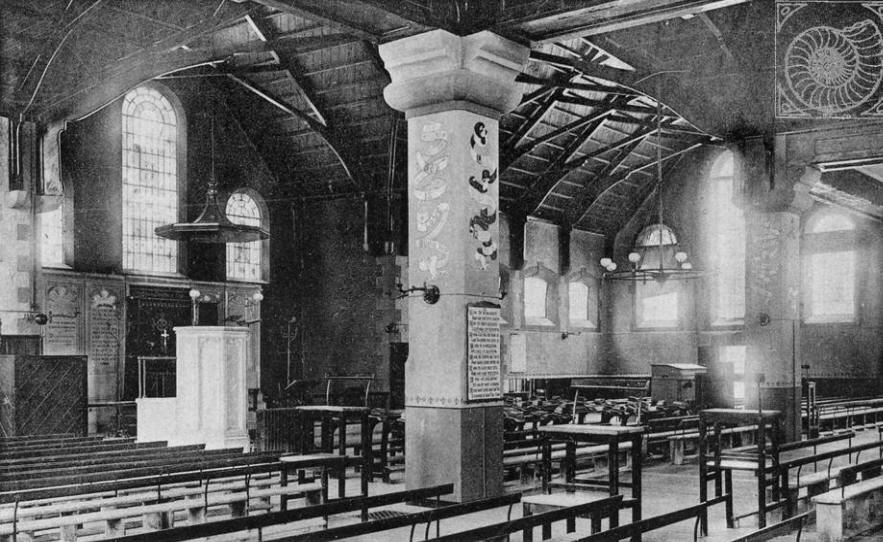
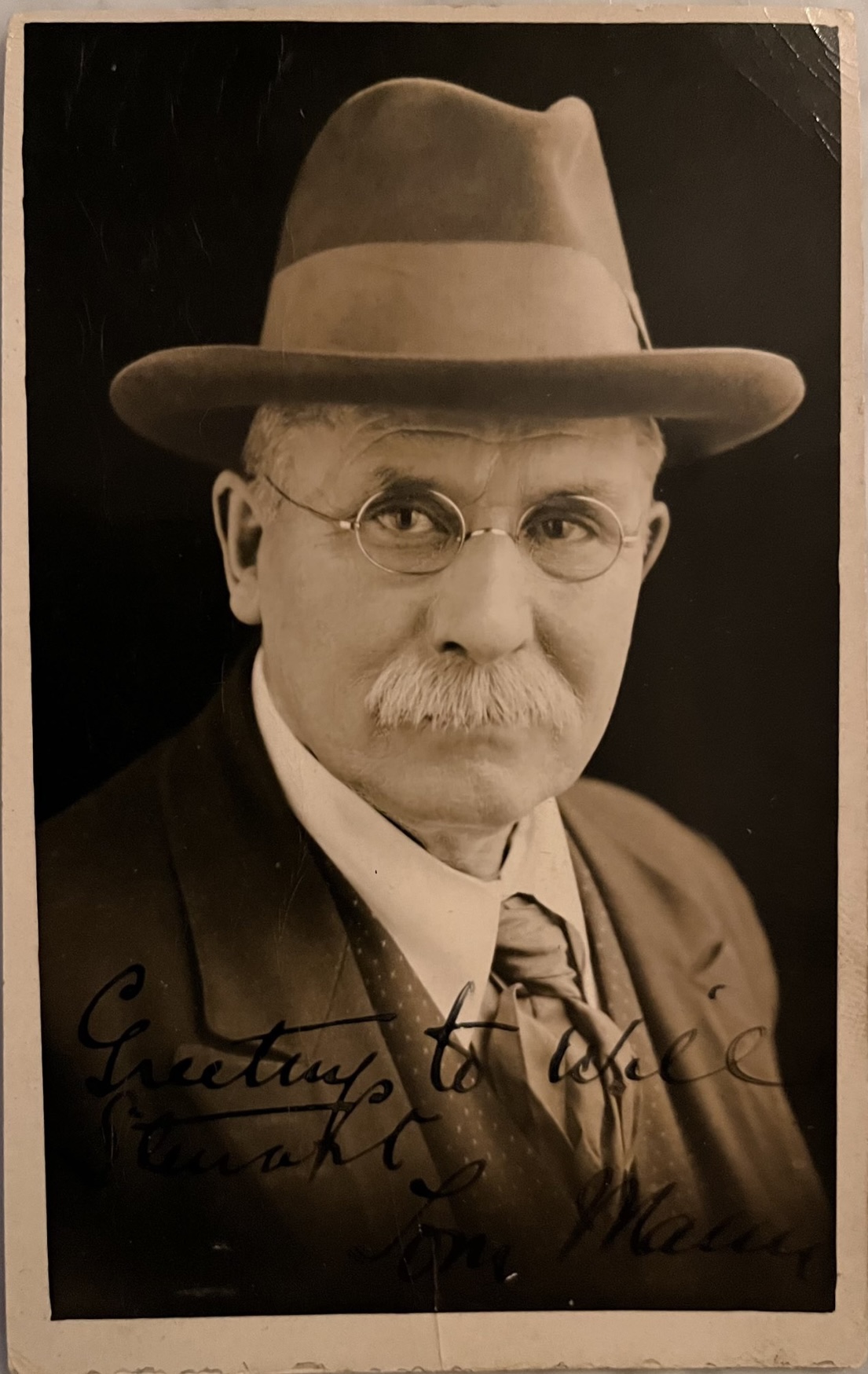
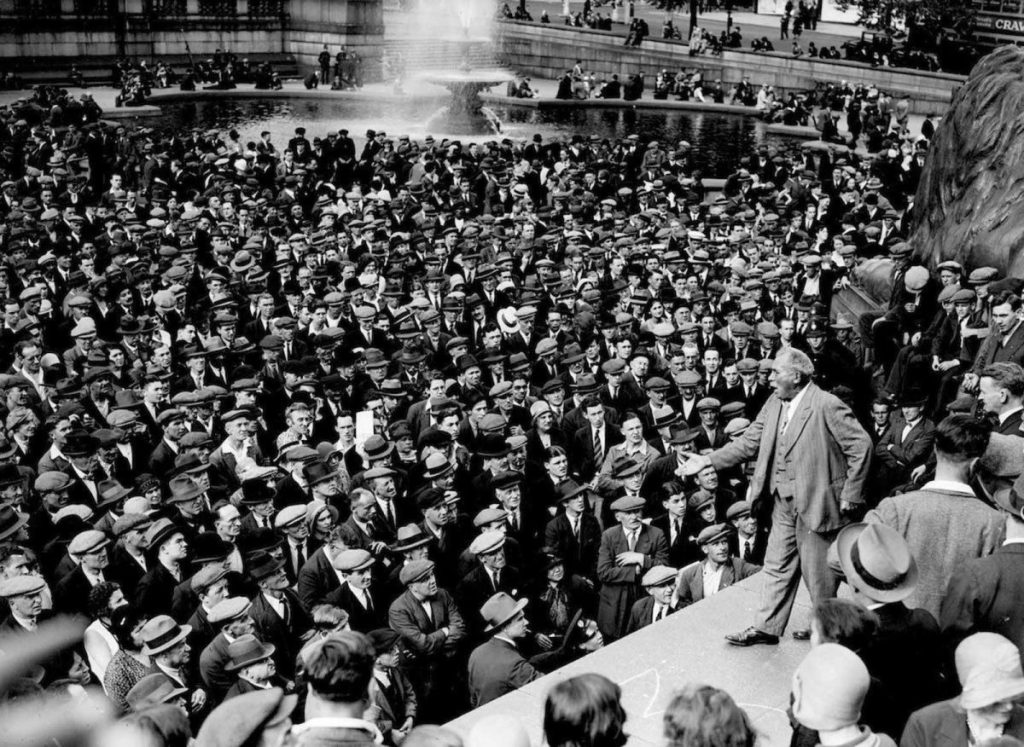


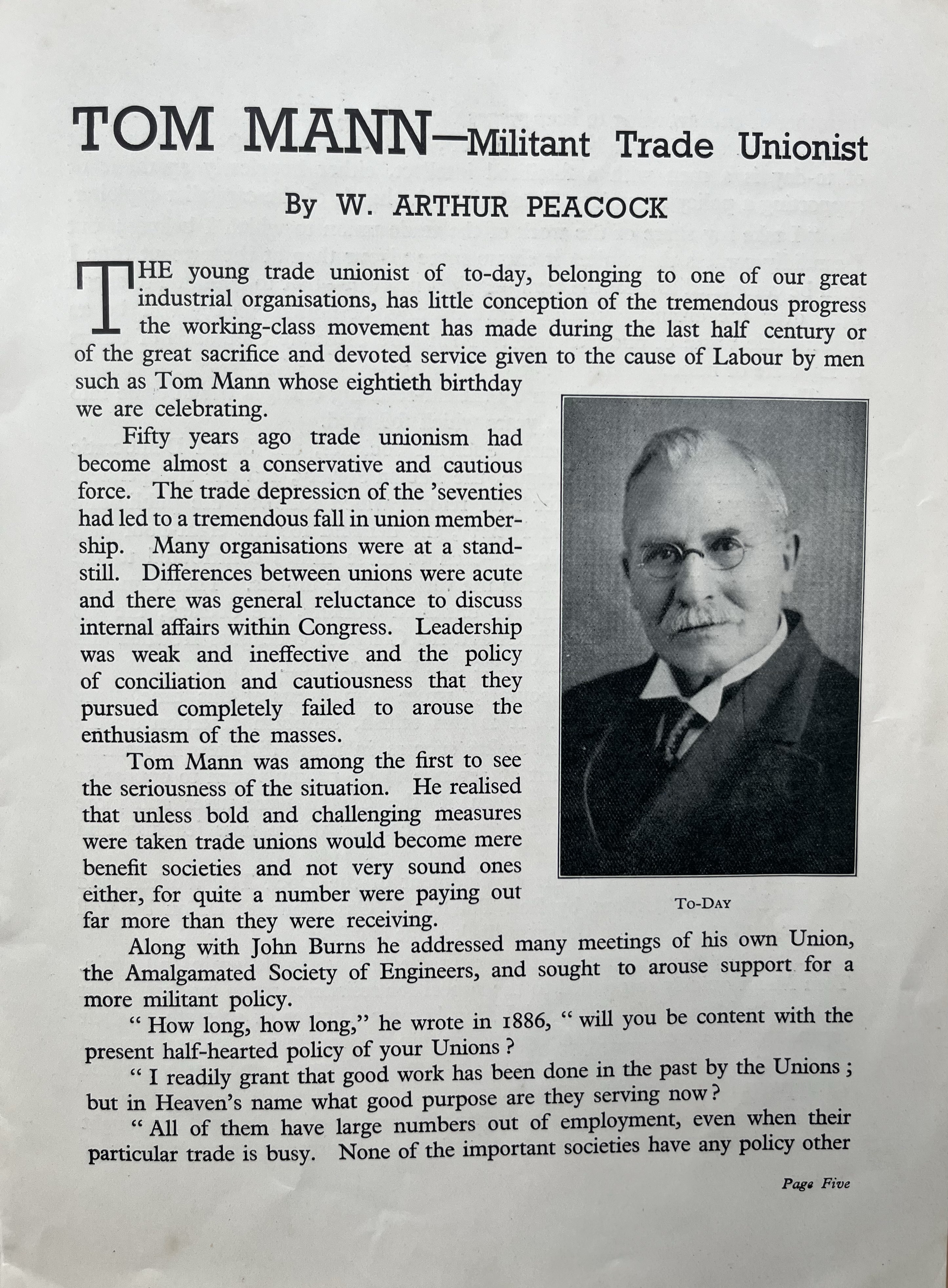


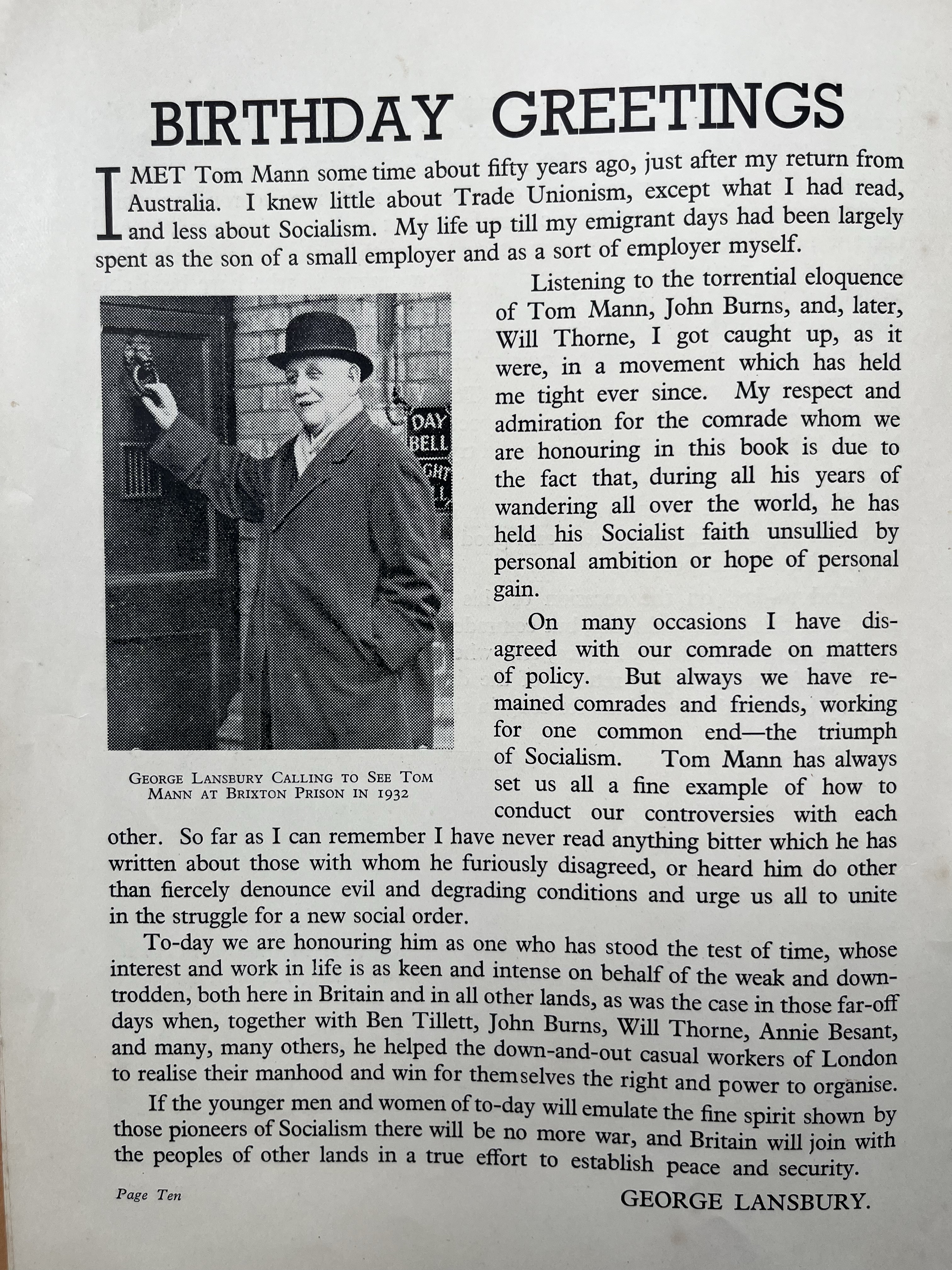
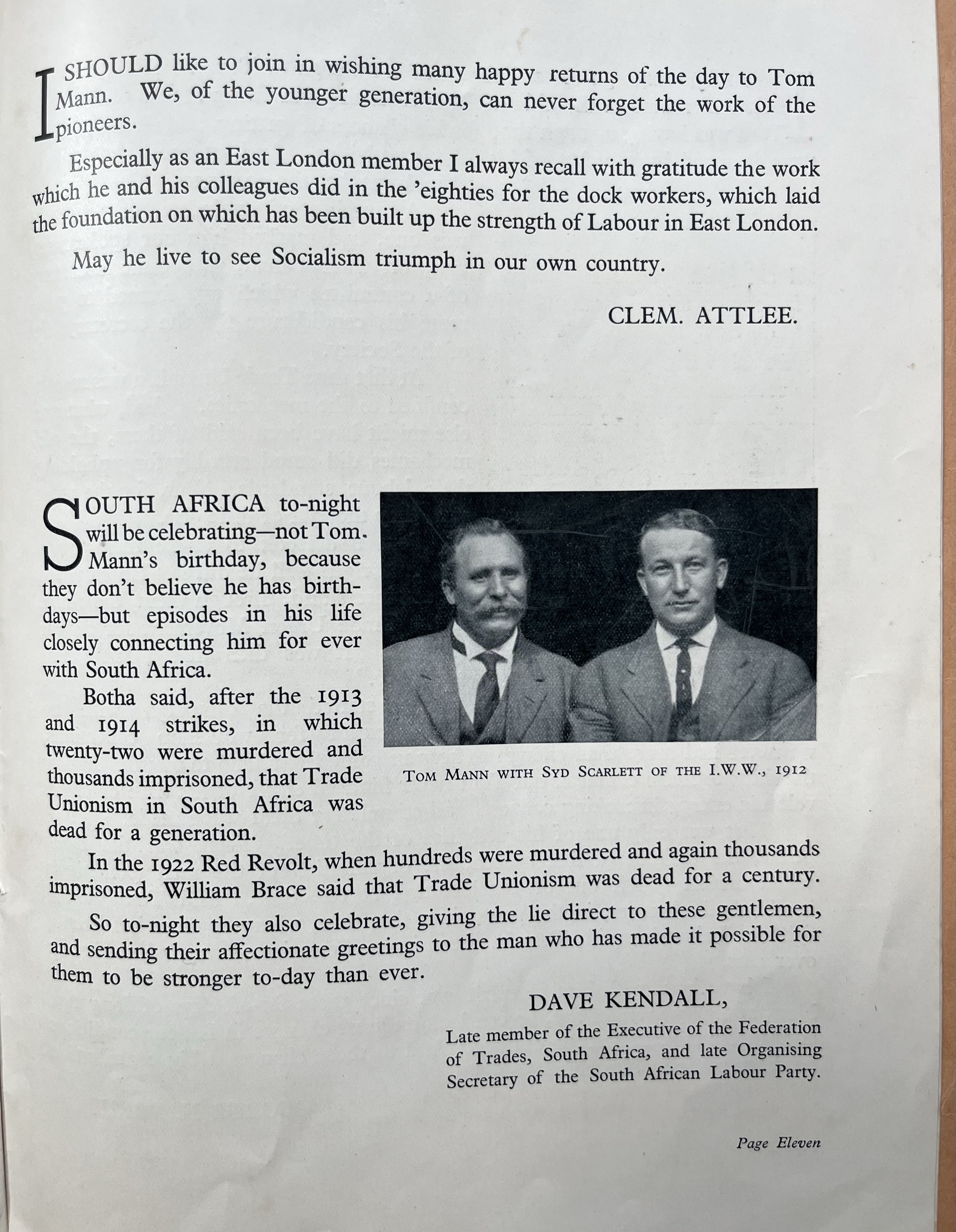
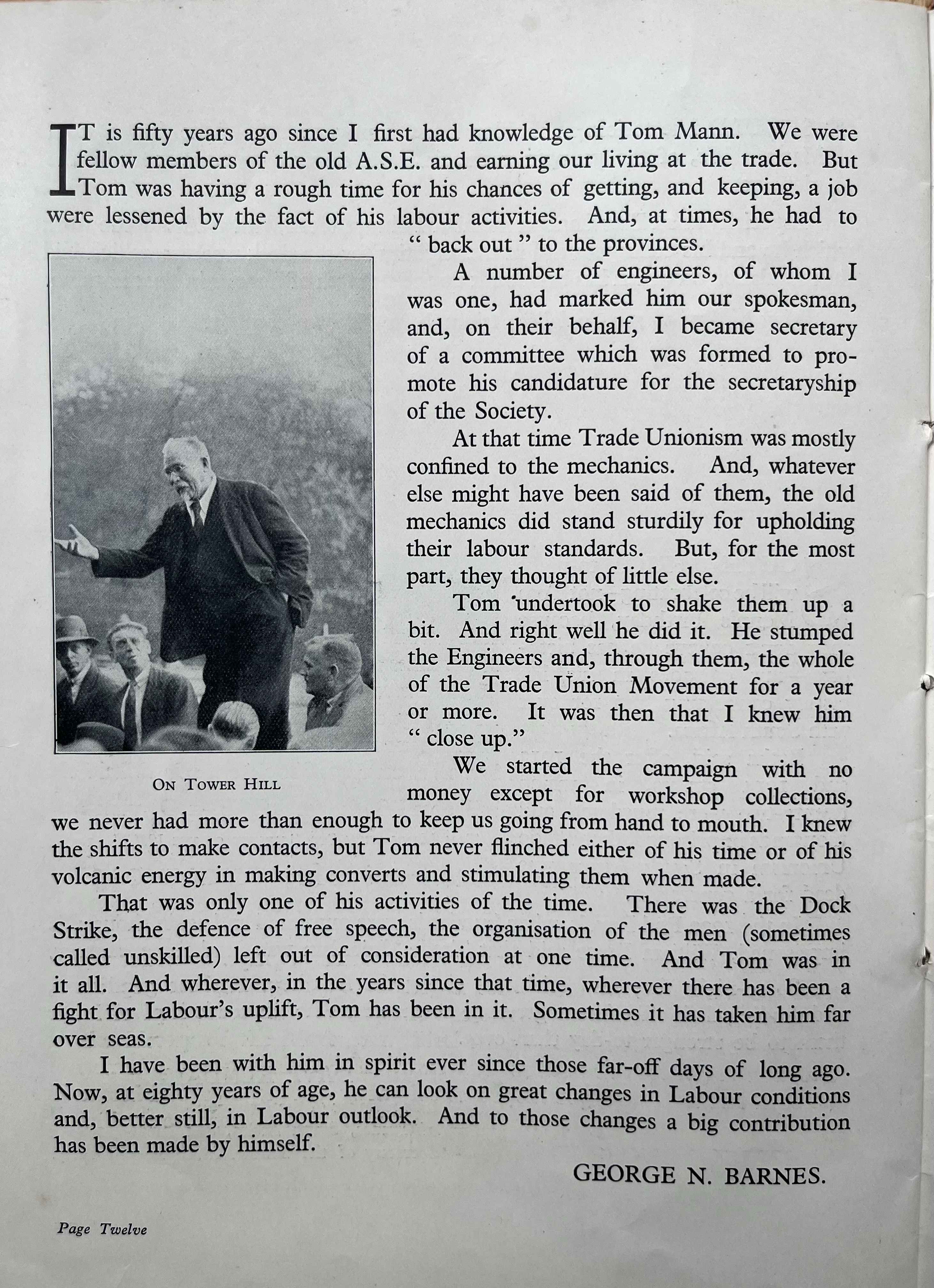


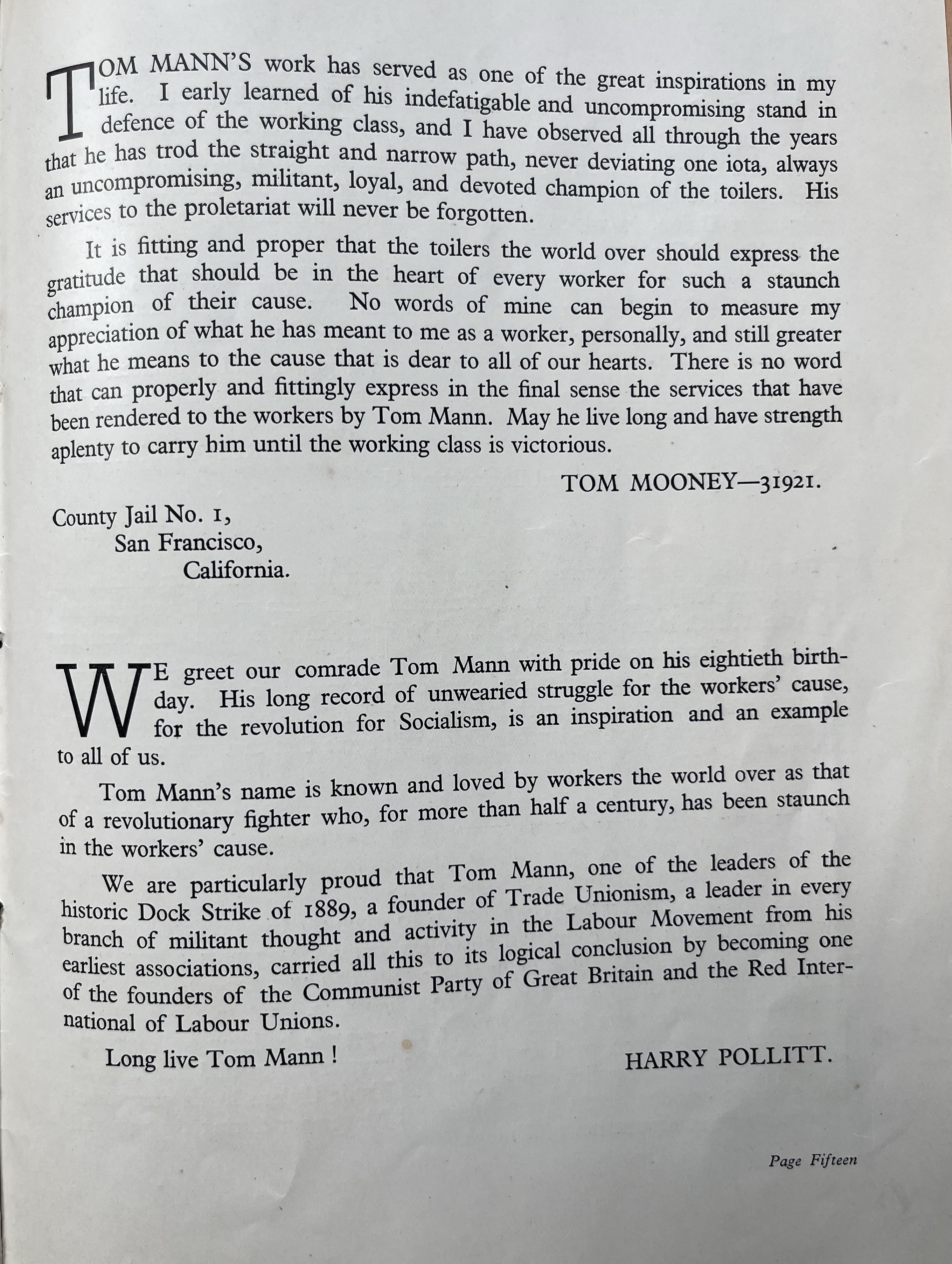

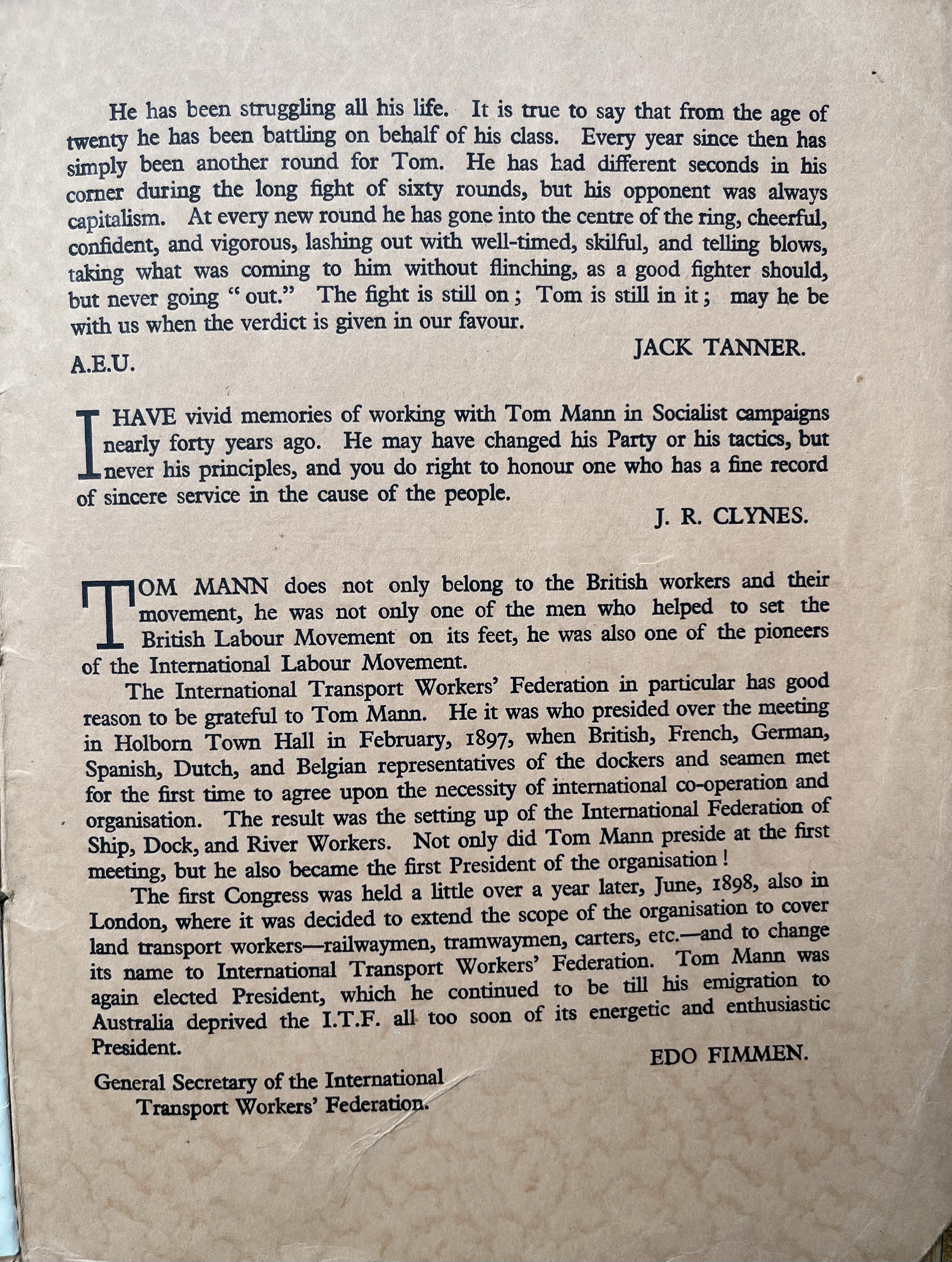


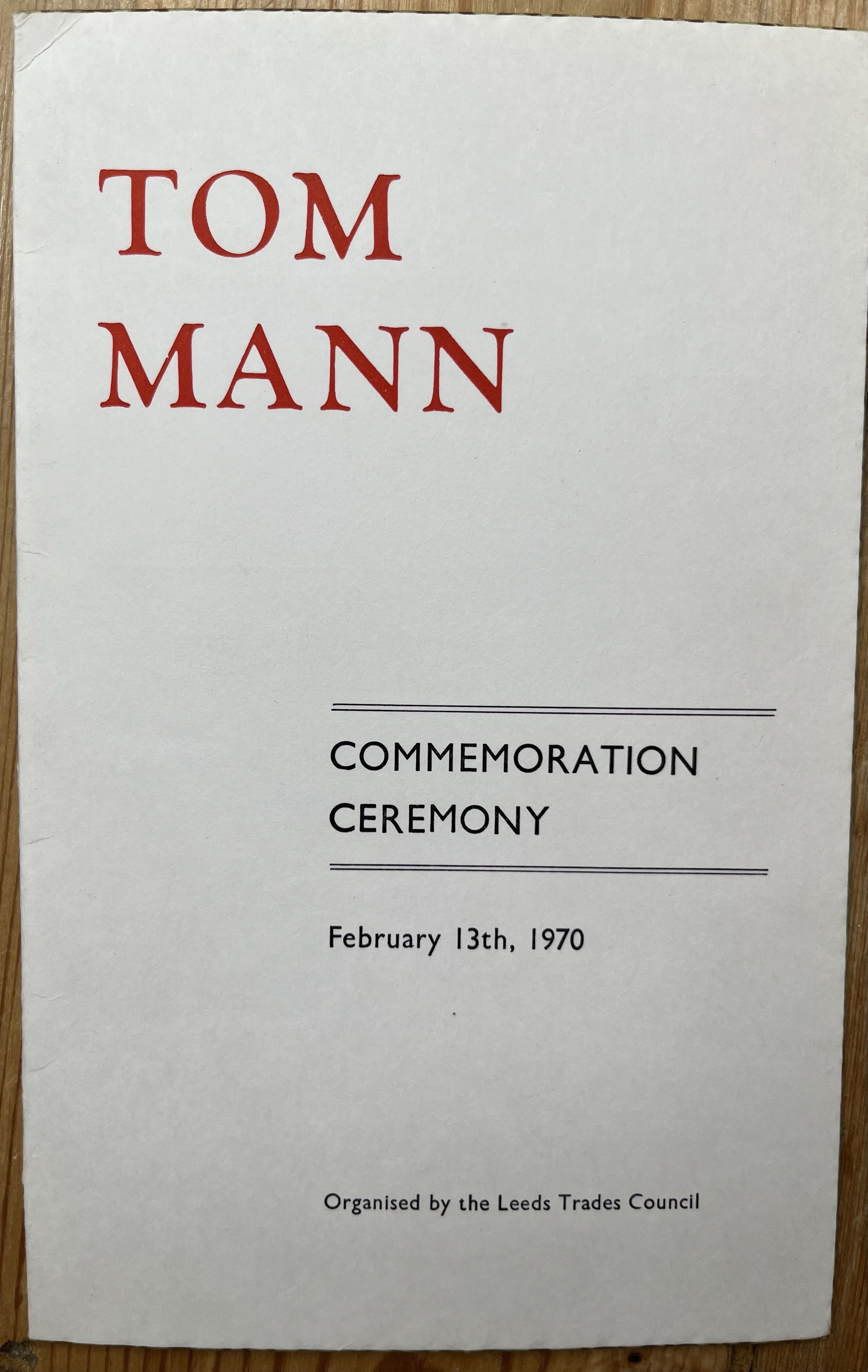
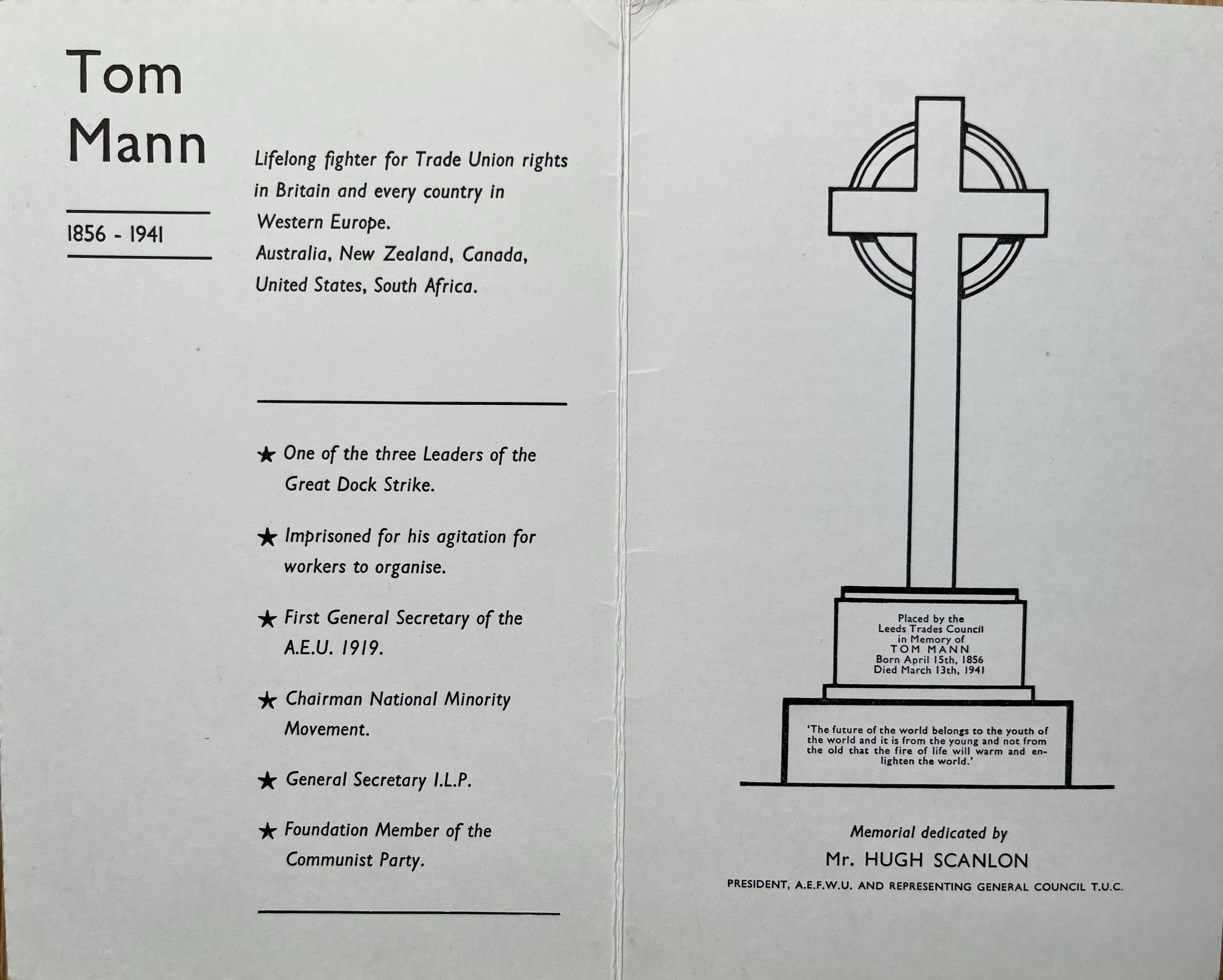

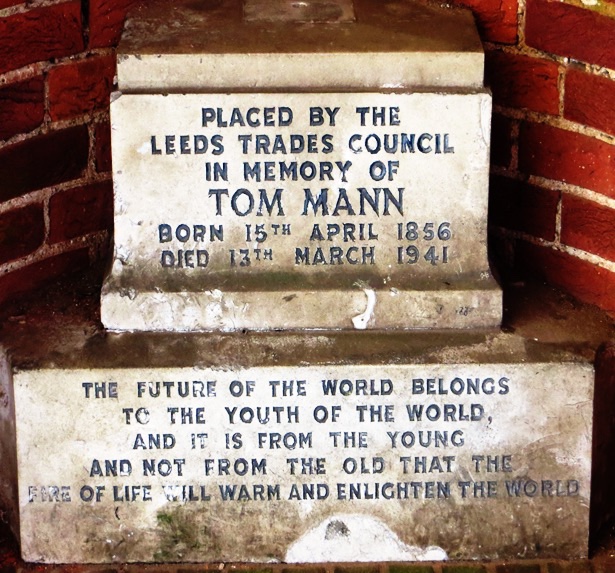
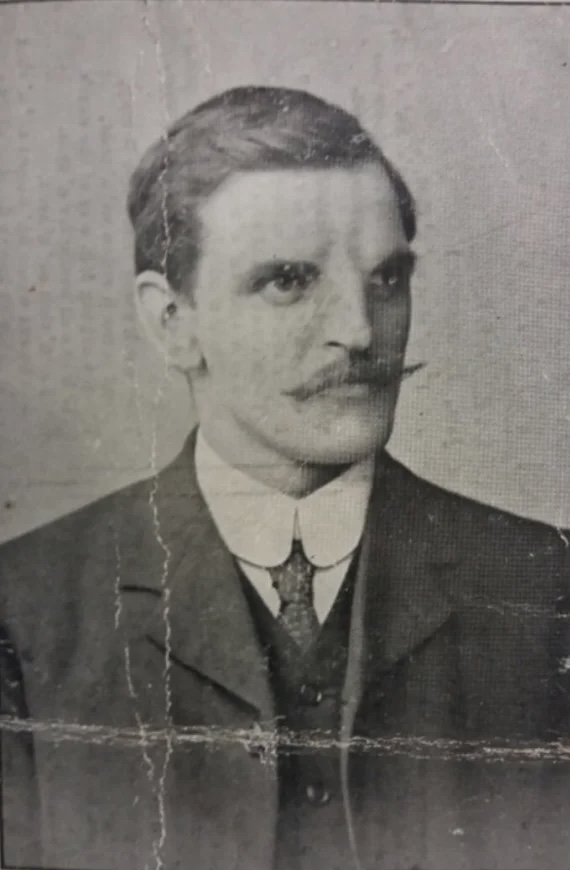

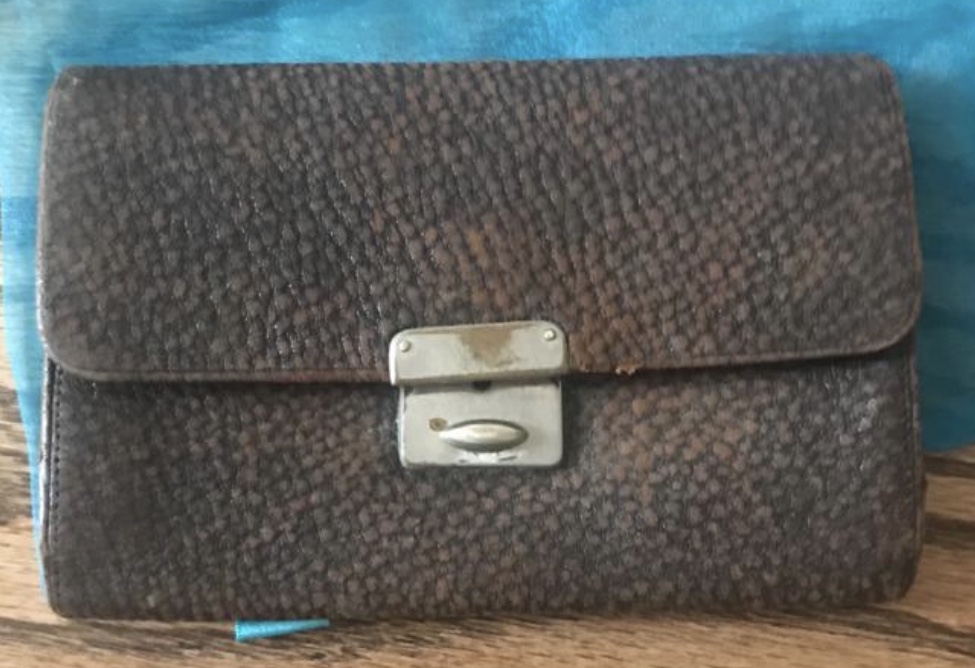
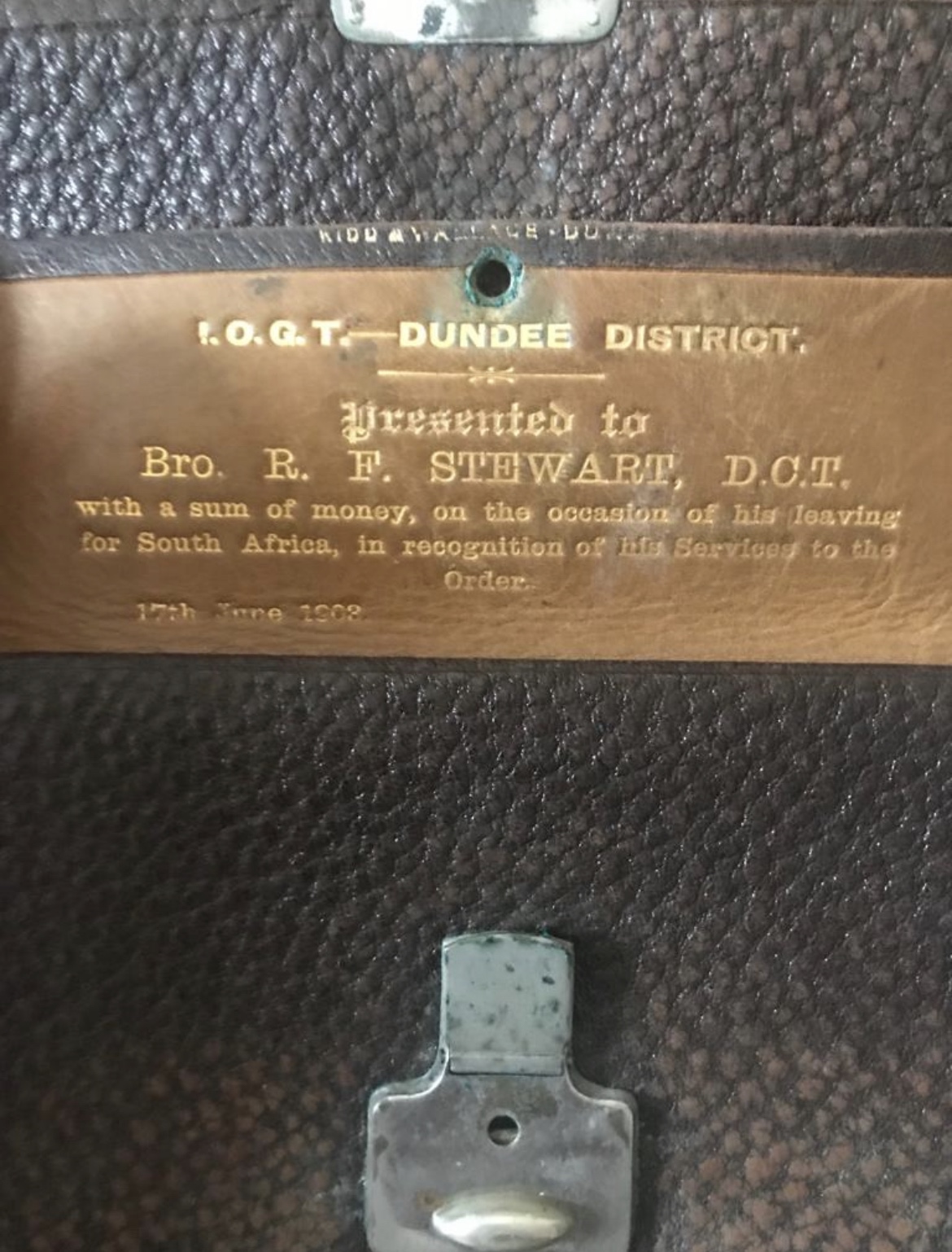


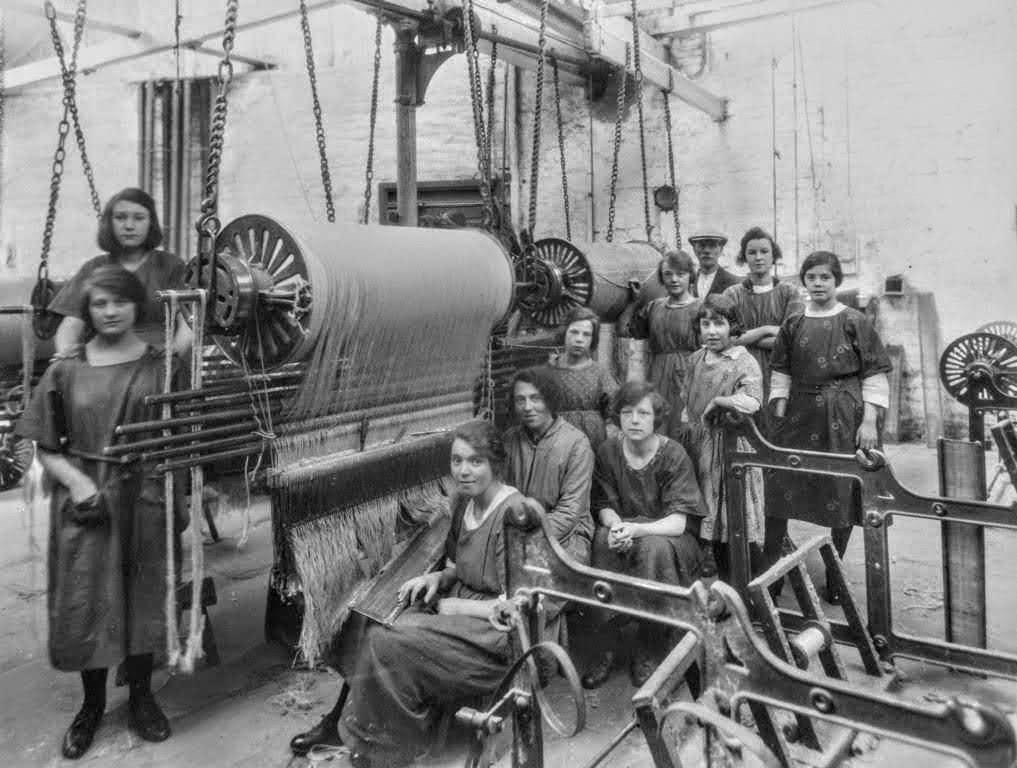

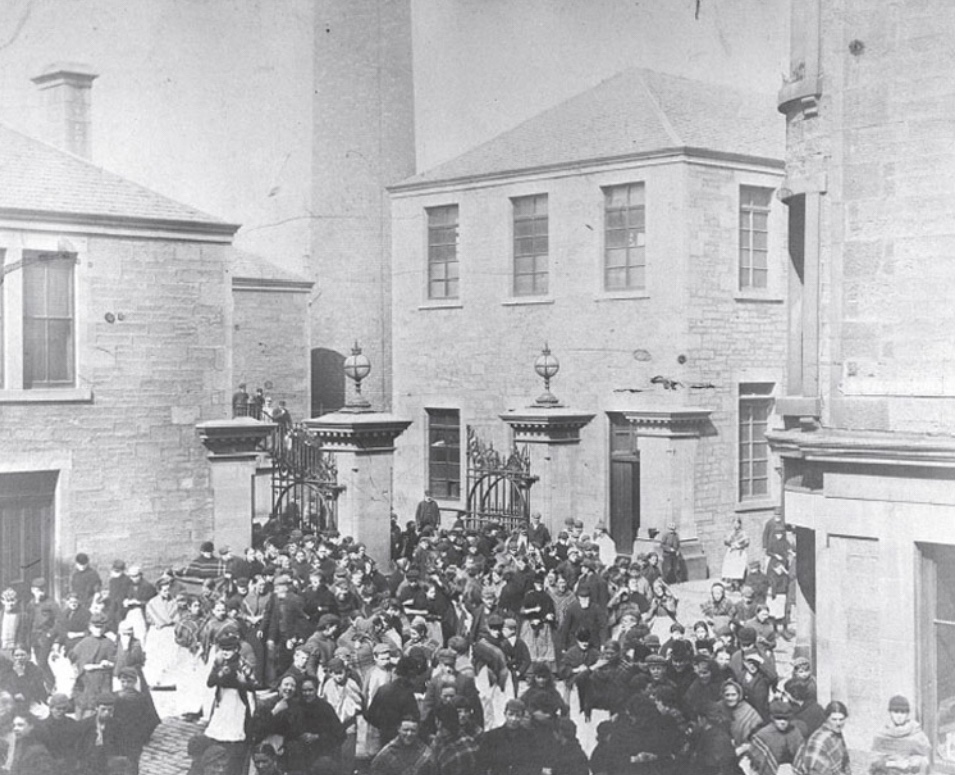


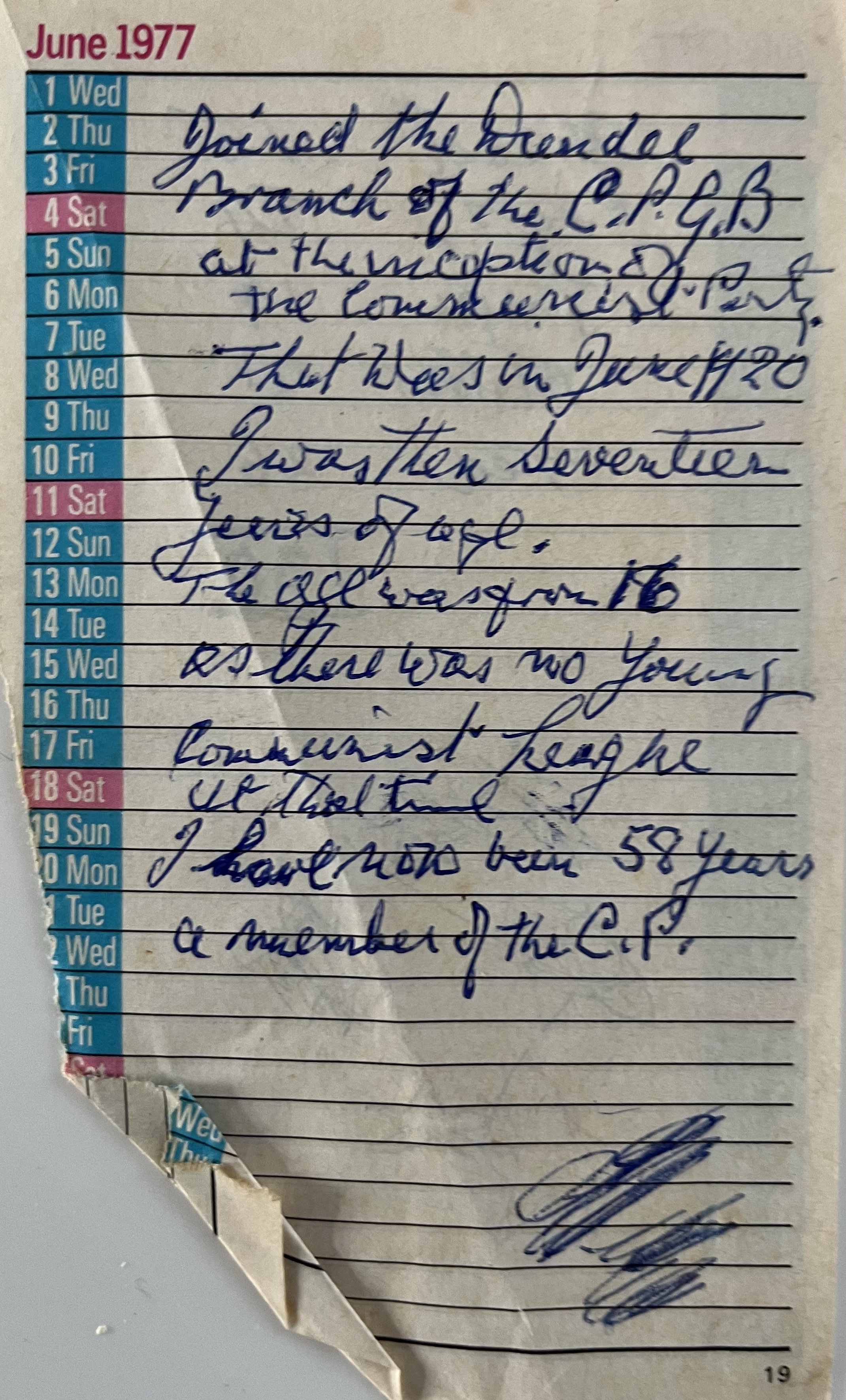
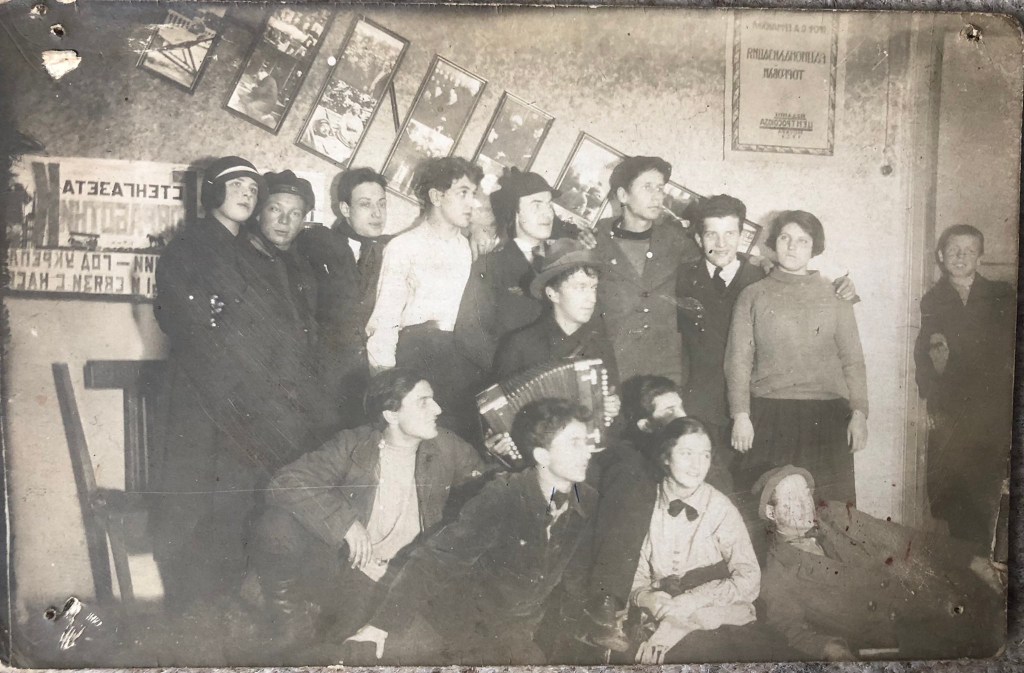
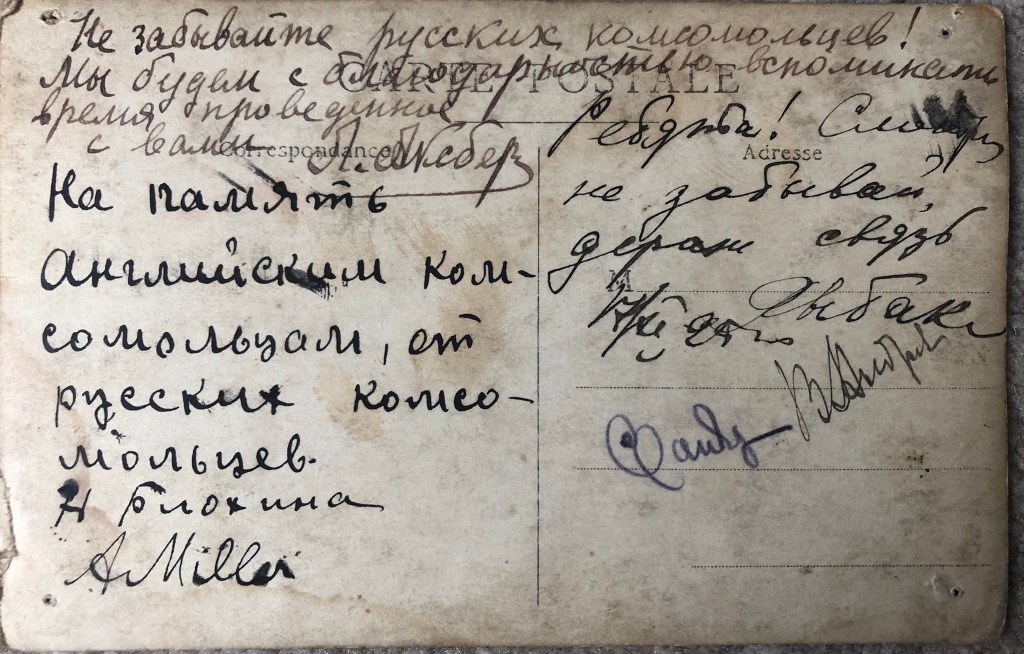

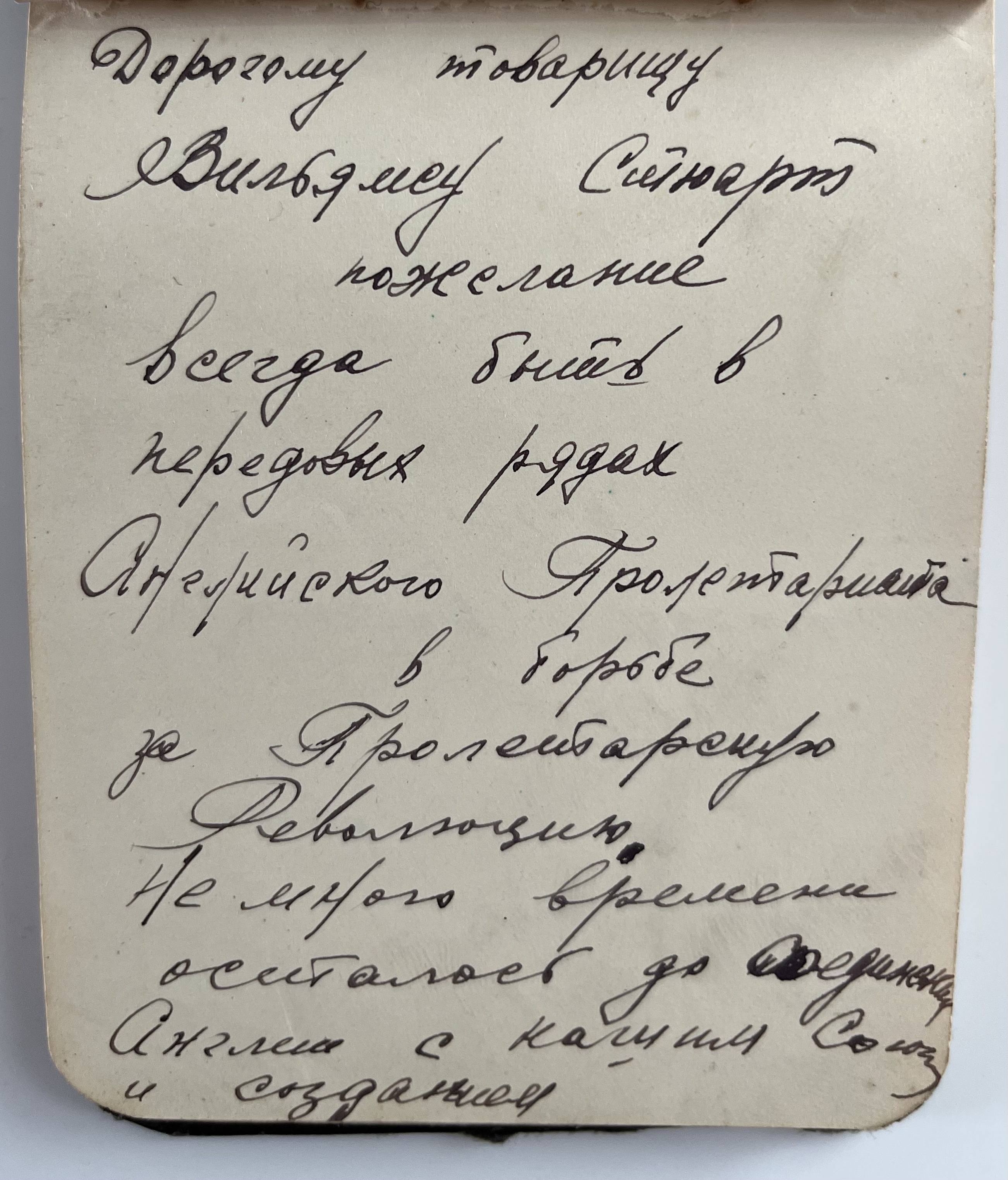


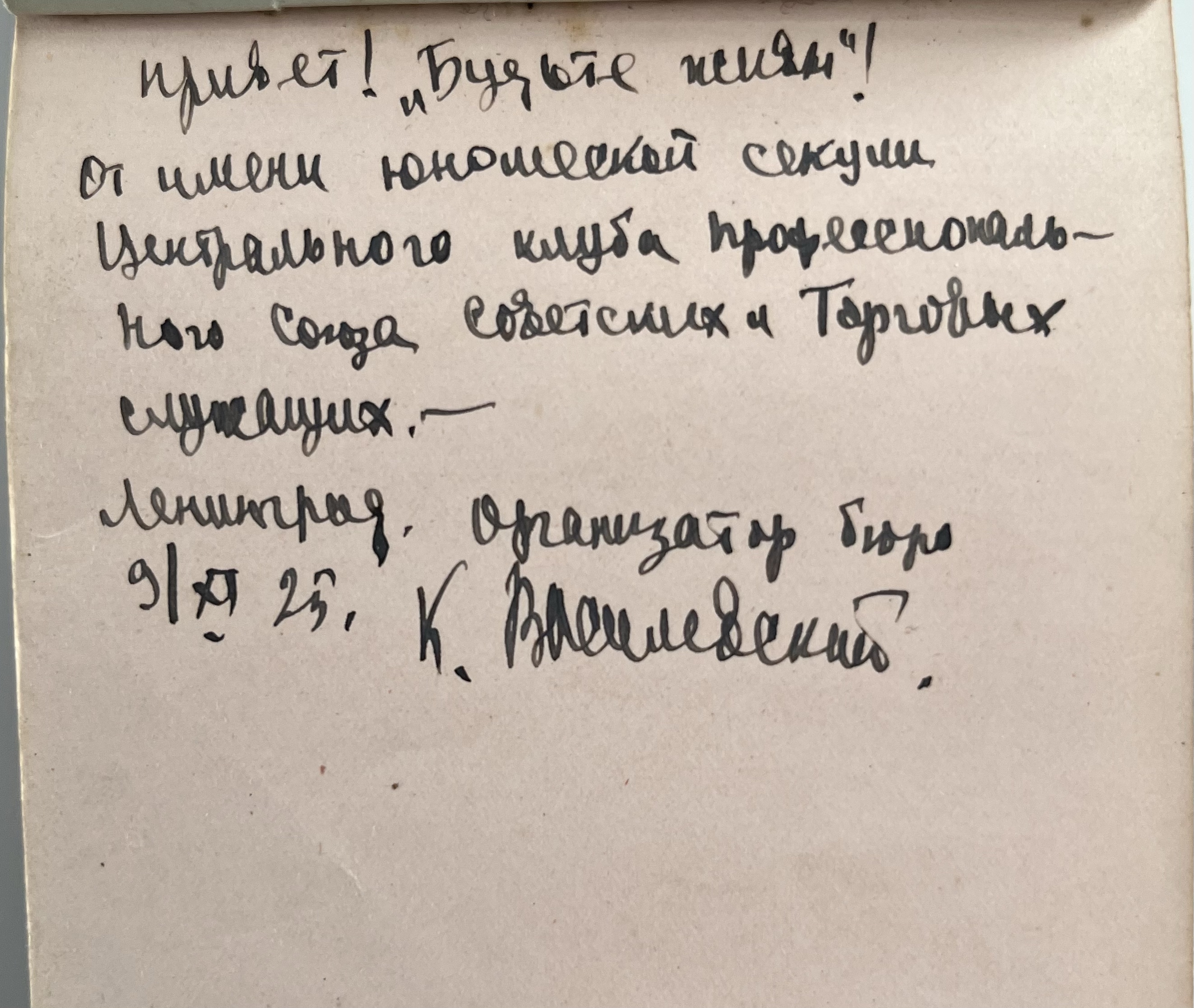
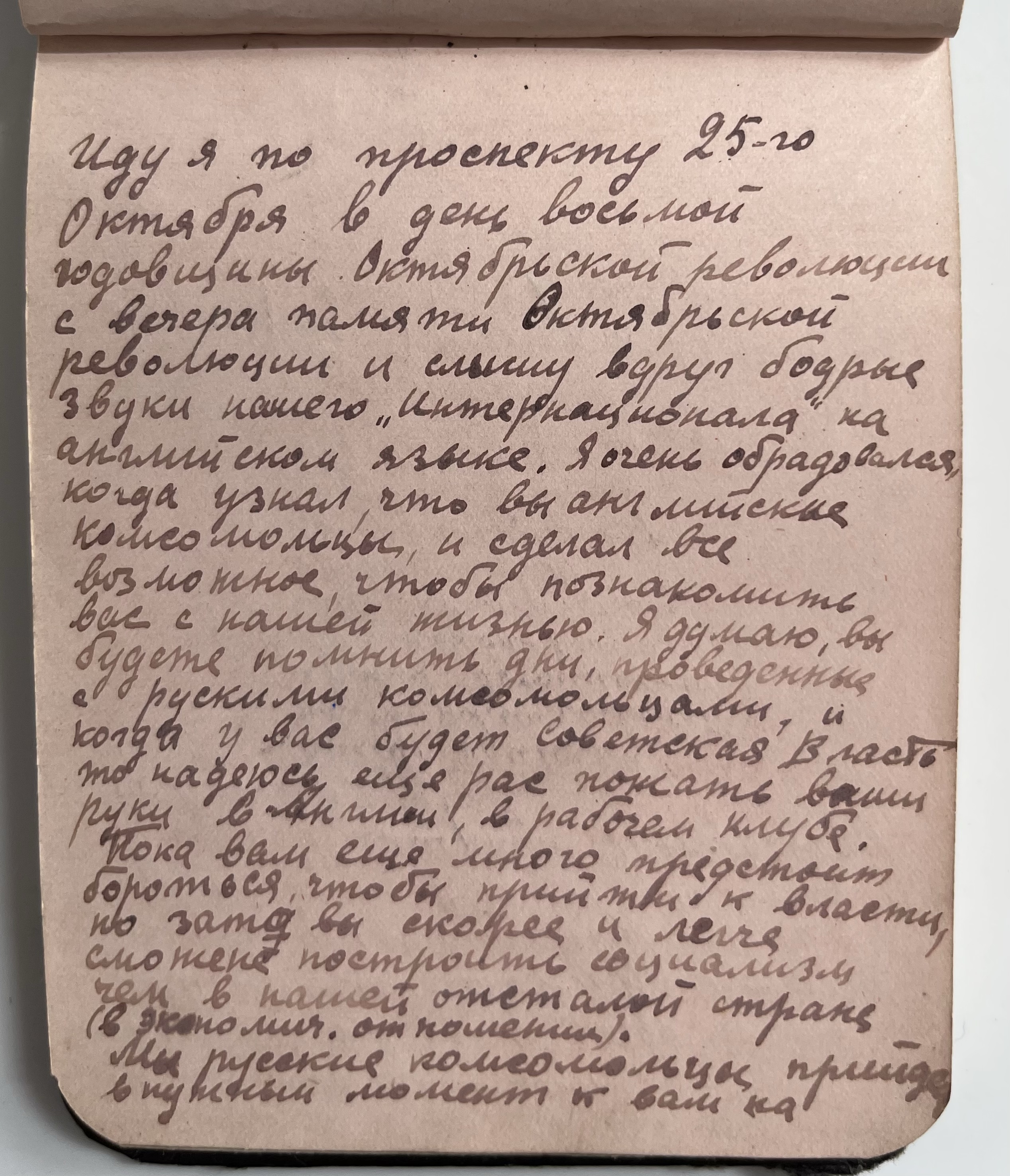
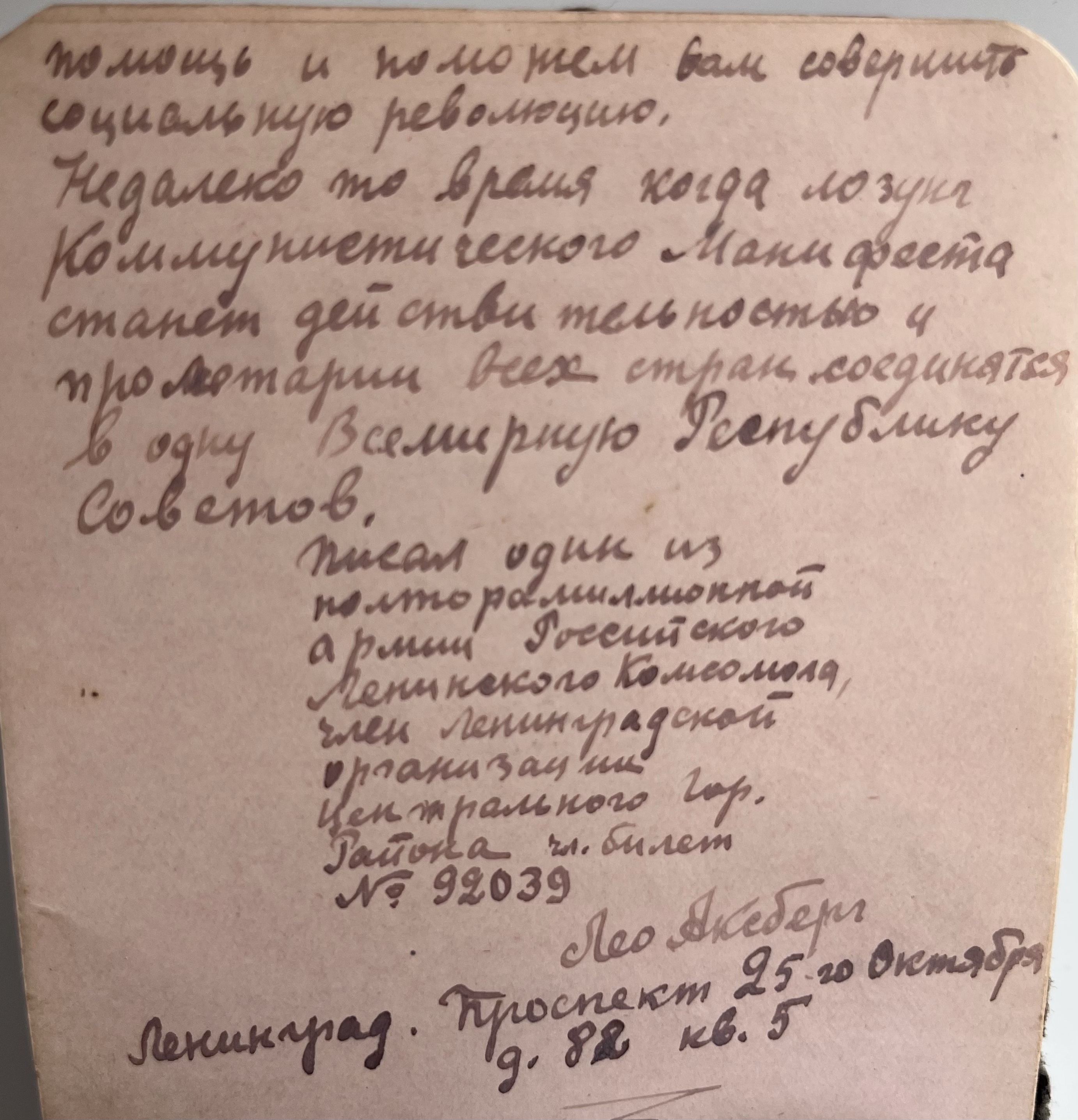

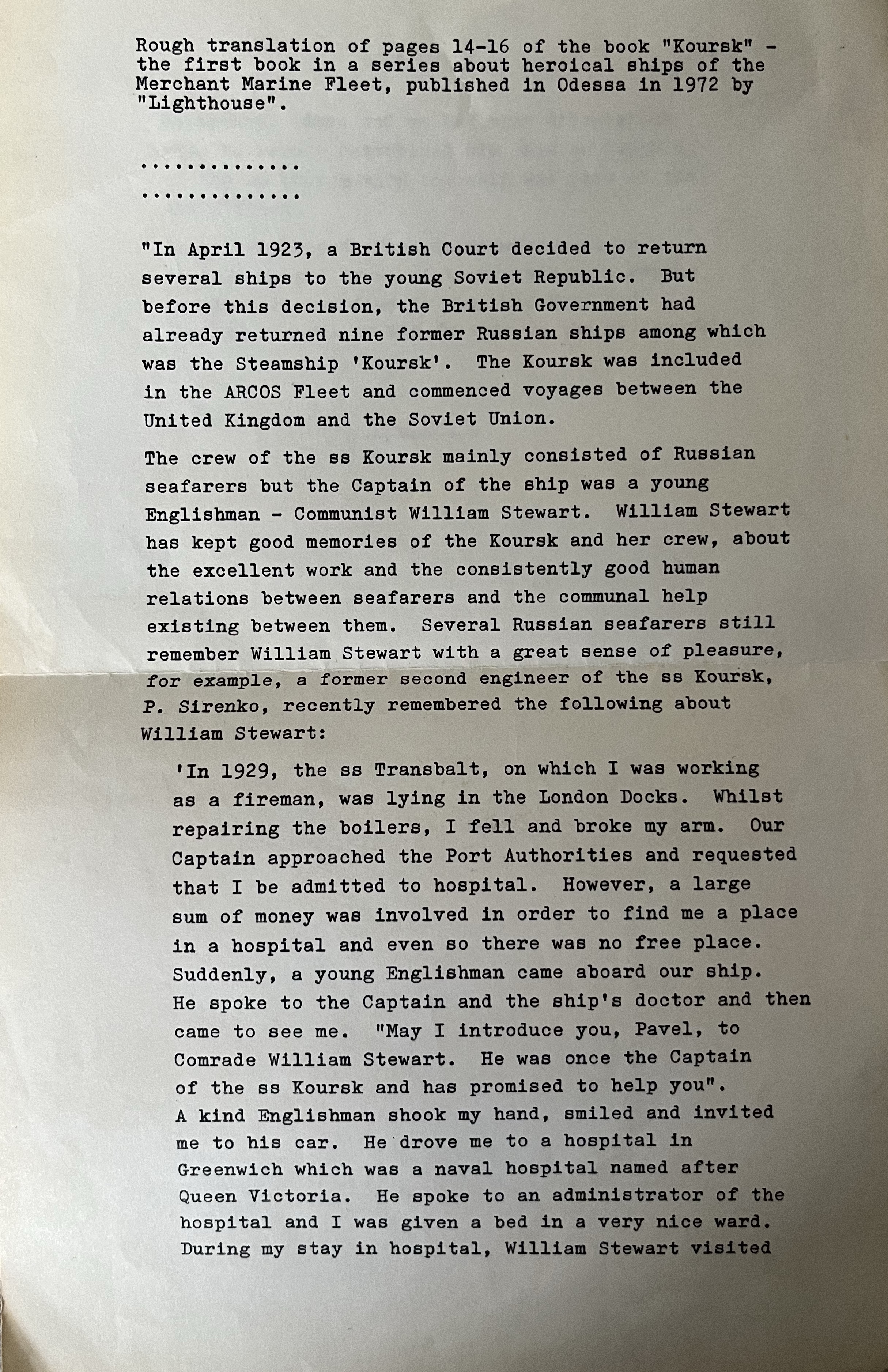
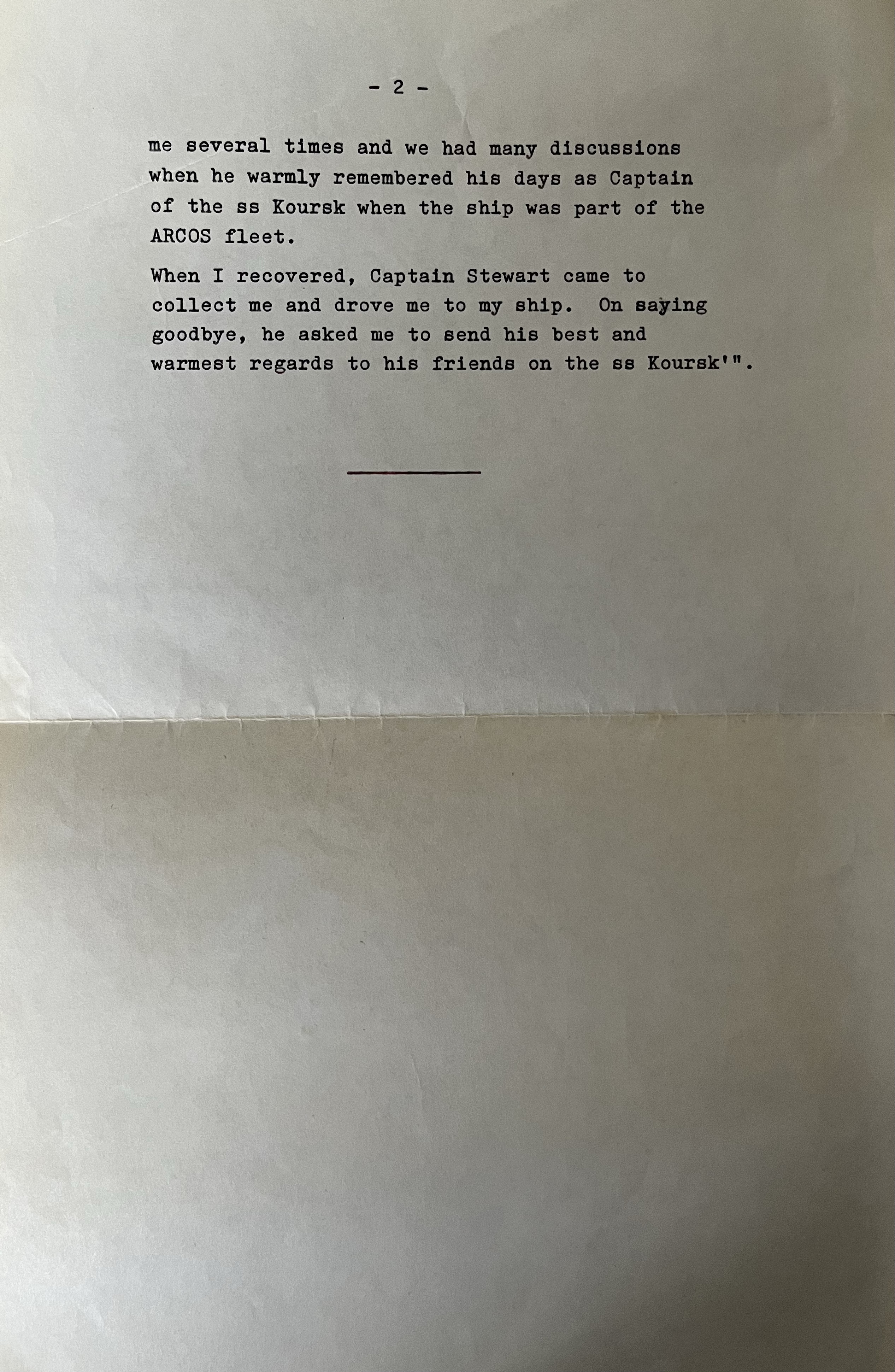
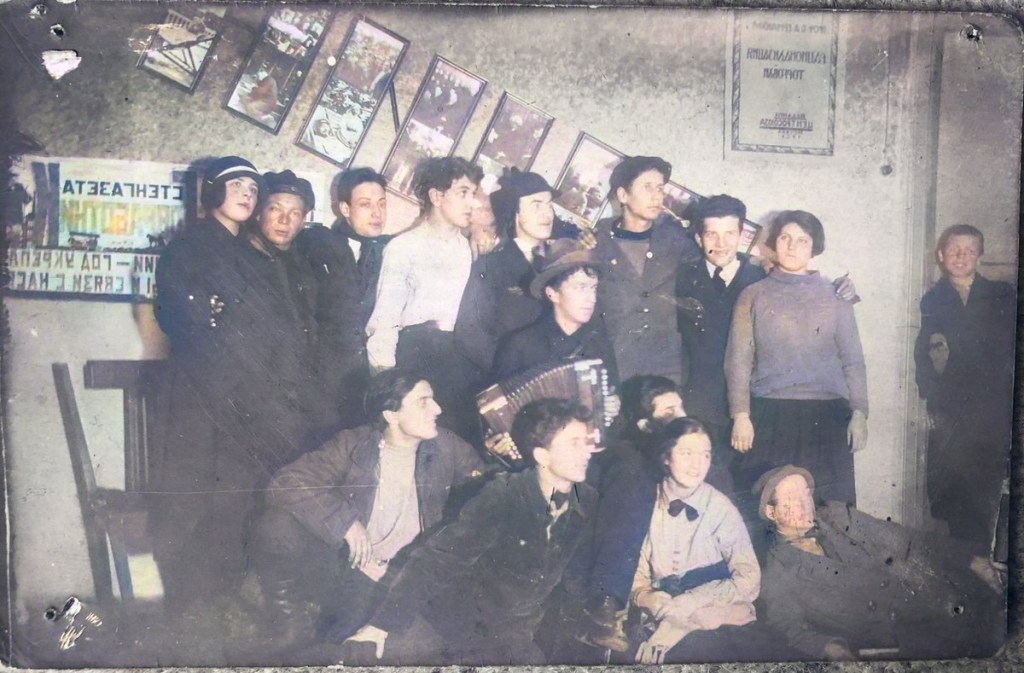

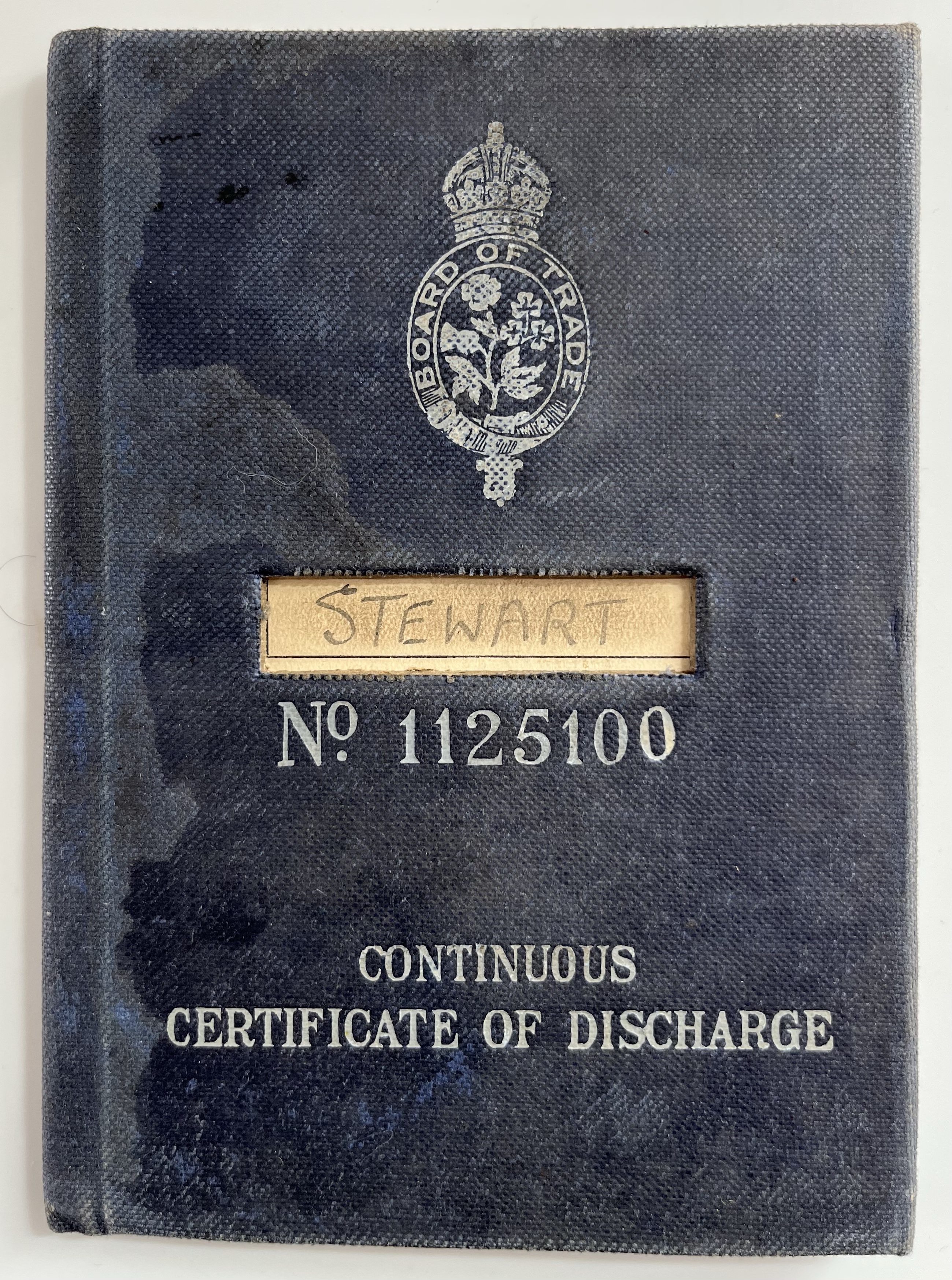
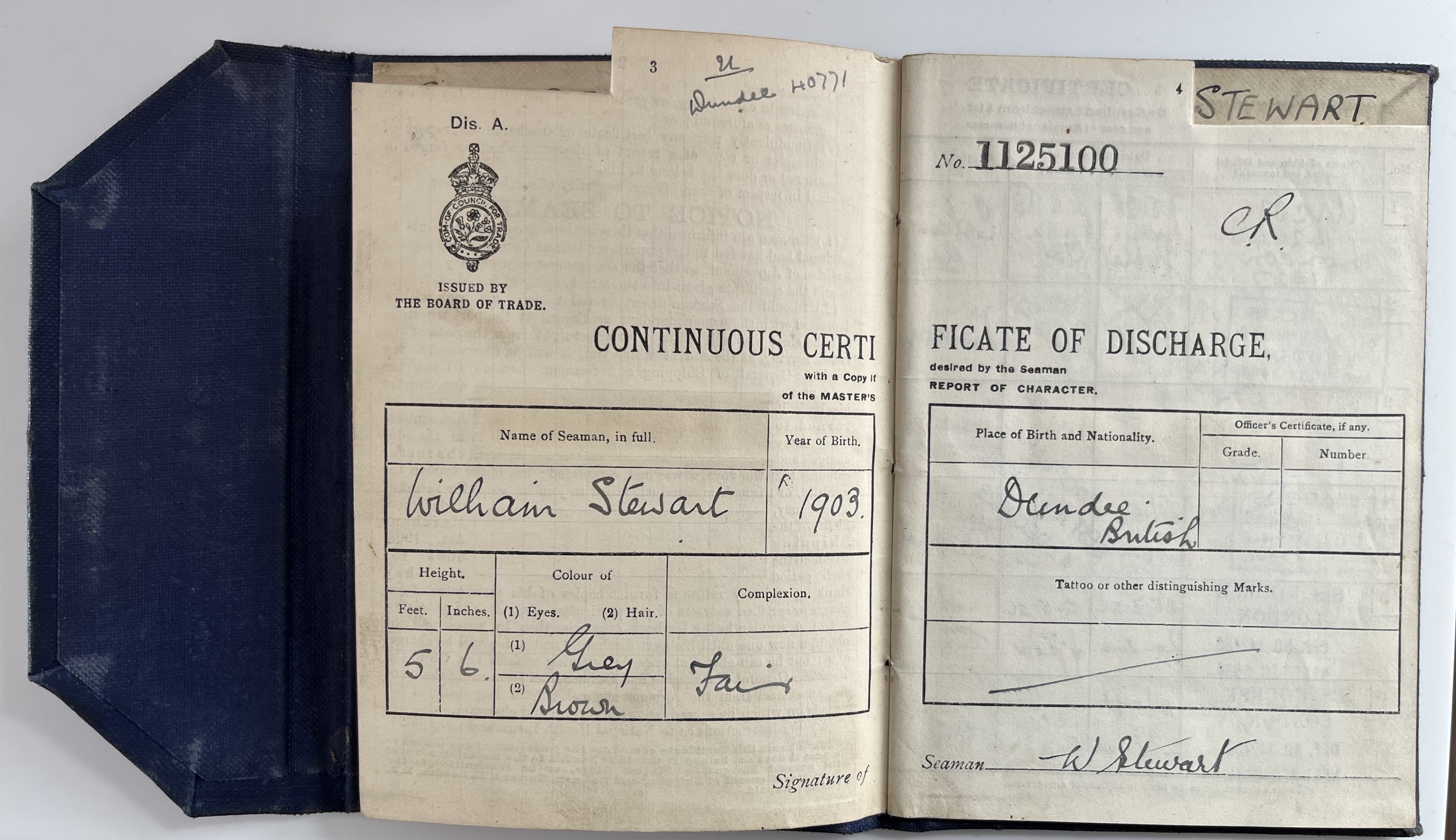


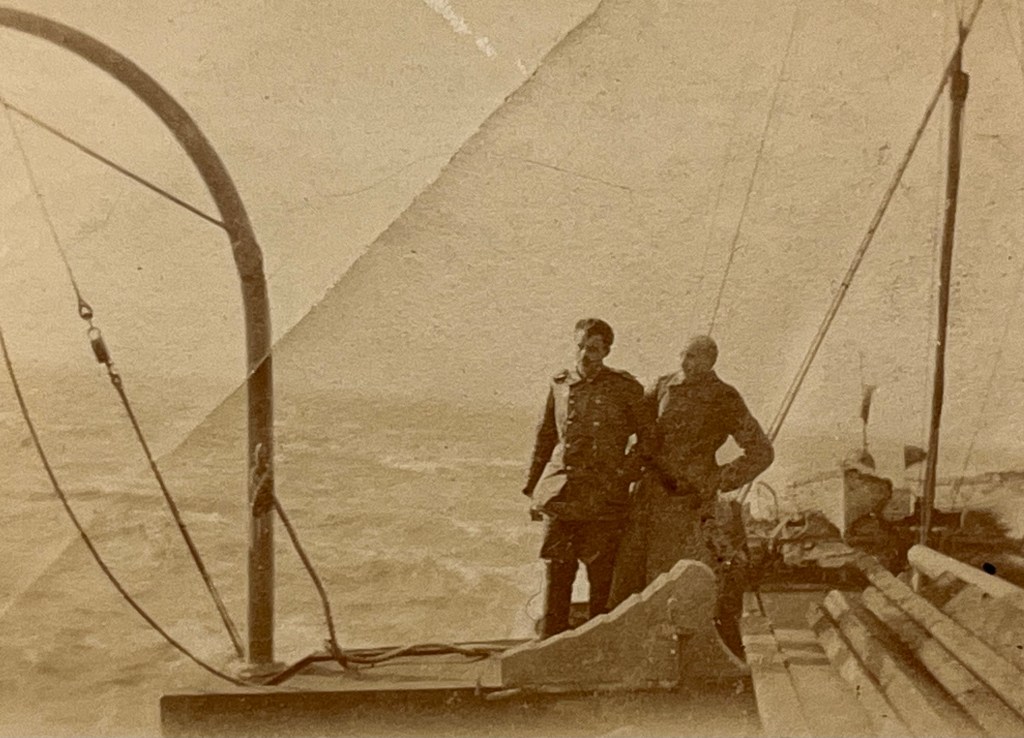
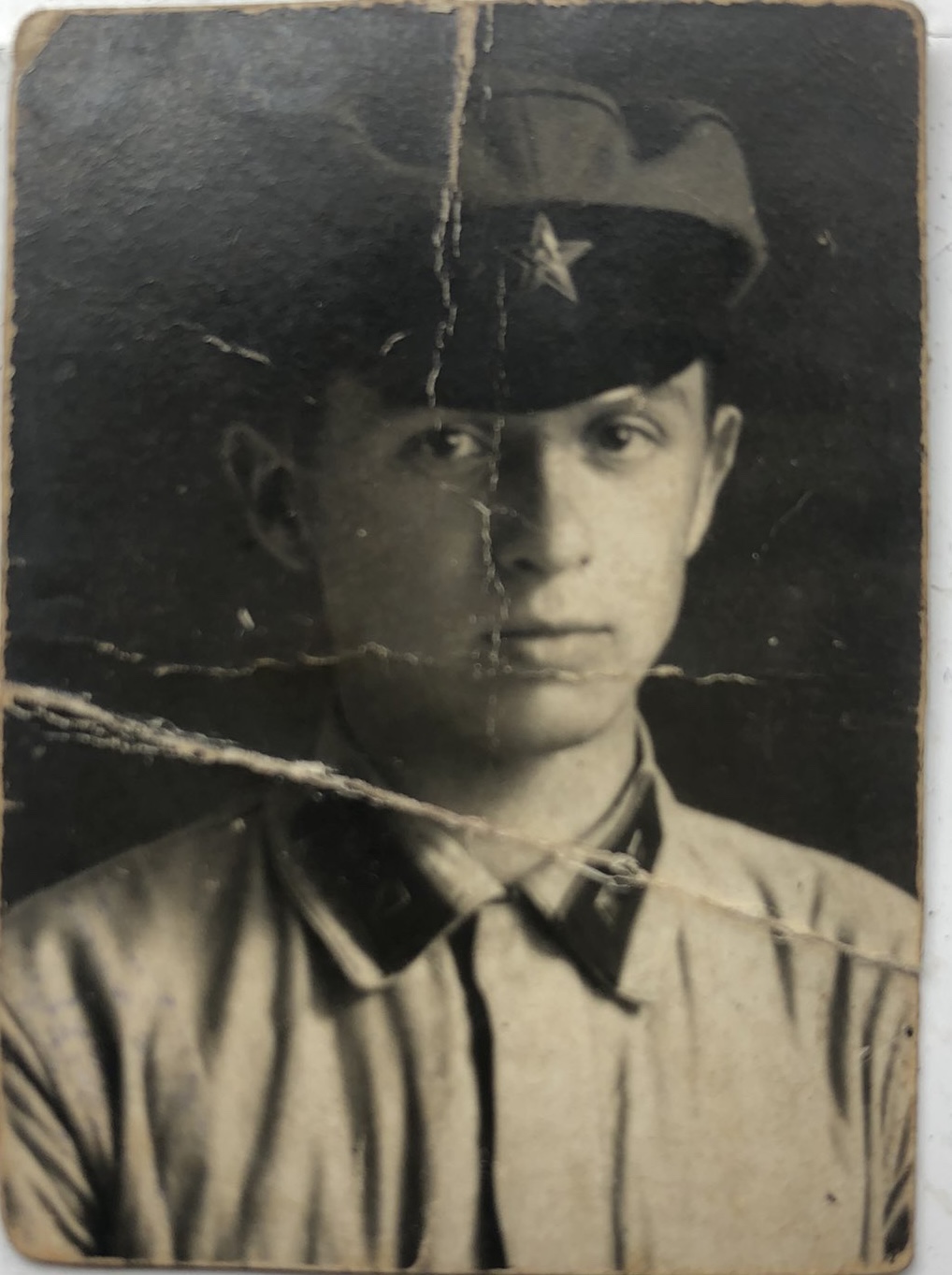

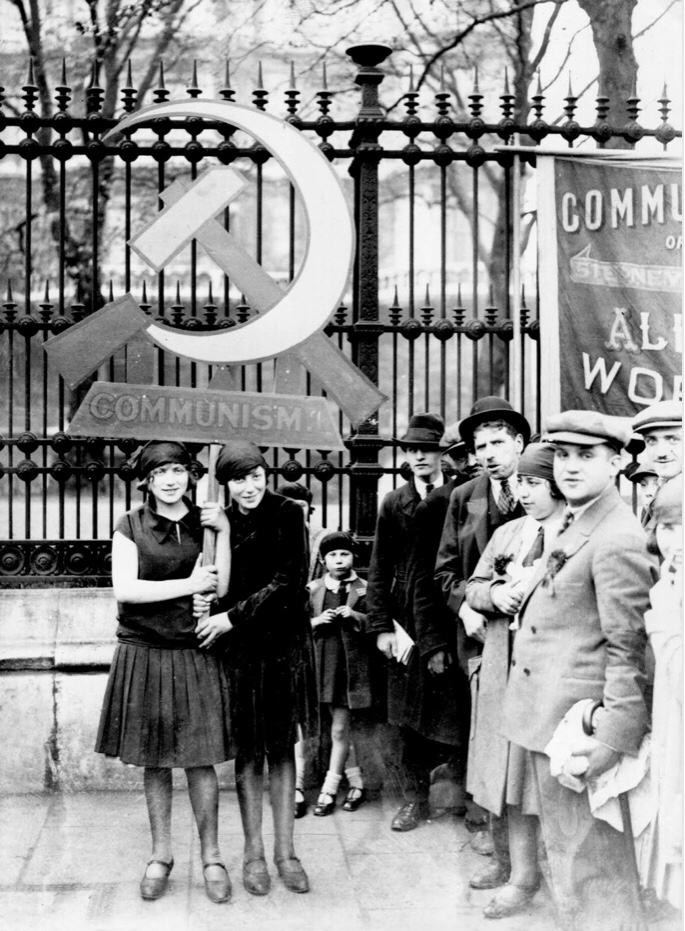
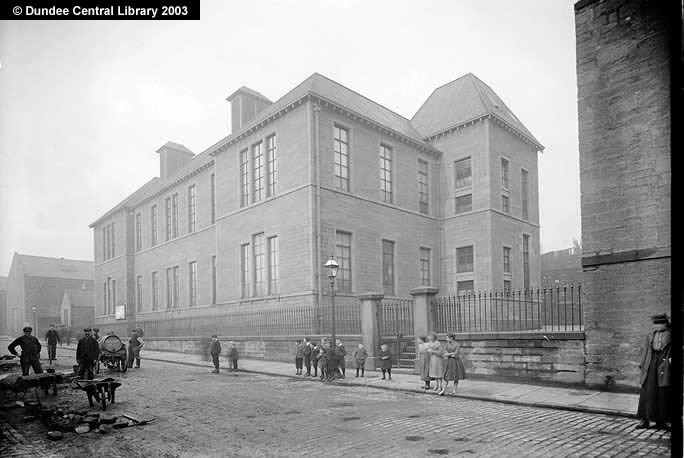
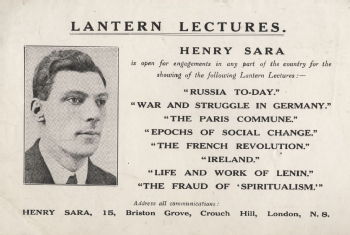

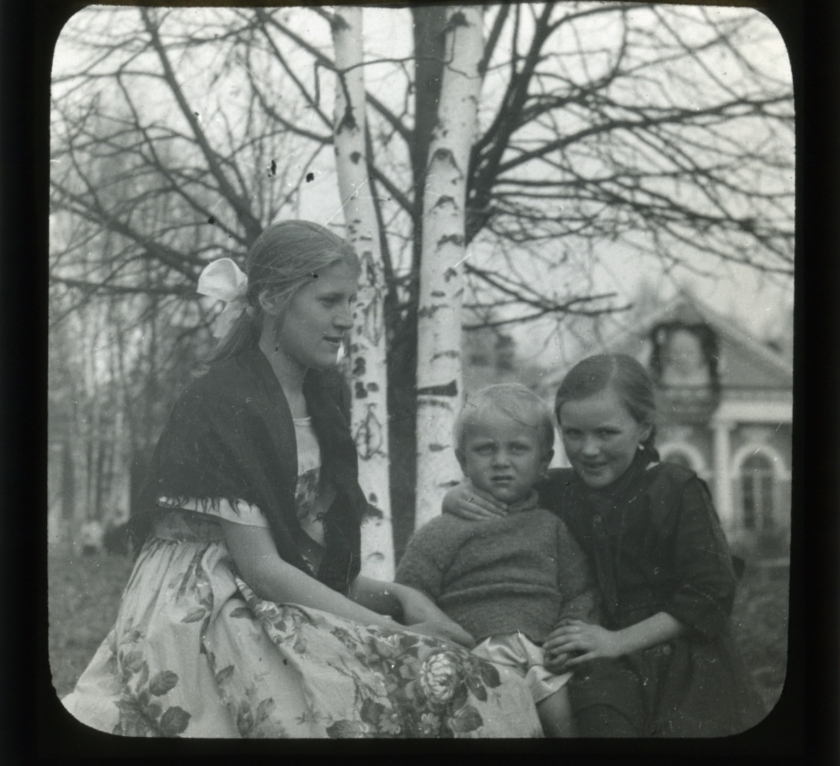


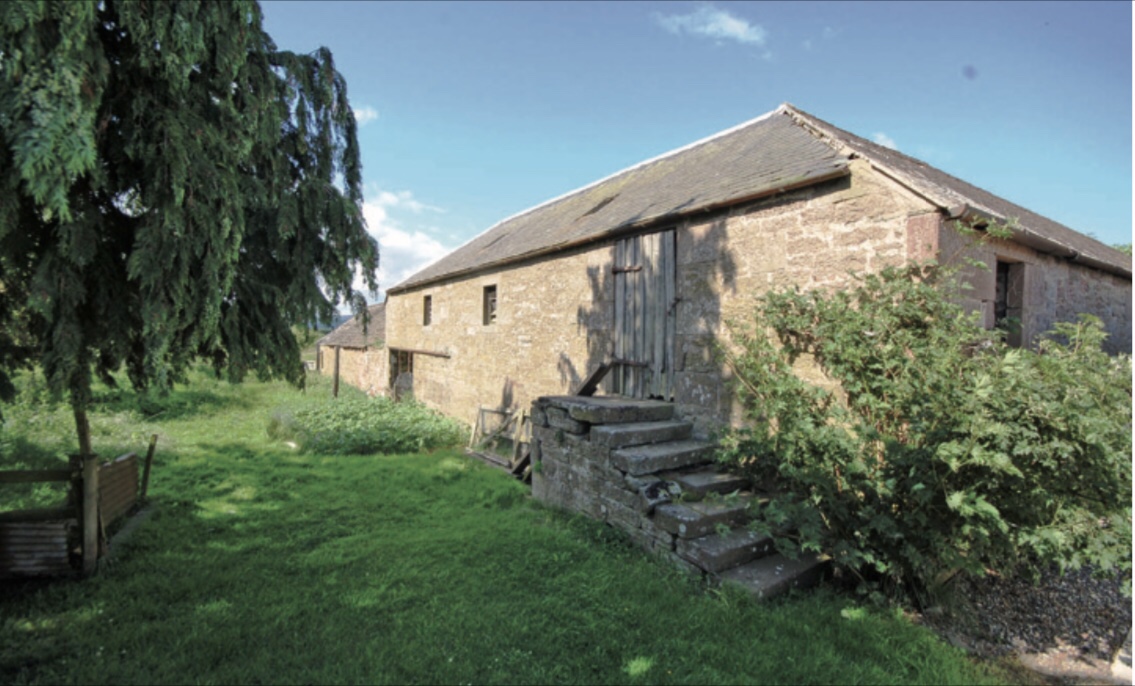
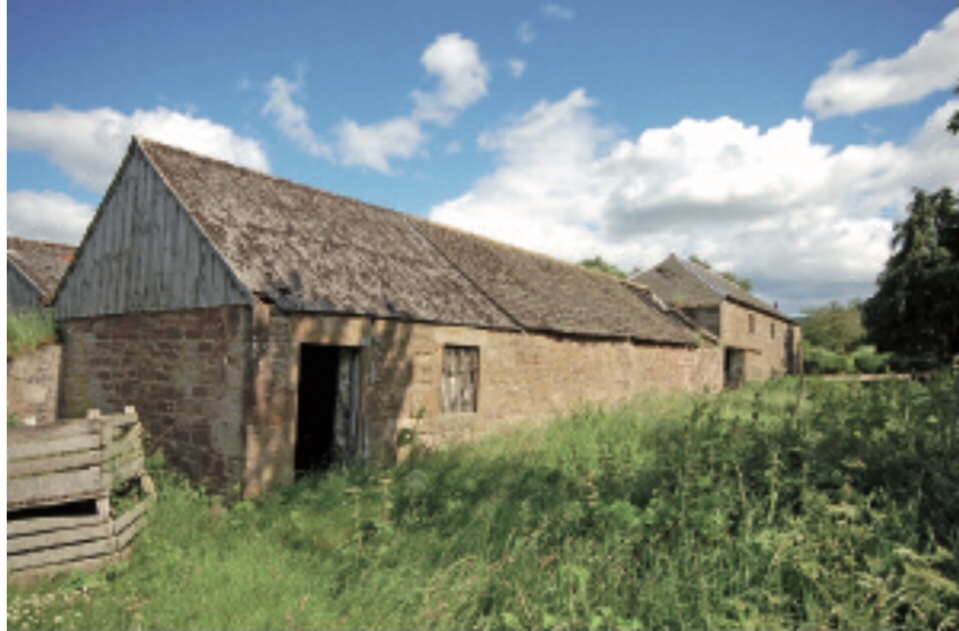
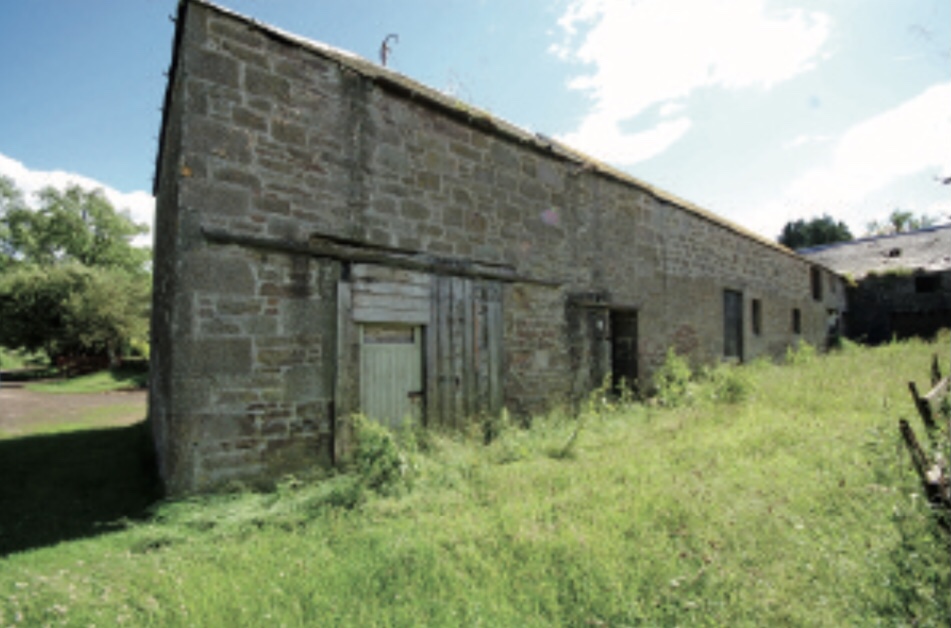
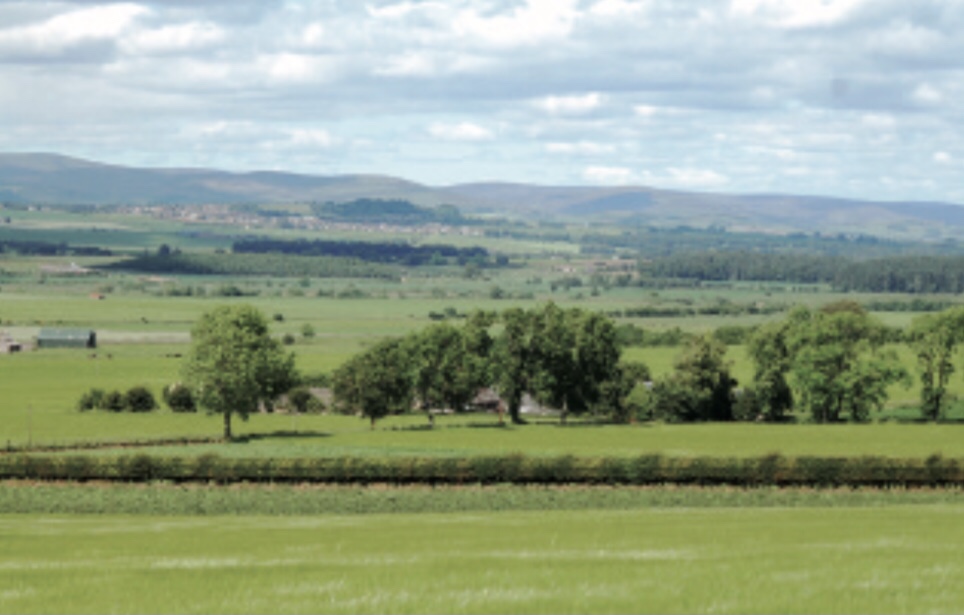
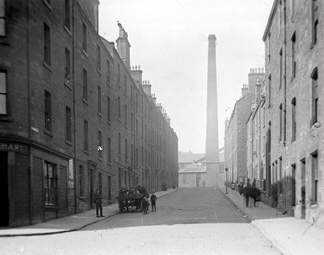
 Breaking the Fetters