There is a wonderful scene in the 1981 film ‘Reds’, the unlikely Hollywood epic about the American left and the impact of the Russian Revolution. Warren Beatty plays John Reed, the author of the definitive eyewitness account of the events in Petrograd ‘Ten Days That Shook the World’. Early on the film, Reed has been invited to speak at a Democrat fundraising dinner about the conflict that has recently engulfed Europe and the question as to whether America should get involved. In their evening dress the attendees drip wealth, although it’s concerned, liberal wealth. Reed is asked, “What is the war for?” The audience are quietly expectant awaiting an impassioned speech about fighting for freedom. They are disappointed. There is silence. Reed, shuffles awkwardly to his feet, looks around the room and replies, “Profits,” before sitting down. It was just such a position that Bob took when addressing a large crowd in Dundee on the day the First World War broke out – though he put it less succinctly but perhaps more forcefully:
“Whatever else may transpire in the coming war, you will all learn in the course of it or in its aftermath that it is a capitalist war. It is not worth sacrificing the bones of your domestic cat, or your pet canary, even less those of your husbands, brothers and sons.”
Bob recognised that many ordinary people joined up for the slaughter not due to patriotic fervour but simply because a soldier’s wage together with the separation allowance for wives was better than a labourer’s earnings. He also saw that the 1915 Munitions of War Act had the effect of ‘handcuffing the workers’ eroding what little employment rights trade unions had fought for. As the war progressed and the supply of young factory and agricultural workers used as cannon fodder began to dry up the government began conscription. Inevitably Bob involved himself with a myriad of organisations in the movement against this and also inevitably, though pushing forty, he was himself eventually conscripted in 1916. Those who refused to fight were tried in civil courts and handed over to the military authorities and if they still refused they were court martialled and sent to prison. He didn’t get out until 1919 months after the war ended. In that time there were three further court martials and he got to know Wormwood Scrubs, Calton and Dundee Gaols and the cells at Edinburgh Castle very well. As I’ve said elsewhere on this site these articles aren’t about hero worship but Bob’s stand does make me proud.
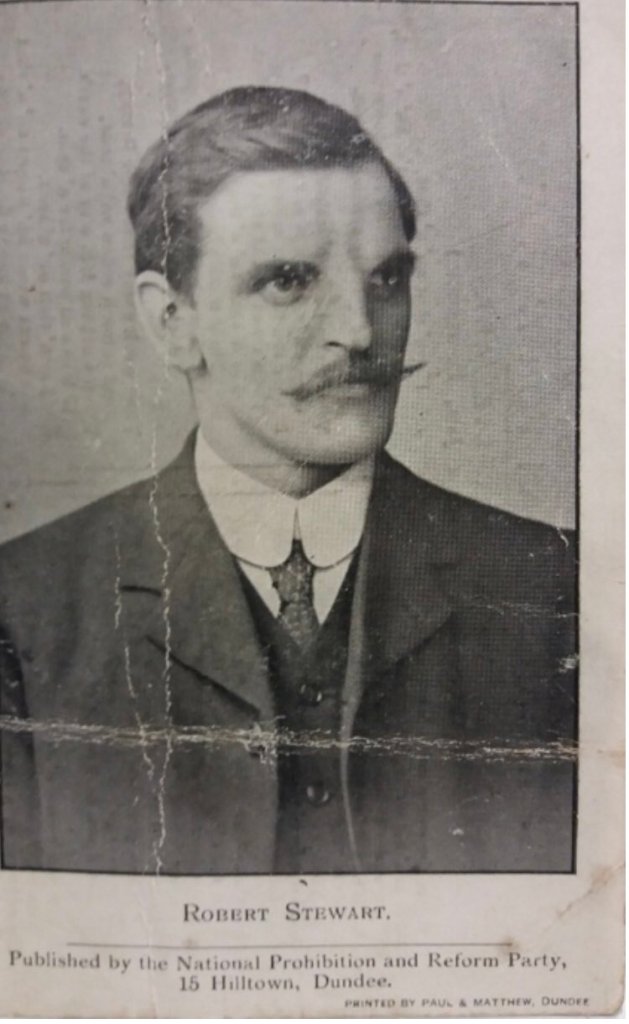
During this time Bob wrote the poems which would be collected in ‘Prison Rhymes’ which were sold to raise funds for his socialist National Prohibition and Reform Party. The photographs that accompany this piece are of a postcard featuring one of the verses included in that pamphlet, an anti-war version of Robert Burns’ ‘A Man’s A Man For A’ That’. Many thanks to Graham Ogilvy who brought them to our attention on Twitter.

Alan Stewart.
 Breaking the Fetters