Comrades: William ‘Bill’ Stewart

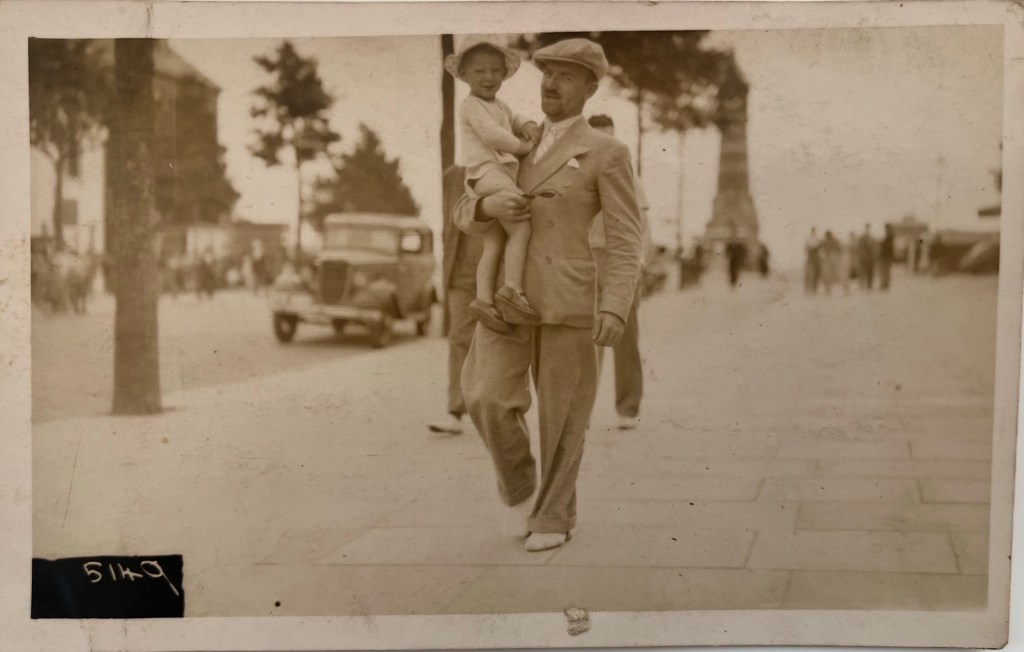
William, the eldest son of Bob and Margaret Stewart, was born in 1903. He was our grandad. He died in 1978 when I was four and so I have few memories of him but those that I do are incredibly vivid. He was a warm, kind and gentle man. This impression has only been strengthened by the many letters and photographs he left behind. Every new detail I come across makes me wish I’d known him longer and I don’t know whether it’s his or Bob’s story I’d rather tell.

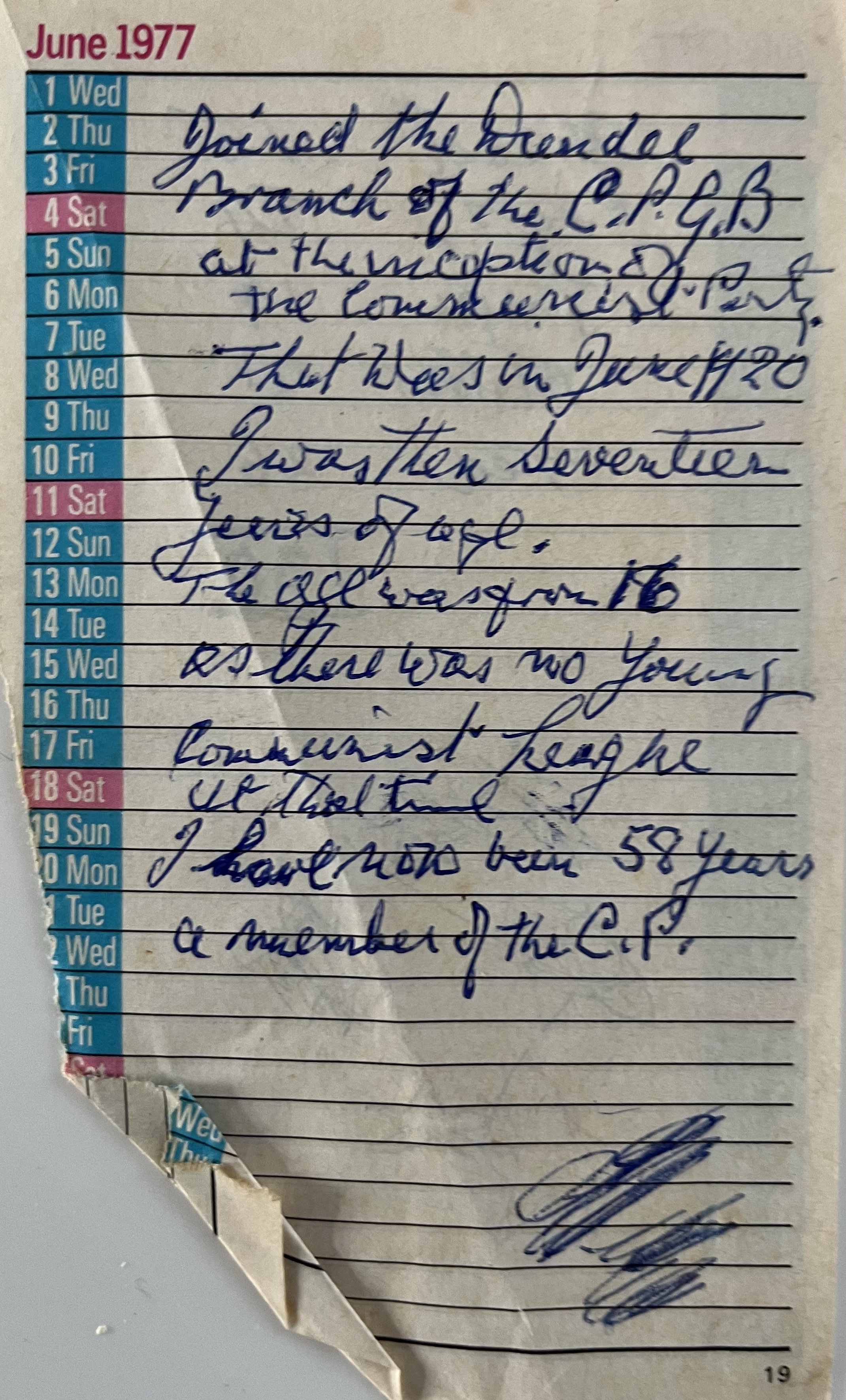
Like his father, he joined the Dundee Branch of the Communist Party of Great Britain on its inception in 1920. He was 17 and remained a card carrying member for the next 58 years until his death. It would have been his commitment to these ideals and presumably family connections that led to him working for ARCOS during the earliest years of the Soviet Union’s existence. Bill worked on merchant steamships sailing from British ports to Odessa and Leningrad progressing from cabin boy to chief steward on the way. ARCOS – the All Russian Co-Operative Society was the body responsible for facilitating Anglo- Soviet trade in the wake of Lenin’s New Economic Policy. MI5, quite understandably, regarded it as a front organisation for espionage and other subversive activities and it was raided and shut down in May 1927. Britain then broke off all diplomatic relations with the Soviet Union.

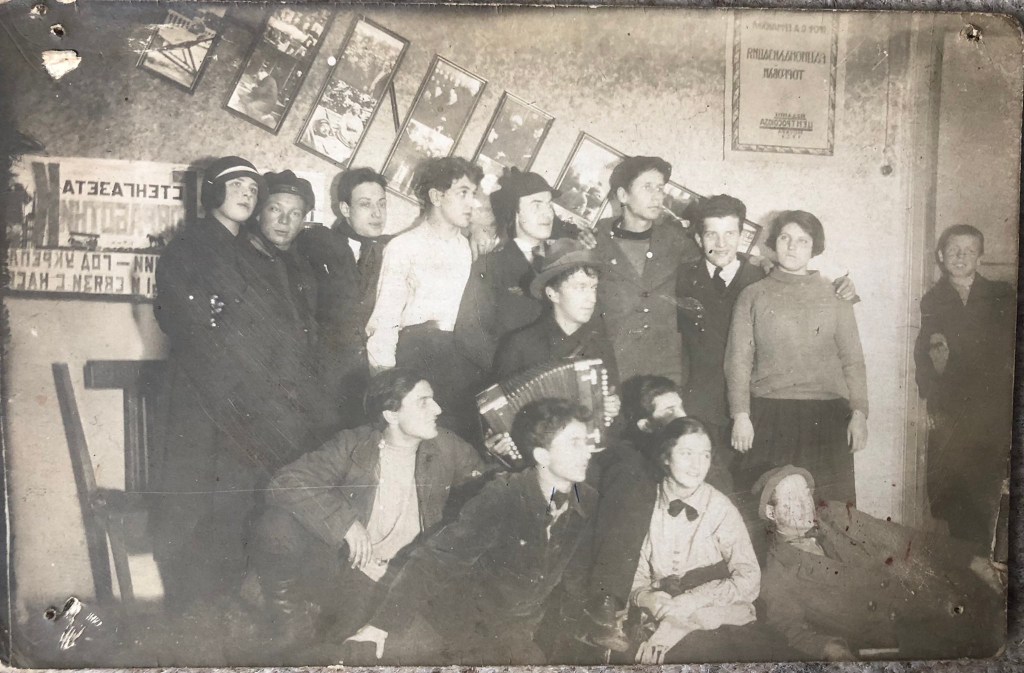
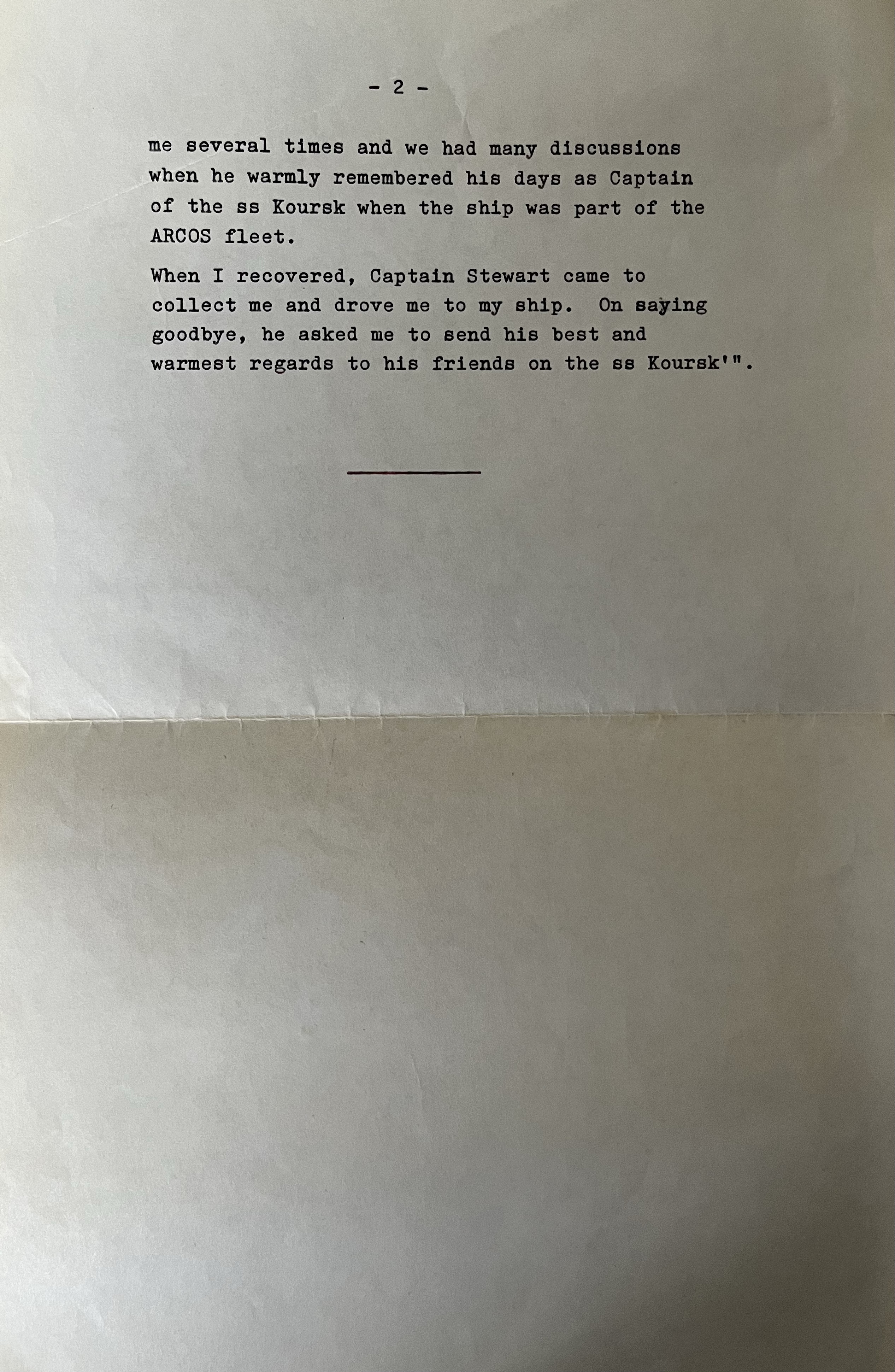
However, it is not the idea of espionage that interests me particularly. Still less the movement of textiles, timber and coal across the Baltic to the benefit of British commerce. It is this photograph that I found amongst hundreds of others in an old suitcase in my mother’s loft. A lively group of young people assembled in a shabby room adorned with agitprop posters and photos of Lenin. Their style of dress ranges from the bohemian to the Bolshevik. The majority of the group are looking towards their left- it appears that someone else is taking a group portrait while a second photographer caught this image from another angle. A couple of the figures stare out in other directions in slight confusion. Despite this there is a distinct sense of that much maligned word ‘comradeship’. One of the young men carries an accordion and I suspect that there has been quite a bit of drinking going on. A much younger boy looks on grinning in the doorway. I love this photograph.

Bill Stewart and the Russian Communists.

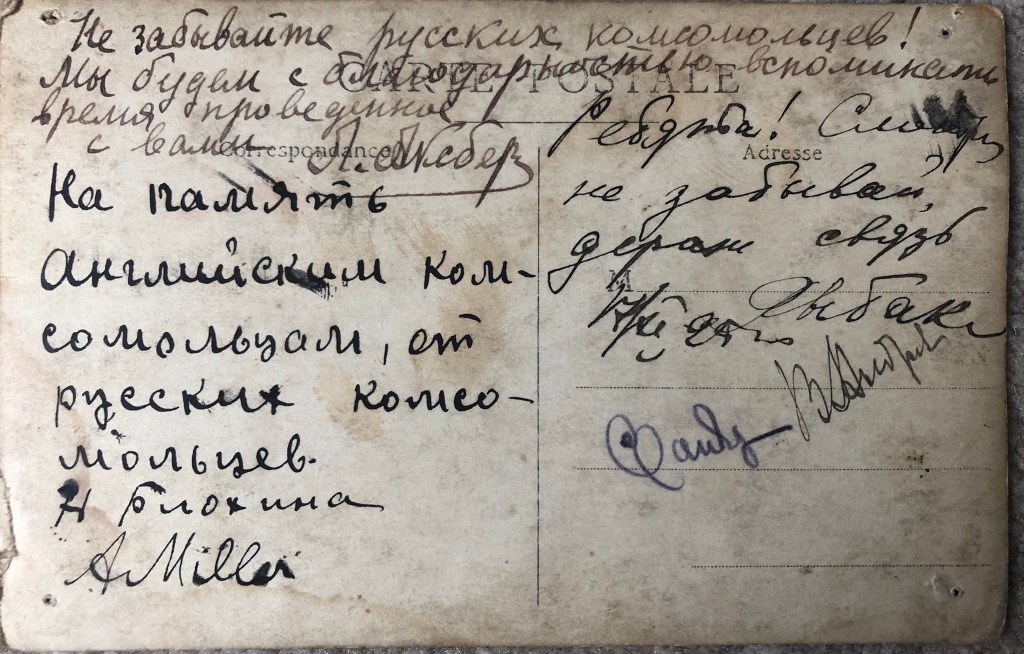
At the centre, in the back row is my grandfather. He’s the one wearing the budenovka- the distinctive early headgear usually worn by the troops of the Red Army in the 1920s. He looks like he’s having a good time. There is some writing on the back which explains that the picture features Russian and English communists with the affectionate declaration, “Don’t forget the Russian young communists! [Komsomoltsiev]” This is accompanied by signatures from several of those gathered there. It must have been a gift to Bill and it appears to have pinned up as a memento to serve as a reminder of his younger days.

“Don’t forget the Russian young communists! [Komsomoltsiev]” Thanks to Maurice Casey for the translation.

It’s hard enough to imagine your parents in their youth let alone your grandparents and my hearts bursts for grandad when I look at this image. It marks him out as someone who, in contrast to my own mundane life, had adventures. Striking out to places far away from home carried away in a moment in history. I’m quite jealous of him to be honest. How on earth did he end up there? When you think of the USSR youthful optimism and idealism is far from what first comes to mind but it’s certainly present in this image captured almost one hundred years ago. But, as with any photograph of the young when the subjects are long dead, there is melancholy too. Whatever happened to Bill’s companions, particularly the young Russians, in the years that followed? I fear for them.

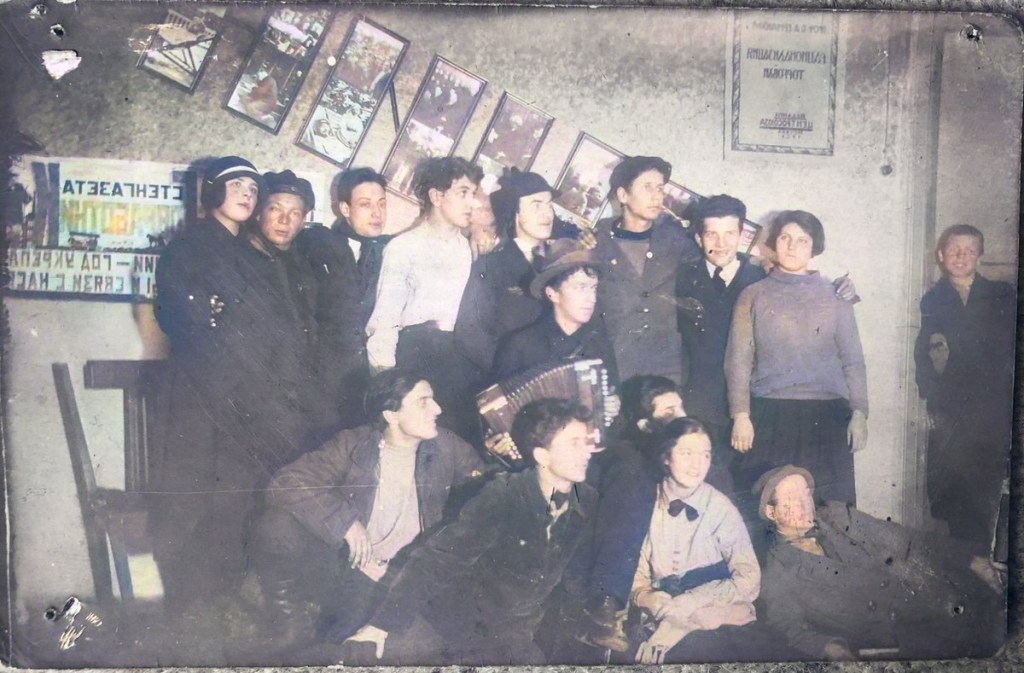
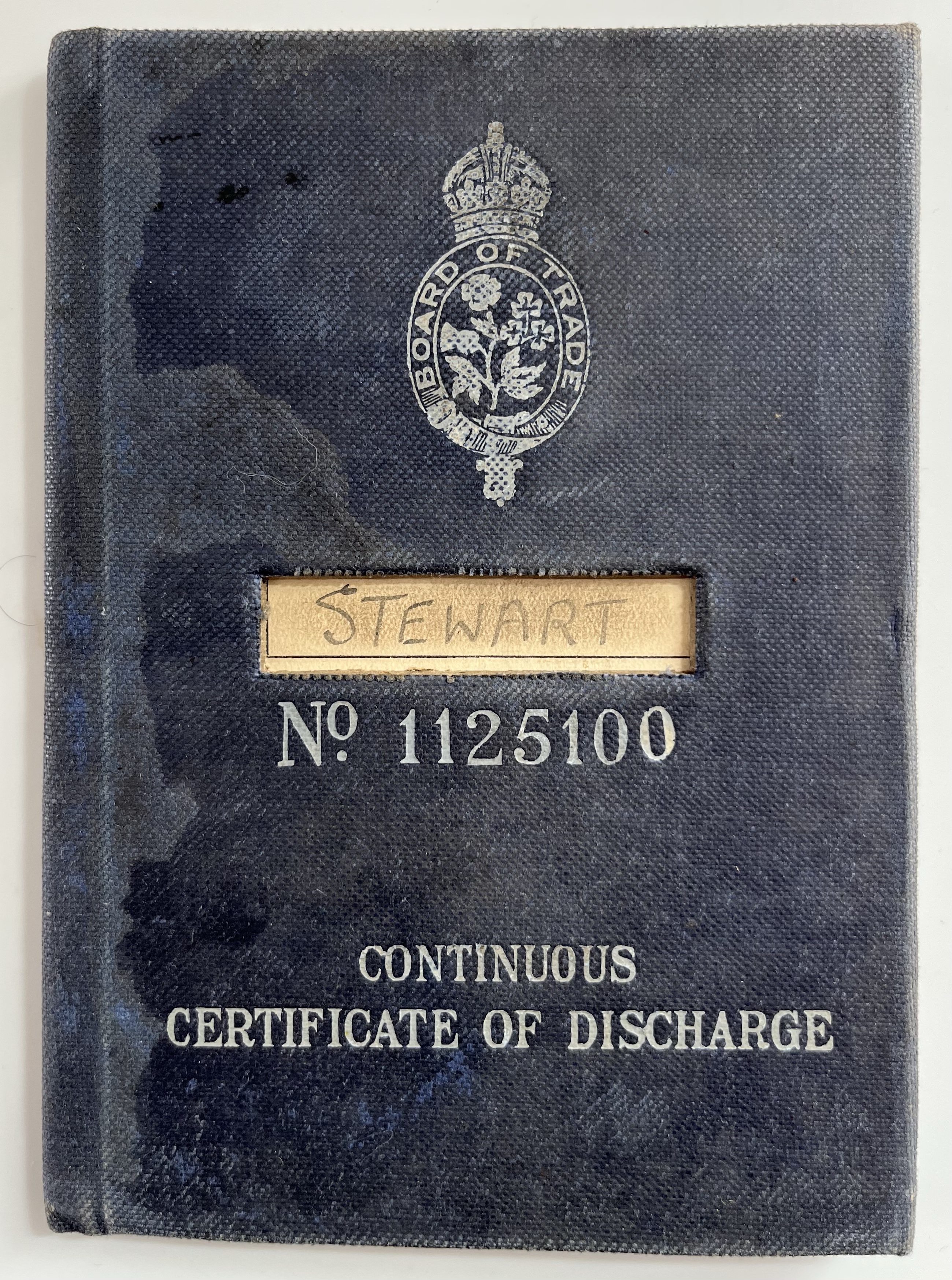
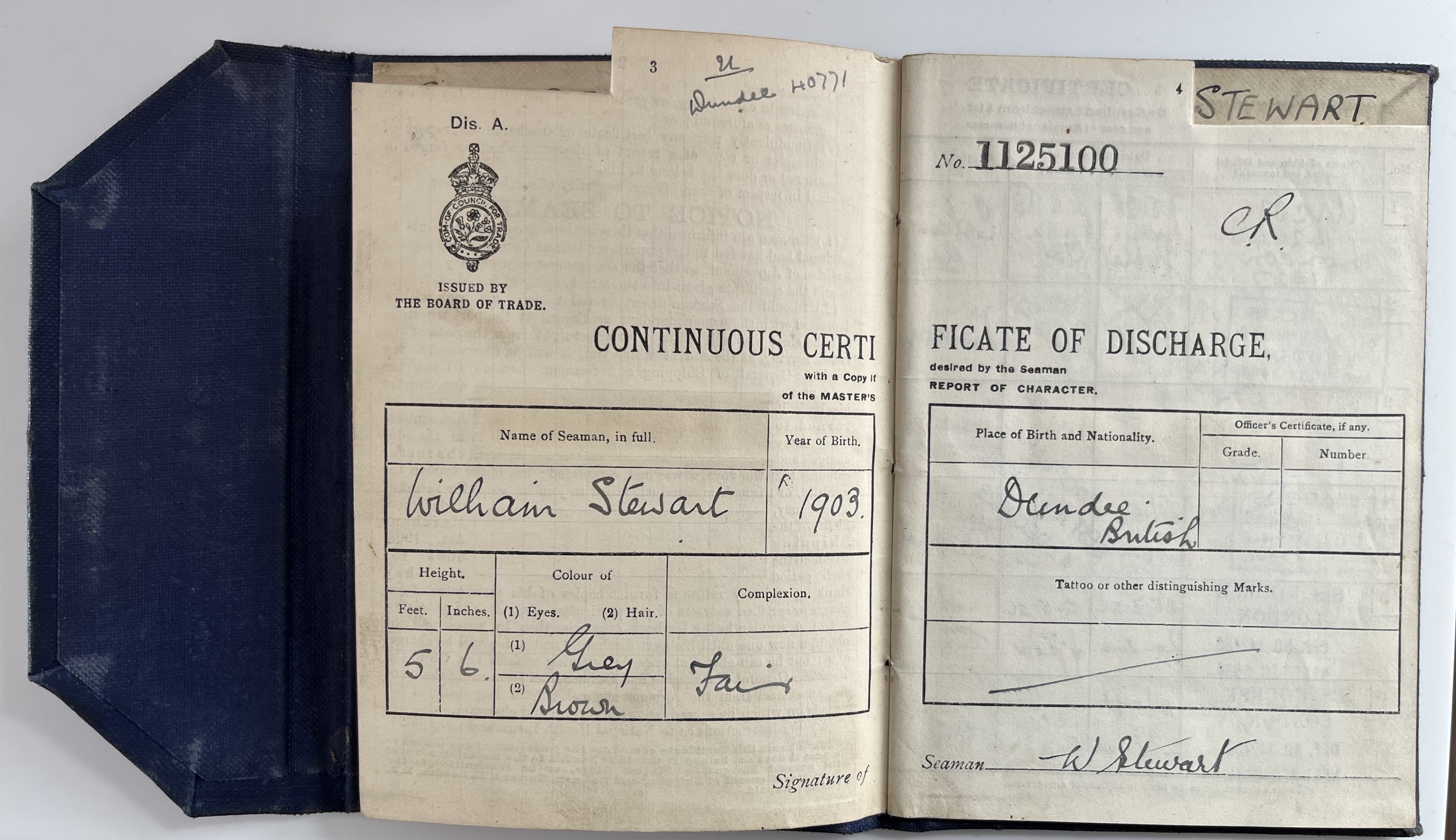
When I first came across the photograph I had the no idea of the circumstances surrounding it or when and where it was taken. The first clue was finding Bill’s ‘Continuous Cerificate of Discharge’- the log book that records the various voyages and their destinations. It would definitely have to have been taken between 1925 and 1927. However, it was finding a small battered autograph book that belonged to Bill that narrowed it down further. The pages are dotted with various signatures and messages in Cyrillic script from friends and comrades my grandfather met on his journeys. Yelena McCafferty of http://www.talkrussian.com provided the translations and the picture became clearer. The photograph was likely to have been taken around October or November 1925 while the SS Koursk, where Bill was working as an assistant steward, was docked at Leningrad. The messages reproduced below describe how Bill and his colleagues met a group of Russian members of the Kosomol during celebrations of the 8th anniversary of the October revolution and struck up a friendship. There is a sense of the Russians eager to know how the proletarian struggle is faring overseas and much talk of Britain working towards its own revolution which, of course, is inevitable and imminent. In the light of what happened in the years that followed I find it all incredibly moving.

Alan Stewart.

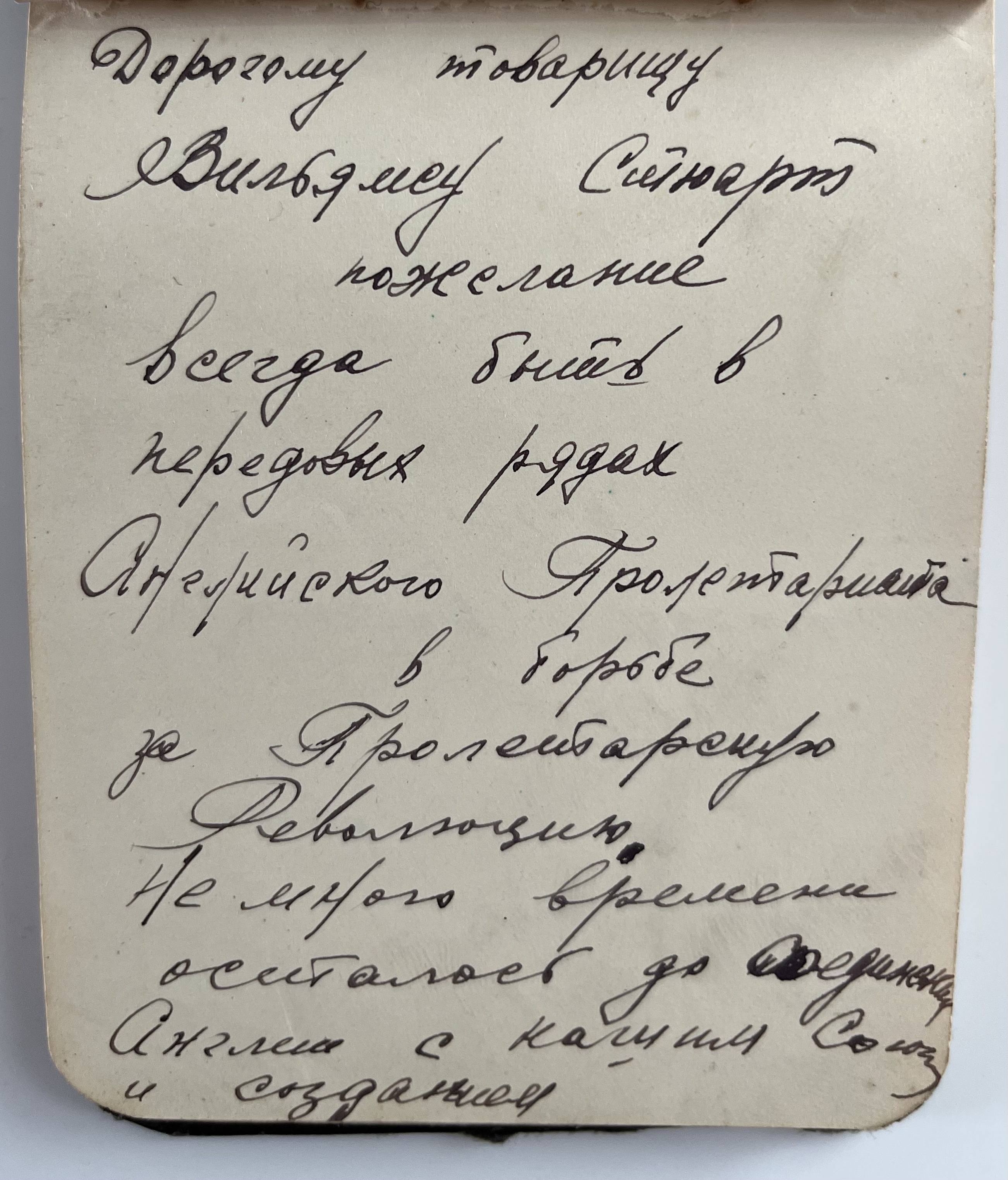
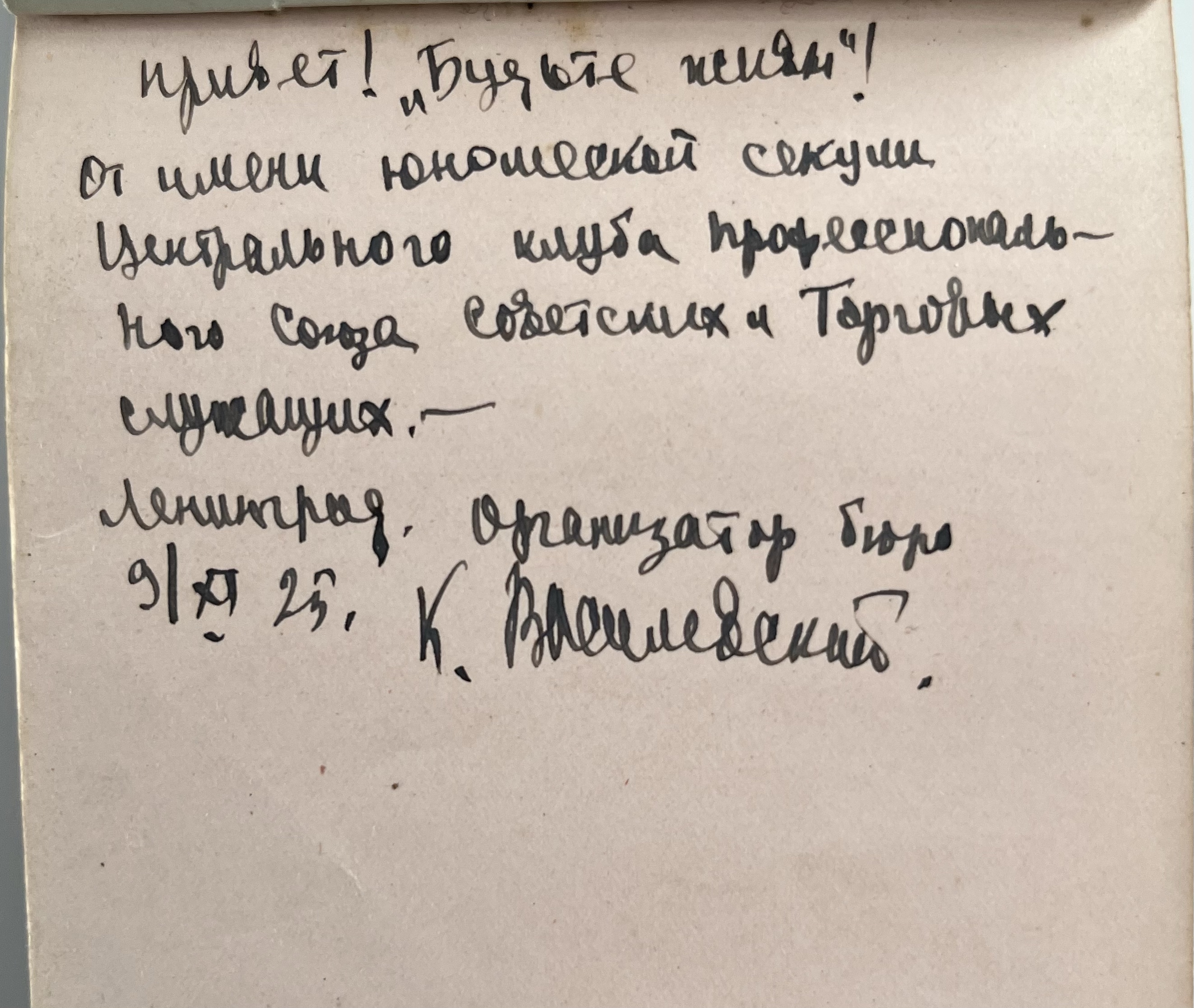
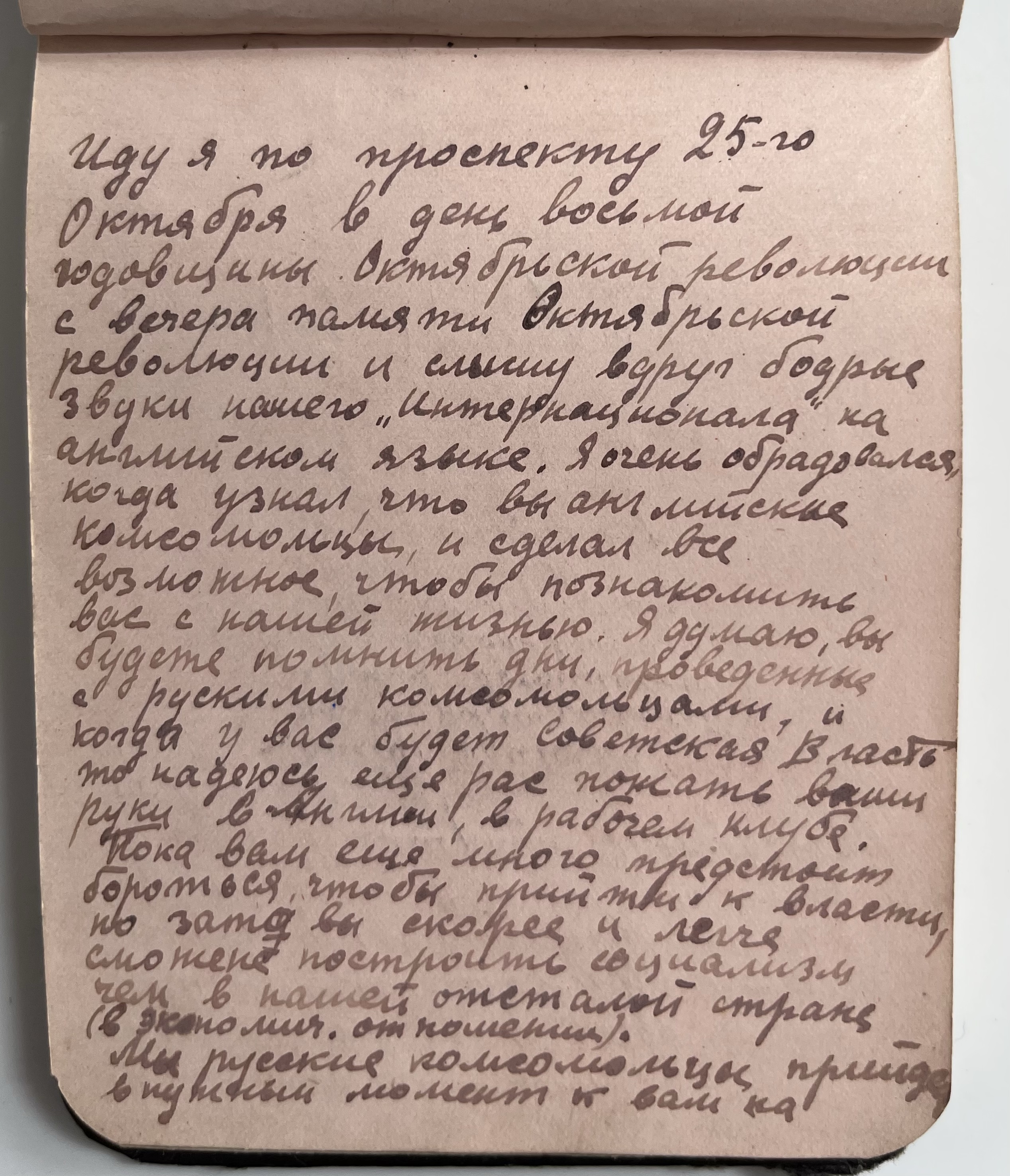
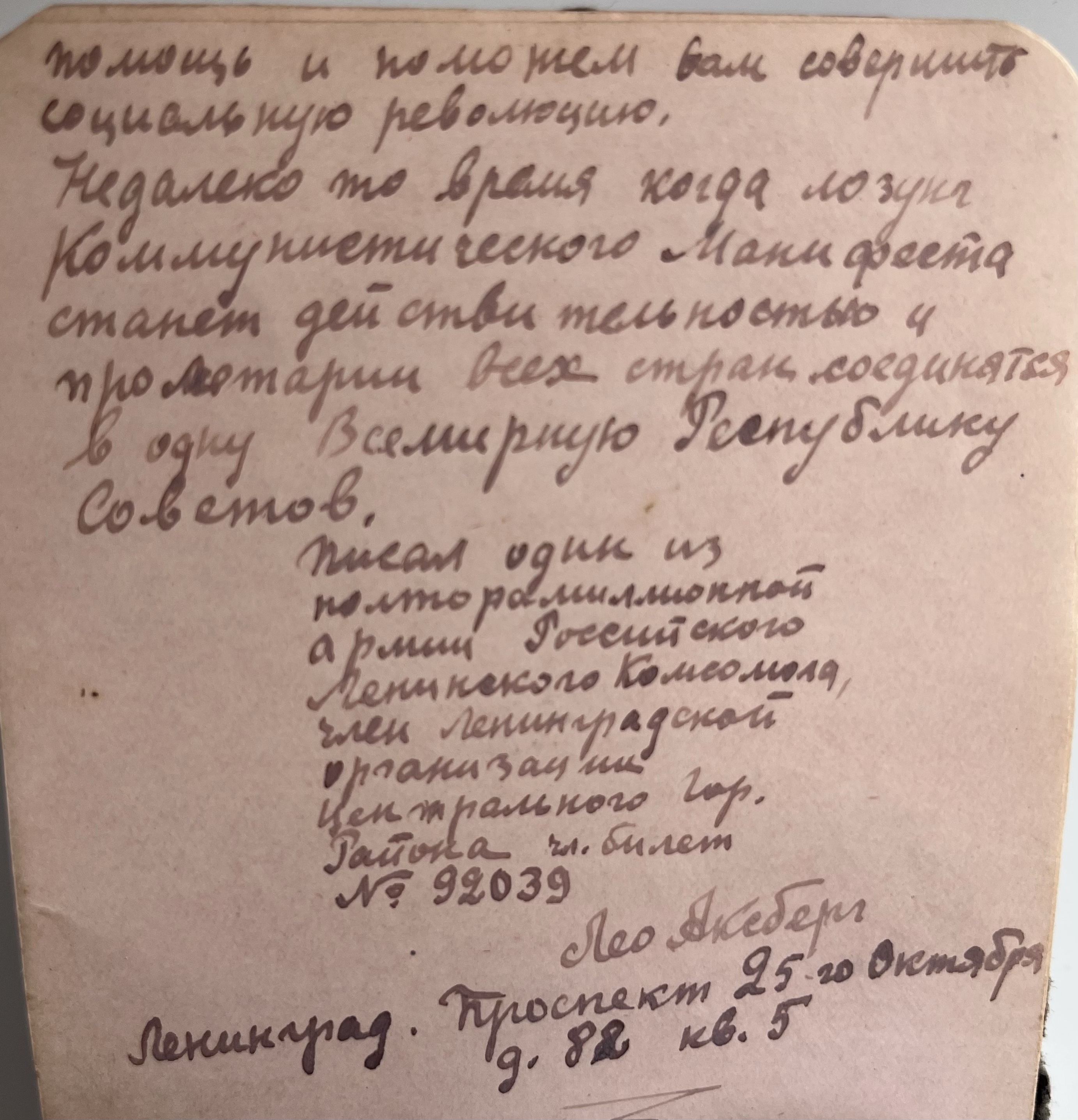
William Stewart’s autograph book.

Wishing dear comrade William Stewart to be always in the leading line of the English proletariat fighting for the proletarian revolution. It’s not long until England is united with our union and until the creation of one powerful Union of Soviet Socialist Republics.

[Signed]

Flat 6, 11 Voskresensky Pr., Leningrad

Dearest comrade,

It was so joyous for us, Komsomol members from Leningrad to see you, messengers of England’s youth, that England we so often see glimpses of in the news in our newspapers but which in essence we know so little about.

Somehow it was particularly joyous to see in you the signs of being relentless fighters, healthy in both spirit and body. You are not yet the powerful Lenin-like party, but you are a wonderful material, fire bricks which will be used to make it. When in the place of a group of young, stubborn Komsomol members, in the place of a small working league comes a broad, mass, proletarian Bolshevik party – then your cause will win. Until then we will bring this day closer together. We will be proud to see that you have found something to learn from our way of life and work. May your visit be an initial point in our closely-knit connection, friendship, correspondence. Please write to us about the way you live, work, what’s happening in Komsomol, about the progress of your work in the unions, work cells, printed press, among farming community. We will write to you everything you are interested in.

Hello! “Stay alive”!

On behalf of the youth section of the Central Club of the Professional Union of Soviet and Clerical Employees.

Leningrad. Bureau Organiser.

09.11.25 K. Vasilevsky

I am walking on Prospekt 25 Oktyabrya on the 8th anniversary of the October revolution, from the commemoration evening in honour of the October revolution and suddenly I hear energetic sounds of our Internationale in English. I was very happy to find out that you are English Komsomol members and did my best to show you our way of living. I think you will remember the days spent with Russian Komsomol members, and when you have Soviets in power I hope to shake handswith you once again in England in a workers’ club. So far you have a lot of fight on your hands to reach power, but you will be able to build socialism quicker and easier compared to our backward country (in the economic sense). We, Russian Komsomol members, will come to help you when needed and will help you to carry out a social revolution.

It’s not long until the slogan of the Communist manifesto becomes reality and the proletarians of all countries join in one World Republic of Soviets.

Written by one of the army of a million and a half Russian Lenin Komsomol members, a member of the Leningrad Organisation, Central City District, Membership card №92039.

Leo Aksberg

Flat 5, 82 Prospekt 25 Oktyabrya, Leningrad

‘Worker’s of the World Unite!’

Postscript

Here’s a few items I wanted to get into the main article but they wouldn’t quite fit:

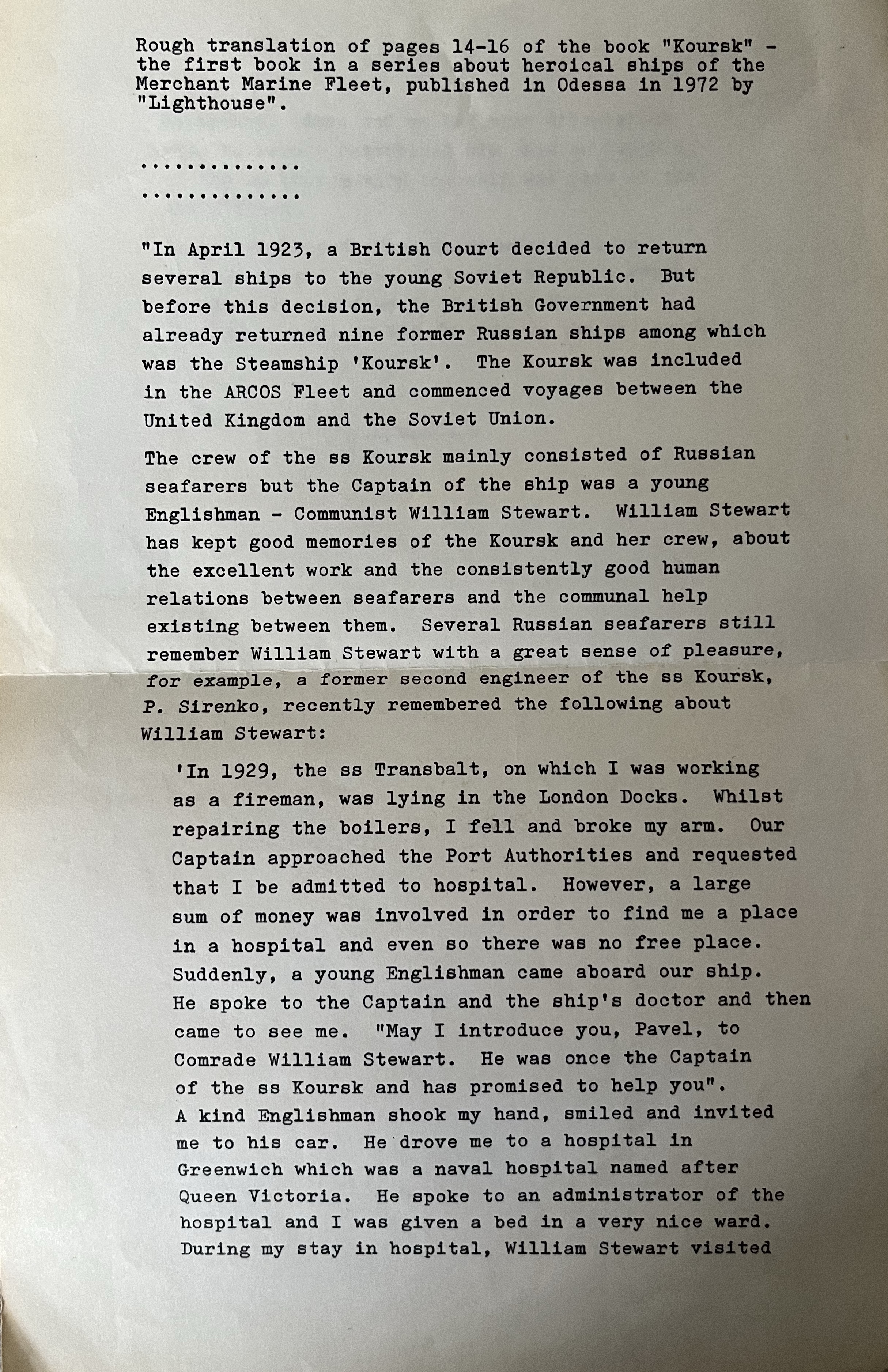
Bill obviously made firm friends on these trips. Here’s a translation from a book on the SS Koursk published in Odessa in 1972 in a series about ‘heroical ships of the Merchant Marine Fleet’. I found it amongst all the jumble of letters and documents I’ve been sifting through. I think the translation is, as the writer admits, only rough as I don’t think Comrade William Stewart ever reached the rank of captain.

In April 1923, a British Court decided to return several ships to the young Soviet Republic. But before this decision, the British Government had already returned nine former Russian ships among which was the Steamship “Koursk’. The Koursk was included in the ARCOS Fleet and commenced voyages between the United Kingdom and the Soviet Union.

The crew of the SS Koursk mainly consisted of Russian seafarers but the Captain of the ship was a young Englishman – Communist William Stewart. William Stewart has kept good memories of the Koursk and her crew, about the excellent work and the consistently good human relations between seafarers and the communal help existing between them. Several Russian seafarers still remember William Stewart with a great sense of pleasure, for example, a former second engineer of the SS Koursk, P. Sirenko, recently remembered the following about William Stewart:

“In 1929, the SS Transbalt, on which I was working as a fireman, was lying in the London Docks. Whilst repairing the boilers, I fell and broke my arm. Our Captain approached the Port Authorities and requested that I be admitted to hospital. However, a large sum of money was involved in order to find me a place in a hospital and even so there was no free place. Suddenly, a young Englishman came aboard our ship. He spoke to the Captain and the ship’s doctor and then came to see me. “May I introduce you, Pavel, to Comrade William Stewart. He was once the Captain of the SS Koursk and has promised to help you”. A kind Englishman shook my hand, smiled and invited me to his car. He drove me to a hospital in Greenwich which was a naval hospital named after Queen Victoria. He spoke to an administrator of the hospital and I was given a bed in a very nice ward. During my stay in hospital, William Stewart visited me several times and we had many discussions when he warmly remembered his days as Captain of the SS Koursk when the ship was part of the
ARCOS fleet.

When I recovered, Captain Stewart came to collect me and drove me to my ship. On saying goodbye, he asked me to send his best and warmest regards to his friends on the SS Koursk'”

Colourised version of the British and Russian young communists.
Another entry in the autograph book- ‘To the Youth, the future- Sam Brasonovitch, Odessa.’ I love this.
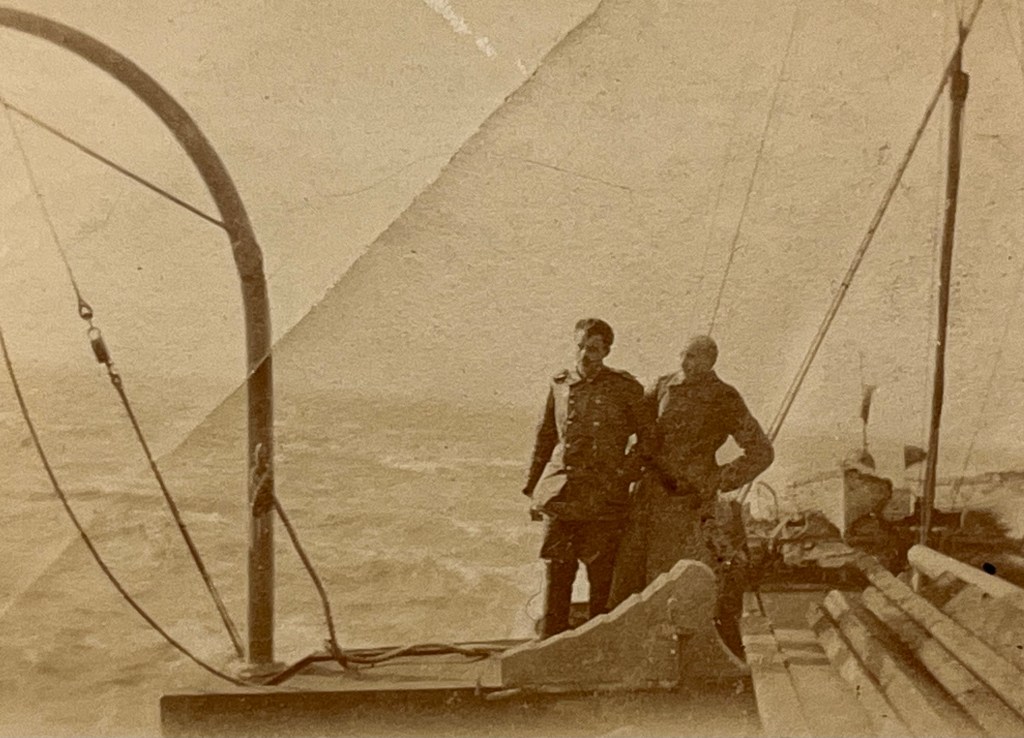
This is a tiny photograph that I’ve magnified here. I presume it was taken either on the SS Arcos or the SS Koursk. I had thought that the figure at the front was Bill Stewart but now I’m not so sure.

Prison Rhymes 4: Tune- ‘O Come All Ye Faithful.’

Communists in London celebrating May Day in 1928 (www.rarehistoricalphotos.com)

‘Prison Rhymes’ was first published in 1919 order to raise money for Bob’s nascent Prohibition and Reform Party. This organisation, which mixed his fervour for the temperance movement with that of socialism, formed after he his cut his teeth working for Edwin Scrymgeour’s Scottish Prohibition Party. The reason for the split was simply because of Scrymgeour’s ‘religious prattling’. He was too much of a ‘Holy Joe’ and that was an anathema to Bob.

However, that’s not to say that Bob rejected the Bible entirely. He became more and more familiar with it after long spells in jail with the good book as compulsory reading. In his opinion the Bible could be considered, “a very valuable book for left wing propagandists.” Given that several of the verses in ‘Prison Rhymes’ are socialist adaptations straight from the pages of ‘Hymns Ancient and Modern’ it seems that Bob wasn’t averse to a rousing singsong either.

Today’s poem, as is obvious, from the title is a rewriting of the popular Christmas carol. However rather than the birth of the Messiah it celebrates something closer to Bob’s heart- International Worker’s Day. In truth, this is one of the weaker poems in the collection. However, I do think it’s worth reproducing indicative as it is of the links between faith and communism.

Tune- ‘O Come All Ye Faithful.’

Lo! on the greensward, romp the men and maidens,
Oh come ye that labour
For mankind’s advancement,
O haste ye, O haste ye, afield today,
O, come let us be joyful,
This May Day.
Long, long have ye laboured
O’er the dismal valley,
Through swamp and morass, a darksome way:
Now shines the sun forth, lightning fairer pathway.
O, come let us be joyful,
This May Day.
Sing, sing in glad chorus 
Of toilsome journey ended,
Of light, love, and laughter upon our way;
No master serve we, each to each is brother.
O, come let us be joyful,
This May Day.

Comrades: Henry Sara

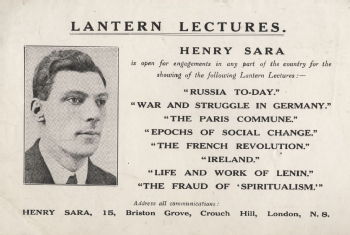
Leaflet advertising Henry Sara’s Lantern Lectures (Warwick Modern Records Centre).

Late last year I was contacted on Twitter by someone who runs the Warwick Modern Records Centre account who told me they thought they had some lantern slides of Bob Stewart in Russia in 1924 – the time he was on the Executive Committee of the Comintern. They were part of the Henry Sara collection – someone I had never heard of before. A brief biography apppears on their website:

“Henry Sara (1886-1953) was attracted early in his life to social ideals, and during his twenties became active within the small British anarcho-syndicalist movement. With the advent of the First World War in 1914 Sara aligned himself with the anti-war movement and, after a campaign of public meetings, was arrested and imprisoned in April 1916 for his refusal to serve in the army. He remained in prison until February 1919, when he was finally released after going on hunger strike.

Henry Sara joined the Communist Party of Great Britain (CPGB) in the early 1920s, shortly after its formation, and became a popular speaker within the Party, travelling widely as a representative of the CPGB and associated organisations. His international trips included a lecture tour of the USA on behalf of the Friends of Soviet Russia in 1922; and visits to Germany and France in 1924, Russia / the Soviet Union in 1921, 1925 and 1927 (in 1921, by his own account, he “smuggl[ed] away on a ship from Hull, because he wanted to see for himself”), and China in 1927, where he attended the 5th Congress of the Communist Party of China in Hankow and witnessed the beginnings of the Chinese civil war. Sara’s willingness to criticise Party leaders and association with other Trotskyist “dissidents” resulted in his expulsion from the CPGB in 1932, and he went on to become a leading figure in the British Trotskyist movement of the 1930s.”

Sara used to give lectures and talks about socialist politics and illustrate them with magic lantern slides taken, in the main, from his own travels. The slides, reproduced by the WMRC on their website are exhaustive and fascinating and I’d encourage anyone interesting in Soviet history or the broader sweep of left wing politics in the early twentieth century to view them. An absolutely exhaustive and stunning resource. You can view them here: https://warwick.ac.uk/services/library/mrc/archives_online/digital/sara/

The photos the WMRC sent me on Twitter are reproduced below. The first is a group portrait taken in Faustovo. Henry Sara is the tall, dark haired young man standing on the left while that’s unmistakeably Bob Stewart standing on the right hand side of the picture. He’s roughly my age there (47) but looks odd due to an industrial accident and too many policemen stamping on his face. His wife Margaret in the glasses is sitting on the left and the little girl by his knee I’m pretty sure is their daughter, my dad’s Aunt Nan. Years later in the late 1930s/early 40s she would have to flee Russia with her baby son after her husband was arrested as a Trotskyist. He was shot in 1941 and the full details only came out in 1956. Standing at the back is British Trade Union legend Tom Mann who I’ll be writing about later. Also in this photograph is Rose Cohen – she’s sitting next to Margaret. She was a suffragette and like my great grandad a founder member of the British Communist Party. Standing behind her is probably her soon to be husband David Petrovsky. In 1938 he was arrested and executed and later on Rose was also arrested. There was nothing anyone could do as she had given up her British citizenship. Her trial lasted twenty minutes and then she was taken out and shot. Their child was sent to an orphanage. All of this is described in Francis Beckett’s superb book ‘Stalin’s British Victims’ and in Maurice Casey’s article, ‘The Suffragettes Who became Communists’ which you can read here: https://www.historytoday.com/miscellanies/suffragettes-who-became-communists

Front Row L-R: Margaret Stewart, Rose Cohen (?), Unknown, Unknown, Annie Stewart, Bob Stewart. Back row L-R: Henry Sara, Unknown, David Petrovsky (?), Tom Mann, Unknown.

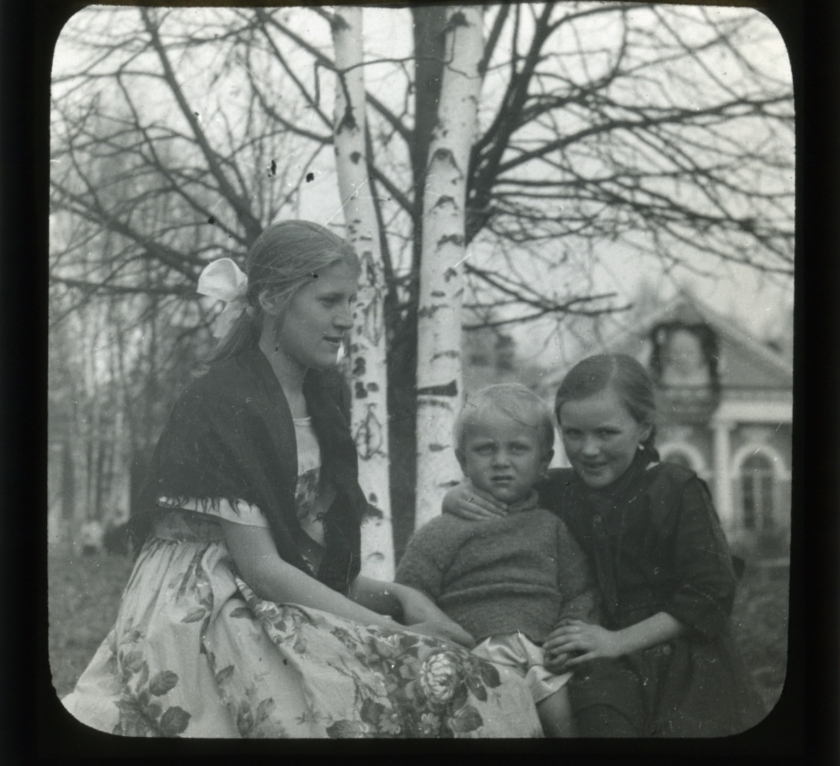
This next photograph was simply labelled ‘Nan’ and though I don’t know who the older girl and the small boy are that’s definitely Bob and Margaret’s daughter Annie ‘Nan’ Stewart aged about 11 on the right. The picture appears to have been taken in the grounds of the Pushkin School.

This image has an empty alt attribute; its file name is 9e2853d7-5854-4bad-9d0e-2355bd77411a.jpeg

Annie Stewart can also be seen in the class photo from the Pushkin School – she’s the little girl standing in the dark dress fifth from the right. Bob and Margaret Stewart can just about be spotted at the back on the left hand side.

The last slide features Bob and Margaret Stewart in Red Square visiting the grave of John Reed- the American journalist who wrote the eyewitness account of the Russian Revolution ‘Ten Days That Shook the World’.

If anyone has any more information regarding these images please do get in touch. I’d love to know more. Many thanks to the kind but anonymous person who brought them to my attention. Learning all about Henry Sara was fascinating. Thanks also to Maurice Casey who has always been so helpful.

Alan Stewart.
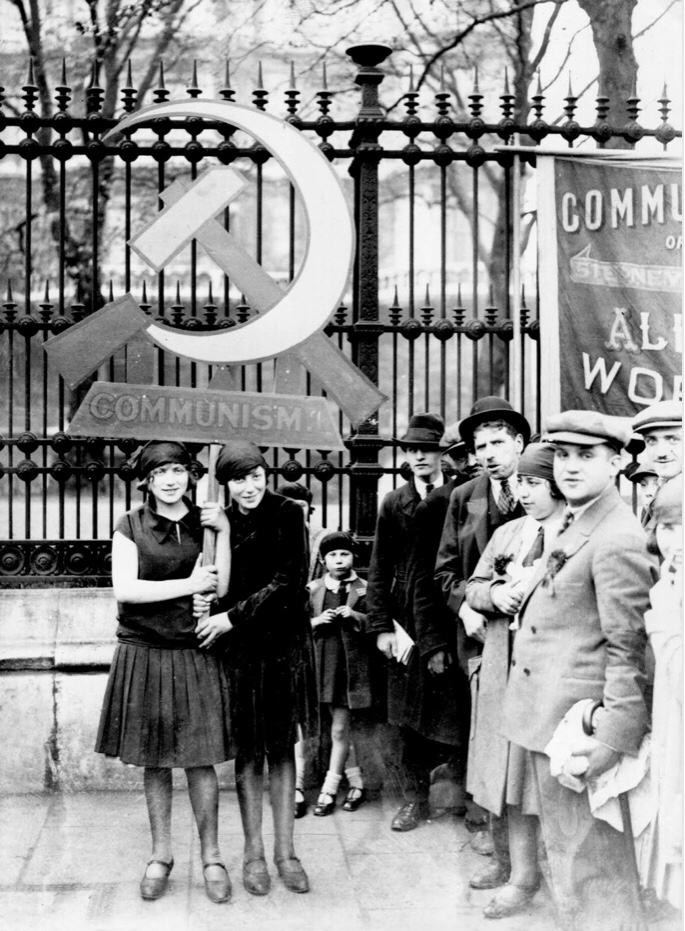
Breaking the Fetters Chapter 1: The Stewart Family.

Brief overview of Bob Stewart’s life taken from the MI5 files held at the National Archives.

I’m going to start serialising Bob’s memoirs ‘Breaking the Fetters’ on this blog as it has long been out of print. It was first published on the author’s ninetieth birthday by Lawrence & Wishart in 1967. As he was beginning to go blind during this time, the memoirs were dictated onto tape and then edited and prepared for the press by Dave and Elizabeth Bowman. The dedication runs as follows:

To the parents who begot me, William Stewart and Georgina Fraser Stewart. To my eight sisters and three brothers, a hard-working, kindly clan.

To all those who struggle to break the fetters that capitalist society has rivetted on public enterprise and social advance.

To my dear comrades the world over who form the vanguard of liberators of human kind from age-old bondage.

Finally, to my beloved wife, Margaret Lang, who in storm and stress was my loyal and loving comrade.

Chapter 1: The Stewart Family.

I was born on 16th February 1877 in the Parish of Eassie, at the farm of Balgownie in Glen Ogilvie, which is part of the beautiful How O’ Strathmore in County Angus, Scotland.

My father was a grieve (foreman) on the farm and my mother naturally worked in the fields, but to augment the small income she was also a handloom weaver, doing two jobs and rearing a family at the same time. Handlooms were in all the homes and apart from weaving for the families’ own needs, the women also worked for the textile merchants in Glamis and Forfar which are only a few miles from Eassie.

It was the small income and the Stewart family, growing both in number and appetite, that forced us to leave Eassie and seek a better means of livelihood in the town of Dundee, which was known at the time as a woman’s town, because its main industry was jute manufacture and the work of spinning and weaving was done by women.

I was two years old when the move to Dundee took place, so I was of little consequence, but my older brothers and sisters were reaching working age. The flitting to the town was made to secure employment and a bigger income for the family.

In town my father got a job as a carter with one of the delivery firms, driving a horse and lorry. There were no motors at the time. His main work was carrying raw jute, which was shipped from India in 2 cwt. bales, from the harbour to the mills. A hard, arduous job for which he was paid a mere 18s per week.

When we were children, we did not see much of my father, as he left home at five o’ clock in the morning and did not return until seven or eight o’ clock in the evening. He took with him bread, sandwiches and a flask of tea. If funds were good and he had twopence to share he would treat himself to a large bottle of ale, called twopenny, the common beer drink of the period.

My father was not a church goer, Sunday “claes” were expensive, but he religiously adhered to the Scottish sabbath as a day of rest. After six days of back-breaking toil his Sunday consisted of lying abe all day reading the newspapers.

My mother had a hard struggle to make ends meet. To feed a big family like ours, to provide the clothes, was no mean task. Our fare consisted mainly of porridge for breakfast, broth for dinner with an occasional treat of rice pudding, an evening tea of bread, butter and home-made jam. Clothes were handed down from the older to the younger children. Boots were worn only in the winter; in summer we ran barefoot.

Through all her troubles and worries my mother kept a cheery disposition. A lovely singer, she could be heard all day singing to herself as she went about her work.

I am the tenth child of twelve. I had three brothers and eight sisters. My youngest brother Willie was a carter. A hard-working, hard-drinking man. When he got drunk, generally on Saturdays, he wanted to fight policemen, an urge which on many occasions landed him in serious trouble. They say in Dundee that a drunk man is an honest man, so deep down Willie must have had a dislike of the police force- a dislike I have shared on many occasions.

Later in life I persuaded Willie to change his ways. He became a total abstainer and an excellent trade unionist. He was one of the founders of the Dundee Branch of the Scottish Carters’ association, which is now the Scottish Horse and Motormen’s Trade Union. I was quite a youth when the Dundee branch opened but gave what help I could. This was my introduction to the trade union movement.

My eldest brother Jock was a regular soldier. He served for thirty years in the army and fought in the Boer War and in the First World war. He said he was fighting for his country. My sisters used to kid him about this when he was home on leave, asking if he had got his farm yet. They said if he had been fighting for his country all these years, he was surely entitled to a wee farm out of it. No doubt he was, but like millions of other British soldiers who defended the rights of the British imperialists to exploit the world, all the land Jock ever got was the eight feet by three in which he found his last resting place. He could well have agreed with Cynicus’s famous carton of a graveyard: “Your portion: make the best of it. The Landlord’s got the rest of it.”

Brother Jim did a short spell in the Cameron Highlanders and trained in the Militia. The militias were county organisations and were used as army reserves. In times of industrial unrest, a common enough feature of these times, they were handy for the Establishment. Each county had its militia, from Aberdeenshire to the South. The training period for a militia man was usually one month, but when a man was finished in one county, he could move onto another.

Jim went one morning after breakfast and came home a year later at dinner time. In between meals he had sampled training in quite a few militias. Jim also liked his dram but differed from Jock in his drinking habits. Jock said he took his medicine regularly while Jim took his in bouts, one time drinking very heavily and then with periods of total abstinence. My horror of the booze was intensified when I spent anxious nights looking after him when he had the DTs.

My sisters, all eight of them, were hard-working lasses, weavers and spinners in jute manufacture doing a ten -hour working day and six hours on Saturday.

Betsy wed a mill ‘gaffer’ whom I taught to read and write so he that he could qualify for the gaffer’s job. She died when she was ninety-two years of age, a fully paid up member of the Communist Party. Georgina for many years peddled household goods in the country, married and had a family of twelve. One of her daughters Madge Hodgson, is a foundation member of the Communist Party and still does her share of party work. Georgina died when she was ninety years of age.

Mary had a tragic life with her husband, a roving ferocious Scotsman who was often “fou’ wi’” the booze. He was a ship’s stoker, and sailed with the Dundee whaling fleet for many years. Mary died at the age of fifty-three, the first break in the twelve.

Elizabeth was a barmaid, and finally emigrated to South Africa where I met her many years later. A handsome, capable lass who served the South African bourgeoisie well as cook or housekeeper and, I fear, imbibed much of its racial prejudice.

Maggie married a railway engine driver and a number of their family became members of the Communist Party. Jean married a carter, a grand player of the melodeon, who was much in demand for weddings. Many a merry evening was spent at her hospitable fireside.

Agnes, next in age to myself, was a mill weaver. A foundation member of the Communist Party well known in Dundee and a devoted sister and comrade, she was also for many years an active Co-op Guildswoman.

My youngest sister Annie is the only one still alive and has been in the USA for thirty years, married, with one daughter. I refrain from giving their names as it is a crime to be related to such as me in that much-advertised land of the free.

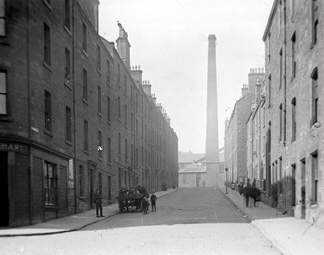
Lawrence Street, Dundee, sometime in the late 19th or early 20th century. (Dundee City Archives).

Our first house in Dundee was at 21 Lawrence Street, in a block of tenements, built like all the others, in close proximity to the jute factories. These tenements were built in flats or platforms very similar to the construction of most prisons. There were four ‘houses’, usually a kitchen with one or two rooms, on each ‘plat’. There were no lavatories, no baths or other essential amenities, but there was running water, naturally only cold.

We entered by a covered entry called a close, which led to a stair winding up to the ‘plats’, again in the best prison design. There was a ground floor and three stories which meant sixteen families to a block, many of them large families such as the Stewarts. In the courtyard stood an open midden for rubbish which was used by the males as a dry closet. The women used a pail indoors and later emptied the contents into the midden. The scavengers emptied the midden weekly, wheeled out the muck and emptied it on the street to wait for a cart to take it and its perfume for disposal.

The tenements from the other side of the street from ours were a bit more classy. They did not have the middens and had a WC on the stair landing. This we called the syrup side and our side the treacle side. Many years after we first moved to Dundee, the Stewart family managed to move to the syrup side.

I went back to the old tenement in 1962, when I was on a visit to Dundee. Eighty-three years had passed but the original tenements complete with ‘plats’ were still standing. The only change was that the midden had gone and one lavatory had been installed for each ‘plat’. That is one lavatory for four families.

Poor as our family was, we kept our heads high. In our kitchen and two rooms the males slept in one room and the females in the other and my parents in the kitchen. As both rooms led off the kitchen, however, the privacy was somewhat restricted. As some of the family married and set up on their own they left more breathing space for the rest.

Such was the Stewart family and its abode. A royal name without a royal income. A royal name without a royal residence. A hard-working family of men and women fighting for a livelihood in a Scottish textile, engineering and ship building town.

In Calton Gaol, may years later, in 1917, I wrote the following:

“In olden days, ‘tis written,
Their sires o’er Scotland ran,
Wi’ shield and spear and sharp claymore,
Made war on many a clan.

Wi’ rieving, robbing, ravaging,
They hewed their bloody way,
Until upon a throne they sat,
To wield their tyrant sway.

But pride o’ place and courtier’s grace
Are little to be trusted,
To brave the force of truth and right,
So the Stuart line was worsted.

And down the centuries grey and old,
New kings, new wars, arrangeth,
But now the Stewarts have wiser grown,
And bestial methods changeth.

Brave and free and fit to dee,
For justice truth and right,
They cannot see that these can be
Maintained by warrior’s might.

A cleaner road, though hard to tread,
They chose to travel through,
To free the earth from lust of war,
And shape the world anew.”


Bob Stewart’s Prison Rhymes.

Prison Rhymes 3: Dividends Almighty.

After the last two posts in this series I’ve decided to start putting the poems up here in the order they appear in Bob’s pamphlet. The collection opens with his version of Burns’ ‘A Man’s A Man For A’ That’ which appeared in the previous ‘Prison Rhymes’ post. Next up is this anti-capitalist effort. Just to clarify for younger readers – the LSD referred to in the poem is ‘ Pounds, Shillings and Pence’ rather than anything psychedelic. This is Bob Stewart we’re talking about, not Aldous Huxley.

Alan Stewart.
Dividends Almighty.

Holy! Holy! Holy! Dividends Almighty;
Early in the morning the workers toil for Thee,
Body, brain, and heart and soul, sacrifice to win Thee;
Oh! thou malignant, powerful L. S. D.

Holy! Holy! Holy! modern saints adore Thee,
Burying the truth and right beneath Thy golden sea,
Prophets of the warring sects in unity uphold Thee,
Oh! thou malignant, powerful L. S. D.

Holy! Holy! Holy! kings and emperors court Thee:
The fruitful earth they drench with blood in greedy chase of Thee,
The lover from the maiden conscripted is to guard Thee,
Oh! thou malignant, powerful L. S. D.

Holy! Holy! Holy! Dividends Almighty!
Although the eyes of working class Thy glories cannot see,
Toilers soon in every land will rise in wrath to smite Thee,
And end Thy dominion, powerful L. S. D.

Greetings to Bob Stewart on his 145th Birthday.

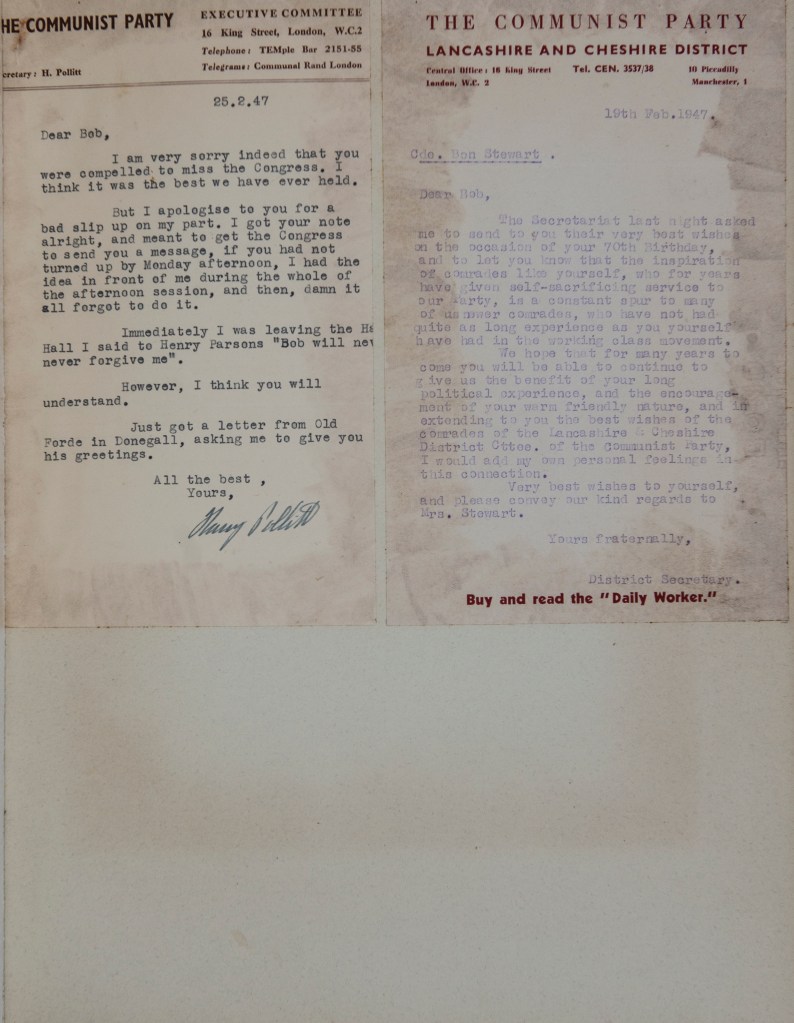
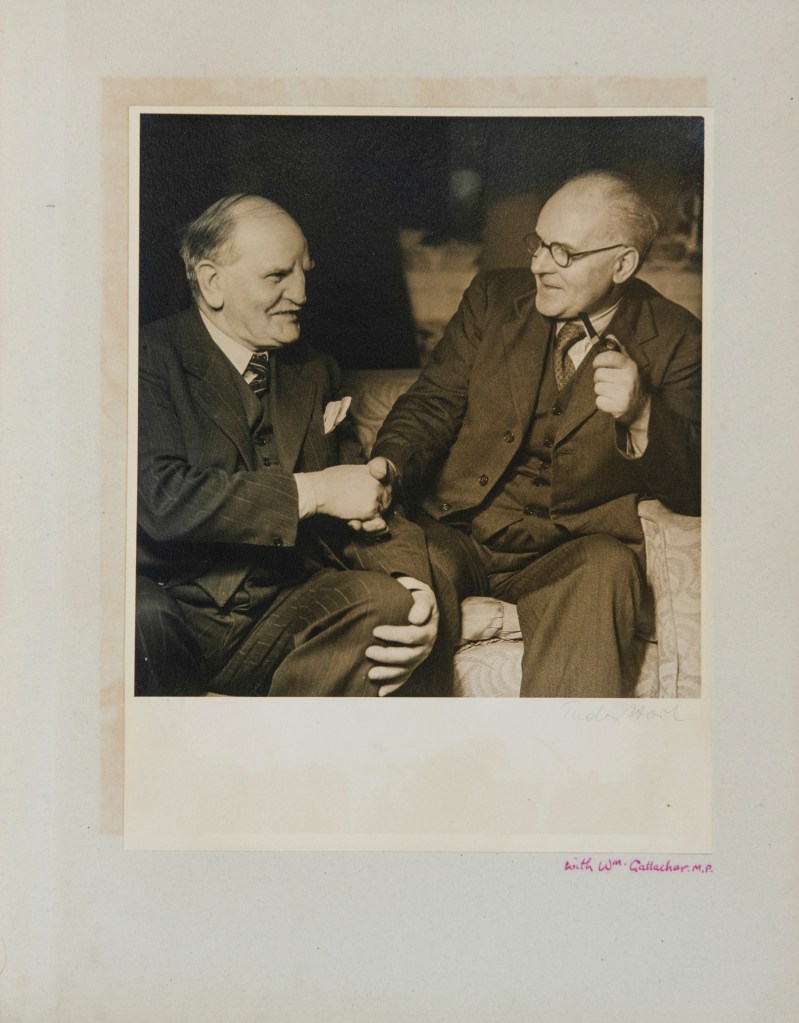
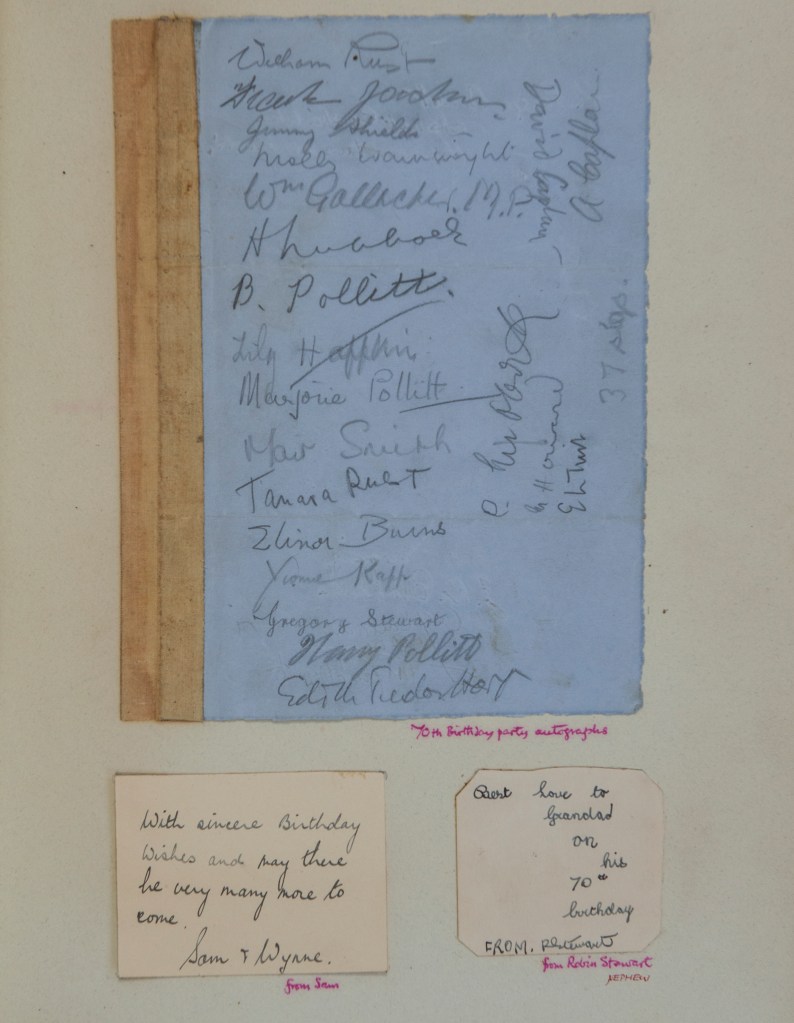
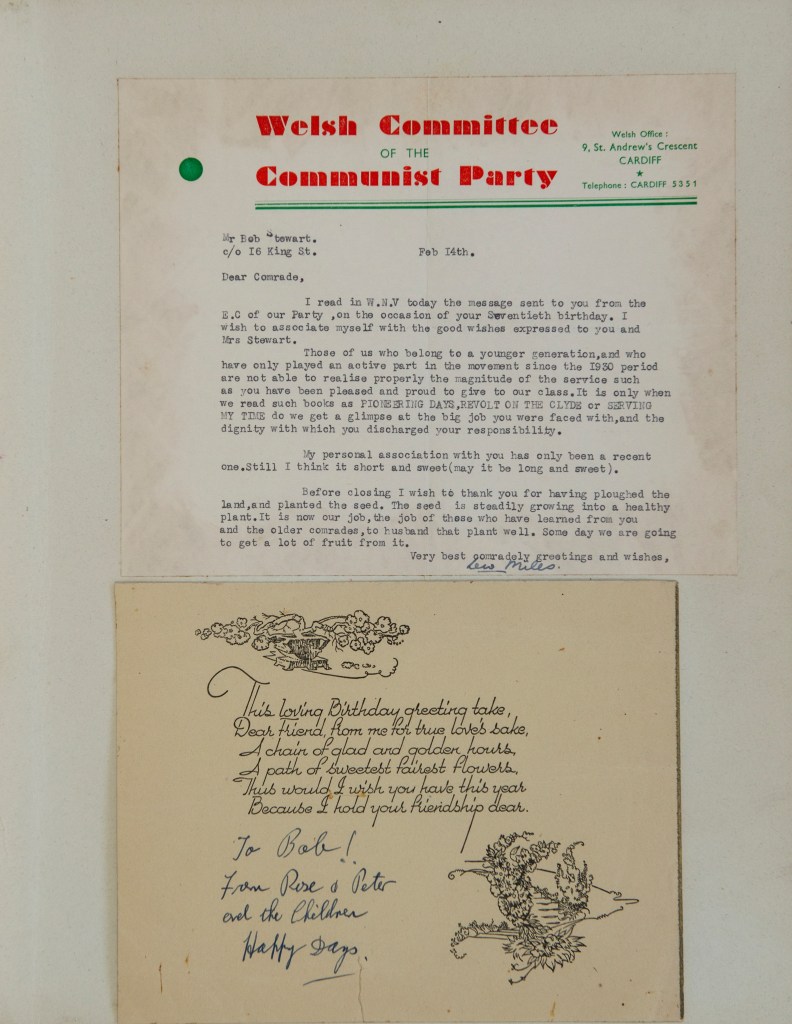
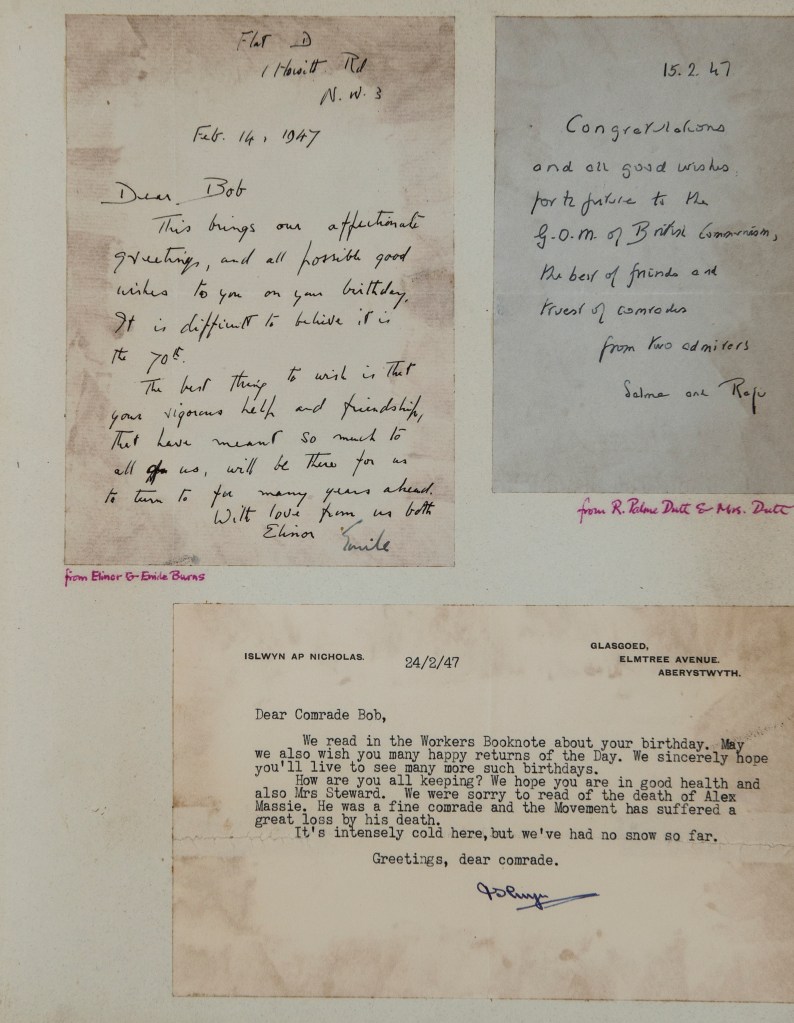
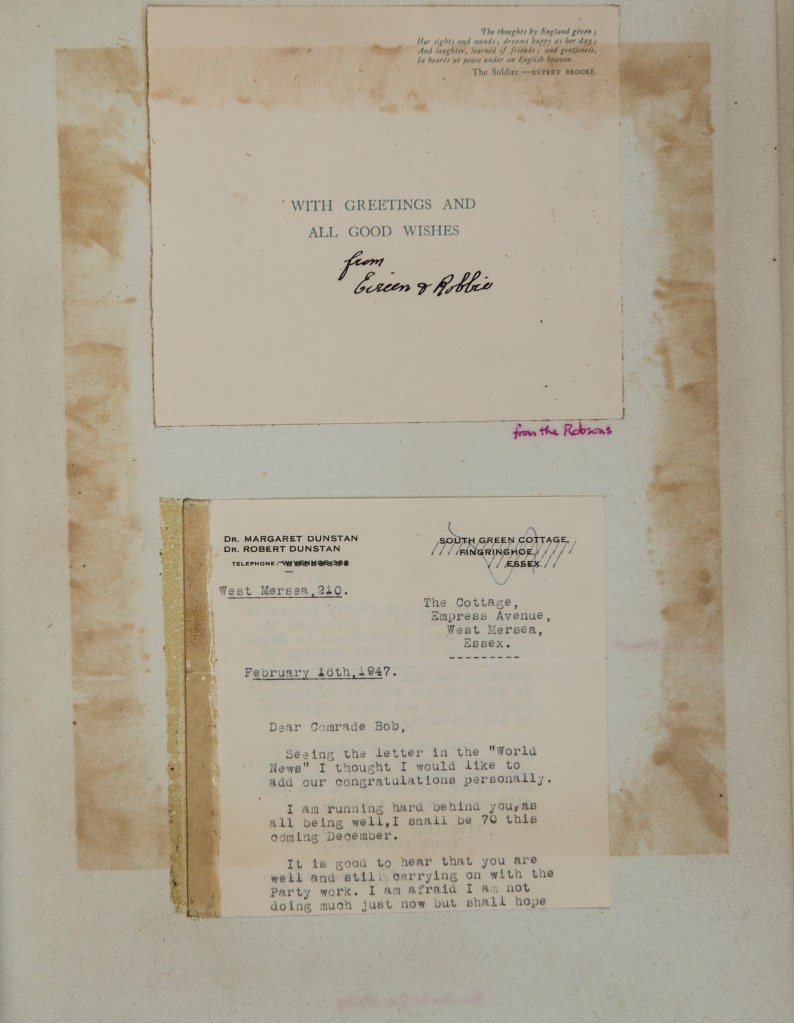
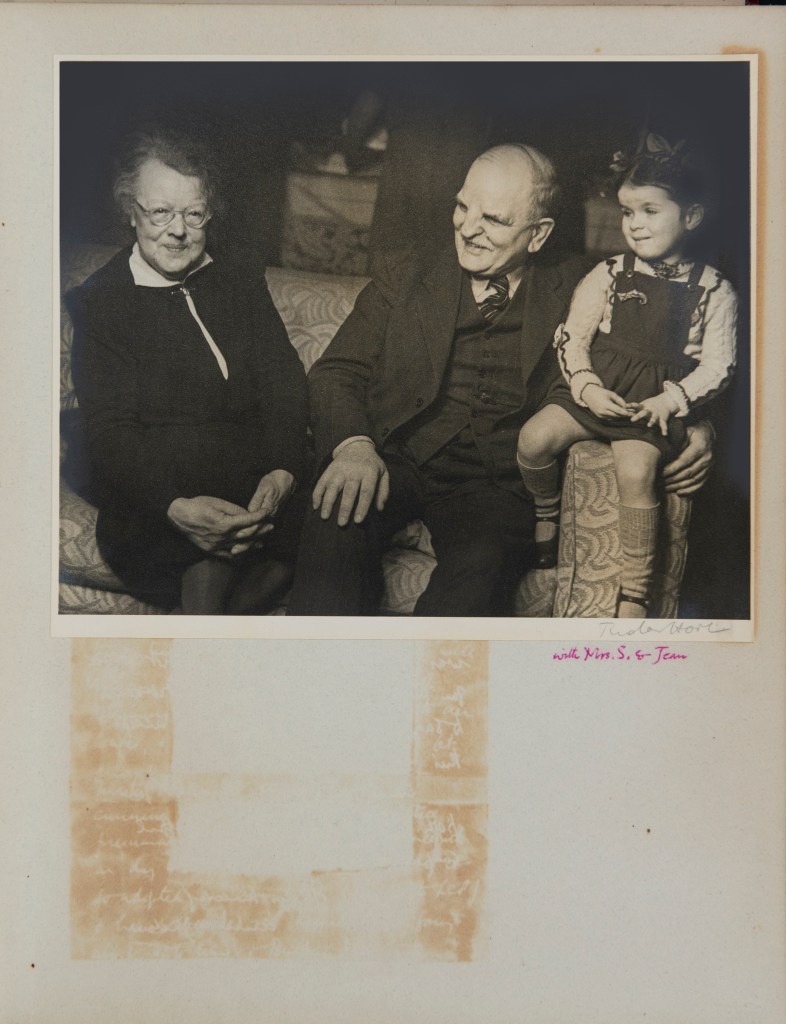
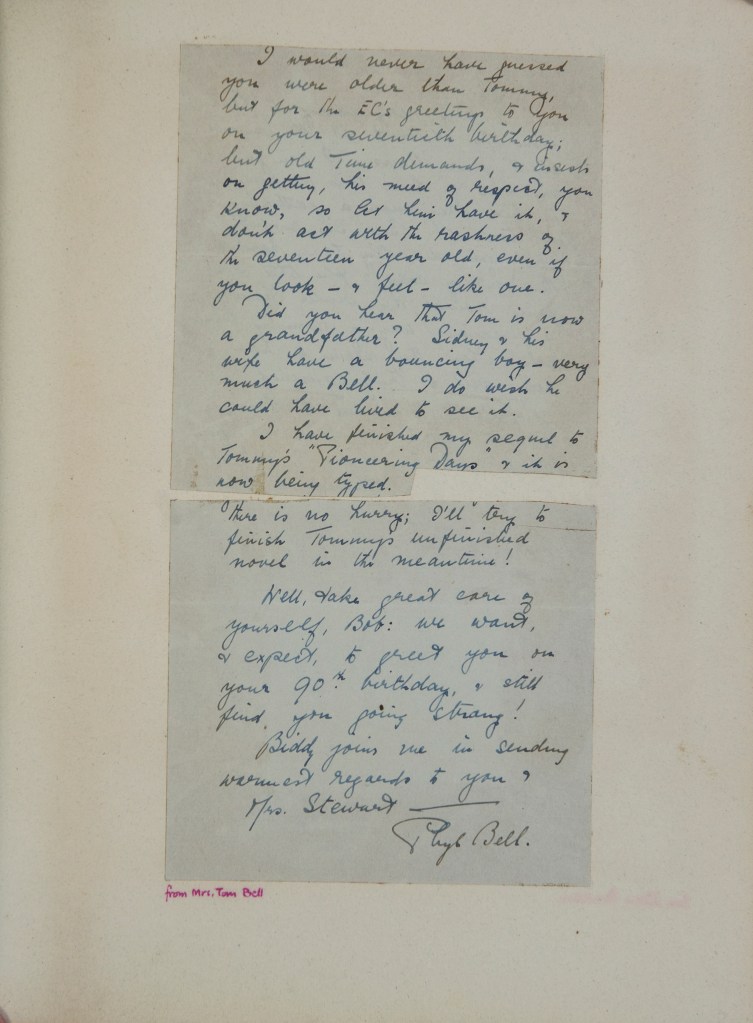
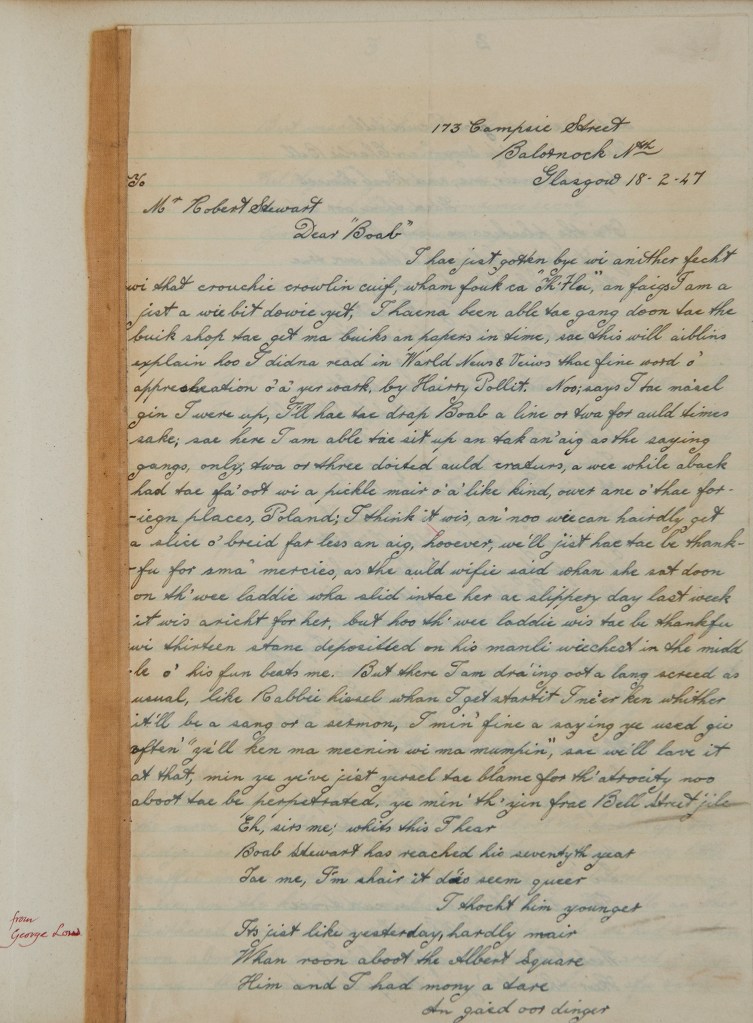
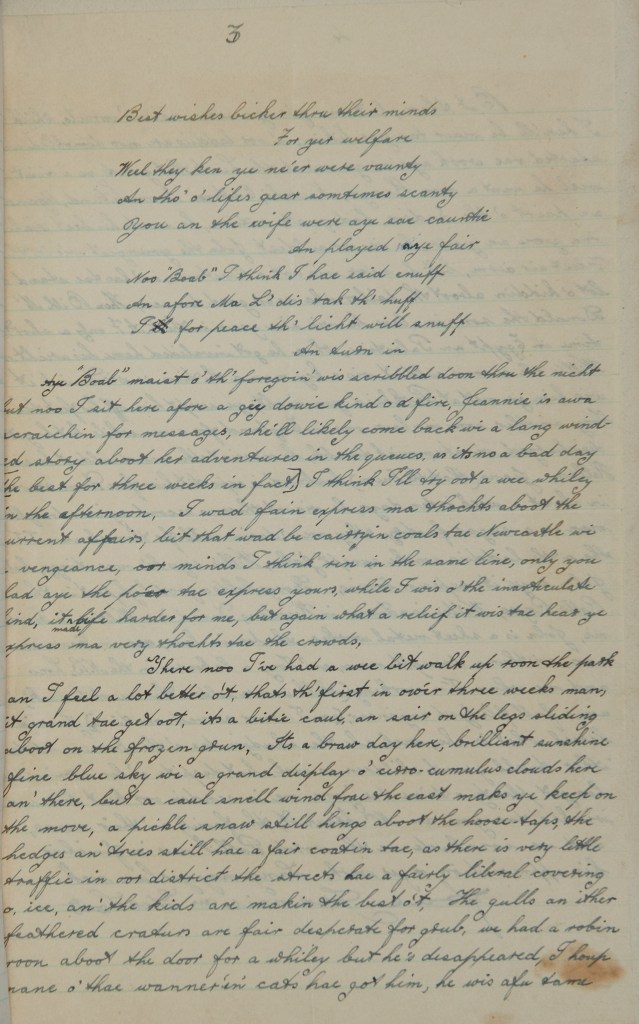
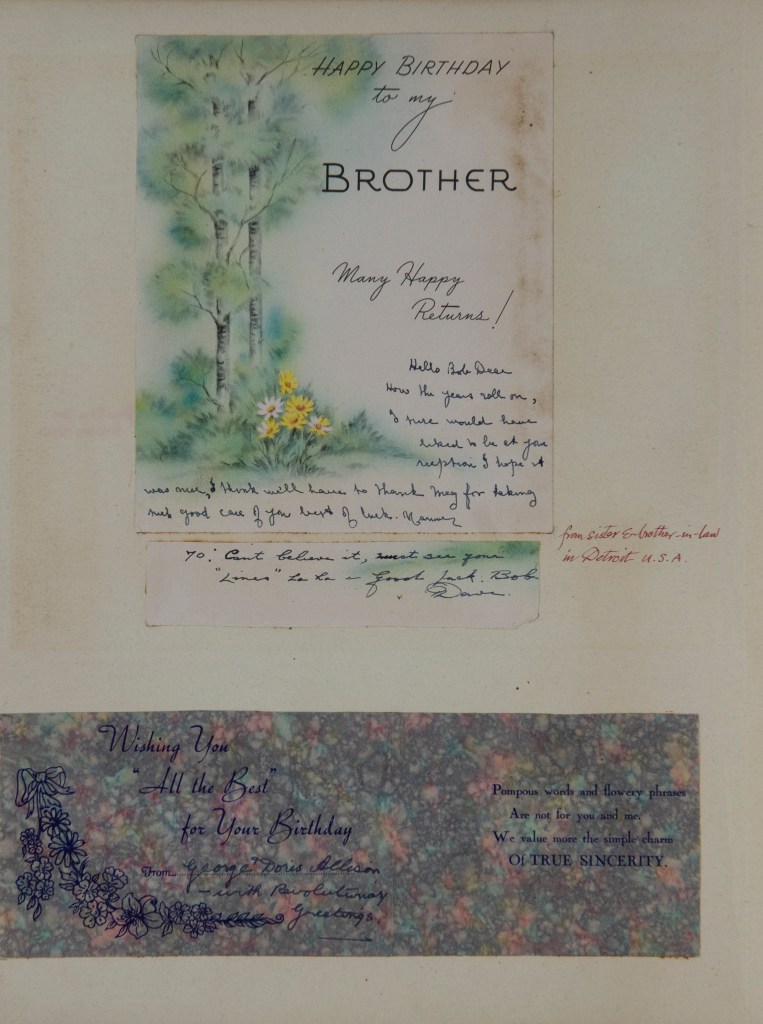
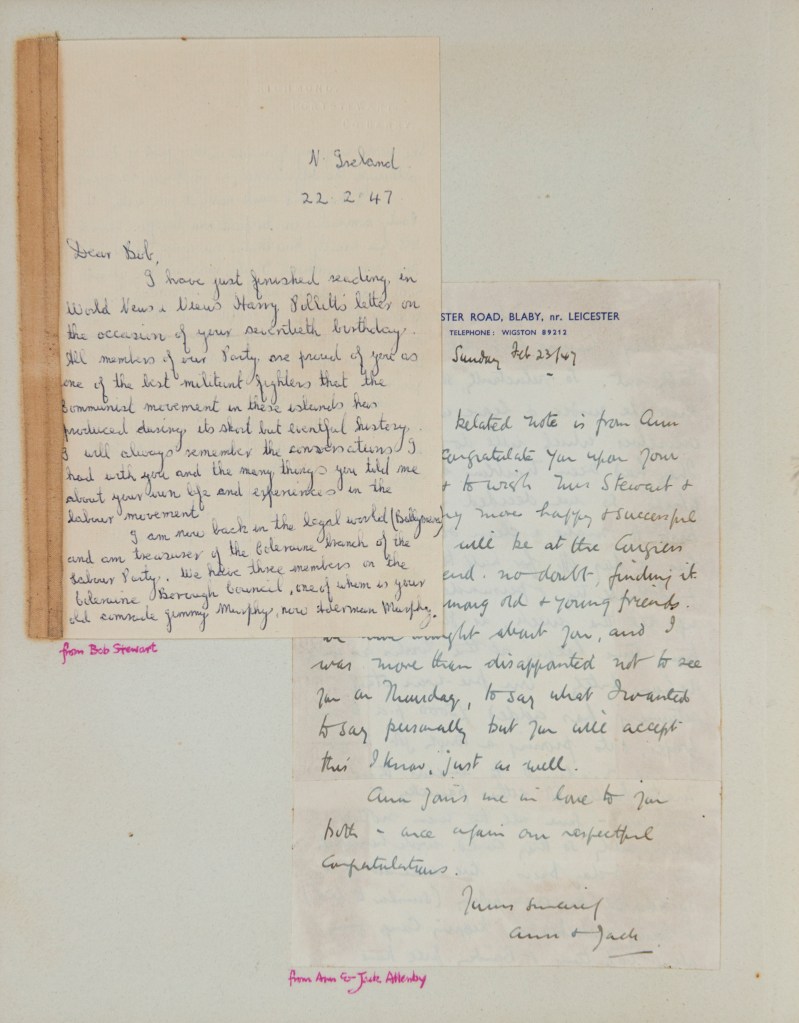
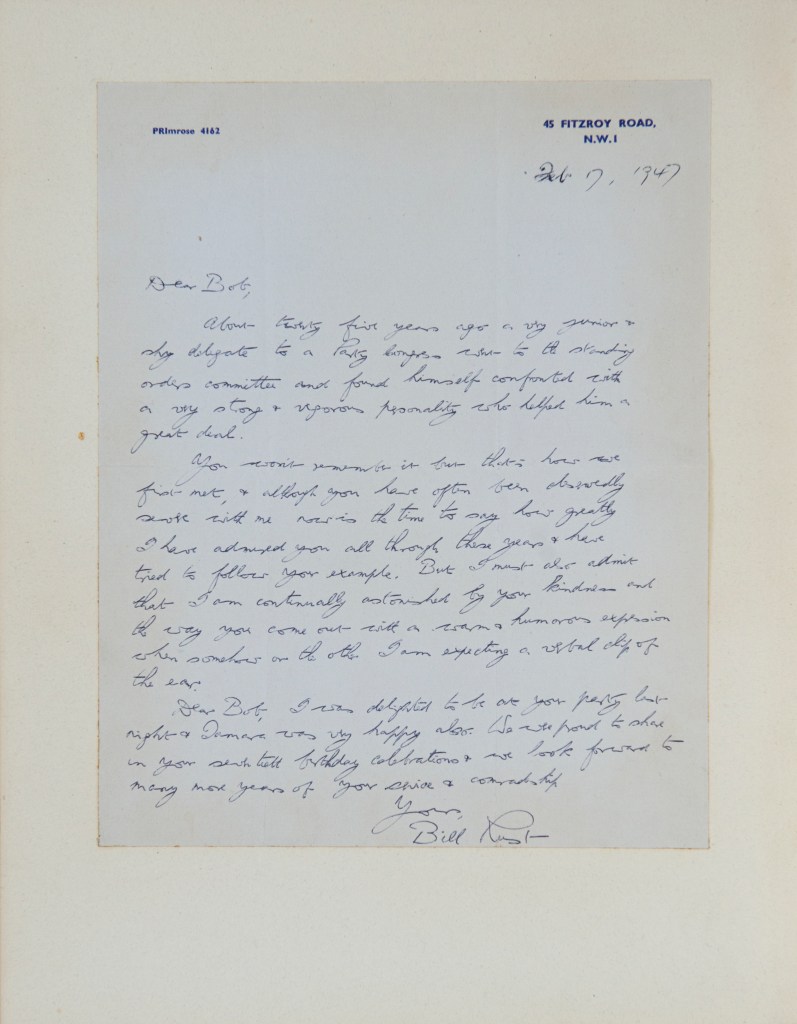
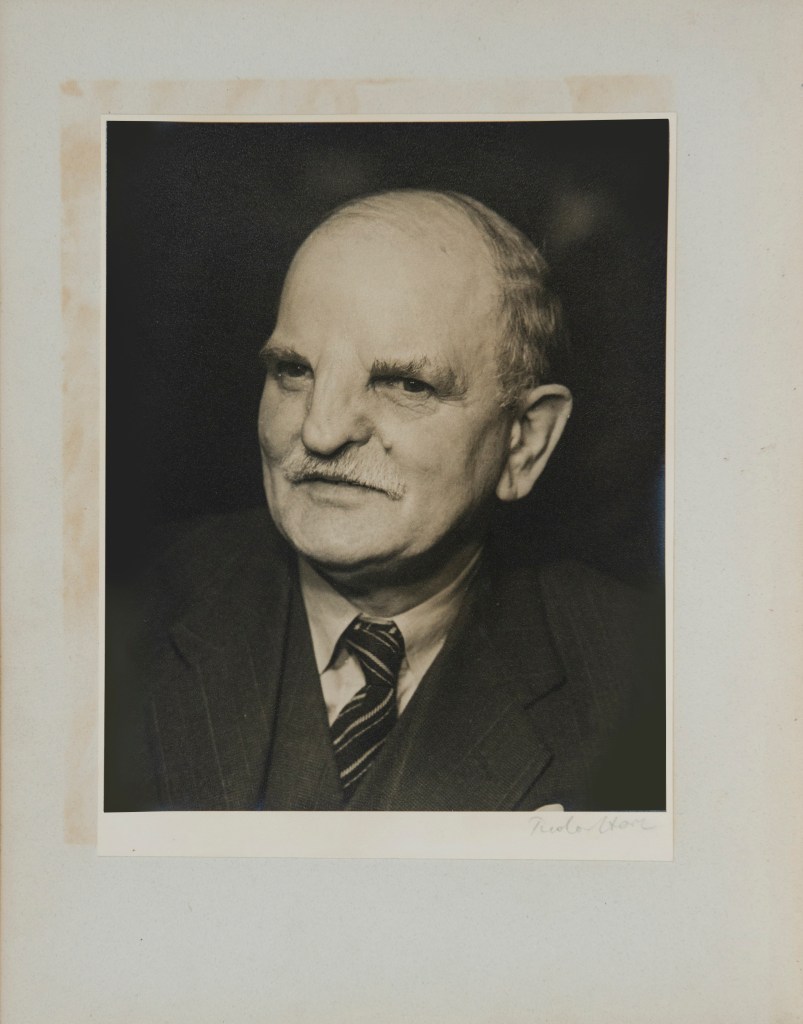
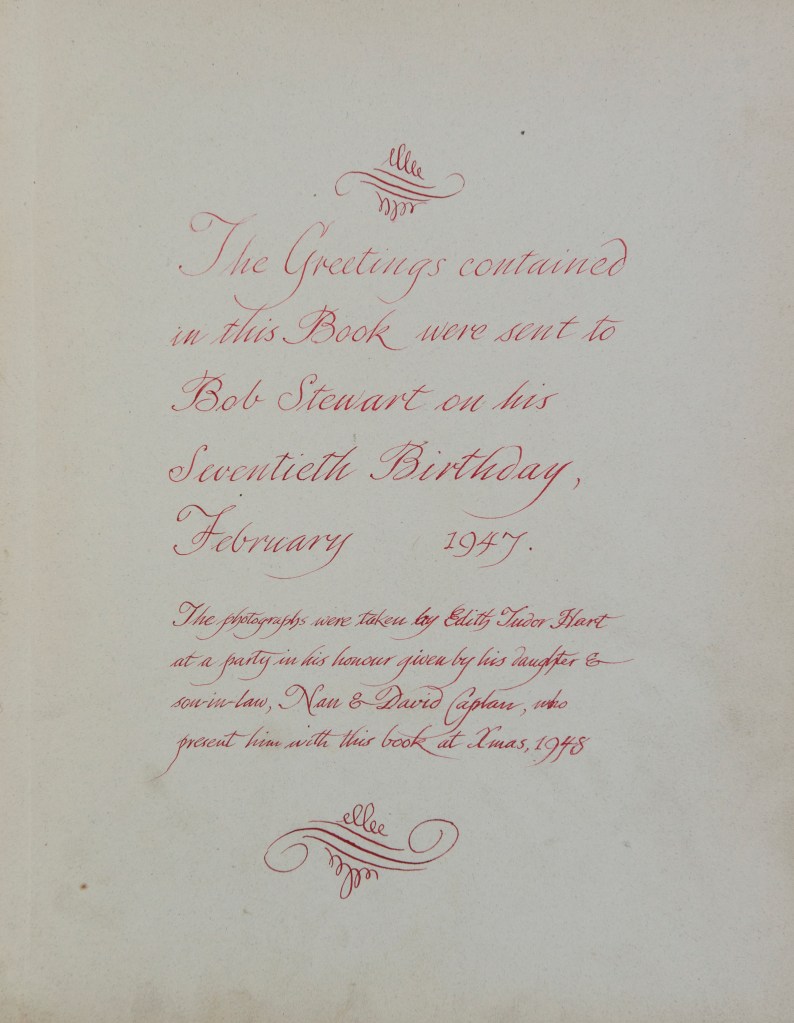
It is the 145th anniversary of Bob Stewart’s birth and to mark the occasion I’d like to present some photographs of an album commemorating Bob’s 70th birthday in 1947. The album was put together by his daughter Annie ‘Nan’ Caplan and contains photographs taken by Edith Tudor-Hart which have rarely been seen. Tudor-Hart was a documentary photographer in the 1930s who was recruited by the Soviets as a spy. Her nephew, Peter Stephan Jungk, directed a wonderful film all about her life called ‘Tracking Edith’ and I cannot recommend it enough. She is also the subject of Charlotte Philby’s book ‘Edith and Kim’ which should be out any day now. Apparently Bob has a walk on part.

The album contains many letters, cards and telegrams from figures central to British Communism and although most of the information they relay about Bob’s life and career is mainly well known I imagine this is the first time they have been put in the public domain. My brother and I also have similar albums from Bob’s 75th and his 90th birthdays and at some point we may donate all of these to the archives of the CPGB at the People’s History Museum in Manchester but we’d just like to hold on to them for a little longer.

The photographs were taken by my friend Jonathan Turner. He’s an excellent photographer who, when not helping a mate out, focuses on social documentary and portraiture. I am very grateful to him. Please have a look at his work on his website: http://www.jonathan-turner.com

Alan Stewart.

Portrait of Bob Stewart by Edith Tudor-Hart.

Bob Stewart at His Majesty’s Pleasure in Cardiff.

Screenshot of some of the findings from the 1921 census.

The 1921 census, which went online earlier this year, is likely to be an invaluable resource for anyone researching their family history. It has to be said it was fairly easy to find Bob Stewart’s whereabouts on the night it was taken – the 19th June, 1921. My great grandfather was in Cardiff. More specifically in HM Prison Cardiff doing three months hard labour. The relationship to head of the house made me laugh- ‘inmate’. Bob’s occupation is listed as ‘organiser’ and his employer is ‘Communist Party’. However, his place of work was noted as ‘no fixed place’ indicating he was spending much of his time this early on into the CPs existence travelling- something that would characterise the next thirty years. Once he’d got out of the clink of course.

He’d been sentenced to jail for making seditious speeches in Aberdare and Mountain Ash – the most diabolical comments being that miners were treated worse than German prisoners. The hard labour consisted of sewing pillowcases until a prison warder got him turning an old oak prison floor into handmade furniture for the warder’s home. At the end of his sentence Bob had been selected as the Parliamentary candidate for the Communist Party in the Caerphilly by-election – their very first candidate.

This experience is the subject of a highly entertaining chapter from Bob’s memoirs which I’ve reproduced below. Just a few notes on some of the people who make an appearance. Albert Inkpin was the first General Secretary of the Communist Party and Arthur McManus was the first chairman.

Part of the digitised census showing Bob Stewart’s entry.

Chapter 15: In Gaol Again.

In 1921 I was attending the Party’s National Executive in London. It was close to May Day and McManus, who was booked to speak at a May Day meeting in South Wales, said he could not go and asked me if I would like to take his place. “Sure,” I said, “I have never been to South Wales and it will be a new experience.” As it turned out it was.

I went down by train to Aberdare but before reaching there the train stopped at a small station and along the platform came a group of fellows shouting, “Bob Stewart, Bob Stewart!” I stuck my head out of the window and said, “That’s me.” “Can you do a meeting for the Party in Mountain Ash tomorrow night?” they asked. “Yes, I’ll be there.” So, after the meeting in Aberdare I travelled to Mountain Ash. The meeting was in a cinema and was crowded out. As usual at the time, the “splits” were in the boxes taking notes of my speech, but this happened at all meetings so I ignored them. The meeting finished and the local fellows said they were very pleased with the attendance and the effect. The repercussions were then still unknown.

I returned to London, and on the following Saturday, 7th May 1921, came the police raid on the party offices at King Street, Covent Garden, when Inkpin the general secretary was arrested. The raid was made without a warrant, under the Emergency Regulations Act. It was carried out by Detective-Inspector Parker, acting under the instructions, so he said, of the Director for Public Prosecutions.

During the raid all personnel in the office were rounded up from their individual rooms and brought to the general office on the ground floor of the building. The rooms were ransacked and, while this was going on, the homes of the office workers, even those of the girl clerks, were being searched. The police authorities certainly put on all the trimmings to build the raid up into a first-class political scare.

When Inkpin came into the general office and he exploded at Parker for the unwarranted intrusion into private property. “I demand to see your warrant to search these premises,” he said. “I don’t need a warrant,” replied Parker. “I am acting under the Emergency Regulations.” Parker then started to question Inkpin about the publication and sale of the Communist Party pamphlet called The Statutes of the Communist International. “Who wrote the book?” asked Parker. “What do you mean who wrote it?” said Inkpin. “These are the Statutes adopted by the 2nd Congress of the Communist International.” “Where did the books come from?” persisted Parker. “They came from Moscow, from the Communist International,” replied Inkpin. During the interrogation Inkpin again protested to Parker about the manner in which the police were acting, forcing their way into all the rooms in the building, sorting out files of correspondence obviously with the intention of taking them away. But Parker brushed this aside and kept on asking questions about the pamphlet The Statutes of the Communist International. Inkpin continued to answer truthfully this was a record of the decisions of the Communist International which was sent by the International not only to Britain but to most countries throughout the world.

Now Detective-Inspector Parker might have been a good man at detecting crime, but he did not seem to have the elementary knowledge required to comprehend the simple working of an international body. Maybe, of course, he had had his instructions not to try to understand. Anyway, after fifteen minutes of this sham he stopped asking questions and started giving instructions. To Inkpin he said, “I am going to arrest you under the Emergency Regulations Act No. 19. I am further going to search the premises and take possession of anything I think fit under an order signed by the Chief of Police.” He then turned to another detective and said, “Mr Hole, here is the order,” and to “Inkpin, “Come with me.” “What, without a warrant?” said Inkpin. “None necessary,” was the reply and he turned to leave. It was then he spotted me standing in a corner trying to look as inconspicuous as possible, but obviously not succeeding. “Who is that man?” he barked. “That’s Mr Stewart,” said Inkpin. “Get his name and address, and the name and addresses of all the others.” And with that little lesson of how democracy works in this land of the free he turned, taking Inkpin with him, and disappeared out of the door.

The place was alive with police and plain-clothes men. I ran from room to room trying to salvage what I could, but the police ransacked the place, almost everything went, even to the paper and the stencils. There were a number of spare files of our paper Communist and I knew that McManus had some papers ‘filed’ away for safety. I said to the policemen who were carting all the material away for examination., “Here, take these away; they are only in the damned way here. You’ll be doing something useful then.” “We don’t need these,” was the reply, “we have files of them ourselves.” So that saved something. After the raid, in the evening, I went out to try and contact some of the Executive members.  I went to the Corner House in the Strand and luckily, I bumped into a few of them and learned that there was to be a meeting at Bill Mellor’s house later to discuss what we could do under the circumstances. After the discussion, I had an argument with McManus because I said I thought that Mellor was deciding to leave us-to get out. McManus said I was a fool, but I was eventually proved right; William Mellor, despite all his thunder and aggressive revolutionary phrases, was afraid of being on the wrong side of the police authorities, and a short time after left the party.

After the meeting, I was sent to get a lawyer for Inkpin, to Torrington square, to see WH Thompson, a lawyer who was on the left. I found him in a strange way. I was ascending the stairs to his place when a young fellow came running past me. Suddenly, he stopped and said, “Jesus Christ! Bob Stewart!” “The latter’s right,” I replied. “What brings you here?” This fellow had been a conscientious objector in Wormwood Scrubs when I was there, so we wore the same old school tie. I explained the position. He worked for WH Thompson. He said, “He’s not here but I’ll tell you where to find him.  He has gone to see his girl friend,” and he gave me the address. I found WH, explained the position, where Inkpin was- Snowhill Prison- and he assured me that I could leave everything to him. I returned to my hotel in Villiers Street, near the Strand, a good evening’s work done. As I entered two big fellows ‘took’ me, one on each side. “Your name Stewart, Robert Stewart?” one of them said. “Yes, a good Scottish name.” “Well, we want you, we have a warrant out for your arrest.” Naturally, I thought it was in connection with the raid on the party office, but as soon as I got to Cannon Row Police Station I discovered I was booked at the request of the Welsh police for speeches made in Aberdare and Mountain Ash. So, I was stuck in a cell, arrested for sedition. I was interrogated by an inspector, a very clever fellow, to his own way of thinking. “Ah! I know you,” he said. “I have heard you speaking in Dumbarton.” “Up on the rock?” I asked. “Sure, there was always a big crowd there.” There was never a meeting on Dumbarton Rock in all history, so I continued to kid him but he twigged it and finally closed up.

Next day I was taken to Wales, to the Abercynon Gaol where I rested the night, and the day after I went before the magistrate. He was an old fellow, sitting at his desk. “Your name Robert Stewart?” he asked. “Yes, but what’s going on?” I replied. “You’re in Court.” “What Court? Only you, me and a policeman?” “Yes, and you are remanded to the Assizes.” And that was the strangest court I was ever in, but then the Welsh do many things in strange ways. Back I went to the cell and the policeman said, “I want to take your fingerprints.” “Not mine, I am no criminal, I draw the line at that.” “We’ll see about that,” he said and went off but he did not return for the fingerprints.

In due course I was taken to the Assizes at Pontypridd. A bunch of snuffy magistrates, local publicans and others of that ilk. The prosecutor was a little fellow called Lloyd. The charges were seditious speeches. Little Lloyd had a real go. He built up a terrible case against me, and said I should be ashamed to call myself a British subject, I was an agitator coming into the district in troublesome times stirring up strife and hatred, saying the miners were being treated worse than German prisoners and that Jimmy Thomas was a traitor to the working class- which appeared to be sedition, I don’t know why. In passing I may add that the selfsame Mr Lloyd was some time later pinched for embezzlement , but I suppose that that would not trouble his loyalty to Britain. The witnesses said their piece. The local secretary, who was a canny lad named Foot, was very good. But the other party witness, Billy Picton, undid the good work. Billy was one of the aggressive type; good in an industrial struggle, but not much use in a court of law. Asked about my reference to miners being treated worse than German prisoners, he replied, “Well, it’s bloody true, isn’t it?” – not very helpful in a court in which the scales have already been loaded against you. In the long run the trial came to an end. The magistrate said a lot of wise words, then asked if there was anything known about a past record. Innocent like, of course. Then out came the dossier. Tried, court-martialled; tried, court-martialled, on and on. When he finished reading out the record, I looked at him and said quietly, “A good record.” The magistrate said that this sort of thing must not be allowed to continue, it would not continue, and so on. The sentence would have to be appropriate to the offence. I would be made an example. The sentence was three months’ hard labour. Three months’ hard. You can do that, as the old lags say, on the door knob.

Well, there I was inside again. In Cardiff Gaol. Interesting, because Cardiff being a big seaport the gaol is very cosmopolitan- men from all nationalities are inside and going around the ring at exercise you saw all colours and all kinds of men. For the first three days I sat sewing a pillow case. That was my hard labour, putting in stitches and pulling them out again. Of course, reading the Bible in between. This was the compulsory reading, but a very valuable book for left wing propagandists. One day the artisan warder came to see me. “What the hell are you sewing pillowcases for?” he demanded. “You’re a carpenter, aren’t you?” I told him what I thought about his pillowcases, his prison and his magistrates, but he only laughed. He turned out to be a good sort. He didn’t like clergymen and that was an instant bond between us. The prison chaplain at Cardiff and I could not get on. Charlie Chaplin we called him. This was because of the way he walked, not because of his humour. One day in my cell he said to me, “Mr Stewart, in cases of your kind, it is the wives and children I am sorry for.” I said, “Don’t you try telling my wife you are sorry for her, because if you do you will end up being sorry for yourself.”

The artisan warder stopped the pillowcases lark and took me down to the workshop. There was method in this because part of the prison was being demolished and an old oak floor was being scrapped. “Can you do anything with this, Jock?” he asked me, showing me a bit of the wood. It was a good bit of oak. “You could make some nice things with that,” I said. And I did- bookcases, hallstands, cupboards, small stools and many other pieces of oak furniture found their way into the warder’s home from the floor of the Old Cardiff Gaol. I am quite sure the government got none of it.

One day the warder gave me a shout when I was working. “Come here, Jock, I have a job for you.” So, I picked up my tools. “No, no,” he said, “all you need is an oil can. We’re going round to the execution chamber to oil the joints of the hanging apparatus.” Two men, sentenced to death for murder, were to be hanged the next day. “I’ll not oil your bloody hanging apparatus.” “What! You not in favour of hanging?” “Oh yes I would hand prison warders at a bob a time,” I said; “the trouble is they usually hang the wrong people.” “Well come and see how it works,” he said. So off we went to the execution chamber. He oiled the necessary places then gave me a demonstration of the proper way to operate it by pulling the lever and pointing to the drop. He seemed to take delight in it.

One day towards the end of my term, in came Jock Wilson, the Welsh Party Organiser, to see me; well, really to tell me something- that I had become a parliamentary candidate because Alfred Irons, the MP, had died. A by-election was pending at Caerphilly and the party had decided to contest their first ever parliamentary election as a party and I had been chosen as the candidate. Well, anyway, being in gaol, I couldn’t speak back. There had been quite a barney with the prison authorities. A report in The Communist appeared as follows:

We had expected difficulties to be put in the way of Robert Stewart’s Candidature in the Caerphilly mining constituency. They have already begun, and the Prison Governor has taken a hand. We wished to know when Stewart would be released for the purpose of the election campaign.

The party had sent a letter to the Governor of Cardiff Gaol in the following terms:

Dear Sir,

I should be very much obliged if you would kindly let me know on what date Robert Stewart, the National Organiser of the Communist Party, whom we understand to be present in Cardiff Gaol, will be released.

Yours faithfully

(signed) Fred H. Peat, acting secretary

Back came the reply:

HM Prison,

Cardiff

23rd July, 1921

In reply to your letter of inquiry it is regretted that the information asked for cannot be given.

I am your obedient servant

(signed) HJ Perwin

One night before the end of my time I was pleasantly surprised when the head warder came and asked if I would like to be released a day early. “Fine,” I said. But really the authorities were afraid of a demonstration, because when I had been taken from Pontypridd to Cardiff Gaol to start my sentence there was a bus load of policemen in the front and a bus load of policemen behind all the way. Certainly a good few tons of policemen to hold mine nine stones of communism. No doubt they were also taking no chances when I was leaving.

Out of the gaol, I went to Alf Cook’s house to discuss the political situation, and I had just arrived when a telegram was delivered from Moscow informing us of the death of Bill Hewlett in a monorail accident in Russia. It had been a bad accident and Jim Stewart of Lochgelly was also injured. So, I had the sad task of making arrangements for someone to break the news to Mrs Hewlett.

The Death of V.I. Lenin.

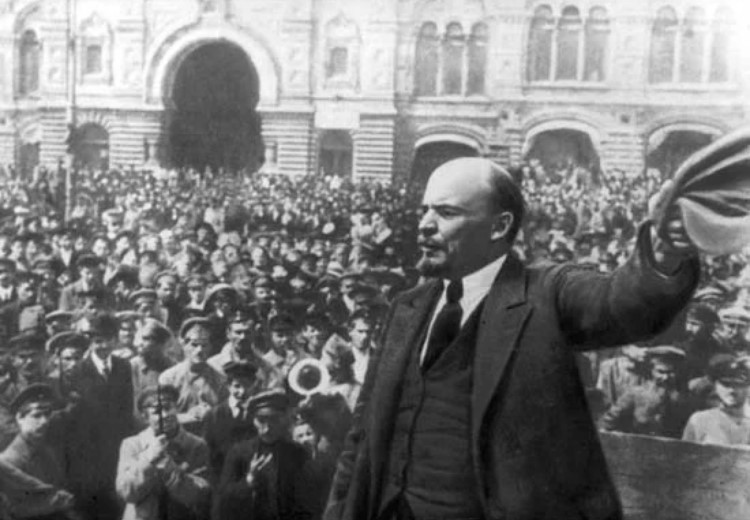
Lenin speaking in Petrograd 1917

Today is the 98th anniversary of Lenin’s death. At that time, Bob Stewart was in the Soviet Union working as a member of the Executive Committee of the Comintern. In this role he accompanied Lenin’s body on its journey from Gorky to Moscow and also stood, alongside Georgy Chicherin the People’s Commissar for Foreign Affairs, as a guard of honour during the lying in state. Today’s post presents two pieces by Bob about Lenin’s passing and his funeral. The first article, ‘In Memory of Lenin’ appeared in Pravda shortly after the Bolshevik leader died and the second, ‘From Ch20: Moscow and the Comintern’ is an extract from Stewart’s memoirs ‘Breaking the Fetters’ published in 1967.

Alan Stewart.
In Memory of Lenin.

Front page of Pravda announcing Lenin’s death. 22nd January 1924.

On the eve of the anniversary of the Petrograd massacre of 1905, the proletariat of the world has suffered a cruel blow; the death of our dear Comrade Lenin has removed the greatest figure in revolutionary history since Marx left the field of struggle. It is hard to reconcile oneself to the idea that the voice of Comrade Lenin will no longer sound in our revolutionary councils. Lenin has become for us the absolute ‘symbol’ of communism and the proletarian revolution. No one was more hated by the enemies of the working class than our beloved leader, and no other leader and teacher of the working class ever commanded such power and influence throughout the world. Since 1917 his name has been, as we say in England, a household word. His revolutionary writings and theoretical works have changed the character of socialist organisations in Great Britain and led them out of chaos onto revolutionary lines.

In this hour of great grief our profoundest sympathy goes out to our Russian comrades and to all the peoples of the Union of Soviet Republics. Now that our great leader, Comrade Lenin, can lead us no longer, his works and teaching, his revolutionary vigour and unshakeable realism must guide and inspire us in the revolutionary tasks which confront the proletariat of the world.

May the memory of Comrade Lenin live forever!

Long live the Union of Soviet Republics!

Long live the international proletariat!

Long live the Communist International!

Robert Stewart

Member of the Executive Committee of the Comintern and the Central Committee of the Communist Party of Great Britain.

Pravda, January 24, 1924.

From Chapter 20 of Breaking the Fetters: Moscow and The Comintern.

Transport of Lenin’s body to the Gorky railway station. Bob Stewart will be somewhere in amongst the crowd as a member of the Executive Committee of the Comintern.

“…It was during my time in Moscow that a great tragedy befell the international working-class movement.

Lenin died in January 1924. I remember this well because I was then a member of the Executive Committee of the Comintern which was summoned immediately: firstly, to hear the announcement of Lenin’s death and also to make all the necessary arrangements for the funeral.

Harry Pollitt came over immediately from Britain to represent the British Communist Party at the funeral. It was desperately cold and both Harry and I felt it very much. It was forty degrees below zero. Fires were kindled in the streets and I remember seeing the militiamen’s horses going over and sticking their noses in the fire to melt the icicles. We were as cold as the horses but at least we could pull down our fur caps and peer out occasionally to see where we were going.

I was one of the delegation of the Comintern chosen to go to Gorky, where Lenin had died, to accompany his body back to Moscow. We left by train from Moscow at about 5am and then travelled by peasant sleigh from Gorky Station to Lenin’s house. From the station you could see the house down in the valley, but the road to it so twisted and turned that even by sleigh it took us a long time to reach it. At the house Lenin was laid on a bed wearing an ordinary Red Army man’s uniform with the Order of Lenin pinned to his breast. The house was full of people: leading members of the Russian Communist Party, of the Comintern, delegates from the factories and the professions, and amongst them all wandered a big black cat who had been a very great favourite with Lenin.

The body was placed in the coffin and carried to the station en route for Moscow. Leading men from the party and the factories took turns to carry the coffin. On the journey, at every station, on the way, thousands of people waited to see the train pass. I do not think I ever saw so many tear-stained faces in my life. It was a very moving demonstration of the love the ordinary people for this great man.

When we got to Moscow I realised for the first time in my life what a mass demonstration really meant. Not a demonstration that was called, but one that came. Every conceivable foot of space was occupied. A great mass of people followed the coffin as it was borne from the station to the Dom Soyus (Hall of the Trade Unions), and from every side street and opening, mass upon mass of people converged with the main stream or waited their turn to do so. At the same time the digging was proceeding on the site of the mausoleum, so there was blasting and picking going on. All these streets were crowded with sad-eyed mourners. Every shop and hotel and all central places were ordered to keep open twenty-four hours a day so that people overcome by the cold could go in and thaw out.

Moscow has witnessed many varied scenes in her many centuries of troubled history; her ancient records must be filled with historic incidents, but never had such scenes been witnessed as during the days of Lenin’s lying in state and funeral. The Dom Soyus, a former palace of nobility, once the setting for the glitter and pomp of the aristocratic Tsarist circles, was the place where Lenin lay. Here his own people, the working masses of Russia, could pay their last tribute to the mighty leader of the Russian working class and the world proletariat. “Our Comrade Lenin” everyone said, as if he were a father or a brother.

For four days and nights, for mile after mile, people queued four abreast to pass the bier on which Lenin lay. Along with Harry Pollitt I took a turn on the guard of honour. I remember I was with Chicherin. The bier was surrounded by wreaths of flowers of every description, sent from all over Russia and indeed from all over the world. The magnificent hall with its white marble walls was a blaze of light, contrasting with the deep varied hues of the flowers, and on the balcony the band of the Red Guards played music befitting such a solemn occasion.

Delegations from all over Russia streamed into Moscow, joined the endless queues, and placed their wreaths as they passed the bier. But there were no kings or queens, no aristocrats and their ladies, no great admirals or field marshals with glittering medals. Only the endless stream of workers and peasants, soldiers and sailors with their wives and families. The queues never seemed to get less. Over a million had passed the bier and still the queues remained. It had been decided that on Saturday the doors must close at 12 noon. But on Saturday afternoon there were still hundreds of thousands of people waiting with banners and wreaths, still train after train arrived, pouring the delegations into Moscow from north, south, east and west. Every minute messages from all over the world came, telling the world-wide grief at the passing of this great working-class leader. Certainly, no king, no emperor, no bloody tsar has been honoured as Lenin, the leader of the world working class.

At 7am on Sunday came the final parting. Around the coffin stood the leaders of the Russian Communist Party and the Communist International, and with them, keeping her last vigil, was Krupskaya, Lenin’s wife and constant companion during thirty years of struggle. Lenin’s body was borne to the Red Square. As the coffin was raised the orchestra wailed the funeral march. After this a moment’s silence, then the International burst out, strongly and boldly sung. I thought then, this is the answer to the enemies of Leninism whose death was rekindling the hopes of new triumphs for imperialism. this is the answer of Lenin’s pupils, the Russian workers and peasants.

As the coffin was carried into the streets, crowds formed behind it. Leaders of the Party and trade unions took turns to shoulder the coffin along the Kremlin walls to the centre of the Red Square where the raised tribune was placed. The people filed past in millions until 4pm. Then silence just before the cannons crashed out the salute with a roar which could be heard in every corner of the world; factory sirens in every Russian city and village took up the salute; men, women and children stood still in silent homage. In every country throughout the world the workers paid their last respects to a great leader, who from small groups of Marxists had led the Russian workers forward to the formation of a mighty Communist Party and a mighty workers’ Republic and had laid the foundation by his leadership for a mighty Communist International.

The coffin was carried into the Mausoleum, Lenin’s final resting place. Queues formed again to pass the bier. It went on all night, all the next day and every day since. the years have passed and still the Russian workers and peasants and the visitors to Moscow from foreign lands pass the bier to pay homage to Lenin, the great working-class leader whose genius guided the people of downtrodden Russia and millions far beyond it, to break their chains and march to the not-so-distant communist society.”

Prison Rhymes 2

There is a wonderful scene in the 1981 film ‘Reds’, the unlikely Hollywood epic about the American left and the impact of the Russian Revolution. Warren Beatty plays John Reed, the author of the definitive eyewitness account of the events in Petrograd ‘Ten Days That Shook the World’. Early on the film, Reed has been invited to speak at a Democrat fundraising dinner about the conflict that has recently engulfed Europe and the question as to whether America should get involved. In their evening dress the attendees drip wealth, although it’s concerned, liberal wealth. Reed is asked, “What is the war for?” The audience are quietly expectant awaiting an impassioned speech about fighting for freedom. They are disappointed. There is silence. Reed, shuffles awkwardly to his feet, looks around the room and replies, “Profits,” before sitting down. It was just such a position that Bob took when addressing a large crowd in Dundee on the day the First World War broke out – though he put it less succinctly but perhaps more forcefully:

Whatever else may transpire in the coming war, you will all learn in the course of it or in its aftermath that it is a capitalist war. It is not worth sacrificing the bones of your domestic cat, or your pet canary, even less those of your husbands, brothers and sons.”

Bob recognised that many ordinary people joined up for the slaughter not due to patriotic fervour but simply because a soldier’s wage together with the separation allowance for wives was better than a labourer’s earnings. He also saw that the 1915 Munitions of War Act had the effect of ‘handcuffing the workers’ eroding what little employment rights trade unions had fought for. As the war progressed and the supply of young factory and agricultural workers used as cannon fodder began to dry up the government began conscription. Inevitably Bob involved himself with a myriad of organisations in the movement against this and also inevitably, though pushing forty, he was himself eventually conscripted in 1916. Those who refused to fight were tried in civil courts and handed over to the military authorities and if they still refused they were court martialled and sent to prison. He didn’t get out until 1919 months after the war ended. In that time there were three further court martials and he got to know Wormwood Scrubs, Calton and Dundee Gaols and the cells at Edinburgh Castle very well. As I’ve said elsewhere on this site these articles aren’t about hero worship but Bob’s stand does make me proud.

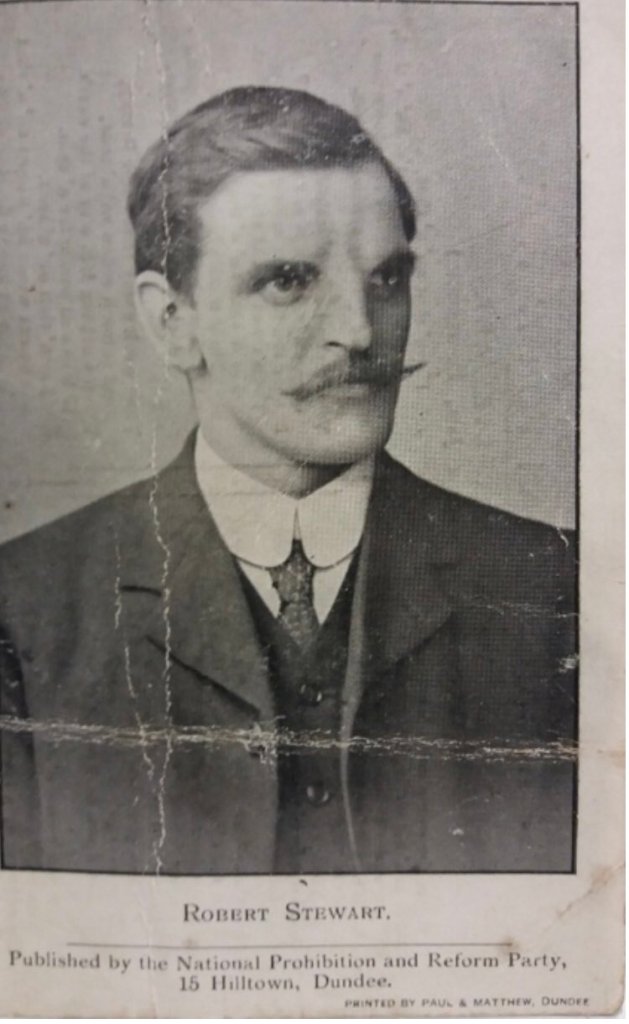
During this time Bob wrote the poems which would be collected in ‘Prison Rhymes’  which were sold to raise funds for his socialist National Prohibition and Reform Party. The photographs that accompany this piece are of a postcard featuring one of the verses included in that pamphlet, an anti-war version of Robert Burns’ ‘A Man’s A Man For A’ That’. Many thanks to Graham Ogilvy who brought them to our attention on Twitter.

Alan Stewart.

Books: ‘Enemy Within’ by Francis Beckett.

If they were asked to recognise the name of Luke Akehurst most sensible people of voting age in the United Kingdom would struggle. How I envy them their Eden-like innocence. Unfortunately for me, I’m one of those people who, without wanting to, seems to possess a perverse desire to keep abreast of every single development of the infighting within the Labour Party forevermore. It is not good for your health. For those of you don’t know Akehurst, he is a figure on the right wing of the party who sits on its NEC whose responsibilities seem to be chiefly to boil the piss of everyone to the left of Liz Kendall. He’s the secretary of a group called ‘Labour to Win’ which is ironic given that his extreme factionalism is likely to steer the party to an even greater electoral disaster than the one Jeremy Corbyn delivered in 2019.
Why even mention the man at all? Distressingly, it’s because earlier this year I found myself in the frankly uncomfortable position of being in agreement with him. Ruined my day to be honest. To elaborate, he had been asked what his problem with the hard left was. Among his reasons was the following:

“…silly exaggerated left rhetoric drives voters away from Labour.”

He’s right. If you’re on the left there are words you’ll use and love. Words such as ‘comrade’, ‘solidarity’ and ‘class struggle’. The problem is, most people who don’t view themselves as left wing- and that’s most voters in the country- loathe this type of thing. The workers of the world may have nothing to lose but their chains but they won’t vote for you in the United Kingdom if your language is couched in socialist tradition. Polling showed many of the policies of Corbyn’s Labour were popular but in no way would many people want to associate themselves with a group whose idea of a good time is a hearty chorus of ‘The Red Flag’.

Where myself and Mr Akehurst differ however is that while I do think ‘left language’ is ill advised when courting the floating voter I think the actual concepts of comradeship, solidarity and class struggle are important for a democratic socialist party. I’m not sure the Secretary of Labour to Win could stretch to that.

At this point you’d be forgiven for wondering what all this has to do with Francis Beckett’s book ‘Enemy Within- The Rise and Fall of the British Communist Party.’ In the first Covid-19 lockdown when I started this project I needed a single volume history of the CPGB to help make sense of all the security files and letters I was poring over. I immediately went for ‘A Centenary For Socialism-Britain’s Communist Party 1920-2020’ which was published by the current version of the party to coincide with its anniversary celebrations. It would be an understatement to say I found it hard going. Having to wade through sentences such as, “Lenin gave added expression to this paradigm of oppression by nations and national colonialism as part of the general struggle of the working class and working people against imperialism” and the general uncritical, almost hagiographic approach to its subject was alienating and exhausting. Perhaps I’m being unfair. After all, it’s hard to write about the CPGB without this kind of language and to be fair the companion volume , ‘Red Lives – Communists and the Struggle for Socialism’ is superb.

After this disappointment my brother recommended Beckett’s book which first came out in 1995 shortly after the CPGB wound up earlier that decade. The contrast was stark. Beckett seems to have achieved the impossible – a book about the far left which is also a pleasure to read. Sympathetic where it’s justified – Harry Pollitt’s activities during the Spanish Civil War and critical when needed – the CPGB’s inability to be independent of Moscow. It is engagingly written throughout and shot through with a dry wit. The history of the CPGB is labyrinth subject but Beckett helps you understand why people were drawn to the Party while also exploring the tragedy at the heart of it. Having read little else other than books on communism over the last couple of years I wouldn’t hesitate to recommend this book alongside Raphael Samuel’s ‘The Lost World of British Communism’ as necessary starting points.

Below is an extract from the book describing Bob Stewart at the conference where the Communist Party of Great Britain was formed in 1920.

There was the first stirring of a debate which was to cause a lot of trouble over the next seventy-one years. Did the CP stand for armed revolution or not? One excited delegate proclaimed ‘the historic and revolutionary value of a gun in the hands of a man of the working class’, only to be magisterially rebuked by Bob Stewart of Dundee: ‘A great many people talk about guns who would run away when they saw one. I am more interested in folks having brains in their heads.’ Bob Stewart had spent several years in prison for opposing the First World War, and knew more about hardship and violence than most. He led the smallest and oddest of the groups which formed the CP, the Socialist Prohibition Fellowship. After the main resolution was carried, the stout sincere man with a sober moustache walked solemnly to the platform to ask the new Party to come out in favour of suppressing the manufacture of alcoholic drinks. Few thought much of the idea, but they liked Bob Stewart, so they referred it to the executive for action. In seventy-one years no action was ever taken.

Yet banning the demon drink struck a chord with many Communists. Many hard, poverty-stricken lives were tolerable only through a haze of beer. Three Scottish founder-Communists, Stewart, Jack Murphy and Willie Gallacher, remembered their deprived childhoods being blighted further by drunken fathers. They not only abstained all their lives, but saw abstaining from alcohol as part of their socialism.

(Francis Beckett, Enemy Within, Merlin 1998 pages 14-15)

Alan Stewart.