During one of my periodic visits to Dundee in early 1923 I ran into a serious confrontation between the jute employers and the jute workers. To make things more serious this took place while nearly 25 per cent of the workers in the city were unemployed. A running battle was taking place over unemployment pay and parish council assistance to those who had exhausted their unemployment benefit.
In February 1923 there were 10,500 workers claiming benefit on the Dundee unemployment register. This was by no means the total unemployment figure; many women workers were not entitled to benefit when they were unemployed. Under the unemployment acts then in force, by April 4th 7,000 would be completely cut off from unemployment benefit and would then have to apply for parish relief. This bleak prospect was causing a serious crisis in every home in the city. The scales for weekly parish relief were 7s. 6d. for a husband, 7s. 6d. for a wife and 1s. for every child under fourteen years of age. This meant a family consisting of man, wife and four children under fourteen years of age (by no means an uncommon family then) had to live on 19s. a week.
Into this already seething cauldron of discontent another problem boiled up. In Cox’s jute mill, one of the largest in the city, employing thousands of workers, the management introduced new spinning frames and demanded a reduction of women spinners. Where formerly three worked, two now would be employed, thus saving the wage of every third spinner. No offer of extra payment to the spinners left was even contemplated. The impudence of such a demand was highlighted by the fact that only the week before, the Associated Companies of Jute Industries, whose chairman was Mr. J. Ernest Cox, had published their profits for the year showing a record £606,224 and declaring a dividend of 9 per cent, all of which Mr. Cox said was very satisfactory. No wonder Cox’s workers were hopping mad. The spinners refused to work the machines and held up the work for the rest of the mill, so the management then locked out all the workers. The mills in the Federation followed suit and in a few days 30,000 jute workers were on the streets swelling the number of unemployed to more than half the population of the city. The locked-out workers got no unemployment pay and were being denied relief from the parish council. There was no doubt in my mind that behind-the-scenes attempts were being made to smash the jute trade union and to try and bring the workers to heel.
The party had discussions with the workers involved and decided to approach the trades council. At first there was a joint effort to organise collections and pay out a few bob to the unemployed, but it soon became clear that this was not even scratching the surface of the problem. Arrangements were then made for a joint demonstration to demand that the parish council raise the relief rates and pay relief to all unemployed.
The demonstration was the largest, noisiest and possibly the most successful in Dundee’s history. The crowd assembled in the Albert Square. The newspapers at the time estimated that 50,000 filled the Square and the adjoining streets. The chairman, one of the locked-out workers, called on me to put the proposals on what should be done. I suggested that the demonstration should elect a delegation to go to the parish council, which was holding a meeting that evening, to table our demands. Secondly, that the crowd should form fours and march to the parish council offices at West Bell Street, making themselves and their demands heard on the way, and continue back to the Square where the delegation would return to give their report. A deputation of ten was selected including Billie Tom Stewart, Councillor John Ogilvie, the A.E. U. organiser Alf Maloney, myself and others. The ten heading the procession, we set off. When we reached West Bell Street there were hundreds of sweating policemen struggling with thousands of people, trying to keep them on the sidewalks so that the demonstration could pass on the road. All traffic was completely halted. In Dundee most of the jute employees were women and many of the husbands stayed at home to keep house and make the meals, so there was the contradictory spectacle of the majority of the marchers being women and those on the sidewalks men. The call went up from the women marchers: “Get the kettle-boilers in the march!” so there was a rush from the sidewalks into the road. The demonstration then became a seething mass of slow-moving humanity.
As the head of the march came to the parish council offices, the deputation dropped off and were admitted to the parish council meeting. At least we got there. A number of the parish councillors were unable to get in the front door and had to be hoisted in by the rear windows. The chairman, Davie Duncan, a pal of mine from the old Temperance movement days, opened the meeting, but no one heard a word he said; you could see his lips move but there was no sound. His voice was entirely drowned by the deafening noise from the thousands passing outside shouting slogans for unemployment benefit, increased relief rates, snatches of “The Red Flag”; the sound bounced off the walls of the building and filled every room. At last Bobby Allan, the clerk of the council, made signs that the delegation should be heard. Now Bobby Allan was a terror in Dundee. In the old days when the mothers wanted to frighten their children and get them to go to sleep they recited the old ditty:
“Hush ye, hush ye, dinna fret ye,
The Black Douglas’ll ne’er get ye.”
In many homes Bobby Allan had replaced the Black Douglas. He was a real swine who saw working-class people as beasts of burden and treated them as such.
Allan began by objecting to one of the delegation called McGuire and demanded that he be asked to leave. I promptly told him and the council that McGuire was an elected member of the delegation and if he left, all left. That finished that lot! So we had our say. I let Baillie Stewart and Councillor John Ogilvie, “Mr. Facing-both-ways” as we called him, have the first go. They started with tear-jerking humanitarianism, poor people without a crust of bread, children who were the future citizens starving, and so on. With the flint-hearted parish councillors that didn’t get us very far. When it came to my turn to speak, Davie Duncan said, “Please be brief, Bob.” “Why me?” I asked. I told them the workers were entitled to a good life and it was no fault of theirs that they were unemployed. I accused the jute bosses of locking out the workers and said they were deliberately trying to bust the trade union. “The workers won’t have it,” I said, “and what’s more if you don’t give them money to buy food and clothes, they will likely take them without asking your permission.” I cautioned them and said if there was any trouble then it was the fault of the parish council and not the starving workers.
Bobby Allan said there was the question of legality involved. Discussion would have to be held with government authorities on raising the scales of payment and certainly discussions with the unemployment exchange before any payments to the locked-out workers could be made. When Bobby cracked the whip the councillors usually obeyed, but on this occasion a few demurred. However, he had the majority with him. So we went back to the Albert Square to report. What a thunderous howl of rage greeted my simple announcement that the parish council were not prepared to move meantime! An unbiased outsider would have thought the day of revolution had arrived. From all sides came the demand to smash the council offices, to smash into the shops and take the goods “that belonged to the workers”. For a time it looked as if control of the meeting had been lost. The chairman then called on me to make any proposals of what could be done. I suggested that the demonstration refuse to accept the parish council decision as final, that the deputation should return to the council meeting, and that the demonstration form a procession again and march as before, only this time making their demands a bit louder. I knew that the “spies would be out” and that before we reached the council offices they would know what had transpired on the Square.
This time there was no one on the sidewalks; there was just a huge surging mass of humanity. On the way the window of G. L. Wilson the clothier went in, and this was followed by a few more, including the Buttercup Dairy, and a few goods were extracted; but the wonderful thing was that with the police impotent because of the vast surging mass, thousands of these people desperately in need of food and clothes remained disciplined and orderly.
When the deputation was received the second time I charged Bobby Allan with provoking the workers and creating a situation in which thousands of people could be seriously injured. I said if I went back and told these people nothing was to be done to relieve their distress, then it was the parish council who would be responsible for what would happen. Some of the councillors, no doubt already well briefed on what was happening, supported me, and Bobby Allan knew he would have to make concessions, so we started to talk. First it was conceded that the scales of payment should be raised, and then that the locked-out workers would be given relief while discussions proceeded with the unemployment exchange authorities. So it was back to the Square with a success report and victory for working-class solidarity and united action. This decision to a certain extent ended the starvation tactics of the jute employers and gave the workers confidence to fight on. Dundee people say Bobby Allan never forgot that evening and for years after he continued to extract revenge from the individual cases he dealt with in the parish council.
The case of the locked-out jute workers dragged on. The jute employers were hard men and did not give up easily. I am sure one of their aims was to smash the jute union, at least to cripple it. The case was discussed in parliament where Edmund Morel, M.P. for Dundee, demanded that something be done to end the lock-out. The Lord Provost tried to mediate but without success. Finally the Minister of Labour, Sir Montagu Barlow, intervened and set up a court of inquiry under the chairmanship of Sir David Shackleton. Naturally the report of the inquiry came down on the employers’ side but, if I remember correctly, it also said that increased rates should be given to the spinners, thus sweetening the blow. The lock-out lasted eight weeks, two months in which Dundee was a storm centre in every sense of the word. It was a remarkable coincidence, but true, that as the lock-out was ending the British Trades Union Congress was opening its first session in Dundee.
Before it got dropped from the GCSE English Literature syllabus, I used love teaching ‘Before You Were Mine’ by Carol Ann Duffy. In the poem, Duffy describes a photograph of her mother as a teenager, laughing with two friends on a Glasgow street corner in the 1950s. The wind blows her polka dot dress around Marilyn Monroe style. Duffy was recently bereaved when she wrote it and the snapshot presents an altogether different person from the parent she knew. The image prompts her to imagine the intense years of teenage life and early adulthood of her mother a decade before she was born. Growing up, Duffy caught glimpses of the person her mother used to be but, of course, they had become someone else entirely.
The poem offered me a lot of scope in the classroom to do what I do best: show off a lot. Nicking my partner’s high heels so I could act out the infant Duffy walking around in her mother’s shoes and bringing in a stray disco ball we had in the living room and suspending it in front of the Smartboard projector to mimic a dancehall from the mid twentieth century. All of this, I imagined, would highlight to the class the distance between who their parents were now and who they used to be. I’m not sure how much my students learned but I had fun. It’s strikes me now that that a tendency to put on a performance at the drop of a hat and a love of poetry are two of the main things I’ve inherited from my dad. My most perfect memories of him are when he was entertaining crowds of drinkers during Christmas and New Year in the pub he ran and, at other times, being the only person I knew who would sit quietly reading poetry behind the bar on a slow afternoon shift while the cigarette between his fingers became three quarters ash before collapsing all down his front. My parents had children quite late on in life for their generation and perhaps it’s because my father and Duffy’s mother would have been roughly contemporaries that this particular poem resonates with me. When he died I came to realise there was so much about him I didn’t really know.
To my brother and I he was ‘Dad’, to practically everyone else he was ‘Mike’ but to his side of the family, who we rarely met, he was ‘Robin’. I have a mountain of photographs of him in his youth and, if I weren’t a terrible poet, I might attempt something along the lines of ‘Before You Were Mine’. However, by way of consolation, I have much more than old photographs. Thanks to the security services interest in his grandfather Bob, and to a lesser extent his own father Bill, both founder members of the Communist Party of Great Britain, my father occasionally turns up in the intercepted letters, transcripts of bugged conversations and observation logs of MI5, all of which are available at the National Archives. I can’t put into words what it meant to find him there. You’d expect there to be an element of Cold War spy movie glamour in all this but the reality is much more mundane. He was an odd figure to turn up in the files – categorically the least likely threat to the nation’s security who ever lived. That didn’t stop the state secretly documenting his existence by default. What follows are the moments where I’ve found him in the once top secret documents. Of course it doesn’t describe the person I knew – it’s an imperfect and haphazard depiction reliant on stray comments from many different people made years apart. The reader is unlikely to get an idea of of who my dad was from all this and whether it is of interest to anyone else I can’t tell but it matters little. I write all this down purely for my brother Ian, myself and our mother. We loved him and we miss him. It is the fifth anniversary of his death and we wish he was still here.
The first appearance is an extract from a letter written in 1933 by Red Clydeside hero and future Communist MP Willie Gallacher to his wife. He mentions Bob Stewart’s return from one of his many trips abroad and his surprise on his return to find out he had become a grandfather. The baby was our dad who was born a few weeks before.
…I saw Bob Stewart yesterday. Bill’s wife is in hospital. She had a baby a couple of days ago. Bob didn’t know a thing until it arrived. Both are doing well…
Just over two years later dad appears in a letter from Bob Stewart to his daughter Nan and her husband Anatole Kaminsky. The couple had recently moved to Moscow and are eager for news about the family. Even as a toddler dad seems to be demonstrating one of his key characteristics- a love of the limelight and thriving in front of an audience.
…We have not seen Bill and family for a fortnight but they are all well and Robin has had more photographs taken. Everyone likes to take his picture and he quite likes it. We have now got a big one of him and all the lady visitors are taking him for a walk -he is so lovely to look at they say…. (8/10/35)
“…Everyone like to take his picture and he quite likes it…”
The next encounters are via the reports of MI5 agents as they follow my grandfather, eager to find out what exactly his job at the Soviet Embassy entails. It’s all very John Le Carre. Is it weird to know that spies were watching your dad play in the park when he was three years old? Yes.
17th August 1936.
re/ William STEWART, Soho Street, W
For thirteen days, between 30th July and 15th inst. observation was kept on this man but nothing of importance was seen except on 10th inst. when he and GLADING met for half an hour, between 1 and 2 p.m. at a public house in Queens Road, W.
STEWART attends the Soviet Embassy daily from 8 a.m. to 5 p.m. and appears to be employed there the whole of that time apart from his hour for lunch which he takes generally alone at a cafe or public house at Notting Hill Gate.
On leaving work he goes direct home and usually remains there although on one or two occasions he has taken his young child to play in Hyde Park…
Reports on Bill Stewart- 1930s.
Surveillance was maintained on William Stewart throughout his employment at the Russian embassy to the extent that the security services are also following our grandmother on the school run at a discreet distance.
7th August 1937.
Re: William STEWART
Between 16th July and 5th August observation for sixteen days has been kept on the above. He is still living at 3, Soho Street, W.1, with his wife and small boy, but during the period of observation has been attending the Soviet Embassy at irregular intervals, and he would appear to have been on leave.
Stewart’s wife who has also been kept under observation takes the child most days to 15, Greek Street, W., a Catholic kindergarten school where he is left all day and collected about 5 pm…
Our grandfather William with our dad sometime around the late 1930s or early 1940s.
There are a few other mentions of Dad around this time- always referred to as ‘the child’. Mainly mundane visits to shops or relatives. However, the surveillance comes to an end as by 1938 our grandad was no longer working at the Soviet Embassy. Moscow had decided their diplomatic service should not employ anyone who wasn’t a Soviet citizen and so his position no longer existed. For a while he was working away as the catering manager at Laycock Engineering Company in Sheffield. It’s looks like this was a position he took on for money rather than anything to do with espionage. However, MI5 weren’t taking any chances and began to intercept his letters home.
My own Darling,
I have just got in from a rather heavy day, Furnell and Bolton another chief (I’m wondering how many chiefs I have on this firm) have been this evening and are coming again tomorrow. Talk about slave driving it isn’t in it. They expect me to do a whole lot more yet and I gave them quite quietly a piece of my mind. Furnell says I am a good chap but I must get still higher percentage and I don’t see how it is humanly possible. If it wasn’t for the fact that jobs are so damn hard to get I would walk out on it. I don’t mind work and I have worked harder than anyone in Laycocks that’s Walker’s own statement. Now I feel that I am being played with and being used in some gigantic swindle. Anyway did “Our lad” get his “chewing gum” and you your “Woodbines”?
Bless you both I wish I had you here to talk to now don’t worry my pet I won’t do anything drastic but it is hellish when you work like a slave and to be told your giving satisfaction one minute and then something else the next. I feel so tired now so I will off to the post and then turn in.
Bless you both and keep you.
Yours ever,
William – your own Bill.
Dad at Tottenham Lido early 1940s. Grandad second from left also at the Lido guarding the home front.
By the time The Second World War began, Bill had taken up the position of catering manager at Tottenham Lido and, apart from ensuring that he wasn’t called up due to his ‘past record’, MI5’s interest in him seems to have waned. Consequently, it’s not until 28th September 1951 that we catch sight of dad again. He would have been eighteen years old and, perhaps for the first and last time, a potential person of interest for the security services. A report from Essex County Constabulary outlines some concerns about William Stewart, licensee of The White Hart Hotel in Manningtree and his son after they had been instructed to make “discreet enquiries”. After noting grandad’s interest in politics, his meeting with far left associates and that he took The Daily Worker attention turns towards dad.
The son Michael has been attending a technical school in London to be trained as a chef and in hotel management.
He only comes home at week-ends, but not every week-end. His London address has not been obtained to date.
It is said that he has appeared on the stage in a Noel Coward production in London, and knows many actors.
He is shortly to be called for National Service (Believed October, 1951).
It is not known whether he attends political meetings. No political meetings are known to be held in this District.
It is known that this person holds Communist views. One customer pointed this out to the licensee who made no comment
Michael usually assists his father in the public house when he comes home.
Further discreet enquiries will be made as the opportunity presents.
The Noel Coward play was actually ‘The Dancing Years’ by Ivor Novello at the Casino which has since reverted back to it’s original name, the Prince Edward’s Theatre. It was his sole engagement, at the age of fourteen, as a professional actor. I remember the delight he took in telling us about the different characters that inhabited the Soho world that he encountered and how much he enjoyed the role of ‘Otto- the bastard son’. The idea of dad holding communist views is also interesting. Certainly not something he clung on too. In a way, it wouldn’t be surprising due to the milieu of his upbringing but as far as I know he was never a member of the CPGB. His parents were unusual in communist circles in that William had ‘married out’ – his mother Jess wasn’t a party member either. And she wielded a very strong influence over him. Growing up, it was Boy’s Brigade for dad rather than the Young Communist League. In later life his politics were broadly left wing but not particularly partisan. I remember him sitting on a beer keg the day after the 1987 Conservative victory smoking and looking folorn. “We’ll get through it somehow,” he said to me. In fact, the last video clip of him I have is from 2017. you can hear me off camera asking him how he was going to vote in the general election. Due to to vascular dementia it’s unlikely he could remember the name of the Labour Party let alone any of its major figures at the time. He looks straight at the camera and says, after some thought, “Socialist.”
As the police noted, Dad was shortly to be called up for National Service which is the subject of his next appearance in the files. There’s a letter from Bill to his father dated 27th November 1952.
…Robin was in slight trouble last week! he was put on charge for being unshaved, up before the Captain under escort hat & belt off – was admonished, the RQSM put a good word in…
While in the army Dad did make it to the rank of Sergeant a fact which will forever astound me because, if there is one single that could define him, it was his lifelong inability to distinguish between his left and his right. How he managed on the parade ground I do not know.
Transcripts of conversations from 1956 picked up by the listening device hidden in Bob Stewart’s office at CPGB HQ .
By 1956 Dad was in his early twenties and he drifts in and out of the files as Bob Stewart struggles with the twin shocks of Khruschev’s revelations about Stalin and the Soviets actions in Hungary. In March there’s a surprise as it appears he was about to be married. This was four years before he met our mother- my brother and I might never have been born. I imagine the photographs on mum’s mantlepiece fading ‘Back to the Future’ style.
BOB STEWART welcomed another comrade whom he later addressed as BILL. BOB asked BILL if he had come in the previous day. BILL replied that he had and had left a message because he had so much running about to do. BILL said that he had been after a job in Whitechapel in a coffee snack bar and he was to start on Tuesday. BOB wanted to know how this would affect ROBIN. BILL replied that ROBIN was getting his own little place fixed up as he was going to get married. ROBIN was up in Hull at the present time; his ship was having a refit. BILL next asked BOB how everybody was and BOB told him that NAN had decided to have a week’s holiday from the 16th. BOB said he did not hear very much from GREG…
In June, however, it’s all over much to the relief of Grandma Jess. No one’s good enough for her son.
BILL STEWART arrived. He told BOB STEWART that he was at Kings Cross for a week.He made some reference to a cafe in Bromley and then said he had also been at Paddington. He was very indistinct but it seems he was filling holiday vacancies at various cafes. He said he was keeping on his digs in Molesey. BOB asked him details about his pay and conditions etc. and then wanted to know how JESS was and if ROBIN was married yet. JESS was all right apparently, in fact rather better than she had been because ROBIN’S affair was ‘all off’. BILL then went on to say that he had been to Derby and to Rutland for four days. BILL had told his father he was going on his last visit to King St. Other members of the family were discussed, including NAN, BILL’S sister, with whom, BOB said, he was having a hell of a time over the Soviet business.
‘The Soviet business’ refers not just to the public reaction to Khruschev’s speech but the devastating news of what had happened to Nan’s husband, Anatole Kaminsky. He’d been arrested by the NKVD in Moscow in the late 1930s. Nan had escaped with baby Greg, my dad’s cousin, but they’d had no news for years. The new openness of 1956 brought with it the news that Greg’s father had been shot in 1941. Relationships within the family were strained and I have a feeling they remained that way from then on. Understandably Nan and Greg went on to reject communism entirely. Maybe the ramifications of this are why we never really knew Dad’s side of the family. Until relatively recently I was unaware of these events and I’m sad that I’ll never know the truth of it now because Dad’s not around to ask.
In addition to this, the Soviet invasion of Hungary ensured my Dad and Greg’s generation viewed the USSR with much more scepticism than their parents and grandparents. There’s a transcript of a tapped telephone call fom grandad to Bob which mentions Dad’s concern over the events in Budapest. Bob and grandad however are rather more defiant.
I/C call to BOB from BILL STEWART (BOB’s son). BILL, asks when BOB got back as he didn’t know he was back. BILL says something about telling MOIRA five weeks ago. He says the last he heard BOB was in the Sanatorium. He says GEOFF and ROBIN (Michael Robin STEWART – BOB’s grandson – son of Bill STEWART have been up in London, and he is now in a job at Liverpool Street where he starts early in the morning. BILL says he is in digs at Ampney Court but is going to try to get digs more centrally placed. BILL says ROBIN and JESS are fine. But ROBIN is worrying about the situation. BOB says there are only two sides in this business “our side, and the other side. Whether it’s mistakes or accidents or anything else of that kind, It’s got nothing to do with it. It’s a show down now, and we’ve either got to fight it through or not?” BILL replies “Yes that’s the line”. BOB says, “We can’t stand on theside lines”. BILL agrees saying “No, no, there’s no flagwaving in this business you either fight or you don’t.” BOB says “Very serious business, there’s no saying where it will end”. BOB says “The honeymoon’s over anyway, and the rest is just to be”. BILL asks about BOB’s trip to Russia etc. BOB says he travelled a lot and will tell BILL about it when he sees him. They will fix up something on the telephone arranging for BILL to come out one evening after his work to see them. BILL sends his love to everyone.
Tapped telephone call 1957. Letter from Grandad to John Gollan 1967.
From 1957, other than a comment from grandad about his brother in law having ‘promised ROBIN a guitar’ dad starts to fade from view in the security files. There appears to be nothing for a decade. After all, grandad’s involvement in the covert world of Communist agitation seems to have dwindled and Bob is blind and bedbound. The last reference is a letter from grandad to John Gollan, the General Secretary of the CPGB dating from 1967.
Dear Comrade Gollan,
On behalf of my wife and I and of my son and his wife I wish to thank the Executive for this invitation to Dad’s birthday celebrations.
I do hope sufficient publicity will give rise to fast sales of the book to the benefit of the Party.
Congratulations to you for your ‘Socialism in the Sixties’.
This would have been Bob Stewart’s 90th birthday at the CPGB HQ at King Street, Covent Garden and the launch of his autobiography ‘Breaking the Fetters’. It’s also, I think, the only time my mother makes an appearance in the security files.
I had my dad for 45 years. He was wonderful and I treasure his memory. I do not know why I have to write all this down – I only know that it helps. Rereading Alison Light’s magisterial book on family history and why we need to know who came before us and what we owe them I came across these words from Joseph Brodsky, “What’s the point of forgetting if it ends in dying?” That might be part of it but, more importantly, and more simply, I wish I could speak to Dad now and learn more about who he was all those years ago before he was mine. But I can’t. So, this will have to do.
Alan Stewart.
Michael Robin Stewart on his 84th birthday about five months before he died. I think this picture gives an indication who he really was. A gloriously silly man. I love you Dad x
As the membership of the Communist Party grew and our organisation developed, better relations with the Labour Party were established in many districts. At the 1922 Labour Party Conference held in Edinburgh in June, the right wing on the National Executive Committee placed a change of rule on the agenda that would prevent such unity and indeed would go a long way towards isolating the Communists from the labour movement. The rule in question concerned the eligibility of delegates to local and national Labour Party conferences and the selection of candidates, and the changes read:
a) Every person nominated to serve as a delegate shall individually accept the constitution and principles of the Labour Party.
b) No person shall be eligible as a delegate who is a member of any organisation having for one of its objects the return to Parliament or any Local Governing Authority of a candidate or candidates other than such as have been endorsed by the Labour Party or have been approved as running in association with the Labour Party.
This change of rule, carried by a two-to-one majority at the conference, was directly aimed at the Communist Party and created a new position in the British labour movement. It was discussed by the Communist Party National Executive, who decided to recommend to their members that where it was necessary, such as in Trades and Labour Councils, Communists should accept the constitution of the Labour Party, and that where Communists were standing for parliamentary or local council elections they should be withdrawn unless there was agreement with the local Labour Party, thus fulfilling the conditions required by the change of rule.
To discuss the executive’s recommendations, I called a special extended meeting of the Scottish District Executive, but fate decreed that we were to have something more on our plate in this discussion. At this time Borodin, a member of the Communist International, was in Britain, and had previously visited a number of districts in England and Wales. He was a lawyer by profession, an erudite and well-informed man. He came to Britain to get an on-the-spot understanding and appreciation of British politics and the way in which the British Communist Party was working.
When I met him in Scotland he told me he wanted to meet people in the labour movement, to get to know them, their background and their attitude to politics. He said I was the only party organiser who had really been able to do this for him. I think that was flattery. He knew all the fine arts of winning people. I had a number of discussions with him and, while I was undoubtedly able to help him in assessing the Scottish political scene, he also greatly assisted me in reaching a deeper appreciation of the way a serious politician must work to win mass support. He patiently explained the value of international work, international trade union contact, international exchange of information in the cultural and educational fields, all of which was very new to me.
At the extended Scottish Executive meeting, Willie Gallacher spoke for the National Executive, emphasising the tactics of the right wing of the Labour Party to drive the Communist members out of the working-class movement, out of the Trades and Labour Councils and finally out of the trade unions. Naturally Mr. Brown, for that was the name Borodin used, asked to speak. He was quite critical of the way a number of Communist members were working. “When I saw the Communist delegates at the Labour Party Conference,” he said, “I thought- if this is how the party is handling the situation then it is manœuvring very poorly.” Borodin was a great story-teller, and went on to say: “It is easy not to get drunk when you pass every saloon bar, but to be good politicians our members must learn to enter these places and not get drunk. To be able to seek affiliation to the Labour Party, the greatest saloon bar I have ever seen, to drink in the bar without getting drunk, that is what is needed. No party can avoid these places.” He talked about the Glasgow Trades and Labour Council. “Here is a basic working-class organisation with 362 affiliations representing 126,116 members. We have fifteen Communists representing their organisations. What do they do? Are we to allow them to be thrown out or do they stay inside and conduct work for the unity of the working class and for working-class policy? Do we fight on ground favourable to the right wing Labour people or on ground favourable to the left wing? Revolutionary tactics demand they stay inside.”
Despite the support of Willie Gallacher, Johnnie Campbell and Mr. Brown for these proposals, there was much criticism in the ensuing discussion of the National Executive’s recommendations, particularly the one seeking to withdraw our candidates where we got no agreement with the Labour Parties. We had already selected candidates for the next general election. J. V. Leckie, Tommy Clark and Ned Douglas, all members of the Scottish Executive, and various other comrades, had a real go. Frankly I could see their point of view and said so in the discussion. At one o’clock in the morning it was voted that we adjourn the meeting on the understanding that we would re-assemble the following week and try and finalise the position.
But the next meeting did not last long. We had just started when the Glasgow Criminal Investigation Department intervened in force. There were dozens of policemen and plainclothes men-they must have been concealed on all the stairs round about. They burst into the meeting and commenced to take all our names and addresses until they came to Brown. “Who is he?” they asked me.”A Yugoslav journalist visiting Scotland, interested in the Scottish Labour Movement,” I answered truthfully. “He’s the man we want,” and they left, taking Borodin with them. This was not an entirely new experience for me, but I admit to being worried during the questioning because I was standing beside a little sideboard we had in the office, hoping they would just leave me there. Fortunately they did. In the sideboard lay Borodin’s briefcase and his private papers. He also left a beautiful big panama hat which would have been a major sensation in Sauchiehall Street any day. I can’t remember who fell heir to that. Once the police had left, we set to work. Goods, chattels and papers were taken away to safe custody.
We arranged for food to be taken to Duke Street Gaol where Borodin lay on remand awaiting trial. This the law allowed. We had a relay of comrades who carried out this duty very willingly and well. The privilege stopped and then he had to exist on the normal prison diet which, in those days, to Borodin, must have been really nauseous, a real punishment indeed only kail and porridge daily.
Our most important task was to find a lawyer to take charge of his defence. Our choice was an ex-bricklayer who had won his way into the legal profession; his name was Alex McGillivray. He worked night and day. In the course of the case Borodin and McGillivray developed a great admiration and a real affection for each other. I never heard a lawyer speak of a client with such profound comradely feeling. Even so, the defence was not a smooth run. Borodin was trained in American law and practice and Alex had great difficulty in persuading him that this would not take a trick in the much more subtle practices of the Scottish Court.
The newspapers made a meal of the incident. “Underground Agent of Communism Caught”; “Red Agent in Glasgow” were two of the headlines. On Wednesday, 3oth August 1922, Borodin appeared in the Glasgow Court. The Procurator Fiscal was J. D. Strathearn and Borodin was charged that, at 156 Vincent Street, Glasgow, he (a) failed to produce a passport to the Registration Officer; (b) failed to produce a registration certificate; (c) refused to answer questions.
The Procurator Fiscal said Mr. Brown, alias Borodin, was a Yugoslav journalist, in Britain without the knowledge or authority of his country. How he came to Britain was not known. The British Intelligence considered him a dangerous person because he was sent to this country to foster revolution and had been found in Glasgow about to deliver an address. The C.I.D. considered his arrest very important. He had previously been in Britain, but on this occasion had only been in Glasgow one day (a big build-up for the efficiency of the Glasgow C.I.D., but a lie). The Procurator Fiscal asked for a prison sentence and deportation. The sentence was six months’ imprisonment with deportation immediately on release.
Note from Special Branch about Borodin’s imprisonment.
Borodin served his time in Barlinnie Prison in Glasgow. He did not like jail, a sentiment I strongly shared with him. He said Barlinnie was colder than Siberia and having sampled both he would be a good judge of that. We did our best to cheer him up while he was on remand, taking in food and news of the outside world. I remember buying one of those iron plates that hold hot water and keep the food warm, to take into prison. Probably because of the coldness of the prison, he always asked for hot food.
Borodin was unfortunate in prison. He worked in the laundry and was badly scalded on the feet and legs with boiling water. Six months pass slowly in prison but fast enough outside. I got special visits to see him and much of our discussion dealt with his deportation. He was like a bird in a cage and his release and deportation must have been a welcome relief to him.
I had to consult with the Russian Trade Delegation about Borodin’s deportation. They were stubborn and, in my opinion, unreasonable people and I became a real angry man. However, I finally persuaded them I was right and on his release off Borodin sailed.
I met Borodin again on my first visit to Moscow when I went there to work on a British Commission. Borodin was very helpful to me during this long survey. After this I was asked to return to Moscow to work at the Comintern headquarters. I was very reluctant and doubtful about my competence to do this work but Borodin pleaded with me to accept. “Bob,” he said, “you come. I will give you all the help you need.” When I arrived in Moscow some time later, with my wife and daughter, as a delegate from the British Communist Party to the Comintern, Borodin had gone, I think to China. Anyway, he was not there to give the “every help” he had promised.
Naturally the Borodin arrest had a profound effect on the Scottish Party. There was an inquisition amongst ourselves as to how the leak had taken place. I began to treat the work with greater carefulness. Afterwards, when the full story was known, we discovered that the leakage did not come from Scotland but from further South.
This was the first parliamentary election ever to be contested by the British Communist Party. The decision to contest was taken by the Party Executive on July 16th 1921. The main reasons were, firstly, the severe attack on the party at the time sixty-eight leading Communists had been arrested and many of them, like myself, were doing hard labour. Secondly, the economic position was becoming desperate. In July, the unemployment figures, according to the Labour Gazette, were 2,178,000. Thirdly, it was a mining constituency and the betrayal of the miners by the right-wing Labour leaders had just taken place. Black Friday was only a few months before the by-election. During the miners’ struggle the party had supported them wholeheartedly throughout and in fact was the only political party to give full support, and we were therefore entitled to stand in a mining constituency. No doubt the reason that I was selected as the candidate was because I had been arrested for delivering speeches in favour of the miners’ wage demands and, when the election date was announced, was actually in jail only a few miles from the constituency. For these reasons the party decided that a contest was necessary and completely justified.
The selection of a Labour candidate created some trouble. A whole number of right-wing labourites, including Ramsay McDonald, were angling for what was considered a safe seat. However, the miners were so disgusted with the action of the right-wingers during the struggle of the Triple Alliance (miners, transport workers and railwaymen) and the final sell-out of Black Friday, that they had no hope of support from the miners’ lodges. The eventual choice of candidate for Labour was Morgan Jones. Like myself, he had been a conscientious objector during the war, but only on religious grounds. He was one of the big guns of the Independent Labour Party, a Baptist lay preacher and at the time of the election, Chairman of the Bible Classes in the valley and, as Tommy Jackson said, “this endeared him to the old women of both sexes”. He was a nice chap but not a virile working-class politician. The Coalition (Tory- Liberal) candidate was Ross Edmunds.
Morgan Jones had the full Labour election machine behind him- the Labour Party, the Miners Federation and the Daily Herald. Even the Free Church Council campaigned vigorously on his behalf. The Daily Herald laid it on thick. “A brilliant young man with a promising career before him–a man who was born among you a fine Baptist who can speak Welsh.”
The government candidate, Edmunds, had the traditional Tory and Liberal Party machines and all the capitalist newspapers on his side. To match this, we were a handful of rebels, maybe sixty in all mostly strangers to the district–with no election machinery, no tradition, no money, nothing to give except the “message” of working-class struggle to gain political power. Our main slogan during the election was ” All Power To The Workers”. Yet we conducted such a powerful political campaign that three days before the poll the Labour Party got the wind up, and in the Labour camp, with its big battalions, the word went out to smash the Communists. The Labour Party bullied, cajoled and wheedled and finished with an SOS- “Don’t split the vote and let the Coalition candidate in”, while the chapels worked overtime calling for the protection of Morgan Jones from the ungodly Reds.
We had a wonderful team of speakers- -Bill Gallacher, Helen Crawfurd and John McLean from Scotland, Walton Newbold, Arthur McManus, Bert Joy, Harry Webb, Joe Vaughan, who came within a hair’s breadth of winning Bethnal Green for the Communist Party in the 1924 parliamentary election, Tommy Jackson and myself. Open-air speaking was our strength. We opened our meetings in the Square in Caerphilly at ten o’clock in the morning and closed them at eleven o’clock at night. We swept the Coalition candidate supporters from the streets altogether, they retired from this arena defeated. Early on in the campaign, a Coalition speaker challenged Harry Webb during one of his speeches to a debate, and this was arranged to take place at Abertridwr. The hour arrived for the debate but not the Coalition speaker; he did not turn up. Bill Gallacher had a debate in public with a group headed by Captain Gee, VC. It was a political massacre of Coalition policies. One of my happiest recollections of the election was of a meeting when Edmunds asked me to state where I stood in relation to the industrial strife in British industry, and then I watched his face as I replied. His fixed conception of the inevitability of the master-worker permanent industrial relationship took a very hard knock.
I remember one night Gallacher and I were speaking at a place called Sengenet. The local synod had been having a meeting and when they finished a number of ministers came around the meeting to have some fun. “Ah! The Bolsheviks! Why don’t you read the Bible?” shouted one of them. Now that was a real question! Challenging Bill Gallacher and me to read the Bible! We gave them Bible lessons they had never dreamed of. Then, when they were quietened, and the audience were laughing their heads off, I told them quietly, “That’s what you get for putting people like Gallacher and me in gaol and making the Bible compulsory reading.”
Another time Tommy Jackson was holding forth to an audience in Caerphilly, when on looking up he noticed that the tower of the castle was leaning to one side. “There you are,” he said, “even the castle tower is leaning to the left.” It was just as well he was holding the meeting at that stance because if he had gone to the other side he would have seen it leaning to the right. Still, Tommy was always one to make the best of any situation.
Apart from our splendid team of propagandists we had dozens of hard workers on the knocker, selling our pamphlets, chalking, arguing in the streets and in the pubs. Everywhere there were people, our fellows were there. Many of them were unemployed and had come from all over Scotland, London, the Midlands and from every part of Wales- to help the party. To go into the committee rooms late in the evening and watch this bunch getting their shake-downs ready for the night was like walking into a picture from John Reed’s Ten Days That Shook The World. But they were a real bunch of first-class fighters. Dai Davies had charge of the Election Address and the job was done competently and on time.
In our campaign it was the transport that took the eye. One national newspaper talked of “Bolshevik emissaries rushing through the Caerphilly Division in expensive cars.” Actually, what happened was that Jimmy Shand came down with his big car from Liverpool and it did valuable service. It was certainly a big flash car; it seemed to hold dozens at a time and with great speed transported speakers and workers to the assigned places. Jimmy was possibly one of the best car drivers I ever knew, certainly one of the few I would sit back and trust on a pitch-black night, driving on a Welsh mountain-side.
The night before the poll I was talking to some journalists who were covering the election. They said, “Your speakers are first class, they have made a great impact. They have destroyed any chance the Coalition candidate had of pulling a patriotic vote-catching stunt, but in attacking and exposing the weakness of his policy you have created a real fear that a split vote will let the Coalition candidate in. You have frightened the Labour crowd and made them work as they have never done before. Your campaign has made the voters class-conscious enough to make them vote Labour but not enough to make them whole-hog Communists.” One should never under-estimate the wisdom of press reporters when speaking off the record and not for their papers, because the final result on polling day bore out their estimation:
Morgan Jones (Lab.) – 13, 699
Ross Edmunds (C. & L.)- 8, 957
Bob Stewart (Comm.) – 2, 592
We lost our deposit. We had spent all our money. In a constituency twenty miles broad, to cross which meant climbing three mountains real ones, not home-made mountains, as Ernie Brown called the slag heaps at the pits. We had given all the energy we had in a tremendously exhausting campaign. What did we get in return? In South Wales mining districts in 1921 there was mass unemployment, a psychology of gloom and despair. Labour was chanting “Leave it all to Parliament- direct action is dead”. We roused enthusiasm in many who had lost hope; we won an understanding that action by the rank and file was essential. We put light back in eyes grown leaden with despair, the spring back in the step of many a young miner, we painted a picture of a future of opportunity and prosperity.
For the first-ever Communist parliamentary election contest this was a real achievement. As the crowds waited for the result of the election, Gallacher, in his inimitable way, started a sing-song and soon everyone had joined in. When the result was announced, you would have thought by the shout that greeted the Communist vote that we had won the seat. We did not win the seat but we won many other things including, most of all, the appreciation that the British Communist Party had a right to take its place in parliamentary elections, against the alleged statesmen whose policies spelt ruin to Britain.
Where to begin? It’s a troubling, ultimately tragic part of the story and some of it is truly inexplicable. Perhaps the best way to deal with it is to set out the information as simply as I can.
What we knew was this. At some point in the early 1930s Bob Stewart’s daughter, Annie (my dad’s Aunt Nan) married a ‘Russian’ and they went to live in Moscow. We didn’t know his name nor had we ever seen a photograph of him. At some point Nan gave birth to a baby boy – my dad’s cousin Greg. Soon after this Nan’s husband was killed in Stalin’s purges. Nan fled with their infant child back to London. Information about her husband was almost impossible to come by. I have no idea how they managed to escape. In the years that followed, Nan remarried, had two more children and remained a member of the Communist Party until 1956.
For me, all of this was rather abstract. Dad had a lot of family somewhere out there but was rarely in contact with them. Until recently, apart from visits to my grandfather when I was a toddler, the only other person I’d ever met from my father’s side was Greg. That was at my brother’s wedding just over a decade ago. I only spoke to him briefly as I was on best man duties. All I can really remember is how strange it was to be speaking to somebody who bore such a strong resemblance to my dad and yet was someone who was to all intents and purposes a complete stranger. I never made the effort to remain in touch. I wish I had.
After my father died, I started reading through the security files on Bob Stewart that the National Archives had digitised and put online. Trying to find glimpses of who he was before he was our dad. To begin with, I knew very little about the Communist Party or our family. I tended to focus on the later files as during that period MI5 weren’t simply intercepting Bob’s post and tailing his movements but bugging his offices and tapping his phone. Rather than squinting at spidery 1920s handwriting and trying to work out what it all meant I could easily read the transcripts of conversations and, through their voices, almost begin to get to know these people who were long gone.
I started looking at the files collected during 1956. The year that Nikita Khrushchev gave a speech condemning the crimes of Stalin and the first official recognition about what had gone on in the decades before. At this time Nan was living in a large house in North London with her family and also her father who was nearing eighty but still involved in the secret side of the Communist Party of Great Britain. Most of the documents in that file focus on the general disquiet about the revelation in ‘secret speech’ felt by those at the CPGB’s HQ at Covent Garden. However, a more personal impact is outlined in the transcript of a phone call Nan made to her sister in law Margaret on 10th August 1956.
O/G call from NAN CAPLAN to MARGARET STEWART, BOB’S daughter in law. HARRY is back, and DRONA, (the father of NAN’s son GREGORY CAPLAN) was definitely shot in 1941. They are both shattered by it. HARRY came to see BOB and NAN insisted on seeing him. She says there is not one of the five brothers in KRONA’s (sic) family left. She threatened that if HARRY does not give her justice she’ll follow him to every meeting at which he speaks. BOB’s threatening to leave (The house? The party?) She would like her brother RAB STEWART to come and see her. BOB is going away next week so they will arrange it. (KV2/2790 – Security File on Robert Stewart held at the National Archives.)
‘HARRY’ was Harry Pollitt, the leader of the CPGB, who had gone to Russia in part to find out what had happened to the family members of several of his own colleagues and friends. Of course, this transcript raises so many questions. How had they lived with this trauma for so long? How had they maintained their commitment to the CPGB in all that time in the face of it? What had they already known?
At this stage I still did not know the identity of Nan’s husband. From the battered suitcase that had been up in the loft, every old photograph or letter in Russian that I sifted through proved a dead end. So too did the references to KRONA or DRONA in the transcript- a nickname that didn’t seem to crop up elsewhere. However, later on in the files I did find a reference that linked Greg’s father to Grigory Kaminsky and this was the first real breakthrough in my search.
Grigory Kaminsky
Grigory Kaminsky was the People’s Commissar for Health of the Soviet Union between 1934 and 1937. He set up the Soviet health system, improved the production of medicine and medical training and battled malaria in the USSR. Evidently, he was also Nan’s brother-in-law. However, in 1937 he made speech in which he condemned the wrongful arrests of people and accused Lavrentiy Beria, the head of the NKVD, of counter revolutionary activities. As a result, he was arrested and then executed by firing squad in February 1938. Then, it seems, the NKVD went for the rest of his family.
Now I had a surname I went back to the earlier files from the 1920s and 1930s and managed to find documents that linked Anatole Naumovich Kaminsky and Annie Stewart together which speculated about whether they were married. So, now I knew who he was but still no idea of what he looked like or any real details of what had happened to him. My first port of call would have been to search for him through the Memorial website. Memorial is the Russian human rights organisation set up to investigate the crimes of the Stalin era and beyond. They’d amassed records of all known victims in a ceaseless effort to record every human rights violation. However, last year it was closed down after years of intimidation by the Putin regime. During one court hearing the state prosecutor announced that Memorial was “creating a false image of the Soviet Union as a terrorist state.”
Screenshot of the information I found on Anatole Kaminsky. Apparently the information is from a database of “Victims of political terror in the USSR”; Moscow, execution lists -Kommunarka.
Despite Memorial being closed down I think I’ve still managed to find a record of what exactly had happened to Anatole. It appears that there are several websites that have ‘backed up’ the information held by Memorial and similar agencies and these have not all been shut down yet. Not being a Russian speaker, I can’t fully judge the reliabilty of the website I found but, as key parts of the information held on Anatole Kaminsky match what’s held in the MI5 files, I am reasonably sure that this is what happened.
On June 20th 1938 NKVD officers arrived at Anatole Kaminsky’s Moscow flat on the St. Malaya Dmitrovka. They arrested him on charges of espionage and participation in counter revolutionary organisations. He remained in custody for the next three years and was eventually convicted on 8th July 1941 shortly after the Nazis invaded the USSR. His sentence was noted down as ‘VMN’. This stood for ‘Vysshaya Mera Nakazaniya’ which translates as ‘the supreme measure of punishment’. In other words, the death penalty. On July 28th the sentence was carried out. They took him to the Kommunarka shooting ground on the outskirsts of Moscow where his body lies alongside thousands of other victims to this day. He was 34 years old.
Anatole was rehabilitated by the Khrushchev regime in 1956. Rehabilitation would have had to have been requested and I assume it was Harry Pollitt who put that in motion or it might have been Bob on his visit to Moscow in August that year. That’s as far as justice stretched.
In November this year I finally saw some photographs of Anatole, one of which is reproduced at the top of this article. They were attached to his MI5 security file held at the National Archives. I spent the morning reading all about the six years he spent in Britain before he returned to the Soviet Union and the dreadful fate that awaited him. That afternoon I met, for the very first time, another of my dad’s cousins. It was Rab and Margaret’s daughter Linda. It had been Margaret who Nan had rang up after discovering what had happened to her husband in that summer in 1956. It was an emotional meeting and we covered a lot of ground in the few hours we were together. She could not believe I had found photographs of ‘Natte’ as he’d been known. He’d died long before she was born and she’d never seen a picture of him either. Of course she was familiar the story and knew that her aunt and cousin had got away by “the skin of their teeth.” When I showed her the photographs on my phone she was instantly struck by the resemblance to Greg who she’d known well and who died in 2019. I was glad I was able to show her these images. I wish that I could have shown them to my father. Above all, I wish I could have shown them to Greg.
Alan Stewart.
Thanks to Linda Stewart, Ian Stewart, Ruth Holliday and Maurice Casey for all their help.
In 1921 I was attending the Party’s National Executive in London. It was close to May Day and McManus, who was booked to speak at a May Day meeting in South Wales, said he could not go and asked me if I would like to take his place. “Sure,” I said, “I have never been to South Wales and it will be a new experience.” As it turned out it was.
I went down by train to Aberdare but before reaching there the train stopped at a small station and along the platform came a group of fellows shouting, “Bob Stewart, Bob Stewart!” I stuck my head out of the window and said, “That’s me.” “Can you do a meeting for the Party in Mountain Ash tomorrow night?” they asked. “Yes, I’ll be there.” So, after the meeting in Aberdare I travelled to Mountain Ash. The meeting was in a cinema and was crowded out. As usual at the time, the “splits” were in the boxes taking notes of my speech, but this happened at all meetings so I ignored them. The meeting finished and the local fellows said they were very pleased with the attendance and the effect. The repercussions were then still unknown.
I returned to London, and on the following Saturday, 7th May 1921, came the police raid on the party offices at King Street, Covent Garden, when Inkpin the general secretary was arrested. The raid was made without a warrant, under the Emergency Regulations Act. It was carried out by Detective-Inspector Parker, acting under the instructions, so he said, of the Director for Public Prosecutions.
During the raid all personnel in the office were rounded up from their individual rooms and brought to the general office on the ground floor of the building. The rooms were ransacked and, while this was going on, the homes of the office workers, even those of the girl clerks, were being searched. The police authorities certainly put on all the trimmings to build the raid up into a first-class political scare.
When Inkpin came into the general office and he exploded at Parker for the unwarranted intrusion into private property. “I demand to see your warrant to search these premises,” he said. “I don’t need a warrant,” replied Parker. “I am acting under the Emergency Regulations.” Parker then started to question Inkpin about the publication and sale of the Communist Party pamphlet called The Statutes of the Communist International. “Who wrote the book?” asked Parker. “What do you mean who wrote it?” said Inkpin. “These are the Statutes adopted by the 2nd Congress of the Communist International.” “Where did the books come from?” persisted Parker. “They came from Moscow, from the Communist International,” replied Inkpin. During the interrogation Inkpin again protested to Parker about the manner in which the police were acting, forcing their way into all the rooms in the building, sorting out files of correspondence obviously with the intention of taking them away. But Parker brushed this aside and kept on asking questions about the pamphlet The Statutes of the Communist International. Inkpin continued to answer truthfully this was a record of the decisions of the Communist International which was sent by the International not only to Britain but to most countries throughout the world.
Now Detective Inspector Parker might have been a good man at detecting crime, but he did not seem to have the elementary knowledge required to comprehend the simple working of an international body. Maybe, of course, he had had his instructions not to try to understand. Anyway, after fifteen minutes of this sham he stopped asking questions and started giving instructions. To Inkpin he said, “I am going to arrest you under the Emergency Regulations Act No. 19. I am further going to search the premises and take possession of anything I think fit under an order signed by the Chief of Police.” He then turned to another detective and said, “Mr Hole, here is the order,” and to “Inkpin, “Come with me.” “What, without a warrant?” said Inkpin. “None necessary,” was the reply and he turned to leave. It was then he spotted me standing in a corner trying to look as inconspicuous as possible, but obviously not succeeding. “Who is that man?” he barked. “That’s Mr Stewart,” said Inkpin. “Get his name and address, and the name and addresses of all the others.” And with that little lesson of how democracy works in this land of the free he turned, taking Inkpin with him, and disappeared out of the door.
The place was alive with police and plain-clothes men. I ran from room to room trying to salvage what I could, but the police ransacked the place, almost everything went, even to the paper and the stencils. There were a number of spare files of our paper Communist and I knew that McManus had some papers ‘filed’ away for safety. I said to the policemen who were carting all the material away for examination., “Here, take these away; they are only in the damned way here. You’ll be doing something useful then.” “We don’t need these,” was the reply, “we have files of them ourselves.” So that saved something. After the raid, in the evening, I went out to try and contact some of the Executive members. I went to the Corner House in the Strand and luckily, I bumped into a few of them and learned that there was to be a meeting at Bill Mellor’s house later to discuss what we could do under the circumstances. After the discussion, I had an argument with McManus because I said I thought that Mellor was deciding to leave us-to get out. McManus said I was a fool, but I was eventually proved right; William Mellor, despite all his thunder and aggressive revolutionary phrases, was afraid of being on the wrong side of the police authorities, and a short time after left the party.
After the meeting, I was sent to get a lawyer for Inkpin, to Torrington square, to see WH Thompson, a lawyer who was on the left. I found him in a strange way. I was ascending the stairs to his place when a young fellow came running past me. Suddenly, he stopped and said, “Jesus Christ! Bob Stewart!” “The latter’s right,” I replied. “What brings you here?” This fellow had been a conscientious objector in Wormwood Scrubs when I was there, so we wore the same old school tie. I explained the position. He worked for WH Thompson. He said, “He’s not here but I’ll tell you where to find him. He has gone to see his girl friend,” and he gave me the address. I found WH, explained the position, where Inkpin was- Snowhill Prison- and he assured me that I could leave everything to him. I returned to my hotel in Villiers Street, near the Strand, a good evening’s work done. As I entered two big fellows ‘took’ me, one on each side. “Your name Stewart, Robert Stewart?” one of them said. “Yes, a good Scottish name.” “Well, we want you, we have a warrant out for your arrest.” Naturally, I thought it was in connection with the raid on the party office, but as soon as I got to Cannon Row Police Station I discovered I was booked at the request of the Welsh police for speeches made in Aberdare and Mountain Ash. So, I was stuck in a cell, arrested for sedition. I was interrogated by an inspector, a very clever fellow, to his own way of thinking. “Ah! I know you,” he said. “I have heard you speaking in Dumbarton.” “Up on the rock?” I asked. “Sure, there was always a big crowd there.” There was never a meeting on Dumbarton Rock in all history, so I continued to kid him but he twigged it and finally closed up.
Next day I was taken to Wales, to the Abercynon Gaol where I rested the night, and the day after I went before the magistrate. He was an old fellow, sitting at his desk. “Your name Robert Stewart?” he asked. “Yes, but what’s going on?” I replied. “You’re in Court.” “What Court? Only you, me and a policeman?” “Yes, and you are remanded to the Assizes.” And that was the strangest court I was ever in, but then the Welsh do many things in strange ways. Back I went to the cell and the policeman said, “I want to take your fingerprints.” “Not mine, I am no criminal, I draw the line at that.” “We’ll see about that,” he said and went off but he did not return for the fingerprints.
In due course I was taken to the Assizes at Pontypridd. A bunch of snuffy magistrates, local publicans and others of that ilk. The prosecutor was a little fellow called Lloyd. The charges were seditious speeches. Little Lloyd had a real go. He built up a terrible case against me, and said I should be ashamed to call myself a British subject, I was an agitator coming into the district in troublesome times stirring up strife and hatred, saying the miners were being treated worse than German prisoners and that Jimmy Thomas was a traitor to the working class- which appeared to be sedition, I don’t know why. In passing I may add that the selfsame Mr Lloyd was some time later pinched for embezzlement , but I suppose that that would not trouble his loyalty to Britain. The witnesses said their piece. The local secretary, who was a canny lad named Foot, was very good. But the other party witness, Billy Picton, undid the good work. Billy was one of the aggressive type; good in an industrial struggle, but not much use in a court of law. Asked about my reference to miners being treated worse than German prisoners, he replied, “Well, it’s bloody true, isn’t it?” – not very helpful in a court in which the scales have already been loaded against you. In the long run the trial came to an end. The magistrate said a lot of wise words, then asked if there was anything known about a past record. Innocent like, of course. Then out came the dossier. Tried, court-martialled; tried, court-martialled, on and on. When he finished reading out the record, I looked at him and said quietly, “A good record.” The magistrate said that this sort of thing must not be allowed to continue, it would not continue, and so on. The sentence would have to be appropriate to the offence. I would be made an example. The sentence was three months’ hard labour. Three months’ hard. You can do that, as the old lags say, on the door knob.
Well, there I was inside again. In Cardiff Gaol. Interesting, because Cardiff being a big seaport the gaol is very cosmopolitan- men from all nationalities are inside and going around the ring at exercise you saw all colours and all kinds of men. For the first three days I sat sewing a pillow case. That was my hard labour, putting in stitches and pulling them out again. Of course, reading the Bible in between. This was the compulsory reading, but a very valuable book for left wing propagandists. One day the artisan warder came to see me. “What the hell are you sewing pillowcases for?” he demanded. “You’re a carpenter, aren’t you?” I told him what I thought about his pillowcases, his prison and his magistrates, but he only laughed. He turned out to be a good sort. He didn’t like clergymen and that was an instant bond between us. The prison chaplain at Cardiff and I could not get on. Charlie Chaplin we called him. This was because of the way he walked, not because of his humour. One day in my cell he said to me, “Mr Stewart, in cases of your kind, it is the wives and children I am sorry for.” I said, “Don’t you try telling my wife you are sorry for her, because if you do you will end up being sorry for yourself.”
The artisan warder stopped the pillowcases lark and took me down to the workshop. There was method in this because part of the prison was being demolished and an old oak floor was being scrapped. “Can you do anything with this, Jock?” he asked me, showing me a bit of the wood. It was a good bit of oak. “You could make some nice things with that,” I said. And I did- bookcases, hallstands, cupboards, small stools and many other pieces of oak furniture found their way into the warder’s home from the floor of the Old Cardiff Gaol. I am quite sure the government got none of it.
One day the warder gave me a shout when I was working. “Come here, Jock, I have a job for you.” So, I picked up my tools. “No, no,” he said, “all you need is an oil can. We’re going round to the execution chamber to oil the joints of the hanging apparatus.” Two men, sentenced to death for murder, were to be hanged the next day. “I’ll not oil your bloody hanging apparatus.” “What! You not in favour of hanging?” “Oh yes I would hand prison warders at a bob a time,” I said; “the trouble is they usually hang the wrong people.” “Well come and see how it works,” he said. So off we went to the execution chamber. He oiled the necessary places then gave me a demonstration of the proper way to operate it by pulling the lever and pointing to the drop. He seemed to take delight in it.
One day towards the end of my term, in came Jock Wilson, the Welsh Party Organiser, to see me; well, really to tell me something- that I had become a parliamentary candidate because Alfred Irons, the MP, had died. A by-election was pending at Caerphilly and the party had decided to contest their first ever parliamentary election as a party and I had been chosen as the candidate. Well, anyway, being in gaol, I couldn’t speak back. There had been quite a barney with the prison authorities. A report in The Communist appeared as follows:
We had expected difficulties to be put in the way of Robert Stewart’s Candidature in the Caerphilly mining constituency. They have already begun, and the Prison Governor has taken a hand. We wished to know when Stewart would be released for the purpose of the election campaign.
The party had sent a letter to the Governor of Cardiff Gaol in the following terms:
Dear Sir,
I should be very much obliged if you would kindly let me know on what date Robert Stewart, the National Organiser of the Communist Party, whom we understand to be present in Cardiff Gaol, will be released.
Yours faithfully
(signed) Fred H. Peat, acting secretary
Back came the reply:
HM Prison,
Cardiff
23rd July, 1921
In reply to your letter of inquiry it is regretted that the information asked for cannot be given.
I am your obedient servant
(signed) HJ Perwin
One night before the end of my time I was pleasantly surprised when the head warder came and asked if I would like to be released a day early. “Fine,” I said. But really the authorities were afraid of a demonstration, because when I had been taken from Pontypridd to Cardiff Gaol to start my sentence there was a bus load of policemen in the front and a bus load of policemen behind all the way. Certainly a good few tons of policemen to hold mine nine stones of communism. No doubt they were also taking no chances when I was leaving.
Out of the gaol, I went to Alf Cook’s house to discuss the political situation, and I had just arrived when a telegram was delivered from Moscow informing us of the death of Bill Hewlett in a monorail accident in Russia. It had been a bad accident and Jim Stewart of Lochgelly was also injured. So, I had the sad task of making arrangements for someone to break the news to Mrs Hewlett.
The Stewart Family pictured in the mid 1920s: -R: Bob, Rab, Annie (Nan), William and Margaret.
To the best of my knowledge the last person in my family to still be fully committed to a Marxist-Leninist revolution died in 1978. He was my grandfather William Stewart and he was lovely. However, even though those that remain have spent the intervening forty-four years failing to overthrow the capitalist system, communism has loomed ever present in the background in our lives for all sorts of reasons. It is a bittersweet inheritance. I suppose there is nothing surprising in its presence as, from the inception of the CPGB in 1920, communism essentially became the family business for the next fifty years. Practically everyone was involved.
At the end of 1955 – a few months before Khrushchev would acknowledge the crimes of Stalin for the first time in his ‘secret speech’ MI5 picked up some office gossip about the Stewart family through one of the bugs it had placed in the offices at the Communist Party’s HQ in King Street, Covent Garden. Reuben Falber, who, when Bob Stewart finally retired in 1957, would go on to be responsible for distributing funds from Moscow, was overheard talking to fellow party worker Betty Reid about a recent scandal involving Bob’s nephew Greg – a Cambridge student who had just been unforgivably rude to one of the comrades at Central Books. Here’s part of the transcript in the security files:
‘They’re a family that-well, they’re a law unto themselves because you’ve got a combination of the old fellow’s prestige and money. BETTY asked where the money came from. Regret FALBER’s reply was whispered and could not be followed.
(From the MI5 Security File on Bob Stewart KV2/2790 – The National Archives)
The ‘old fellow’ is, of course, Bob Stewart and quite clearly the whole family had something of a reputation within communist circles. In fact, Betty Reid, in a conversation recorded about eight months later, was of the opinion that the Stewart children – William, Rab and Nan, had been “thoroughly spoiled all their lives.” This kind of attitude is elaborated further in an earlier document I came across in my grandfather’s security file on a recent visit to the National Archives. It’s dated 17th October 1932 and appears to be a memorandum from Special Branch to MI5 concerning the activities of Bob and his three children. I reproduce it here in full partly because I think it’s an interesting account of how the Stewarts and other similar families were viewed within the movement but mainly because I love the description of my grandfather.
The following information has been received.
WILLIAM STEWART, who used to drive the Soviet Ambassador’s car has given up driving altogether and is now employed in the Embassy as a ‘trusted’ man. He recently stated that he was engaged there on work of a secret nature, which included a little clerical labour.
His hours are from 5pm until 1am and his wife also has a job at the Embassy.
He is forbidden to undertake Communist Party of Great Britain work.
He now wears a small moustache, Charlie Chaplin style, which gives him an altered appearance, and carries an ash walking-stick. He often wears a light green shirt, brown jacket and shorts (at other times grey flannel trousers), light brown rabbit-skin hat, and brown shoes. He apes the appearance and mannerisms of a university student.
His father, ‘Bob’, is at present in Belfast where he is assisting the Irish Revolutionary Workers’ Party.
His brother, who lived with Ralph Edwin BOND, and was attached to St. Pancras Local Communist Party of Great Britain, has now secured a situation at Arcos Ltd. as also has his wife. Both have been transferred to Islington Local.
His sister, who was active in the Young Communist League of Great Britain, and who went to Russia on several occasions, has gone to live there permanently. She also was employed at Arcos and married a principal of that concern. As he has been recalled to Russia, she has accompanied him.
The state of affairs here outlined indicates how the movement is ‘exploited as a meal ticket’ (to use the phrase of certain disgusted genuine Communists) by certain fortunate families.
The CAMPBELL family is another case in point. The sum of over £20 weekly is received in John Ross Campbell’s home from Soviet sources.
The WATKINS’ are in the same position, whilst there is a host of others.
There is keen resentment in the ‘movement’ over this condition of things. It is freely expressed that no man and wife should be allowed to hold a situation while other ‘Comrades’ are unemployed. This objection has taken root and considerable trouble on the point seems likely to develop.
SUPERINTENDENT.
(From the MI5 Security File on William Stewart KV2/4494 – The National Archives)
The Unity Conference, 1920. Bob Stewart in the front row seventh from the left.
I came out of gaol in April 1919 and entered an entirely changed world from the one I had left. The heroes had returned from the war to find the golden promises of a land fit for heroes to live in had not materialised. Many were unable to find work. Many, when they found it, got low wages on which they could not adequately provide for their wives and children. The housing shortage became a serious social problem as the soldiers, married during the war, tried to set up house with their war-wives and young children. The landlords, taking advantage of the shortage, found ways and means to raise rents.
Foresters Hall in Dundee.
The Dundee I came back to had all these problems and more. Lack of work, low wages, unemployment, bad housing and a housing shortage, and to add to the confusion, thousands of war disabled demanding work and maintenance. During the war our party had absorbed many facets of socialism into its policy, so we changed the name from the Prohibition and Reform Party to the Socialist Prohibition Fellowship. We ran meetings every Sunday night in the Foresters Hall. They were always packed out, with hundreds left outside. Invariably there was a queue to get in an hour before starting time to make sure of a seat. My Prison Rhymes now became a bestseller. So, with the money from the collections and the booklet we were doing very well financially.
We got a new hall, the Unity Hall we called it, relaid the floor, bought the best seats available and certainly made it one of the finest little halls in the city. Despite this veneer of success, it became evident to those of us who were thinking politically that we were not making any real political advance, and certainly not making the basic political progress towards socialist organisation that the economic conditions warranted.
While in prison I had written to the monthly paper of the Socialist Labour Party, The Socialist, on the question of unity and the necessity for the various social sects and parties to get together. The Russian Revolution had had a profound effect in Britain. In all the left groupings our thinking had changed or was in the process of changing.
In all the left parties the need for, and the road to, unity was being discussed. In fact, in July 1919, only a few weeks after I came out of gaol, meetings seeking to establish unity had been held in London. Members of the British Socialist Party, the Workers’ Socialist Federation, the Socialist Labour Party and the South Wales Socialist Society had taken part. Although our party was not present, I got to know later that while agreement was won on a number of political principles, there was a fundamental division on the question of the attitude to the Labour Party. The B.S.P. members made crystal clear their demand that any new united party must be affiliated to the Labour Party. The W.S.F, and the SouthWales S.S. said it was useless to approach the Labour Party. Thus early, at the very first meeting, battle lines on this supremely important political principle were taken up.
Early in 1920 I was doing a meeting in Aberdeen. When I finished, I returned to the house of Jimmy Gordon to find Tommy Bell and Arthur McManus waiting for me. They were working for a unity conference and, after a discussion, asked me to use my influence to get our party to attend. So, I put it to the party and after due consideration we decided to participate and I was sent as a delegate.
This conference was held in early April 1920, in the William Morris Hall in Nottingham. There were members from the main left parties there. The B.S.P., the W.F., the South Wales S.S. and the Socialist Prohibition Fellowship. The Socialist Labour Party had split on the question of “attitude to the Labour Party” and only a section were represented at Nottingham. Of the people I remember, there was John S. Clarke, Tommy Bell and Arthur McManus from Scotland, Willie Paul who was leading the S.L.P. section, Bill Gee, a perambulating propagandist well known in all parts of the country, Charlie Pentie from Woolwich, Jock McBain, a foundry worker, Bill Hewlitt from Wales who was tragically killed in an accident in Moscow in 1921, Tommy Jackson, and of course others.
We had a day’s discussion, forenoon and afternoon. We hammered things out as best we could, collated the points of agreement and decided to issue a manifesto. We then went for a walk and left Tommy Jackson to draft the document. When we came back, we found a dance band playing in one part of the place and Tommy Jackson sitting with the dance music bellowing all around, a few beer bottles at his elbow, discarded manuscripts littering the floor at his feet, beads of perspiration trickling from his forehead. But he had done the job. The Manifesto of the Communist Unity Group was drafted. We went over it, slight changes being made, and then adopted the document. So, from the Nottingham Conference the call for Communist Unity went out. The Manifesto declared, among other things: “To create this force…by unity of all elements scattered throughout the various groups and Parties as the first essential to the formation of a Communist Party in Britain.” The Manifesto had twenty-two signatories.
The Manifesto from the Nottingham Conference produced immediate results. It provided the yeast to ferment the unity discussions and drew the left elements closer together. It really paved the way for the next big step forward, the Communist Unity Conference which was held in London on July 31st and August 1st 1920, on Saturday July 31st in the Cannon Street Hotel and the following day in the International Socialist Club, 28 East Road, London E.C.
The Cannon Street Hotel where the Unity Conference took place in 1920.
The conference was summoned by a Joint Provisional Committee of the Communist Unity Conference representing the Communist Unity Group, the B.S.P, and the South Wales Communist Council under the names of Arthur McManus, chairman, and Albert Inkpin, secretary. There were 152 delegates present holding 211 mandates. McManus was unanimously elected to preside.
Up to this time, when any discussions on unity had been held, many groups and individuals continued, after the discussions and decisions, to propagate their former minority viewpoints. Majority decisions were not being accepted. In order to get over this difficulty at the London Conference, it was agreed that “All bodies participating in summoning the conference are pledged to abide by its decisions on points of tactics and to merge their organisation into the new Communist Party. Representation at the Conference will be held to imply that branches, groups and societies represented will also accept its decisions and become branches of the Communist Party.”
This was accepted by the conference-a very big step forward at that time. With this understanding, the conference turned its attention to discussion and agreement on the main points of policy for the new party.
The first resolution covered the main aims of the party:
“The Communists in Conference assembled declare for the Soviet (or Workers’ Councils) system as a means whereby the working class shall achieve power and take control of the forces of production. Declare the dictatorship of the proletariat as a necessary means of combating counter-revolution during the transition period between capitalism and communism and stand for the adoption of these measures as a step towards the establishment of a system of complete communism wherein the means of production shall be communally owned and controlled. This Conference therefore establishes itself the Communist Party on the foregoing basis and declares its adhesion to the Communist International.”
In the discussion on this resolution, a number of speakers kept referring to the “use of the gun” as the real, and, for some, the only way to power. Naturally, after my prison experiences, this kind of talk irked me. In speaking to the resolution I said: “I do not want to stress too much the point being made about ‘men with guns’ but I do hope the sincerity of delegates not ‘gun-minded’ will not be questioned. Even the capitalist, powerful as he may be, will not be able to use guns except in so far as he can persuade the members of our class that our policy is detrimental to working-class interests. Whether guns come soon, late or not at all, there will be times when it is far more revolutionary to refuse to have anything to do with guns. I think the provisional executive which is to be set up by the conference will be far wiser to devote themselves to building up such organisation as will make it possible to win the maximum of our party policy with the minimum of violence.” On the Dictatorship of the Proletariat question I said: “I don’t know much about this, and I don’t think anyone else does here, but we know it is necessary and if the working class is to achieve power and we will require to do as the circumstances determine.”
It may be a strange thing, but I have invariably found that the people who want to “shoot it out’ are the worst stayers in the movement. They do not seem to be able to cope with the hard grind of day-to-day politics. Maybe, of course, that’s why they want to use guns.
This resolution, while causing a fair discussion, was passed unanimously, and then the conference turned to the subjects causing deep divisions in the left forces-attitude to the Labour Party and the advisability of parliamentary political action.
Tom Bell and a number of delegates were against having anything to do with parliament. In an appealing speech, Tom said: “Nothing can be hoped for from the Chamber of Parliament. Can Communist members of Parliament take the oath of allegiance? In all cases, Communists must hold their mandate from the party and not from their constituencies. The only Communist allegiance is to, communist principles not to royalty or decadent capitalism.”
He was followed by delegates who put much the same point of view, but some with harsher words.
I spoke on this resolution and, with several others, put the point of view that we could not divorce ourselves from parliamentary action, that we must use parliament. “Our job is to be where the laws are made.” I remember Ellen Wilkinson delivering a revolutionary speech for parliamentary action, saying: “A revolution must mean discipline and obedience to working-class principles.” Ellen finally landed up as a minister in a Labour government. She certainly used parliament, but I am afraid not for the revolutionary principles she espoused that day.
When the vote was taken, a large majority were for the resolution supporting parliamentary action by the new party.
A fierce, no-punches-pulled debate on the attitude of the new party to the Labour Party concluded the policy debates. The big battle was whether or not the new party should seek affiliation to the Labour Party; or rather, to put it in its correct context, whether to resume the affiliation to the Labour Party already standing in the name of the British Socialist Party which was the biggest section of the new Communist Party.
The conference had two alternatives: (a) to seek affiliation,or (b) not to seek affiliation.
Hodgson moved (a) and Paul moved (b). The B.S.P. speakers in the debate came down heavily for affiliation because they knew by practical experience the value of affiliation to the mass Labour Party. Paul, Bell and others were violently against. In fact, the day before the conference opened Tom Bell had written an article in The Call against affiliation, saying: “Never was the time more opportune for Communists to proclaim their open hostility to the utopian aims of the Labour reformists, and pursue an independent course.”
Many delegates put the point that the last thing the right-wing Labour leaders wanted was the affiliation of the Communist Party. I remember George Dear putting this point in a very skillful way. He referred to a speech made by Jimmy Sexton, secretary of the Docks Trade Union, at the Scarborough Labour Party Conference, where Sexton had said: “Here is the British Socialist Party with 10,000 alleged members, paying £50 a year affiliation fees. They monopolise the conference, get five speakers to the rostrum the first day, demand a bloody revolution and Jim Thomas’s head on a charger, and then foist Colonel Malone on us. What the hell do they want for fifty quid?”
There were no kid gloves used, and the protagonists were nearly equal. This also showed in the vote. One hundred were for affiliation, 85 against. It was then agreed the matter be dealt with by the new Executive and be reported to the next conference.
Arthur McManus- The First Chairman of the CPGB. Albert Inkpin- The First General Secretary of the CPGB.
There were sixteen nominations put forward for the six positions on the Executive Committee. On an exhaustive vote, the following were elected: Fred Shaw 123 votes; I got 117; Dora Montifiore 115; Colonel Malone 106; W. Mellor 100, and George Dear 100. I must add here that Colonel Malone was the man who won some fame for himself by threatening to hang Winston Churchill from a lamp-post, for which he got six months hard labour. Arthur McManus was elected chairman and Albert Inkpin secretary.
The task set the Executive was to win further unity of the left movement and to take charge of the paper Communist, the official organ of the party. The headquarters were at 21a Maiden Lane, Strand, London.
During this conference in London a letter was sent by Lenin to the delegates. Lenin had taken a great interest in the attempts to forge left unity in Britain, in the problems of unity and in the tactics of the left groupings, as the letter from him to the conference shows:
Having received the letter from the Joint Provisional Committee of the Communist Party of Great Britain dated June 1920 I hasten to reply, in accordance with their request, that I am in complete sympathy with their plansfor the immediate organisation of a Communist Party in England. I consider the policy of Sylvia Pankhurst and the S.D.F. in refusing to collaborate in the amalgamation of the B.S. P., the S.L.P and others into one Communist Party, to be wrong. I personally favour participation in Parliament and adhesion to the Labour Party on condition of free and independent Communist activity. This policy I am going to defend at the second congress of the Third International on July igth in Moscow. I consider it most desirable that a Communist Party be speedily organised on the basis of the decisions and principles of the Third International and that the Party be brought into close touch with the industrial workers of the world and bring about their complete union.
N. LENIN July 18th 1920.
In the first edition of the Communist, dated August 5th 1920, I gave my opinion of the London Conference.
“The value of the conference was its evident eagerness and sincerity; its old men were young and its young men did not lack wisdom. The Leftest of the Left and the Rightest of the Right showed an evident anxiety to keep the CPGB free from that ineptitude for action that has hitherto been not an uncommon feature in the debating stage of our growth. Minor differences were relegated to their proper position.”
But the major differences were firmly entrenched. The main one was the affiliation question, and after that, parliamentary action. In the first edition of The Communist, McManus also wrote his impressions of the London Conference, and showed that the deep divisions on affiliation were still dominant. He wrote: “The voting on the Labour Party was such as indicated a strong, evenly divided opinion on the question of affiliation, and while according to the result the minority are honourably expected to acquiesce to the decision, there is also the obligation placed on the majority to fully appreciate the character and strength of the minority.”
At the first meeting of the new Executive held in August, discussion on affiliation brought the motion that an immediate application be made to the Labour Party. An amendment was then moved that the application make clear the objects, methods and policy of the Communist Party as set forth in the resolution passed by the London Conference. Naturally the amendment was accepted, but no doubt the supporters knew where they wanted to be, as time proved. The Executive unanimously accepting that an application be made, the following letter was sent to the Labour Party. As it is now an historic document, I quote it in full.
August 10th 1920
Dear Sir, At a National Convention held in London on Saturday and Sunday, 31st July and 1st August last, the Communist Party of Great Britain was established. The resolutions adopted by the Convention, defining the objects, methods and policy of the Communist Party, read as follows:
(a) The Communists in conference assembled declare for the Soviet (or Workers’ Council) system as a means whereby the working class shall achieve power and take control of the forces of production; declare for the dictatorship of the proletariat as a necessary means of combating the counter-revolution during the transition period between Capitalism and Communism; and stand for the adoption of these means as steps towards the establishment of a system of complete Communism wherein all the means of production shall be communally owned and controlled. This conference therefore establishes itself the Communist Party on the foregoing basis and declares its adherence to the Third International.
(b) The Communist Party repudiates the reformist view that a social revolution can be achieved by ordinary methods of Parliamentary Democracy but regards Parliamentary and electoral action generally as providing a means of propaganda and agitation towards the revolution. The tactics to be employed by representatives of the Party elected to Parliament or local bodies must be laid down by the Party itself, according to national or local circumstances. In all cases such representatives must be considered as holding a mandate from the Party and not from the particular constituency for which they happen to sit. Also, that in the event of any representative violating the decisions of the Party as embodied in the mandate which he or she has accepted, or as an instruction, that he or she be called upon to resign his or her membership of Parliament or municipality and also of the Party.
(c) That the Communist Party shall be affiliated to the Labour Party.
At a meeting of the Provisional Executive Committee held on Sunday last, we were directed to send you the foregoing resolutions, and to make application for the affiliation of the Communist Party to the Labour Party.
Yours faithfully, ARTHUR MCMANUS (chairman) ALBERT INKPIN (secretary).
One month later came the reply from Arthur Henderson, then secretary of the Labour Party, saying the application had been considered by the National Executive of the Labour Party and he had been “instructed to inform you (the Communist Party) that the basis of affiliation to the Labour Party is the acceptance of its constitution, principles and programme, with which the objects of the Communist Party do not appear to accord”. This reply led to further correspondence in which the words “do not appear to be in accord with the constitution, principles and programme of the Labour Party” figured prominently. The Communist Party asked: “Does the Labour Party rule that the acceptance of Communism is contrary to the constitution, principles and programme of the Labour Party, or is it the methods of the Communist Party to which exception is taken?”
Arthur Henderson, secretary of the Labour Party. Not too keen on CPGB affiliation. Lenin wrote that he was “as stupid as Kerensky.”
Back came Henderson: “Your letter raises a definite issue-the obvious conflict between the fundamentals of the Labour Party constitution, objects and methods, and those of the Communist Party.” He then went on to quote the following from the article by McManus in the Communist:
“One impression I should like to make definitely clear as gathered from Sunday’s experience (the London Conference), and that is that those arguing for affiliation to the Labour Party did not urge for, nor contemplate working with the Labour Party. The antagonism to the Labour Party was general, but those for affiliation held the opinion that such antagonism would best be waged within their own camp.”
To a man of Henderson’s calibre, this was meat and drink in argument, and he went on to quote part of a previous letter from the Communist Party, which said: “You have made a definite refusal to our request for affiliation on the ground that our objects do not appear to be in accord with those of the Labour Party. To be frank, we never supposed they were. Our worst enemy will not accuse us of ever pretending they were.”
No doubt, looking back, many things were said in the correspondence that, to put it mildly, did not smooth the way to affiliation. Really, the big difference between the parties was one of methods, Henderson and the Labour Party contending that the Communists would use violent methods while the Labour Party would not. Yet the fact was that the Labour Party, and Arthur Henderson in particular, had just supported the most violent war in human history.
After the correspondence, the Labour Executive decided to place the question on the agenda of the next Labour Party Conference. This took place on Tuesday 21st June, at Brighton. The affiliation question came up in the form of a resolution from the Norwood Labour Party, which said:
“That this Conference, whilst appreciating the difficult position of the National Executive Committee when called upon to deal with the application of the Communist Party for affiliation, owing to the various shades of opinion in the Labour Party which they represent, this Conference of the National Labour Party, in the interest of unity of the earning sections of the community who are opposed to the capitalist system, agrees to accept the affiliation of the Communist Party on the condition that the constitution of the Labour Party is accepted and the rules of the Communist Party are in conformity with the same.”
This was moved by W. A. Hodgson and seconded by Duncan Carmichael of the London Trades Council. An amendment “That the request for affiliation be not accepted was moved by Bert McKillop of the Social Democratic Federation and seconded by W. J. Brown of the Clerical Officers Association, Civil Service.
In a debate, A. J. Cook and Herbert Smith of the Miners Federation, and Bob Williams of the Transport Workers supported the resolution, while Manny Shinwell and Fred Bramley of the Furnishing Trades spoke against. The debate was very unreal. It did not deal with policy. The speakers for the resolution did not adequately show the need for affiliation to strengthen the left political forces and to win a more working-class policy. They tended to appeal to the right wing to accept unity. No one spotlighted the glaring evidence that the right wingers were afraid of affiliation because it meant the strengthening of the left wing of the Labour Party.
Naturally the right wingers played on this weakness, talked of “the methods of the Communist Party”, “acceptance of violence by the Communist Party”. Arthur Henderson, who was then Labour Party secretary, gave a most hypocritical performance in summing up for the National Executive. Just before the conference, a by-election had taken place at Woolwich. The Labour candidate was none other than Ramsay McDonald. During this by-election the Communist Party had issued a leaflet, part of which was quoted by Henderson to prove that the Communist Party were not to be trusted and would not support Labour candidates. The leaflet said: “The Communist Party feels it cannot allow the decision to run Ramsay McDonald to pass without comment… While the coalition candidate stands for capitalism in all its manifestations … the Labour Party candidate also stands for capitalism in all its manifestations.” Henderson made use of this in 1921to show that the Communists would betray the Labour Party. Yet ten years later Ramsay McDonald proved the Communists completely correct, when he betrayed the British working class, tried to destroy the Labour Party and deserted to the Tory National Government. Such was the verdict of history.
On the Wednesday morning, after Henderson had spoken, the Previous Question was moved. The voting resulted in 4,115,000 for, 224,000 against. So ended the first round of the question that was going to continue to push its way to the forefront of British politics and is still with us today.
At a meeting of the Communist Party Executive Committee in November, arising from a report on the work of the Third International, the need to further extend the organisation of the Communist Party was agreed upon, and a decision taken to organise a further Unity Conference. Discussion with a number of left groupings who had not been present at the London Conference took place. Among these was the Communist Labour Party. One of the leaders of this Party, Willie Gallacher, had been in Moscow at the time of the London Conference. In discussions with Lenin, Gallacher’s thinking on scientific socialism had changed and Lenin had got him to promise that on his return to Britain he would work for the unity of the working-class movement and for a united Communist Party.
A joint committee to prepare for the conference was formed, to compile the agenda and draw up the basis of representation! A manifesto was produced under the signatures of McManus and Inkpin of the C.P.G.B, J. V: Leckie of the Communist Labour Party, George Peat of the Shop Stewards’ and Workers’ Committees and E. T. Whitchead of the Communist Party B.S. T.I. (British Section Third International). The manifesto read as follows:
Comrades,
We address this statement and appeal to you in the hope of clearing away for all time the differences of opinion which have served to keep us apart in the past, thereby preventing the consolidation of the revolutionary forces in this country.
It is not our purpose to explain or justify those differences but simply to record the fact that our task has been much simplified by the decisions of the recent congress of the Third International. These decisions prescribe for the world movement the basis upon which such efforts as ours should be founded and constitute a clear and definite demand that a united Communist Party shall be established in Britain.
To this end the following organisations have assented to the proposal for the formation of a united Party, and have elected representatives to the above committees: Communist Party of Great Britain, Communist Labour Party, Communist Party (B.S.T.I.), Shop Stewards’ and Workers’ Committee (in a consultative capacity), and the left wing group of the I.L.P. (in an informative capacity).
The Committee has set about its task and has held a preliminary conference. We appreciate that the heartiest co-operation is essential if the united Party is to contain all the features which mark a real live revolutionary organisation. To this end we seek such assistance and urge that all the groups and bodies not in touch with the proceedings should communicate at once with the secretary, when the fullest information will be supplied. In the meantime we would counsel the closest observation of what is being done thus ensuring that when the National Convention takes place about the end of January the results will justify the hopes we place in the Convention.
The Bull and Mouth Hotel in Leeds. Later renamed the Victory Hotel and the location of the the 1921 conference where the CPGB was formalised. Demolished years ago, there’s now a Gregg’s on the site.
This appeal was the forerunner to the Leeds Conference, which was held in the Victory Hotel, Leeds, on the 29th January 1921. Jack Tanner was voted into the chair. There were 170 delegates.
Two resolutions were on the agenda, a unity resolution which was moved by Leckie and seconded by Watkins, and a merging resolution, which was moved by Gallacher and seconded by Paul. There were none of the fierce polemics which had raged at the London Conference, and the proceedings took place in a quiet and orderly atmosphere. A new Executive was appointed which had representatives from the former parties, and there were also representatives selected on a geographical basis. McManus was elected as chairman of the party and Inkpin as secretary.
It can be truly said that from the Leeds Conference the foundation of the British Communist Party was laid. Then the wagon began to roll.
Dundee Jail. Bob Stewart wrote most of the poems in Prison Rhymes here.
In the "Clink"-Edinburgh Castle

On jam and bread and bully beef,
They feed us in the clink,
There's a guard that's got the wind up,
And not a drop to drink.
We are short of fags and matches
And squeezed in very tight,
But we don't go short of scratches
When the flea-bags' come at night.

We are exercised each morning,
Deep down in Castle moat,
We play football and pitch and toss
And get the sergeant's goat.
We throw kisses to the ladies
And curses at the Yanks,
And when they pitch us cigarettes
There's mutiny in the ranks.

When the lovely war is over
And we're back at 'joyful' work,
When we've hypnotised old "Jerry"
And camouflaged the Turk,
When we meet again in "civvies"
What a tale we'll have to tell,
Of the clink up in the Castle,
Good old forty-second Hell.

Bob Stewart's Prison Rhymes
So I did my time in Dundee and with my remission I came up for my fourth court martial. Back to Edinburgh and this time to the Castle, with “Bobby” Moncrieff in charge. “Ha-ha,” they all warned with glee, “wait till Bobby Moncrieff gets hold of you.” But I knew Bobby, he was one of the family from Perth who made their fortune in ink. He was in command of the Dundee-Perth regiment of the Black Watch. I used to watch him march the jute workers through Dundee, men with the lowest wages in the country, hardly a bite in their belly, and Bobby howling at them “Bout turn!” “Forward march!” trying to make them into big brawny soldiers fit to be killed. Oh, I knew him all right, and I had known many of his kind in my time. But he didn’t put the fear of death into me.
However, I arrived at the Castle and got shoved into the guard-room. The sergeant said to the corporal, “Search that man.” “Not necessary,” I replied, “I’ll turn out my pockets.” So I counted my money, took out a box of matches and counted them. “What are you doing?” the sergeant hollered. “The Black Watch has a reputation! “I know,” I answered, “that’s why I’m counting my matches.” Soon I am shoved into another room with all the other delinquents. Like every other place, you soon make friends. First the meal. Beef and potatoes are served. But no fork and knife. “Where’s the tools?” I asked. No answer. So I sit, and the other lads, possibly hungrier than myself, ask, “Aren’t you going to eat it?” “Not without tools.” “Can we eat it?” “Better leave it till we sort this out.”
Back comes the sergeant. “Not eating the food, Stewart?” he says. “No, and I won’t until I get a fork and knife.” “Well, we will get you some sandwiches.” When the sandwiches came there was a rush for the plate of beef and potatoes that certainly did not say much for the culture practised in the British Army.
Into the guard-room came a wee drummer boy. I remember him well because he was so tiny. A jockey of jockeys, you might say. A bit nosey, he starts his own investigations. “What are you in for?” he asked me. “Because I won’t fight.” “Why won’t you go and fight?” “Because it’s not my quarrel.” “Christ, it’s no’ mine either:” Round and round he goes, asking his questions and getting his answers, until he comes to a fellow sitting very despondent and taking no heed of the proceedings. “How long have you been absent?” asks the nipper. No reply. Then he looks into the fellow’s face. “You’re no’ absent, he said, “you’re lost!” The lighter moments come and very often can linger much longer in memory than the tribulations. I did see Bobby Moncrieff but he must have been in a subdued mood. The war weariness was weighing heavily on everyone, even the Top Brass were feeling the weight of the loss of millions of good lives.
So I am again sentenced and returned to Dundee Gaol.
It was in Dundee Gaol I had a real barney with one of the religious mentors. The normal chaplain had gone to the front to administer religion to the soldiers, because you can’t very well preach the old adage “Fix your bayonet and say Be Holy or I’ll make you holy” if you don’t sometimes obey it yourself. Anyway, that honest little chaplain was succeeded by a little guy called McDonald. A little weasel. He and I never got on. Coming through the prison one day while I was whitewashing the walls, he said, “That’s a nice clean job you’re making of the walls, Stewart.” “I’m not cleaning the walls,” I replied, “I’m covering up the dirt.”
But I really detested him because he took advantage of his pulpit every Sunday to have a go at the Bolsheviks. Telling how Lenin ate children, Trotsky shot all the workers, and so on. The microbes eating each other up. I was sorely tempted to have a go at him, but Dave Donaldson was waiting to go out for another court martial, which is always a break, you understand, so I had to bide my time. When Dave went the storm broke.
The Weasel commenced his usual sermon with the evil doings of the Bolsheviks, then got on to his main theme, “They must be crushed like rats, etc., etc.” I could stand it no longer, so I jumped up. “You dirty miserable little coward,” I said, “standing up there in your coward’s castle maligning men who can’t speak back. Well, here’s one that speaks back, you dirty contemptible little rascal! They should put you in a prison cell not a prison pulpit.” During this outburst he sat down too surprised to say a word and he never rose again. It must be the shortest prison service on record in British prisons.
We were all marched out. One of the warders who knew me said, “You must write to the Prison Commissioners, Bob, complaining of the chaplain using his pulpit for political purposes.” “No,” I replied, “I have done what I wanted to do. Let it rest meantime.” Next came the Head Warder. “You’ll have to apologise to the chaplain,” he said. “That’s what I’m waiting for,” I replied. “Send him up here.” But he never came and the matter ended there.
During my stay in Dundee Jail I fancied myself as a poet and wrote a number of prison rhymes. I can make an apology for these because prison is not the best place to practise literary ambitions. However, when I came out of jail, the Prohibition and Reform Party published them in pamphlet form and they were a best-seller. Many thousands of copies were sold, giving a much-needed boost to the party funds.
The library in Dundee Gaol was composed of a few old copies of monthly and quarterly magazines. When I first asked for a book the warder said, “Christ, nobody reads here.” It was at this time that, through questions in Parliament and outside pressure, certain concessions were granted, so that newspapers and books could be sent to friends in prisons. An exception was The Tribune, published with great difficulty by the No-conscription Fellowship, which was the most hounded and persecuted little paper at that time. It was then edited by a group of women, amongst whom was Joan Beauchamp, who became the wife of W. H. Thompson, a famous expert on Compensation Law and Labour Law questions. The Socialist Monthly was also banned. Despite this banning, we still got these papers. I took up the question of supplies of newspapers with the Prison Commissioners, and finally we got a number of daily and weekly newspapers and a number of books as well. In fact, one of the new governors, on occasions, borrowed my books from me.
We got one or two of the warders, particularly the female warders, interested, and were able to circulate rationalist, progressive and socialist literature quietly in prison. Now and again our privileges were threatened when the newspapers turned up where they ought not to be, but we weathered the storms.
News from the outside only adds to the impatience and yearning for release-it was always galling to be divorced from activity as well as from home and friends.
It was while I was doing my term for the fourth court martial that the war finished, but still I was confined to gaol. Month after month was passing and not a word said about my release. One day I was communing with myself. “What am I doing in here? It was in April 1919. I was going with a bucket of water and a brush to clean some windows. “Ach,” I said, “I’m finished.’ So I went back to my cell and the warder hurried after me. “What’s up?” “I’m finished.” “What do you mean, you’re finished? “I’m through. I’m not going to do another damned thing. I’m not going to work, eat or drink in this prison.” Up came the Governor, but I held my ground. “I’m finished,” I said. “There’s neither sense nor reason for my being here. The war ended months ago and to keep me here is sheer malice. I am not going to continue.” That started the ball rolling and in a few days Dave Donaldson and I were out. They called a cab to take us home.
My first reception was from my little daughter, who on seeing us ran to her mother saying there were two dirty- looking soldiers coming into the house. But we had a real party to celebrate the occasion. So many people came that we had to borrow trestle-tables from the co-operative shop next door to accommodate all the guests.
So that was the end of the court martials. More prison sentences were to come, but I didn’t know that then. Left-wing politics in the twenties were not be to a bed of roses after all.
Duffy, he got huffy,
And says he to little John,
“You've got no business talkin'
When you're out at exercise,
I've tould you that, I'm sure, until I'm sick."
“Ach, Duffy dear, recall the days,When you were human too,
Before you took a screw’s job in the nick.”
"There's got to be no more of it
Or else I'll lock you up;
Will yez promise that ye won't talk any more?"
“Ach bless yer heart, I couldn't promise,such a stupid thing,
I'd be speakin' to mesilf behind the door."
Bob Stewart’s Prison Rhymes
I was taken from Calton Gaol to East Linton to await my third court martial. The officer in charge there was a Broughty Ferry man (Broughty Ferry is a suburb of my home town, Dundee) and he asked me, “Is it true, Stewart, that while you were in Calton you got home at weekends?”‘ “If it is,” I answered, “I never noticed it.” “Well, that’s what they said in the Ferry.” “It isn’t the only lie they told about me in the Ferry.” As the Ferry was, and still is, the stronghold of Toryism since it became the home and playground of jute millionaires, I was certain I was right, but if anyone believed that conscientious objectors got weekends out from Calton Gaol they would believe anything.
Keeping me company in the line of court martials was a very fine man called Alex McCrae. A little chap who had been in Smyrna when the war broke out. When he came home to Britain he had declared his conscientious objection. His wife, a very pretty lass who was active in the No-conscription Fellowship, came to East Linton the day I arrived, to see her husband. Knowing this, McCrae asked the Broughty Officer in Charge if he could have a night out with his wife, which was granted. So when I arrived at East Linton I got a seat at a table set for four, McCrae, two of God’s own, Christadelphians I think, and myself. Knowing McCrae would be absent, these two others shared the third meal between them and never said “Would you like an extra bite?” I was so enraged that I rounded on them. “I don’t know which Bible class you were brought up in but there’s not a prostitute in the whole of Glasgow as mean as you two.’
Then off I went to Leith Street School for the court martial. The two men in charge were rankers, had risen from the ranks to this exalted position, and didn’t they let everyone know it. My wife arrived and they refused to let her see me. I got to know and demanded to see the orderly sergeant. “This is a bloody lousy trick,” I said, “keeping my wife and kid from seeing me.” “I know,” he replied, “but it’s that fellow Cross (the ranker), he refused permission. But hang around and I think it will be all right when he goes.” And it was.
But at the court martial I got my own back good and proper. It was a real field day. Edinburgh Castle was the headquarters of Scottish Command and most defaulters passed that way. So there we were, a huge crowd in Leith Street, sergeants, corporals, privates, all in the queue; and there in the court- the Colonel and his henchmen.
Command: “Prisoners and escorts in!” So in we march, and are ranged in front of the Court. The Chairman said, “I am Colonel so-and-so, this is Captain —-and this is Lieutenant —-. By regulation I have to ask you, each one separately, if you are satisfied with the composition of the Court.” He didn’t say what would happen if anyone objected. Then he went on. “Sergeant —-, are you satisfied?” “Yes, sor.” Then it came to Private Stewart. No answer. A repeat, a bit louder, and still no answer. So he passes on until the queue is finished then bawls out, “All except Stewart.” At least there is no “Private” this time. He then turned direct to me and shouted, “Are you satisfied?” “Before we come to that I would like to ask you a question,” I said. “What is it?” “How much notice should an accused get before he is court martialled?” “Well, that depends on the conditions.” “In the present conditions?” I asked. “Twenty-four or forty eight hours.” “What happens if you don’t get any notice?” I asked. Suddenly he whipped round on them lieutenant. “Did this man get notice? “Didn’t think it was necessary,” replied the lieutenant. “Case adjourned–prisoner and escort out!” shouted the colonel. “Wait here, Lieutenant.” My escort was standing, his eyes like glass, and the order had to be repeated. When we reached the corridor he was besieged by his mates. “What happened? What did he get?” “Made a bloody mess o’ them, case adjourned.” “Holy jees!” So the story buzzed around the escorts and accused, and all seemed highly pleased. Then the door opened and out came the lieutenant in a furious rage. “Take him back to barracks,” he shouted; then howled, “And see he gets no privileges.”
So we reach the street and then I find the escort is blazing mad. He had schemed that he could leave me after sentence and visit his wife who lived in Leith, only a mile away. “Well,” I said, “that’s tough on you, you haven’t done anything wrong. Why should you be deprived of a night with the wife? Why not buzz off and I will meet you in the morning?” “Can I trust you?” “Sure, I’ll be at the station in the morning.” So off he went to see his wife and I to see an old pal, Jimmie Leven, who lived out in Gorgie. There I had a great welcome, a bath and a good feed. In the evening Jim and I went to a Peace Committee meeting and I made such an impassioned speech that the secretary thought the war had come to his meeting.
I was soon back again and this time no mistake. All regulations duly observed – ‘Refused to Parade’ was the charge. So I was sentenced to two years’ imprisonment with hard labour (later remitted to one year). I was sent to the state prison in Edinburgh Castle. But I was not long there. My mother was much too old to make the journey to Edinburgh but naturally she wanted to see her youngest son as many times as she could. So she came a few times, and in the process discovered that the Governor came from the same part of the country as she did. When she had said good-bye to me, the Governor invited her into his office to chat–as we Scots say, “Hame crack ower farms and farmers, cattle and crops, lairds and tenants and the hamely fare o’ the countryside.” I remember my mother telling me about him saying to her, “What I canna understand, wumman, hoo wi’ a maither like you Robert’s an atheist.” “Aye;” she replied, “he was aye a great Bible student.”
My mother died while I was in the state prison, but military regulations would not allow me permission to attend the funeral. There was much local feeling about this because my mother was greatly respected by all her neighbours, and protests were made to the Lord Provost of Dundee. He did intervene and said he would vouch for my return. I was then transferred to civil imprisonment again in Calton Gaol for a few hours, and taken under a most inhuman warder to Dundee, where I arrived too late to see my mother buried; but I met the family, among them my two soldiering brothers who had managed to get leave. The warder was in a hurry to get back to Edinburgh and so he dumped me in Dundee Gaol. More deputations to the Lord Provost and the upshot was that it was decided I would do the rest of my time in Dundee. Dundee was a smaller prison than Calton, and at that time, much to the chagrin of the warders, not fully occupied. How well I remember their glee at reception of new prisoners. Not that they were more devoted to duty or softer-hearted than the turnkeys at Calton, but the massacres in Europe were eating up hosts of men, and patriotic as the warders naturally were, they were not at all anxious to be called up to the front for service.
As a matter of record, I helped some of them make out their claims for exemption on compassionate, domestic or other grounds. So the warder who locked me up for resisting military service then asked my assistance to fill up his application form for exemption so that he could continue to lock me up!
Jute being the staple industry of Dundee, the situation in its prison was more or less the same. Teasing jute ropes, making and sewing sacks for coal, copper, meat-packing, etc. The working day was ten hours, sixty sacks, sides and bottoms, being the daily norm: a smaller number of coal sacks, which were heavy and hard to bore with the needle. Of course, all material was hand sewn, there were no machines, and the work was primitive and not very economic. At times my work was in association with a fellow called Tammy Sword, a local worthy doing his fifty-second sentence for being drunk and disorderly. When he got really drunk he boasted that it took half a dozen policemen to carry him to gaol, where he was more at home than in his own home.
The warders appreciated Tammy’s capacity as a sewer. He set a hard pace for his fellow prisoners, but he had a soft spot for me. “Dinna sew any, Bob,” he would say,”tak’ some o’ mine to mak’ up your lot.” Dave Donaldson and I were couriers in a romance with his sweetheart, who was doing time in the female part of the gaol. Dave was working with the artisan warder who did the maintenance work, and so was able to move around. In this way amorous notes were exchanged between Tammy and his lass with great regularity. Dave Donaldson was a beam and scale maker, and was handy at pipe fitting and whatever small smithy work had to be done. When necessary I was his labourer. We changed over when there was a carpenter’s job to be done, I then becoming the skilled man. We painted and whitewashed too, and were getting quite proud of our skill until Willie Findlay, another “conchie” and a painter by trade, came to do his hard labour. Then we sadly gave in and admitted that painting was a trade.

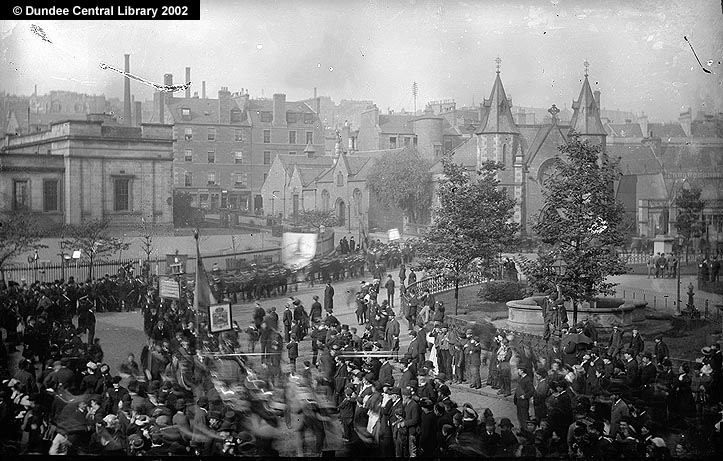
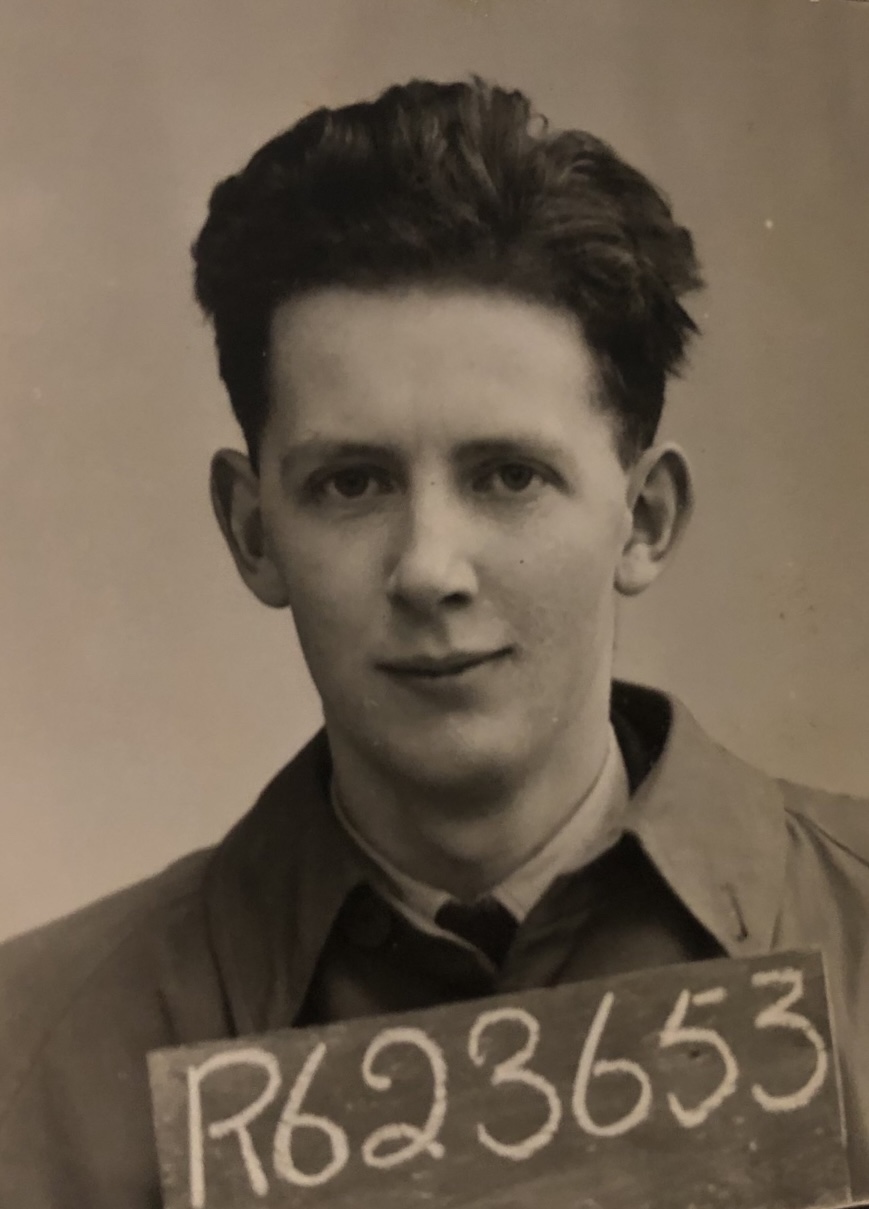

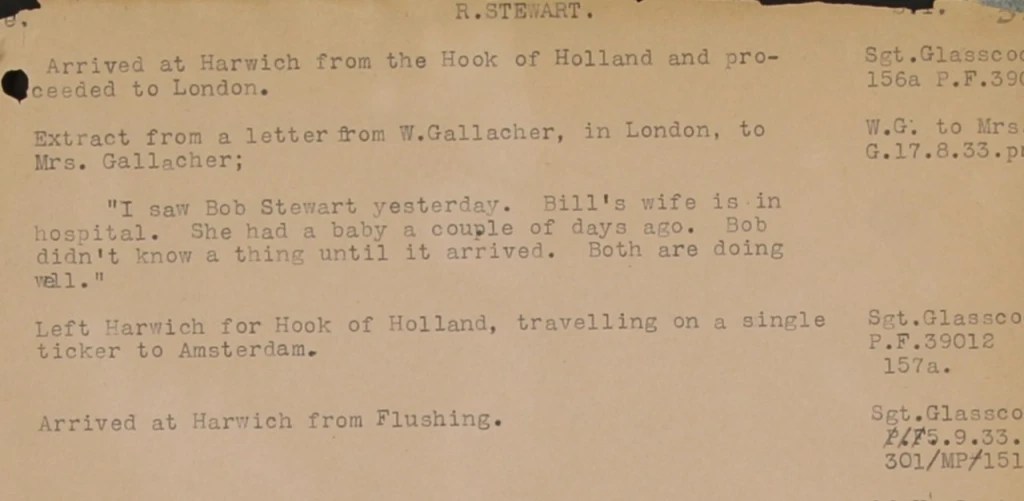


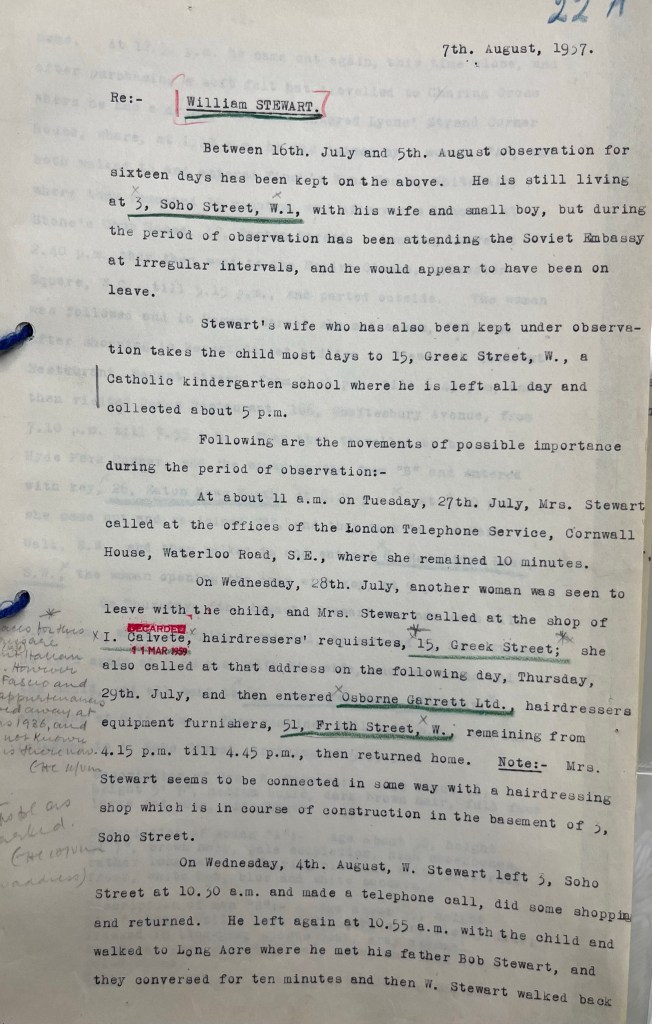
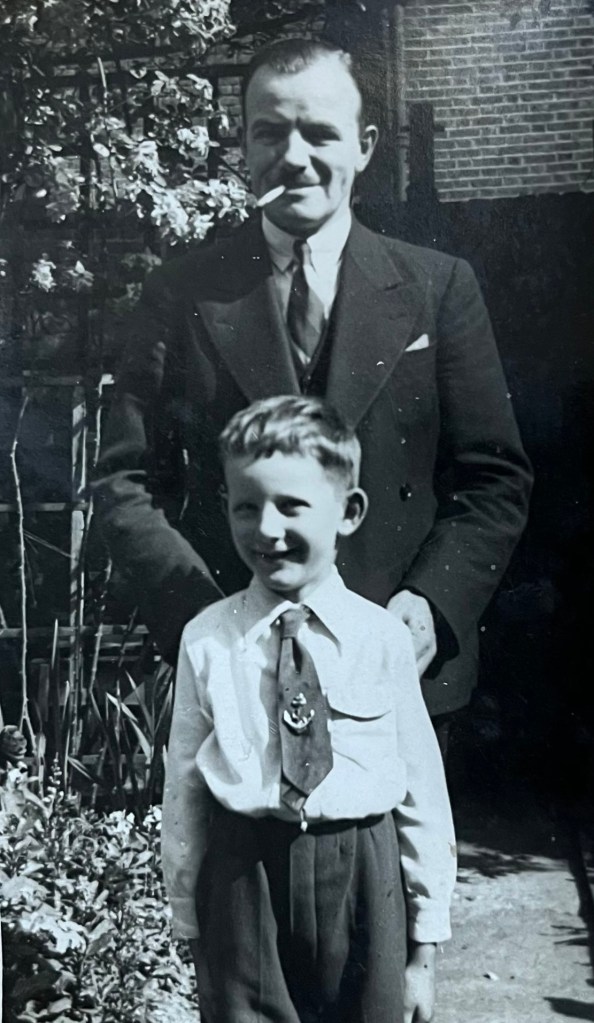


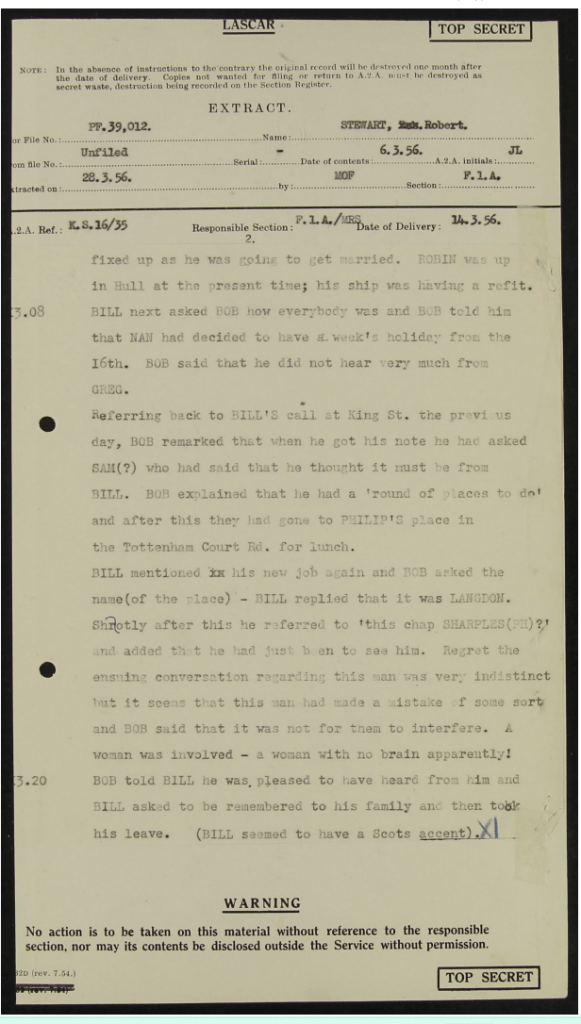
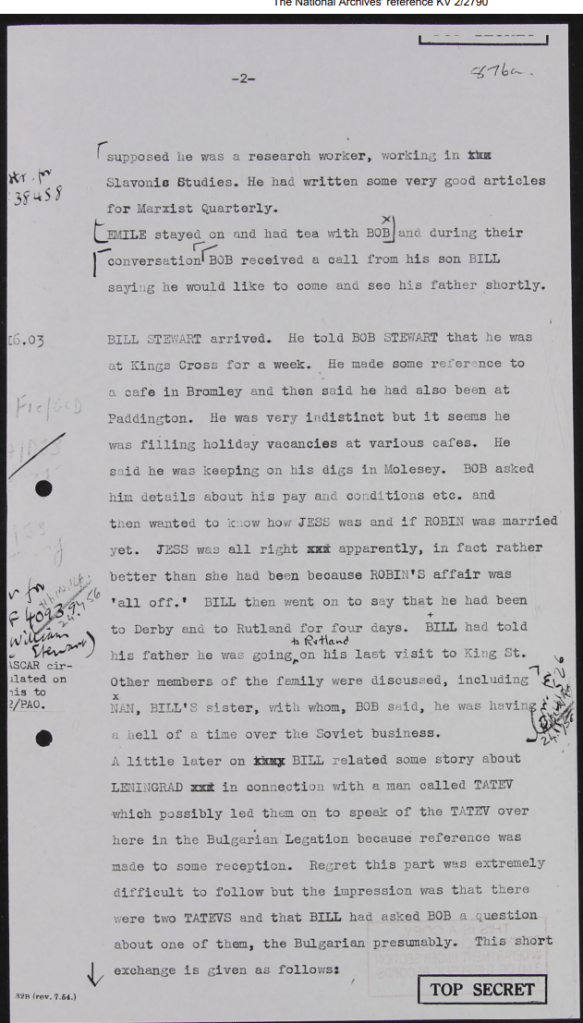
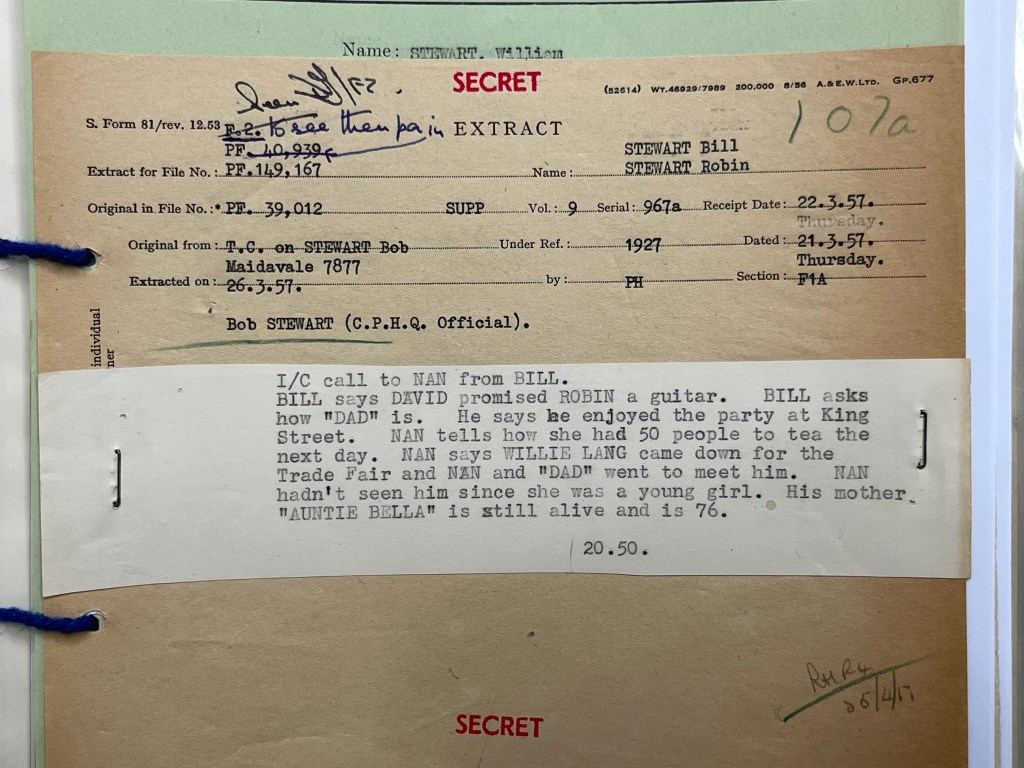

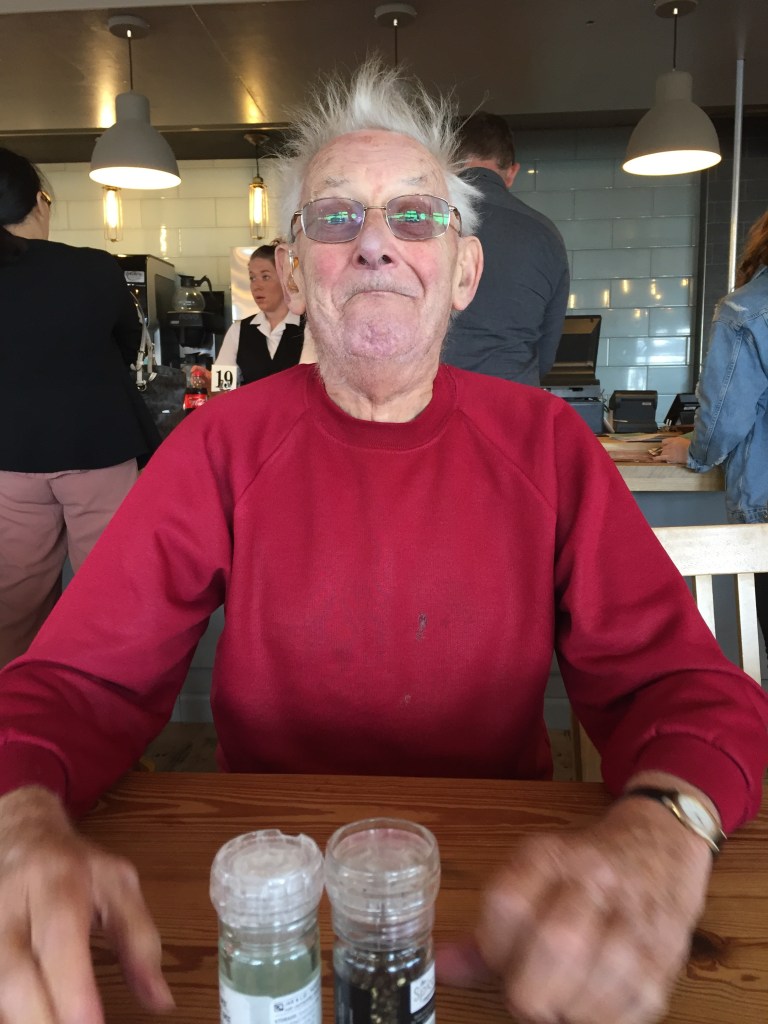
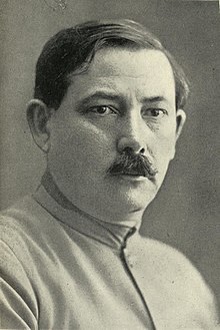
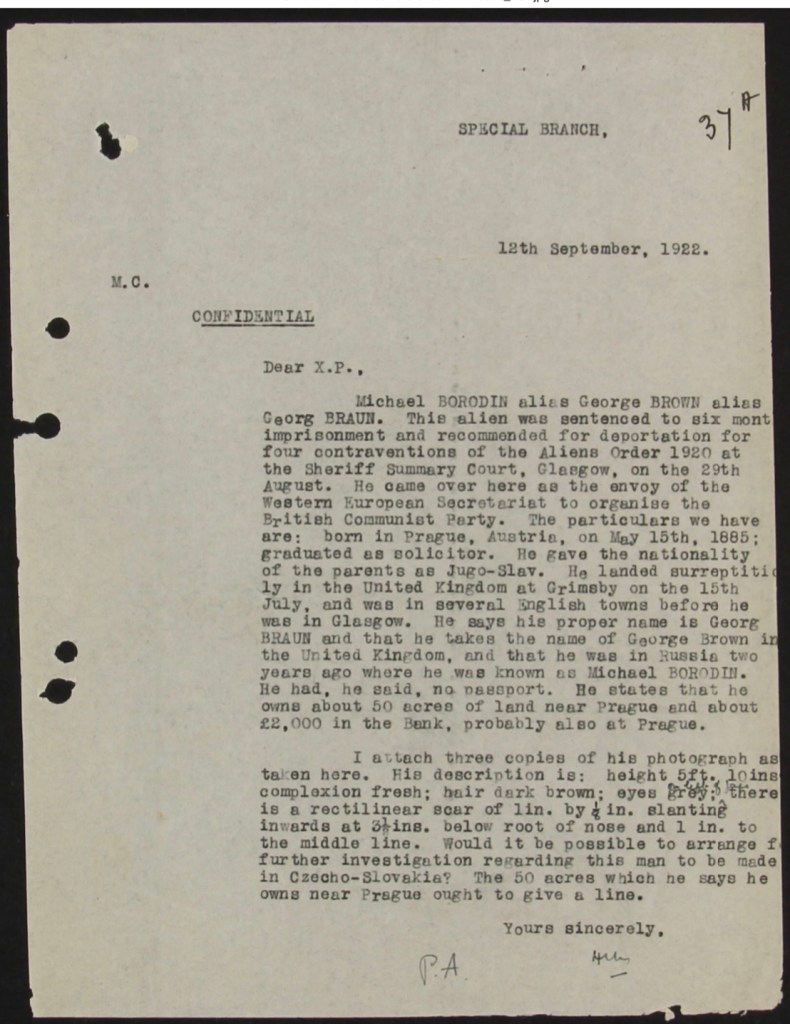

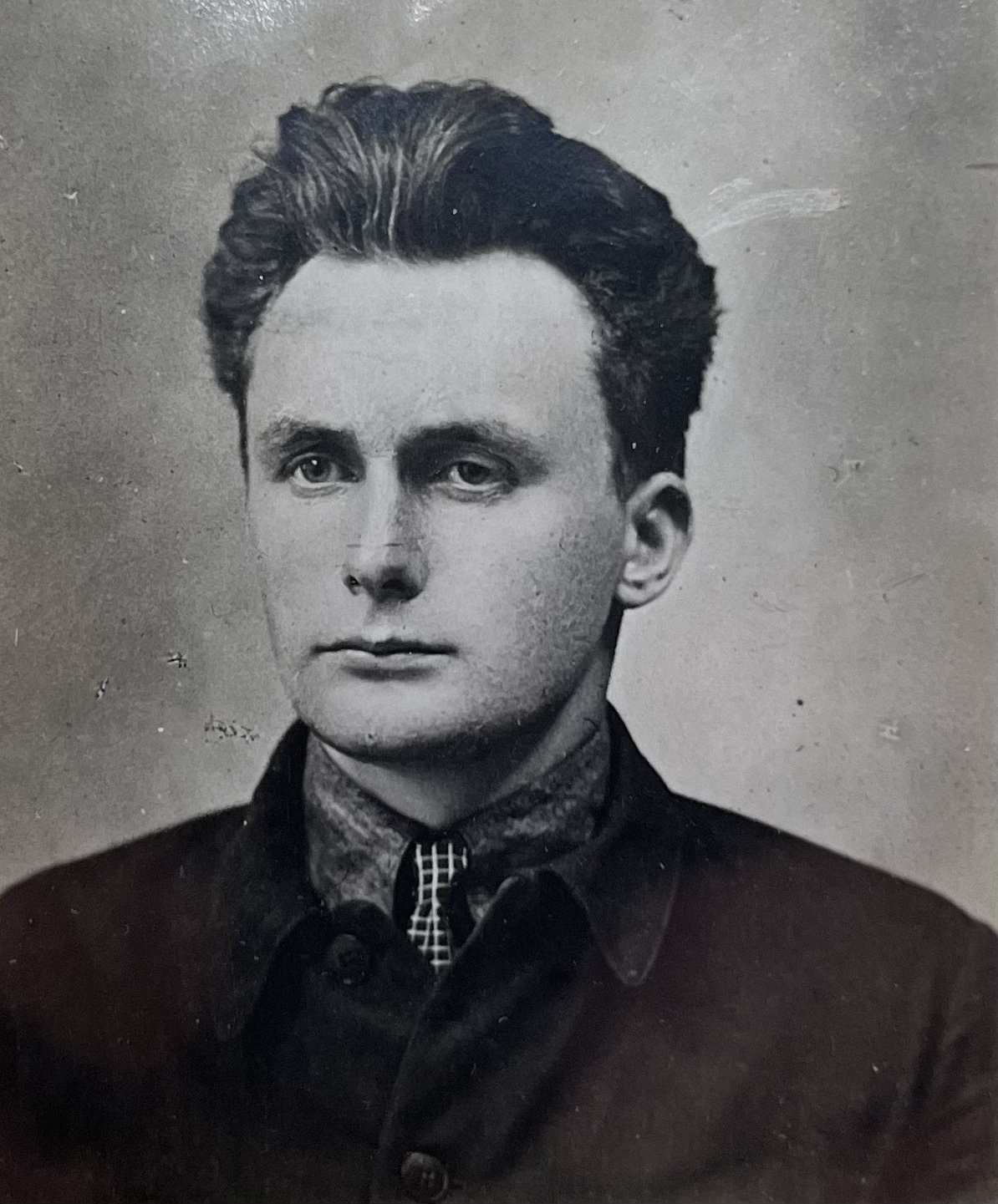
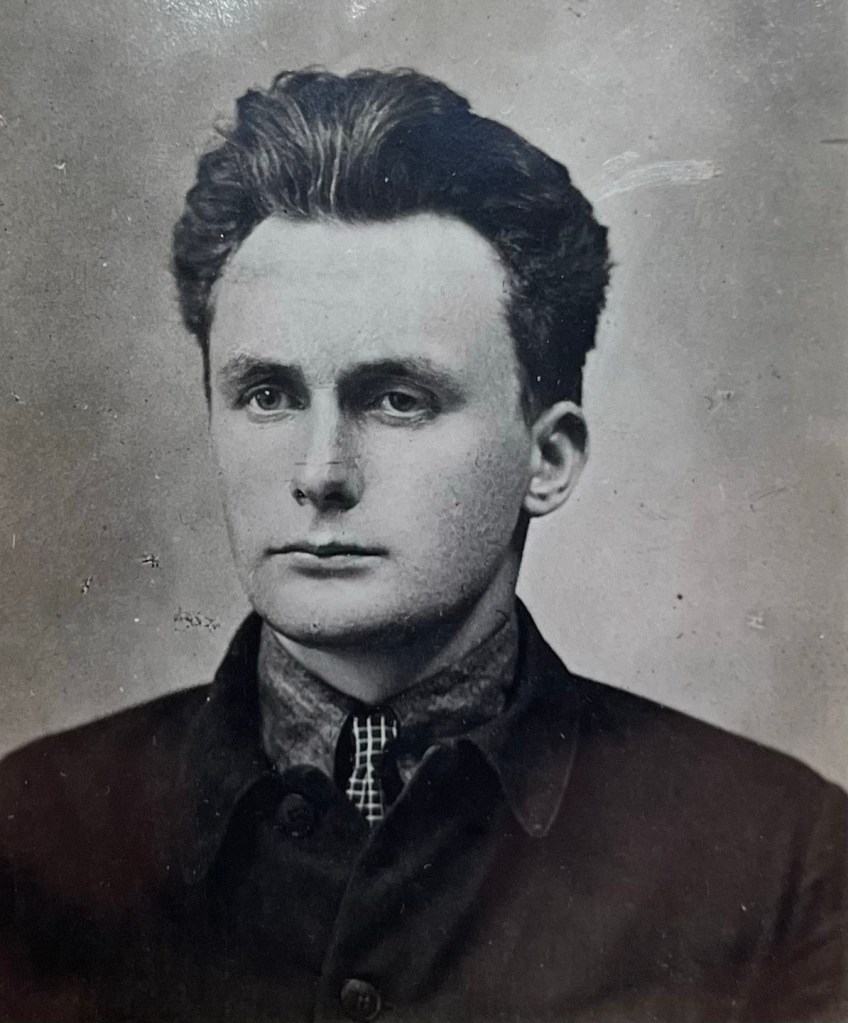

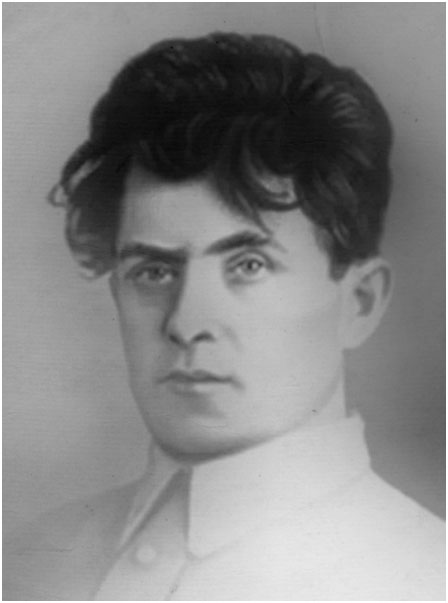
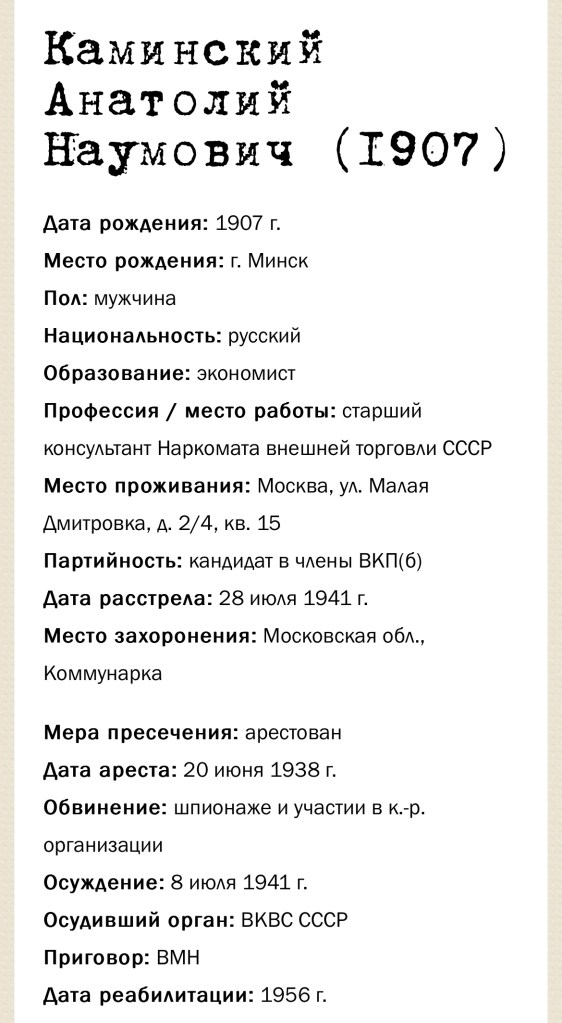
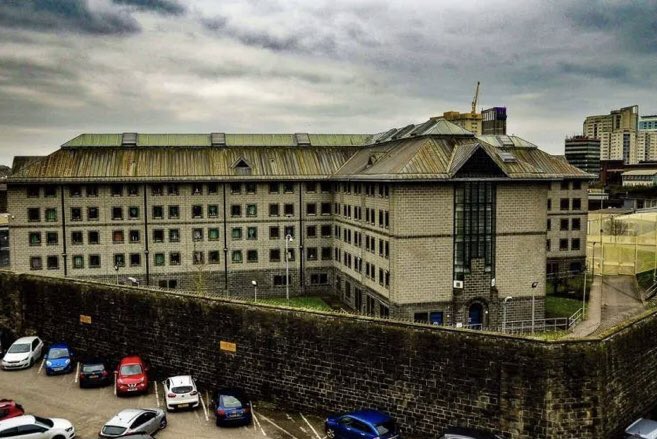

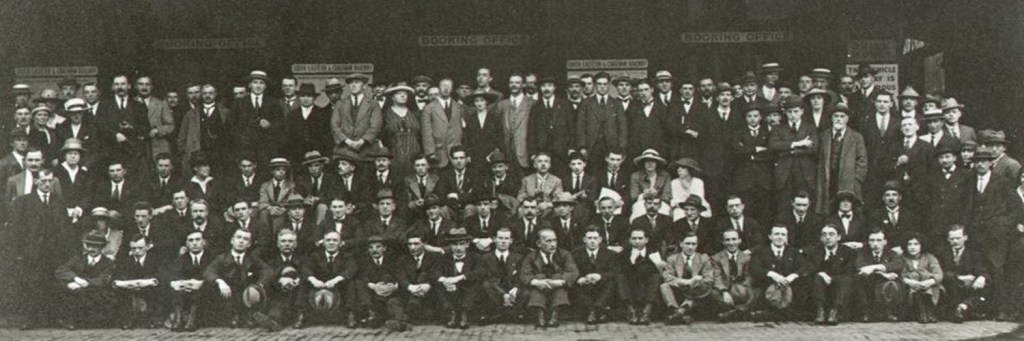

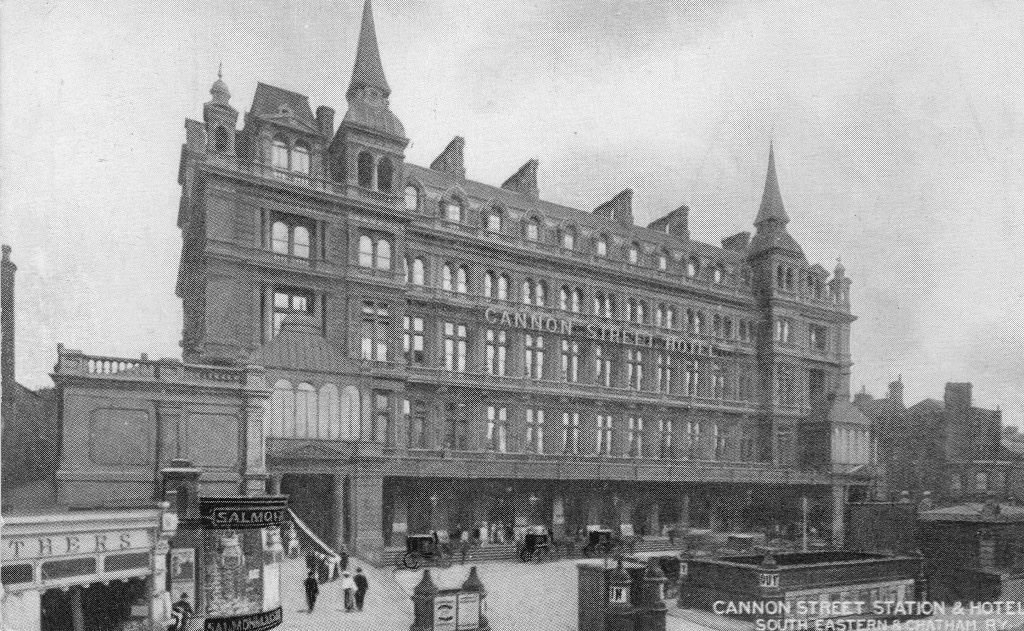

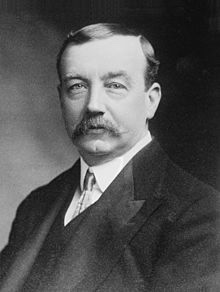



 Breaking the Fetters