Breaking the Fetters Chapter 20: Moscow and the Comintern.

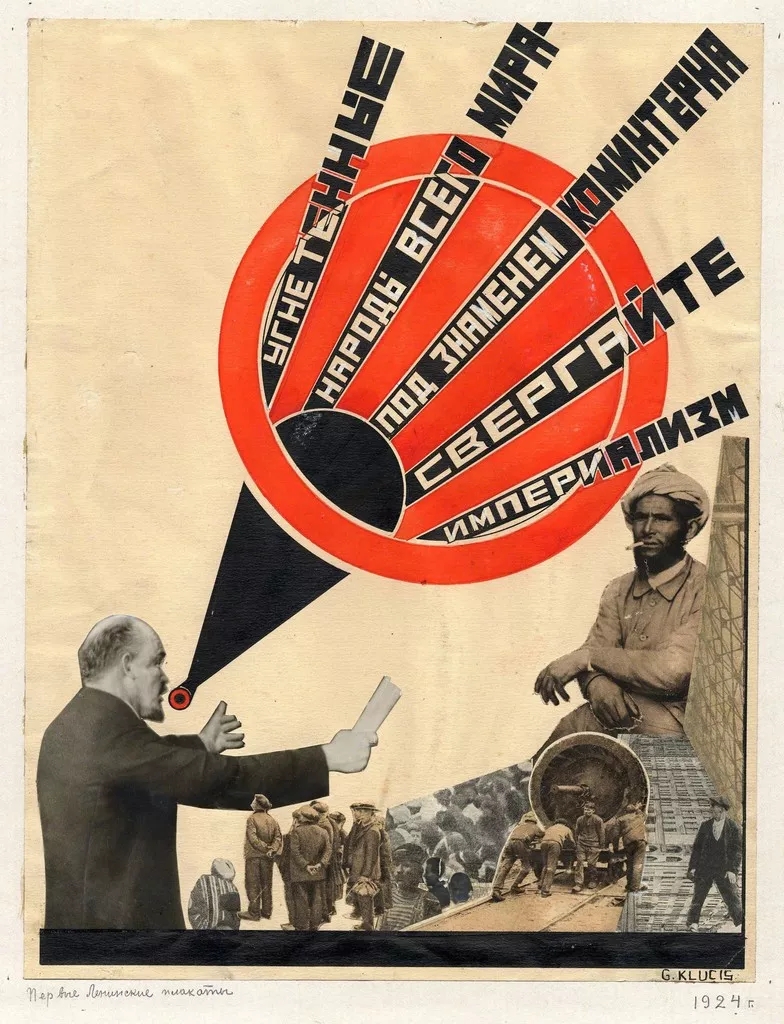
“The oppressed peoples of the whole world, under the banner of the Comintern, overthrow imperialism!” Soviet poster by Gustav Klutsis, 1924. Shamelessly nicked from @sovietvisuals.

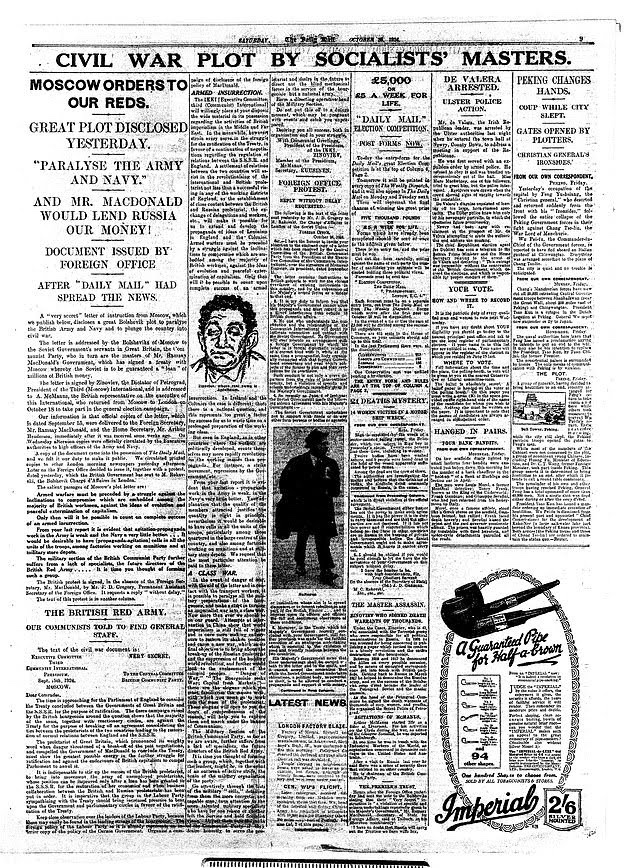
I went to Moscow early in 1923 as British representative to the Communist International, or the Comintern as it was called more briefly. I was a bit diffident about accepting this job because I regarded myself as an apprentice in Communist Party work. My wife and daughter came with me and I left my two sons with my sister, so the arrangements were quite good. I liked the job very much. I was living in the heart of the revolutionary political world. I was meeting people who knew much better than I the main world political events and could interpret them much better. I was taking part in discussion with leading working-class politicians from all over the world, all with their special problems, and if at times I could not make a contribution at least I could listen and learn.

In the Comintern I did a fair amount of foreign work. Because I had a British passport, I was better able to cross frontiers and move about freely than many of the other foreign representatives. At this time, the Comintern was very much in its formative period and the communist parties of the various countries had serious conflicts of opinion on many political questions. There were many commissions in the work of the Comintern, trying to smooth the way and deal with the problems.

Troubles had grown in the Swedish Communist Party and the Comintern sent a delegation of which I was a member to help to sort things out. In Sweden I was known as Comrade XR (Executive Representative). Half the Swedish party were really right-wing social democrats, both in theory and action.

The party was led by Seth Hoglund, a social democrat who certainly put no R in revolution but had a very good anti war record. The party was split in two; the left-wing section was the more aggressive and was able to retain control of the party paper. Hoglund was a likeable chap, not in any way vicious but a true social democrat and for quiet, steady reform. The leadership afterwards passed to Samuelson and some others, but they too quarrelled and some left the party.

At this time Scandinavia was very important. Politically, despite some setbacks, the left forces were making good progress. There was also another practical reason. The Norwegian party had a good standing among the seamen, which enabled comrades to get across the seas illegally. Bill Gallacher, Sylvia Pankhurst and a number of others crossed the North Sea in this way. Irish sailors did the same before Eire became a state, ready to smuggle people across on the Irish boats. De Valera was got out of Lincoln Gaol and smuggled across in this way.

Many people with whom I worked and whom I met during my time at the Comintern are now dead. A few are still alive. Some made their political mark, some dropped out of political life in the development of the struggle, because being a Communist in politics is never easy, no matter in which country you are domiciled.

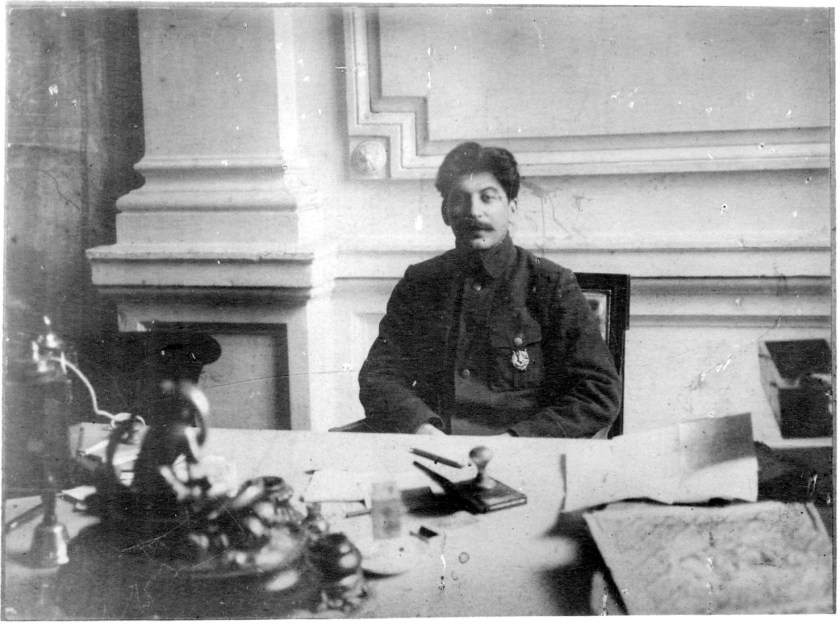
Stalin in the early 1920s- “quiet, painstaking and efficient.”

Naturally the reader will ask what I thought of Stalin. I always speak of people as I find them. I worked with Stalin on a commission on Germany after the defeat of the German party in 1923. I found him a quiet, painstaking and efficient chairman. He chaired the commission which was composed of members from all parties resident in Moscow and from the Russian party, which was represented by Kuibishev, who later became Minister for Planning in the Soviet Union. The discussion in the commission went on for weeks, and one interesting point was that after every session the delegates and their interpreters met singly with Stalin to make sure that if they had not spoken during the discussion, he would be aware of their views. In this way I had several talks with Stalin. I remember that one particular discussion he and I had dealt with the way in which the German party central committee worked. In my opinion there was too much bureaucracy and I said that certain changes in work should be considered. The Comintern could not enforce changes, since the national parties were independent; but the Comintern could, and did, make suggestions. At the end of our tête-a-tête Stalin made a number of pointed remarks and agreed with me on the need for change, but there was a great battle of personalities in the German party at that time. The need for unity was so important that one had to cut the suit according to the cloth and not seek changes that might possibly widen the division.

This commission usually started work about midnight. As a rule I was getting ready for bed when the telephone would ring, and then it was down to the Kremlin for an all-night sitting. They did not rush it, these people. Many of the Kremlin lads were long-distance men. I remember one night Terricini- the delegate from Italy I think his first name was Angelico, but he was certainly no angel -was delivering his point of view in French and doing it very well. He had been at it for over an hour and a half when Stalin intervened to say,

“Tovaritch Terricini, French is a beautiful language to listen to but it is now three o’clock in the morning.” Terricini nodded to show he had heard and then continued with his speech, as if no intervention had been made.

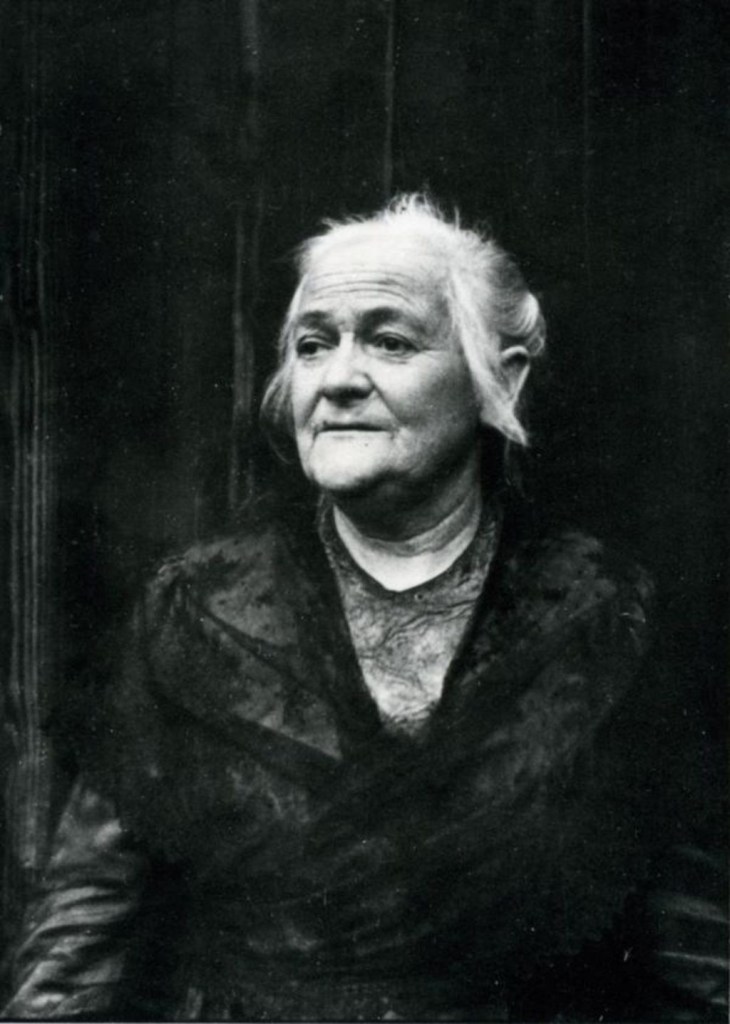
Clara Zetkin

During this German commission discussion, some leading members of the German party went after Clara Zetkin; they baited her unmercifully and this really sickened me. It was an exhibition of political cannibalism that should never be tolerated in working-class politics. Clara Zetkin may have had some weaknesses and faults we all have but she had many decades of selfless working-class struggle behind her and a great reputation both in the international communist movement and in Germany. I protested vigorously against the manner in which some of the German comrades were acting and, with several other delegates supporting me, Stalin said, “We hold a high opinion of Clara Zetkin, our Russian women have learned much from her work, and we will not permit this type of vilification.”

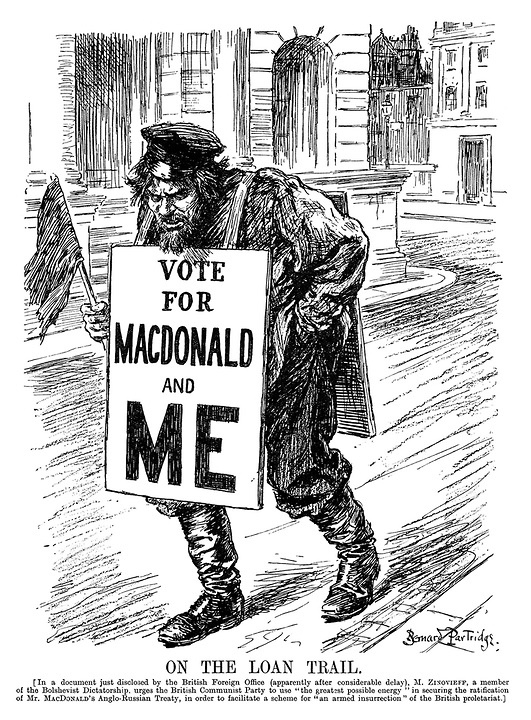
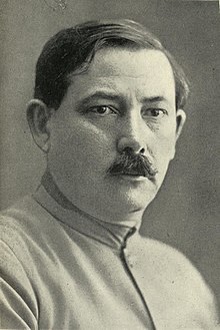
Radek was another member of the Comintern with whom I worked in close association When the first Labour Government was formed in January 1924, Radek, Theodore Roth-stein, Clara Zetkin, some others and myself, worked on a manifesto to be published in Britain in the name of the Communist International. Radek was the most remarkable reader I have ever come across. He had an insatiable appetite for newspapers and had a wide and fundamental knowledge of world politics. Lenin’s criticism of Radek was that he read too many bourgeois newspapers and I think he inferred that Radek was influenced by them. But Radek was most helpful to me. He was also a humorist with a ready answer to any question. He wore long side-whiskers, like the Ancient Mariner, but one day when I met him they were shaved off. “Oh, what’s happened to the growth?” I asked. “Got to go to Germany so I must have a disguise,” he replied. Another time when I was having a difference of opinion with Walton Newbold, who was once Communist M.P. for Motherwell, and was lamenting about it, he said, “Never mind Newbold, Bob, he not only sits on his arse, he sits on his brains as well.”

Kamenev, Zinoviev and other leaders of the Soviet party, Dimitrov from Bulgaria, Pieck from Germany and many others from other countries, I met both at work and socially, but as a rule the discussion was mainly political. I never found it easy or even practicable to discuss everyday “common-place” happenings through an interpreter. Language to me was always a great barrier and I am sure it is for everyone.

Radek was the one who spoke all languages. I heard him speak and communicate with ease with people of many nationalities. I never knew how many languages he spoke. He was a Pole by birth. He once said to me, “Bob, there are good Jews and bad Jews, and the worst of the bad Jews are Polish Jews and I am one of them.” I don’t think the part about Polish Jews is right, nor in my contact with Radek was it true of him. In Moscow, in all his work with me, he was a most able and helpful member of the Comintern.

Naturally, apart from the leading comrades I got to know in the course of my work, I also met the ordinary Russian people. A group of Russians I got to know fairly well consisted of teachers. This happened somewhat accidentally. One day my wife and I were having a walk in the suburbs, and as we passed a school the children were coming out. Some of the children, observing by our dress that we were foreigners, asked us questions. When they found out that we were British, a number of them had to try out their English on us. Because of this incident we became very well acquainted with the school and the teachers. I took any English delegations that came to Moscow to the school, and through this the pupils became the proud possessors of footballs, boots, sweaters and other sports equipment. I found the children most friendly and com-paniable, with no sullen shyness, and the teachers were born to their jobs aunties and uncles they were called. The school owned a huge boar, a real Goliath. One day I said to one of the children,

“Big boar.” “Da, bolshoi -bolshoi Curzon!”

(Lord Curzon was the most notorious anti-Russian British statesman of the period, the originator of the attempt to enforce the Curzon line).

Another school I used to visit was a school for musically gifted girls. The teacher was the first flautist of the Bolshoi Orchestra. The children gathered round in the most natural way and sang and played spontaneously, everything from folk drama to grand opera. Watching these girls, I began to realise the inborn musical understanding and appreciation of the Russian people, which has endured for centuries.

I remember the first time in my life I heard community singing. It was at the Agricultural Exhibition in Moscow in 1924 I was wandering around with Jim Larkin, the leader of the Irish Transport and General Workers’ Union, and we saw some people congregating near some seats. We strolled over to see what was happening. Out comes a fellow with a corduroy jacket and a pair of high boots curled up like a concertina. He stepped on to a small platform and started to sing, and away went the audience in wonderful community sing-ing. I couldn’t follow the words but there was no mistaking the real genuine feeling and natural musical ability of the crowd.

For the citizens of Moscow, however, it was not all singing and playing. Moscow was a political city, everyone talked politics. Even in the armed forces, the aim was to have politically understanding soldiers, sailors and airmen. Our party was a patron of some Russian regiments, and so got to know the officers and men. It was this political consciousness on the part of the Soviet soldiers, brought about by intense political discussions of day-to-day events, that created the understanding of the necessity to fight for the independence of the Soviet Union and the determination to crush the Nazi invaders in World War Two.

On the political side, I naturally attended conferences and meetings of the Russian Communist Party, and met with Russians from Stalin downwards. What struck me from the beginning was the business sense of the Russian political workers, very few of whom were business men. In these early days of Soviet rule, blacksmiths, mechanics, textile and other workers were pitchforked into top political jobs and had to adapt themselves to new work, sometimes dealing with old managements in production and, more important, themselves forming new managements in the big new factories. I remember Milnechesneski, who was an ordinary worker, telling me one day he was the biggest textile owner in the world -he had just been put in charge of the cotton textile industry.

In the countryside, many of the peasants were illiterate but, of course, while illiteracy is a great disadvantage, it does not mean lack of intelligence. The Russian peasant, who was intelligent enough to revolt against -and end serfdom, was also intelligent enough to combine with the Russian working class to end capitalism and also to end illiteracy among the peasant masses in the Soviet Union.

It was during my time in Moscow that a great tragedy befell the international working-class movement.

Lenin died in January 1924. I remember this well because I was then a member of the Executive Committee of the Comintern which was summoned immediately: firstly, to hear the announcement of Lenin’s death and also to make all the necessary arrangements for the funeral.

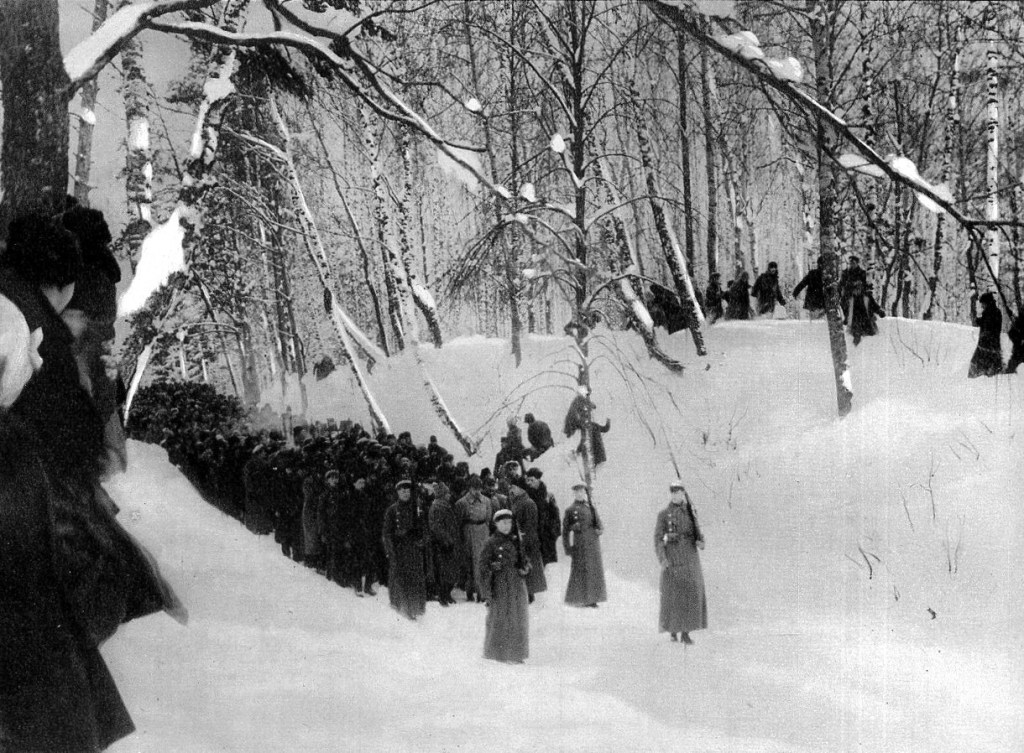
Harry Pollitt came over immediately from Britain to represent the British Communist Party at the funeral. It was desperately cold and both Harry and I felt it very much. It was forty degrees below zero. Fires were kindled in the streets and I remember seeing the militiamen’s horses going over and sticking their noses in the fire to melt the icicles. We were as cold as the horses but at least we could pull down our fur caps and peer out occasionally to see where we were going.

I was one of the delegation of the Comintern chosen to go to Gorky, where Lenin had died, to accompany his body back to Moscow. We left by train from Moscow at about 5am and then travelled by peasant sleigh from Gorky Station to Lenin’s house. From the station you could see the house down in the valley, but the road to it so twisted and turned that even by sleigh it took us a long time to reach it. At the house Lenin was laid on a bed wearing an ordinary Red Army man’s uniform with the Order of Lenin pinned to his breast. The house was full of people: leading members of the Russian Communist Party, of the Comintern, delegates from the factories and the professions, and amongst them all wandered a big black cat who had been a very great favourite with Lenin.

Lenin’s body being taken to Gorky station en route to Moscow.

The body was placed in the coffin and carried to the station en route for Moscow. Leading men from the party and the factories took turns to carry the coffin. On the journey, at every station, on the way, thousands of people waited to see the train pass. I do not think I ever saw so many tear-stained faces in my life. It was a very moving demonstration of the love the ordinary people for this great man.

When we got to Moscow I realised for the first time in my life what a mass demonstration really meant. Not a demonstration that was called, but one that came. Every conceivable foot of space was occupied. A great mass of people followed the coffin as it was borne from the station to the Dom Soyus (Hall of the Trade Unions), and from every side street and opening, mass upon mass of people converged with the main stream or waited their turn to do so. At the same time the digging was proceeding on the site of the mausoleum, so there was blasting and picking going on. All these streets were crowded with sad-eyed mourners. Every shop and hotel and all central places were ordered to keep open twenty-four hours a day so that people overcome by the cold could go in and thaw out.

Moscow has witnessed many varied scenes in her many centuries of troubled history; her ancient records must be filled with historic incidents, but never had such scenes been witnessed as during the days of Lenin’s lying in state and funeral. The Dom Soyus, a former palace of nobility, once the setting for the glitter and pomp of the aristocratic Tsarist circles, was the place where Lenin lay. Here his own people, the working masses of Russia, could pay their last tribute to the mighty leader of the Russian working class and the world proletariat. “Our Comrade Lenin” everyone said, as if he were a father or a brother.

For four days and nights, for mile after mile, people queued four abreast to pass the bier on which Lenin lay. Along with Harry Pollitt I took a turn on the guard of honour. I remember I was with Chicherin. The bier was surrounded by wreaths of flowers of every description, sent from all over Russia and indeed from all over the world. The magnificent hall with its white marble walls was a blaze of light, contrasting with the deep varied hues of the flowers, and on the balcony the band of the Red Guards played music befitting such a solemn occasion.

Delegations from all over Russia streamed into Moscow, joined the endless queues, and placed their wreaths as they passed the bier. But there were no kings or queens, no aristocrats and their ladies, no great admirals or field marshals with glittering medals. Only the endless stream of workers and peasants, soldiers and sailors with their wives and families. The queues never seemed to get less. Over a million had passed the bier and still the queues remained. It had been decided that on Saturday the doors must close at 12 noon. But on Saturday afternoon there were still hundreds of thousands of people waiting with banners and wreaths, still train after train arrived, pouring the delegations into Moscow from north, south, east and west. Every minute messages from all over the world came, telling the world-wide grief at the passing of this great working-class leader. Certainly, no king, no emperor, no bloody tsar has been honoured as Lenin, the leader of the world working class.

At 7am on Sunday came the final parting. Around the coffin stood the leaders of the Russian Communist Party and the Communist International, and with them, keeping her last vigil, was Krupskaya, Lenin’s wife and constant companion during thirty years of struggle. Lenin’s body was borne to the Red Square. As the coffin was raised the orchestra wailed the funeral march. After this a moment’s silence, then the International burst out, strongly and boldly sung. I thought then, this is the answer to the enemies of Leninism whose death was rekindling the hopes of new triumphs for imperialism. this is the answer of Lenin’s pupils, the Russian workers and peasants.

As the coffin was carried into the streets, crowds formed behind it. Leaders of the Party and trade unions took turns to shoulder the coffin along the Kremlin walls to the centre of the Red Square where the raised tribune was placed. The people filed past in millions until 4pm. Then silence just before the cannons crashed out the salute with a roar which could be heard in every corner of the world; factory sirens in every Russian city and village took up the salute; men, women and children stood still in silent homage. In every country throughout the world the workers paid their last respects to a great leader, who from small groups of Marxists had led the Russian workers forward to the formation of a mighty Communist Party and a mighty workers’ Republic and had laid the foundation by his leadership for a mighty Communist International.

The coffin was carried into the Mausoleum, Lenin’s final resting place. Queues formed again to pass the bier. It went on all night, all the next day and every day since. the years have passed and still the Russian workers and peasants and the visitors to Moscow from foreign lands pass the bier to pay homage to Lenin, the great working-class leader whose genius guided the people of downtrodden Russia and millions far beyond it, to break their chains and march to the not-so-distant communist society

Breaking the Fetters Chapter 19: A Storm – Workers in Action.

During one of my periodic visits to Dundee in early 1923 I ran into a serious confrontation between the jute employers and the jute workers. To make things more serious this took place while nearly 25 per cent of the workers in the city were unemployed. A running battle was taking place over unemployment pay and parish council assistance to those who had exhausted their unemployment benefit.

In February 1923 there were 10,500 workers claiming benefit on the Dundee unemployment register. This was by no means the total unemployment figure; many women workers were not entitled to benefit when they were unemployed. Under the unemployment acts then in force, by April 4th 7,000 would be completely cut off from unemployment benefit and would then have to apply for parish relief. This bleak prospect was causing a serious crisis in every home in the city. The scales for weekly parish relief were 7s. 6d. for a husband, 7s. 6d. for a wife and 1s. for every child under fourteen years of age. This meant a family consisting of man, wife and four children under fourteen years of age (by no means an uncommon family then) had to live on 19s. a week.

Into this already seething cauldron of discontent another problem boiled up. In Cox’s jute mill, one of the largest in the city, employing thousands of workers, the management introduced new spinning frames and demanded a reduction of women spinners. Where formerly three worked, two now would be employed, thus saving the wage of every third spinner. No offer of extra payment to the spinners left was even contemplated. The impudence of such a demand was highlighted by the fact that only the week before, the Associated Companies of Jute Industries, whose chairman was Mr. J. Ernest Cox, had published their profits for the year showing a record £606,224 and declaring a dividend of 9 per cent, all of which Mr. Cox said was very satisfactory. No wonder Cox’s workers were hopping mad. The spinners refused to work the machines and held up the work for the rest of the mill, so the management then locked out all the workers. The mills in the Federation followed suit and in a few days 30,000 jute workers were on the streets swelling the number of unemployed to more than half the population of the city. The locked-out workers got no unemployment pay and were being denied relief from the parish council. There was no doubt in my mind that behind-the-scenes attempts were being made to smash the jute trade union and to try and bring the workers to heel.

The party had discussions with the workers involved and decided to approach the trades council. At first there was a joint effort to organise collections and pay out a few bob to the unemployed, but it soon became clear that this was not even scratching the surface of the problem. Arrangements were then made for a joint demonstration to demand that the parish council raise the relief rates and pay relief to all unemployed.

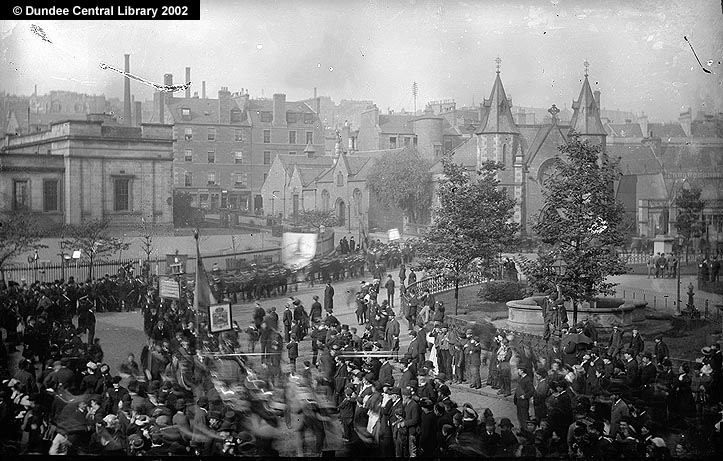
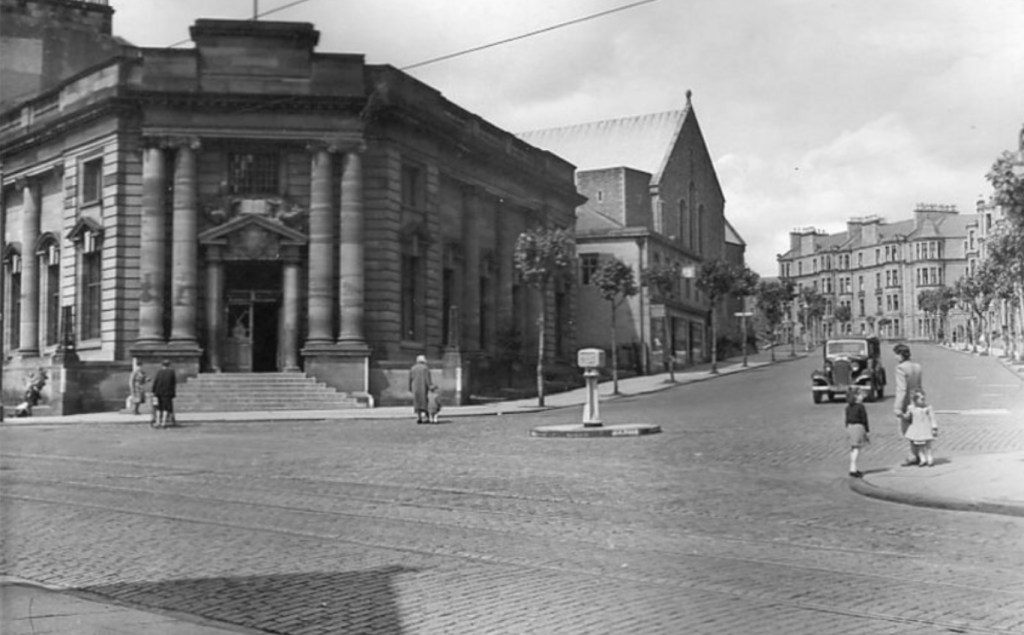
The demonstration was the largest, noisiest and possibly the most successful in Dundee’s history. The crowd assembled in the Albert Square. The newspapers at the time estimated that 50,000 filled the Square and the adjoining streets. The chairman, one of the locked-out workers, called on me to put the proposals on what should be done. I suggested that the demonstration should elect a delegation to go to the parish council, which was holding a meeting that evening, to table our demands. Secondly, that the crowd should form fours and march to the parish council offices at West Bell Street, making themselves and their demands heard on the way, and continue back to the Square where the delegation would return to give their report. A deputation of ten was selected including Billie Tom Stewart, Councillor John Ogilvie, the A.E. U. organiser Alf Maloney, myself and others. The ten heading the procession, we set off. When we reached West Bell Street there were hundreds of sweating policemen struggling with thousands of people, trying to keep them on the sidewalks so that the demonstration could pass on the road. All traffic was completely halted. In Dundee most of the jute employees were women and many of the husbands stayed at home to keep house and make the meals, so there was the contradictory spectacle of the majority of the marchers being women and those on the sidewalks men. The call went up from the women marchers: “Get the kettle-boilers in the march!” so there was a rush from the sidewalks into the road. The demonstration then became a seething mass of slow-moving humanity.

As the head of the march came to the parish council offices, the deputation dropped off and were admitted to the parish council meeting. At least we got there. A number of the parish councillors were unable to get in the front door and had to be hoisted in by the rear windows. The chairman, Davie Duncan, a pal of mine from the old Temperance movement days, opened the meeting, but no one heard a word he said; you could see his lips move but there was no sound. His voice was entirely drowned by the deafening noise from the thousands passing outside shouting slogans for unemployment benefit, increased relief rates, snatches of “The Red Flag”; the sound bounced off the walls of the building and filled every room. At last Bobby Allan, the clerk of the council, made signs that the delegation should be heard. Now Bobby Allan was a terror in Dundee. In the old days when the mothers wanted to frighten their children and get them to go to sleep they recited the old ditty:

“Hush ye, hush ye, dinna fret ye,

The Black Douglas’ll ne’er get ye.”

In many homes Bobby Allan had replaced the Black Douglas. He was a real swine who saw working-class people as beasts of burden and treated them as such.

Allan began by objecting to one of the delegation called McGuire and demanded that he be asked to leave. I promptly told him and the council that McGuire was an elected member of the delegation and if he left, all left. That finished that lot! So we had our say. I let Baillie Stewart and Councillor John Ogilvie, “Mr. Facing-both-ways” as we called him, have the first go. They started with tear-jerking humanitarianism, poor people without a crust of bread, children who were the future citizens starving, and so on. With the flint-hearted parish councillors that didn’t get us very far. When it came to my turn to speak, Davie Duncan said, “Please be brief, Bob.” “Why me?” I asked. I told them the workers were entitled to a good life and it was no fault of theirs that they were unemployed. I accused the jute bosses of locking out the workers and said they were deliberately trying to bust the trade union. “The workers won’t have it,” I said, “and what’s more if you don’t give them money to buy food and clothes, they will likely take them without asking your permission.” I cautioned them and said if there was any trouble then it was the fault of the parish council and not the starving workers.

Bobby Allan said there was the question of legality involved. Discussion would have to be held with government authorities on raising the scales of payment and certainly discussions with the unemployment exchange before any payments to the locked-out workers could be made. When Bobby cracked the whip the councillors usually obeyed, but on this occasion a few demurred. However, he had the majority with him. So we went back to the Albert Square to report. What a thunderous howl of rage greeted my simple announcement that the parish council were not prepared to move meantime! An unbiased outsider would have thought the day of revolution had arrived. From all sides came the demand to smash the council offices, to smash into the shops and take the goods “that belonged to the workers”. For a time it looked as if control of the meeting had been lost. The chairman then called on me to make any proposals of what could be done. I suggested that the demonstration refuse to accept the parish council decision as final, that the deputation should return to the council meeting, and that the demonstration form a procession again and march as before, only this time making their demands a bit louder. I knew that the “spies would be out” and that before we reached the council offices they would know what had transpired on the Square.

This time there was no one on the sidewalks; there was just a huge surging mass of humanity. On the way the window of G. L. Wilson the clothier went in, and this was followed by a few more, including the Buttercup Dairy, and a few goods were extracted; but the wonderful thing was that with the police impotent because of the vast surging mass, thousands of these people desperately in need of food and clothes remained disciplined and orderly.

When the deputation was received the second time I charged Bobby Allan with provoking the workers and creating a situation in which thousands of people could be seriously injured. I said if I went back and told these people nothing was to be done to relieve their distress, then it was the parish council who would be responsible for what would happen. Some of the councillors, no doubt already well briefed on what was happening, supported me, and Bobby Allan knew he would have to make concessions, so we started to talk. First it was conceded that the scales of payment should be raised, and then that the locked-out workers would be given relief while discussions proceeded with the unemployment exchange authorities. So it was back to the Square with a success report and victory for working-class solidarity and united action. This decision to a certain extent ended the starvation tactics of the jute employers and gave the workers confidence to fight on. Dundee people say Bobby Allan never forgot that evening and for years after he continued to extract revenge from the individual cases he dealt with in the parish council.

The case of the locked-out jute workers dragged on. The jute employers were hard men and did not give up easily. I am sure one of their aims was to smash the jute union, at least to cripple it. The case was discussed in parliament where Edmund Morel, M.P. for Dundee, demanded that something be done to end the lock-out. The Lord Provost tried to mediate but without success. Finally the Minister of Labour, Sir Montagu Barlow, intervened and set up a court of inquiry under the chairmanship of Sir David Shackleton. Naturally the report of the inquiry came down on the employers’ side but, if I remember correctly, it also said that increased rates should be given to the spinners, thus sweetening the blow. The lock-out lasted eight weeks, two months in which Dundee was a storm centre in every sense of the word. It was a remarkable coincidence, but true, that as the lock-out was ending the British Trades Union Congress was opening its first session in Dundee.

Breaking the Fetters Chapter 17: Red Agent in Glasgow.

Mikhail Borodin

As the membership of the Communist Party grew and our organisation developed, better relations with the Labour Party were established in many districts. At the 1922 Labour Party Conference held in Edinburgh in June, the right wing on the National Executive Committee placed a change of rule on the agenda that would prevent such unity and indeed would go a long way towards isolating the Communists from the labour movement. The rule in question concerned the eligibility of delegates to local and national Labour Party conferences and the selection of candidates, and the changes read:

a) Every person nominated to serve as a delegate shall individually accept the constitution and principles of the Labour Party.

b) No person shall be eligible as a delegate who is a member of any organisation having for one of its objects the return to Parliament or any Local Governing Authority of a candidate or candidates other than such as have been endorsed by the Labour Party or have been approved as running in association with the Labour Party.

This change of rule, carried by a two-to-one majority at the conference, was directly aimed at the Communist Party and created a new position in the British labour movement. It was discussed by the Communist Party National Executive, who decided to recommend to their members that where it was necessary, such as in Trades and Labour Councils, Communists should accept the constitution of the Labour Party, and that where Communists were standing for parliamentary or local council elections they should be withdrawn unless there was agreement with the local Labour Party, thus fulfilling the conditions required by the change of rule.

To discuss the executive’s recommendations, I called a special extended meeting of the Scottish District Executive, but fate decreed that we were to have something more on our plate in this discussion. At this time Borodin, a member of the Communist International, was in Britain, and had previously visited a number of districts in England and Wales. He was a lawyer by profession, an erudite and well-informed man. He came to Britain to get an on-the-spot understanding and appreciation of British politics and the way in which the British Communist Party was working.

When I met him in Scotland he told me he wanted to meet people in the labour movement, to get to know them, their background and their attitude to politics. He said I was the only party organiser who had really been able to do this for him. I think that was flattery. He knew all the fine arts of winning people. I had a number of discussions with him and, while I was undoubtedly able to help him in assessing the Scottish political scene, he also greatly assisted me in reaching a deeper appreciation of the way a serious politician must work to win mass support. He patiently explained the value of international work, international trade union contact, international exchange of information in the cultural and educational fields, all of which was very new to me.

At the extended Scottish Executive meeting, Willie Gallacher spoke for the National Executive, emphasising the tactics of the right wing of the Labour Party to drive the Communist members out of the working-class movement, out of the Trades and Labour Councils and finally out of the trade unions. Naturally Mr. Brown, for that was the name Borodin used, asked to speak. He was quite critical of the way a number of Communist members were working. “When I saw the Communist delegates at the Labour Party Conference,” he said, “I thought- if this is how the party is handling the situation then it is manœuvring very poorly.” Borodin was a great story-teller, and went on to say: “It is easy not to get drunk when you pass every saloon bar, but to be good politicians our members must learn to enter these places and not get drunk. To be able to seek affiliation to the Labour Party, the greatest saloon bar I have ever seen, to drink in the bar without getting drunk, that is what is needed. No party can avoid these places.” He talked about the Glasgow Trades and Labour Council. “Here is a basic working-class organisation with 362 affiliations representing 126,116 members. We have fifteen Communists representing their organisations. What do they do? Are we to allow them to be thrown out or do they stay inside and conduct work for the unity of the working class and for working-class policy? Do we fight on ground favourable to the right wing Labour people or on ground favourable to the left wing? Revolutionary tactics demand they stay inside.”

Despite the support of Willie Gallacher, Johnnie Campbell and Mr. Brown for these proposals, there was much criticism in the ensuing discussion of the National Executive’s recommendations, particularly the one seeking to withdraw our candidates where we got no agreement with the Labour Parties. We had already selected candidates for the next general election. J. V. Leckie, Tommy Clark and Ned Douglas, all members of the Scottish Executive, and various other comrades, had a real go. Frankly I could see their point of view and said so in the discussion. At one o’clock in the morning it was voted that we adjourn the meeting on the understanding that we would re-assemble the following week and try and finalise the position.

But the next meeting did not last long. We had just started when the Glasgow Criminal Investigation Department intervened in force. There were dozens of policemen and plainclothes men-they must have been concealed on all the stairs round about. They burst into the meeting and commenced to take all our names and addresses until they came to Brown. “Who is he?” they asked me.”A Yugoslav journalist visiting Scotland, interested in the Scottish Labour Movement,” I answered truthfully. “He’s the man we want,” and they left, taking Borodin with them. This was not an entirely new experience for me, but I admit to being worried during the questioning because I was standing beside a little sideboard we had in the office, hoping they would just leave me there. Fortunately they did. In the sideboard lay Borodin’s briefcase and his private papers. He also left a beautiful big panama hat which would have been a major sensation in Sauchiehall Street any day. I can’t remember who fell heir to that. Once the police had left, we set to work. Goods, chattels and papers were taken away to safe custody.

We arranged for food to be taken to Duke Street Gaol where Borodin lay on remand awaiting trial. This the law allowed. We had a relay of comrades who carried out this duty very willingly and well. The privilege stopped and then he had to exist on the normal prison diet which, in those days, to Borodin, must have been really nauseous, a real punishment indeed only kail and porridge daily.

Our most important task was to find a lawyer to take charge of his defence. Our choice was an ex-bricklayer who had won his way into the legal profession; his name was Alex McGillivray. He worked night and day. In the course of the case Borodin and McGillivray developed a great admiration and a real affection for each other. I never heard a lawyer speak of a client with such profound comradely feeling. Even so, the defence was not a smooth run. Borodin was trained in American law and practice and Alex had great difficulty in persuading him that this would not take a trick in the much more subtle practices of the Scottish Court.

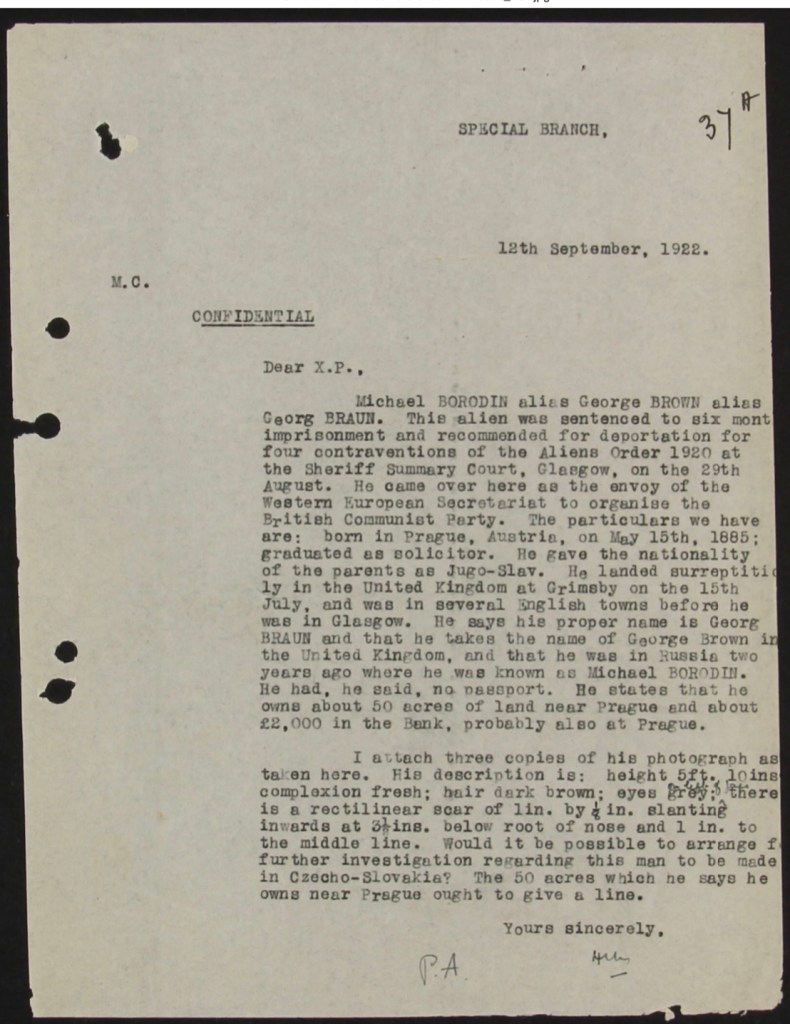
The newspapers made a meal of the incident. “Underground Agent of Communism Caught”; “Red Agent in Glasgow” were two of the headlines. On Wednesday, 3oth August 1922, Borodin appeared in the Glasgow Court. The Procurator Fiscal was J. D. Strathearn and Borodin was charged that, at 156 Vincent Street, Glasgow, he (a) failed to produce a passport to the Registration Officer; (b) failed to produce a registration certificate; (c) refused to answer questions.

The Procurator Fiscal said Mr. Brown, alias Borodin, was a Yugoslav journalist, in Britain without the knowledge or authority of his country. How he came to Britain was not known. The British Intelligence considered him a dangerous person because he was sent to this country to foster revolution and had been found in Glasgow about to deliver an address. The C.I.D. considered his arrest very important. He had previously been in Britain, but on this occasion had only been in Glasgow one day (a big build-up for the efficiency of the Glasgow C.I.D., but a lie). The Procurator Fiscal asked for a prison sentence and deportation. The sentence was six months’ imprisonment with deportation immediately on release.

Note from Special Branch about Borodin’s imprisonment.


Borodin served his time in Barlinnie Prison in Glasgow. He did not like jail, a sentiment I strongly shared with him. He said Barlinnie was colder than Siberia and having sampled both he would be a good judge of that. We did our best to cheer him up while he was on remand, taking in food and news of the outside world. I remember buying one of those iron plates that hold hot water and keep the food warm, to take into prison. Probably because of the coldness of the prison, he always asked for hot food.

Borodin was unfortunate in prison. He worked in the laundry and was badly scalded on the feet and legs with boiling water. Six months pass slowly in prison but fast enough outside. I got special visits to see him and much of our discussion dealt with his deportation. He was like a bird in a cage and his release and deportation must have been a welcome relief to him.

I had to consult with the Russian Trade Delegation about Borodin’s deportation. They were stubborn and, in my opinion, unreasonable people and I became a real angry man. However, I finally persuaded them I was right and on his release off Borodin sailed.

I met Borodin again on my first visit to Moscow when I went there to work on a British Commission. Borodin was very helpful to me during this long survey. After this I was asked to return to Moscow to work at the Comintern headquarters. I was very reluctant and doubtful about my competence to do this work but Borodin pleaded with me to accept. “Bob,” he said, “you come. I will give you all the help you need.” When I arrived in Moscow some time later, with my wife and daughter, as a delegate from the British Communist Party to the Comintern, Borodin had gone, I think to China. Anyway, he was not there to give the “every help” he had promised.

Naturally the Borodin arrest had a profound effect on the Scottish Party. There was an inquisition amongst ourselves as to how the leak had taken place. I began to treat the work with greater carefulness. Afterwards, when the full story was known, we discovered that the leakage did not come from Scotland but from further South.

Breaking the Fetters Chapter 16: The Caerphilly By-election.

Election Poster 1921.

This was the first parliamentary election ever to be contested by the British Communist Party. The decision to contest was taken by the Party Executive on July 16th 1921. The main reasons were, firstly, the severe attack on the party at the time sixty-eight leading Communists had been arrested and many of them, like myself, were doing hard labour. Secondly, the economic position was becoming desperate. In July, the unemployment figures, according to the Labour Gazette, were 2,178,000. Thirdly, it was a mining constituency and the betrayal of the miners by the right-wing Labour leaders had just taken place. Black Friday was only a few months before the by-election. During the miners’ struggle the party had supported them wholeheartedly throughout and in fact was the only political party to give full support, and we were therefore entitled to stand in a mining constituency. No doubt the reason that I was selected as the candidate was because I had been arrested for delivering speeches in favour of the miners’ wage demands and, when the election date was announced, was actually in jail only a few miles from the constituency. For these reasons the party decided that a contest was necessary and completely justified.

The selection of a Labour candidate created some trouble. A whole number of right-wing labourites, including Ramsay McDonald, were angling for what was considered a safe seat. However, the miners were so disgusted with the action of the right-wingers during the struggle of the Triple Alliance (miners, transport workers and railwaymen) and the final sell-out of Black Friday, that they had no hope of support from the miners’ lodges. The eventual choice of candidate for Labour was Morgan Jones. Like myself, he had been a conscientious objector during the war, but only on religious grounds. He was one of the big guns of the Independent Labour Party, a Baptist lay preacher and at the time of the election, Chairman of the Bible Classes in the valley and, as Tommy Jackson said, “this endeared him to the old women of both sexes”. He was a nice chap but not a virile working-class politician. The Coalition (Tory- Liberal) candidate was Ross Edmunds.

Morgan Jones had the full Labour election machine behind him- the Labour Party, the Miners Federation and the Daily Herald. Even the Free Church Council campaigned vigorously on his behalf. The Daily Herald laid it on thick. “A brilliant young man with a promising career before him–a man who was born among you a fine Baptist who can speak Welsh.”

The government candidate, Edmunds, had the traditional Tory and Liberal Party machines and all the capitalist newspapers on his side. To match this, we were a handful of rebels, maybe sixty in all mostly strangers to the district–with no election machinery, no tradition, no money, nothing to give except the “message” of working-class struggle to gain political power. Our main slogan during the election was ” All Power To The Workers”. Yet we conducted such a powerful political campaign that three days before the poll the Labour Party got the wind up, and in the Labour camp, with its big battalions, the word went out to smash the Communists. The Labour Party bullied, cajoled and wheedled and finished with an SOS- “Don’t split the vote and let the Coalition candidate in”, while the chapels worked overtime calling for the protection of Morgan Jones from the ungodly Reds.

We had a wonderful team of speakers- -Bill Gallacher, Helen Crawfurd and John McLean from Scotland, Walton Newbold, Arthur McManus, Bert Joy, Harry Webb, Joe Vaughan, who came within a hair’s breadth of winning Bethnal Green for the Communist Party in the 1924 parliamentary election, Tommy Jackson and myself. Open-air speaking was our strength. We opened our meetings in the Square in Caerphilly at ten o’clock in the morning and closed them at eleven o’clock at night. We swept the Coalition candidate supporters from the streets altogether, they retired from this arena defeated. Early on in the campaign, a Coalition speaker challenged Harry Webb during one of his speeches to a debate, and this was arranged to take place at Abertridwr. The hour arrived for the debate but not the Coalition speaker; he did not turn up. Bill Gallacher had a debate in public with a group headed by Captain Gee, VC. It was a political massacre of Coalition policies. One of my happiest recollections of the election was of a meeting when Edmunds asked me to state where I stood in relation to the industrial strife in British industry, and then I watched his face as I replied. His fixed conception of the inevitability of the master-worker permanent industrial relationship took a very hard knock.

I remember one night Gallacher and I were speaking at a place called Sengenet. The local synod had been having a meeting and when they finished a number of ministers came around the meeting to have some fun. “Ah! The Bolsheviks! Why don’t you read the Bible?” shouted one of them. Now that was a real question! Challenging Bill Gallacher and me to read the Bible! We gave them Bible lessons they had never dreamed of. Then, when they were quietened, and the audience were laughing their heads off, I told them quietly, “That’s what you get for putting people like Gallacher and me in gaol and making the Bible compulsory reading.”

Another time Tommy Jackson was holding forth to an audience in Caerphilly, when on looking up he noticed that the tower of the castle was leaning to one side. “There you are,” he said, “even the castle tower is leaning to the left.” It was just as well he was holding the meeting at that stance because if he had gone to the other side he would have seen it leaning to the right. Still, Tommy was always one to make the best of any situation.

Apart from our splendid team of propagandists we had dozens of hard workers on the knocker, selling our pamphlets, chalking, arguing in the streets and in the pubs. Everywhere there were people, our fellows were there. Many of them were unemployed and had come from all over Scotland, London, the Midlands and from every part of Wales- to help the party. To go into the committee rooms late in the evening and watch this bunch getting their shake-downs ready for the night was like walking into a picture from John Reed’s Ten Days That Shook The World. But they were a real bunch of first-class fighters. Dai Davies had charge of the Election Address and the job was done competently and on time.

In our campaign it was the transport that took the eye. One national newspaper talked of “Bolshevik emissaries rushing through the Caerphilly Division in expensive cars.” Actually, what happened was that Jimmy Shand came down with his big car from Liverpool and it did valuable service. It was certainly a big flash car; it seemed to hold dozens at a time and with great speed transported speakers and workers to the assigned places. Jimmy was possibly one of the best car drivers I ever knew, certainly one of the few I would sit back and trust on a pitch-black night, driving on a Welsh mountain-side.

The night before the poll I was talking to some journalists who were covering the election. They said, “Your speakers are first class, they have made a great impact. They have destroyed any chance the Coalition candidate had of pulling a patriotic vote-catching stunt, but in attacking and exposing the weakness of his policy you have created a real fear that a split vote will let the Coalition candidate in. You have frightened the Labour crowd and made them work as they have never done before. Your campaign has made the voters class-conscious enough to make them vote Labour but not enough to make them whole-hog Communists.” One should never under-estimate the wisdom of press reporters when speaking off the record and not for their papers, because the final result on polling day bore out their estimation:

Morgan Jones (Lab.) – 13, 699

Ross Edmunds (C. & L.)- 8, 957

Bob Stewart (Comm.) – 2, 592

We lost our deposit. We had spent all our money. In a constituency twenty miles broad, to cross which meant climbing three mountains real ones, not home-made mountains, as Ernie Brown called the slag heaps at the pits. We had given all the energy we had in a tremendously exhausting campaign. What did we get in return? In South Wales mining districts in 1921 there was mass unemployment, a psychology of gloom and despair. Labour was chanting “Leave it all to Parliament- direct action is dead”. We roused enthusiasm in many who had lost hope; we won an understanding that action by the rank and file was essential. We put light back in eyes grown leaden with despair, the spring back in the step of many a young miner, we painted a picture of a future of opportunity and prosperity.

For the first-ever Communist parliamentary election contest this was a real achievement. As the crowds waited for the result of the election, Gallacher, in his inimitable way, started a sing-song and soon everyone had joined in. When the result was announced, you would have thought by the shout that greeted the Communist vote that we had won the seat. We did not win the seat but we won many other things including, most of all, the appreciation that the British Communist Party had a right to take its place in parliamentary elections, against the alleged statesmen whose policies spelt ruin to Britain.

Breaking the Fetters Chapter 14: Scottish Party Organiser.

After the formation of the British Communist Party at the Leeds Conference, the main task was to build and strengthen the organisation. I was elected as the Scottish organiser, a very tough assignment.

The main political problem then was the beginning of mass unemployment, the fight for work, and the divisions which this creates in the working-class movement. During the war most big factories had established their “factory committees”. But now many of the factory committee members had become
unemployed, and factory committees had employed and unemployed workers working together. This, however, gradually ceased and there began the unemployed workers’ committees which led to the National Unemployed Workers’ Movement which was to play such an important role in the working-class struggles of the 1920s. This segregation of employed and unemployed workers was not then and never has been a good thing for workers in struggle. One section is always played off against the other by the boss and inevitably the boss wins.

Naturally our fellows, being the most militant, suffered most and were the first victims in the factories. Many joined the ranks of the unemployed, and while this meant they had time for political campaigning it cut them off from the much more decisive political work in the factory organisation.

In this setting we commenced to gather together the socialist fragments and build the Communist Party in Scotland. We inherited the British Socialist Party branches, the Communist Labor Party branches, and Socialist Prohibition Fellowship Party branches. All rather loose in organisation, and as I very soon found out, very inflated in assumed membership. The Communist Labour Party were supposed to bring over 4,000 members but I doubt if there was half that
number. The British Socialist Party claimed to bring over 10,000 members. If they did, there were thousands I never saw and I very much doubt if anyone else ever saw them. Propaganda was our strong point. We had many excellent speakers, and all dead sure of themselves. Tom Bell, for years the editor of The Communist; Willie Gallacher, for fifteen years M.P. for West Fife; Johnnie Campbell, who became editor of the Daily Worker, and Bill Joss, one of the ablest lecturers in the Scottish Labour College. These and many others made up a brilliant team of socialist agitators for the Scottish district of the new party.

Then there was the selling of our paper, The Communist, an extremely important part of our political work. With self-sacrificing effort of fellows like big Pat Quinlan, Malcolm McFarlane and others the sales rose by thousands. Nothing was a handicap to them. They were out on sales late and early, in snow, sleet and rain, nothing deterred them. At this period I remember one strange incident that came up in the ordinary course of the work. In Glasgow there was a big Irish docker named Jimmy Fearns. He originally came from Newry in Northern Ireland, and I think he was one of the founders of the Irish Citizen Army. Jimmy was out of work and, like most people in his circumstances, living in one of the model lodging houses for which Glasgow was famous-or infamous, depending on which way you look at it. I never knew why the name “model” was given to these dens of human suffering, they were certainly revoltingly original, but never model. One morning Jimmy came to me and said:

“Bob, can’t we do something for the modelers?”

“Have they any grievances?” I asked.

“Sure they got nothing but grievances.”

So we had a meeting with a number of representatives from the models, mostly men living apart from their wives and families and trying to keep two homes going. We got their grievances, published a leaflet and distributed it around the lodging houses. Because of this agitation a number of these places became cleaner and started to provide more up-to-date cooking and washing facilities.

The story was not without sequel. We were amply repaid for our work. For us there was the guarantee that our meetings in Glasgow were conducted in a peaceful atmosphere. The modelers were very handy fellows when the occasion arose. They lived in a society in which “might was right” and if there was any attempt to break up our meetings they soon put an end to that nonsense, saying “they defended those who defended them.”

The Scottish organisation took shape on the basis of our propaganda meetings. We had branches in every big borough from Glasgow to Aberdeen and a lone scout or two in places like Inverness, Dumfries, Perterhead and Fraserburgh. We listed speakers for the meetings, checked that they were advertised- because in those days it was a hit or miss business, sometimes the speaker did not turn up, sometimes the meetings were not advertised and there was no audience. All arrangements had to be checked and re-checked.

This meant money, and sometimes the sums were large, at least large for us. Two members of the Scottish Executive who did a magnificent job on finance for the party were John Inches and George Whitehead. By their work the Scottish Party was entirely self supporting, and with good finances the
political and organisation work of the party received most attention. Thus early I already understood that freedom from financial worry is a boon to a Communist Party organiser.

The most distinguishing feature of the Scottish Party then was its solid industrial base. In fact, the party was so working-class that there was a real antipathy to what was termed “the intellectuals”. It was entirely wrong of course and was combated by the Party. At that time we had a number of students; one of them, Phil Canning, later to be elected as a Communist Councillor in Greenock for many years, became an outstanding representative of the working class. Our students became swallowed up in revolutionary thought and began to absent themselves from their university classes, thinking the revolution was round the corner. I had long conversations with them, and patiently explained that just as in the workshop a Communist had to be a capable worker and win the respect of his mates, so in the college and university the students must do the same. If a Communist could not pull his weight then his “preaching” will fall on deaf ears. A student with a degree was a much more valuable political worker than a student without a degree.

Our solid industrial base came largely from the members who had come to the party from the Clyde Workers’ Movements and the militant workers from the mines and the railways who also had an excellent record of militancy during the war. But they also brought a number of problems. Our relations with the Labour Party were not good. This was partly of our own making, in that many of the groups that had preceded the new Communist Party and helped to form it had a very abusive attitude towards the Labour Party. Many of these members were strong political individualists and spent the greater part of their political life calling the Labour Party names. Not that sometimes the abuse was not called for, but nevertheless it was not the right way to go about trying to cement relationships that certainly would have helped us to gain more working-class unity in action.

We also inherited a problem from the Socialist Labour Party, who had laid down that their members would not accept trade union office lest they be corrupted. We naturally had to fight against that principle; corruption in the trade unions was then and still is an occupational hazard for which membership of the Communist Party is a good antidote. This, however, was one of the reasons why many militant trade union leaders in Scotland did not immediately join our party.

Our principal problem in industry was to get a balanced understanding of the political work of the party, engaging in every struggle in the social field and blending this with our industrial work in the fight for wages and better working conditions. This conception was foreign to British politics and therefore the hardest nut to crack for our party. A break had been made during the war in the rent struggles on the Clydeside, which culminated in the pressure on the authorities being so great that a new Rent Act was passed in Parliament. The Clyde Workers’ Movement had played a decisive part in this fight, organising the workers in the factories and combining with the tenants’ organisations. In fact, it can truly be said it was this successful combination of social and industrial struggle that was the main reason for the success gained.

We also had to try and overcome strong syndicalist traditions which still endured in industry. In this there was good and bad. I well remember when the late Jack Tanner came to the party, at that time a strong syndicalist-in fact, he edited a paper called The Syndicalist from somewhere in Fetter Lane, London. But Handsome Jack, as he was called, developed ambitions to become a trade union leader and the Communist label did not make for an easy passage, so Jack
changed the label.

Tom Mann in 1920.

Another syndicalist, but one who was quickly shedding his syndicalist ideas and who came to the party, was Tom Mann. A great national and international figure and the first Labour candidate to contest Aberdeen; a fine trade unionist, a first-class politician, a great social mixer, known to everyone left, right and centre, respected by all and one of the best speakers the Communist Party ever had; Tom Mann was a great asset to the British trade union movement and an excellent representative of the Communist Party.

In these early days the party attracted all kinds of industrial do-gooders and the sieve of struggle sorted them out. In Scotland we got our quota, but the vast majority of our members were fine men and women, with the success of the working-class struggles and the achievement of socialism as their main aim. We had leading miners from every coalfeld, engineers like Willie Gallacher and Hugh Hinselwood, Tom Bell and Jim Gardner (later to be the general secretary of the Foundry Workers Union) from the foundry workers, from the railways Jimmy Davidson and Jimmy Figgins who many years later was general secretary of the N.U.R., and George Whitehead from the Clerks. They and many others were held in the very highest esteem in the unions and the factories, enhancing the prestige of our party.

At that time we had not reached the stage of factory organisation, but there is no doubt that the work of our industrial members at the formative stage of the party laid a firm base for party industrial work in Scotland which has endured, expanded and strengthened until the present time. One of the big disappointments when the party was formed in Scotland was that John McLean, one of the foremost members of the British Socialist Party, did not join the new
Communist Party.

John McLean.

McLean was undoubtedly one of the greatest British socialists of all time. Lenin spoke of him as a fearless fighter against imperialist war. When the first All Russian Congress of Workers and Soldiers’ Councils met, John McLean and Karl Leibknecht were appointed honorary members of the presidium in recognition of the great international character of their socialist work. Later McLean was appointed as the first consul for Russian affairs in Great Britain. In this job he did a vast amount of work and many Russians then living in Britain thanked him for his assistance.

McLean’s main aim was to have Labour Colleges in every county and city in Scotland and he succeeded in doing so in all the main cities and in many of the counties. These colleges brought many thousands of Scottish workers closer to the understanding of socialist principles. As a school teacher and a mass working-class leader McLean naturally gravitated to this form of mass socialist education. I was an Executive member of the Scottish Labour College, worked with McLean, and came to appreciate his outstanding capabilities in this form of work.

I am many times asked, “Why did McLean not join the Communist Party?’ I have always found some difficulty in answering. John McLean was a Communist. His life and work was that of a dedicated Communist motivated by sincere socialist principles. He was a most energetic man and never at rest, a powerful debater and a skilful propagandist. He could hold a crowd for hours with his oratory. He was a comparatively easy man to work with, but more an individualist worker than a collective one. There can be no doubt that the long spells in His Majesty’s prisons totally undermined his health and that this had an effect on his thinking in his later years, when he became obsessed with the idea that he would be poisoned. He refused to eat in anyone’s house and on occasions refused food even from his wife. I noticed this particularly when he came down to assist me in the Caerphilly by-election in which I stood as the Communist candidate.

He told me he did not like a number of the leading members of the Communist Party, but I think he would not be alone in that, and we had a number of discussions on this question. Yet such things should not detract from the indispensable contribution John McLean made to the advancement of the British working class. He was truly a giant in the British labour
movement and an international socialist of whom the British people can be proud.

His early death in 1923 was a great blow to the Scottish working class.

Breaking the Fetters Chapter 12: Fourth Court Martial.

Dundee Jail. Bob Stewart wrote most of the poems in Prison Rhymes here.
In the "Clink"-Edinburgh Castle

On jam and bread and bully beef,
They feed us in the clink,
There's a guard that's got the wind up,
And not a drop to drink.
We are short of fags and matches
And squeezed in very tight,
But we don't go short of scratches
When the flea-bags' come at night.

We are exercised each morning,
Deep down in Castle moat,
We play football and pitch and toss
And get the sergeant's goat.
We throw kisses to the ladies
And curses at the Yanks,
And when they pitch us cigarettes
There's mutiny in the ranks.

When the lovely war is over
And we're back at 'joyful' work,
When we've hypnotised old "Jerry"
And camouflaged the Turk,
When we meet again in "civvies"
What a tale we'll have to tell,
Of the clink up in the Castle,
Good old forty-second Hell.

Bob Stewart's Prison Rhymes

So I did my time in Dundee and with my remission I came up for my fourth court martial. Back to Edinburgh and this time to the Castle, with “Bobby” Moncrieff in charge. “Ha-ha,” they all warned with glee, “wait till Bobby Moncrieff gets hold of you.” But I knew Bobby, he was one of the family from Perth who made their fortune in ink. He was in command of the Dundee-Perth regiment of the Black Watch. I used to watch him march the jute workers through Dundee, men with the lowest wages in the country, hardly a bite in their belly, and Bobby howling at them “Bout turn!” “Forward march!” trying to make them into big brawny soldiers fit to be killed. Oh, I knew him all right, and I had known many of his kind in my time. But he didn’t put the fear of death into me.

However, I arrived at the Castle and got shoved into the guard-room. The sergeant said to the corporal, “Search that man.” “Not necessary,” I replied, “I’ll turn out my pockets.” So I counted my money, took out a box of matches and counted them. “What are you doing?” the sergeant hollered. “The Black Watch has a reputation! “I know,” I answered, “that’s why I’m counting my matches.” Soon I am shoved into another room with all the other delinquents. Like every other place, you soon make friends. First the meal. Beef and
potatoes are served. But no fork and knife. “Where’s the tools?” I asked. No answer. So I sit, and the other lads, possibly hungrier than myself, ask, “Aren’t you going to eat it?” “Not without tools.” “Can we eat it?” “Better leave it till we sort this out.”

Back comes the sergeant. “Not eating the food, Stewart?” he says. “No, and I won’t until I get a fork and knife.” “Well, we will get you some sandwiches.” When the sandwiches came there was a rush for the plate of beef and potatoes that certainly did not say much for the culture practised in the British Army.

Into the guard-room came a wee drummer boy. I remember him well because he was so tiny. A jockey of jockeys, you might say. A bit nosey, he starts his own investigations. “What are you in for?” he asked me. “Because I won’t fight.” “Why won’t you go and fight?” “Because it’s not my quarrel.” “Christ, it’s no’ mine either:” Round and round he goes, asking his questions and getting his answers, until he comes to a fellow sitting very despondent and taking no heed of the proceedings. “How long have you been absent?” asks the nipper. No reply. Then he looks into the fellow’s face. “You’re no’ absent, he said, “you’re lost!” The lighter moments come and very often can linger much longer in memory than the tribulations. I did see Bobby Moncrieff but he must have been in a subdued mood. The war weariness was weighing heavily on everyone, even the Top Brass were feeling the weight of the loss of millions of good lives.

So I am again sentenced and returned to Dundee Gaol.

It was in Dundee Gaol I had a real barney with one of the religious mentors. The normal chaplain had gone to the front to administer religion to the soldiers, because you can’t very well preach the old adage “Fix your bayonet and say Be Holy or I’ll make you holy” if you don’t sometimes obey it yourself. Anyway, that honest little chaplain was succeeded by a little guy called McDonald. A little weasel. He and I never got on. Coming through the prison one day while I was whitewashing the walls, he said, “That’s a nice clean job you’re making of the walls, Stewart.” “I’m not cleaning the walls,” I replied, “I’m covering up the dirt.”

But I really detested him because he took advantage of his pulpit every Sunday to have a go at the Bolsheviks. Telling how Lenin ate children, Trotsky shot all the workers, and so on. The microbes eating each other up. I was sorely tempted to have a go at him, but Dave Donaldson was waiting to go out for another court martial, which is always a break, you understand, so I had to bide my time. When Dave went the storm broke.

The Weasel commenced his usual sermon with the evil doings of the Bolsheviks, then got on to his main theme, “They must be crushed like rats, etc., etc.” I could stand it no longer, so I jumped up. “You dirty miserable little coward,” I said, “standing up there in your coward’s castle maligning men who can’t speak back. Well, here’s one that speaks back, you dirty contemptible little rascal! They should put you in a prison cell not a prison pulpit.” During this outburst he sat down too surprised to say a word and he never rose again. It must be the shortest prison service on record in British prisons.

We were all marched out. One of the warders who knew me said, “You must write to the Prison Commissioners, Bob, complaining of the chaplain using his pulpit for political purposes.” “No,” I replied, “I have done what I wanted to do. Let it rest meantime.” Next came the Head Warder. “You’ll have to apologise to the chaplain,” he said. “That’s what I’m waiting for,” I replied. “Send him up here.” But he never came and the matter ended there.

During my stay in Dundee Jail I fancied myself as a poet and wrote a number of prison rhymes. I can make an apology for these because prison is not the best place to practise literary ambitions. However, when I came out of jail, the Prohibition and Reform Party published them in pamphlet form and they were a best-seller. Many thousands of copies were sold, giving a much-needed boost to the party funds.

The library in Dundee Gaol was composed of a few old copies of monthly and quarterly magazines. When I first asked for a book the warder said, “Christ, nobody reads here.” It was at this time that, through questions in Parliament and outside pressure, certain concessions were granted, so that newspapers and books could be sent to friends in prisons. An exception was The Tribune, published with great difficulty by the No-conscription Fellowship, which was the most hounded and persecuted little paper at that time. It was then edited by a group of women, amongst whom was Joan Beauchamp, who became the wife of W. H. Thompson, a famous expert on Compensation Law and Labour Law questions. The Socialist Monthly was also banned. Despite this banning, we still got these papers. I took up the question of supplies of newspapers with the Prison Commissioners, and finally we got a number of daily and weekly newspapers and a number of books as well. In fact, one of the new governors, on occasions, borrowed my books from me.

We got one or two of the warders, particularly the female warders, interested, and were able to circulate rationalist, progressive and socialist literature quietly in prison. Now and again our privileges were threatened when the newspapers turned up where they ought not to be, but we weathered the storms.

News from the outside only adds to the impatience and yearning for release-it was always galling to be divorced from activity as well as from home and friends.

It was while I was doing my term for the fourth court martial that the war finished, but still I was confined to gaol. Month after month was passing and not a word said about my release. One day I was communing with myself. “What am I doing in here? It was in April 1919. I was going with a bucket of water and a brush to clean some windows. “Ach,” I said, “I’m finished.’ So I went back to my cell and the warder hurried after me. “What’s up?” “I’m finished.” “What do you mean, you’re finished? “I’m through. I’m not going to do another damned thing. I’m not going to work, eat or drink in this prison.” Up came the Governor, but I held my ground. “I’m finished,” I said. “There’s neither sense nor reason for my being here. The war ended months ago and to keep me here is sheer malice. I am not going to continue.” That started the ball rolling and in a few days Dave Donaldson and I were out. They called a cab to take us home.

My first reception was from my little daughter, who on seeing us ran to her mother saying there were two dirty- looking soldiers coming into the house. But we had a real party to celebrate the occasion. So many people came that we had to borrow trestle-tables from the co-operative shop next door to accommodate all the guests.

So that was the end of the court martials. More prison sentences were to come, but I didn’t know that then. Left-wing politics in the twenties were not be to a bed of roses after all.

Breaking the Fetters Chapter 6: Into Politics Full Time

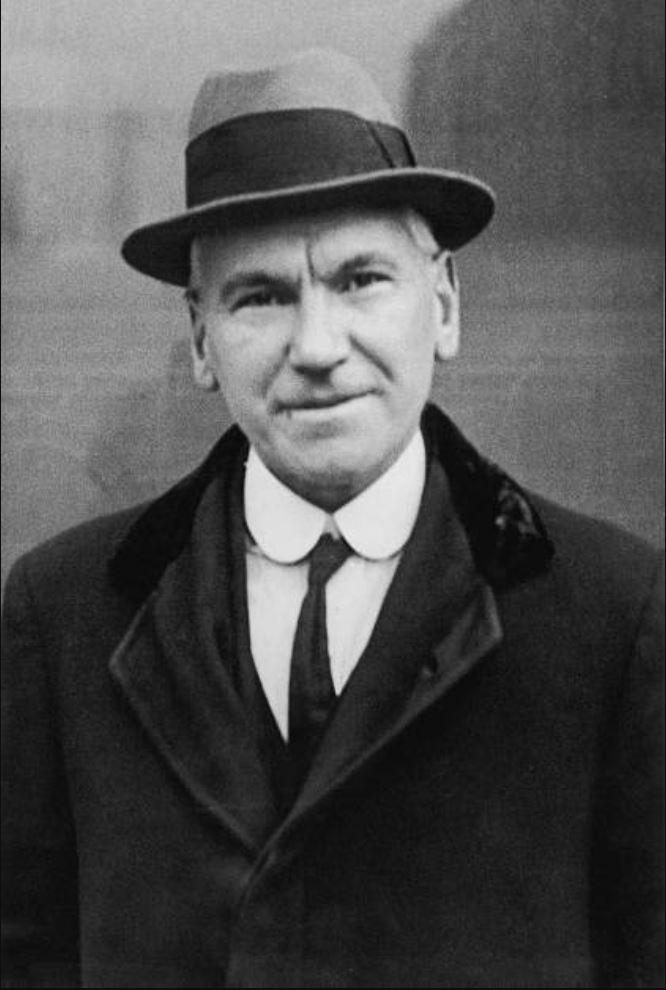
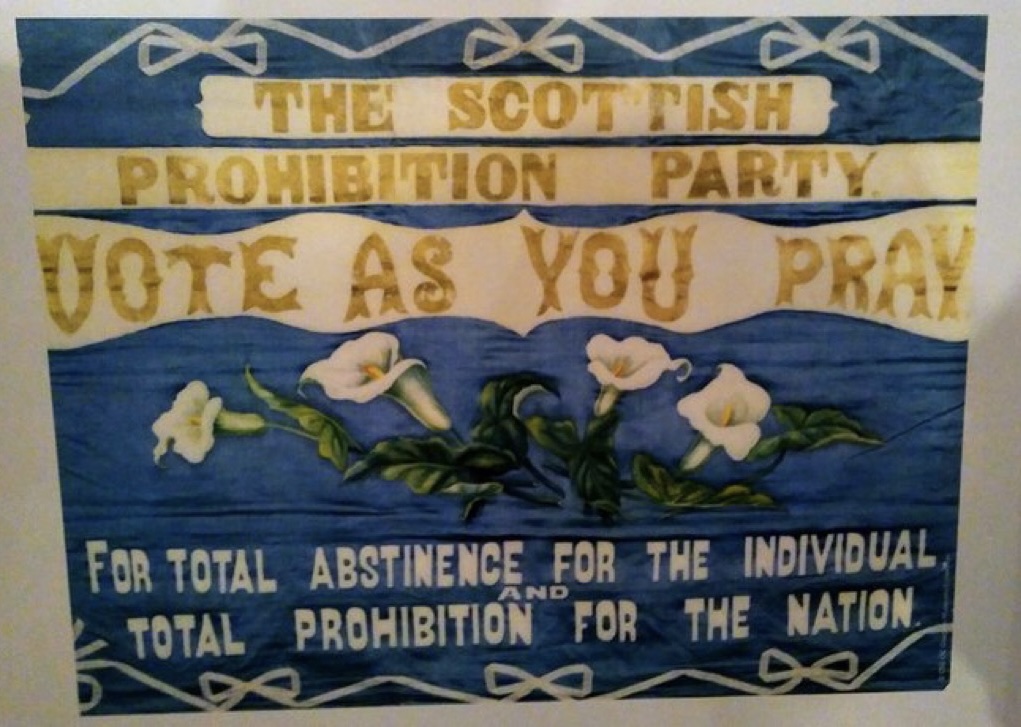
Although committed to temperance, Bob Stewart couldn’t abide the ‘religious prattling’ within the Scottish Prohibition Party.

During all the comings and goings, organising for the trade union and for the Templars, I was always drawn to political affairs. In a way this was natural, because Dundee was a politically radical city and had been so ever since the days of the Jacobins when Palmer, an associate of Thomas Muir, had been banished to the hulks in Botany Bay for his political activities. Dundee was also one of the main centres of Chartist agitation. In the 1880s and 1890s, Dundee was a real stronghold of radical liberalism and the local weekly newspaper, The People’s Journal, published strong radical views. I sold this newspaper on the streets and got fourpence a dozen; even when a boy I was doing a useful job in spreading the message.

In 1892, a political leftward move took place in Dundee when Jimmy McDonald, then secretary of the London Trades Council, stood as a Labour parliamentary candidate and polled 345 votes. In 1895 he again contested, this time as an Independent Labour Party candidate, and polled 1,313 votes. I did some campaigning for McDonald in this election and remember that the elder men thought this was an excellent vote because his candidature did not have the support of the Dundee Trades Council. A resolution which sought to support him in the Council had been defeated and an amendment to support the Liberal candidate had been carried by 19 votes to 16. It was shortly after this that I became a delegate to the Trades Council and very soon began to take part in the debates.

The Scottish Labour Party had been formed on July 23rd 1892. Many of the temperance men left the Liberal Party and joined the new party, taking their temperance views with them. But at this time I was still singularly obsessed with the struggle to stop the sale of strong drink and remained uncommitted to any political party. However, I read avidly-topical pamphlets, books theoretical and otherwise- I particularly remember several by Karl Kautsky. American temperance books and socialist pamphlets held a particular appeal, and I was always drawn to the Chartist books because they had a positive political programme.

Up to just after the turn of the century, therefore, my life consisted of finding a job, trying to keep it, trade union work, organising in the temperance movement, speaking and debating on radical platforms and reading and trying to assimilate the new revolutionary socialist ideas.

On my return from South Africa I was soon back again in the organising and political groove. I became full-time organiser for the Scottish Prohibition Party with a wage of 27s. a week; this was much less than I could have earned in the yards, but political idealism was taking a hold of me and political principle was more important than money. The Prohibition Party was committed to a reformist labour programme but was semi-religious. I travelled up and down Scotland in all the big cities and in many of the villages doing propaganda meetings. We had a small newspaper called The Prohibitionist, and I helped to edit this as well.

This was the period of great political struggle to break Liberal-Labour coalition politics and for independent working-class action. In the General Election of January 1906 fifty-one Labour candidates were returned as Members of Parliament, including some fine leaders for independent working-class action such as Keir Hardie. One month later, on February 15th at the Memorial Hall in Farringdon Street, London, the Labour Representation Committee transformed itself into the Labour Party and thus started the final break with Liberal-Labour unity and the birth of organised independent working-class political action. One of the first demands of the independent Labour M.Ps was the passing of the Trades Disputes Act, a very progressive piece of legislation that stood the test of time for over half a century.

In the 1906 Parliamentary General Election, Alex Wilkie, general secretary of the shipwrights’ union and one of the original Labor Representation Committee of 1900-6, stood on the Labour ticket in Dundee and won. He was, however, very much a Lib-Lab politician, and, while campaigning for him, I and a number of others tried to change his ideas. Dundee was then a double-barrelled constituency, that is, there were two votes for two parliamentary seats. Wilkie was returned to Parliament together with a Liberal named Robertson.

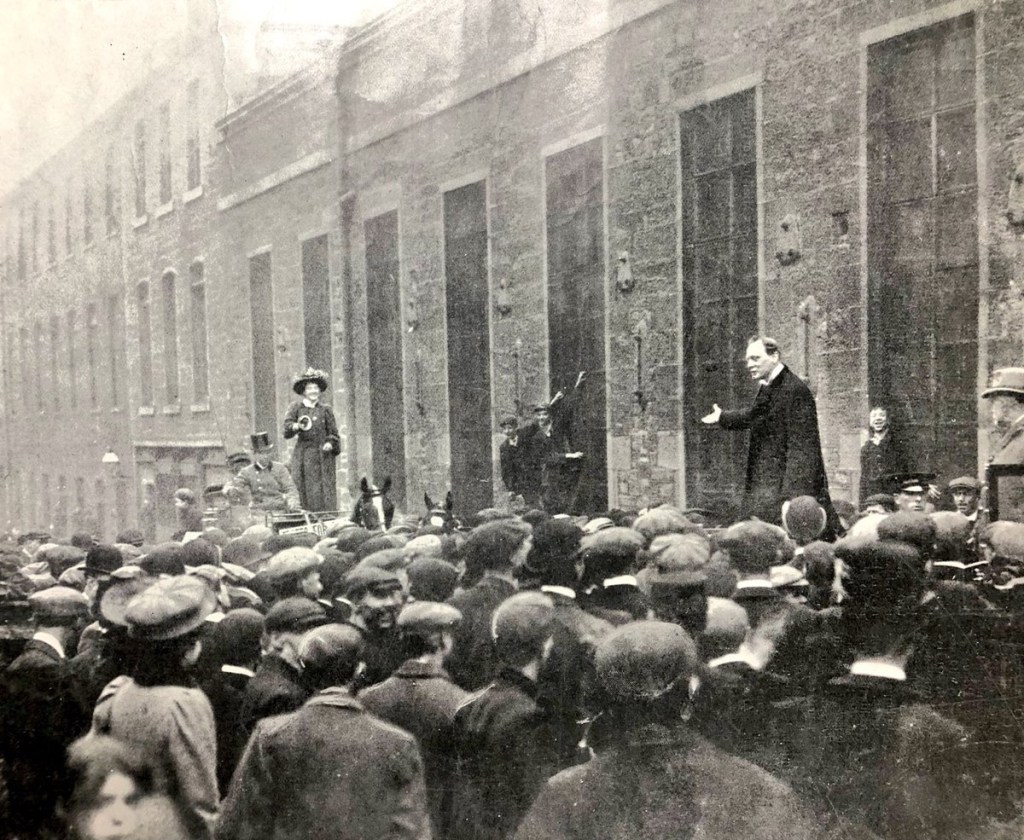
The year 1908 was one of heavy trade depression and high unemployment, but politically it was a vintage year for me. I stood for the Dundee Town Council and won. The full-time secretary of the Prohibition Party, Scrymgeour, was also on the Council so this made a mover and seconder for any motion we desired to put. We certainly enlivened the Council meetings. The first night I took my seat we were both suspended for being “‘offenders against decorum”. I had called another councillor a liar and the Lord Provost interrupted me to warn against the use of such language. The Provost was Jimmy Urquhart and I knew he had a university education, so I asked him to tell me how I could call a man a liar without actually saying so. “See me after the meeting,” he replied, “but don’t use that word here.”


There was a Baillie on the Council called Robertson who was, among other things, a director of the Dundee Football Club. Some material had disappeared from the Council Stores and found its way to the Dundee Football Club. I called Robertson a thief. This was a bit too much for a mere reprimand. I was taken to Court and fined £5 and £8 costs, but it put a stop to a number of things that were going on. A friend of mine, Adam Piggot, a butcher, paid the fine or I would have been “inside” again, because £13 was a small fortune to me in those days.


All this was good political campaigning, because it was all official Town Council business, and the local press gave it great publicity. Dundee in 1908 was in a desperate position. Unemployment was rampant, so bad that relief work had to be arranged. Soup kitchens were erected in the wards. Farmers from the surrounding area brought in vegetables free, and local butchers donated beef and bones. Door-to- door collections for money were organised and food was
distributed to the needy- over half of the town were needy. I did an immense amount of work on relief both for the Prohibition Party and as a councillor. One helper I remember, who worked like a Trojan, was a Roman Catholic priest called Turner. He was out day and night working; and never a needy case was turned away. He was a kindly, hard-working man, which was more than could be said for many of those who did nothing but were always on hand to give advice on how the relief should be distributed.

The employment position was so bad that I moved in the Council that we provide some work for the unemployed. I suggested that to provide work trees be planted in the Blackness Road to beautify the street. Many were against it because it was spending the town’s money needlessly. However, I won; the trees were planted and are still there today. Blackness Road, lined with trees, is one of the prettiest in the city.

Blackness Road, Dundee. Early 20th century.

During the Council term I was elected as a representative to the Blind Institution Committee. Usually the meetings of the Committee lasted fifteen minutes. Minutes would be read and approved, a lot of nice things said and then everyone would go home. The Committee consisted of one or two mill owners, a few business men and representatives of the Town and Parish Councils. At my first meeting the minutes were read and approved and then I started to ask questions. There was consternation, but I knew many of the blind people living in their own homes were weaving baskets, making mattresses and the like, and were being very poorly paid. So I continued to press my questions and to get answers, which when followed up made it clear that the manager was making absurdly high profits out of the blind people’s work. On leaving the meeting, one of the mill masters, a great county cricketer, Sharp by name, said to me,
” Stewart I did not know anything like that was going on. I think it’s a scandal.” “So do I,” I replied, “but the living standard of the working class is a scandal.” He nodded his head and went away. No doubt next morning he would be demanding more effort from his jute workers to provide more profit for himself.


After a year in the Council I had to stand for re-election. A campaign was waged, in which the local press took a hand, to get Councillor Stewart, that spendthrift agitator, out of the Council. Naturally, with the expenses for relief work the rates had gone up -32d. in fact- -and I got the full blame for this. Of course I defended the relief work, but the forces against me were too strong, and I was defeated at the poll.


The year 1908 saw another famous election in Dundee. It was a Parliamentary by-election in which Winston Churchill stood as a Liberal candidate.

Winston Churchill campaigning in Dundee, 1908.


Churchill had started his parliamentary career as a Tory and won the seat at Oldham in October, 1900. In the fight for tariff reform at the beginning of the century he changed his coat and became a Liberal, contesting the North-West Manchester constituency. In the general election of 1906 he defeated Joynson Hicks in what was accepted as a safe Tory seat. In 1908 he succeeded Lloyd George as President of the Board of Trade and this necessitated a by-election. (This was the parliamentary procedure of the period: when an M.P. became a cabinet minister he had to face the electorate again.) On the 24th of April, 1908, in the by-election at North-West Manchester Jonson Hicks got his revenge and defeated Churchill, largely because of the intervention of Dan Irving, a Socialist candidate. The date is important because, while, Churchill was contesting this by-election, the Dundee Liberal Party were meeting to choose their candidate for the Dundee by-election. After a few stormy meetings the decision was postponed. There was a terrible row at the time, with the local press giving pages of publicity to the rumours that some Liberal leaders in Dundee were keeping the candidature warm for Churchill should he be defeated at Manchester. So it came about that Churchill, who was defeated as a sitting M.P. on April 24, packed his bags and was campaigning in Dundee three days later. On May 10, sixteen days after his defeat, the Dundee result was announced and Churchill was returned to Parliament and became President of the Board of Trade, but as M.P. for Dundee and not for Manchester. In this by-election I was election agent for Scrymgeour. The Prohibition Party had decided not to support the candidature of Stuart, the Labour candidate, but to put up our own candidate. It was a short but lively campaign. With four candidates in the field, the meetings were all packed out. I remember one meeting in the Drill Hall at which Churchill spoke. He shouted to the crowd: “Britain has great imperial strength. We have belted the world with free institutions.” He was speaking in Bell Street, next door to the Sheriff Court, across the road from the Salvation Home for fallen women; next door to that was the Parish Council Lunatic Department, nearby the Curr Night Refuge for homeless people to get a cup of tea and a bed, before they started their wanderings the next day. The gulf between Churchill’s oratory and the living reality was there in the street where the meeting was held. This was a good propaganda point I certainly did not miss.


During the counting of the votes I noticed Churchill standing alone in a corner twisting little rubber bands around his fingers, and as each one broke he threw it away. He was obviously in a very agitated condition.

I went over and started a conversation with him about stopping the sale of strong drink, asking what he would do in Parliament to bring this into law. It was obvious he was only interested in one thing-the result. In retrospect he was right; another defeat in Dundee after Manchester would have ruined his political career. “How do you think it’s going?” he asked me. “You’re in by a mile, worse luck,” I said. You didn’t have to look at the vote-counting very long to see that. However, our little discussion on prohibition had not gone entirely unnoticed. Later, the Provost, Jimmy Urquhart, came over to me and said: “I understand you’ve been trying to convert Winnie to prohibition. By Christ! Bob, you never give up!” He said it in a voice of admiration for my courage and with the certainty that I was on a forlorn quest. As later years proved, Churchill and the prohibition of strong drink were poles apart.

Edwin Scrymgeour.

Scrymgeour and I had many differences in the election campaign. He dwelt too much on religion. He had a great advantage over all the other candidates because he had a mandate from God. His speech to the crowd after the announcement of the result was really heavenly: “I feel deeply grateful to the Almighty God that has enabled the Prohibition Party to put me forward as the first British Prohibition candidate and look forward to another day when success will attend our efforts.” That speech was the beginning of the break in the Prohibition Party.

Winston Churchill was Member of Parliament for Dundee until the general election of 1922, when Willie Gallacher stood for Dundee as a Communist candidate. But in 1908 he was the hero. When the result was declared that May night, the Dundee workers not only lifted Churchill shoulder high, they lifted his motor car with him inside it and carried him down Bell Street.

A year or so after the election the inevitable split came in the Prohibition Party. I could no longer stomach the religious prattlings of Scrymgeour and some of his adherents. A number of us broke away and formed the Prohibition and Reform Party. It was at this period that I wrote the pamphlets, En Route To The Sober Commonwealth and Socialism, which were laced with good socialist principles. Apart from the aim of achieving complete National Prohibition its aims were:

SOCIALISM
The abolition of private ownership of the land and the means of manufacture, production and exchange, and the substitution of public or social ownership without compensation.

COMPLETE DEMOCRATIC RULE
Abolition of the hereditary principle in government, adult suffrage, initiative and referendum, devolution on separate Parliaments of domestic legislation.

INTERNATIONALISM
Recognition of the common interests of mankind. The establishment of international arbitration courts for the settlement of all disputes between nations, leading up to world-wide government elected by the citizens of all nations.

Breaking the Fetters Chapter 4: A Man Grown.

RRS Discovery under construction in Dundee in 1900. (www.rrsdiscovery.co.uk)


Now I was a fully fledged journeyman, Gourlay’s offered me an extra year at an improver’s rate, which was 10s. under the basic journeyman’s rate. This was usual at the time but did not appeal to me. I felt I had done my apprenticeship and was entitled to the full journeyman’s rate. So I left Dundee and went to the Clydeside where I got a job in a yard in Renfrew called The Ring. This yard did specialised work on dredgers. I worked 53 hours a week for a basic 38s. 3d., 9 hours week-days and 6 hours Saturday.

I held this job for a few months. Then, after the ship was launched, there was a big pay off. It was just before the Glasgow Fair holidays and was a blow to the Glasgow men. No work meant no trip “down the water” for the wife and kids and no whisky and chasers in the pubs with their pals on Saturday nights,

For me it meant looking for another job immediately. I tramped the whole of the reaches of the Clyde, Greenock, Yoker, Partick and Govan, but at every yard the position was the same, no work. Trying to find a job was humiliating. At the yard gates hundreds of men would wait each morning and dinner-time for the foreman to come out. In most cases he did not appear, but if he did he would walk down the line of waiting men and then turn on his heel and go back inside the gates with a grunt of ‘Nothing today”, or sometimes even not a word. There were no employment exchanges then and no dole. The unemployed got 10s. a week from the union for thirteen weeks and then it was reduced. My position became desperate and, unable to find work in the yards, I was forced to find other employment. I got a job with what was called the National Benefit Trust. It had a system in which a draw was held periodically and the winner got his advance of money free of interest to buy a house. My job was to hawk around the doors trying to interest people in the lottery. The whole thing was run by a family who held all the top positions in the firm. Sellers like myself were paid on a commission-only basis. I stuck this for a month. The whole thing revolted me and I had the feeling of being degraded.

Then, by a stroke of luck, I picked up a job in the Arrol Bridge Building Works. A mate of mine, Jimmy Walsh, had an uncle who was foreman in the template shops and he told Jimmy to come and get a start. But Jimmy had also been offered another job at the Linthouse Yard which he preferred, so I went to see the uncle. He was a good sort and when I explained that his nephew had taken a job at Linthouse and hoped I would be suitable, he asked me “Can you draw?” “A barrow,” I replied . “All right,” he said, “start tomorrow and we’ll see how good your barrow is.”

I stayed there until the New Year but it was not my cup of tea. I wanted back to my trade and when I saw an advertisement for joiners for a small shipyard at Annan, I applied and got the job.


Annan today.

Annan is a small market town on the River Annan near the border and naturally, being so far inland, the ships built there were small-stern wheel ships. They were built in sections and exported, mostly to the American lakes. When I arrived, the joiner’s shop was just being erected and I went in with the
pattern makers. In fact, I was the only ship joiner in the yard. The manager, a little fellow who wore a bow tie and was always very smartly dressed, but a decent fellow to work for, asked me if I could get more joiners, so I wrote to the Glasgow union committee and asked for another five to be sent. I went
up to the station to meet them when they arrived and asked to see their union cards. One of them said, “Christ! I’ve left mine at home.” “Well, you had better go home and get it because you can’t start here without one,” I said. Fortunately, the other four had their union cards up-to-date and I said they were all right. I can imagine their astonishment next morning when they found out I was the only other ship joiner in the yard. Now that I had some mates I did a lot of union canvassing on the building sites in the area and we soon formed an Annan union branch of the Amalgamated Carpenters and Joiners.

Annan was a nice place to work in. The countryside was beautiful in summer. It was a great temptation to throw up a brick and if it came down you didn’t go to work that day. The laws of gravity being what they are, one day we did throw up a brick on the job and down it came, so we had the day off. We went to the hostelry and hired a two-horse brake. No motors then, and no traffic jams. We had a run round the countryside and a real good picnic. Next morning, when we turned up at the yard, the manager asked: Where were you all yesterday?” “It was too good weather to work,” I replied. “Where did you go?” “To the Loch Mabon.” “Why the hell didn’t you tell me and I would have been with you.”

In Annan there was a branch of the Good Templars Lodge. A real live lodge it was. We had dancing every week, and fishing competitions, as the River Annan was famed for its salmon and trout. We even ran a regatta, which in those days was considered a real feat of organisation. I don’t know if we took many people out of the public houses, but we certainly did give them a chance to employ their time fully in the Templars Lodge.

I lived with an old lady and her daughter who looked as old as her mother. She kept an excellent house. I had a room of my own for a time but one day Mrs. Patterson came in to apologise, saying she would have to put another lodger in with me. In this way I met Harry Watson, an iron planer from Manchester.

Harry was a good singer, he had done a bit of amateur stage work at the “free and easies” in Manchester and I persuaded him to join the Templars, stop drinking and use his talents. Soon he had more money than he had ever had in his life. He bought himself new shoes, suits, shirts and began to feel and be a man about town, So I said one day, “Harry, now I have introduced you to the finer things in life, I must now introduce you to Scottish culture. Let’s have a walk to Ecclefechan and I will show you where Thomas Carlyle was born.” “Who’s Thomas Carlyle?” asked Harry. So I explained to him as best I could that he was a Scottish writer, explained briefly what he had written, then went off to Ecclefechan which was six miles by road. But Harry remained unimpressed by his introduction to Scottish culture, his final comment being: “Thomas Carlyle must have been a bloody fool to have been born in a place like that!’

One time Harry had a flaming row with his sweetheart. Flora Whimpenny was her name. I remember it well, because many a letter I wrote to her signed “Harry”. I was engaged for a long time trying to effect a reconciliation, which I eventually did. But I never knew how Harry explained these letters to Flora because he could not write a sentence, never mind a letter, and the only papers he ever read were children’s comics. He was not alone in this. The best sellers in the shipyards in those days were Comic Cuts, Chips and other comics specially written for children. I was astounded to find that grown men read such bairn’s weeklies.

One day I was working on a little wooden boat, the type used by the missionaries in Africa. It was being built for some religious society and had only a dozen rivets in its whole construction, but unfortunately a fragment of a red-hot rivet finished up in my eye. I was on the stair panelling, and the riveter knocking off the rivet failed to stop the blaze coming off it. Off it came, and struck me right in the eye. There was no first aid. One man wanted to put carbolic in my eye. That was enough for me. I immediately took the next train home to Dundee where the eye specialist said I was just in time to save the eye. That ended my idyllic situation in Annan.

When the eye healed and I was ready to resume work, the shipyards were still slack but the Boer War had made necessary the building of many more barracks. So I went down to Salisbury Plain and got a job on the building of Bulford Camp. We were a motley lot, drawn from all over the British Isles with the Irish in the majority. At that time there was a strike in Belfast and to save strike pay joiners were sent in mass to Bulford and other camps. You could work as many hours as God sent at 9d. an hour. We slept in the huts as we built them. A hardboard bed with one blanket, which I rolled into and made the best of it. Trade unionism in this setting took a back seat although we had forms of organisation on the job.

In 1900 the shipyards got busy again and I went back to Gourlay’s at Dundee where I became a shop steward and also a member of the yard management committee. The job of the shop steward was to see that members were fully paid up and being paid in accordance with the existing agreements, and so I religiously examined all cards and wage packets from time to time in case anyone was being paid under the rate for the job. Some union organisers today pride themselves on the excellent state of their organisation but in those days in shipbuilding, particularly in places such as Dundee and on the Clyde, there was already well organised labour in the trades.

Naturally, of course, a lot depended on the activity of the delegate and his standing in the trade union branch. The rule was that men more than eight weeks in arrears would not be started, so if a man came on the job the first thing was to see his union card and get it in order. I tried to make it the generally accepted thing that when a man started he would clear his card if in arrears, and sometimes this was done by borrowing the money from me, the money being paid back from his first pay.

RRS Discovery in the Antarctic, 1923

It was about this time that I got a job on the building of the Discovery, the ship which took Captain Scott on the National Antarctic expedition. It was most interesting work. The ship was built at the Dundee Shipbuilder’s Company yard and was constructed almost entirely of Scottish oak, with a little greenheart and elm. There were no rivets, no steel plates, no iron nails. With the exception of the funnel the ship was entirely constructed of wood. It was said at the time that they had to dig men out of the Howff (the local graveyard) to get the right labour for the construction. The wood was steamed to get it bent into its proper position and wooden nails called trunnels were used and battered in to hold the beams in position.

When construction commenced, the joiner gaffer on the job was Joe Wyllie, a man with a great respect for the trade unions and respected by the workers, so in the early days the construction went smoothly and well. The job, however, was not being completed fast enough. Joe got the sack and another gaffer was brought from Grangemouth. We called him the Rat, and he was just that. The first thing he did was to have a little glass-fronted bucky built so that he could survey the whole of the shop, and from this perch he would periodically dart down to snarl at some workmen. This was to frighten them and consequently to get more work out of them. I was never able to fathom this type of thinking. I had one brush with the Rat. The joiners had a dispute and I was deputed to by-pass the Rat and go and see the yard manager, Davie Low, who was a very decent fellow. When the Rat saw me standing at the door of the manager’s office, he rushed down, threatening me and demanding to know what I was doing. His attitude sickened me. I said “Get back to your glass bucky, I’m waiting to see the manager and don’t want to be molested by an insignificant pup like you.” “You won’t be paid for this time,” he shouted, but at this point Davie Low came out and I cut it short by informing him that I was on union business, so not to worry about “his” money. Strange how such people as the Rat always scem to think it’s their money that pays the wages. So I saw the manager, told him of the dispute and in the course of it made a few uncomplimentary remarks about the Rat. “Well, Bob,” he said, “I’m only the manager, not the whole company.” Then he explained to me that the Rat had been specially employed to horse on the men and get the ship finished. Like us, the manager didn’t like it but also had to put up with it. In March, 1901, the Discovery was launched. At a reception at the Queen’s Hotel after the launching Captain Scott said “that for some months the preparing of the ship had been handed over to him. It was work that involved great detail, some harassing detail. In fact it got on your nerves occasionally.” I do not know if the new gaffer had rubbed Scott the wrong way but he certainly caused many a disturbance amongst the workers who built the good ship Discovery. But I suppose Lady Markham, who bashed a bottle of champagne against the bows at the launching, would be blissfully ignorant of such mundane shipbuilding affairs.

At this time I had a good run of work and accepted that my employment was steady. So while at Gourlay’s I got married, in 1902, on the 13th of June.

I met my wife Margaret in the Templars Lodge and with the occasional breaks I saw her regularly for some months. In fact we courted for years, then we decided to get married- a decision which I never once regretted in all my forty-eight years of married life. Margaret’s father was a master painter and had a shop of his own. Quite posh in those days. He later emigrated to New Zealand and died there.


With a master painter for a father-in-law we had a beautifully decorated home to start our married life, although it was only one room, kitchen and lavatory. One year after we were married, shipyard order books began to wear very thin. When the pay offs came, I was one of the first to go, as was usual for shop delegates.

I really did not mind this at first because I had a friend in South Africa who had been writing to me extolling the vast opportunity working men had in that great new developing country. I had done him some service previously and he said he would send me my fare to take me out to South Africa. so when the pay off came at Gourlay’s I had made up my mind to accept the offer and try my luck in the promised land. It was summer when I set sail on a ship of the Union Castle Line, the Guelph, from Southampton.

Breaking the Fetters Chapter 3: Learning a Trade.

At school I passed the fifth standard when I was thirteen and so entered the labour market looking for a full-time job. Following my half time work I first tried the jute mills, and was offered a start on the breaker -can. But when I saw the nature of the work my first thought was to get out, which I did. I picked up my jacket and ran as fast as I could- certainly out of sight and sound of the gaffer, who thought the new start was well on the way to being shown how to tramp the cans.

So I tried another mill and got a job in the spinning flat. Some months later, however, I did do a turn on the breaker-can. in fact, as I passed from mill to mill, I had a turn at most of the jobs.

The process of jute manufacture was then as follows. First the jute was broken from the 2 cwt. bales in which it was shipped from India. Then it was impregnated with oil. This was to add resilience to the fibre. (In the old days whale oil was used. Dundee was a main whaling seaport.) After the jute was batched , it was passed through a feeder which had rows of sharp needles called hackles. These ripped the jute fibre into strands before it fell into a breaker-can. Into these cans the boys and girls packed the jute hard with their hands. This was called tramping the cans. The fibre then went through the carding machine, the drawing machine, then to the roving, each process making the jute sliver finer. At the roving, the shifter laddies took the roves off the machine and threw them into barrows, then the roves were barrowed to the spinners where the jute was spun on to bobbins. The bobbins went to winders where the jute yarn was wound on to cops. The cops then went to the factory where the weavers at their looms wove the yarn into the finished cloth.

In many cases the factories were not adjacent to the mills and the cops had to be transported by lorries. To have a job in the factory was considered posh, much better than having a job at the mill as a spinner or a shifter, and the low mill- that is the preparing flats- was considered the lower depths.

Many a song was sung about the work in the mills and factories. There was the Dundee Weaver’s song, the Dundee Spinner’s song, and the Wee Shifter’s song, all of which have made their way one time or another to the top of the folksong charts. There were songs about the batchers and the breaker-cans, but as these came from the low mill I am afraid the language was a little on the strong side for the publishers and their printing machines, and so they remain to this day in the heads of the old mill worlkers, reserved as a special party piece when occasion permits.

It was during this time that I became involved in my first strike. As a matter of fact I was the leader. The object of the strike was none other than William Gladstone, then prime minister in Her Majesty’s government. Gladstone was a great Liberal and frequently visited a small town near Dundee called Blairgowrie which had a large area of wooded countryside around it . When in Blairgowrie, the prime minister took a hand at tree felling, and this gave rise to the cartoon of Gladstone, axe in both hands, and the slogan “Woodman, spare that tree”. Speaking of Blairgowrie, I should not forget to mention that it is also the parental home of the Grimond family who had made their fortune in Dundee jute. From the Grimond family tree came the present leader of the Liberal Party, Jo Grimond. The Grimonds were Liberal in politics but never liberal in paying wages to the Dundee jute workers who were, and still are, among the lowest paid workers in Britain.

However, that day Dundee was en fête for the prime minister, who was to receive the freedom of the city. Now it seemed to me an insult to that worthy person and a slur on the city’s reputation that while the freedom ceremony was being performed we mill workers should be slaving away in the mills. At least that was how I put it to the fellows when I suggested we knock off and go to the freedom ceremony. The proposal was carried unanimously. I can’t remember anything Gladstone said that day so it could not have been important. The important event came m next morning when the gaffer demanded an explanation: and on being told I had suggested stopping work to hear the prime minister I was given the sack on the spot.


I crossed the road to another mill and got a job there. In all, I stayed in the mills until I was sixteen. These three years of mill work and my half-time mill experience had an important effect on shaping my character and my attitude to life. Working long hours for small wages, living daily with injustice and intolerance, sowed the seeds of the desire to see a system which gave justice to the workers. Allied to this was the poverty to be seen everywhere in this jute city. Dundee was considered a town of drunkards, but when I look back with the wisdom of age, I can see that this really arose from the impoverished life of the people. They were so poorly fed that a couple of nips of whisky and a pint of beer was enough to send them into a drunken stupor. The Scottish drink was a nip of whisky, price twopence, and a penny pint of beer. That is still the Scottish drink today, but the prices are somewhat higher. When Scotsmen talk of the Good Old Days they usually refer to drink prices.

The public houses were evil, smelly places. I had first-hand experience because I used to go in them to sell news-papers, another sideline of mine to make an extra penny or two. There was the stench of beer, the sawdust on the floor, the spittoons and the salt fish the publican kept on the counter because it gave the customers a thirst when they chewed it. Most of them would not need the salt fish because those from the mills had enough jute “stoor” (flakes of jute) in their lungs and bellies to give them a thirst that a barrel of beer would not quench.

Dundee on a Saturday night (Saturday was pay day) was bedlam let loose. It used to be said that the workers did more fighting in the Overgate (a street in the city centre) on a Saturday night than the Black Watch did during all of the war. Certainly there were many pitched battles, often family against family. The Molonys against the Mulligans, O’Fees versus the McFarlanes and so on. It is laughable but true that the police used wheelbarrows to cart away the drunks and the casualties after the battles had subsided. The police wisely kept well clear until they could move in for the kill. On Monday morning, as kids, we used to go down to the prison and see dozens at a time being thrown into the Black Maria and taken to the courts. Each successive court appearance meant a higher fine but this did not lessen the number of offenders, nor make the Overgate a more peaceful place on a Saturday night. It brought tragedy to many homes, however. Fortunately my parents did not drink. My father could take an occasional bottle of ale and my mother was a strict teetotaller, a complete abstainer.

All this squalor and degradation, seeing and experiencing the misery of some of my pals who went back on a Saturday night to a home with parents brawling and fighting in a drunken stupor, had a very profound effect on my thinking. Many of my political acquaintances throughout my life have asked me why I spent so many of my early years in the Temperance and Prohibition movement. This was the reason. In fact for many years I had only one way of separating right from wrong. Those who drank were wrong- those who did not drink were right. True, my temperance was always colored with socialist principles and working-class justice, but the real reason why my early political work was done in the I.O.G.T. (Independent Order of Good Templars) was because of my experience in early life in Dundee.

When I was sixteen my life took another turn. My mother, knowing the lot of the labouring classes and not wishing her son to be one of them determined to make me an artisan, But it was by sheer accident that I became a joiner. The tailor who made my father’s clothes came on a periodic visit to get his order for trousers and jacket. When the measurements were done and a chat was taking place over a glass of ale, the subject to a trade for wee Bob came up. It transpired that the tailor had a son who was gaffer to a builder. He “spoke” for me and so I started my time as a joiner apprentice with the firm of Sandy Stewart at 4s. for a 54-hour week. This part of my apprenticeship lasted for over two years. I learned to plane and saw, making doors and windows for whatever jobs we were working on, jobbing or building. But a vast amount of my time was spent on labouring work, Sandy Stewart had a strange idea of how an apprentice should
acquire the skill of his trade. I was worked like a wee Scots donkey. I had to push a barrow from the yard to the docks nearly a mile away, stack the timber on the barrow and push it back, all uphill, a very strenuous job. Worse still, I had to combine brute force with diplomacy. Sandy Stewart was always in debt to the timber merchants, Bell and Sime, and so I had to promise faithfully that the firm would give prompt attention to future payments before I could load the timber on the barrow.

The crunch came in the winter of my second year. The snow was very deep, and thick ice covered everything. The boss sent me up to his house to clear the roof and clean out the gutters. At the end of the week I received my apprentice’s wages, 6s., the second-year rate. I said, “If I do labourer’s work I want labourer’s wages.” “You’ll have to see the boss then.” So in to Sandy Stewart I went. “I did labourer’s work last week and I want labourer’s wages,” I said. “Ye’ll get no labourer’s wages here,” shouted Sandy Stewart, then he went into a rage shouting that I was a lazy good for nothing and so on. “Get out or I’ll put you out that window,” he roared. “You’ll need a new pane of glass then,” I said, “because it’s you who’s going to make that journey. Give me my apprenticeship lines.” I moved towards him, but like most men who shout and bluster their way through life he didn’t need much pressure to cave in. I got my apprenticeship lines with a note saying I had left of my own accord and so my work in Sandy Stewart’s yard came to an abrupt end.

Unemployment in the city was high. The hard winter had closed the building sites and all outside work was at a stand-still. Labour was plentiful, jobs were scarce. After much searching and standing at work gates, I started on the railway, shunting with the hydraulic capstan at the Tay Bridge goods shed. But that did not last long. One day the capstan went faulty and did not stop, the shunting rope and the hook flew off the wagon and twisted around my legs, giving me a bad though not serious injury.

I was off work for many weeks, but the railway was a new experience and there I learned a few more tricks of the workers’ trade. Railwaymen were among the lowest paid workers and always on the look out for ways to supplement their wages. Maybe it was an extra bag of flour on the lorry; there was always a market for that. Or it might be fruit. Apples or pears, particularly in the Christmas season, were always a winner. But the best bet of all was the whisky trade. Broaching the barrel was a railway skill, in fact it was more,
it was an accomplished art, and many a “dab hand’ there was at the game. It was done with a very fine brace and drill. When the tiny hole was made in the barrel and the fine thread of whisky spurted out, every vessel capable of holding liquid was pressed into service- bottles, pails, flasks, the lot. After they had been filled, a very fine sliver of wood was knocked into the hole, a concoction of oil and dirt rubbed over the surface and the barrel proceeded on its way.

Broaching the barrel was so prevalent at the New Year period that special corps of police were drafted in for protection. But these guards were lured away to the bothy on the loading bank for a wee dram, just to keep them warm, and of course while they were having their wee dram another barrel was being relieved of its liquid gold. As one old loader used to say when he had got the special cop out of the way, “Whisky has a greater drawing power than the world’s best
poultice.” In the bothy on the loading bank there was a barrel sunk into the ground. All the time I was there it was never empty. Anyone could drink as much as they wanted. Some did, and were carried home on occasions, but I was never once tempted, which proved conclusively that the temperance movement had one adherent whose lips were sealed to strong liquor.

I was again idle after my accident, but through people in the temperance movement I got a job in Gourlay’s shipyard. Gourlay’s was quite a famous yard; many world-renowned ships left its slipway.

While in Gourlay’s yard, I threw myself heart and soul into building the temperance movement. We had a strong group of Templars in the yard, but most of our work was done in the evenings and on Sundays. Some of the “big” fellows, the Fathers of the Lodges, wanted young people to be, as they said, “good law abiding Christians” to just come to the meetings, listen to speeches about the evils of strong drink and then meekly return home. I fought against this attitude. I thought the lodges were places where young people should
have debates, sport and entertainment. Finally a few of the more progressive fellows and myself started a new lodge, the Victory Lodge. We broke the rule, we organised dances and concerts and from the money made we bought billiard tables, dart boards, draught and domino sets, and made the lodge into a real young people’s club. We held open-air meetings at which I often spoke and asked people to sign the Pledge. Naturally, because of our activity, we attracted many young people and our new lodge soon became the largest in the city. In fact, at one time it had more members than any other lodge in Scotland, and I became the Chief Templar in Dundee.

There was a lot of competition for the allegiance of the young people in the city. Churches with their auxiliaries, Young Men’s and Young Women’s Groups, were always active. There was a very good and active Secular Society. They too held meetings in the Albert Square. Their main theme was “religion is the opium of the people” and all their work was aimed at destroying the various images of God. I spent many evenings and Sunday afternoons listening to the secularists, all of them excellent speakers. Wull Bowman (grandfather of Dave Bowman, who has now for many years been Communist candidate for Dundee), and Jimmy Croll, a local shopkeeper, were two of their best who could hold a big crowd, often in face of much heckling. Their paper The Freethinker had a good sale. I was attracted to much of the logic in the secularist argument and began to have my doubts about God. Interesting therefore to record that, in later years, it was mainly on religious grounds that I finally broke with the prohibition and temperance movement.

Entrance card for the Amalgamated Society of Carpenters and Joiners. (TUC History Online)

In the last year of my apprenticeship I joined the union. It was forbidden to do so before then. I immediately took part in active work. There were two unions, the Scottish Association of Carpenters and the Amalgamated Society of Carpenters and Joiners. I joined the latter. I was elected to the management committee for the yard and did a valuable job. I was the only one who thoroughly read the National Committee minutes and consequently was always up-to-date on demarcation problems, and extra payment agreements for varying types of work. While I was there we had a very militant management committee and a closed shop was enforced, with a trade union card examination every month.

In doing this work I became a well known and popular figure, so when my apprenticeship finished my mates were determined to give me a good show. The practice then was for the new journeyman to give the fellows a big booze-up in one of the public houses in the Vault (an old alleyway in the city centre nearly three hundred years old). A journeyman was often remembered in later years for the number of drunks he had at his pay off. But I put an end to that idea for me. I said no pub. But I took a restaurant instead, and there we gave the fellows a slap up feed. Aberdeen-Angus steaks were in my opinion a better pay off than Whitbread’s beer or Morton’s whisky, all of them, by the way, products of Dundee. Naturally, when the steaks had been consumed, many of the fellows gravitated across the road to the pub, and a few got so tight that they had a swing on the glass chandelier and were “Bounced” into the street for their daring.

Now I was a fully fledged joiner. Mrs. Stewart’s work had borne fruit. I was an artisan with papers to prove it, but I was soon to discover that the lot of the artisan and that of the common labourer were very much the same.

Breaking the Fetters Chapter 1: The Stewart Family.

Brief overview of Bob Stewart’s life taken from the MI5 files held at the National Archives.

I’m going to start serialising Bob’s memoirs ‘Breaking the Fetters’ on this blog as it has long been out of print. It was first published on the author’s ninetieth birthday by Lawrence & Wishart in 1967. As he was beginning to go blind during this time, the memoirs were dictated onto tape and then edited and prepared for the press by Dave and Elizabeth Bowman. The dedication runs as follows:

To the parents who begot me, William Stewart and Georgina Fraser Stewart. To my eight sisters and three brothers, a hard-working, kindly clan.

To all those who struggle to break the fetters that capitalist society has rivetted on public enterprise and social advance.

To my dear comrades the world over who form the vanguard of liberators of human kind from age-old bondage.

Finally, to my beloved wife, Margaret Lang, who in storm and stress was my loyal and loving comrade.

Chapter 1: The Stewart Family.

I was born on 16th February 1877 in the Parish of Eassie, at the farm of Balgownie in Glen Ogilvie, which is part of the beautiful How O’ Strathmore in County Angus, Scotland.

My father was a grieve (foreman) on the farm and my mother naturally worked in the fields, but to augment the small income she was also a handloom weaver, doing two jobs and rearing a family at the same time. Handlooms were in all the homes and apart from weaving for the families’ own needs, the women also worked for the textile merchants in Glamis and Forfar which are only a few miles from Eassie.

It was the small income and the Stewart family, growing both in number and appetite, that forced us to leave Eassie and seek a better means of livelihood in the town of Dundee, which was known at the time as a woman’s town, because its main industry was jute manufacture and the work of spinning and weaving was done by women.

I was two years old when the move to Dundee took place, so I was of little consequence, but my older brothers and sisters were reaching working age. The flitting to the town was made to secure employment and a bigger income for the family.

In town my father got a job as a carter with one of the delivery firms, driving a horse and lorry. There were no motors at the time. His main work was carrying raw jute, which was shipped from India in 2 cwt. bales, from the harbour to the mills. A hard, arduous job for which he was paid a mere 18s per week.

When we were children, we did not see much of my father, as he left home at five o’ clock in the morning and did not return until seven or eight o’ clock in the evening. He took with him bread, sandwiches and a flask of tea. If funds were good and he had twopence to share he would treat himself to a large bottle of ale, called twopenny, the common beer drink of the period.

My father was not a church goer, Sunday “claes” were expensive, but he religiously adhered to the Scottish sabbath as a day of rest. After six days of back-breaking toil his Sunday consisted of lying abe all day reading the newspapers.

My mother had a hard struggle to make ends meet. To feed a big family like ours, to provide the clothes, was no mean task. Our fare consisted mainly of porridge for breakfast, broth for dinner with an occasional treat of rice pudding, an evening tea of bread, butter and home-made jam. Clothes were handed down from the older to the younger children. Boots were worn only in the winter; in summer we ran barefoot.

Through all her troubles and worries my mother kept a cheery disposition. A lovely singer, she could be heard all day singing to herself as she went about her work.

I am the tenth child of twelve. I had three brothers and eight sisters. My youngest brother Willie was a carter. A hard-working, hard-drinking man. When he got drunk, generally on Saturdays, he wanted to fight policemen, an urge which on many occasions landed him in serious trouble. They say in Dundee that a drunk man is an honest man, so deep down Willie must have had a dislike of the police force- a dislike I have shared on many occasions.

Later in life I persuaded Willie to change his ways. He became a total abstainer and an excellent trade unionist. He was one of the founders of the Dundee Branch of the Scottish Carters’ association, which is now the Scottish Horse and Motormen’s Trade Union. I was quite a youth when the Dundee branch opened but gave what help I could. This was my introduction to the trade union movement.

My eldest brother Jock was a regular soldier. He served for thirty years in the army and fought in the Boer War and in the First World war. He said he was fighting for his country. My sisters used to kid him about this when he was home on leave, asking if he had got his farm yet. They said if he had been fighting for his country all these years, he was surely entitled to a wee farm out of it. No doubt he was, but like millions of other British soldiers who defended the rights of the British imperialists to exploit the world, all the land Jock ever got was the eight feet by three in which he found his last resting place. He could well have agreed with Cynicus’s famous carton of a graveyard: “Your portion: make the best of it. The Landlord’s got the rest of it.”

Brother Jim did a short spell in the Cameron Highlanders and trained in the Militia. The militias were county organisations and were used as army reserves. In times of industrial unrest, a common enough feature of these times, they were handy for the Establishment. Each county had its militia, from Aberdeenshire to the South. The training period for a militia man was usually one month, but when a man was finished in one county, he could move onto another.

Jim went one morning after breakfast and came home a year later at dinner time. In between meals he had sampled training in quite a few militias. Jim also liked his dram but differed from Jock in his drinking habits. Jock said he took his medicine regularly while Jim took his in bouts, one time drinking very heavily and then with periods of total abstinence. My horror of the booze was intensified when I spent anxious nights looking after him when he had the DTs.

My sisters, all eight of them, were hard-working lasses, weavers and spinners in jute manufacture doing a ten -hour working day and six hours on Saturday.

Betsy wed a mill ‘gaffer’ whom I taught to read and write so he that he could qualify for the gaffer’s job. She died when she was ninety-two years of age, a fully paid up member of the Communist Party. Georgina for many years peddled household goods in the country, married and had a family of twelve. One of her daughters Madge Hodgson, is a foundation member of the Communist Party and still does her share of party work. Georgina died when she was ninety years of age.

Mary had a tragic life with her husband, a roving ferocious Scotsman who was often “fou’ wi’” the booze. He was a ship’s stoker, and sailed with the Dundee whaling fleet for many years. Mary died at the age of fifty-three, the first break in the twelve.

Elizabeth was a barmaid, and finally emigrated to South Africa where I met her many years later. A handsome, capable lass who served the South African bourgeoisie well as cook or housekeeper and, I fear, imbibed much of its racial prejudice.

Maggie married a railway engine driver and a number of their family became members of the Communist Party. Jean married a carter, a grand player of the melodeon, who was much in demand for weddings. Many a merry evening was spent at her hospitable fireside.

Agnes, next in age to myself, was a mill weaver. A foundation member of the Communist Party well known in Dundee and a devoted sister and comrade, she was also for many years an active Co-op Guildswoman.

My youngest sister Annie is the only one still alive and has been in the USA for thirty years, married, with one daughter. I refrain from giving their names as it is a crime to be related to such as me in that much-advertised land of the free.

Lawrence Street, Dundee, sometime in the late 19th or early 20th century. (Dundee City Archives).

Our first house in Dundee was at 21 Lawrence Street, in a block of tenements, built like all the others, in close proximity to the jute factories. These tenements were built in flats or platforms very similar to the construction of most prisons. There were four ‘houses’, usually a kitchen with one or two rooms, on each ‘plat’. There were no lavatories, no baths or other essential amenities, but there was running water, naturally only cold.

We entered by a covered entry called a close, which led to a stair winding up to the ‘plats’, again in the best prison design. There was a ground floor and three stories which meant sixteen families to a block, many of them large families such as the Stewarts. In the courtyard stood an open midden for rubbish which was used by the males as a dry closet. The women used a pail indoors and later emptied the contents into the midden. The scavengers emptied the midden weekly, wheeled out the muck and emptied it on the street to wait for a cart to take it and its perfume for disposal.

The tenements from the other side of the street from ours were a bit more classy. They did not have the middens and had a WC on the stair landing. This we called the syrup side and our side the treacle side. Many years after we first moved to Dundee, the Stewart family managed to move to the syrup side.

I went back to the old tenement in 1962, when I was on a visit to Dundee. Eighty-three years had passed but the original tenements complete with ‘plats’ were still standing. The only change was that the midden had gone and one lavatory had been installed for each ‘plat’. That is one lavatory for four families.

Poor as our family was, we kept our heads high. In our kitchen and two rooms the males slept in one room and the females in the other and my parents in the kitchen. As both rooms led off the kitchen, however, the privacy was somewhat restricted. As some of the family married and set up on their own they left more breathing space for the rest.

Such was the Stewart family and its abode. A royal name without a royal income. A royal name without a royal residence. A hard-working family of men and women fighting for a livelihood in a Scottish textile, engineering and ship building town.

In Calton Gaol, may years later, in 1917, I wrote the following:

“In olden days, ‘tis written,
Their sires o’er Scotland ran,
Wi’ shield and spear and sharp claymore,
Made war on many a clan.

Wi’ rieving, robbing, ravaging,
They hewed their bloody way,
Until upon a throne they sat,
To wield their tyrant sway.

But pride o’ place and courtier’s grace
Are little to be trusted,
To brave the force of truth and right,
So the Stuart line was worsted.

And down the centuries grey and old,
New kings, new wars, arrangeth,
But now the Stewarts have wiser grown,
And bestial methods changeth.

Brave and free and fit to dee,
For justice truth and right,
They cannot see that these can be
Maintained by warrior’s might.

A cleaner road, though hard to tread,
They chose to travel through,
To free the earth from lust of war,
And shape the world anew.”


Bob Stewart’s Prison Rhymes.