Viscount Peel, for the Government, said these men, conscientious objectors, must not be released, as their purpose was to abolish conscription.
I hear the sounding tread, my Lords,
Of many a million feet,
As the toilers of the earth, my Lords,
March down to your defeat.
To destroy your laws and statutes,
That have made of earth a hell,
And in memory of the gallant hearts
You stifled in the cell.
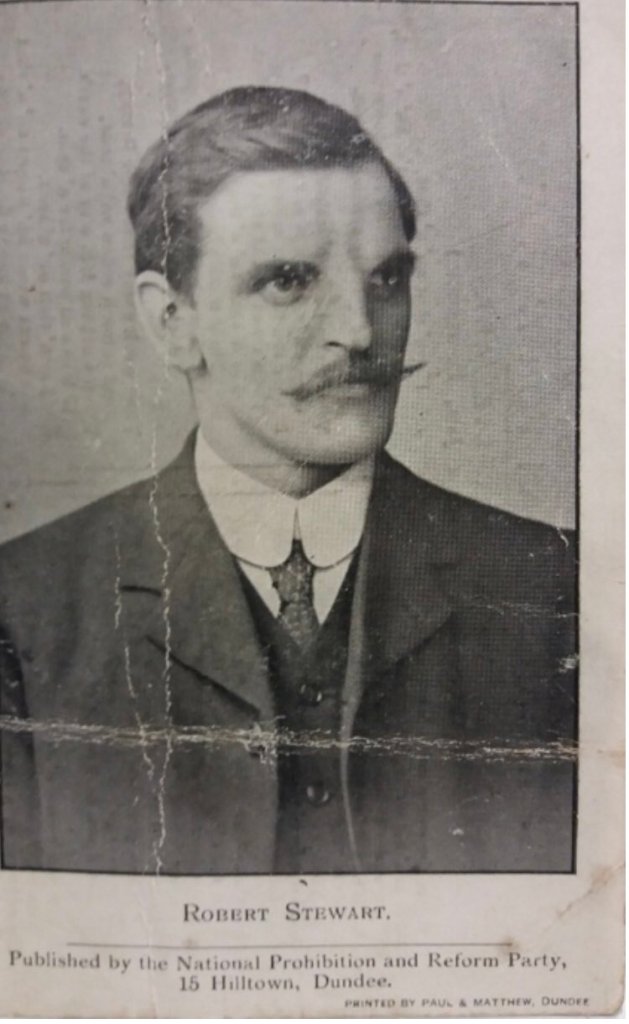
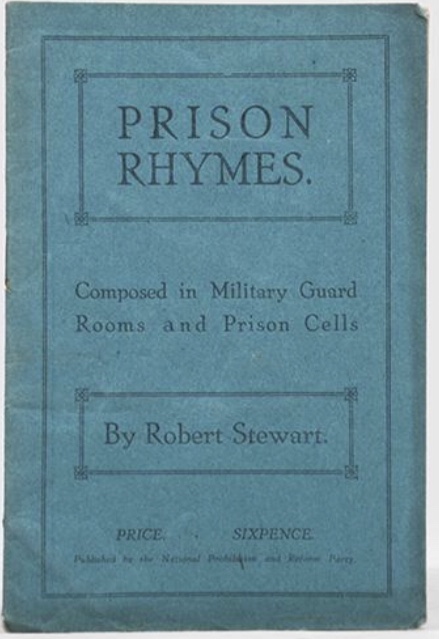
Bob Stewart’s Prison Rhymes
So I was booked for a crime: Refusing to go on parade.
Details of my civil trial were handed over to the Chairman, Colonel in Charge. “Stewart,” he said, “take my advice, behave yourself and soldier properly.’ I replied, “I am old enough to be responsible for my own behaviour, and as for soldiering, certainly not in this war.” “Right, you leave me no alternative,” he said. “One hundred and twelve days with hard labour.”
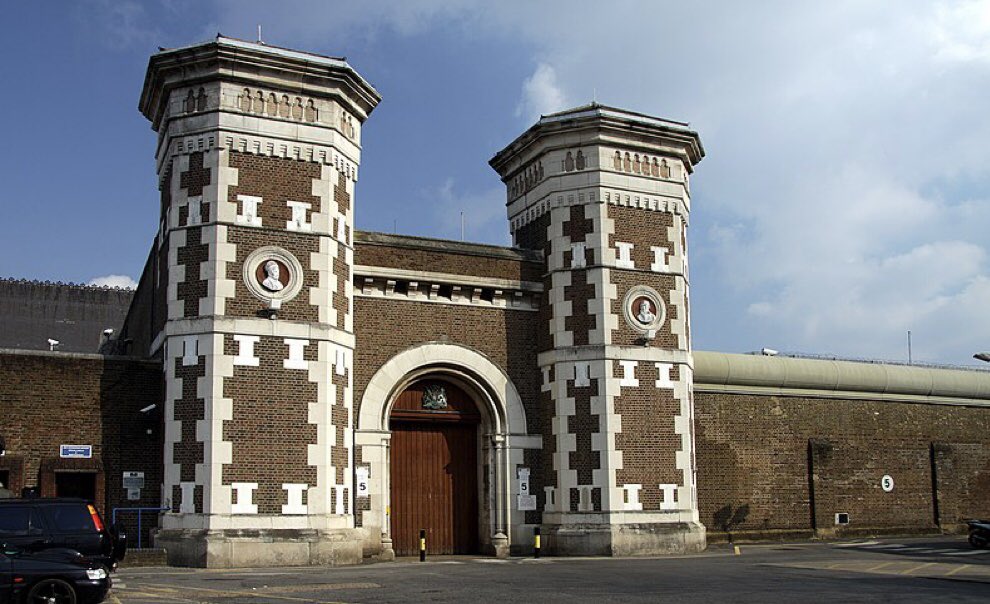
So that was it, one hundred and twelve of the best in Wormwood Scrubs.
Arriving in London, I was handed over by my military escort to the civil authority which in fact was much less civil than the army. I shook hands with the military escort and was handed over to the Scrubs’ gate warder. Then, as nowadays, the warders liked to be called officers, but a screw by any other name is still only a turnkey, himself under just as close a surveillance as the prisoners in his charge. They differ a lot. Some are sadistic and cruel, extra officious and bent on promotion. Others, under their official skin, are reasonably human. All of them are fearful of the economic consequences of losing their steady and comparatively lazy occupation which carries a pension with it. So they sweat to keep their record clean.
The Scrubs was one of the largest and in consequence most regimental of what were known in official jargon as ‘His Majesty’s Prisons’, which of course he never used as a personal residence. I was turfed into a reception cell to await disposal. It was a dirty, begrimed hole, some thirteen feet long and six
and a half broad, its dingy walls covered by names of former occupants and an occasional word of advice, like “Sleep on it”, and some uncomplimentary remarks about officers and prison food. Scribbling on walls seems to be a favourite occupation of the Britisher in prison, possibly arising from, or maybe giving rise to, our high literary accomplishments as a nation. In one cell that I afterwards occupied, a previous occupant had written with a needle on the brickwork an almost complete catalogue of the books in the prison library. It must have been a long and tedious task.
I got a pint of skilly for breakfast and a concoction which would have horrified my wife, called soup, for dinner. Late afternoon I was officially received, my height and weight were taken, my personal possessions together with every article of kit enumerated to the barking of a head warder, then a bath in three or four inches of tepid water, and a suit of prison clothes, not ready to wear but already well worn. Then we were lined up to pass the doctor, face to the wall, while the warder shouted “Stand apart, stop talking.” In to the medico, one at a time, “Shirt up and trousers down for the doctor.” Amusing but strange to me that members of this humane profession should lend themselves to this farcical medical examination and humiliation of their fellows.
“Get them books, get up them stairs.” Them books were one Bible and one Prayer Book, which are the compulsory library of each prisoner during his stay except when on punishment.
So I became a number on the third corridor of the D hall, which at the time was entirely occupied by the “conchies”, that is those who had been tried in civil courts handed over to the military, court martialled and sentenced.
At the Scrubs, what was named the Supreme Appeal Tribunal held its sessions to re-examine each case lest any more-than-usually flagrant injustice had been perpetrated by the lesser tribunals. It was presided over by one of the Salisbury family, Lord James Edward Hubert Gascoyne-Cecil, 4th Marquess of Salisbury. This was to guarantee true impartiality, as such members of the British aristocracy would be sure to distinguish true conscientiousness from mere honest refusal of men to be conscripted to fight any enemy selected for them. In reality, the tribunal’s business was to separate the “sheep” from the “goats” by offering an alternative to prison sentence, in the shape of the Home Office work schemes, or removal to Dartmoor or Wakefield, where the locks were removed from the cell doors and a certain amount of freedom of association allowed. Those who refused to submit to alternative service, which meant voluntary service in the prosecution of the war, were condemned to the established routine of serving sentences in civil prisons, repeated court martials and further sentences. They were known as the “absolutists” who
resisted all attempts to make them conform to any measures of military discipline.
So I go before the Supreme Tribunal, the Marquess of Salisbury in the chair. “I have your papers here, Stewart,” he said. “Nothing much we can do with you.” “Good,” I replied. “You can do without me altogether if you like.” But he did not like. My impression of him was that impartiality was not his strong point. So at the Scrubs I was to be for one hundred and twelve days without a visitor or a letter. Many letters came but were held back and I only received them when my time expired.
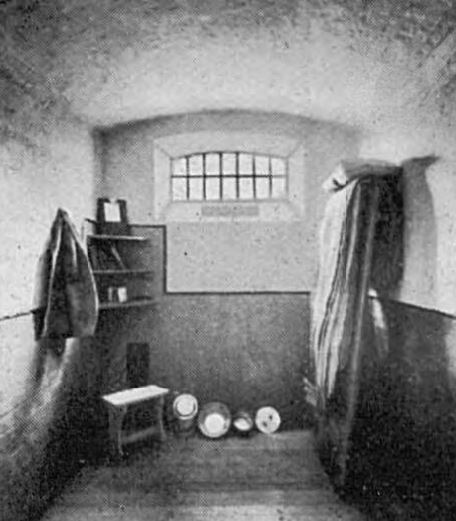
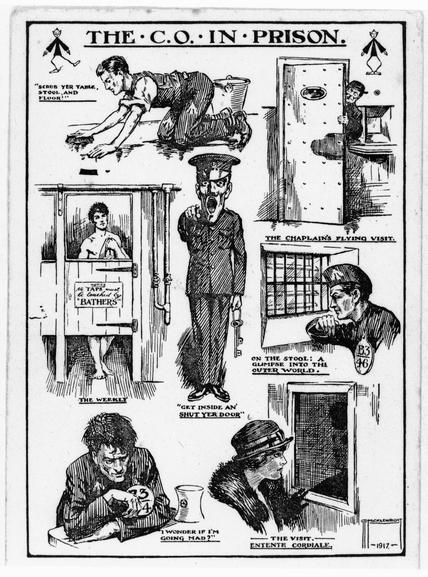
My new abode was the usual brick-walled domicile, thirteen feet by about seven feet. Its furnishing, a six feet by thirty-inch board bed. Top and bottom sheets of canvas, one or two blankets according to season, a bedcover, a small table under a pane of obscure glass through which a flicker of gaslight shone, sufficient to strain your eyes when reading. A small shelf for books, and a pint pot, a tin basin and a jug for water, a minute portion of soap, a very small weekly supply of toilet paper and a slop pot for natural necessities. A window in the outer wall with twenty-one very small panes of obscure glass. Woe betide any prisoner who was caught (as many were) trying to get a cock-eyed view of the outside world by standing on the stool provided to be sat on and not stood on. A copy of the prison regulations and diet sheet was hung on the wall. A mark on the centre of the wall, I learned, indicated where the prisoner should stand when the Governor made his inspection, at which time the prisoner must place his cap on top of his bed.
Religion is a very important part of prison routine. In fact you can hardly get into prison unless you have a religion. In the Scrubs, because it was so big, they had a “bunch’ of chaplains. The one I saw was a big red-faced fellow. “Religion?” he asked me curtly. “Don’t need one,” I answered just as curtly.
“Don’t you believe in God?” “Which one?” That did it. “No chapel,” he shouted to his aide and that was my religious interview at an end.
I soon ran into my first bit of trouble. As I have said, the screws regard themselves as officers and like to be called Sir. I have never said Sir to anyone in my life, and certainly did not see why I should make an exception for the screws in the Scrubs. One of them said to me, “Call me Sir.” “Why?” I asked. Well, there is no direct answer to that but it meant I did two weeks in very, very solitary confinement. After that I went to sewing mail bags for an hour or two a day and also did a bit of artisan work as a joiner. We had exercise once a day, and with the large contingent walked from nowhere to nowhere and back again. What a silly exhibition.
After the first fortnight a prisoner is staged–that is, he is now considered fit to work in association. You are marched before the inspector. “What was your occupation in civil life?” “Agitator.” “What, no trade?” “Yes, carpenter.” “Could you earn a living at it?” “I could earn more than I get in here.” So I am passed to the carpenter’s shop and am given a test, then set to labour, making furniture and fitments for the H.M. Office of Works. Now there were greater opportunities of getting to know my fellow victims.
When we were working, on a platform overlooking us all paced the disciplinary warder who had no responsibility for work. He was the watch dog and his growling and barking often annoyed the artisan warder more than it did the prisoners. Artisan warders were, in my experience, more intelligent and less cunning than their mates. Their job was to get the work completed and in the process they had to discuss problems with the working prisoner. Thus there was
formed an association. All tools, of course, were checked, and at the end of the work locked up in a cupboard with drawings of each tool to show where it should be put (like kids in a kindergarten). Pencils had to be sharpened by the disciplinary warder on the bridge–he painted one end and notched the other lest the lead be pinched for writing purposes. There was a powered saw and a planer but the grindstone was hand-driven. It may have been meant for punishment but actually it made gossip a bit easier, as one had to hold the tool while another turned the grinder.
Here it was I first met Dick Penifold of Brighton, who afterwards became a devoted member of the Communist Party and a leader in the co-operative movement. I remember when we were given one week’s solitary confinement and loss of one day’s remission. It was Good Friday. On exercise I contrived to fall behind Dick and whispered, “You’ll get an Easter Egg with a red flag on it for tea.” Dick laughed too loud and we were carpeted before the Governor next morning. Result, no association for one week, loss of eight marks and one day’s remission, which meant nothing.
Although a prison day seems much longer than the normal twenty-four hours, the one hundred and twelve days passed and my stay in the Scrubs came to an end. So I was taken to the Governor and then to reception to be transported to Dreghorn in Scotland for my next court martial. But the escort did not turn up and I had to do an extra day. Just my luck, overtime without pay.
Next day, in breezed a bright little corporal, well polished and full of himself, to take me to Scotland.
When I asked what had detained my escort the day before, he rattled off a story about how the escort had fallen among thieves, and bad lassies, which I guessed was bunkum. When later on I met the missing escort I got the true story. The alleged robbery was a cover-up for some inefficient book-keeping, which together we sorted out, greatly to his relief. Some years after the close of that war I was speaking at Buchanan Street, Glasgow to a very appreciative audience. At the close a neatly but poorly clad middle-aged man said:
“You won’t remember me!”
“No, laddie, I canna place you.”
“I was the escort that got lost in London.
“The uniform made you look a bit smarter!”
“Oh, aye, Bob. I didn’t believe you when you said you’ll need to be a real hero to live in Lloyd George’s Land Fit for Heroes’, but by Jesus you were right!”
He was with millions on the dole- the forgotten men.
When the little fellow and I got outside the gates at the Scrubs I dumped my kitbag on the sidewalk. “What are you doing?” he asked. “I’m not carrying it,” I replied. “It’s not my kitbag, it belongs to the king, let him carry it.” So there and then began a first-class row, not about the king, he was unimportant, but about the more mundane problem of who should carry the kitbag. Finally we made a deal. We would take turn about and leave it at King’s Cross Station in the left luggage until train time. The wee fellow wanted to see London but was not too keen to do the sights accompanied by such a scruffy soldier as myself.
We were an incongruous couple, my smart escort and I, to be parading in public, but queer sights are common in London and except when we lined up at a theatre queue, small attention was paid to us. Then my escort showed off the handcuffs to show our relationship, or the absence of it, to the girls whom he was trying to impress. I don’t think he made much headway because at this time, in 1917, people were showing signs of war weariness and accustomed to seeing even dirtier conscripts than I. I don’t remember much about the show that night except that one of the performers was a countryman of mine, Harry Lauder, that much lauded Scots comedian who made a large fortune out of representing his fellow countrymen as either half drunk or half daft. He achieved further fame and fortune, a knighthood and a castle, and was a welcome guest at the tables of the great when he took to occasional anti-Labour tirades. During the show I wrote postcards to my wife and friends and was so busy that when “the King” was played the whole audience dutifully rose except me; but as the escort was more concerned with a young lass and getting her address for future purposes he did not notice the incident.
The show being over we left for King’s Cross, lifted the offending kitbag and boarded the train for my native heath. Into the guard-room on arrival at the barracks, where my escort explained that our late arrival was due to the prisoner being sick. As I was not asked for an explanation or opinion it passed, although by the manner in which my escort explained to the lieutenant the delights of London I very much doubt whether he was believed.
This officer was an agreeable chap who had been wounded and shell shocked. During his convalescence he was appointed to a non-combatant labour corps composed of conscientious objectors who were prepared to fit into military requirements which entitled them to pay, and their wives to allotments. This corps was usually an odd assortment of Christians from every sect- Orthodox, Auld Kirk, Free Kirk, Quakers, Christadelphians, Episcopalians, Roman and other Catholics, and other idealists, I.L.Pers and other near-socialists, and many who objected to killing or being killed in war. I always found them rather timid and less friendly than the regular soldiers with whom I fraternised in various guard-rooms.
I met one bright exception to this rule, although I have now forgotten his name. We were introduced by a corporal from Leith, a ship’s painter in civil life, who brought him into the guard-room saying, “Here’s a pal for you, Stewart, he wouldn’t eat his bloody dinner so now he’s for it.” He really was a fine pal, and well read, he knew Shakespeare’s tragedies, comedies, histories, sonnets and all. I learned much about literature from him and we had as good a time as ever I had in the guard-room, and not without fierce debates about politics. He was a member of the I.L.P, and I tried hard to cure him of that mixture although my own politics were mixed enough then. It transpired from the prisoner’s story that the rations were being cut, which he thought was being done by two officers in charge who were then helping themselves, and taking a “load” on their weekends home. To my query, “Well, what about it?” he replied, “This crowd will not stand up to the officers.” No one would bell the cat.
I suggested a round robin and after days of patient work a typist orderly was found with courage enough to type the complaint, which was then signed by quite a number, and was sent on my advice to Scottish Command. Long afterwards, I learned through the grapevine that an enquiry had been held and the officers in question transferred. They were an objectionable pair of super-patriotic bullies, dressed up in their brief authority, full of swank and swagger well behind the lines.





 Breaking the Fetters